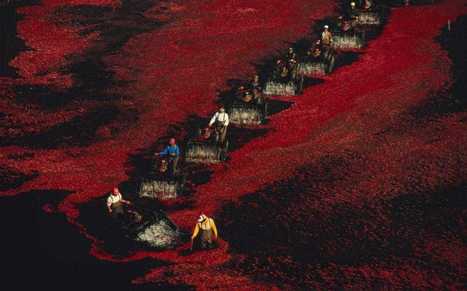
10,000 miles outside Silicon Valley, start-ups are booming in Nairobi, Kenya. Take a tour of Nairobi Garage – Africa’s largest co-working space – and see for yourself
Your new post is loading...
10,000 miles outside Silicon Valley, start-ups are booming in Nairobi, Kenya. Take a tour of Nairobi Garage – Africa’s largest co-working space – and see for yourself
Graham Watson's insight:
Entrepreneurship is vital to a growing economy, and this International Finance Corporation clip highlights the fact that digital entrepreneurs are playing a growing role in the development of Kenya.
No comment yet.
Sign up to comment
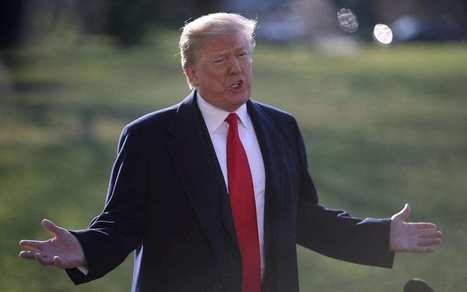
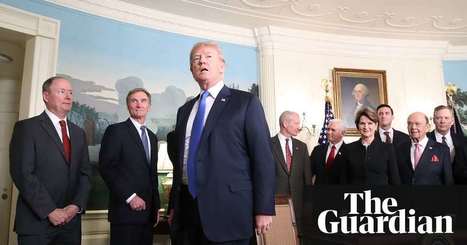
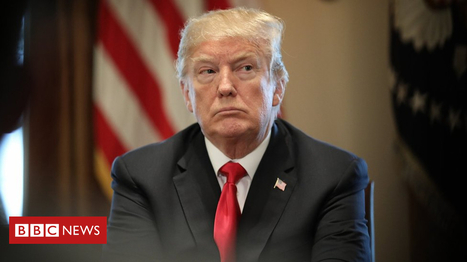
Donald Trump’s “economic madness” will push the US into a sharp recession that risks dragging the rest of the world down with it, one of Britain’s most senior economists has warned.
Graham Watson's insight:
A sober assessment of the impact of Trumponomics from a former Bank of England policymaker. Alas, to people with a degree of sense, this sort of thing comes as no surprise. But are we being fooled by our cognitive biases into favouring this view. It is clear that the President has little to commend him as either human being or President, and we're all desperately keen for him to fail - or be impeached - so whilst I'd like to agree with the story, I confess that I'm also sceptical too.
US President Donald Trump announced plans for tariffs of 25% on up to $60bn in Chinese imports, heightening fears of a trade war between the world’s two largest economies and sending US stocks sharply lower.
Graham Watson's insight:
President Trump outlines the reasons for his introduction of $60bn worth of tariffs on China. Except that it isn't - other than suggesting that China doesn't respect intellectual property rights (IPRs) and that this is a way to correct the US trade deficit, both with China and the rest of the world. He has some sort of point with the first argument. But that second, whilst appealing to his political supporters, just isn't good economics.
China has been flouting intellectual property rules and it does has more to lose
Graham Watson's insight:
Nils Pratley's business briefs are always informative: the first part of this is very good, and gives a rationale for the latest US tariffs on Chinese exports.
US president calls on Brussels to respond in kind to temporary amnesty, while move against Beijing hits stock markets
Graham Watson's insight:
More on the latest round of tariffs imposed by the US, this time against China. I love the fact that the President argues that the "US trade deficit with Beijing was out of control at about $504bn" without accepting any Us responsibility for this. I'm a simple fellow. However, I suspect that this particular trait is a long-standing one as far as the President is concerned.
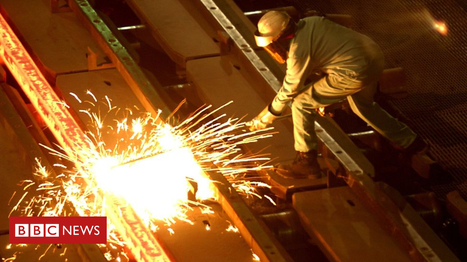
EU leaders will looking to avoid a full-blown confrontation over trade with the Trump administration today, as efforts continue to broker an EU exemption from looming US steel and aluminium tariffs, EU sources said.
Graham Watson's insight:
More on US tariffs: we're not in on the deal, but we're 'hopeful' of exemptions. This is the world we live in. 'Hopeful'. Are there any more straws that we can clutch at?
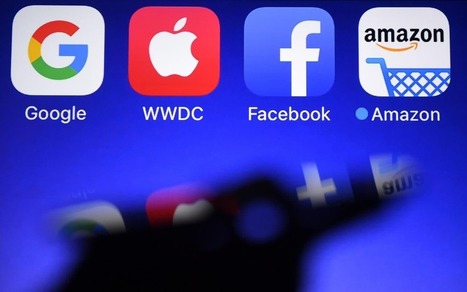
The European Commission has revealed its plan for a 3% tax on the revenues of big technology groups in response to pressure from EU governments, which wan
Graham Watson's insight:
The FT looks at the proposed 'digital tax' to be levied on giant tech companies. However, in watching the clip, I think I've discovered an obvious loophole. I suspect that the first thing the big tech companies will do is split themselves up into lots of smaller service providers, creating 'national' companies and argue that they are no longer the behemoths that they once were. I'm sure that the EU will have thought of this, but cue legal wrangling and the only winners? Lawyers.
The world’s biggest technology firms face an extra €5bn (£4.4bn) tax bill each year to operate in the EU as governments face an "even-bigger black hole" in their finances.
Graham Watson's insight:
The EU has decided to crack down on tech firms, introducing what it calls an interim tax for digital activities. The tax is designed to compensate for the fact that “Our pre-internet rules do not allow our member states to tax digital companies operating in Europe when they have little or no physical presence here” and instead is looking to tax companies "with global revenues of more than €750m and EU revenues above €50m" at 3% on their total revenues. It's unusual: it's not a perfect theoretical solution, but it's an attempt to try and claw back some of the tax revenues that more conventional firms pay, and that they feel their digital rivals get away with not paying.
Larry Kudlow, Trump’s pick as chief economic adviser, has a history of radically different views to the president’s on the economy
Graham Watson's insight:
The Guardian covers the appointment of President Trump's latest economic advisor, Larry Kudlow, and suggests that perhaps he's not the best economic forecaster. Or the best appointment.
The country named the world’s happiest in a UN report was relatively slow to recover after the financial crisis
Graham Watson's insight:
A thought-provoking business leader: they've never had it so good, the Finns, as the UN World Happiness Report named them the happiest nation on the planet. This Guardian article looks at why that might be, attributing it to the emphasis placed on gender equality and the resilience of an economy that has seen established firms like Nokia collapse and newcomers, like games studio, Supercell, take their place. Factor in a much vaunted - probably overly-so - school system, and high levels of R&D, and it seems the Finns have cracked 'happiness' - whatever that may be. It would seem to revolve around very cold, dark winters, saunas and the thwack of birch tiwgs.
Known for its sugarcane, Mauritius has also starting farming the more challenging vanilla crop.
Graham Watson's insight:
An interesting look at the growth of the vanilla industry on the island of Mauritius, which started by looking at the long leadtime - it takes 5 years before a vanilla orchid starts bearing vanilla pods. However, vanilla is a luxury good, and as a consequence, it will account for a higher proportion of global income over time, especially when its added to rum, another luxury good. However, the development of both markets could potentially enhance development.
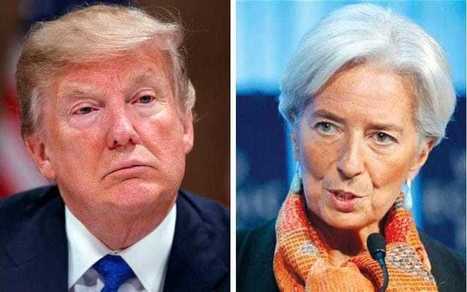
World leaders have been warned that a Donald Trump-inspired trade war could trash the global economic recovery with protectionist policies tearing up global supply chains and killing off the green shoots of productivity growth.
Graham Watson's insight:
Christine Lagarde clearly isn't on the White House Christmas card list, after suggesting that a Trump-inspired trade war poses a serious threat to global economic health. Yes, there's a multiplier effect in there somewhere.
Today, 40% of the world’s people are affected by water scarcity. To change the future of water, we must rethink how to understand, value and manage water as a precious resource.
Graham Watson's insight:
This World Bank clip looks at Sustainable Development Goal 6 - ensuring "sustainable management of water and sanitation for all". It highlights the fact that water is an increasingly scarce resource, as high profile droughts, such as that affecting Cape Town have indicated, and the need for a concerted effort to value and manage water appropriately in a world where 40% of the global population are affected by water scarcity.
|
Trump made a big play of slapping tariffs on Chinese imports, but experts say neither side will risk escalating the current spat
Graham Watson's insight:
The Guardian argues that, although the rhetoric is incendiary, the likelihood of a full-blown trade war between the US and China is unlikely, because it isn't in anyone's interest. Let's hope they are right.
Stock markets dived again on Friday as Donald Trump faced a barrage of criticism for launching a $60bn (£42bn) package of tariffs on Chinese goods, sparking fears of a global trade war.
Graham Watson's insight:
It seems that the EU is bracing itself for a trade war.
Beijing says it firmly opposes new US tariffs and that it is capable of meeting any challenge.
Graham Watson's insight:
Let the games begin!
Experts say US and Chinese consumers will see higher prices – and fear other countries will be dragged in to the dispute
Graham Watson's insight:
Hurrah! A trade war looms: easy to win, apparently.
The US trade representative says the import duties have been "paused" while further talks take place.
Graham Watson's insight:
Good oh! The EU and six other economies have been excused from the recently-introduced steel and aluminium tariffs. That, at least, is a good thing. However, isn't it nice to have our trade policy dictated by the whims of President Trump. I'm looking forward to fiscal and monetary policy being determined on the same basis.
Walk in the shoes of 13-year old Rendela in Papua New Guinea, who wakes before dawn and often misses school to collect fresh water for her family.
Graham Watson's insight:
A poignant developmental clip that shows how the lack of fresh water, and the fact that women and children are often delegated to collect drinking water perpetuates gender equality and deprives some of the world's poor of education , adversely affects developmental outcomes.
The White House says its investigation finds that China encourages the theft or transfer of intellectual property.
Graham Watson's insight:
One of the worst kept secrets in the world looks likely to come to pass: President Trump is going to introduce protectionist measures against China, retaliating to the theft of intellectual property. What are the likely implications of this? It's a fascinating example of the conduct of policy in a post-truth world. Economists are going to tell us that this is likely to impose a number of costs, and that further rounds of retaliation, or a full-scale trade war are going to further damage economic welfare. However, that's not going to be the angle rolled out by the Trump team who know that this sort of thing will no doubt play well with their core electorate: we are punishing China for 'unfair' trade practices, we are protecting American jobs - although probably very few - and we are 'taking back control'. The latter might sound familiar. But it's not good economics, and as 'experts' we have a duty to deconstruct this in an era where experts aren't in fashion. Heaven forbid, these even a non-expert in the Oval Office.
As African heads of state sign the first continent wide free trade deal, what will it mean for the people that live there? The BBC's Nancy Kacungira explains.
Graham Watson's insight:
It seems like Africa is on the brink of its first continental-wide free trade deal, with almost all nations about to sign up to the African Continental Free Trade Area (ACFTA) looking to foster intra-African trade. As a point of comparison, around 70% of EU trade is intra-EU trade. However, in Africa the figure is only 16% and a free trade area is likely to boost that, raising living standards and welfare as a result of trade creation.
US protectionism is in accord with the spirit of the times – but it won’t have a happy ending
Graham Watson's insight:
Larry Elliott argues that the logical conclusion of President Trump's trade policy is a full-scale trade war, and that the net result isn't a good one. For any of us.
A major trade war could be in the offing as the EU strikes back against US tariffs with threats to slap import taxes on hundreds of major US products.
Graham Watson's insight:
Here comes the retaliation: the EU are planning to retaliate against the US tariffs on steel and aluminium with a raft of tariffs on an array of American produce. President Trump has claimed that “trade wars are good, and easy to win” - let's see shall we.
Over the past decade, Tanzania has registered significant gains in poverty reduction with the headcount poverty rate falling from 34 to 28 percent between 2007 and 2012. The World Bank Country Partnership Framework (2018-2022) will support Tanzania’s ambitious agenda for industrialization, economic growth, and human development as laid out in the Second Five-Year Development Plan and Zanzibar’s Strategy for Growth and Reduction of Poverty.
Graham Watson's insight:
This World Bank clip quantifies the rapid development of Tanzania in the past decade, highlighting the improvement in a number of development outcomes. and the progress that still needs to be made to tackle poverty. It's a good country example of the nature of development, and how international efforts can help overcome some of the problems facing East Africa's largest economy.
Immigration does not damage the average happiness of local people and migrants themselves become as happy as the nation they move to, according to a ground-breaking new study compiled by economists and backed by the United Nations.
Graham Watson's insight:
Interesting findings in the World Happiness Report backed by the United Nations: immigration doesn't adversely affect happiness. It's not a surprise to me, but it might be to some. Immigration makes for diversity, and is likely to boost growth. What are immigrants, if they're not risk-takers? |
Your new post is loading...