




Known for its sugarcane, Mauritius has also starting farming the more challenging vanilla crop.

 Your new post is loading...
 Your new post is loading...
Your new post is loading...
 Scoop.it!
Known for its sugarcane, Mauritius has also starting farming the more challenging vanilla crop.
Graham Watson's insight:
An interesting look at the growth of the vanilla industry on the island of Mauritius, which started by looking at the long leadtime - it takes 5 years before a vanilla orchid starts bearing vanilla pods. However, vanilla is a luxury good, and as a consequence, it will account for a higher proportion of global income over time, especially when its added to rum, another luxury good. However, the development of both markets could potentially enhance development. No comment yet.
Sign up to comment
Scoop.it!
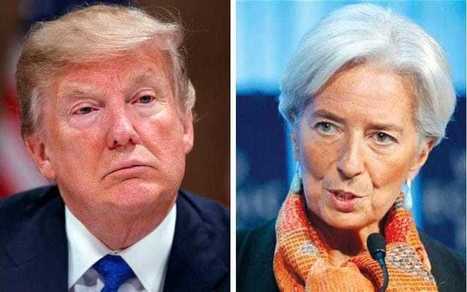
World leaders have been warned that a Donald Trump-inspired trade war could trash the global economic recovery with protectionist policies tearing up global supply chains and killing off the green shoots of productivity growth.
Graham Watson's insight:
Christine Lagarde clearly isn't on the White House Christmas card list, after suggesting that a Trump-inspired trade war poses a serious threat to global economic health. Yes, there's a multiplier effect in there somewhere.
Scoop.it!
Today, 40% of the world’s people are affected by water scarcity. To change the future of water, we must rethink how to understand, value and manage water as a precious resource.
Graham Watson's insight:
This World Bank clip looks at Sustainable Development Goal 6 - ensuring "sustainable management of water and sanitation for all". It highlights the fact that water is an increasingly scarce resource, as high profile droughts, such as that affecting Cape Town have indicated, and the need for a concerted effort to value and manage water appropriately in a world where 40% of the global population are affected by water scarcity.
Scoop.it!

The money sent home by migrant workers is relied up on by schools in El Salvador
Graham Watson's insight:
The BBC looks at the importance of remittances to development, highlighting the fact that, for many countries, this is now a more important source of funds that formal aid programmes. This article illustrates how El Salvador has benefit from the Salvadorean diaspora based in the United States.
Scoop.it!
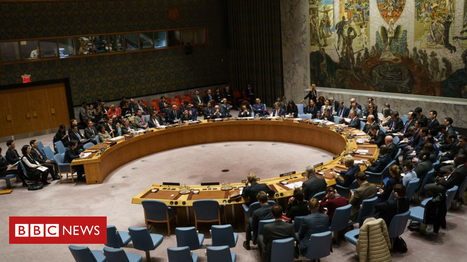
The alleged violations, if proven, raise questions about how common such breaches might be in Asia.
Graham Watson's insight:
An interesting example of the impact of a trade embargo, with the UN looking at whether two Singaporean firms have broken the embargo with North Korea, after evidence emerged of luxury imported alcohol being sold in Pyongyang. The article looks at how easy it might be to overcome such restrictions on trade.
Scoop.it!

Tensions continue over US tariffs on imported steel and aluminium imposed by President Trump.
Graham Watson's insight:
And so it goes... A bit of Kurt Vonnegut to accompany the latest response to US tariffs on steel.
Scoop.it!
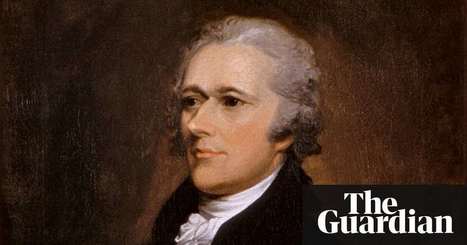
Both Britain and America have championed free trade from a position of global strength. But their views in the past were very different
Graham Watson's insight:
Larry Elliott with a historical overview of protectionism. The US and the UK haven't always been in favour of free trade, you know.
|
Scoop.it!
Over the past decade, Tanzania has registered significant gains in poverty reduction with the headcount poverty rate falling from 34 to 28 percent between 2007 and 2012. The World Bank Country Partnership Framework (2018-2022) will support Tanzania’s ambitious agenda for industrialization, economic growth, and human development as laid out in the Second Five-Year Development Plan and Zanzibar’s Strategy for Growth and Reduction of Poverty.
Graham Watson's insight:
This World Bank clip quantifies the rapid development of Tanzania in the past decade, highlighting the improvement in a number of development outcomes. and the progress that still needs to be made to tackle poverty. It's a good country example of the nature of development, and how international efforts can help overcome some of the problems facing East Africa's largest economy.
Scoop.it!

Immigration does not damage the average happiness of local people and migrants themselves become as happy as the nation they move to, according to a ground-breaking new study compiled by economists and backed by the United Nations.
Graham Watson's insight:
Interesting findings in the World Happiness Report backed by the United Nations: immigration doesn't adversely affect happiness. It's not a surprise to me, but it might be to some. Immigration makes for diversity, and is likely to boost growth. What are immigrants, if they're not risk-takers?
Scoop.it!

Broadcom abandons pursuit of US rival Qualcomm two days after it was blocked by President Trump.
Graham Watson's insight:
It seems that the President's intervention - on the basis of "credible evidence" of a threat to national security, mind you - has caused the proposed Broadcom-Qualcomm merger to collapse. It will be interesting to see the ramifications of this for future US merger activity involving foreign firms. This, of course, comes on the back of suggestions last week that entrepreneurs are already becoming reluctant about moving to the US. However, given the fact that the President already has all the best words, it's probably safe to assume he's got all the best people too. It's just that the never work for him for very long before they get fired..
Scoop.it!

Thinktank upgrades its growth forecast but says tit-for-tat tariffs would make international trade vulnerable
Graham Watson's insight:
Neoclassical economists rejoice: the OECD believe that a trade war is likely to have an adverse effect upon global economic growth and possibly even derail a putative recovery. Who would have thought that a trade war would have this effect. Everyone bar the President of the United States, it would seem.
Scoop.it!

Chipmaker Broadcom's attempt to buy US rival Qualcomm "threatens national security", the president says.
Graham Watson's insight:
Although this is undoubtedly a microeconomic story, about a merger, it belongs here because the broader implications about what this means for US trade polcy are, arguably, more important. It seems that the President has a new toy: it's the defence that certain activities "threaten to impair the national security of the US"., and he has "credible evidence" that this is the case in the Broadcom - Qualcomm merger, between two of the world's largest chipmakers. Of course, what constitutes credible evidence is open to debate, but I suspect it's largely what the President wants it to be, as most things are these days.
Scoop.it!

Workers in Pennsylvania, once a steel hub, are conflicted about the tariffs proposal and fear Trump could just be playing politics
Graham Watson's insight:
So, if tariffs don't represent 'good economics', why do countries adopt them? Here is your answer: because it benefits a narrowly defined, concentrated group and the costs are widely dispersed among many different economic agents. In this instance, US steelworkers and US consumers.
Scoop.it!

The EU does not want the president’s tariffs to create a spiral of retaliation. But Europe is a target – and a battle looks inevitable
Graham Watson's insight:
The Guardian considers the likely effects of a global trade war - they aren't good, although it seems that retaliation is inevitable.
|





