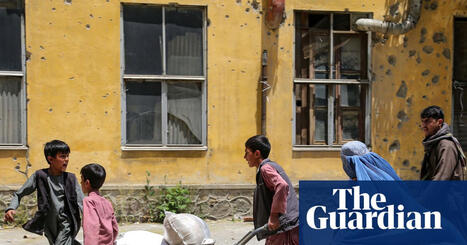
Exclusive: Food systems of low-income nations projected to deteriorate seven times as fast as those of wealthy ones
Get Started for FREE
Sign up with Facebook Sign up with X
I don't have a Facebook or a X account


|
Scooped by
Graham Watson
onto International Economics: IB Economics March 23, 8:13 AM
|
 Scoop.it!
Exclusive: Food systems of low-income nations projected to deteriorate seven times as fast as those of wealthy ones

 Your new post is loading...
 Your new post is loading...
Your new post is loading...
Scoop.it!

As Trump suggests Middle East oil disruption is not his problem, experts say talk of US ‘energy independence’ is a smokescreen – with consumers paying the price
Graham Watson's insight:
This Guardian piece looks at the impact of the Iran conflict on the US, via its effect on the oil price. The notion that the US has energy independence is explored, and whilst it's true that the US imports relatively little oil and natural gas from the Persian Gulf, it is also true that the globally-determined oil price has significant distributional consequences, in benefitting producers at the expense of consumers.
Scoop.it!
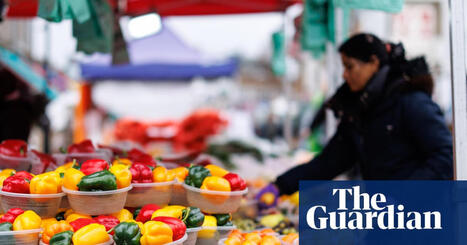
Effects of Iran’s blockade will depend on how long crisis lasts as disruption ripples through supply chains
Graham Watson's insight:
What are the wider implications of the closure of the Strait of Hormuz for the global economy. This article highlights two key sectors - food and medicine - and a number of scenarios: a two-week closure, a six-week closure and, potentially, six-month closure.
None of the scenarios are good - but the prospect of a six-month closure really isn't good.
Scoop.it!

Brutal past experience has taught us that a cost of living crisis doesn’t affect us all the same, because we don’t all go into it with the same income or wealth, says Guardian columnist Aditya Chakrabortty
Graham Watson's insight:
Another article highlighting the distributional implications of the ongoing Iran war: in short, higher inflation is going to affect us all, but the poor are going to bear the burden to the greatest degree. 'Twas ever thus.
Scoop.it!
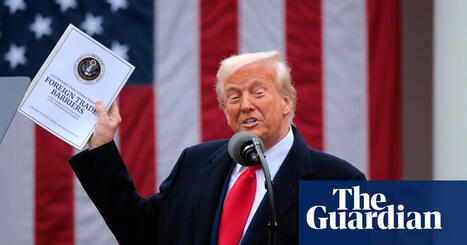
Last April, the president unleashed a tidal wave of tariffs on ‘liberation day’. Analysts say the policy has failed, even by the Trump administration’s own terms
Graham Watson's insight:
The Guardian with a pretty blunt opinion on the impact of President Trump's tariffs. And well-deserved too.
Scoop.it!
From
www

The price of a wide range of goods - from food, to smartphones, to medicines - could be affected by the US-Israel war with Iran.
Graham Watson's insight:
This BBC Verify clip looks at the wider ramifications of the shutting of the Strait of Hormuz to global supply chains, identifying sectors other than oil and natural gas that will be affected by the ongoing hiatus. It identifies four important areas of concern: fertiliser, helium, petrochemical derivatives - important for pharmaceutical manufacture, and sulphur as areas where there's significant supply chain disruption.
Scoop.it!
Philippine President Ferdinand Marcos said he is working to secure new sources of oil after he placed the country under a state of national energy emergency in response to the war in Iran.
Graham Watson's insight:
This BBC clip looks at how the ongoing energy crisis is affecting the Philippines, where the country imports 98% of its oil from the Gulf. The economy was the first country to impose emergency measures, although there are already fuel shortages in the economy.
Scoop.it!

Editorial: The steep reductions are a grave error, both morally and pragmatically. But a better case needs to be made for spending
Graham Watson's insight:
This editorial bemoans the decision by the government to cut its aid budget by 40%, albeit it's something that's common to G7 nations, with this year's aid spending being 28% lower than in 2024.
In the case of the UK, the government are seeking to portray a trade-off between aid and defence spending, arguing that cutting the former allows us to increase the latter. Bilateral aid to Africa, for example, is going to be cut by nearly 60% and in doing so, we risk squandering Britain's status as a global power.
Scoop.it!
Exclusive: Food systems of low-income nations projected to deteriorate seven times as fast as those of wealthy ones
Graham Watson's insight:
Analysis by the International Institute for Environment and Development (IIED) suggests that the greatest threats from climate change are going to hit low-income countries hardest, with the prospect of a 2 degree increase in the average global temperature having serious implications for food security in many of them. The think-tank has gone as far as to create a Food Security Index to detail the vulnerability of these economies in this regard. develop
Scoop.it!

From
www
The European nation, struggling to find skilled staff, is giving jobs to young people from India.
Graham Watson's insight:
Germany faces a demographic crisis: an ageing population and a declining labour force. However, this BBC article highlights one way that this could be tackled - by recruiting Indian workers. Initially, this was to fill butcher's apprenticeships but it's broadened as Germany has increased the skilled work visa quota for Indians from 20,000 a year to 90,000 per year.
As a result of this change, and clever recruitment, the number of Indian workers in Germany has increased from 23,320 back in 2015 to 136,670 today.
Scoop.it!

As other Asian economies race to conserve energy, China has huge reserves of oil and gas as well as alternative energy sources like wind and solar
Graham Watson's insight:
And the one economy that's largely unaffected by the Iran conflict? China. Not only does it have extensive fossil fuel reserves but its diversification into renewable energy, and the roll out of massive solar and wind power generating capacity means that the well-thought out actions of President Trump many, once again, prove to benefit China more than the United States.
Scoop.it!
From
www
For more than 50 years, the World Economic Forum has brought together global leaders from government, business and civil society. The Forum's public-private initiatives, communities and research-backed insights help these decision-makers drive collaborative solutions to better navigate the most complex issues of our time. In a world of rapid change, the need for trusted collaboration has never been greater.
Graham Watson's insight:
I think I've 'scooped' something similar to this before but you might have heard of the World Economic Forum but wondered about what it does. This clip - propaganda - if you like - looks at what WEF has achieved. There are plenty of grandiose claims but very few specific examples of where the World Economic Forum has made a difference. It's current focii are fostering inclusive growth, accelerating responsible innovation and making economies more resilient.
You are likely to know it because of the prominence of its annual Davos meeting held early in the year.
Scoop.it!
From
www
Results Narratives in the World Bank Group Scorecard provide a complete picture of development outcomes, policy reforms, and institutional strengthening beyond just financing. Results Narratives outline the crucial context needed to understand how change happens. This video explores how we capture the impact of non-financial support - such as legal reforms, governance improvements, and market creation, that drives sustainable development. You will see real-world examples from Kenya, Jordan, and Colombia that illustrate how connecting the dots between policy and systems leads to lasting results for people and the planet.
Graham Watson's insight:
Another clip looking at the new World Bank Group Scorecard, highlighting how it it attempting to capture all elements of development stories - both the quantitative and qualitative aspects of development. This clip looks at three different examples - Kenya, Jordan and Colombia helping young people to get jobs, increase female participation and fund improvements in healthcare.
Scoop.it!
From
www
Egypt30by30 is an IFC program strengthening the foundations of sustainable finance in Egypt. Working with banks and regulators, it helps expand financing for investments that improve efficiency, strengthen resilience, and support long-term growth.
Graham Watson's insight:
The importance of finance for development is set out in this International Finance Corporation clip which emphasises the importance of financial markets for sustainable development. In the case of Egypt, this means the issuing of green bonds to support development and achieve climate change targets.
|
Scoop.it!
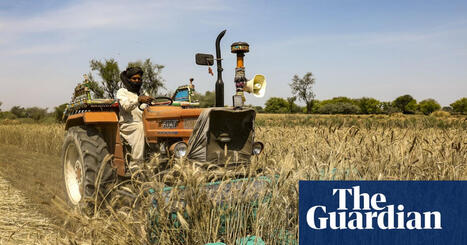
UN says record numbers of people could face acute hunger if conflict continues
Graham Watson's insight:
And here's a very visual explanation of the impact of the supply-side shock on the market for fertiliser and, by implication, food security, across the world, with those countries most dependent upon the Gulf states for fertiliser, the most vulnerable, such as Sri Lanka, Pakistan and Tanzania.
Scoop.it!

From
www
The order does not affect generic medicines, the most commonly used in the US.
Graham Watson's insight:
The intention of President Trump's tariffs is laid bare with these proposed 100% tariffs on pharmaceuticals designed to encourage pharmaceutical companies to invest in American manufacturing facilities.
Otherwise, patented medicines will face a 100% tariff, unless they commit to build a manufacturing base in the US by the end of January 2029. Will this induce them to invest into the US?
Scoop.it!
Global super-rich may have hidden $3.55tn from tax officials, says Oxfam | Tax havens | The Guardian
Charity calls for a levy on the very richest and the closing of tax loopholes in its report on offshore wealth
Graham Watson's insight:
Oxfam reckons that the super-rich have engaged in tax avoidance to the extent that they've concealed $3.55 trillion in potential tax revenues from global governments. My view? Name and shame. We shouldn't admire these people.
Scoop.it!
From
www
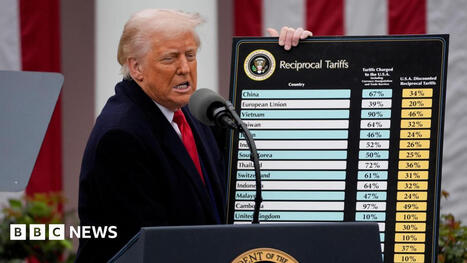
US tariffs stand at the highest rate in decades. But what has the impact been?
Graham Watson's insight:
A year on from "Liberation Day" this BBC article looks at how President Trump's tariffs have affected the global economy. In short, they've only had damaging effects: changing trade relations between nations and raising prices for consumers, not least in the US.
Scoop.it!
From
www
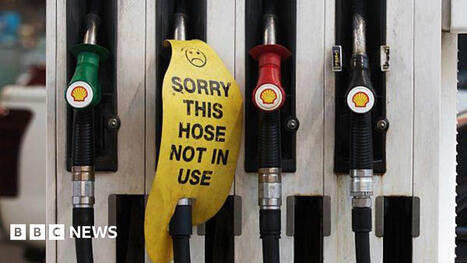
Anthony Albanese says nation's supply remains "secure" amid reports of panic buying and shortages.
Graham Watson's insight:
From 12,000 miles away it looks like Australia is starting to feel the pinch when it comes to fuel, with shortages being reported and fuel prices rising. According to the article "The average retail price of petrol reached 238 Australian cents ($1.64; £1.23) a litre as of Sunday compared to 171 cents four weeks earlier, according to the Australian Institute of Petroleum".
It seems that independent petrol retailers are the ones suffering because they don't have long-term contracts with suppliers.
Scoop.it!
From
www
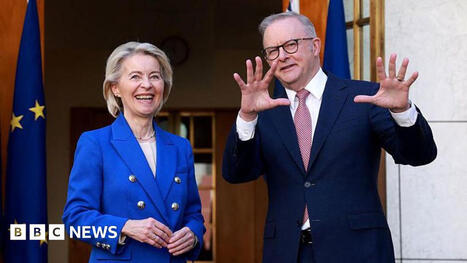
Australian producers have also won the right to sell Italian-style sparkling wine as prosecco.
Graham Watson's insight:
The signing of an EU-Australia trade deal is going to remove many tariffs on agricultural goods, although red meat will still be subject to a 30,000 tonne quota - up from less than 4,000 tonnes today.
The hope is that it will cheapen food for consumers in both economies and offer them greater choice, although the naming of some Australian produce, manufactured by European migrants, such as prosecco, will need to be phased out over time.
Scoop.it!

Growers face soaring fertiliser and fuel costs as shipping choke point of the strait of Hormuz hits supply chains
Graham Watson's insight:
Heather Stewart highlights the risks to the global food supply as the result of the ongoing Iran war, with supply chain disruption likely to see shortages and, inevitably, higher prices for food. In this article she highlights the fate of Tanzania avocado farmers who face the prospect of being unable to get their harvest to the developed world.
Additionally, food costs in these economies are also going to rise, with local reports suggesting that they've already gone up by 20% in Somalia.
Scoop.it!

Fatih Birol says effect on energy markets of Iran bombings and closure of Hormuz strait not initially understood by world leaders
Graham Watson's insight:
Are we under-estimating the effect of the supply-side shock generated by the Iran war? Certainly the head of the International Energy Agency thinks so.
Scoop.it!
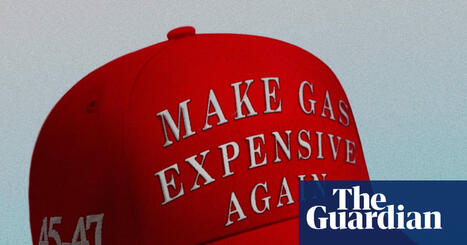
Donald Trump’s ‘little excursion’ is likely to have long-term effects, from oil prices to inflation to growth, say experts
Graham Watson's insight:
The global implications of a major supply-side shock. Discuss.
Scoop.it!
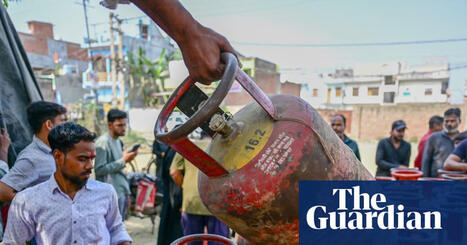
From restaurant closures in the Philippines and petrol rationing in Sri Lanka, to Asian food production crises due to fertiliser shortages, the effects of the US-Israeli war on Iran reverberate around the world
Graham Watson's insight:
A weekend round-up of all the ways that governments are trying to mitigate the effects of the conflict in Iran: restaurant closures, petrol rationing, changes in the working week and so on.
An interesting set of examples of the impact of a supply-side shock - you might note that the developed economies are more resilient than their developing counterparts, and work out both why that is and what its implications are.
Scoop.it!

From
www
As the conflict triggers economic disruption some risk being hit hard, while others stand to benefit.
Graham Watson's insight:
Crikey! And there's more.
This time the BBC are looking at the distributional effects of the current Middle East conflict, noting that oil producers and renewable energy producers are the beneficiaries and that net oil importers are the losers. Them and the people responsible for starting this conflict in the first place who are heavily invested in the Middle East.
Scoop.it!

New Zealand economic growth tipped to overtake Australia’s this year but Middle East conflict casts a shadow over outlook
Graham Watson's insight:
It's always interesting to read about another economy facing the same problems that we are. In this case it's New Zealand, which was forecast to grow this year but, because it's so heavily dependent upon global trade and tourism, there are concerns that the Middle East conflict could stall growth, and its size makes it more vulnerable than most to supply-side shocks such as this.
|






Analysis by the International Institute for Environment and Development (IIED) suggests that the greatest threats from climate change are going to hit low-income countries hardest, with the prospect of a 2 degree increase in the average global temperature having serious implications for food security in many of them. The think-tank has gone as far as to create a Food Security Index to detail the vulnerability of these economies in this regard. develop