Your new post is loading...

|
Scooped by
Elizabeth E Charles
October 14, 2021 3:51 PM
|
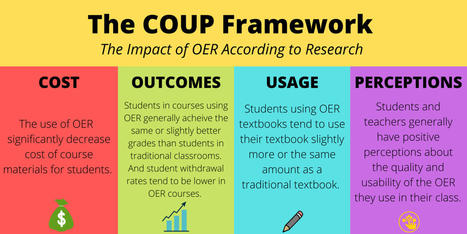
Last week, I introduced the COUP framework, which is a great framework to start with OER research. However, some categories of the COUP framework have been researched more extensively than others. For example, one of the biggest “selling points” of OER is cost. But is a free resource always the better option if students don’t achieve good grades in the end?
Children who avoid challenging situations will lack the ability to succeed in the years to come. Taking on a challenge involves many skills, such as focus, adaptability, using critical thinking, and confidence.
Via EDTECH@UTRGV
|
|
Scooped by
Elizabeth E Charles
October 9, 2021 2:33 PM
|
If we are to bring about lasting changes around the use of technology in teaching and learning in colleges and universities, we need to understand the practices that staff undertake and the challenges they face. Effective and sustained change comes from a place of working in service to pedagogies, and practices that support and surround learning and teaching. In order to better understand these issues Jisc commissioned research to gain more understanding about practice around learning and teaching and gaining insights beyond the technology-led.
|
|
Scooped by
Elizabeth E Charles
October 8, 2021 3:13 PM
|
Students often put in a great deal of time and energy into learning course material, yet their efforts are often less than fruitful. Week after week, we witness students arriving to lecture—seemingly prepared—armed with planners, Post-its, highlighters, and tablets. With such obvious effort poured into their preparation, it can be tough to grasp why these same students are often performing poorly on exams.
|
|
Scooped by
Elizabeth E Charles
October 3, 2021 3:02 PM
|
In this article, you will learn about hybrid and blended learning in higher education, as well as their advantages and disadvantages!
|
|
Scooped by
Elizabeth E Charles
October 2, 2021 2:58 PM
|
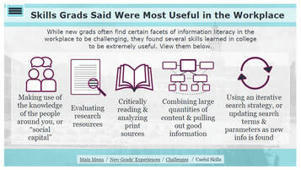
In this blog post, Alison Hicks, the CILIP Information Literacy Group rep for Higher Education and LIS, talks about an article she inadvertently found that she related to both personally and professionally and her thoughts on how diverse learners are represented within models of information literacy.
|
|
Scooped by
Elizabeth E Charles
October 2, 2021 2:42 PM
|
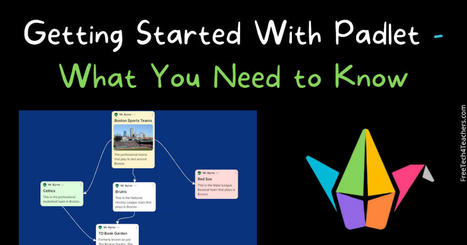
Padlet is a tool that I've been using and recommending to others for more than a decade. I started using it back when it was known as Wall Wisher. I often used it to create digital KLW charts with my U.S. History students. Over the years Padlet has evolved by adding more features, updates to the user interface, and updates to privacy and sharing options. If you haven't tried Padlet or you're looking for a tutorial to share with others who are new to using Padlet, take a look at my new video that covers all of the basics that you need to know to get started using Padlet with students.
|
|
Scooped by
Elizabeth E Charles
October 2, 2021 2:08 PM
|
At the start of the pandemic, higher education institutions rushed to set up hybrid flexible (HyFlex) classrooms without knowing how permanent these arrangements would be. As it turns out, students are quite happy with HyFlex, which gives them the freedom to choose between face-to-face, synchronous and asynchronous classes. Some studies have found this flexible structure can even improve student success. “We have students who, quite literally, would have had to drop out if their courses had not been available in the HyFlex format,” Kevin Gannon, professor of history at Grand View University, writes in The Chronicle of Higher Education.
|
|
Scooped by
Elizabeth E Charles
September 18, 2021 7:30 PM
|
Practical PIL How is PIL’s research applied in the trenches by librarians and educators? Practical PIL features examples of outreach projects from different campuses that have drawn on PIL research. If you have an example of applying PIL research you would like us to consider, drop us a line and share what you have done.
|
|
Scooped by
Elizabeth E Charles
September 18, 2021 7:12 PM
|
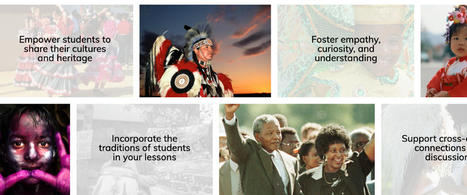
Our classrooms are culturally diverse with students coming from different racial, linguistic, and ethnic backgrounds. Diversity is a pedagogical strength which we should draw on to prepare culturally responsive spaces where students learn about the importance of respecting and accepting each other's cultural practices. As the adage goes, diversity is the spice of life and cultural awareness is the antidote to prejudice, racism, bias, sexism, homophobia, ableism, and discrimination.
|
|
Rescooped by
Elizabeth E Charles
from Learning & Technology News
September 18, 2021 6:46 PM
|
The penultimate day of SHAPE Education: The Future of Schools focused on educational technology. The speakers discussed the role they see technology playing in education by 2040. They covered topics including pedagogy in educational technology, the value of connecting through technology, the need to reflect on how technology can make education more accessible, and participatory approaches to developing educational technology.
Via Nik Peachey
|
|
Scooped by
Elizabeth E Charles
August 29, 2021 5:56 PM
|
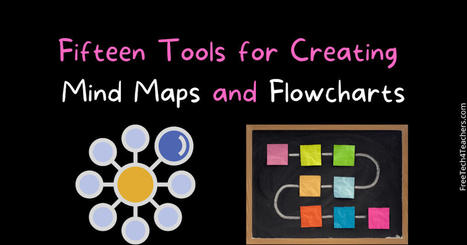
Earlier this year I published some reviews and videos about a few new mind mapping tools. As the new school year begins I think it's time that I add those new tools my list of mind mapping creation tools for students and teachers. Here's my updated list of mind mapping and flowchart creation tools.
|
|
Scooped by
Elizabeth E Charles
August 29, 2021 5:37 PM
|
Britannica ImageQuest offers students, teachers, and schools access to a huge media library encompassing over 3 million rights-cleared images that can be used to support teaching and to enhance students learning and engagement.
|
|
|
Scooped by
Elizabeth E Charles
October 14, 2021 3:49 PM
|
Recently I was invited to present on free and open resources that are available on the web. This presentation was part of a local effort to keep our community working—sponsored by the Foster Center at St. Bonaventure University near my home. Some of the resources I shared were not open source and merely cost $0, but many of the tools were also open source.
Teachers got a crash course in creating video content when schools shifted online. They relied on videos out of necessity to explain concepts and model strategies while students learned from home. As teachers transitioned back into classrooms, many abandoned video in favor of live instruction. However, if teachers are going to say the same thing the same way for all students, I encourage them to make a video. That way, they can use their synchronous time for more engaging and differentiated learning experiences.
Via EDTECH@UTRGV
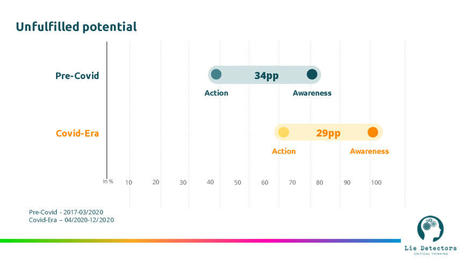
A surge in awareness about disinformation among pupils and teachers has been accompanied by a rise in the number of teachers who bring up this thorny issue in the classroom. But the gap between demand and supply remains largely unchanged. The share of teachers saying digital literacy is important is still nearly 30 percentage points above those who say it is being taught.
Via Nik Peachey
|
|
Scooped by
Elizabeth E Charles
October 8, 2021 3:00 PM
|
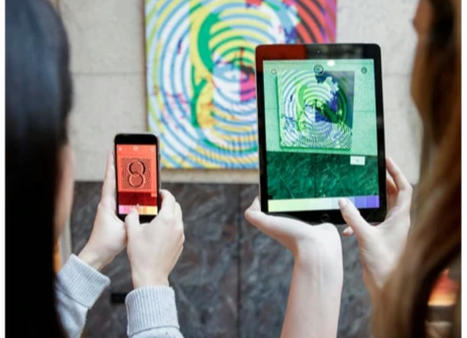
Augmented reality has a huge potential for us in education. It helps engage students in hands-on and immersive learning experiences and boosts their self-directed learning and "their social and emotional connections to curricular topics". A few days ago I shared with you a number of AR resources including Apple's guide: Augmented Reality in Education and a review of two powerful AR science apps. In today's post I am sharing more resources to help you make the best of AR in your classroom.
Part of this continuous learning and refinement must include assessments of bias, both in the content and in the algorithms that are determining success. Have you ever read a paragraph in which you could understand most of the words, but without experience or context to draw upon you could not fully understand the author’s message?
Via Nik Peachey
|
|
Scooped by
Elizabeth E Charles
October 2, 2021 2:53 PM
|
Chris Thorpe (City, University of London, UK) and I presented on the first day of the virtual European Conference on Information Literacy (ECIL2021) on Fake news: has it changed UK academic librarians’ ideas about teaching Information Literacy? The slides are embedded below.
|
|
Scooped by
Elizabeth E Charles
October 2, 2021 2:16 PM
|
Many tools created by Google are increasingly becoming a mainstay of teachers digital toolkit. I am pretty sure that most if not all readers of Educational Technology and Mobile Learning use some form of Google products whether it is Gmail, Docs, Slides, Sheets, Classroom, Drawings, you name it. That being the case, and given the exponential integration of services in education, Google offers this excellent resource called Google Learning to help educators, teachers, students, and everyone else make the best of Google in their learning journey.
|
|
Scooped by
Elizabeth E Charles
September 22, 2021 5:19 PM
|
Applied Digital Skills is a great resource from Google for Education that offers a wide variety of digitally-focused lessons to integrate in both in-class and distance instruction. Its library includes over 100 video-based lessons spanning various topics and skill sets. You can browse the lessons by audience (late elementary, middle school, high school, or adult learners), digital tool (e.g., Docs, Drawings, Slides, Sheets, Meet, Sites, etc), and by topic (e.g., Art, Digital Citizenship, Science, Math, Social Studies, Computer Science, etc.).
|
|
Scooped by
Elizabeth E Charles
September 18, 2021 7:18 PM
|
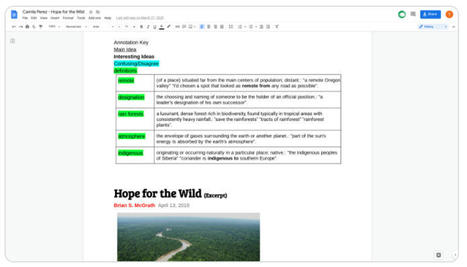
The Universal Design for Learning (UDL) framework allows us to understand the importance of utilizing web 2.0 in teaching and learning. Social annotation tools such as Hypothes.is allow teachers to fulfil the three essential UDL components: engagement, representation, and action & expression through thoughtful use of the platform. Social annotation tools such as Hypothesis and Voice Thread, when used well, boost student engagement, enhance critical thinking, expand reading comprehension, and increase student interaction. Of the several social annotation tools currently available, our institution uses Hypothesis. Hypothesis’ motto—“Making reading active, visible and social”—sums up why we think social annotation is so valuable for our students: it engages students and invites them to read and think together as a group by sharing real-time annotations of websites or PDFs (Hypothesis, 2021). The richly multimodal, interactive nature of Hypothesis offers instructors a platform through which they can employ the principles of Universal Design for Learning (UDL) to improve engagement and accessibility for all learners.
|
|
Rescooped by
Elizabeth E Charles
from Educational Technology News
September 18, 2021 6:52 PM
|
Online classrooms optimized to success will share these key characteristics: connection, consistency, content, community, and compassion.
Via EDTECH@UTRGV
|
|
Rescooped by
Elizabeth E Charles
from Educational Technology News
September 18, 2021 6:43 PM
|
With Firefox Suggest, Mozilla is rethinking web search—and its Google-reliant business model.
Via EDTECH@UTRGV
|
|
Scooped by
Elizabeth E Charles
August 29, 2021 5:42 PM
|
An important part of responsible digital citizenship, according to ISTE Standards for Students, is the respect for "the rights and obligations of using and sharing intellectual property". Students need to learn that accessibility of information online does not necessarily make it copyright free. Unfortunately, I myself have learned this the hard way. I believe, the best and safest way to deal with the issue of copyrights online is to always seek permission from content owners.
|