Your new post is loading...

|
Scooped by
Gilbert C FAURE
May 25, 2017 2:07 PM
|
|
|
Scooped by
Gilbert C FAURE
May 25, 2017 1:44 AM
|
Although interleukin 17 (IL-17) has modest activity on its own, it has a substantial impact in immunity through its synergistic action with other factors and its self-sustaining feedback loop. Veldhoen discusses the role of IL-17 during infections.
|
|
Scooped by
Gilbert C FAURE
May 23, 2017 9:51 AM
|
The study has revealed that activated T cells are the main immune cell to leave tumours, and that these T cells move to other tumours and lymph nodes.
|
|
Scooped by
Gilbert C FAURE
May 23, 2017 8:54 AM
|
Jason T. White, Eric W. Cross & Ross M. Kedl AffiliationsCorresponding author Nature Reviews Immunology (2017) doi:10.1038/nri.2017.34 Published online 08 May 2017
|
|
Scooped by
Gilbert C FAURE
May 22, 2017 3:33 AM
|
|
|
Scooped by
Gilbert C FAURE
May 20, 2017 6:51 AM
|
Understanding immunity to viruses therefore encompasses many, if not nearly all aspects of cell biology and immunology. A positive trend of the past twenty years of viral research is that the connection between viruses and innate cellular anti-viral mechanisms has cemented virology as an important sub-discipline of cell biology, and converted many virologists into at least honorary immunologists. The inherent simplicity of viruses and their marked tendency towards robust expression of their proteome and flagrant manipulation of host cells and immunity, make them superb tools to make basic discoveries.
Pragmatically, basic research in viral immunology provides the foundation for improving and developing new anti-viral vaccines and therapies. Recent outbreaks of MERs, Ebola and Zika viruses provide a pointed reminder of the threat that rapidly evolving viruses pose to human health and even existence, and underscore the importance of having a sufficient understanding of virus host interactions to quickly develop vaccines.
This issue of Current Opinion in Virology features eight outstanding reviews that summarize current knowledge of a number of the immune hurdles to viral replication. The immune system can be broadly, if imprecisely divided into innate vs. adaptive elements. Innate immunity is generally immediate and agent non-specific. Adaptive immunity is based on the functions of B and T cells, which due to their high antigen specificity, exist in relatively small numbers at the start of infection of a naïve host, and need nearly a week of exceedingly rapid division to attain fighting strength (four to six doublings per day, for six days geometrically increases their numbers up to 16 million-fold).

|
Suggested by
LIGHTING
May 18, 2017 11:20 AM
|
Hippo signaling controls cell and tissue growth. Geng et al. show that Hippo signaling is required for TH17 cell differentiation but inhibits Treg cell differentiation.
Our editors have curated recent articles and reviews from Cell Press journals that cover the topics and presenters of this year’s main symposia.
Via Krishan Maggon
|
|
Scooped by
Gilbert C FAURE
May 15, 2017 2:13 AM
|
Very different figures circulate about the quantity of cells found in the human body. An international team of scientists has done systematic calculations – and arrived at surprising results.
|
|
Scooped by
Gilbert C FAURE
May 12, 2017 7:10 AM
|
Author summary The disease tuberculosis (TB) is caused by the microbe Mycobacterium tuberculosis (Mtb), and remains a major public health concern. More research is needed to understand the diverse immune responses against Mtb to develop better vaccines. Mouse Qa-1 and its human counterpart HLA-E are nonclassical MHC I molecules that can activate or inhibit immune responses in a variety of diseases. However, their role during the immune response to Mtb remains unknown. We found that Qa-1 can present Mtb peptides to activate CD8+ T effector cells during aerosol Mtb infection. Further, Mtb-infected mice that lacked Qa-1 (Qa-1-/-) had higher numbers of bacteria and died more often than infected mice that expressed Qa-1 (Qa-1+/+). The lack of Qa-1 results in over-activation of the immune response upon infection, which is less efficient in controlling Mtb. Using mice expressing different mutant forms of Qa-1, we showed that Qa-1 can regulate immune responses against Mtb through the interaction with inhibitory CD94/NKG2A receptors as well as the activation of regulatory CD8+ T cells. We believe our study sheds light on the diverse mechanisms at play in generating protective immune responses against Mtb and will inform future mouse and human studies.
|
|
Scooped by
Gilbert C FAURE
May 8, 2017 9:40 AM
|
Type I interferons (IFN-α/β) and the more recently identified type III IFNs (IFN-λ) function as the first line of defense against virus infection and regulate the development of both innate and adaptive immune responses. Type III IFNs were originally identified as a novel ligand-receptor system acting in parallel with type I IFNs, but subsequent studies have provided increasing evidence for distinct roles for each IFN family. In addition to their compartmentalized antiviral actions, these two systems appear to have multiple levels of cross-regulation and act coordinately to achieve effective antimicrobial protection with minimal collateral damage to the host.
|
|
Scooped by
Gilbert C FAURE
May 7, 2017 5:51 AM
|
Publication date: 4 May 2017
Source:Cell, Volume 169, Issue 4
Author(s): Davide F. Robbiani, Leonia Bozzacco, Jennifer R. Keeffe, Ricardo Khouri, Priscilla C. Olsen, Anna Gazumyan, Dennis Schaefer-Babajew, Santiago Avila-Rios, Lilian Nogueira, Roshni Patel, Stephanie A. Azzopardi, Lion F.K. Uhl, Mohsan Saeed, Edgar E. Sevilla-Reyes, Marianna Agudelo, Kai-Hui Yao, Jovana Golijanin, Harry B. Gristick, Yu E. Lee, Arlene Hurley, Marina Caskey, Joy Pai, Thiago Oliveira, Elsio A. Wunder, Gielson Sacramento, Nivison Nery, Cibele Orge, Federico Costa, Mitermayer G. Reis, Neena M. Thomas, Thomas Eisenreich, Daniel M. Weinberger, Antonio R.P. de Almeida, Anthony P. West, Charles M. Rice, Pamela J. Bjorkman, Gustavo Reyes-Teran, Albert I. Ko, Margaret R. MacDonald, Michel C. Nussenzweig
Antibodies to Zika virus (ZIKV) can be protective. To examine the antibody response in individuals who develop high titers of anti-ZIKV antibodies, we screened cohorts in Brazil and Mexico for ZIKV envelope domain III (ZEDIII) binding and neutralization. We find that serologic reactivity to dengue 1 virus (DENV1) EDIII before ZIKV exposure is associated with increased ZIKV neutralizing titers after exposure. Antibody cloning shows that donors with high ZIKV neutralizing antibody titers have expanded clones of memory B cells that express the same immunoglobulin VH3-23/VK1-5 genes. These recurring antibodies cross-react with DENV1, but not other flaviviruses, neutralize both DENV1 and ZIKV, and protect mice against ZIKV challenge. Structural analyses reveal the mechanism of recognition of the ZEDIII lateral ridge by VH3-23/VK1-5 antibodies. Serologic testing shows that antibodies to this region correlate with serum neutralizing activity to ZIKV. Thus, high neutralizing responses to ZIKV are associated with pre-existing reactivity to DENV1 in humans.
Graphical abstract Teaser Individuals with high neutralizing antibody response against Zika virus have expanded clones of B cells that express the same heavy and light immunoglobulin genes and that are cross-reactive against dengue 1 virus.
|
|
Scooped by
Gilbert C FAURE
May 7, 2017 5:49 AM
|
Researchers in dermatology at Lund University in Sweden believe they have cracked the mystery of why we are able to quickly prevent an infection from
|
|
|
Scooped by
Gilbert C FAURE
May 25, 2017 1:45 AM
|
Silva-Santos and colleagues review the activation and pathophysiological functions of [gamma][delta]17 T cells during inflammatory responses.
|
|
Scooped by
Gilbert C FAURE
May 24, 2017 2:17 PM
|
Wucherpfennig and colleagues show that the microRNA miR-31 increases the sensitivity of T cells to type I interferons, which interferes with effector T cell function during chronic infection.
|
|
Scooped by
Gilbert C FAURE
May 23, 2017 9:10 AM
|
Recent emergence of exosomes as information carriers between cells has introduced us to a new previously unknown biological communication system. Multi‐directional cross‐talk mediated by exosome
|
|
Scooped by
Gilbert C FAURE
May 22, 2017 9:10 AM
|
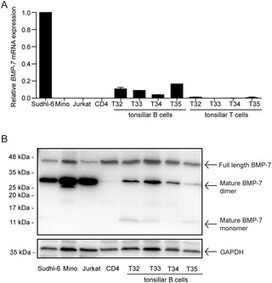
Selection and maturation of B cells into plasma cells producing high-affinity antibodies occur in germinal centers (GC). GCs form transiently in secondary lymphoid organs upon antigen challenge, and the GC reaction is a highly regulated process. TGF-β is a potent negative regulator, but the influence of other family members including bone morphogenetic proteins (BMPs) is less known. Studies of human peripheral blood B lymphocytes showed that BMP-6 suppressed plasmablast differentiation, whereas BMP-7 induced apoptosis. Here, we show that human naïve and GC B cells had a strikingly different receptor expression pattern. GC B cells expressed high levels of BMP type I receptor but low levels of type II receptors, whereas naïve B cells had the opposite pattern. Furthermore, GC B cells had elevated levels of downstream signaling components SMAD1 and SMAD5, but reduced levels of the inhibitory SMAD7. Functional assays of GC B cells revealed that BMP-7 suppressed the viability-promoting effect of CD40L and IL-21, but had no effect on CD40L- and IL-21-induced differentiation into plasmablasts. BMP-7-induced apoptosis was counteracted by a selective TGF-β type I receptor (ALK4/5/7) inhibitor, but not by a selective BMP receptor type I inhibitor. Furthermore, overexpression of truncated ALK5 in a B-cell line counteracted BMP-7-induced apoptosis, whereas overexpression of truncated ALK4 had no effect. BMP-7 mRNA and protein was readily detected in tonsillar B cells, indicating a physiological relevance of the study. Altogether, we identified BMP-7 as a negative regulator of GC B-cell survival. The effect was counteracted by truncated ALK5, suggesting greater complexity in regulating BMP-7 signaling than previously believed.
|
|
Scooped by
Gilbert C FAURE
May 22, 2017 1:42 AM
|
Type I IFNs are a cytokine family essential for antiviral defense. More recently, type I IFNs were shown to be important during bacterial infections. In this article, we show that, in addition to known cytokine functions, IFN-β is antimicrobial. Parts of the IFN-β molecular surface (especially helix 4) are cationic and amphipathic, both classic characteristics of antimicrobial peptides, and we observed that IFN-β can directly kill Staphylococcus aureus . Further, a mutant S. aureus that is more sensitive to antimicrobial peptides was killed more efficiently by IFN-β than was the wild-type S. aureus , and immunoblotting showed that IFN-β interacts with the bacterial cell surface. To determine whether specific parts of IFN-β are antimicrobial, we synthesized IFN-β helix 4 and found that it is sufficient to permeate model prokaryotic membranes using synchrotron x-ray diffraction and that it is sufficient to kill S. aureus . These results suggest that, in addition to its well-known signaling activity, IFN-β may be directly antimicrobial and be part of a growing family of cytokines and chemokines, called kinocidins, that also have antimicrobial properties.
|
|
Scooped by
Gilbert C FAURE
May 19, 2017 3:05 PM
|
|
|
Scooped by
Gilbert C FAURE
May 17, 2017 8:59 AM
|
Binding of T cell receptors (TCR) to peptide-loaded major histocompatibility complexes (p/MHC) leads to T-cell activation.
|
|
Scooped by
Gilbert C FAURE
May 15, 2017 11:20 AM
|
Glands in frog skin secrete substances that possess broad antimicrobial function.
Holthausen et al. mined this soup of natural products and discovered a peptide that
destroys diverse human influenza strains (Holthausen et al., 2017). This study points
the way to the discovery of novel anti-influenza molecules targeting conserved elements
on influenza surface proteins.
|
|
Scooped by
Gilbert C FAURE
May 14, 2017 5:07 AM
|
Immunological memory – the ability of the body to ‘remember’ and fight previously encountered pathogens – forms the basis of vaccination, which is one of the most important discoveries in the history of medicine. However, despite the enormous success of vaccination, we still do not fully understand how the body maintains long-term immunological memory, and this gap in our knowledge is hindering attempts to develop ‘next-generation vaccines’ and efforts to deploy immune cells called T cells against cancer. The immune system contains many different types of cells. Some of these cells can recognize pathogens without ever having encountered them. However,
|
|
Scooped by
Gilbert C FAURE
May 10, 2017 2:58 AM
|
End-stage differentiation of antigen-specific T-cells may precede loss of immune responses against e.g. viral infections after allogeneic stem cell transplantation (SCT). Antigen-specific CD8+ T-cells detected by HLA/peptide multimers largely comprise CD45RA-/CCR7- effector memory (TEM) and CD45RA+/CCR7- TEMRA subsets. A majority of terminally differentiated T-cells is considered to be part of the heterogeneous TEMRA subset. The senescence marker CD57 has been functionally described in memory T-cells mainly composed of central memory (TCM) and TEM cells. However, its role specifically in TEMRA cells remained undefined. Here, we investigated the relevance of CD57 to separate human CD8+ TEMRA cells into functionally distinct subsets. CD57- CD8+ TEMRA cells isolated from healthy donors had considerably longer telomeres and showed significantly more BrdU uptake and IFN-γ release upon stimulation compared to the CD57+ counterpart. Cytomegalovirus (CMV) specific T-cells isolated from patients after allogeneic SCT were purified into CD57+ and CD57- TEMRA subsets. CMV specific CD57- TEMRA cells had longer telomeres and a considerably higher CMV peptide sensitivity in BrdU uptake and IFN-γ release assays compared to CD57+ TEMRA cells. In contrast, CD57+ and CD57- TEMRA cells showed comparable peptide specific cytotoxicity. Finally, CD57- CD8+ TEMRA cells partially changed phenotypically into TEM cells and gained CD57 expression, while CD57+ CD8+ TEMRA cells hardly changed phenotypically and showed considerable cell death after in vitro stimulation. To the best of our knowledge, these data show for the first time that CD57 separates CD8+ TEMRA cells into a terminally differentiated CD57+ population and a so far functionally undescribed “young” CD57- TEMRA subset with high proliferative capacity and differentiation plasticity.
|
|
Scooped by
Gilbert C FAURE
May 8, 2017 9:32 AM
|
Cellular and Molecular Immunology aims to report the dynamic progress being made in China and abroad in immunological research, and welcomes high-quality Research Articles, Reviews and Brief Reports across a broad range of topics including, but not limited to, clinical immunology, comparative immunology, immunobiology, immunogenetics, immunological techniques, immunopathology, immunopharmacology, infection immunology, neuroimmunology, transplantation immunology, tumor immunology, and veterinary immunology.
|
|
Scooped by
Gilbert C FAURE
May 7, 2017 5:50 AM
|
Recent advances in single-cell RNA-sequencing (scRNA-seq) technology increase the understanding of immune differentiation and activation processes, as well as
|


 Scoop.it!