Your new post is loading...
Visualizing TGF-β1 regulation by GARP
Regulatory T cells (Tregs) can suppress immune responses through a variety of mechanisms. One such mechanism involves the activation of a surface-bound latent form of the cytokine transforming growth factor–β1 (TGF-β1). Within the cell, newly synthesized pro-TGF-β1 homodimers form disulfide bonds with the transmembrane protein GARP, which acts to chaperone and orient the cytokine for activation at the cell surface. Liénart et al. reveal how GARP interacts with TGF-β1, using a crystal structure in which the complex was stabilized using a Fab fragment from a monoclonal antibody (MHG-8) that binds to the complex. In so doing, they also demonstrate how MHG-8 prevents membrane-associated TGF-β1 release. These structural and mechanistic insights may inform treatments of diseases with altered TGF-β1 functionality and dysfunctional Treg activity, including cancer immunotherapy.
Via Krishan Maggon

|
Suggested by
LIGHTING
November 22, 2018 6:41 AM
|
CD8 T cells comprising the memory pool display considerable heterogeneity, with individual cells differing in phenotype and function. This review will focus on our current understanding of heterogeneity within the antigen-specific memory CD8 T cell compartment and classifications of memory CD8 T cell subsets with defined and discrete functionalities. While numbers of circulatory memory CD8 T cells can be stably maintained in secondary lymphoid organs following contraction, recent data suggest that phenotype and/or function are defined by the age of memory CD8 T cell (or time after initial antigen-encounter). In addition, history of antigen stimulations has a profound effect on memory CD8 T cell populations, suggesting that repeated infections (or vaccination) have the capacity to further shape the memory CD8 T cell pool. Finally, genetic background of hosts and history of exposure to diverse microorganisms likely contribute to the observed heterogeneity in the memory CD8 T cell compartment. Extending our tool box and exploring alternative mouse models (i.e. ‘dirty’ and/or outbred mice) to encompass and better model diversity observed in humans will remain an important goal for the near future that will likely shed new light into the mechanisms that govern biology of memory CD8 T cells.

|
Scooped by
Gilbert C FAURE
November 21, 2018 3:24 PM
|
BenchSci is a reagent intelligence platform that reduces the time, uncertainty, and cost of scientific experiments. We use machine learning to decode comprehensive open- and closed-access datasets, display published figures with no commercial bias, and allow you to search by experimental variables.
|
|
Scooped by
Gilbert C FAURE
November 19, 2018 9:32 AM
|
Thorsson et al. present immunogenomics analyses of more than 10,000 tumors, identifying
six immune subtypes that encompass multiple cancer types and are hypothesized to define
immune response patterns impacting prognosis.
|
|
Scooped by
Gilbert C FAURE
November 18, 2018 10:59 AM
|
Immunology
The causes of later-onset immune deficiencies are elusive, but the symptoms can be distressing. A new syndrome that leads to global immune dysregulation has been discovered independently in two unrelated patients, one from Australia and the other in Japan. Using whole-genome sequencing, Cardinez et al. found that both patients had a mutation in a gene called inhibitor of nuclear factor kappa-B kinase subunit beta ( IKBKB ). The mutation causes the destruction of white blood cells known as lymphocytes, leading to excessive inflammation and recurrent infections. CRISPR-Cas technology was used to precisely engineer the same mutation into mice and generate immunodeficiency similar to that observed in human patients. This discovery highlights the value of rare-disease research and offers hope to patients with conditions that have escaped diagnosis.
J. Exp. Med. 215 , 2715 (2018).
|
|
Scooped by
Gilbert C FAURE
November 18, 2018 7:11 AM
|
Caltech scientists have now identified the complex role a particular protein plays in helping stem cells develop into T-lymphocytes, powerful immune cells.
|
|
Scooped by
Gilbert C FAURE
November 14, 2018 11:37 AM
|
Self-antigen recognition in the thymus can result in both clonal deletion of developing thymocytes and their diversion into the regulatory T cell lineage. How do thymocyte-intrinsic and thymocyte-extrinsic determinants influence this cell fate choice?
|
|
Scooped by
Gilbert C FAURE
November 13, 2018 1:57 PM
|
Genome Med. 2018 May 25;10(1):39. doi: 10.1186/s13073-018-0553-2. Research Support, Non-U.S.Gov't; Review...
|
|
Scooped by
Gilbert C FAURE
November 13, 2018 9:01 AM
|
Obesity is a risk factor for cancer. Lynch and colleagues show that obesity alters the cellular metabolism of natural killer cells and decreases their antitumor surveillance and effector responses.
|
|
Suggested by
LIGHTING
November 10, 2018 4:08 PM
|
Accurate predictions of T-cell epitopes would be useful for designing vaccines, immunotherapies for cancer and autoimmune diseases, and improved protein therapies. The humoral immune response involves uptake of antigens by antigen presenting cells (APCs), APC processing and presentation of peptides on MHC class II (pMHCII), and T-cell receptor (TCR) recognition of pMHCII complexes. Most in silico methods predict only peptide-MHCII binding, resulting in significant over-prediction of CD4 T-cell epitopes. We present a method, ITCell, for prediction of T-cell epitopes within an input protein antigen sequence for given MHCII and TCR sequences. The method integrates information about three stages of the immune response pathway: antigen cleavage, MHCII presentation, and TCR recognition. First, antigen cleavage sites are predicted based on the cleavage profiles of cathepsins S, B, and H. Second, for each 12-mer peptide in the antigen sequence we predict whether it will bind to a given MHCII, based on the scores of modeled peptide-MHCII complexes. Third, we predict whether or not any of the top scoring peptide-MHCII complexes can bind to a given TCR, based on the scores of modeled ternary peptide-MHCII-TCR complexes and the distribution of predicted cleavage sites. Our benchmarks consist of epitope predictions generated by this algorithm, checked against 20 peptide-MHCII-TCR crystal structures, as well as epitope predictions for four peptide-MHCII-TCR complexes with known epitopes and TCR sequences but without crystal structures. ITCell successfully identified the correct epitopes as one of the 20 top scoring peptides for 22 of 24 benchmark cases. To validate the method using a clinically relevant application, we utilized five factor VIII-specific TCR sequences from hemophilia A subjects who developed an immune response to factor VIII replacement therapy. The known HLA-DR1-restricted factor VIII epitope was among the six top-scoring factor VIII peptides predicted by ITCall to bind HLA-DR1 and all five TCRs. Our integrative approach is more accurate than current single-stage epitope prediction algorithms applied to the same benchmarks. It is freely available as a web server (http://salilab.org/itcell).
|
|
Scooped by
Gilbert C FAURE
November 10, 2018 6:38 AM
|
About HIPC The Human Immunology Project Consortium (HIPC) program was established in 2010, and renewed in 2015, by the NIAID Division of Allergy, Immunology, and Transplantation as part of the overall NIAID focus on human immunology. Through this program, well-characterized human cohorts are studied using a variety of modern analytic tools, including multiplex transcriptional, cytokine, and proteomic assays; multiparameter phenotyping of leukocyte subsets; assessment of leukocyte functional status; and multiple computational methods. Read more »
|
|
Scooped by
Gilbert C FAURE
November 9, 2018 8:58 AM
|
![Figure][1]
The murine epidermis harbors two immune cell lineages, Langerhans cells (LCs) and γδ T cells known as dendritic epidermal T cells (DETCs). LCs develop from both early yolk sac (YS) progenitors and fetal liver monocytes before locally self-renewing in the adult. For DETCs, the mechanisms of homeostatic maintenance and their hematopoietic origin are largely unknown. Here, we exploited multicolor fate mapping systems to reveal that DETCs slowly turn over at steady state. Like for LCs, homeostatic maintenance of DETCs is achieved by clonal expansion of tissue-resident cells assembled in proliferative units. The same mechanism, albeit accelerated, facilitates DETC replenishment upon injury. Hematopoietic lineage tracing uncovered that DETCs are established independently of definitive hematopoietic stem cells and instead originate from YS hematopoiesis, again reminiscent of LCs. DETCs thus resemble LCs concerning their maintenance, replenishment mechanisms, and hematopoietic development, suggesting that the epidermal microenvironment exerts a lineage-independent influence on the initial seeding and homeostatic maintenance of its resident immune cells.
[1]: pending:yes
|
|
Scooped by
Gilbert C FAURE
November 9, 2018 2:35 AM
|
Macrophages pass on electrical impulses from heart’s pacemaker
|
|
|
Suggested by
LIGHTING
November 22, 2018 6:41 AM
|
Review Article from The New England Journal of Medicine — Phosphatidylinositol 3-Kinase, Growth Disorders, and Cancer
|
|
Scooped by
Gilbert C FAURE
November 22, 2018 2:05 AM
|
Here, the author provides an overview of the spatial organization of the different subsets of dendritic cells in lymph nodes and spleen and discusses how the temporal microanatomy of secondary lymphoid organs allows for tailored and effective T cell immunity.
|
|
Scooped by
Gilbert C FAURE
November 19, 2018 12:01 PM
|
Cryptic connections facilitate the community-wide spread of disease both within and among species.
|
|
Scooped by
Gilbert C FAURE
November 19, 2018 4:07 AM
|
Special Issue: 2018 International Complement Workshop
|
|
Scooped by
Gilbert C FAURE
November 18, 2018 7:13 AM
|
05 December 2018 12:00 p.m. ET Register now! Speakers Petter Brodin, M.D., Ph.D. Karolinska Institute Stockholm, Sweden Yueh-hsiu Chien, Ph.D. Stanford University Stanford, CA Moderated by Sean Sanders, Ph.D. Science/AAAS Washington, DC Sponsored by Olink Proteomics Immune systems are found in most living organisms. They reflect the common challenges of existing in a potentially hostile external environment, and often exhibit a complex, ever-changing interplay between specialized cell types, potent effector molecules, and exogenously acquired molecules and organisms. In our own immune systems, changes in the delicate homeostatic balance can lead to major problems, such as allergic responses or autoimmune diseases. Understanding how our immune system functions is difficult because of the plethora of different cell types and biomolecules involved, and because of its extremely dynamic nature. It is in constant coevolution with pathogens and must respond rapidly and specifically in each individual to a vast array of potential threats. Two major limitations of human immune system studies are their reliance on relatively few targeted assays and their potentially limited diversity within the samples examined. Studies that can provide genuine answers for immunological questions may require a systems biology approach that examines large numbers of different cell types and their interplay with real-time effector biomolecules, preferably using diverse sample cohorts. This webinar will focus on two such breakthrough studies (published in the journals Cell and Nature, respectively), which employ a broad, systems biology approach to better understand early postnatal immune system development, and the immunological control of latent infections. During the webinar, the speakers will: Describe how combining approaches such as mass cytometry, protein biomarker discovery, and transcriptomics provides valuable insights into complex immunological systems Reveal how the immune system develops in newborn children, and the external factors that influence this process Offer new insights into the complex pathophysiology of latent infections with Mycobacterium tuberculosis, using a multi-omic, multicohort approach Answer your questions during the live broadcast! This webinar will last for approximately 60 minutes. Speaker bios Petter Brodin, M.D., Ph.D. Karolinska Institute Stockholm, Sweden Dr. Brodin is a pediatrician at the Karolinska University Hospital and an associate professor of immunology at the Karolinska Institute, both located in Stockholm, Sweden. He is also director of the National Mass Cytometry Facility at Sweden’s Science for Life Laboratory. He performed postdoctoral training with Mark Davis at the Stanford University School of Medicine (2012–2013) and developed an interest in the use of systems-level analyses as a means to advance human immunology. The Brodin lab now investigates human immune system variation, the factors that underlie this variation, and particularly how the external environment shapes our immune system in early life. The lab is also developing methods for systems-level profiling of immune function in various patient groups in order to improve clinical decision-making and outcomes. Yueh-hsiu Chien, Ph.D. Stanford University Stanford, CA Dr. Chien is a professor in the Department of Microbiology and Immunology and in the immunology program at Stanford University. The question of how gamma-delta (γδ) T cells contribute to host immune defense has been the focus of her research group since soon after these cells were discovered. They have made several landmark discoveries, including isolating the T-cell receptor δ gene and showing that γδ T cells and αβ T cells are distinct in their antigen recognition and activation requirements, and also in their antigen-specific repertoire and effector-function development. These aspects allow γδ T cells to occupy unique temporal and functional niches to initiate and regulate the inflammatory response. More recently, Chien’s group also started to analyze the human immune system using systems biology approaches, such as exploring the effects of tuberculosis on the immune system. Dr. Chien holds a B.S. in chemistry from National Taiwan University and a Ph.D. in chemistry from the University of Illinois at Urbana-Champaign. She did her postdoctoral training at the California Institute of Technology. Sean Sanders, Ph.D. Science/AAAS Washington, DC Dr. Sanders did his undergraduate training at the University of Cape Town, South Africa, and his Ph.D. at the University of Cambridge, UK, supported by the Wellcome Trust. Following postdoctoral training at the National Institutes of Health and Georgetown University, Dr. Sanders joined TranXenoGen, a startup biotechnology company in Massachusetts working on avian transgenics. Pursuing his parallel passion for writing and editing, Dr. Sanders joined BioTechniques as an editor, before joining Science/AAAS in 2006. Currently Dr. Sanders is the Senior Editor for Custom Publishing for the journal Science and Program Director for Outreach. Sponsored by
|
|
Scooped by
Gilbert C FAURE
November 17, 2018 5:24 AM
|
J Vet Med Sci. 2018 Nov 5. doi: 10.1292/jvms.18-0601.[Epub ahead of print]...
|
|
Scooped by
Gilbert C FAURE
November 13, 2018 1:58 PM
|
Lymph node tuberculosis (LNTB) is the most frequent extrapulmonary form of tuberculosis (TB). Studies of human tuberculosis at sites of disease are limited. LNTB provides a unique opportunity to compare local in situ and peripheral blood immune response in active Mycobacterium tuberculosis (Mtb)...
|
|
Scooped by
Gilbert C FAURE
November 13, 2018 11:52 AM
|
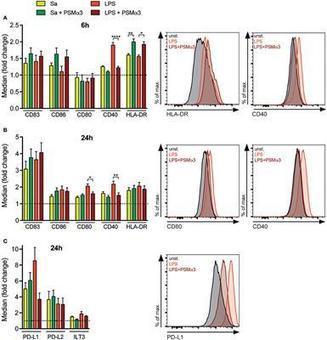
Staphylococcus aureus (Sa), as one of the major human pathogens, has very effective strategies to subvert the human immune system. Virulence of the emerging community-associated methicillin-resistant Sa (CA-MRSA) depends on the secretion of phenol-soluble modulin (PSM) peptide toxins e.g. by binding to and modulation of innate immune cells. Previously, by using mouse bone marrow-derived dendritic cells we demonstrated that PSMs in combination with various Toll-like receptor (TLR) ligands induce a tolerogenic DC phenotype (tDC) characterized by the production of IL-10 and impaired secretion of pro-inflammatory cytokines. Consequently, PSM-induced tDCs favored priming of CD4+CD25+FoxP3+ Tregs with suppressor function while impairing the Th1 response. However, the relevance of these findings for the human system remained elusive. Here, we analyzed the impact of PSMα3 on the maturation, cytokine production, antigen uptake, and T cell stimulatory capacity of human monocyte-derived DCs (moDCs) treated simultaneously with either LPS (TLR4 ligand) or S. aureus cell lysate (TLR2 ligand). Herein, we demonstrate that PSMs indeed modulate human moDCs upon treatment with TLR2/4 ligands via multiple mechanisms, such as transient pore formation, impaired DC maturation, inhibited pro- and anti-inflammatory cytokine secretion, as well as reduced antigen uptake. As a result, the adaptive immune response was altered shown by an increased differentiation of naïve and even CD4+ T cells fro
|
|
Scooped by
Gilbert C FAURE
November 12, 2018 1:08 PM
|
|
|
Scooped by
Gilbert C FAURE
November 10, 2018 6:58 AM
|
Polymorphisms in HLA-DP can modulate interactions with the invariant chain chaperone,
contributing independently to differences in the peptide repertoire presented on DP. The resulting presentation of intracellular antigens directly to CD4+ T cells may partly explain genetic and clinical studies...
Human leukocyte antigens (HLA) are multi-allelic and polymorphic genes that present antigens to immune cells for inducing protective immunity. Here, using systems biology and structural approaches, the authors show that micropolymorphism of three HLA has effects beyond the modulation of antigen...
Via Krishan Maggon
|
|
Scooped by
Gilbert C FAURE
November 9, 2018 4:06 AM
|
Comparison of transcriptomic data from immune-stimulated cells across different species sheds light on the architecture of the innate immune response.
|