Your new post is loading...

|
Scooped by
Gilbert C FAURE
November 14, 2019 1:02 PM
|
The first major question in osteoimmunology has been to understand how the immune system controls the differentiation and activity of bone cells. Initially, an important role was attributed to Th17 cells that produce RANKL, IL-17 and TNFα, all increasing osteoclast formation, as reviewed in this topic in the context of arthritis (Coury et al (3)), inflammatory bowel disease (Madel et al (4)), and periodontal diseases (Alvarez et al (5)). Biphotonic microscopy became an important tool that enables visualization of the dynamic interaction between osteoclasts and T cells, as presented by Hasegawa et al (6). The B cell lineage also plays an important role in controlling osteoclastogenesis. As reviewed by Coury et al (3), autoantibodies against citrullinated proteins (ACPA) mediate bone destruction in rheumatoid arthritis. The underlying mechanisms linking ACPA and osteoclastogenesis in arthritis were further explored in the review of Steffen et al (7). The role of the adaptive immune system appears therefore essential in osteoimmunology. This was further emphasized in 2 papers from the group of SchmidtBleek. Bucher et al (8) demonstrated that, during aging in mice, the acquisition of a more experienced adaptive immune system alters the bone structure and mechanical properties and decreases the bone healing capacity of the mice. The same group (Wendler at al (9)) reported that the immune suppressive drug Iloprost stimulates the osteogenic capacity of mesenchymal cells and bon
|
|
Scooped by
Gilbert C FAURE
November 13, 2019 12:15 PM
|
Young immunologists should remember that at least half of written in immunological textbooks is probably wrong; we just do not know which half"..Read our summary of talks that took place on 2nd day of Immuno-Jaipur
|
|
Scooped by
Gilbert C FAURE
November 12, 2019 8:34 AM
|
The gasdermins are a family of recently identified pore-forming effector proteins that cause membrane permeabilization and pyroptosis, a lytic pro-inflammatory type of cell death. Gasdermins contain a cytotoxic N-terminal domain and a C-terminal repressor domain connected by a flexible linker. Proteolytic cleavage between these two domains releases the intramolecular inhibition on the cytotoxic domain, allowing it to insert into cell membranes and form large oligomeric pores, which disrupts ion homeostasis and induces cell death. Gasdermin-induced pyroptosis plays a prominent role in many hereditary diseases and (auto)inflammatory disorders as well as in cancer. In this Review, we discuss recent developments in gasdermin research with a focus on mechanisms that control gasdermin activation, pore formation and functional consequences of gasdermin-induced membrane permeabilization. The gasdermin family of proteins has the capacity to form pores in the membrane, causing a pro-inflammatory lytic type of cell death called pyroptosis, This Review provides a comprehensive overview of the gasdermin family, the mechanisms that control their activation and their role in inflammatory disorders and cancer.
|
|
Scooped by
Gilbert C FAURE
November 11, 2019 10:39 AM
|
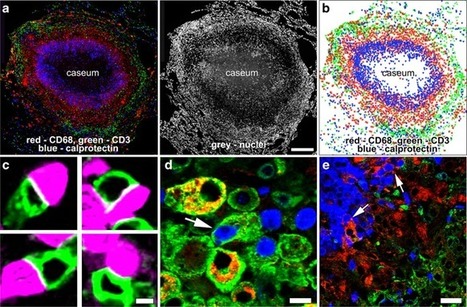
Neutrophils are implicated in the pathogenesis of tuberculosis (TB), a disease caused by Mycobacterium tuberculosis infection, but the mechanisms by which they promote disease are not fully understood. Neutrophils can express cytokines that influence TB progression, and so we compared neutrophil and T-cell expression of the Th1 cytokines IFNγ and TNF, the Th2 cytokine IL-4, and regulatory cytokine IL-10 in M. tuberculosis-infected macaques to determine if neutrophil cytokine expression contributes to dysregulated immunity in TB. We found that peripheral blood neutrophils produced cytokines after stimulation by mycobacterial antigens and inactive and viable M. tuberculosis. M. tuberculosis antigen-stimulated neutrophils inhibited antigen-specific T-cell IFNγ production. In lung granulomas, neutrophil cytokine expression resembled T-cell cytokine expression, and although there was histologic evidence for neutrophil interaction with T cells, neutrophil cytokine expression was not correlated with T-cell cytokine expression or bacteria load. There was substantial overlap in the spatial arrangement of cytokine-expressing neutrophils and T cells, but IL-10-expressing neutrophils were also abundant in bacteria-rich areas between caseum and epithelioid macrophages. These results suggest that neutrophils contribute to the cytokine milieu in granulomas and may be important immunoregulatory cells in TB granulomas.
|
|
Scooped by
Gilbert C FAURE
November 3, 2019 4:09 AM
|
Both animals and plants express intracellular innate immunity receptors known as NLR (NOD-like receptors or nucleotide-binding domain and leucine-rich…...
|
|
Scooped by
Gilbert C FAURE
November 1, 2019 12:53 PM
|
|
|
Scooped by
Gilbert C FAURE
October 24, 2019 2:16 AM
|
Tuberculosis (TB) caused by Mycobacterium tuberculosis (Mtb) infection is a serious threat to human health. γδT cells, which are characterized by major histocompatibility complex (MHC) non-restriction, are rapidly activated and initiate anti-infectious immune responses in the early stages of Mtb infection. However, the mechanism underlying the recognition of Mtb by γδT cells remains unclear. In this study, we characterized the pattern of the human T-cell receptor (TCR) γδ complementary determinant region 3 (CDR3) repertoire in TB patients by using high-throughput immune repertoire sequencing. The results showed that the diversity of CDR3δ was significantly reduced and that the frequency of different gene fragments (V/J), particularly the V-segment of the δ-chain, was substantially altered, which indicate that TB infection-related γδT cells, especially the δ genes, were activated and amplified in TB patients. Then, we screened the Mtb-associated epitopes/proteins recognized by γδT cells using an Mtb proteome chip with dominant CDR3δ peptides as probes. We identified the Mtb protein Rv0002 as a potential ligand capable of stimulating the activation and proliferation of γδT cells. Our findings provide a further understanding of the mechanisms underlying γδT cell-mediated immunity against Mtb infection.
|
|
Scooped by
Gilbert C FAURE
October 20, 2019 4:54 AM
|
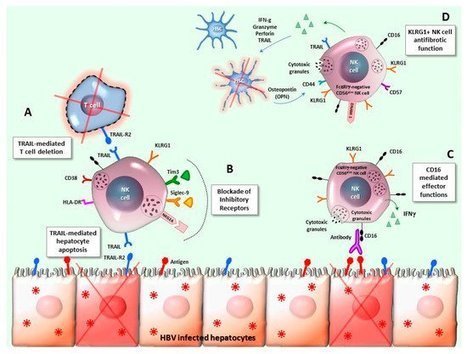
Immune modulatory therapies are widely believed to represent potential therapeutic strategies for chronic hepatitis B infection (CHB). Among the cellular targets for immune interventions, Natural Killer (NK) cells represent possible candidates because they have a key role in anti-viral control by...
|
|
Scooped by
Gilbert C FAURE
October 18, 2019 4:51 AM
|
Abstract Controlled human malaria infection (CHMI) is an established model in clinical malaria research. Upon exposure to Plasmodium falciparum parasites, malaria‐naive volunteers differ in dynamic...
|
|
Scooped by
Gilbert C FAURE
October 16, 2019 10:24 PM
|
Journal of Immunology Research is a peer-reviewed, Open Access journal that provides a platform for scientists and clinicians working in different areas of immunology and therapy. The journal publishes research articles, review articles, as well as clinical studies related to classical immunology,...
|
|
Scooped by
Gilbert C FAURE
October 12, 2019 12:56 PM
|
Some naïve T cell fates are sealed Tissue-resident memory T (TRM) cells constitute a subpopulation of memory cells that reside in tissues instead of recirculating. CD8+ epithelial TRM (eTRM) cells, which occupy the epithelium of sites like the skin, require transforming growth factor–β (TGF-β) for their development. Mani et al. found that αV integrin–expressing dendritic cells, which activate and present TGF-β, are key (see the Perspective by Farber). Surprisingly, this interplay did not occur in the skin or draining lymph nodes during T cell priming. Rather, resting naïve CD8+ T cells interacted with αV integrin–expressing migratory dendritic cells during immune homeostasis, reversibly preconditioning them to become eTRM cells upon activation. A potent cytokine is thus controlled in a context-dependent manner and preimmune T cell repertoires may be less uniform than previously presumed. Science, this issue p. eaav5728; see also p. 188 Structured Abstract INTRODUCTION Successful immune responses to infections generate memory T cells that provide enhanced protection from reinfection by the same pathogen. Some memory cells continually recirculate through tissues via the blood and lymph, whereas others establish local residence. This second population includes CD8+ tissue-resident memory T cells that seed the epithelial layers of barrier tissues (eTRM cells), such as the skin. These cells constitute a highly sensitive sentinel system, which responds to reencounters with cognate pathogen-derived antigens by triggering a local inflammatory response to rapidly contain the infection. The formation of eTRM cells requires transforming growth factor β (TGF-β), a broadly expressed cytokine with a wide range of functions in the immune system. Secreted TGF-β is abundant in tissues, but its biological activity is tightly regulated by release of the active cytokine from the latent pro-complex. Binding to αV-integrins facilitates TGF-β release for activity in the immune system. However, the cellular mechanisms of its release, as well as the sites of CD8+ T cell exposure driving the formation of eTRM cells, are unknown. RATIONALE Enhancing eTRM cell formation is desirable in the context of vaccines designed to protect against pathogens that infect by way of barrier tissues. Conversely, attenuating eTRM cell formation may be therapeutic for diseases, such as psoriasis, in which eTRM cells play pathogenic roles. Understanding how TGF-β is activated and where it acts on T cells to enable eTRM differentiation may inform new approaches to selectively amplify or disrupt this process without the predicted systemic effects of globally perturbing TGF-β activity. We hypothesized that αV-integrin–expressing dendritic cells (DCs) activate and present TGF-β to CD8+ T cells to enable eTRM cell formation. RESULTS Upon deleting αV integrins from CD11c+ DCs in mice, we observed a pronounced reduction in the number of CD8+ T cells in the epidermis, whereas the numbers of dermal CD8+ T cells and other skin immune cells were unchanged. The same selective defect was apparent after different forms of skin immune challenge, including DNA vaccination, indicating that the de novo formation of eTRM cells was disrupted. Unexpectedly, neither expression of αV integrins on DCs in skin-draining lymph nodes during priming of T cell responses, nor on DCs in the skin, was required for generation of eTRM cells. Instead, the exposure of resting naïve CD8+ T cells to αV-expressing DCs during immune homeostasis preconditioned them for effective formation of eTRM cells upon activation. An examination of the genomic accessibility of naïve cells suggested that TGF-β signals enabled by αV-expressing DCs prime genes involved in eTRM cell formation for their more rapid induction. This reversible preconditioning effect was mediated by migratory DCs and occurred in lymph nodes, but not in spleen, as both exposure of naïve T cells to TGF-β and the formation of eTRM cells in the skin were strongly impaired in the absence of lymph nodes or of CCR7-dependent DC migration from skin to lymph nodes. eTRM formation was also reduced when expression of major histocompatibility complex class I (MHC I) molecules and αV integrins was segregated on individual DCs, indicating that exposure of naïve CD8+ T cells to TGF-β occurs in the context of noncognate, yet MHC I–dependent, physical interactions with migratory DCs. CONCLUSION Naïve CD8+ T cells are preconditioned for the formation of skin eTRM cells by DCs that migrate from nonlymphoid tissues to lymph nodes at steady state. These DCs both activate and present TGF-β to naïve T cells, exemplifying how this cytokine’s potent biological activities can be limited to specific contexts through its requirement for extracellular processing. In this way, individual T cells appear to be actively preconditioned for a specific differentiation path already at the naïve cell stage. This is in contrast to the general expectation that the preimmune T cell repertoire is uniform in its potential to differentiate into various effector and memory cell subsets upon activation. Abstract Epithelial resident memory T (eTRM) cells serve as sentinels in barrier tissues to guard against previously encountered pathogens. How eTRM cells are generated has important implications for efforts to elicit their formation through vaccination or prevent it in autoimmune disease. Here, we show that during immune homeostasis, the cytokine transforming growth factor β (TGF-β) epigenetically conditions resting naïve CD8+ T cells and prepares them for the formation of eTRM cells in a mouse model of skin vaccination. Naïve T cell conditioning occurs in lymph nodes (LNs), but not in the spleen, through major histocompatibility complex class I–dependent interactions with peripheral tissue–derived migratory dendritic cells (DCs) and depends on DC expression of TGF-β–activating αV integrins. Thus, the preimmune T cell repertoire is actively conditioned for a specialized memory differentiation fate through signals restricted to LNs. http://www.sciencemag.org/about/science-licenses-journal-article-reuse This is an article distributed under the terms of the Science Journals Default License.
|
|
Scooped by
Gilbert C FAURE
October 12, 2019 5:27 AM
|
The lymphatic vasculature is essential to maintain fluid homeostasis and immune surveillance, including in the brain where lymphatic vessels were only recently identified. Here, Jacob et al. provide an anatomical map of lymphatic vessels in the vertebral column, where they find these contribute to...
|
|
Scooped by
Gilbert C FAURE
October 12, 2019 5:24 AM
|
Interleukin-33 (IL-33) drives inflammatory responses in allergic and nonallergic disease. Epithelial cells in the lungs, gastrointestinal tract and elsewhere release IL-33, which activates the ST2 receptor on immune cell ...
|
|
|
Scooped by
Gilbert C FAURE
November 13, 2019 3:40 PM
|
As we learn more about the HIV latent reservoir, we continue to discover that the viral reservoir is more complicated than just a pool of infected resting memory CD4+ T cells in peripheral blood. Evidence increasingly points to both certain tissues and certain types of cells as potential viral reservoirs. T follicular helper cells (TFH) are prime targets of HIV infection—this creates a sanctuary for infected cells because CD8+ T cells generally do not enter lymph node follicles unless they express CXCR5, and are not as effective at killing infected CD4+ T cells as peripheral CD8+ T cells. In this review, we summarize the current state of research on TFH cell infection in peripheral lymphoid tissues and focus on the question of whether CD8+ T cell exclusion from B cell follicles is responsible, at least in part, for establishing secondary lymphoid tissue B cell follicles as an anatomic site of HIV transcription and replication.
|
|
Scooped by
Gilbert C FAURE
November 12, 2019 11:56 AM
|
|
|
Scooped by
Gilbert C FAURE
November 11, 2019 11:28 AM
|
Subjects Download PDF In a recent study published in Cell Research, Dr. Xu Song’s group reported the potent antibacterial activity of three coagulation factors (VII, IX, and X) against gram-negative bacteria and hence discovered a novel class of endogenous host antimicrobial proteins.1 At present, antimicrobial resistance (AMR) poses significant challenges for clinical care and seriously threatens human health.2,3 Among the clinical pathogens, gram-negative bacteria are particularly problematic in terms of drug resistance because their lipopolysaccharide (LPS)-rich outer membrane reduces cellular permeability and acts as a target for antibacterial resistance development.4 Gram-negative bacterial infections have attracted worldwide concern in recent years, and new antibacterial drugs and novel therapeutic strategies that can address this healthcare issue are urgently needed. Although many efforts have been made to develop novel antimicrobial agents, some endogenous host proteins with innate antibacterial activity may have been underappreciated. The coagulation factors VII, IX, and X are initiators of the clotting process; however, patients deficient in these factors were found to have bacterial infectious diseases (sepsis and pneumonia, for example) in addition to blood-clotting disorders.5 This finding leads to the assumption that the coagulation factors VII, IX, and X may have antibacterial function. Research conducted by Song et al. showed that the coagulation factors VII, IX, and X possess antimicrobial activity against gram-negative bacteria, even extensively drug-resistant (XDR) pathogens, such as Pseudomonas aeruginosa and Acinetobacter baumannii.1 Both pathogens were recently listed among the 12 bacteria that pose the greatest threat to human health because of their antibiotic resistance by the World Health Organization.6 The coagulation factors VII, IX, and X are composed of two separate domains, i.e., a heavy chain (HC) and a light chain (LC). Their well-known role in the initiation of blood clotting is associated with the HC, which possesses serine protease activity.7 However, their antimicrobial activity revealed in this study is attributed to the LC. Using factor IX and its LC as an example, this study suggested that while serine protease activity of the factors is thermostable, their antibacterial activity is sensitive to heat treatment. Heat treatment is a major process for viral inactivation in manufacturing plasma-derived coagulation factor products,8 which may explain why the antibacterial activity was not observed for the widely used plasma-derived factors VII, IX, and X in patients with bleeding disorders. Examining the antibacterial mechanism further, the authors demonstrated that, unlike current antimicrobial agents that aim at cellular metabolism or the cytoplasmic membrane,3,9 the LC of the coagulation factors functions by hydrolyzing LPS in the bacterial outer membrane, leading to thorough damage of the bacterial morphology (Fig. 1). This unique mechanism renders bacteria less likely to develop resistance to the coagulation factors, and as LPS is present in almost all gram-negative bacteria, these factors should have general efficacy against gram-negative isolates, including XDR pathogens.10 Moreover, considering their origin from humans, these factors should have almost no toxicity toward mammalian cells. Sepsis is a major reason for morbidity and mortality in bacterial infections, which is characterized by excessive and uncontrolled immune and coagulation responses, with LPS serving as a critical factor in the pathogenesis of gram-negative bacterial sepsis. Sensing of LPS by innate immune cells is vital for host defense against gram-negative bacteria, and dysregulation of the innate immune system (as seen in severe sepsis) will cause dramatic consequences for the infected host. No antimicrobial agents have been found to act by hydrolyzing LPS. Therefore, LPS hydrolysis triggered by the coagulation factors VII, IX, and X represents a new and promising strategy for antisepsis therapy. The coagulation factors VII, IX, and X should have certain levels of antibacterial efficacy under physiological conditions, and in the case of injury, their recruitment to wounds will cause increased local concentrations and elevated antibacterial activities. Clotting disorders are associated with many diseases, such as stroke, and factors VII, IX, and X may act in the pathogenesis of these diseases by their functions in both blood clotting and anti-infection when massive bacterial infection occurs. Thus, a proper local concentration of these factors is critical for creating a balance between their positive and side effects. Traditional antibacterial agents include antibiotics produced by microorganisms and semisynthetic derivatives or de novo-synthesized compounds. The seminal work of Song et al. identified a novel class of endogenous host antimicrobial proteins, the coagulation factors, which have broad prospects in clinical application and will also expand our knowledge of implying the coagulation system to host defense. However, there are still questions to be further explored, and these important results will stimulate researchers from different laboratories to produce exciting discoveries over the next few years. References 1. Chen, J. et al. Coagulation factors VII, IX, and X are antibacterial proteins against drug-resistant Gram-negative bacteria. Cell Res. https://doi.org/10.1038/s41422-019-0202-3 (2019). CAS Article Google Scholar 2. Marston, H. D. et al. Antimicrobial resistance. JAMA 316, 1193–1204 (2016). CAS Article Google Scholar 3. Brown, E. D. & Wright, G. D. Antibacterial drug discovery in the resistance era. Nature 529, 336–343 (2016). CAS Article Google Scholar 4. Gruenheid, S. & Le Moual, H. Resistance to antimicrobial peptides in Gram-negative bacteria. FEMS Microbiol. Lett. 330, 81–89 (2012). CAS Article Google Scholar 5. Girolami, A. et al. Acquired isolated FVII deficiency: an underestimated and potentially important laboratory finding. Clin. Appl. Thromb. Hemost. 22, 705–711 (2016). CAS Article Google Scholar 6. Tacconelli, E. et al. Discovery, research, and development of new antibiotics: the WHO priority list of antibiotic-resistant bacteria and tuberculosis. Lancet Infect. Dis. 18, 318–327 (2018). Article Google Scholar 7. Zhong, D. et al. The N-terminal epidermal growth factor-like domain in factor IX and factor X represents an important recognition motif for binding to tissue factor. J. Biol. Chem. 277, 3622–3631 (2002). CAS Article Google Scholar 8. Franchini, M. et al. Treatment of hemophilia B: focus on recombinant factor IX. Biologics 7, 33–38 (2013). 9. Maffioli, S. I. et al. Antibacterial nucleoside-analog inhibitor of bacterial RNA polymerase. Cell 169, 1240–1248 (2017). CAS Article Google Scholar 10. Raetz, C. R. Biochemistry of endotoxins. Annu. Rev. Biochem. 59, 129–170 (1990). CAS Article Google Scholar Download references Author information Affiliations Beijing Key Laboratory of Antimicrobial Agents, Institute of Medicinal Biotechnology, Chinese Academy of Medical Sciences & Peking Union Medical College, 100050, Beijing, China Congran Li & Xuefu You Authors Search for Congran Li in: PubMed • Google Scholar Search for Xuefu You in: PubMed • Google Scholar Corresponding author Correspondence to Xuefu You. Rights and permissions Open Access This article is licensed under a Creative Commons Attribution 4.0 International License, which permits use, sharing, adaptation, distribution and reproduction in any medium or format, as long as you give appropriate credit to the original author(s) and the source, provide a link to the Creative Commons license, and indicate if changes were made. The images or other third party material in this article are included in the article’s Creative Commons license, unless indicated otherwise in a credit line to the material. If material is not included in the article’s Creative Commons license and your intended use is not permitted by statutory regulation or exceeds the permitted use, you will need to obtain permission directly from the copyright holder. To view a copy of this license, visit http://creativecommons.org/licenses/by/4.0/. Reprints and Permissions About this article Cite this article Li, C., You, X. Coagulation factors: a novel class of endogenous host antimicrobial proteins against drug-resistant gram-negative bacteria. Sig Transduct Target Ther 4, 46 (2019) doi:10.1038/s41392-019-0083-4 Download citation Received 30 August 2019 Revised 18 September 2019 Accepted 23 September 2019 Published 08 November 2019 DOI https://doi.org/10.1038/s41392-019-0083-4
|
|
Scooped by
Gilbert C FAURE
November 8, 2019 1:40 PM
|
Abstract Although calcium signaling and the important role of calcium release–activated calcium channels is well recognized in the context of immune cell signaling, there is a vast diversity of ion...
bstract
Antibody class switch recombination (CSR) in B lymphocytes replaces immunoglobulin heavy chain locus (Igh) Cμ constant region exons (CHs) with one of six CHs lying 100–200 kb downstream1. Each CH is flanked upstream by an I promoter and long repetitive switch (S) region1. Cytokines and activators induce activation-induced cytidine deaminase (AID)2 and I-promoter transcription, with 3′ IgH regulatory region (3′ IgHRR) enhancers controlling the latter via I-promoter competition for long-range 3′ IgHRR interactions3,4,5,6,7,8. Transcription through donor Sμ and an activated downstream acceptor S-region targets AID-generated deamination lesions at, potentially, any of hundreds of individual S-region deamination motifs9,10,11. General DNA repair pathways convert these lesions to double-stranded breaks (DSBs) and join an Sμ-upstream DSB-end to an acceptor S-region-downstream DSB-end for deletional CSR12. AID-initiated DSBs at targets spread across activated S regions routinely participate in such deletional CSR joining11. Here we report that chromatin loop extrusion underlies the mechanism11 by which IgH organization in cis promotes deletional CSR. In naive B cells, loop extrusion dynamically juxtaposes 3′ IgHRR enhancers with the 200-kb upstream Sμ to generate a CSR centre (CSRC). In CSR-activated primary B cells, I-promoter transcription activates cohesin loading, leading to generation of dynamic subdomains that directionally align a downstream S region with Sμ for deletional CSR. During constitutive Sα CSR in CH12F3 B lymphoma cells, inversional CSR can be activated by insertion of a CTCF-binding element (CBE)-based impediment in the extrusion path. CBE insertion also inactivates upstream S-region CSR and converts adjacent downstream sequences into an ectopic S region by inhibiting and promoting their dynamic alignment with Sμ in the CSRC, respectively. Our findings suggest that, in a CSRC, dynamically impeded cohesin-mediated loop extrusion juxtaposes proper ends of AID-initiated donor and acceptor S-region DSBs for deletional CSR. Such a mechanism might also contribute to pathogenic DSB joining genome-wide.
Via Krishan Maggon
|
|
Scooped by
Gilbert C FAURE
October 24, 2019 3:20 PM
|
Alternative influenza target There is a pressing need for a broadly protective influenza vaccine that can neutralize this constantly varying, deadly virus. Stadlbauer et al. turned their attention away from the current vaccine target—the mutable hemagglutinin—and investigated an alternative, less variable virus-coat glycoprotein: neuraminidase. The authors extracted monoclonal antibodies (mAbs) from a human donor naturally infected with the H3N2 virus subtype. In mice, the mAbs were broadly protective against influenza virus A groups 1 and 2 (human, avian, and swine origin) and some influenza B viruses. These mAbs were also therapeutically effective as late as 72 hours after infection. The wide range of reactivity probably relates to the infection history of the donor, whose plasmablasts generated antibodies with long regions that insert into the active site of the neuraminidase enzyme. Science, this issue p. 499 Abstract Better vaccines against influenza virus are urgently needed to provide broader protection against diverse strains, subtypes, and types. Such efforts are assisted by the identification of novel broadly neutralizing epitopes targeted by protective antibodies. Influenza vaccine development has largely focused on the hemagglutinin, but the other major surface antigen, the neuraminidase, has reemerged as a potential target for universal vaccines. We describe three human monoclonal antibodies isolated from an H3N2-infected donor that bind with exceptional breadth to multiple different influenza A and B virus neuraminidases. These antibodies neutralize the virus, mediate effector functions, are broadly protective in vivo, and inhibit neuraminidase activity by directly binding to the active site. Structural and functional characterization of these antibodies will inform the development of neuraminidase-based universal vaccines against influenza virus. http://www.sciencemag.org/about/science-licenses-journal-article-reuse This is an article distributed under the terms of the Science Journals Default License.
|
|
Scooped by
Gilbert C FAURE
October 21, 2019 6:26 AM
|
Discover the most popular research
|
|
Scooped by
Gilbert C FAURE
October 20, 2019 12:29 AM
|
PubMed comprises more than 30 million citations for biomedical literature from MEDLINE, life science journals, and online books. Citations may include links to full-text content from PubMed Central and publisher web sites.
|
|
Scooped by
Gilbert C FAURE
October 16, 2019 10:26 PM
|
The Role Of PD-1/PD-L1 Axis In Treg Development And Function: Implications For Cancer Immunotherapy...
|
|
Scooped by
Gilbert C FAURE
October 12, 2019 1:57 PM
|
|
|
Scooped by
Gilbert C FAURE
October 12, 2019 10:18 AM
|
|
|
Scooped by
Gilbert C FAURE
October 12, 2019 5:27 AM
|
Platelets are central players in thrombosis and hemostasis but are increasingly recognized
as key components of the immune system. They shape ensuing immune responses by recruiting
leukocytes, and support the development of adaptive immunity.
|