Your new post is loading...

|
Scooped by
Gilbert C FAURE
December 16, 2013 2:45 AM
|
Resources for DIU Immunologie et Biothérapies
DIU Immunologie et Biotherapies is a french diploma associating french universities and immunology laboratories. It is dedicated to the involvement of immunology in new biotherapies, either molecular or cellular.
|
|
Scooped by
Gilbert C FAURE
August 25, 8:40 AM
|
🩻⚡ CE NE SONT PAS DEUX PATIENTS. C'EST LE MÊME, À QUELQUES SEMAINES D'INTERVALLE.
À gauche, un corps envahi. Chaque tache noire est une zone où le cancer dévore du sucre à toute vitesse.
C'est le principe du TEP-scan : on injecte un glucose radioactif 🧪, et les cellules les plus voraces s'allument. Les tumeurs, elles, sont insatiables. Elles se dessinent d'elles-mêmes. 🔥
À droite, presque plus rien. ✨
Entre les deux images, une seule intervention. On a prélevé les globules blancs du patient 🩸. On les a reprogrammés génétiquement 🧬 pour qu'ils reconnaissent enfin ce qu'ils ne voyaient pas. On les a multipliés par centaines de millions 🔢. Puis on les a réinjectés.
C'est la thérapie #CAR-T. 🚗🎯
Et ce n'est pas un médicament au sens habituel. Ça ne se dissout pas, ça ne s'élimine pas. Ce sont des cellules vivantes qui continuent de se diviser dans le corps et de chasser toutes seules. 🛡️🦠
Le patient devient son propre traitement. 💪
La médecine du futur n'est plus une promesse.
Elle est là, elle est vivante, et elle porte votre nom. 🚀
#CART #Immunothérapie #Oncologie #InnovationMédicale #Biotech #MédecineRégénérative #Cancer #RechercheMédicale #Santé #Science | 119 comments on LinkedIn
|
|
Scooped by
Gilbert C FAURE
August 19, 10:57 AM
|
"A small study showed preliminary evidence of activity in a peptide vaccine targeting KRAS mutations in pancreatic cancer.
I’ve written about an an mRNA-based pancreatic cancer vaccine that also targets KRAS, but this is a more traditional peptide vaccine, which can be used to target specific antigens on a cancer cell.
...
There is a lot of research on vaccines being used to treat cancer, and pancreatic cancer, which is difficult to treat, is one of the top priorities.
Although this study was quite small, it has a remarkable success rate of preventing cancer in individuals who had a high success rate.
This can be an important tool in fighting pancreatic cancer, one of the more dangerous cancers."
|
|
Scooped by
Gilbert C FAURE
August 17, 4:50 AM
|
The IBD pipeline is widening. Translation must keep up.
While conventional therapy still matters, with 5-ASA, corticosteroids and immunomodulators remain part of care, depending on disease phenotype and severity, for moderate-to-severe disease, targeted options now span:
🔹 TNF blockade
🔹 α4β7 blockade
🔹 IL-12/23 and selective IL-23 inhibition
🔹 JAK inhibition
🔹 S1P modulation
Recently:
• Tulisokibart: Merck reported positive topline Phase III induction-only results in UC. ATLAS-UC met its primary and key secondary endpoints at week 12. [1]
• Duvakitug: Phase III programmes are underway in both UC and Crohn’s disease. [2]
• Obefazimod: Abivax reported positive topline Phase III induction and maintenance results in UC. [3]
• Icotrokinra: oral IL-23R inhibition is in Phase III for UC and a Phase 2b/3 programme for Crohn’s disease. [4]
Taken together, these programmes highlight at least four active development themes:
🔸 TL1A blockade
🔸 Oral targeted mechanisms
🔸 Combination strategies
🔸 Longer-acting antibody formats
More mechanisms do not automatically solve the translational problem.
𝗧𝗵𝗲 𝗾𝘂𝗲𝘀𝘁𝗶𝗼𝗻 𝗶𝘀 𝘄𝗵𝗶𝗰𝗵 𝗺𝗲𝗰𝗵𝗮𝗻𝗶𝘀𝗺 𝗳𝗶𝘁𝘀 𝘄𝗵𝗶𝗰𝗵 𝘁𝗶𝘀𝘀𝘂𝗲 𝘀𝘁𝗮𝘁𝗲, 𝗱𝗶𝘀𝗲𝗮𝘀𝗲 𝗵𝗶𝘀𝘁𝗼𝗿𝘆 𝗮𝗻𝗱 𝗽𝗮𝘁𝗶𝗲𝗻𝘁 𝗯𝗶𝗼𝗹𝗼𝗴𝘆.
At RoukenBio, our ex vivo IBD service studies fresh intestinal biopsies from Crohn’s disease, UC and non-IBD donors. Readouts can include tissue integrity and imaging, cytokines, transcriptional responses and matched blood analysis.
The aim is to add human disease context while candidate and biomarker decisions are still flexible.
👉 Learn more: https://lnkd.in/d5sADiad
𝗪𝗵𝗶𝗰𝗵 𝗽𝗶𝗽𝗲𝗹𝗶𝗻𝗲 𝗱𝗶𝗿𝗲𝗰𝘁𝗶𝗼𝗻 𝗱𝗼 𝘆𝗼𝘂 𝘁𝗵𝗶𝗻𝗸 𝘄𝗶𝗹𝗹 𝗵𝗮𝘃𝗲 𝘁𝗵𝗲 𝗴𝗿𝗲𝗮𝘁𝗲𝘀𝘁 𝗰𝗹𝗶𝗻𝗶𝗰𝗮𝗹 𝗶𝗺𝗽𝗮𝗰𝘁?
[1] Merck, 22 June 2026; ATLAS-UC, NCT06052059.
[2] Sanofi/Teva; NCT07184996 and NCT07184931.
[3] Abivax; ABTECT-1 NCT05507203, ABTECT-2 NCT05507216, Maintenance NCT05535946.
[4] Johnson & Johnson; ICONIC-UC NCT07196748, ICONIC-CD NCT07196722.
#IBD #CrohnsDisease #UlcerativeColitis
|
|
Scooped by
Gilbert C FAURE
August 15, 3:33 AM
|
Our new study with our PhD student Franck Zekre a great pediatrician and in collaboration with a smart company in US Vaxcyte. We developed a new vaccine againt P gingivalis to prevent inflammatory dosorders
|
|
Scooped by
Gilbert C FAURE
August 4, 11:13 AM
|
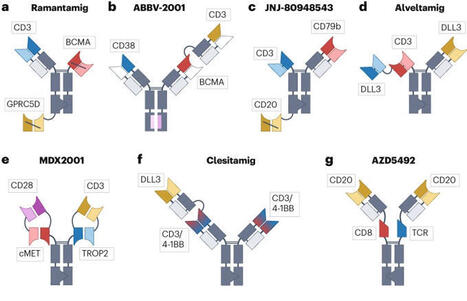
T cell engagers (TCEs) are antibody-based, bispecific or multi-specific constructs that can reprogramme T cells to eliminate target cells expressing a defined surface antigen. Originally developed for cancer therapy, TCEs are now being investigated for the treatment of autoimmune diseases, with promising initial results. The interest in using TCEs for autoimmune diseases is rapidly growing given their comparable potency with cellular therapies, combined with the advantages of biologics, including ease of manufacturing, off-the-shelf availability, better safety and more convenient delivery. Here we review the history of TCEs, focus on distinct aspects of the mechanism of action of TCEs and explain design principles. We also discuss key challenges for future TCE development in autoimmunity, including enhanced safety, high convenience and complete target cell elimination. Finally, we provide an overview of the preclinical and clinical development landscape and give an outlook on next-generation TCEs that are optimized to treat a wide variety of autoimmune diseases. T cell engagers reprogramme T cells to eliminate pathogenic cell populations and are now emerging as a promising biologic strategy for autoimmune disease. This Perspective outlines their mechanisms, design principles and development challenges, highlighting next-generation approaches to improve safety, convenience and durable target cell depletion.
|
|
Scooped by
Gilbert C FAURE
July 30, 3:13 AM
|
𝗪𝗵𝘆 𝗦𝗼𝗺𝗲 𝗩𝗮𝗰𝗰𝗶𝗻𝗲𝘀 𝗣𝗿𝗼𝘃𝗶𝗱𝗲 𝗟𝗶𝗳𝗲𝗹𝗼𝗻𝗴 𝗣𝗿𝗼𝘁𝗲𝗰𝘁𝗶𝗼𝗻 𝗪𝗵𝗶𝗹𝗲 𝗢𝘁𝗵𝗲𝗿𝘀 𝗙𝗮𝗱𝗲, 𝗮𝗻𝗱 𝗪𝗵𝗮𝘁 𝗦𝗰𝗶𝗲𝗻𝘁𝗶𝘀𝘁𝘀 𝗔𝗿𝗲 𝗗𝗼𝗶𝗻𝗴 𝗔𝗯𝗼𝘂𝘁 𝗜𝘁
One dose of yellow fever vaccine can protect a traveler for the rest of their life. One dose of this year's influenza vaccine may lose much of its protective power within months. Both engage the very same immune system, the same B cells, the same antibody factories, the same molecular memory machinery, yet they leave behind radically different legacies of protection. This is the "memory paradox" at the heart of modern vaccinology: identical immunological hardware producing wildly divergent durability. For decades, this gap was explained mostly through clinical observation rather than mechanisms. Today, tools that let scientists watch immune memory form in real time inside human lymph nodes, combined with new methods for tracking individual B-cell lines over decades, are finally providing an evidence-based answer and a fast-growing toolkit to close the durability gap that leaves under-protected populations vulnerable to entirely preventable diseases.
|
|
Scooped by
Gilbert C FAURE
July 17, 10:50 AM
|
Anti-Rh immunoglobulins, such as Rhogam and similar brands, are not vaccines.
💉This warning may seem silly and outdated, but incredibly, many pregnant women at risk of Rh isoimmunization who have received anti-Rh immunoglobulin preparations (such as Rhogam) believe they are vaccines and will protect them in their current and future pregnancies, or that they simply won't need them because they will be sterilized.
💉Furthermore, they underestimate the importance of administering these preparations, and even worse, they lack access to them in hospitals and cannot afford to purchase them privately.
💉RHOGAM and similar brands do not contain any antigens, so they are not vaccines. Instead, they provide immediate passive immunity (antibodies), hence the confusion. They contain IgG immunoglobulins against the D+ antigen, which react against the erythrocytes of the fetus (Rh D+), destroying or inactivating their maternal macrophage and lymphocyte antigenic stimulation.
💉During pregnancy, after 10 weeks, small amounts of fetal blood can pass into the maternal bloodstream, potentially stimulating a maternal immune response (sensitization). This response can be more pronounced after 24 weeks of gestation and in pathological conditions (trauma, placenta previa, placenta accreta, etc.).
💉Finally, with anti-Rh immunoglobulins, perinatal complications of Rh isoimmunization, such as immune hydrops fetalis, its sequelae, as well as intrauterine and postnatal fetal death, are prevented.
Sincerely, Dr. Jaider Gómez D/Gynecologist-Obstetrician.
WhatsApp +584149712890/+584166741754.
@consultdrjaider on Instagram and Facebook.
@dr_jaider on TikTok and Instagram.
#AntiRhImmunoglobulins #Rhogam #immunehydrops #consultdrjaider #RhIsoimmunization
|
|
Scooped by
Gilbert C FAURE
July 10, 4:35 AM
|
This Review provides an update on the interleukin 1 (IL-1) family of cytokines in inflammatory and rheumatic diseases. The authors discuss advances in mechanistic understanding and highlight therapeutic developments in targeting this family of cytokines.
|
|
Scooped by
Gilbert C FAURE
July 4, 9:00 AM
|
Sun L, et al. Cyclic GMP-AMP synthase is a cytosolic DNA sensor that activates the type I interferon pathway. Science. 2013;339(6121):786–791.View this article via: CrossRef PubMed Google Scholar Ishikawa H, Barber GN.
|
|
Scooped by
Gilbert C FAURE
June 21, 11:30 AM
|
Immunotherapy has changed the landscape of cancer treatment but the question remains: how can we make more patients benefit from durable responses?
A recent comment in Nature Cancer highlights an exciting area of research: 𝐭𝐞𝐫𝐭𝐢𝐚𝐫𝐲 𝐥𝐲𝐦𝐩𝐡𝐨𝐢𝐝 𝐬𝐭𝐫𝐮𝐜𝐭𝐮𝐫𝐞𝐬 (𝐓𝐋𝐒) 𝐢𝐧 𝐭𝐮𝐦𝐨𝐫𝐬.
TLS are organized immune structures that can develop within the tumor microenvironment. Increasing evidence suggests that their presence (especially mature TLS with germinal centers) is associated with improved prognosis and better responses to immune checkpoint inhibitors.
The next step is moving beyond TLS as biomarkers and exploring their potential as therapeutic targets. By inducing functional TLS, researchers hope to transform “immune-excluded” tumors into more immune-active environments and potentially enhance responses to immunotherapies.
Several strategies are already being explored, including approaches targeting lymphotoxin signaling, CD40 agonism, TLR9 activation, and combinations with existing immunotherapies.
The future of immuno-oncology may not only be about activating immune cells but also about creating the right immune environment where these cells can function effectively.
https://lnkd.in/dw-Puskm
|
|
Scooped by
Gilbert C FAURE
June 20, 8:10 AM
|
Multispecific T-cell engagers that bind three or more targets on cancer and immune cells promise to address the shortcomings of their bispecific predecessors.
|
|
Scooped by
Gilbert C FAURE
June 16, 4:02 AM
|
Identifiez-vous ou inscrivez-vous pour voir des posts tels que celui-ci et plus encore.
|
|
|
Scooped by
Gilbert C FAURE
September 4, 11:05 AM
|
A new Nature Review from Bali Pulendran asks a fundamental question for vaccinology: Are we still defining vaccine-induced protection too narrowly?
For decades, vaccine development has relied heavily on antibody titres as correlates of protection. But human immunity is far more complex.
In this Review, Bali describes how systems vaccinology is revealing a different picture: protection emerges from integrated immune programs involving antibodies, T cells, innate immunity, baseline immune states, metabolism, the microbiome and tissue-level interactions.
Perhaps most importantly, the paper takes the discussion beyond discovery science.
If there are multiple roads to protection, how should we design clinical trials? What should count as a correlate of protection? And how can systems-level evidence eventually become useful to regulators and vaccine developers?
This is not simply about generating more omics data. It represents a potential shift from asking:
“How high is the antibody response?”
to:
“What architecture of immunity actually produces durable protection in humans?”
These are exactly the kinds of questions we hope to explore at VIF World 2027.
We are very happy to have Bali Pulendran joining us again on our SAB and, even more importantly, working with us to co-design this part of the scientific program for VIF World 2027 in Shanghai.
Looking forward to seeing where this discussion takes us.
https://lnkd.in/gUtF6_7R
#Vaccines #Immunology #SystemsVaccinology #VaccineDevelopment #VIFWorld2027
|
|
Scooped by
Gilbert C FAURE
August 21, 4:44 AM
|
I am pleased to announce that "𝐓𝐡𝐞 𝐪𝐮𝐞𝐬𝐭𝐢𝐨𝐧𝐬 𝐬𝐭𝐢𝐥𝐥 𝐟𝐚𝐜𝐢𝐧𝐠 𝐯𝐚𝐜𝐜𝐢𝐧𝐞𝐬: 𝐄𝐱𝐩𝐞𝐫𝐭 𝐩𝐞𝐫𝐬𝐩𝐞𝐜𝐭𝐢𝐯𝐞𝐬 𝐟𝐫𝐨𝐦 𝐭𝐡𝐞 World Vaccine Congress 𝐖𝐚𝐬𝐡𝐢𝐧𝐠𝐭𝐨𝐧 𝟐𝟎𝟐𝟔" has now been published!
Thank you to Ashling Cannon and the Vaccine Insights team for highlighting some of our key speakers (Michael Osterholm PhD, MPH, Marion F. Gruber, Ph.D., MS, Rajinder Suri, Simon van Haren) and recognising their crucial contributions to the field!
Check out the article here: https://lnkd.in/exhnRKvQ
|
|
Scooped by
Gilbert C FAURE
August 17, 6:54 AM
|
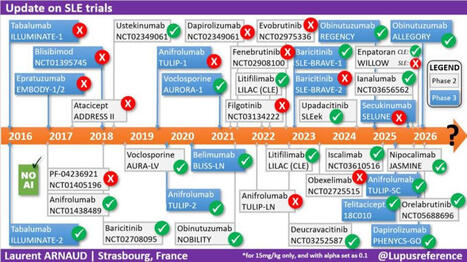
✅ 10 YEARS of RANDOMIZED TRIALS in #LUPUS ⏲️summarized on a single slide!!!! With a specific focus on phase 2(b) and 3 #RCTs, as well as whether the main endpoint was reached or not 👍 The least we can say, is that we have collectively put A LOT OF EFFORT in the development of new treatments 💊 in #SLE. As always I used only my natural intelligence (#NoAI) so please let me know if I have forgotten a trial or if something needs to be corrected.
|
|
Scooped by
Gilbert C FAURE
August 17, 4:29 AM
|
Chimeric antigen receptor (CAR) T-cell therapy has revolutionized oncology, and its foundational logic—precise antigen recognition coupled with durable effector activity—extends naturally to chronic non-malignant diseases sustained by long-lived pathological cells. These include viral reservoirs, autoreactive B and plasma cells, activated fibroblasts, alloimmune clones, and senescent cells that remodel tissue niches and evade clearance by conventional therapies.
This review highlights how CAR-based strategies can be adapted across diverse disease settings by redirecting engineered immune responses toward disease-sustaining cellular compartments. Co-stimulatory domains such as CD28, 4-1BB, and OX40 enhance persistence and effector function; programmed cell death protein 1 (PD-1)–CD28 switch receptors reverse inhibitory signaling; and cytokine-resistant CARs incorporating dominant-negative transforming growth factor-β (TGF-β) receptors maintain activity within suppressive microenvironments.
We discuss these approaches across infections, including human immunodeficiency virus (HIV) and Epstein–Barr virus (EBV); autoimmunity involving CD19- and B-cell maturation antigen (BCMA)-directed depletion strategies and CAR-engineered regulatory T cells (CAR-Tregs); fibrosis targeting fibroblast activation protein (FAP); hemophilia using B-cell antibody receptor (BAR)-CARs against factor VIII and factor IX inhibitors; transplantation employing human leukocyte antigen (HLA)-specific CAR-Tregs; and senescence-associated pathologies targeting urokinase plasminogen activator receptor (uPAR) and natural killer group 2D ligands (NKG2DLs).
Early clinical experiences in systemic lupus erythematosus, systemic sclerosis, myositis, and multiple sclerosis, together with preclinical successes in chronic infections and fibrotic disease, demonstrate both feasibility and durable disease modification. By extending CAR-T therapy beyond oncology, these applications position programmable cellular immunotherapy as a broadly adaptable platform for eliminating persistent pathological cells, remodeling diseased tissue environments, and restoring long-term immune homeostasis.
Great review by Saurabh Upadhyay, @Sungwoo Cho, @Kirti Upmanyu & Moustafa Gabr. The excerpt above is from the author's manuscript.
|
|
Scooped by
Gilbert C FAURE
August 11, 8:29 AM
|
The CAR-T therapy market is projected to grow from $5.76 billion in 2025 to $81.45 billion by 2035 - over 30% annual growth. The science works. Big Pharma is placing billion-dollar bets: Eli Lilly's $2.4B acquisition of Orna Therapeutics, AbbVie's $2.1B move for Capstan Therapeutics, BMS's $1.5B deal for Orbital Therapeutics - all in the last eighteen months.
So why do more than a third of industry leaders say they can't find the people to run any of it?
A shortage that isn't new, and isn't shrinking
This isn't a post-pandemic blip. BioPlan Associates has tracked hiring difficulty as a major constraint on biopharma manufacturing for over fifteen years, and the trend isn't improving: 36% of facilities can't fill process development roles, 28% struggle with downstream production, 27% lack sufficient process engineers.
Cytiva's 2025 Global Biopharma Index (1,250 leaders surveyed) sharpens the point: over a third of organisations report severe or critical shortages in cell and gene therapy specifically - clustered in process development, GMP manufacturing, quality, and regulatory affairs. Not the scientists who discover the therapy. The people who take it from lab to commercial scale.
Why it's structural, not cyclical
The industry keeps inventing job categories faster than anyone can train for them. Five years ago, "in vivo CAR-T" wasn't a hiring category. Every platform shift - in vivo delivery, allogeneic models, dual-antigen targeting - creates a new specialisation with no existing talent pool. Training pipelines can't keep pace with a two-year innovation cycle.
The result: a "barbell" labor market - simultaneous layoffs in some functions, fierce competition for specialists in others. Specialist searches now routinely take six to nine months, even at strong compensation.
Bench to Board, not just the bench
The scarcity that makes it hard to hire a GMP-experienced engineer also makes it hard to find a CMO who's actually taken a cell therapy through pivotal trials, or a regulatory lead fluent in ATMP approval pathways. Over 80% of biotech leaders expect workforce shortages to hurt their strategy over the next five years.
The $81 billion opportunity in CAR-T won't be limited by chemistry. It'll be limited by who's in the room to build it.
#CARTtherapy #CellAndGeneTherapy #OncologyTalent #BiopharmaHiring #LifeSciencesRecruitment #ExecutiveSearch #ExecruitTalentInsights
|
|
Scooped by
Gilbert C FAURE
July 31, 9:04 AM
|
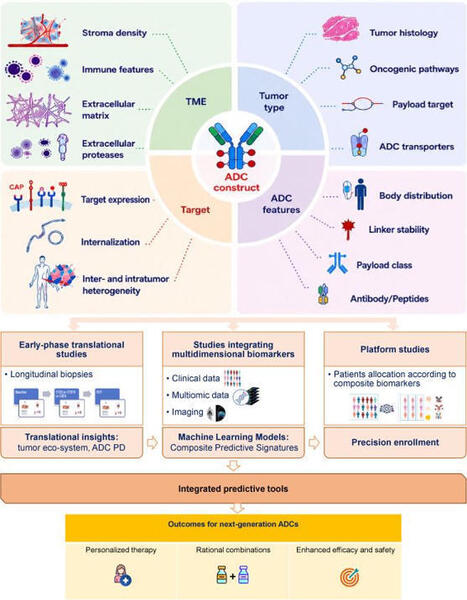
I’ve spent much of the past decade thinking about antibody-drug conjugates. The field has changed dramatically in that time: there are now 14 approved ADCs, including one (T-DXd) with tumor-agnostic, expression-based (HER2 3+) approval.
One constant theme I hear over and over is that target expression doesn’t predict response to ADCs. But I’ve always felt like that was an oversimplification of a complex problem. I loved reading this new Cancer Cell review from Pistilli et al., which clearly explained the nuances in detail.
They highlight that target expression correlates well with benefits for some ADCs but not others, and suggest payload class or therapeutic design may be responsible. For example, for TROP-2-targeting ADCs, internalization kinetics seem to matter as much or more than the more commonly scored membrane abundance.
They also highlight emerging work on therapeutic resistance mechanisms including TOP1 mutations, upregulation of efflux pumps, target loss, and impaired internalization (e.g., EGFR-HER2 heterodimerization suppressing T-DXd uptake) that can help identify why patients may stop responding.
The review expands on the traditional four-step mechanisms (target recognition and internalization -> trafficking -> linker cleavage -> payload release) to include bystander effect and immune mediated effects. This underscores why target expression is only one of many important factors.
There’s also review of indications where there hasn’t been strong ADC activity, such as pancreatic cancer. This could be due to a combination of antigen density, inefficient internalization, and stroma effects. Stroma modulating approaches are being explored here.
It’s clear that matching the right ADC to the right patient will take more than a semi-quantitative IHC score. It will take a real understanding of how each individual therapeutic behaves in a given tumor environment.
If you read it, I'd love to know what you thought: https://lnkd.in/dCPw5xVs
|
|
Scooped by
Gilbert C FAURE
July 19, 2:31 AM
|
Yesterday I shared our new Nature paper on HIV vaccine development. Our new paper is being discussed as an HIV vaccine advance, which is gratifying. It is also a study of how the immune system works. We think it will have long-lasting impacts in immunology.
When the idea of germline-targeting vaccines was first proposed, there wasn’t just skepticism about the vaccine design. There was skepticism about the underlying immunology. Many of the key steps were thought to be unlikely—or even impossible.
Could extraordinarily rare naïve B cells be successfully recruited into an immune response?
Could those rare cells compete successfully inside germinal centers against millions of other B cells?
Could they undergo enough rounds of affinity maturation to evolve into broadly neutralizing antibodies?
Could memory B cells generated after one immunization be recalled months later by a different immunogen, re-enter germinal centers, and continue evolving?
Could this process be repeated over and over again?
These weren’t simply questions about HIV. They were fundamental questions about how B-cell memory, germinal centers, and antibody evolution actually work.
Our study shows that the answer to all of these questions can be yes.
Exceptionally rare precursor B cells can be primed, recruited into germinal centers, remain competitive through repeated rounds of affinity maturation, generate durable memory B-cell lineages, be recalled by sequential immunogens, and ultimately differentiate into plasma cells producing broadly neutralizing antibodies.
That is exciting because it advances HIV vaccine development. But it is equally exciting because it expands our understanding of adaptive immunity.
One of the most rewarding aspects of science is that pursuing one difficult problem often teaches us something much broader about biology than we originally set out to learn. I think this project is one of those examples.
If you’re interested in the details, the full paper is available here:
https://lnkd.in/gqYWu5NN
| 14 comments on LinkedIn
|
|
Scooped by
Gilbert C FAURE
July 15, 7:26 AM
|
Cancer immunotherapies have shown promise and success in a number of different types of tumours, yet many solid epithelial tumours remain recalcitrant. Somatic mutations in tumour cells can lead to the expression of neoantigens, which are potent targets of the human antitumour immune response. These can be targeted through adoptive cell transfer (ACT) of neoantigen-specific T cells, including tumour-infiltrating lymphocytes (TILs) or T cell receptor (TCR)-engineered T cells (TCR-T cells), an approach that has been shown to achieve tumour regression in patients with different types of metastatic solid tumours including melanoma, breast and gastrointestinal cancer. Immunogenomics, systems immunology and genome editing now provide multidisciplinary tools to design cell therapies against solid cancer. Here, we review historical efforts and our current conceptual understanding of ACT using TILs or TCR-T cells. Moreover, we highlight emerging correlates of response to ACT and novel strategies that integrate tumour immunology, cancer genomics, computational biology and T cell engineering for the development of next-generation cellular immunotherapies. In this Review, Krishna and colleagues draw on clinical and scientific progress in the past two decades to describe the many factors that influence clinical outcomes during adoptive cell therapy using tumour-infiltrating lymphocytes and TCR-engineered T cell therapies. They explain how T cell-intrinsic factors and tumour-specific factors in patients with advanced cancer challenge or promote the success of adoptive cell transfer (ACT), and outline new approaches in the field of ACT.
|
|
Scooped by
Gilbert C FAURE
July 5, 8:50 AM
|
Immune checkpoint molecules are essential regulators of immune homeostasis, maintaining the balance between activation and tolerance. In cancer, tumours exploit checkpoint pathways to suppress antitumour immunity and promote progression. The advent of immune checkpoint inhibitors, particularly those that target the clinically validated PDL1–PD1 and CTLA4 axes, has transformed cancer therapy, and the LAG3 axis has recently entered clinical practice, yet most patients experience limited or transient benefit, often because the checkpoint molecules become dysregulated. Here, we examine how multilayered regulatory mechanisms operating at the genetic, epigenetic, transcriptional, post-transcriptional, translational and post-translational levels collectively shape checkpoint abundance and function in tumour and immune cells. We further connect these regulatory processes to immune evasion and therapeutic resistance and highlight how this knowledge informs biomarker development and mechanism-guided strategies to improve immunotherapy outcomes. Tumours evade immunity by dynamically rewiring immune checkpoint expression across multiple regulatory layers. In this Review, Eris, Zu et al. synthesize how these mechanisms operate in tumour and immune cells, connect them to therapeutic resistance, and highlight emerging biomarkers and therapeutic strategies that target convergent regulatory nodes to improve immunotherapy outcomes.
|
|
Scooped by
Gilbert C FAURE
June 30, 7:32 AM
|
𝐒𝐜𝐢𝐞𝐧𝐭𝐢𝐬𝐭𝐬 𝐯𝐚𝐜𝐜𝐢𝐧𝐚𝐭𝐞𝐝 𝐦𝐢𝐜𝐞 𝐚𝐠𝐚𝐢𝐧𝐬𝐭 𝐭𝐡𝐞 𝐟𝐥𝐮. 𝐔𝐬𝐢𝐧𝐠 𝐝𝐞𝐧𝐭𝐚𝐥 𝐟𝐥𝐨𝐬𝐬.
𝐈 𝐤𝐧𝐨𝐰. 𝐒𝐭𝐢𝐜𝐤 𝐰𝐢𝐭𝐡 𝐦𝐞.
Here's the thing about flu vaccines — they're usually injected into your arm. But that's not actually where the flu enters your body. It sneaks in through your nose, through the mucous tissue lining your airways.
So a team of researchers had an idea: what if we vaccinated people right at the entry point? Coat the gums where they meet the teeth: a thin, leaky strip of tissue that connects directly to the immune system and deliver the vaccine there instead.
Genius. Except one problem.
How do you get a vaccine precisely into a tiny pocket below the gumline?
And then someone looked at the table and saw a keychain.
The breakthrough moment in this research was a researcher spotting a keyring lying around the lab after a failed experiment, and thinking what if I use this to hold the mouse's jaw open gently?
Vaccinated mice survived flu infections. Their immune systems learned to fight the virus — no needle required. And one version of the floss vaccine performed just as well as a nasal spray vaccine, without the risk of neurological side effects that nasal vaccines sometimes carry.
Citation: R.S.J. Ingrole et al. Floss-based vaccination targets the gingival sulcus for mucosal and systemic immunization. Nature Biomedical Engineering. Published online July 22, 2025. doi: 10.1038/s41551-025-01451-3.
-----
Follow Abantika Ghosh for more such content
#immunology #Health #Vaccines #discover
|
|
Scooped by
Gilbert C FAURE
June 21, 3:36 AM
|
Back-to-back papers in Immunity by Cell Press led by Dandan Yang: multi-omics studies reveal how the gluococorticoid (GC) pathway restrains Th17 cell pathogenicity.
1️⃣ GC steroid synthesis & sensing maintain the homeostatic state of Th17 cells.
led by Ana Anderson's lab
🔗 https://lnkd.in/e2U6pUM4
2️⃣ IL-23 switches on a pro-inflammatory Th17 state via epigenetic & transcriptional regulation, by stabilizing RoRgt & impairing GC sensing.
Shared senior authors: Vijay Kuchroo, Ana Anderson, #NirYosef
🔗 https://lnkd.in/eRxjqHMy
These findings could help address steroid resistance of Th17 cells frequently seen in the clinic that constrains the efficacy of this mainstay of treatment for autoimmune flares.
Mass General Brigham Research, Harvard Medical School, Broad Institute of MIT and Harvard, Weizmann Institute of Science| 11 commentaires sur LinkedIn
|
|
Scooped by
Gilbert C FAURE
June 18, 5:39 AM
|
|
|
Scooped by
Gilbert C FAURE
June 15, 4:39 AM
|
In 2003, the world’s first synthetic mRNA injections in humans were carried out in Tübingen, Germany. Many people ‘forget’ to mention this in their timelines on mRNA vaccines. So let me remind it (and please eventually correct your timelines in articles and talks):
First mRNA injections in humans (in me): 2003, published in 2007
First clinical trial on mRNA vaccines: started in 2003 and published in 2008
Second clinical trial on mRNA vaccines: launched in 2004, published in 2009
Third clinical study on mRNA vaccines: launched in 2004, published in 2011.
All these studies were conducted at Tübingen University Hospital by Dr Weide, Dr Brossart, myself and numerous colleagues from the University of Tübingen, Tübingen University Hospital and CureVac. All those pioneering mRNA vaccine studies showed safety and immune responses.
References are below.
Spontaneous cellular uptake of exogenous messenger RNA in vivo is nucleic acid-specific, saturable and ion dependent.
Probst J, et al. Gene Ther. 2007. PMID: 17476302
Results of the first phase I/II clinical vaccination trial with direct injection of mRNA.
Weide B, et al. J Immunother. 2008.PMID: 18481387 Clinical Trial.
Direct injection of protamine-protected mRNA: results of a phase 1/2 vaccination trial in metastatic melanoma patients.
Weide B, et al. J Immunother. 2009.PMID: 19609242 Clinical Trial
Intradermal vaccinations with RNA coding for TAA generate CD8+ and CD4+ immune responses and induce clinical benefit in vaccinated patients.
Rittig SM, et al. Mol Ther. 2011. PMID: 21189474Free PMC article
Long-term survival correlates with immunological responses in renal cell carcinoma patients treated with mRNA-based immunotherapy.
Rittig SM, et al. Oncoimmunology. 2015.PMID: 27467913 Free PMC article
|