Your new post is loading...

|
Scooped by
Gilbert C FAURE
December 16, 2013 2:45 AM
|
Resources for DIU Immunologie et Biothérapies
DIU Immunologie et Biotherapies is a french diploma associating french universities and immunology laboratories. It is dedicated to the involvement of immunology in new biotherapies, either molecular or cellular.
|
|
Scooped by
Gilbert C FAURE
July 17, 10:50 AM
|
Anti-Rh immunoglobulins, such as Rhogam and similar brands, are not vaccines.
💉This warning may seem silly and outdated, but incredibly, many pregnant women at risk of Rh isoimmunization who have received anti-Rh immunoglobulin preparations (such as Rhogam) believe they are vaccines and will protect them in their current and future pregnancies, or that they simply won't need them because they will be sterilized.
💉Furthermore, they underestimate the importance of administering these preparations, and even worse, they lack access to them in hospitals and cannot afford to purchase them privately.
💉RHOGAM and similar brands do not contain any antigens, so they are not vaccines. Instead, they provide immediate passive immunity (antibodies), hence the confusion. They contain IgG immunoglobulins against the D+ antigen, which react against the erythrocytes of the fetus (Rh D+), destroying or inactivating their maternal macrophage and lymphocyte antigenic stimulation.
💉During pregnancy, after 10 weeks, small amounts of fetal blood can pass into the maternal bloodstream, potentially stimulating a maternal immune response (sensitization). This response can be more pronounced after 24 weeks of gestation and in pathological conditions (trauma, placenta previa, placenta accreta, etc.).
💉Finally, with anti-Rh immunoglobulins, perinatal complications of Rh isoimmunization, such as immune hydrops fetalis, its sequelae, as well as intrauterine and postnatal fetal death, are prevented.
Sincerely, Dr. Jaider Gómez D/Gynecologist-Obstetrician.
WhatsApp +584149712890/+584166741754.
@consultdrjaider on Instagram and Facebook.
@dr_jaider on TikTok and Instagram.
#AntiRhImmunoglobulins #Rhogam #immunehydrops #consultdrjaider #RhIsoimmunization
|
|
Scooped by
Gilbert C FAURE
July 10, 4:35 AM
|
This Review provides an update on the interleukin 1 (IL-1) family of cytokines in inflammatory and rheumatic diseases. The authors discuss advances in mechanistic understanding and highlight therapeutic developments in targeting this family of cytokines.
|
|
Scooped by
Gilbert C FAURE
July 4, 9:00 AM
|
Sun L, et al. Cyclic GMP-AMP synthase is a cytosolic DNA sensor that activates the type I interferon pathway. Science. 2013;339(6121):786–791.View this article via: CrossRef PubMed Google Scholar Ishikawa H, Barber GN.
|
|
Scooped by
Gilbert C FAURE
June 21, 11:30 AM
|
Immunotherapy has changed the landscape of cancer treatment but the question remains: how can we make more patients benefit from durable responses?
A recent comment in Nature Cancer highlights an exciting area of research: 𝐭𝐞𝐫𝐭𝐢𝐚𝐫𝐲 𝐥𝐲𝐦𝐩𝐡𝐨𝐢𝐝 𝐬𝐭𝐫𝐮𝐜𝐭𝐮𝐫𝐞𝐬 (𝐓𝐋𝐒) 𝐢𝐧 𝐭𝐮𝐦𝐨𝐫𝐬.
TLS are organized immune structures that can develop within the tumor microenvironment. Increasing evidence suggests that their presence (especially mature TLS with germinal centers) is associated with improved prognosis and better responses to immune checkpoint inhibitors.
The next step is moving beyond TLS as biomarkers and exploring their potential as therapeutic targets. By inducing functional TLS, researchers hope to transform “immune-excluded” tumors into more immune-active environments and potentially enhance responses to immunotherapies.
Several strategies are already being explored, including approaches targeting lymphotoxin signaling, CD40 agonism, TLR9 activation, and combinations with existing immunotherapies.
The future of immuno-oncology may not only be about activating immune cells but also about creating the right immune environment where these cells can function effectively.
https://lnkd.in/dw-Puskm
|
|
Scooped by
Gilbert C FAURE
June 20, 8:10 AM
|
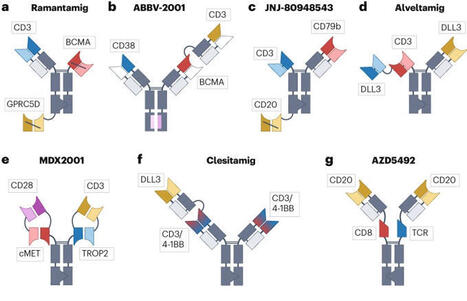
Multispecific T-cell engagers that bind three or more targets on cancer and immune cells promise to address the shortcomings of their bispecific predecessors.
|
|
Scooped by
Gilbert C FAURE
June 16, 4:02 AM
|
Identifiez-vous ou inscrivez-vous pour voir des posts tels que celui-ci et plus encore.
|
|
Scooped by
Gilbert C FAURE
June 7, 3:37 AM
|
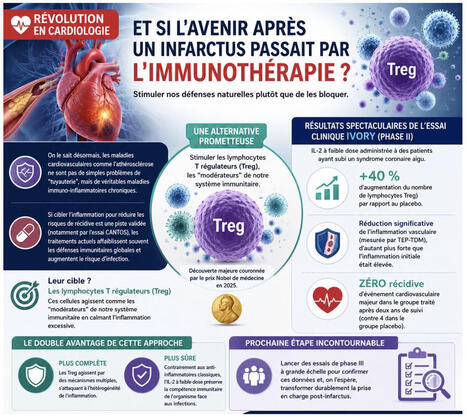
[#PARCC Highlight]: Retour sur une avancée majeure en cardiologie : l’immunothérapie post-infarctus!
On le sait désormais, les maladies cardiovasculaires comme l’athérosclérose ne sont pas de simples problèmes de "tuyauterie", mais de véritables maladies immuno-inflammatoires chroniques.
Si cibler l'inflammation pour réduire les risques de récidive est une piste validée (notamment par l'essai CANTOS), les traitements actuels affaiblissent souvent les défenses immunitaires globales et augmentent le risque d'infection.
🔬 Une alternative prometteuse émerge grâce aux travaux de l’équipe du #PARCC de Alain Tedgui, Ziad Mallat, Soraya Taleb et Hafid Ait-Oufella : stimuler nos propres cellules protectrices plutôt que de bloquer le système immunitaire.
Leur cible ? Les lymphocytes T régulateurs (Treg) — dont la découverte majeure a d'ailleurs été couronnée par le prix Nobel de médecine en 2025. Ces cellules agissent comme les "modérateurs" de notre système immunitaire en calmant l'inflammation excessive.
📈 Les résultats spectaculaires de l'essai clinique IVORY (Phase II) : En administrant de l'interleukine-2 (IL-2) à faible dose à des patients ayant subi un syndrome coronaire aigu, l'équipe a observé :
➡️ +40 % d'augmentation du nombre de lymphocytes Treg par rapport au placebo.
➡️ Une réduction significative de l'inflammation vasculaire (mesurée par TEP-TDM), d'autant plus forte que l'inflammation initiale était élevée.
➡️ Zéro récidive d’événement cardiovasculaire majeur dans le groupe traité après deux ans de suivi.
🛡️ Le double avantage de cette approche :
📈 Plus complète : Les Treg agissent par des mécanismes multiples, s'attaquant à l'hétérogénéité de l'inflammation.
📉 Plus sûre : Contrairement aux anti-inflammatoires classiques, l'IL-2 à faible dose préserve la compétence immunitaire de l'organisme face aux infections.
👉 Prochaine étape incontournable : lancer des essais de phase III à grande échelle pour confirmer ces données et, on l'espère, transformer durablement la prise en charge post-infarctus.
Faculté de Santé - Université Paris Cité INSERM médecine/sciences
👉 Pour approfondir le sujet, découvrez l'analyse complète d'Alain Tedgui et Ziad Mallat dans médecine/sciences: https://lnkd.in/e4zebMjF
|
|
Scooped by
Gilbert C FAURE
June 5, 11:18 AM
|
Are you in London this Sunday afternoon? Join us to learn about the amazing work on Plant-Powered Vaccines Tsepo Tsekoa Sibongile Mtimka Maabo Moralo Rahwa Osman PhD.Katty Wadda, PhDChanjo Hub Liselo Labs Academy of Medical Sciences
https://lnkd.in/eE-hckpT
See you there 😎 😎 😎
|
|
Scooped by
Gilbert C FAURE
May 27, 3:34 AM
|
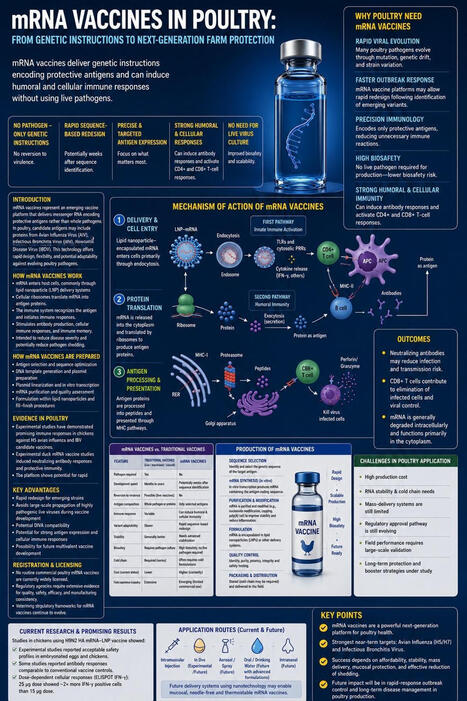
mRNA Vaccines in Poultry: Questions We Must Ask Before the Future Arrives
Q1: Why are mRNA vaccines important for poultry?
Because poultry pathogens such as avian influenza virus and infectious bronchitis virus can evolve rapidly. mRNA platforms may allow faster vaccine redesign once new genetic sequences are identified.
Q2: How do mRNA vaccines work?
They deliver messenger RNA encoding a selected protective antigen. Host cells translate this mRNA into antigen protein, which can stimulate antibody responses, cellular immunity, and immune memory.
Q3: Do mRNA vaccines use live pathogens?
No. They do not require live pathogen replication inside the vaccine product, which may reduce biosafety risks during development and production.
Q4: What diseases could be future poultry targets?
Major candidates include H5/H7 avian influenza, infectious bronchitis virus, Newcastle disease virus, and infectious bursal disease virus.
Q5: Are mRNA vaccines already routine in poultry?
Not yet. They remain mainly experimental or early-stage veterinary technologies. Routine poultry use still requires strong field validation, regulatory approval, and cost-effective manufacturing.
Q6: What are the main advantages?
Rapid redesign, precision antigen targeting, potential DIVA compatibility, reduced need for live-virus culture, and possible induction of humoral and cellular immune responses.
Q7: What are the biggest challenges?
Cost, cold-chain stability, mass delivery, mucosal immunity, reduction of shedding, long-term protection, and performance under real commercial farm conditions.
Q8: What is the real question for the future?
Not only whether mRNA can produce an antigen, but whether it can become affordable, stable, scalable, and protective at the farm level.
The future of poultry vaccination may move from classical vaccine matching toward sequence-based precision immunity.
#Poultry #mRNA #Vaccines #AvianInfluenza #IBV #NDV #IBDV #AnimalHealth #Biosecurity #PrecisionImmunology #OneHealth
|
|
Scooped by
Gilbert C FAURE
May 26, 3:47 AM
|
Having worked on gene and cell therapies for the past 14 years, it’s been fascinating to help drive the evolution from purely viral approaches (adenoviruses, AAVs, lentiviruses) to non-viral platforms (lipid nanoparticles/liposomes, polymer nanoparticles, electroporation methods). Yet, the fundamental biology and end goal remain the same: delivering nucleic acids to the right cells, while avoiding off-target effects and excessive innate immune activation. The latter is especially tricky, as LNPs and other nanoparticles trigger various anti-viral and tissue damage pathways due to their resemblance with viruses (as depicted in this illustration).
The current momentum behind in vivo CAR-T delivery will put these viral and non-viral platforms into direct competition. Ultimately, the winners of that race won't just be determined by delivery efficiency, but by who can achieve the most precise tissue targeting with an acceptable, manageable safety profile, especially when treating patients with inflammatory and autoimmune diseases.
And, perhaps, the key principles we learn and the limitations we overcome in this space will define how we develop all other in vivo therapeutics in the future.
|
|
Scooped by
Gilbert C FAURE
May 25, 11:32 AM
|
|
|
Scooped by
Gilbert C FAURE
May 22, 4:00 AM
|
Global vaccine development.
Abstract
Since the inception of the World Health Organization (WHO) Extended Programme on Immunization in 1974, vaccines have saved the lives of approximately 150 million children, and they continue to save 2–5 million lives each year, according to WHO estimates. The consensus around the benefit and funding of childhood vaccination in low- and middle-income countries has unraveled, and the hard-won gains of the past quarter century are at risk. At the same time, in some high-income countries, vaccine hesitancy—sometimes enabled by government policy pronouncements—has led to reductions in vaccination, resulting in outbreaks of measles in countries that had eliminated this disease. Despite these setbacks, advances in vaccine platform technologies, new immunogens, and new and expanding target populations have the potential to extend the direct and indirect effects of vaccination across the life course. In this Perspective, we discuss how each of these advances could shape the future vaccine landscape. We also highlight cross-cutting issues, including those related to equity, manufacturing, funding and vaccine hesitancy, which make successful implementation more complex.
https://lnkd.in/e38Spimq
|
|
|
Scooped by
Gilbert C FAURE
July 19, 2:31 AM
|
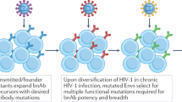
Yesterday I shared our new Nature paper on HIV vaccine development. Our new paper is being discussed as an HIV vaccine advance, which is gratifying. It is also a study of how the immune system works. We think it will have long-lasting impacts in immunology.
When the idea of germline-targeting vaccines was first proposed, there wasn’t just skepticism about the vaccine design. There was skepticism about the underlying immunology. Many of the key steps were thought to be unlikely—or even impossible.
Could extraordinarily rare naïve B cells be successfully recruited into an immune response?
Could those rare cells compete successfully inside germinal centers against millions of other B cells?
Could they undergo enough rounds of affinity maturation to evolve into broadly neutralizing antibodies?
Could memory B cells generated after one immunization be recalled months later by a different immunogen, re-enter germinal centers, and continue evolving?
Could this process be repeated over and over again?
These weren’t simply questions about HIV. They were fundamental questions about how B-cell memory, germinal centers, and antibody evolution actually work.
Our study shows that the answer to all of these questions can be yes.
Exceptionally rare precursor B cells can be primed, recruited into germinal centers, remain competitive through repeated rounds of affinity maturation, generate durable memory B-cell lineages, be recalled by sequential immunogens, and ultimately differentiate into plasma cells producing broadly neutralizing antibodies.
That is exciting because it advances HIV vaccine development. But it is equally exciting because it expands our understanding of adaptive immunity.
One of the most rewarding aspects of science is that pursuing one difficult problem often teaches us something much broader about biology than we originally set out to learn. I think this project is one of those examples.
If you’re interested in the details, the full paper is available here:
https://lnkd.in/gqYWu5NN
| 14 comments on LinkedIn
|
|
Scooped by
Gilbert C FAURE
July 15, 7:26 AM
|
Cancer immunotherapies have shown promise and success in a number of different types of tumours, yet many solid epithelial tumours remain recalcitrant. Somatic mutations in tumour cells can lead to the expression of neoantigens, which are potent targets of the human antitumour immune response. These can be targeted through adoptive cell transfer (ACT) of neoantigen-specific T cells, including tumour-infiltrating lymphocytes (TILs) or T cell receptor (TCR)-engineered T cells (TCR-T cells), an approach that has been shown to achieve tumour regression in patients with different types of metastatic solid tumours including melanoma, breast and gastrointestinal cancer. Immunogenomics, systems immunology and genome editing now provide multidisciplinary tools to design cell therapies against solid cancer. Here, we review historical efforts and our current conceptual understanding of ACT using TILs or TCR-T cells. Moreover, we highlight emerging correlates of response to ACT and novel strategies that integrate tumour immunology, cancer genomics, computational biology and T cell engineering for the development of next-generation cellular immunotherapies. In this Review, Krishna and colleagues draw on clinical and scientific progress in the past two decades to describe the many factors that influence clinical outcomes during adoptive cell therapy using tumour-infiltrating lymphocytes and TCR-engineered T cell therapies. They explain how T cell-intrinsic factors and tumour-specific factors in patients with advanced cancer challenge or promote the success of adoptive cell transfer (ACT), and outline new approaches in the field of ACT.
|
|
Scooped by
Gilbert C FAURE
July 5, 8:50 AM
|
Immune checkpoint molecules are essential regulators of immune homeostasis, maintaining the balance between activation and tolerance. In cancer, tumours exploit checkpoint pathways to suppress antitumour immunity and promote progression. The advent of immune checkpoint inhibitors, particularly those that target the clinically validated PDL1–PD1 and CTLA4 axes, has transformed cancer therapy, and the LAG3 axis has recently entered clinical practice, yet most patients experience limited or transient benefit, often because the checkpoint molecules become dysregulated. Here, we examine how multilayered regulatory mechanisms operating at the genetic, epigenetic, transcriptional, post-transcriptional, translational and post-translational levels collectively shape checkpoint abundance and function in tumour and immune cells. We further connect these regulatory processes to immune evasion and therapeutic resistance and highlight how this knowledge informs biomarker development and mechanism-guided strategies to improve immunotherapy outcomes. Tumours evade immunity by dynamically rewiring immune checkpoint expression across multiple regulatory layers. In this Review, Eris, Zu et al. synthesize how these mechanisms operate in tumour and immune cells, connect them to therapeutic resistance, and highlight emerging biomarkers and therapeutic strategies that target convergent regulatory nodes to improve immunotherapy outcomes.
|
|
Scooped by
Gilbert C FAURE
June 30, 7:32 AM
|
𝐒𝐜𝐢𝐞𝐧𝐭𝐢𝐬𝐭𝐬 𝐯𝐚𝐜𝐜𝐢𝐧𝐚𝐭𝐞𝐝 𝐦𝐢𝐜𝐞 𝐚𝐠𝐚𝐢𝐧𝐬𝐭 𝐭𝐡𝐞 𝐟𝐥𝐮. 𝐔𝐬𝐢𝐧𝐠 𝐝𝐞𝐧𝐭𝐚𝐥 𝐟𝐥𝐨𝐬𝐬.
𝐈 𝐤𝐧𝐨𝐰. 𝐒𝐭𝐢𝐜𝐤 𝐰𝐢𝐭𝐡 𝐦𝐞.
Here's the thing about flu vaccines — they're usually injected into your arm. But that's not actually where the flu enters your body. It sneaks in through your nose, through the mucous tissue lining your airways.
So a team of researchers had an idea: what if we vaccinated people right at the entry point? Coat the gums where they meet the teeth: a thin, leaky strip of tissue that connects directly to the immune system and deliver the vaccine there instead.
Genius. Except one problem.
How do you get a vaccine precisely into a tiny pocket below the gumline?
And then someone looked at the table and saw a keychain.
The breakthrough moment in this research was a researcher spotting a keyring lying around the lab after a failed experiment, and thinking what if I use this to hold the mouse's jaw open gently?
Vaccinated mice survived flu infections. Their immune systems learned to fight the virus — no needle required. And one version of the floss vaccine performed just as well as a nasal spray vaccine, without the risk of neurological side effects that nasal vaccines sometimes carry.
Citation: R.S.J. Ingrole et al. Floss-based vaccination targets the gingival sulcus for mucosal and systemic immunization. Nature Biomedical Engineering. Published online July 22, 2025. doi: 10.1038/s41551-025-01451-3.
-----
Follow Abantika Ghosh for more such content
#immunology #Health #Vaccines #discover
|
|
Scooped by
Gilbert C FAURE
June 21, 3:36 AM
|
Back-to-back papers in Immunity by Cell Press led by Dandan Yang: multi-omics studies reveal how the gluococorticoid (GC) pathway restrains Th17 cell pathogenicity.
1️⃣ GC steroid synthesis & sensing maintain the homeostatic state of Th17 cells.
led by Ana Anderson's lab
🔗 https://lnkd.in/e2U6pUM4
2️⃣ IL-23 switches on a pro-inflammatory Th17 state via epigenetic & transcriptional regulation, by stabilizing RoRgt & impairing GC sensing.
Shared senior authors: Vijay Kuchroo, Ana Anderson, #NirYosef
🔗 https://lnkd.in/eRxjqHMy
These findings could help address steroid resistance of Th17 cells frequently seen in the clinic that constrains the efficacy of this mainstay of treatment for autoimmune flares.
Mass General Brigham Research, Harvard Medical School, Broad Institute of MIT and Harvard, Weizmann Institute of Science| 11 commentaires sur LinkedIn
|
|
Scooped by
Gilbert C FAURE
June 18, 5:39 AM
|
|
|
Scooped by
Gilbert C FAURE
June 15, 4:39 AM
|
In 2003, the world’s first synthetic mRNA injections in humans were carried out in Tübingen, Germany. Many people ‘forget’ to mention this in their timelines on mRNA vaccines. So let me remind it (and please eventually correct your timelines in articles and talks):
First mRNA injections in humans (in me): 2003, published in 2007
First clinical trial on mRNA vaccines: started in 2003 and published in 2008
Second clinical trial on mRNA vaccines: launched in 2004, published in 2009
Third clinical study on mRNA vaccines: launched in 2004, published in 2011.
All these studies were conducted at Tübingen University Hospital by Dr Weide, Dr Brossart, myself and numerous colleagues from the University of Tübingen, Tübingen University Hospital and CureVac. All those pioneering mRNA vaccine studies showed safety and immune responses.
References are below.
Spontaneous cellular uptake of exogenous messenger RNA in vivo is nucleic acid-specific, saturable and ion dependent.
Probst J, et al. Gene Ther. 2007. PMID: 17476302
Results of the first phase I/II clinical vaccination trial with direct injection of mRNA.
Weide B, et al. J Immunother. 2008.PMID: 18481387 Clinical Trial.
Direct injection of protamine-protected mRNA: results of a phase 1/2 vaccination trial in metastatic melanoma patients.
Weide B, et al. J Immunother. 2009.PMID: 19609242 Clinical Trial
Intradermal vaccinations with RNA coding for TAA generate CD8+ and CD4+ immune responses and induce clinical benefit in vaccinated patients.
Rittig SM, et al. Mol Ther. 2011. PMID: 21189474Free PMC article
Long-term survival correlates with immunological responses in renal cell carcinoma patients treated with mRNA-based immunotherapy.
Rittig SM, et al. Oncoimmunology. 2015.PMID: 27467913 Free PMC article
|
|
Scooped by
Gilbert C FAURE
June 5, 1:22 PM
|
China is moving stem-cell “anti-aging” into formal clinical research.
Ruibosheng is China’s first approved mesenchymal stem-cell drug. It was originally conditionally approved for steroid-refractory acute GVHD, a severe immune complication after bone-marrow transplantation.
The therapy is priced at RMB 19,800 per infusion, roughly US$2,700–2,900. A full eight-dose course costs around US$22,000–23,000.
Now, PLA General Hospital, widely known as 301 Hospital and one of China’s most influential national medical centers, is studying the same product in aging and vascular-aging cohorts.
The studies focus on measurable aging-related endpoints, including biological age, multi-omics markers, and vascular stiffness.
Results are still pending.
#Longevity #Healthspan #StemCells #CellTherapy #RegenerativeMedicine #ChinaBiotech #AgingResearch
https://lnkd.in/gNufsMQ8
|
|
Scooped by
Gilbert C FAURE
May 27, 3:37 AM
|
"In a paper published on 19 February 2025 in Nature, Vinod P Balachandran, MD, David M. Rubenstein Center for Pancreatic Cancer Research, Memorial Sloan Kettering Cancer Center, New York, and colleagues examined the same 16 patients discussed in the 2023 study, 3.2 years after treatment.
The data showed:
* In 8 of 16 patients, cevumeran elicited an immune response up to three years post-administration, measured by activated T cells. The persistence of T cells was associated with a longer median recurrence-free survival in cancer vaccine responders.
* In two of the eight patients who had a strong immune response, their cancer returned.
* Seven of the eight non-responding patients had their cancers return within that 3.2-year window
The still-recruiting phase 2 clinical trial should provide more data about the effectiveness of the vaccine. It is sponsored by Genentech and BioNTech and will include 260 subjects in 14 locations in the USA. The study will compare the endpoints of patients with pancreatic cancer who receive cevumeran plus Atezolizumab and mFOLFIRINOX, two chemotherapy drugs, to patients who receive mFOLFIRINOX alone. The goal of the study is to determine the safety and efficacy of cevumeran, the mRNA vaccine, and to determine if the vaccine improves outcomes compared to chemotherapy alone.
NBC reported that the six patients who were successfully treated with the mRNA vaccine have survived for over six years. Of course, we need larger trials with more subjects to begin to confirm the effectiveness of this vaccine treatment for pancreatic cancer.
All of this is good news; we may have a powerful treatment for a scary cancer. Of course, the anti-vaccine people may block it because the vaccine is mRNA-based."
|
|
Scooped by
Gilbert C FAURE
May 26, 4:13 AM
|
China’s Stem Cell Wild West Is Coming to an End.
We are witnessing a massive structural shift in Chinese biotech. On May 1, 2026, China officially enforced Decree No. 818, pulling the plug on a multi-billion-dollar unapproved cell therapy market and introducing some of the tightest compliance standards our industry has seen in decades.
For years, a massive regulatory gray market allowed clinics to sell unproven stem cell injections for up to $28,000, while actual manufacturing costs hovered around $400. I've watched how this hyper-profitable, unregulated ecosystem diluted true scientific innovation.
Decree No. 818 completely dismantles this gray zone through three absolute mandates:
1. Restricting all cell therapies exclusively to top-tier Grade 3A hospitals.
2. Imposing an absolute ban on charging patients during clinical research phases.
3. Levying crippling fines up to 20 times illegal profits for non-compliance.
This is not a routine policy tweak. It is an aggressive, much-needed industry purge.
My view is that up to 80% of China's 30,000+ registered cell therapy firms will face immediate elimination. While under-qualified players are already panic-selling equipment in tech hubs like Guangzhou Nansha Medical Valley, compliant, science-backed biotech operations saw their stocks hit daily limits.
The era of selling hype is over. China’s premium longevity and biotech sectors are finally entering a mature, institutional phase.
In this new landscape, survival belongs strictly to those who prioritize clinical evidence over marketing noise.
#ChinaBiotech #CellTherapy #StemCells #BiotechRegulation #HealthcareCompliance
|
|
Scooped by
Gilbert C FAURE
May 26, 3:44 AM
|
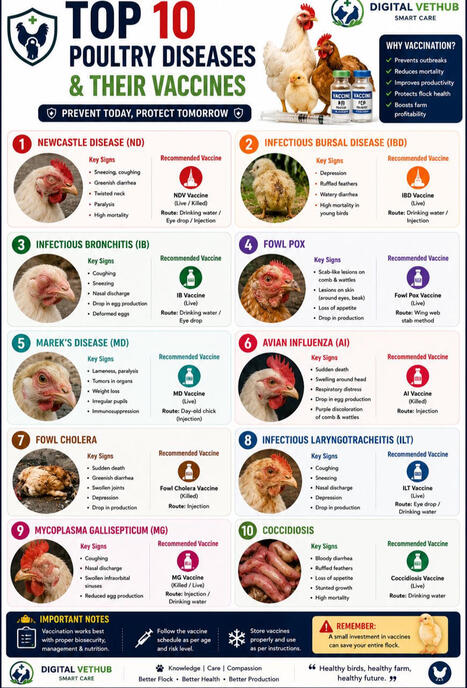
💉 𝐓𝐎𝐏 𝟏𝟎 𝐏𝐎𝐔𝐋𝐓𝐑𝐘 𝐃𝐈𝐒𝐄𝐀𝐒𝐄𝐒 & 𝐓𝐇𝐄𝐈𝐑 𝐕𝐀𝐂𝐂𝐈𝐍𝐄𝐒
Vaccination remains one of the most effective tools in modern poultry health management.
Many major poultry diseases can cause severe economic losses, reduced productivity, and high mortality when preventive vaccination programs are ignored or delayed.
This practical guide highlights some important poultry diseases along with commonly recommended vaccines used in poultry practice.
📌 Includes:
• Newcastle Disease (ND)
• Infectious Bursal Disease (IBD)
• Infectious Bronchitis (IB)
• Fowl Pox
• Marek’s Disease
• Avian Influenza (AI)
• Fowl Cholera
• Infectious Laryngotracheitis (ILT)
• Mycoplasma Gallisepticum (MG)
• Coccidiosis
A strong vaccination program helps:
✅ Reduce disease outbreaks
✅ Improve flock immunity
✅ Increase farm productivity
✅ Reduce mortality losses
✅ Support long-term farm profitability
Healthy flocks begin with prevention.
Save this guide for quick reference and share it with poultry professionals, veterinarians, students, and farm managers.
#Poultry #VeterinaryMedicine #PoultryFarming #AnimalHealth #Vaccination #PoultryHealth #VetLife #FarmManagement #Livestock #DigitalVetHub
|
|
Scooped by
Gilbert C FAURE
May 23, 5:24 AM
|
The activation of pattern recognition receptors (PRRs) orchestrates inflammation and regulates adaptive immunity. To test whether tuning inflammation through PRR stimulation enhanced the efficacy of mRNA vaccines, we combined an mRNA-based vaccine generated against the ancestral spike protein of SARS-CoV-2 with mannadjuvant, a formulation of fungal mannan and aluminum hydroxide targeting the PRR dectin-2. In mice and non-human primates, mannadjuvant increased the magnitude and durability of the response elicited by the mRNA-based vaccine, and it also led to the induction of neutralizing antibodies directed against variants of concern with a high escape capacity, overcoming antigenic imprinting. Mechanistically, prolonged type I interferon (IFN) production and potentiated interleukin-1 (IL-1) signaling locally within the draining lymph node in mice or in human cells were necessary and sufficient to exert the effect of mannadjuvant. Our data indicate that antifungal PRRs can be harnessed to create more potent and durable mRNA-based vaccines. Jena, Qu et al. show that mannadjuvant, a formulation of fungal mannan and aluminum hydroxide, increases the magnitude, durability and breadth of the response elicited by mRNA-based vaccines against SARS-CoV-2 variants in mice and non-human primates.
|
|
Scooped by
Gilbert C FAURE
May 21, 10:55 AM
|
|