


Follow, research and publish the best content
Get Started for FREE
Sign up with Facebook Sign up with X
I don't have a Facebook or a X account
Already have an account: Login

HMD hot spot
12.8K views |
+2 today
 Your new post is loading...
 Your new post is loading...
Your new post is loading...
 Scoop.it!

via The Alan Turing Institute, https://www.turing.ac.uk 
Scoop.it!
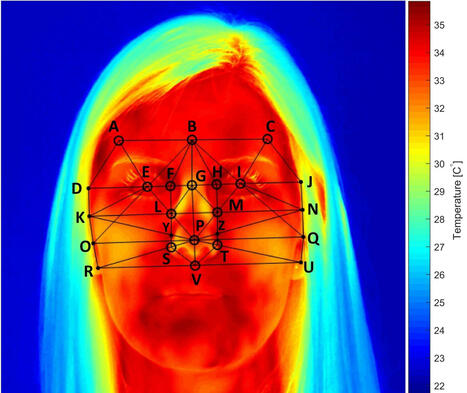
Changes in facial thermal patterns can be used to determine mental workload, according to a new study from Nottingham University.
Scoop.it!

Freeform polarization volume hologram - US20200371475
"Optical lens based on a Polarization Volume Hologram (PVH) layer having a freeform design and an optical system using such a freeform PVH lens. Depending on applications, the PVH layer can be transmissive, reflective, or partial-transmissive-partial-reflective. The freeform PVH layer consistent with the disclosure can be responsive to light with a certain wavelength, such as infrared (IR) light for eye tracking purposes in a head-mounted display (HMD). […] A PVH layer can include a birefringent material layer including a plurality of birefringent molecules, and is also referred to as, e.g., “polarization sensitive gratings,” “polarization sensitive optical elements,” “liquid crystal gratings,” or “chiral liquid crystal elements.” For example, the PVH layer can include a liquid crystal (LC) layer including a plurality of liquid crystal (LC) molecules. The LC molecules are spatially orientated to enable at least one optical function of the PVH layer. […] The optical function of a PVH layer can be determined based on the configuration or manipulation of optical axes of the LC molecules in the PVH layer. […] When the LC layer is thick enough, Bragg diffraction can be established. […] The slanted Bragg grating can allow the PVH layer 100 to redirect incident light to be converged or diverged in reflection or in transmission. Thus, through further manipulation of the orientation of the LC molecules in the x-y plane, the PVH layer 100 can be configured to function as a lens, such as a reflective lens or a transmissive lens, that can, e.g., converge or diverge an incident light beam. […] The PVH layer is also referred to as a “PVH lens.”: […] wherein the first region and the second region have different optical powers, […], wherein an optical axis of the first region and an optical axis of the second region point toward different directions, […] wherein the first region and the second region are arranged side by side, […] wherein the second region encircles the first region.
Scoop.it!

MICROSOFT EP4405736 - 31.07.2024
Scoop.it!
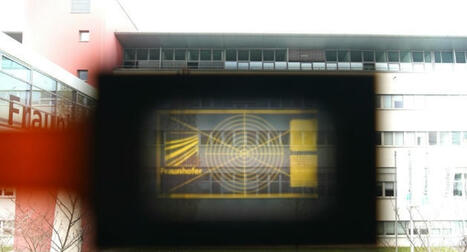
Microdisplays are designed for ultra-light and compact augmented reality systems.
Scoop.it!

"GitHub (/ˈɡɪthʌb/) is a developer platform that allows developers to create, store, manage and share their code. It uses Git software, providing the distributed version control of Git plus access control, bug tracking, software feature requests, task management, continuous integration, and wikis for every project.[6] Headquartered in California, it has been a subsidiary of Microsoft since 2018icrosoft is pulling out all the stops to accelerate the adoption of Azure AI. The introduction of GitHub Models marks a significant step in this direction. GitHub announced that it will make generative AI models more accessible to developers by tightly integrating with existing tools and features. This new capability, known as GitHub Models, allows developers to explore various models within the GitHub web interface. They can also test and compare different models without leaving their current environment."
Scoop.it!

The news: Facebook’s
Scoop.it!
In this video, I sat down with Mark Zuckerberg to chat through Meta's launch of AI Studio and all things creators.
Scoop.it!

https://ieeexplore.ieee.org/document/888472 Optics Technology Division, Minolta Company Limited, Japan Optics Technology Division, Minolta Company Limited, Japan Optics Technology Division, Minolta Company Limited, Japan Optics Technology Division, Minolta Company Limited, Japan
Scoop.it!

From
phys

Technicians armed with advanced measuring equipment, augmented reality headsets, and QR codes virtually checked the fit of some Roman Space Telescope structures before building or moving them through facilities at NASA's Goddard Space Flight Center in Greenbelt, Maryland.
Scoop.it!
Conductive inks have emerged as a transformative technology with the potential to revolutionize multiple industries. These innovative inks, formulated with
|
Scoop.it!

Spatially variable liquid crystal diffraction gratings - US11586065B2 - 2024-06-04 The present disclosure relates to display systems and, more particularly, to augmented reality display systems.
Sara Mautino's insight:
Scoop.it!
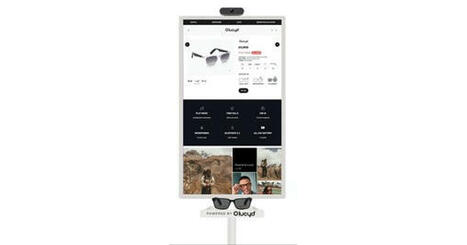
/PRNewswire/ -- Innovative Eyewear, Inc. ("Innovative Eyewear" or the "Company") (NASDAQ: LUCY; LUCYW), the developer of ChatGPT smart eyewear unde
About Innovative Eyewear, Inc. About Geenee, Inc.
Scoop.it!
From
youtu
Here at Metalenz, we are on a mission to revolutionize optical sensing. Whether in our smartphones, our car, or medical devices, meta-optics can access whole new sets of information that conventional optics can’t. Our breakthrough technology improves performance with simpler, smaller modules, allowing powerful new sensing capabilities to proliferate to more devices, and impact more lives. Sound good? Here’s more - Our meta-optics are made in the same semiconductor foundries that make the electronics. This convergence of the chip making industry and lens making consolidates the supply chain and unlocks entirely new applications and integrations. Learn more @ metalenz.com
Scoop.it!
Sara Mautino's insight:
"Piping" includes the means for pupil expansion by replication, and it is strictly related to the eye-box. Pupil expansion is a difficult task, also as it is limited by the Lagrange Invariant. Here it is only an example and it is implemented by phase-shifting the beam as it propagates through the waveguide at the level of the outcoupling grating. (There exist means to replicate the pupil both laterally and in the depth direction)
Scoop.it!
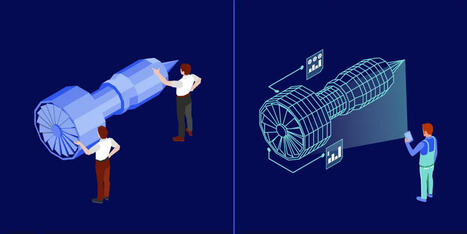
An introduction to digital twins, their benefits, and how they're being used to drive efficiency and productivity across industry.
Scoop.it!
Elon Musk is CEO of Neuralink, SpaceX, Tesla, xAI, and CTO of X. DJ Seo is COO & President of Neuralink. Matthew MacDougall is Head Neurosurgeon at Neuralink. Bliss Chapman is Brain Interface Software Lead at Neuralink. Noland Arbaugh is the first human to have a Neuralink device implanted in his brain.
Scoop.it!
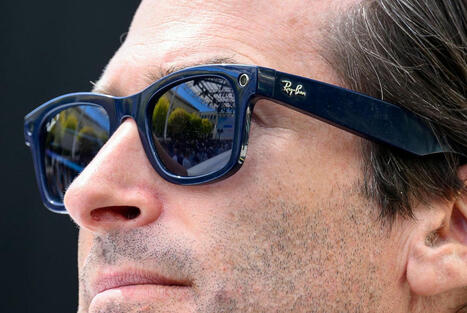
EssilorLuxottica, Meta and Heidelberg Engineering haven't said this but they are in a position to unlock the biggest opportunity in the prescription eyewear market.
Scoop.it!

Physicists are always riveted in predicting how a physical system behaves as a function of time. We begin this review article by understanding various formalisms to study the dynamics of the systems. The once-accepted belief that the Hamiltonian had to be Hermitian to ensure real eigenvalues got crashed down by parity-time (PT) symmetry where the Hamiltonian is no longer Hermitian. Thus, the idea of PT symmetry demonstrated that Hamiltonian's Hermicity is not necessary but sufficient to ensure the real eigenvalues. In this review article, we clearly describe the fundamental principle of PT symmetry, its significant attributes and its evolution in various fields of Physics, especially in Optics. In recent years, an artificial material called metamaterial has gained phenomenal momentum due to its unusual electromagnetic properties. These subwavelength-scale artificial electromagnetic materials can provide a variety of mediums for exploring non-Hermitian phenomena. Thus, the implementation of PT symmetry in metamaterial opened up an extended range of unusual phenomena in light-matter interaction. This paper addresses recent developments in PT metamaterials and highlights a few of its applications. Graphical Abstract
Scoop.it!

From
optics
US Army and Oak Ridge teams partner with Kopin and DigiLens in support of government missions.
Scoop.it!
Ceres Holographics, in collaboration with Eastman Chemical, has unveiled the industry’s first fully integrated windshield featuring multiple holographic optical elements (HOEs) inside a single laminate construct. This innovation, being showcased at Car.HMI Europe, uses Ceres’ HoloFlekt® technology to produce films with multiple HOEs that are then seamlessly laminated inside windshield glass using Eastman’s proprietary lamination techniques. […]
Scoop.it!

Advance Robotics DOI: 10.1080/01691864.2024.2358439 Dogs and cats have exceptionally developed sensory systems and abilities to recognize human signals and emotional states. It makes them invaluable in roles such as working dogs and therapy animals in human society. Understanding each other’s emotional state is essential to working with them effectively. However, the low accuracy of human emotional estimation in dogs and cats is
|








REUTERS - The axed device was internally code-named La Jolla and was scheduled for release in 2027, the report said. It was going to contain ultrahigh-resolution screens known as micro OLEDs — the same display technology used in Vision Pros.
Meta had stopped production of the Quest Pro — its most expensive headset priced at $999 — in 2023 after encountering weak sales and poor reviews, according to the Information report.