


A vantagem da tecnologia Head-Up Display
Follow, research and publish the best content
Get Started for FREE
Sign up with Facebook Sign up with X
I don't have a Facebook or a X account
Already have an account: Login

HMD hot spot
13.3K views |
+0 today
 Your new post is loading...
 Your new post is loading...
Your new post is loading...
 Scoop.it!
Hi tech motorcycle helmet. Heads up display. Voice activated. Camera in the back showing you what's behind you. Is this cool or what! Dr. Marcus Weller from ... 
Scoop.it!

An MIT lab has produced a device the size of a stamp that harvests energy from bending movements. Commercialising it could be a breakthrough for wearables
Sara Mautino's insight:
Harvesting energy form the body movement for wearables energy feeding is the new frontier
Scoop.it!

Should players be allowed to use a #HUD (Heads up display) for online poker? pic.twitter.com/L8C5qHJjRI
Sara Mautino's insight:
"Should players be allowed to use a #HUD (Heads up display) for online poker? " - the question comes from CardChats, a platform for online games, with over 150k members -
Scoop.it!

Visteon’s time-of-flight vehicle aims to keep drivers focused on the road.
Sara Mautino's insight:
impressive
Scoop.it!
A head-up display or heads-up display—also known as a HUD—is any transparent display that presents data without requiring users to look away from their usual...
Sara Mautino's insight:
HUDs - the funny side
Scoop.it!

A Microsoft patent application focused on augmented reality aims to provide virtual nutrition information and food warnings to smart glass wearers.
Sara Mautino's insight:
Il looks to me only a first step. Though, interesting and pioneering.
Scoop.it!
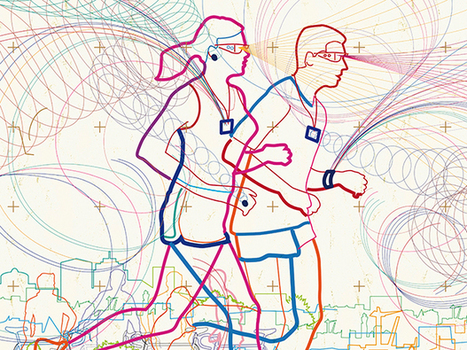
It takes more than data to get users motivated
Sara Mautino's insight:
"“Humans have complex motivational systems [...]" “If designers of wearables don’t understand people on a holistic level, then they create devices that won’t work over the long term for the majority of users.”"
[Elizabeth Churchill, specialist in user experience with a background in experimental psychology, studying how to go beyond the data wearables gather to motivate people on a subconscious level to take charge of their health]
Scoop.it!
Sara Mautino's insight:
" But consider this; we may indeed be coming full circle, as the display of the future may eventually be no (external) display at all. And after billions of dollars in capital investment, research and human visioning, isn't that an interesting prospect?" - DO YOU AGREE?
Scoop.it!

The automaker and 'The Atlantic' creative marketing group produced an event to measure the thrill of driving around a race track
Sara Mautino's insight:
"The event measured the thrill and excitement drivers experience while driving the new Porsche Macan on the race track, with biometric data provided by the Hexoskin shirt. The event and a recently published article by The Atlantic show wearable tech meeting digital art. Twenty five drivers were selected to participate, each fitted with the latest in high tech wearable sensors"
Scoop.it!
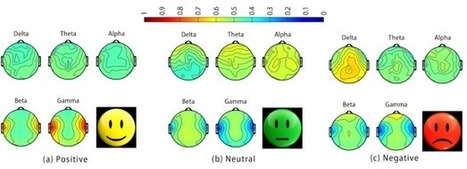
Nobody knew how to identify people’s emotional states by looking at their brain waves. Then a machine learning algorithm stepped in.
Sara Mautino's insight:
"When it comes to communication, humans are hugely sensitive to each other’s emotional states. Indeed, most people expect their emotional state to be taken into account by their correspondents. And when this happens, communication tends to be more effective." RECCOMENDATION: such matter is to be handled with immense SENSE OF RESPONSIBILITY and humanism or it may be dangerous.
Scoop.it!
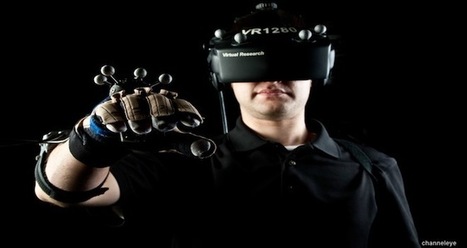
Dr. Tom Furness recently joined Envelop VR, an enterprise software company leader in the field of virtual reality, as its Senior Scientific Advisor.
Sara Mautino's insight:
“The power of virtual worlds is not in the achievement of technological capabilities, but in the creative possibilities of the human imagination that transform the limits of reality”
|
Scoop.it!

After Sight? An Aid for the Blind and Vision Impaired The After Sight Model 1 is a wearable vision assistance device slightly larger than a cell phone.
Sara Mautino's insight:
"The After Sight Model 1 is a wearable vision assistance device slightly larger than a cell phone. It's dedicated functions are visual to auditory sensory substitution, computer vision object recognition, and collision avoidance using a distance sensor. "
Scoop.it!

In my childhood I discovered an interesting phenomenon: if I connected a light source to a sufficiently amplified television receiver, and waved the light around in front of a video camera, I could get the light to function as a 3D augmented reality display that would overlay the sightfield of the camera, as virtual information on top of physical reality. I grew up at a time when technology was transparent and easy to understand. Radios and televisions used transparent electronic lamps called "vacuum tubes" where you could see inside them and they revealed all their secrets. I then witnessed a transition into an era of opacity in which scientific principles were concealed inside integrated circuits with closed-source firmware. And while machines became more "secretive", we entered a new era in which they also began to watch us and sense our presence, yet reveal nothing about themselves (see a short essay ...
Scoop.it!
Sara Mautino's insight:
source of the infographic: raconteur.net
Scoop.it!

We’re honoured to be identified as one of the 7 representative vendors in Gartner’s 2016 Market Guide to Augmented Reality. As the world’s leading information technology …
Scoop.it!

Microvision laser head-up displays projects visual data on windshields | Ubergizmo
Sara Mautino's insight:
Astonishing and overcoming the eventual risks of a werable version
Scoop.it!

'They can design for their own needs, which creates a beautiful closed-loop cycle where designer equals tester and end user.'
Sara Mautino's insight:
The moving lesson of these true SuperHeroes of the 21st century, designing thier own, on-scale, colored, cyber-prostethic devices. THANKS, you're great!
Scoop.it!

Note: please attach the enclosed glass protector film to the accordingly glass display window due to it can eliminate the sharp light and make the HUD display
Scoop.it!
Cognitive AI Technologies Inc. is raising funds for Carloudy: Futuristic Head-Up Display on Your Windshield on Kickstarter!
Sara Mautino's insight:
Microencapsulated electrophoretic displays. Adopting a similar technology to that of a Kindle Reader, Carloudy is based on a E-Inked based material, with its working principle analogous to that of an electrophoretic display.
Scoop.it!
This video showcases a methodology for using the Leap Motion controller tracking information to calibrate Optical See-Through (OST) Head-Mounted Displays (HM...
Sara Mautino's insight:
Leap Motion Hand and Stylus Tracking - - the Magics of a disruptive See-Through AR interface-
Scoop.it!
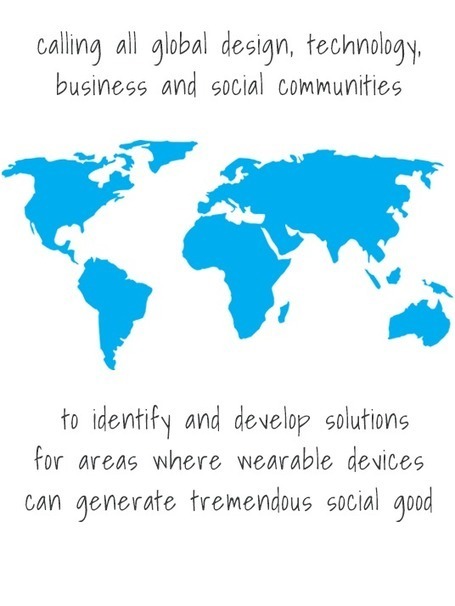
Could wearables be the next mobile revolution? Join us to develop innovative, affordable solutions to make wearables and sensor technology a game-changer for women and children across the world.
Sara Mautino's insight:
Wearables for the Good, times not to miss the chance
Scoop.it!

X Games and Intel on Tuesday announced a partnership that will bring real-time deep data to viewers, coaches and athletes at X Games Aspen via Intel's new "Curie" device.
Sara Mautino's insight:
"Intel's real-time data to X Games Aspen "
Scoop.it!
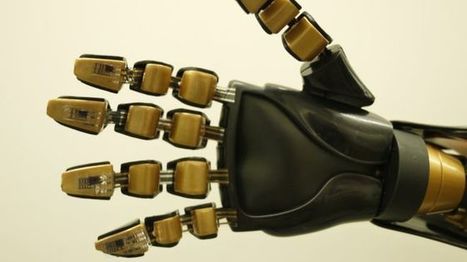
Engineers have built a flexible sensor that detects touch and, just like skin, produces electrical pulses that get faster when the pressure increases. Via Wildcat2030
|
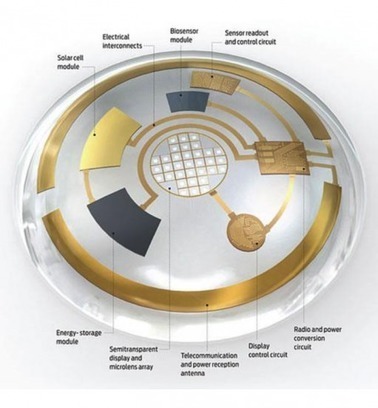






to find 5 minutes to watch this, is a good choice.