From the Cold War to the Russian Revolution-bits and pieces from the Net that you might find useful, brought to you courtesy of the Rondebosch Boys' High School Library (If you would like to receive a weekly newsletter of the latest items in this Scoop just mail me at library@rondebosch.com)
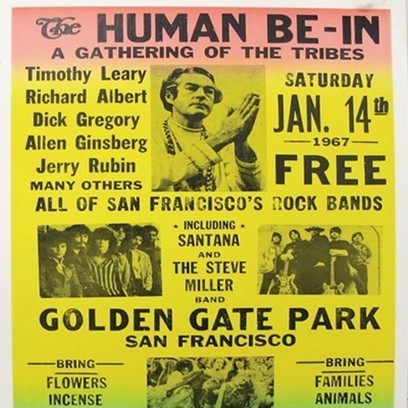
The ‘Human Be-In’ was the prototype of all 1960s counter culture celebrations and precipitated the legendary Summer of Love, and made San Francisco’s Haight-Ashbury the epicenter of the burgeoning hippie movement. It featured all the luminaries of psychedelic counter-culture, including Timothy Leary, Allen Ginsberg, Gary Snyder, Ram Dass and more.
What makes a terrorist tick? There’s one way to find out – just ask them. Some remarkable new research on extremist groups in Kenya has done just that, and the findings make for compelling reading. By SIMON ALLISON for ISS Today.
Published on Sep 23, 2014 For over 60 years, Tibetans have sought autonomy from Chinese rule and to no avail. Recent reports suggest that the region's current leader and longest living incumbent, the 14th Dalai Lama, will be the last of his kind unless Tibet gains its freedom. Will China ever grant Tibet independence? What does it mean if the Dalai Lama doesn't have a successor?
Published on Sep 19, 2014 Hear author Jack El Hai talk about his latest book “The Nazi and the Psychiatrist.” Learn about army psychiatrist Dr. Douglas Kelley who was given the task to study the minds of high ranking Nazi officials, including Hermann Göring. Dr. Kelley was responsible for deciding whether Nazi war criminals were mentally fit for trial and in the process conducted his own studies to see if there was a common psychosis that made Nazi’s commit their crimes.
Published on Sep 22, 2014 Modern day slavery in the Thai fishing industry was exposed by a six-month Guardian investigation. In Kyra Bartley's animation based on interviews carried out as part of that investigation into slavery in the supermarket shrimp supply chain, a Burmese man describes how enslaved workers often take their own lives to escape a world where the slightest blunder or act of dissension can result in barbaric violence and murder.
The Scottish independence referendum is a confusing matter. So here's an animated explanation of some fundamental questions on the Scottish independence debate.
A new report takes several countries to task for not following through on promises to research the background of art that may have been looted from Jews during World War II.
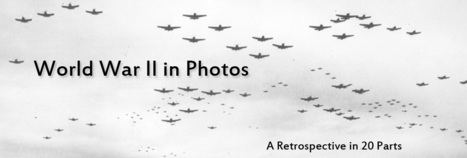
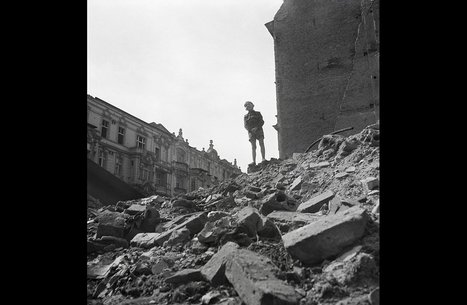
World War II is the story of the 20th Century. The war officially lasted from 1939 until 1945, but the causes of the conflict and its horrible aftermath echoed for decades in both directions. This series of entries was published weekly on TheAtlantic.com from June 19 through October 30, 2011, running every Sunday morning for 20 weeks. In this collection of 900 photos spread over 20 essays, I tried to explore the events of the war, the lives of the people fighting at the front and working back home, and the effects of the trauma on everyday activity.
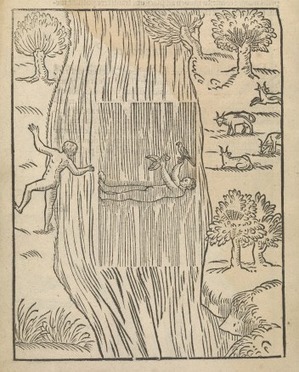
Ask the Past is a blog by Johns Hopkins history professor Elizabeth Archibald. She quotes advice from old books, often very old books, whether it’s good advice or not. Mostly not. Here are some other example posts:
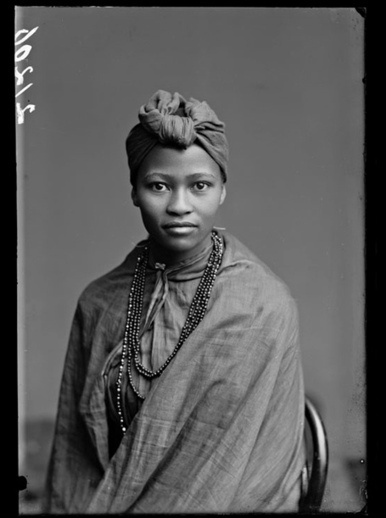
From the African Choir posing like Vogue models to an Abyssinian prince adopted by an explorer, a new exhibition spotlights the first black people ever photographed in Britain, writes Sean O’Hagan
In 1935, Roman Vishniac, a Russian-born Jew and heralded photographer, journeyed throughout Eastern Europe with one goal: photograph impoverished Jewish communities. The American Jewish Joint Distribution Committee, his employer, planned to use the images to raise funds for relief efforts, but the photos would become an iconic link to the culture that vanished as a result of the Holocaust.
Published on Sep 29, 2014 Pro-democracy protests are common in Hong Kong, but they've never been met with the kind of police response that came down on demonstrators in recent days. Vox's Max Fisher explains why the people of Hong Kong have taken to the streets and what's at stake in the protests.
Published on Sep 24, 2014 ISIS has been all over the news with their huge social media presence on Twitter and YouTube. How does the US counteract this social media attack? Like many social media users would...by trolling.
Published on Sep 19, 2014 On 15 September, more than half a million students returned to school in Gaza. "This is the first day at school for many children after suffering from a war that lasted 51 days," says one school director. "There is a lot of pain and hurt and sadness." The conflict killed 500 children and left 3,300 injured. UNICEF is supporting the training of 12,000 school staff to address the massive increase in student trauma.
Published on Sep 22, 2014 The US just began bombing campaign in Syria as part of a broader strategy to root ISIS out of both Syria and Iraq. Too bad it's likely to fail. Zack Beauchamp explains in 2 minutes.
Published on Sep 11, 2014 100 summers ago the countries of Europe collapsed quickly into war: it was sudden but also strangely inevitable. Countless books have been written since about the causes of The Great War, but in this video essay we offer an alternative history. By tracing the story backwards in time we stumble upon a very unexpected cause and discover that sometimes the most harmless of things can have terrible consequences.
Using cutting-edge digital mapping technology, scientists of the Stonehenge Hidden Landscape Project find signs of a "long barrow," a sophisticated mass grave that reveals strange burial rituals and the arrival of a new era.
In recent years, many academics and others have condemned President Truman's decision to use the atomic bomb on the Japanese cities of Hiroshima and Nagasaki as unnecessary and immoral. Yet this interpretation relies on a poor understanding of history that both lacks perspective and ignores context.
Published on Sep 18, 2014 If you have a tattoo, you’re part of a rich cultural history that dates back at least 8,000 years. Where did this practice of body modification come from, and how has its function changed over time? Addison Anderson tracks the history of getting inked.
The new Library of Congress Student Discovery Sets bring together historical artifacts and one-of-a-kind documents on a wide range of topics, from history to science to literature. Interactive tools let students zoom in for close examination, draw to highlight interesting details and make notes about what they discover.
With international political tensions on the rise, the threat of an all-out nuclear war seems too close for comfort. What countries possess nuclear weapons? Is the likelihood of a nuclear war higher than we think?
Google is opening up its Google Maps Gallery service with an expanded array of historical and contemporary maps, as well as tools for students and educators that will allow them to create and edit their own maps. "Now, information ranging from this World War II veteran's journey through the war to this description of how local governments are responding to climate change is available for everyone to explore. This expanded, publicly contributed information can give students a new way to visualize, understand, and get excited about a broad range of topics," according to Google.
To get content containing either thought or leadership enter:
To get content containing both thought and leadership enter:
To get content containing the expression thought leadership enter:
You can enter several keywords and you can refine them whenever you want. Our suggestion engine uses more signals but entering a few keywords here will rapidly give you great content to curate.


 Your new post is loading...