From the Cold War to the Russian Revolution-bits and pieces from the Net that you might find useful, brought to you courtesy of the Rondebosch Boys' High School Library (If you would like to receive a weekly newsletter of the latest items in this Scoop just mail me at library@rondebosch.com)
An American newsreel reports on the Potsdam conference, held in Germany in July 1945. Potsdam was attended by Soviet leader Joseph Stalin, newly appointed US president Harry S. Truman and British prime minister Winston Churchill, who was replaced during the conference by Clement Attlee.
This is clip is one of hundreds from the excellent Alphahistory Youtube channel. They not only have newsreel-type footage, but the bright sparks who run the channel have added great bits and pieces to give colour and context to historical issues. Around McCarthyism for example they provide clips such as Make Mine Freedom-a 1948 animated propaganda short extolling democracy over other forms of goverment; Edward R Murrow on McCarthyism and even How to spot a Communist, a 1950 propaganda short. If you want to make your lessons come alive this is a great place to start!
This lively exchange, between Rian Malan, Paul Trewhela and Bill Keller, takes on the image of the SACP in South Africa’s liberation struggle: its role and, of course, its much-debated brand of communism. It was first published in the New York Review of Books, kicked off by Malan’s collection of magazine writings, 'The Lion Sleeps Tonight and Other Stories of Africa'.
Yup. I’m a history geek. I’m a member of the History Book Club, I love maps, I stop and read every historical marker before driving past, I spent most of a morning three weeks ago quizzing the docent in the Northfield, Minnesota history museum on the 1876 raid by the James Gang, and I have the Band of Brothers DVD series memorized.
So where do I go when I need a good YouTube video?
Here are five very sweet YouTube channels that are great places for you and your kids.
In the early ’90s, the so-called “Iron Archives” of Russian political documents from the Cold War era opened up to historians, shedding light on the earliest days of Mao Zedong and Joseph Stalin’s diplomatic alliance.
But not all of the Russian documents were declassified at that time. The Woodrow Wilson International Center for Scholars has launched a new digital archive containing recently declassified materials from some 100 different international collections, including a cable Mao sent to Commander Filippov (Stalin’s alias) eagerly detailing his plans to study Russia and complaining about his poor health.
The subsequent exchange between the two world leaders is as banal as their later correspondence would be ideological. Mao suggests, once his health improves, that they use the aerodrome in Weixian for his departure and he includes the exact dimensions of the landing strip. One wonders whether Obama and Israeli President Shimon Peres worked so closely together on travel details for their meetings in March.
The details contained in the thousands of cables, telegrams and memos are part of the fun. Other documents exchanged between the KGB chairman and East German Minister in July, 1981 include blunt language about the difficulties of reading the Reagan Administration’s intentions and the importance of quashing the Polish Solidarity Movement.
"I continue to believe, as I have said to you before, that the release of Nelson Mandela would have more impact than almost any single action you could undertake. A specific initiative to launch a political dialogue before the Commonwealth Group gets far into its work would also be a skilful move and one in line with the intentions which you expressed to me."
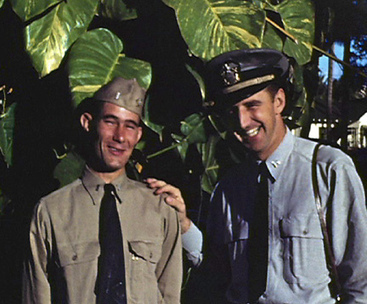
When Field Marshal Wilhelm Keitel signed Nazi Germany’s unconditional surrender on May 8, 1945 in Berlin (footage here), the Second World War may have been over for Europe, but the war on the Pacific front waged on as Japan refused to surrender. Only after the fateful decision to drop atomic bombs on Hiroshima and Nagasaki, and after the Soviets invaded Japanese-held Manchuria, did Emperor Hirohito accept the hopelessness of the situation and agree to surrender on August 15. When the official radio announcement (recording here) was broadcast – due to time zone differences on August 14 in the U.S. – the news spread like wildfire and the day became known as “Victory over Japan Day”, or simply as “VJ Day.” Spontaneous celebrations erupted all over the United States, but especially on Hawaii, where the Japanese attacked Pearl Harbor on December 7, 1941 leading the US to officially enter World War II.
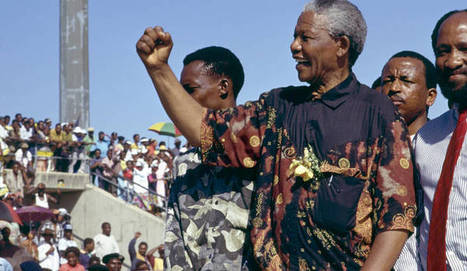
Twenty-seven May this year marked the 50th anniversary of Nelson Mandela’s first arrival onto Robben Island (he actually was received there twice, the second time after the Rivonia Trial was decided). Once incarcerated there, he eventually became the country’s most famous political prisoner (and most likely the world’s best-known one as well), as he spent much of the next three decades of his life before he finally left Victor Verster Prison on 11 February 1990 for a then still-uncertain life of political activity and personal freedom. Now, the nature of the legacy of this nonagenarian, elder statesman, a man who has not made a significant public appearance since the 2010 World Cup, is coming forward anew, even as his children squabble over money with the custodians of his finances. J BROOKS SPECTOR examines the crucial role of the newly refurbished Nelson Mandela Centre of Memory in the Mandela legacy effort.
Hermann Giliomee identifies the most important qualities for leader and party
Speech by Professor Hermann Giliomee, vice-president of the South African Institute of Race Relations, to the Education Colloquium of the Democratic Alliance caucus, May 15 2013
For history teachers, videos can be a powerful tool to contextualize events that seem intangible, or too far distant in the past. When it comes to World War II, specifically, this collection of videos put together by YouTube Education’s Angela Lin, bring a variety of perspectives for students to consider. In the mix, the topics cover the geopolitical significance of the war, as well as personal lives affected in the U.S., Europe, and Japan.
For Israelis and Palestinians trying to lead an ordinary life, the complications of living in a conflict zone can be extraordinary. Aziz Abu Sarah meets with people from both sides to understand how this conflict impacts their daily lives. He is a cultural educator, a native of Jerusalem, and a National Geographic Emerging Explorer who works in international conflict resolution.
If you are teaching the Middle East conflict you may want to check out this up-close and personal four-part series by National Geographic. The other parts cover Israel Defence Forces, Palestinian protestors and the possibility of a Space To Talk....
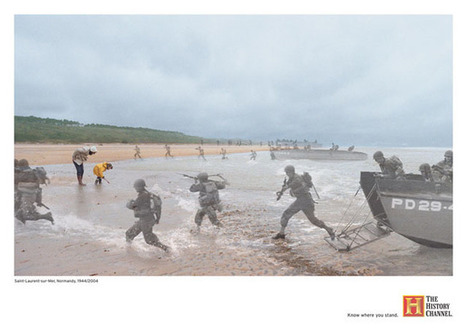
Photographer Seth Taras created then and now composites out of famous photos of momentous historical events for the 2004 “Know Where You Stand” ad campaign for the History Channel. The campaign was orchestrated by the Ground Zero ad agency and included four tv spots. Ground Zero has since merged with Wong, Doody, Crandall, Wiener.
To get content containing either thought or leadership enter:
To get content containing both thought and leadership enter:
To get content containing the expression thought leadership enter:
You can enter several keywords and you can refine them whenever you want. Our suggestion engine uses more signals but entering a few keywords here will rapidly give you great content to curate.


 Your new post is loading...


 Scoop.it!








This is clip is one of hundreds from the excellent Alphahistory Youtube channel. They not only have newsreel-type footage, but the bright sparks who run the channel have added great bits and pieces to give colour and context to historical issues. Around McCarthyism for example they provide clips such as Make Mine Freedom-a 1948 animated propaganda short extolling democracy over other forms of goverment; Edward R Murrow on McCarthyism and even How to spot a Communist, a 1950 propaganda short. If you want to make your lessons come alive this is a great place to start!