From the Cold War to the Russian Revolution-bits and pieces from the Net that you might find useful, brought to you courtesy of the Rondebosch Boys' High School Library (If you would like to receive a weekly newsletter of the latest items in this Scoop just mail me at library@rondebosch.com)
Published on Oct 13, 2014 Many people in the United States and Latin America have grown up celebrating the anniversary of Christopher Columbus’s voyage. But was he an intrepid explorer who brought two worlds together or a ruthless exploiter who brought colonialism and slavery? And did he even discover America at all? Alex Gendler puts Columbus on the stand in History vs. Christopher Columbus.
Ogilvy & Mather Cape Town have created a print campaign to promote the Walking Tours at the District Six Museum.
“During the apartheid years, the government forcibly removed over 60 000 coloured and black people from their homes in Cape Town’s District Six. These homes were demolished to make way for a new “whites only” area. The District Six Museum offers the unique experience of Walking Tours of the destroyed site, led by ex-residents. To promote the tours, we took photographs of former District Six residents on the sites of their former homes and suburb.”
Published on Oct 9, 2014 We live in the most peaceful time in human history. Wait, what? Seriously? That can't be right, there are more wars than ever! Well, no and they're killing fewer and fewer people, even though the world population is at an all-time high...and the numbers prove it! We explain how we came to this conclusion, and why war might... go away.
Springsteen played 32 songs in an epic four-hour performance. But which song was it that sent the Wall crumbling one year later? Was it, perhaps, “Born in the U.S.A.” (top)—the song about a bitter, disenfranchised Vietnam vet? More likely it was his cover of Bob Dylan’s “Chimes of Freedom”. Before that song, writes The Guardian, Springsteen gives “a passionate speech, delivered in a creaky but understandable German.” “I’m not here for any government,” he says, “I’ve come to play rock ‘n’ roll for you in the hope that one day all the barriers will be torn down.”
Published on Oct 6, 2014 Here is a quick timeline of The Space Race in 1957 to 1975 between the United States and the Soviet Union. Eventually taking the United States all the way to the moon! Would you ever want to go to space?
Published on Oct 7, 2014 As the pro-democracy protests in Hong Kong recede, one young woman reflects on the outcome and how it forced her to confront the inequities she sees every day.
Published on Oct 6, 2014 Thousands of massive stone monuments, known as Moai, preside over Easter Island. The way they were carved, using only stone tools, seems unfathomable.
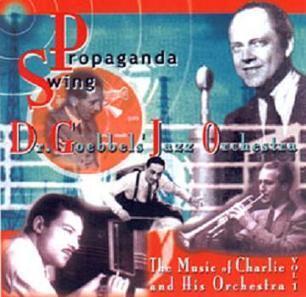
The Nazis, as you might expect, didn’t much care for jazz, or at least saw some political capital in openly denouncing it. Yet it seems they also saw some in embracing it, turning the quintessentially free art form toward, as always, their own propagandistic purposes. What if they could come up with their own popular jazz band and, using long-distance short- and medium-wave broadcast signals, turn the Allies’ own music against them? Enter, in 1940, Charlie and His Orchestra. Another Joseph Goebbels creation.
That color photography exists of anything in mid-1910s Europe, much less as momentous and disastrous a period as World War I, still surprises some people. We owe these shots to the efforts of German photographer Hans Hildebrand, as well as to his country’s already-established appreciation for the art and adeptness in engineering its tools.
Disobedient objects are often everyday items that have been turned to a new purpose. But social change is about making as much as breaking. Sometimes designing a new object creates a new way to disobey.
If you are looking for ways to make your history lessons come alive you may want to check out these instructions on how to make your own tear-gas mask, bucket pamphlet bomb or flone (a drone with a phone).
Published on Sep 30, 2014 ISIS wasn't the only target in the recent U.S. airstrikes in Syria. The U.S. also attacked a group of Al-Qaeda veterans and bomb makers referred to as The Khorasan Group. The organization was largely unknown to the American public up until now, yet U.S. officials considered them to be more dangerous than ISIS. Who exactly are they and how are they a big threat?
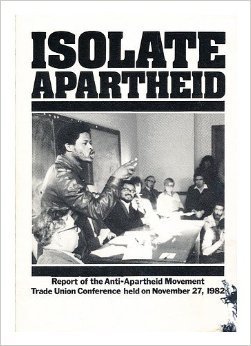
If you are looking for primary source material as well as some great images to liven up your classroom walls look no further! This collection of almost 5000 posters and photographs from the Eighties and Nineties includes a broad array of visual material from the anti-apartheid movement. There is a search function, but if you just want to browse through the material to see what's available you may want to start here. Just click on this link and then press the Next button on the top right-hand side to scroll through each successive image. Enjoy!
Published on Oct 9, 2014 Al Jazeera speaks to Karin Lukas, a German journalist, who was there in Leipzig in 1989 and witnessed the protests that led to the fall of East Germany.
Published on Oct 7, 2014 When the most isolated country in the world threatens a nuclear attack, there’s good reason for concern. North Korea may be off-the-grid globally, but their military manpower under Kim Jong-un is surprisingly strong. Just how powerful is North Korea?
Published on Oct 3, 2014 Hugh Bonneville and Jessica Hynes find a decent road as they travel to Stalin's birthplace, but the museum dedicated to the man leaves a sour taste in Hugh's mouth.
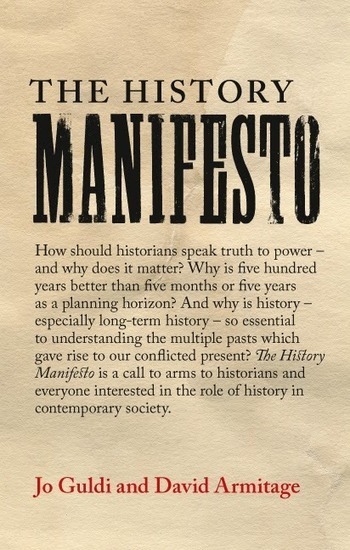
Cambridge University Press has just published a new book called The History Manifesto which argues that historians have lost their relevance by writing histories of the “short term” when they could be writing bigger, deeper histories, covering longer periods of time, that help readers put our world into perspective. It is a call for a return to long, meaningful narratives and big-picture thinking. Print editions will come out in November but you can read it online in PDF formats.
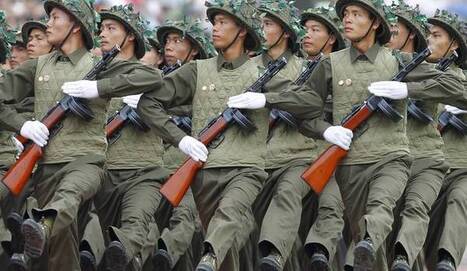
2014 is the 60th year since the defeat of French forces at the Battle of Dien Bien Phu. Veterans of that battle are in their dotage, their famous commander Grand General Von Nguyen Giap passing away in 2013 aged 102. Dien Bien Phu has transformed since 1954 when there were just 100 houses. But as the veterans fade away, Dien Bien Phu is a battle most Vietnamese have only read about in the history books. By GREG MILLS and ANTHONY ARNOTT.
Published on Oct 1, 2014 Former Bosnian Serb leader Radovan Karadzic has denied responsibility for the death of 100,000 people during the 1992-1995 war in Bosnia, claiming UN prosecutors have no "shred of evidence" against him.
To get content containing either thought or leadership enter:
To get content containing both thought and leadership enter:
To get content containing the expression thought leadership enter:
You can enter several keywords and you can refine them whenever you want. Our suggestion engine uses more signals but entering a few keywords here will rapidly give you great content to curate.


 Your new post is loading...


 Scoop.it!