


Nearly 70 years after it disappeared, a key piece of Nazi evidence has formally been turned over to the U.S. Holocaust museum. The hand-written accounts are from one of the most important and influential members of the Third Reich.

History resources for Teachers
7.4K views |
+0 today

From the Cold War to the Russian Revolution-bits and pieces from the Net that you might find useful, brought to you courtesy of the Rondebosch Boys' High School Library (If you would like to receive a weekly newsletter of the latest items in this Scoop just mail me at library@rondebosch.com)
Curated by
Andrew van Zyl
 Your new post is loading...
 Scoop.it! 
Charles Darwin, Felix Mendelssohn and Edgar Allan Poe were all born in 1809. But it was also a year that saw the birth of a Kentucky boy who went on to save the United States of America and forever define the essence of the just government. His name was Lincoln, Abraham Lincoln. By J BROOKS SPECTOR. 
Scoop.it!

Joe Sacco annotates The Great War The comics journalist Joe Sacco's new book The Great War tells the story of July 1, 1916—the first day of the Battle of the Somme, one of the bloodiest days in human history—through a single, astonishing panorama, 24 feet wide and containing thousands of human figures. Here Sacco annotates a small part of this epic undertaking, a tableau several inches wide.
Reeler Centre's insight:
I think this would be an awesome thing to put on your history classroom wall!
Scoop.it!

In late September, the US military declared the hunger strikes at Guantánamo Bay over. “At its peak,” writes Charlie Savage in The New York Times, “106 of the 166 prisoners … were listed as participants” in the strike. That number has now dropped to 19, they say, and they’re all being given “the appropriate level of care.” What exactly does that mean? You can get an idea from this animated video created by The Guardian. In 6 minutes, you’ll get introduced to the world of people who have spent years in prison. They’ve never been charged with a crime nor given access to the legal system. Despite being cleared for release, many remain stuck in limbo year after year. When they lose hope and go on hunger strike, they have tubes and food crammed down their noses.
Scoop.it!
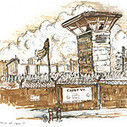
A Jamaican love song plays at Guantanamo Bay’s tiki bar. The woman cries that she will wait for her man forever. I drink my beer and think of Zin, the wife of British detainee Shaker Aamer. It’s been eleven years since the Northern Alliance arrested Shaker. Though not charged with any crime, he sits in a solitary cell a few miles from the tiki bar. Zin Aamer is still waiting.
Scoop.it!
Al-Shabab's deadly Westgate Mall siege in Nairobi is unlikely to alter Kenya's foreign policy, but the incident could encourage tighter U.S.-Kenya relations and reinforce Washington's engagement with the broader region, says CFR's Jendayi Frazer.
Reeler Centre's insight:
Although it is fairly easy nowadays to get information on news events, it often proves more difficult to understand the background to those events. This clip produced by the Council on Foreign Relations really helped me to contextualise the recent attacks in Nairobi. The CFR declares itself to be "an independent, nonpartisan membership organization, think tank, and publisher" and it seems to be a really useful resource to help oneself (and one's students) to get the backstory on contemporary events. I thought their Publications section which includes the views of their members, as well as opinion pieces from newspapers and primary sources, might be particularly helpful for teaching history.
Scoop.it!
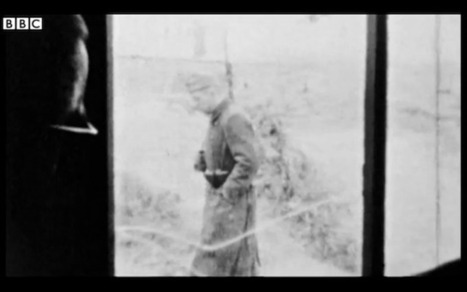
An incredibly brave and cunning group of French prisoners of war were able to construct a camera inside the Nazi prison camp they were being held at and film their conditions. Their rarely seen footage is called Sous Le Manteau (Clandestinely). So professional is it that on first viewing you would be forgiven for thinking it is a post-war reconstruction. Prisoners filmed the camp secretly with a camera inside a hollowed-out dictionary. It is in fact a 30-minute documentary, shot in secret by the prisoners themselves. Risking death, they recorded it on a secret camera built from parts that were smuggled into the camp in sausages. The prisoners had discovered that German soldiers would only check food sent in by cutting it down the middle. The parts were hidden in the ends.
Reeler Centre's insight:
You can read more about this amazing undertaking here, and I found a short clip on Youtube which shows footage the prisoners filmed while attempting to escape beneath a theatre on the campsite. Note-the film is in French, but if you click on the Captions button beneath the video and choose English, then you will get a rough translation of the text into English.
Scoop.it!

Paris, winter 1895. Georges Picquart is the ambitious, intellectual, recently promoted head of the counterespionage agency that helped convict Dreyfus of treason. Picquart staunchly believes in Dreyfus's guilt-even after he witnesses the man's protestations of innocence in front of twenty thousand spectators baying "Death to the Jew!" But gradually Picquart comes to suspect that a spy remains at large in the military. With evidence mounting, pointing to deceit at the highest levels of government, Picquart has nowhere to turn and is compelled to question his most deeply held beliefs about his country and himself. Bringing to life the scandal that mesmerized the world at the turn of the twentieth century, Harris tells a tale of uncanny timeliness-a whistle-blower, a witch hunt of a minority, secret tribunals, out-of-control intelligence agencies, government corruption, a cover-up-richly, dramatized with the storytelling mastery that has marked all of his internationally best-selling novels.
Reeler Centre's insight:
If you enjoy historical thrillers you will be excited to learn that Robet Harris, author of Fatherland and Enigma has attempted a recreation of one of the most infamous cases of official injustice-the Dreyfus Affair. If you haven't read Fatherland or Enigma you are missing out!
Scoop.it!
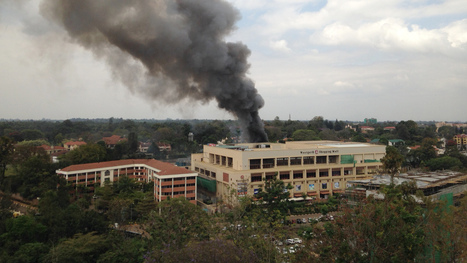
The group that claimed responsibility for the attack on the mall in the Kenyan capital, Nairobi, began as a militia fighting in Somalia. But it has evolved into an al-Qaida affiliate that views Somalia as a front in the war against the West.
Scoop.it!

Al-Shabab, a Qaida-linked Somali insurgent group known for brutal, terroristic tactics, has claimed responsibility for the grisly massacre at a mall in Nairobi today. That in itself is unsurprising: The perpetrators of political violence have long sought media attention for their cause. What is new is the degree to which al-Shabab in particular makes use of social media to broadcast its side of the story directly to the public.
Scoop.it!

I vividly remember being disappointed during my first year of teaching: my students weren’t nearly as excited about primary source documents as I was. Primary source documents, as you know, offer readers a unique, real-world perspective, and I thought my kids would love delving into them. I soon learned that my disappointing results weren’t due to the documents that I’d selected, but rather how I was having students use them. That first year, they weren’t doing anything but reading them. Today, Web-based tools enable students to discover more primary sources than ever before and engage them in dynamic ways. The following items are some of my favorites.
Scoop.it!
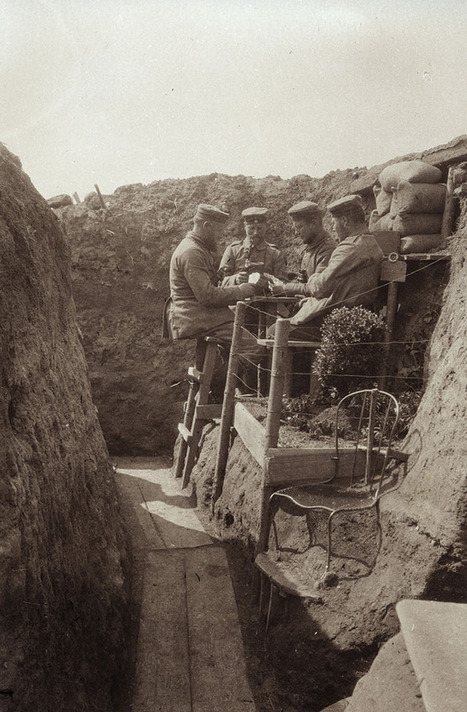
Developer Dean Putney has embarked on a fascinating project to share nearly 1,000 unpublished photos of World War I that were taken by his Great Grandfather, Walter Koessler, who was an officer in the German army throughout the war. As a hobbyist photographer Koessler provided a rare personal record of the war—most images of the era were taken by official press or propaganda photographers. Putney is sharing photos on the Walter Koessler Project Tumblr blog and on Boing Boing.
Scoop.it!

"White farmers also didn’t want to compete with black farmers over land price. The 1913 Natives Land Act, which set aside just 7% of agricultural land for the use of black people, was designed to take care of these concerns. There was a further benefit for white rulers: the reserves to which black people were confined “created a physical and social space in which to contain large numbers of black people at minimal cost”. Bundy quotes Godfrey Lagden, the Transvaal’s Native Affairs Commissioner: “Every rabbit has a warren where he can live and burrow and breed and every native must have a warren too”."
|
Scoop.it!

With the war's centenary near, this is not a parlour game. Counterfactual conjecture allows us to see the conflict far more objectively.
Scoop.it!

Erik Sass has been covering the events leading up to World War I exactly 100 years after they happened. But today he's here to discuss some inventions of The Great War.
Scoop.it!

In today's selection -- the Mongols did not just conquer, they completely leveled the civilizations they conquered: "Part of Genghis Khan's strategy was calculated massacre: if a city resisted his armies, once it fell to him -- and they always fell -- he had all the inhabitants slaughtered. The chroniclers' reports of the numbers of dead are staggering; 1,600,000 at Harat in 1220. Rumor reached the Mongol prince Tuli that some had survived there by hiding among the piled corpses, and when he took Nishapur, some time later, he ordered the heads cut off all the bodies. At Nishapur, according to contemporaries, 1,747,000 died.”
Reeler Centre's insight:
If you teach history you may want to subscribe to Delanceyplace's daily newsletter. Here's what they're about: Delanceyplace is very simply a brief daily email with an excerpt or quote we view as interesting or noteworthy, offered with commentary to provide context. Generally the extract is from a new book and the focus is often on history, so you get a useful extract and an introduction to a new title which you may want to buy later!
Scoop.it!

The Second World War was waged over six long years on every continent save South America and Antarctica. Seventy-some years later, the daily shifts of the European Theater’s front lines can be tracked in under seven minutes, thanks to a mysterious, map-loving animator known variously as Emperor Tigerstar or Kaiser Tigerstar (the latter accounts for the helmet-wearing kitten gracing the upper corner of his World War I time-lapse).
Scoop.it!
Filmed in the middle of Egypt's days of rage in August, this report got to the heart of the tensions that erupted Cairo into violence, providing a close-up look at the country's newly increasing turmoil.
Scoop.it!
Syria has become the bloodiest uprising of the Arab Spring and has now descended into a full-blown civil war. Find out what's behind the conflict and what's at stake for the international community
Scoop.it!
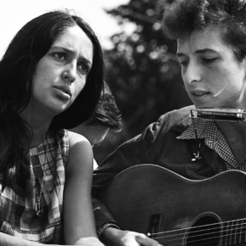
Today is the fiftieth anniversary of the March on Washington for Jobs and Freedom, which brought roughly two hundred and fifty thousand men, women, and children, mostly African-American, to the nation’s capital. It’s best remembered for Martin Luther King, Jr.’s, “I Have a Dream” speech, though that was only a corner of the overall picture. The lineup of speakers at the march was controversial: James Baldwin was not permitted to address the crowd, and other than Josephine Baker, who made opening remarks but was not on the official program, there were no female speakers. The sound system secured for the event was itself an event. The evening before the march, saboteurs destroyed the system, which had to be rebuilt by the Army Signal Corps of Engineers. And then there was the music. Here are the day’s singers, along with footage (in some cases audio only) of their performances.
Reeler Centre's insight:
A useful selection of songs which communicate the spirit of resistance and hope of the march.
Scoop.it!

We may be at a turning point in the Syrian agony, when diplomatic action combined with the threat of force moves the Syrian regime toward putting its chemical weapons under international control. If this happens it will be a victory for international law, for the authority of the UN Security Council, and for peace. But it is only too obvious that thus far the peoples of the democratic states have failed in our responsibility to protect the people of Syria.
Scoop.it!
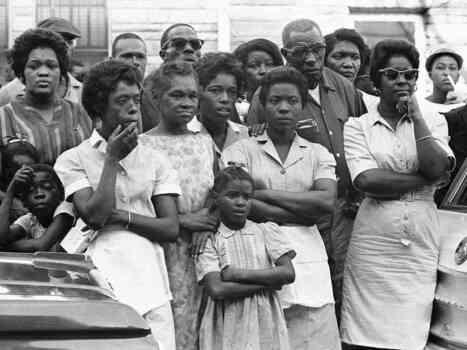
The Birmingham church bombing that killed four African-American girls fifty years ago was no isolated racial horror. At the time, the Sixteenth Street Baptist church bombing was just another in the decade long train of racist terror attacks that included beatings, shootings, mob attacks, ambushes, and, of course, bombings. Dozens were killed in the attacks. The victims had two things in common. They were either targeted for their civil rights work, or targeted solely out of racial hate and revenge. The other was that in nearly every case their killers were never prosecuted, and in more cases than not, were not even arrested though their identities were often well-known.
Scoop.it!
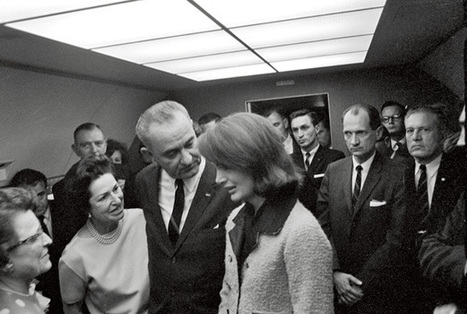
From noon to dusk on November 22, 1963, history went dark, locked inside the closed and crowded cabin of Air Force One. Fifty years later, what happened after JFK died has fully come to light.
Scoop.it!
Unless you're new to the internet, you probably know that Tesla was an incredibly popular scientist and inventor who was WAY ahead of his time. But was he really the valiant underdog against the Goliath of Edison that we've come to know and understand? Despite what you may think, there are actually TWO Teslas - the meat and bones Tesla, who was born in 1856 and died in 1943, and then there's the culturally created Tesla. Neither is wrong, but all this starts making us question: what even IS "history"?
Scoop.it!

On 11 July 1963 police raided Liliesleaf Farm in Rivonia and arrested the high command of Umkhonto we Sizwe. The arrests resulted in the Rivonia Trial at which eight accused – Nelson Mandela, Walter Sisulu, Govan Mbeki, Andrew Mlangeni, Raymond Mhlaba, Ahmed Kathrada, Elias Motsoaledi and Denis Goldberg – were sentenced to life in prison. RYLAND FISHER speaks to the founder of the Liliesleaf Trust, Nicholas Wolpe, about history and the future of the farm.
|






American bastards lost an evidence