From the Cold War to the Russian Revolution-bits and pieces from the Net that you might find useful, brought to you courtesy of the Rondebosch Boys' High School Library (If you would like to receive a weekly newsletter of the latest items in this Scoop just mail me at library@rondebosch.com)
Not so long ago, looking for a history of Ukraine in a London bookstore, I was offered the following memorable advice: “Look under Russia”. I did. And between shelves groaning with the glories of Russian history I found two thin volumes on Ukraine, a country of some forty six million people. I bought both. I doubt very much they were immediately replaced. ‘Looking under Russia’ is perhaps an appropriate metaphor for Ukrainian history.
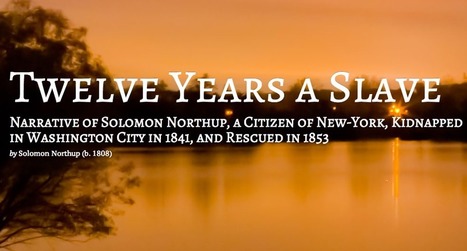
On Sunday night, 12 Years a Slave was named best picture at the 86th Academy Awards. John Ridley’s screenplay was based, of course, on Twelve Years a Slave, the 1853 memoir by Solomon Northup. Published not long after Uncle Tom’s Cabin, the book became something of a bestseller before falling into relative obscurity. The 2013 film obviously put the memoir back into the spotlight, and it inspired someone to put the book on the web in a handsome, readable format. You can head over to 12years.org to read Northup’s dramatic personal account, free online.
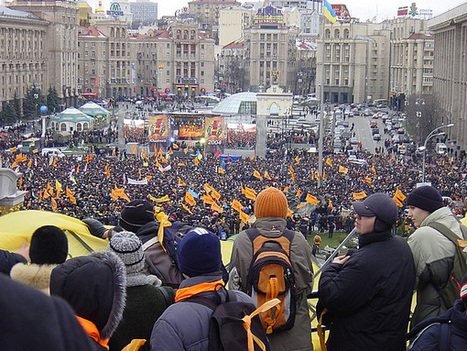
Seemingly out of nowhere, Ukraine and Crimea are now at the centre of the international landscape in a way that has not been so since the Roosevelt, Stalin and Churchill met at the Crimean resort of Yalta, just before the end of World War II in Europe, to set out the continent’s future. The overthrow of a Ukrainian president Yanukovych has made the ancient fault-line between ethnic Russians and Ukrainians a key element of the conflict in Ukraine. J. BROOKS SPECTOR tries to untangle it all.
It is almost difficult to believe that this year marks the fortieth anniversary of the Watergate scandal and the resignation of Richard Nixon. It helped prove to even congenital optimists that senior officials could lie, cheat and prevaricate and pervert heretofore trusted organs of state in an attempt to cover it all up and keep their crimes undiscovered. Perhaps we can all learn something from it. J BROOKS SPECTOR
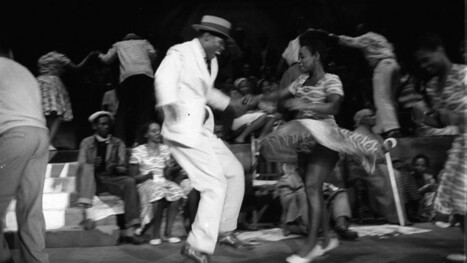
"Why Should I Be Proud of Africa?" That's a thought-provoking question and is also the theme of the Black History Month Tour. The tour coincides with what is known as "African-American History Month" celebrated in the United States.
Manny Man Does the history of World War 1 in six minutes. It's a quick and easy way to get up to speed on what the First World War was about, especially with the centenary going from 2014 to 2018! Of course it's six minutes so not every single detail is in there but you get the general gist of what happened!
Soviet Toys came out in 1924, during Lenin’s New Economic Policy (NEP), which gave some market incentives to small farmers. The movie opens with a bloated caricature of a Capitalist devouring food. Later, as priests look on, a worker tries to extract money from the Capitalist. When that fails, the worker and a passing peasant fuse bodies to create a two-headed being that stomps on the Capitalist’s belly, which pops open. Then members of the Red Army pile together and form a sort of human pyramid before turning into a giant tree. They hang the Capitalist along with the priests. The end.
Artists United Against Apartheid was a 1985 protest group founded by activist and performer Steven Van Zandt and record producer Arthur Baker to protest apartheid in South Africa.
If you're teaching on the increased isolation of South Africa during the Eighties you might want to use this. The lyrics are below the song and if you are teaching teens they will also enjoy those wild hairstyles and very young versions of rock legends...
The Soviets did have a doomsday machine, and a rogue American officer could have launched a nuclear attack.
"The first casualty of every war is the truth—and the Cold War was no exception to that dictum. Half a century after Kubrick’s mad general, Jack D. Ripper, launched a nuclear strike on the Soviets to defend the purity of “our precious bodily fluids” from Communist subversion, we now know that American officers did indeed have the ability to start a Third World War on their own."
As 2013 bled into 2014, I read two books that on the surface, had nothing to do with each other. Yet they led me to a startling realisation that made me think perhaps they should be set reading for all South Africans. By MARK HEYWOOD
The BBC has just launched an exhaustive interactive site on the War, which they call the first in a new way they say they plan to rebrand all their content. The new brand is called iWonder, and their World War One iWonder Guide has just about anything you want to know and is presented in an interactive and accessible format.
Imagine if you could surf Facebook ... from the Middle Ages. Well, it may not be as far off as it sounds. In a fun and interesting talk, researcher and engineer Frederic Kaplan shows off the Venice Time Machine, a project to digitize 80 kilometers of books to create a historical and geographical simulation of Venice across 1000 years.
The work of Hannah Arendt has been in the press recently for two reasons: the 50th anniversary of her book Eichmann in Jerusalem, published in 1963 from reports she filed for The New Yorker and the 2012 biopic Hannah Arendt, starring German actress Barbara Sukowa as the German Jewish philosopher. Recent coverage of the book and the film have focused on Arendt’s reputation as a philosophical journalist most closely identified with the famous descriptive phrase “the banality of evil,” a comment on Adolf Eichmann as an exemplar of genocidal murderers who, as the well-worn defense goes, were “just following orders.” Those interested in connecting with Arendt’s life and scholarship can find a wealth of archival materials online from the collections of Bard College and the Library of Congress.
We know that Julius Malema does not understand economics. How can he, when he claims what he espouses is freedom? But the populist rhetoric is popular. It works. And since he's not alone on the far left, the people that respond to it ought to understand its true meaning. by IVO VEGTER
The UNESCO Courier magazine has been in print since 1948 and aims to promote UNESCO’s ideals by maintaining a platform for the dialogue between cultures and provide a forum for international debate. The good news for history teachers is that all 700 issues of the magazine are available for free online! You can search through the archives here, but you may want to start by looking at this page which hosts a collection of items on Nelson Mandela and the history of Apartheid. Some good stuff-if you browse through the 1967 special edition on "Apartheid in South Africa" you will find articles by Alan Paton, Lewis Nkosi and Breyten Breytenbach, to name a few. Happy hunting!
Published on Feb 15, 2014 Johannesburg - If a picture speaks a thousand words, some of the images captured during the apartheid era speak volumes. Having toured globally, the 'Rise and Fall of Apartheid' exhibition is now home at the Museum Africa in Newtown.
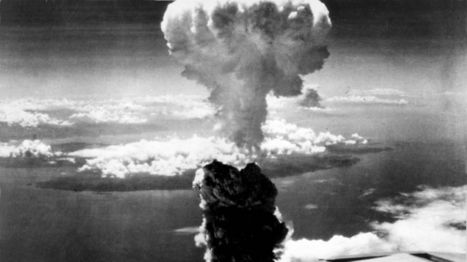
Here’s a silent film showing ”the final preparation and loading of the ‘Fat Man’ bomb into ‘Bockscar,’” the plane that would drop a devastating bomb on Nagasaki on August 9, 1945. The footage from the Los Alamos National Laboratory is raw, except for the helpful annotations added by Alex Wellerstein, who runs Nuclear Secrecy: The Restricted Data Blog. Eventually, toward the 8 minute mark, the video shows “the Nagasaki explosion from the window of an observation plane.”
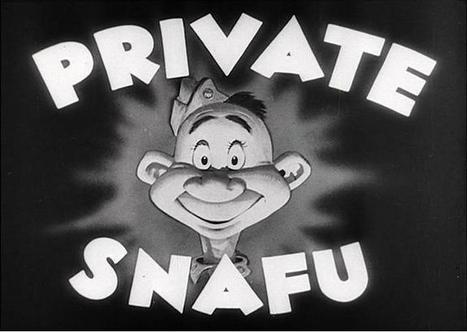
Private Snafu was the U.S. Army’s worst soldier. He was sloppy, lazy and prone to shooting off his mouth to Nazi agents. And he was hugely popular with his fellow GIs.
The images in the archive can be sorted by theme. If you find one you like, you can choose to download the image in a high-resolution format, ranging from small to extra large. Scholars of the French Revolution won’t want to miss another part of the newly-created archive. It contains the Archives parlementaires, a series of historical documents that record the political events of the Revolution
Happy Nazis: The shocking Holiday snaps of the terrifying Nazis in charge of running second world war death camps. In January 2007 a photo album marked "Auschwitz: 21 June 1944" was made public. It revealed astonishing clues as to how the Nazi extermination team enjoyed a life that they ruthlessly denied their victims.
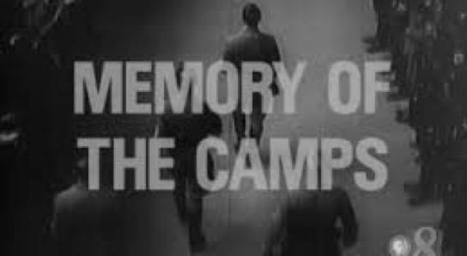
This new, restored film draws on footage shot by the British Army Film Unit in Nazi concentration camps in 1945, which was released in the mid-80s, in a film called Memory of the Camps. This first version, which you can watch above, took nearly forty years to reach the public, when it was finally released in 1984, first at the Berlin Film Festival, then on PBS. Until that time, the original footage sat unused in storage at the Imperial War Museum
To get content containing either thought or leadership enter:
To get content containing both thought and leadership enter:
To get content containing the expression thought leadership enter:
You can enter several keywords and you can refine them whenever you want. Our suggestion engine uses more signals but entering a few keywords here will rapidly give you great content to curate.


 Your new post is loading...