


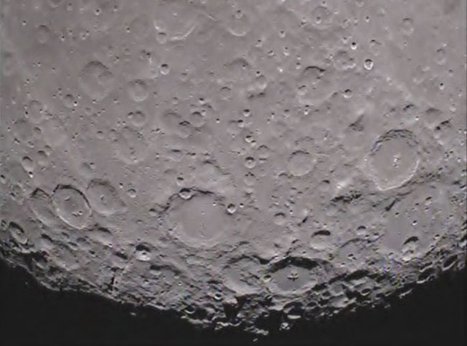

New images from the far side of the moon have been acquired from video cameras on NASA's moon spacecraft mission called the Gravity Recovery And Interior Laboratory (GRAIL).
Main focus of the mission is educationnal.

 Your new post is loading...
 Your new post is loading...
Your new post is loading...
 Scoop.it!
New images from the far side of the moon have been acquired from video cameras on NASA's moon spacecraft mission called the Gravity Recovery And Interior Laboratory (GRAIL). Main focus of the mission is educationnal. 
No comment yet.
Sign up to comment
Scoop.it!

ForbesNASA launches Facebook game for space nerdsRegisterBy Team Register • Get more from this author NASA has created its first ever multiplayer online game, Space Race Blastoff - and it's now available on Facebook. Via Rami Kantari
Scoop.it!

No comment... (but I didn't verify - did you?)
Scoop.it!

Astronomers said Wednesday that each of the 100 billion stars in the Milky Way probably has at least one companion planet, adding credence to the notion that planets are as common in the cosmos as grains of sand on the beach.
Wow! This is big and science goes fats. Back in 1994, we weren't sure there weren't any other solar system and now, just 15+ years later, we seem to have evidence there are billion others.
"To estimate the number of other worlds, Dr. Cassan and his colleagues studied 100 million stars between 3,000 and 25,000 light-years from Earth with gravitational microlensing."
And they apparently found most of them had at least one or two planets - most of them of course unsuitable for carbon-based life. Via Sakis Koukouvis

Sakis Koukouvis's comment,
January 12, 2012 11:47 AM
I see...
You are right. Mark Lamm suggest this article to me and I scooped it automatically. I didn't see the complete url. Anyway, I think that it is not so serious. Thank you olivierc :-) 
The BioSync Team's comment,
January 12, 2012 12:08 PM
Strange ... I 'test' rescooped from your site to READ | WATCH | LISTEN with no problem and also clicked to test back to the WSJ also with no problem.
Scoop.it!

Early in December, astronomers confirmed the existence of the first known world beyond the Solar System that exists in a cozy, habitable zone around its sun-like star.It’s too soon to say whether the planet, called Kepler-22b, has a rocky, watery or gassy surface. Nevertheless, NASA used some artistic license to render the planet (below), casting it in a green-blue with wispy white clouds.Astrobiologist Abel Mendez of the University of Puerto Rico at Arecibo, who is developing new software to render scientifically accurate images of exoplanets, said NASA’s illustration misses the mark.“I think that the NASA image got the color right,” Mendez said, “but I don’t expect clouds like that. It probably will be more featureless like Uranus or Neptune and not so good for a press release.”To Mendez, it’s more than an artistic quibble. Since the Kepler telescope launched in March 2009, the space-based observatory has pinpointed a whopping 2,326 exoplanet candidates, and that number is growing by about 70 planets a month.It’s an untenable situation for space artists, whose renderings often lack the accuracy informed by current planet formation theories. More importantly, said Mendez, databases of scientifically informed portrayals of unseen exoplanets — including animations — could help make sense of direct future observations...
Scoop.it!
Nice!"A beautiful and mesmerizing series of time-lapse videos taken by astronaut Ron Garan during his last weeks aboard the International Space Station"
Scoop.it!
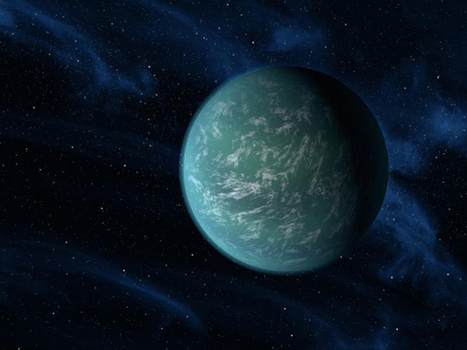
According to this article by The Register, NASA’s Kepler mission "has spotted the first possibility" for an habitable exoplanet. But I'm a bit confused as this is also what was reported back a few months ago here.
The good news is that the search for our new home seems to be making progress. Via Sakis Koukouvis
Scoop.it!
The rover will take more than 8 months to reach the red planet.
It's bigger and heavier than its predecessors and should cover much ground around the Gale crater, a site rich in minerals. It will also use a jet pack landing system and not the airbag mechanism used before. Next step: man mission?
Scoop.it!

Imagine if every time you went for on a trip, you had to carry all the fuel required to get you to your destination and back - even if that trip was to a place far, far away, like say Mars.
Project would only be the cost of a North Sea Oil complex: $15B. And would be ready by 2020. Realistic? Optimistic?
Scoop.it!

"During the 520-day fake mission to the Red Planet, nerves were sometimes frayed." But, in spite of that finding, the mission - which attempted at replicating the conditions of a real Mars mission by confining a team of 6 would-be astronauts in a replica spaceship - was otherwise a success. Jealousy was triggered by uneven work distribution or unbalanced reception of messages from loved ones. Good enough to try it for real in a few years?
Scoop.it!
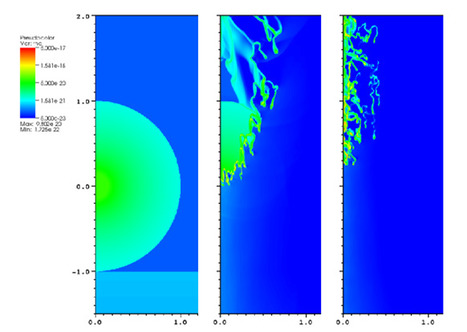
Interesting read on how our solar system was born. Among the different hypothesis, a simulation seems to favor the one of a supernova.
Scoop.it!
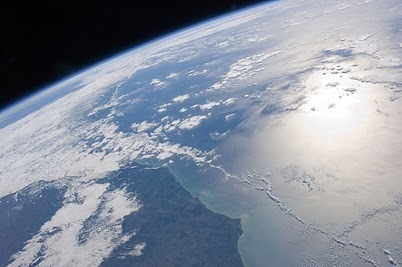
As I discovered through Google+ thanks to David D. Stanton, Ron Garan is an astronaut who started using Google+ while he was living in space on the ISS. He took pretty amazing pictures of earth that are on his profile. I encourage you to click through and discover them: I love this social media + space combo.
Scoop.it!

"The circular patterns within the cosmic microwave background suggest that space and time did not come into being at the Big Bang but that our universe in fact continually cycles through a series of of "aeons," according to University of Oxford theoretical physicist Roger Penrose." Interesting theory: this would mean the Big Bang would keep repeating itself overtime.
|
Scoop.it!
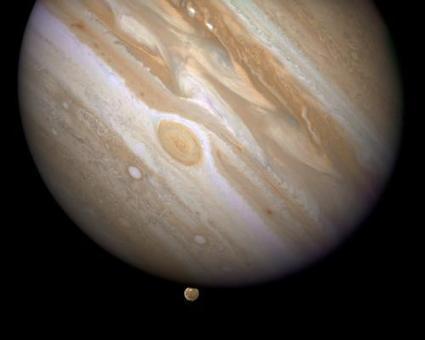
Advances in technology have lead to the discovery of new planets outside of our Solar System, and now even new moons in our own backyard. These moons are apparently distant from Jupiter and very tiny (1 km...). Question is whether they've been captured or formed at the same time of the giant planet.
Scoop.it!
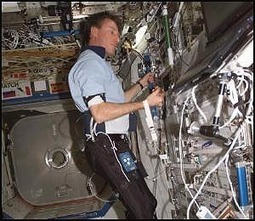
Do you have what it takes to become an astronaut?
Scoop.it!
Stratolaunch Systems Space Aircraft Brings Paying Passengers Into Orbit With 6 Boeing 747 Engines
Scoop.it!

"Engineers at NASA's Goddard Space Flight Center are working on a harpoon gun that can spear the heart of the comet, collect a sample of subsurface dirt in its tip and reel it back into the hovering craft."
Could help understand the role of comets in bringing key ingredients for life to appear on earth.
Scoop.it!

Extrasolar planet discoveries have boosted by 50 percent the number of known planets orbiting massive stars concludes a survey of about 300 stars.
Scoop.it!
If you have a college age student with an undeclared major, you may want to steer them into astronomy.
Apparently the combination of skills links Mathis and computer science and science you need to major is a winner.
Scoop.it!

Pretty cool 360 tour of the Space Shuttle cockpit.
Scoop.it!
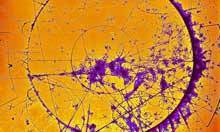
"Finding that contradicts Einstein's theory of special relativity is repeated with fine-tuned procedures and equipment."
But the search for errors is not over yet... When I heard of the results on the first experiment, I didn't even publish them, thinking it was a joke or an error. Exciting to see how this will be explained in the next few years.
Scoop.it!
Just heard Brian Greene this afternoon on NPR: fascinating speaker. Very clear. Made me want to look further and I discovered this great TED talk he gave explaining how string theory works and could be the unifying theory Einstein was looking for. In very clear terms. Fascinating.
Scoop.it!
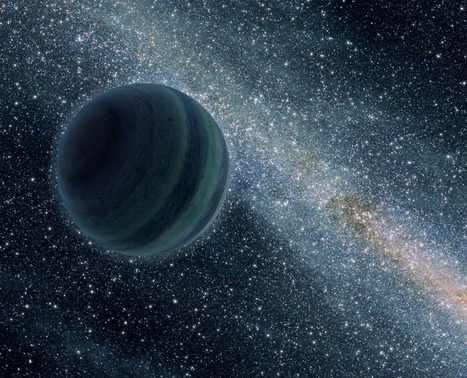
The "fifth planet" is a hypothesized giant world that was flung out of our solar system 4 billion years ago.
Some recent simulations on how the Solar System was formed have indeed shown highly unlikely results when assuming 4 giant planets only (Jupiter, Saturn, Uranus and Neptune). But a much better outcome with a 5th planet.
Now, where is it? Somewhere wandering in the dark cold space within the Galaxy... Via Duncan Kaiser, Randi Springer
Scoop.it!
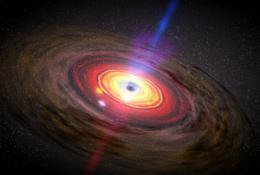
(PhysOrg.com) -- Astronomers at Copenhagen's Niels Bohr Institute have found a new way to measure distances. The solution is - in brief and as far as I understood - to use quasars and correlate their brightness with their distance. Could it mean we understand better exactly how far some remote galaxies are? And how fast the Universe expands?
|






