PARLIAMENTS - (PAP) PAN AFRICAN PARLIAMENT
16.2K views | +0 today
PARLIAMENTS - (PAP) PAN AFRICAN PARLIAMENT
The Pan-African Parliament (PAP), also known as the African Parliament, is the legislative body of the African Union. It held its inaugural session in March 2004. The Parliament exercises oversight, and has advisory and consultative powers, having lasting for the first five years. Initially the seat of the Pan-African Parliament was in Addis Ababa, Ethiopia, but was later moved to Midrand, South Africa. The goal in establishing the parliament was creating a space where people from all states of Africa could meet, deliberate, and pass some policy on issues that affect the entire continent of Africa.

The Parliament is composed of a maximum of five members per member state that have ratified the Protocol establishing it, including at least one woman per Member State. These members are selected by their member state and their domestic legislatures. The overall goal for the parliament is to be an institution that has full legislative power whose members are elected through universal suffrage, as stated by South African President Jacob Zuma in his opening speech to the first ordinary session of the second legislature of the Pan-African Parliament on October 28, 2009.

The Pan-African Parliament is composed of three sections. The Plenary is the main legislative and deliberation section of the Parliament, where representatives meet regularly to discuss issues in Africa and potential solutions. The Bureau is the leadership section of the Parliament, made up of a president and four vice presidents, all of whom are elected by delegates in the Plenary. The final section of the Parliament is the Secretariat, which is the organizational body of the Parliament and is chaired by a Clerk, Deputy Clerk, and an Acting Deputy Clerk. Together, these structures maintain and carry out the goals and protocol set out to govern the Parliament.

At the Parliament's 2022 elections, Chief Fortune Charumbira from Zimbabwe was elected as the new President, and Massouda Mohamed Laghdaf from Mauritania, Ashebiri Gayo from Ethiopia, Lúcia Maria Mendes Gonçalves dos Passos from Cape Verde, and Francois Ango Ndoutoume from Gabon were elected as Vice Presidents.

Structure
The Parliament is made up of three main bodies: the plenary, bureau, and secretariat. There are also Ten Permanent Committees, which were created to deal with different sectors of life in Africa.

Plenary
The Plenary is the main decision-making body of the Parliament. The Plenary consists of the delegates from the member states, and is chaired by the President. It is the body which passes resolutions.

The Pan-African Parliament has 235 representatives that are elected by the legislatures of 47 of the 54 AU states, rather than being directly elected in their own capacity. Each member state sends a delegation of five parliamentarians to the Parliament, at least one of whom must be a woman. The composition of the delegation should reflect the political diversity of the member state's legislature.

Bureau
Main article: Bureau of the Pan-African Parliament
The Bureau is the leadership group of the Parliament and consists of the President and four vice-presidents. Each member of the Bureau represents a different region of Africa. The current members of the Bureau are:

President - Hon. Chief Fortune Zephania Charumbira from Zimbabwe.
First Vice President -Hon. Prof Massouda Mohamed Laghdaf from Mauritania.
Second Vice President - Hon. Dr Ashebiri Gayo from Ethiopia
Third Vice President - Hon. Lucia Dos Passos from Cape Verde
Fourth Vice President - Hon. Djidda Mamar Mahamat from Chad
Secretariat
Main article: Secretariat of the Pan-African Parliament
The Secretariat assists in the day-to-day running of the Parliament, undertaking duties such as minuting meetings, organizing elections and managing staff. The Secretariat consists of the Clerk of Parliament and two Deputy Clerks – one of whom leads the Legislative Business Department, the other the Finance, Administration, and Human Resources. The Clerk of Parliament and their deputies are also supported by other staff and functionaries when needed.

History
The Abuja Treaty of 1991 and Sirte Declaration of 1999 called for the creation of a PAP. The former had simply listed the PAP among the organization's bodies and stated, "In order to ensure that the peoples of Africa are fully involved in the economic development and integration of the Continent, there shall be established a Pan-African Parliament. The composition, functions, powers and organisation of the Pan-African Parliament shall be defined in a Protocol providing thereof." The Treaty on the Establishment of the African Union and a Protocol to the Treaty Establishing the African Economic Community relating to the Pan-African Parliament followed. Then there was the Constitutive Act of the African Union. The Protocol Establishing the Pan African Parliament was adopted in 2000 during the OAU Summit in Lomé, Togo. SEE MORE https://en.wikipedia.org
Your new post is loading...
Scooped by KROTOASA RESEARCH-INTENSIVE INSTITUTE (KRII)
April 26, 2014 8:59 PM
Scoop.it!

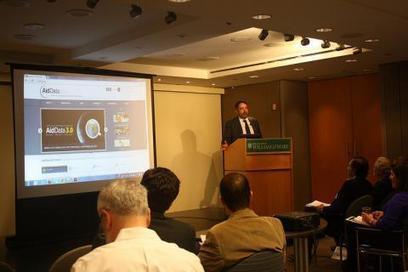
Get the Inside Scoop on AidData 3.0: Launch Event Highlights and Audio Now Available! | AidData 3.0

Get the Inside Scoop on AidData 3.0: Launch Event Highlights and Audio Now Available! | AidData 3.0 | PARLIAMENTS - (PAP) PAN AFRICAN PARLIAMENT | Scoop.it
No comment yet.
Scooped by KROTOASA RESEARCH-INTENSIVE INSTITUTE (KRII)
April 26, 2014 8:33 PM
Scoop.it!

A Data Revolution for 2014: It Starts With Data, But Ends With Action-Inducing Insights | AidData 3.0

A Data Revolution for 2014: It Starts With Data, But Ends With Action-Inducing Insights | AidData 3.0 | PARLIAMENTS - (PAP) PAN AFRICAN PARLIAMENT | Scoop.it
No comment yet.
Scooped by KROTOASA RESEARCH-INTENSIVE INSTITUTE (KRII)
April 26, 2014 8:30 PM
Scoop.it!

From Rhetoric to “Revolution”: Mexico’s Challenge to Cultivate a Culture of Transparency | AidData 3.0

No comment yet.
Scooped by KROTOASA RESEARCH-INTENSIVE INSTITUTE (KRII)
April 26, 2014 8:27 PM
Scoop.it!

5 Things You Should Know Before Starting a Citizen Feedback Initiative | AidData 3.0

5 Things You Should Know Before Starting a Citizen Feedback Initiative | AidData 3.0 | PARLIAMENTS - (PAP) PAN AFRICAN PARLIAMENT | Scoop.it
No comment yet.
Scooped by KROTOASA RESEARCH-INTENSIVE INSTITUTE (KRII)
April 26, 2014 8:26 PM
Scoop.it!

A Fuzzy Transparency Mandate for the Global Partnership for Effective Development Cooperation | AidData 3.0

A Fuzzy Transparency Mandate for the Global Partnership for Effective Development Cooperation | AidData 3.0 | PARLIAMENTS - (PAP) PAN AFRICAN PARLIAMENT | Scoop.it
No comment yet.
Rescooped by KROTOASA RESEARCH-INTENSIVE INSTITUTE (KRII) from OECD DAC in the news
April 26, 2014 2:21 PM
Scoop.it!

Aid To Sub-Sahara Expected To Decline | IDN-InDepthNews | Analysis That Matters

Aid To Sub-Sahara Expected To Decline | IDN-InDepthNews | Analysis That Matters | PARLIAMENTS - (PAP) PAN AFRICAN PARLIAMENT | Scoop.it
By Jaya Ramachandran | IDN-InDepth NewsAnalysis PARIS (IDN) - While the trend of rise in international development assistance, which increased by 6. 1 percent in real terms in 2013, is expected to

Via OECDdev
No comment yet.
Rescooped by KROTOASA RESEARCH-INTENSIVE INSTITUTE (KRII) from OECD DAC in the news
April 26, 2014 2:19 PM
Scoop.it!

News Press - When will Europe's biggest economies deliver to the world's poorest ? - AfGH - Action for Global Health

News Press - When will Europe's biggest economies deliver to the world's poorest ? - AfGH - Action for Global Health | PARLIAMENTS - (PAP) PAN AFRICAN PARLIAMENT | Scoop.it
Action for Global Health responds to the latest OECD figures, which shows that EU member states share of aid to Africa continues to drop, despite highest-ever recorded increase in Official Development...

Via OECDdev
No comment yet.
Rescooped by KROTOASA RESEARCH-INTENSIVE INSTITUTE (KRII) from OECD DAC in the news
April 26, 2014 2:17 PM
Scoop.it!

Scaling Up Education: Finding New Financing Methods

Scaling Up Education: Finding New Financing Methods | PARLIAMENTS - (PAP) PAN AFRICAN PARLIAMENT | Scoop.it
It looks like funding for education aid is always going to be a source of controversy. Disbursed aid levels for education in developing countries are barely reaching one-third of what governments have committed to....

Via OECDdev
No comment yet.
Rescooped by KROTOASA RESEARCH-INTENSIVE INSTITUTE (KRII) from OECD DAC in the news
April 26, 2014 2:16 PM
Scoop.it!

Switzerland's official development assistance in 2013

Click here to edit the title


Via OECDdev
No comment yet.
Scooped by KROTOASA RESEARCH-INTENSIVE INSTITUTE (KRII)
April 26, 2014 1:58 PM
Scoop.it!

Global Partnership for Effective Development Cooperation: A feminist perspective following the First High Level Ministerial Meeting / Friday Files / News & Analysis / Homepage - AWID

Global Partnership for Effective Development Cooperation: A feminist perspective following the First High Level Ministerial Meeting / Friday Files / News & Analysis / Homepage - AWID | PARLIAMENTS - (PAP) PAN AFRICAN PARLIAMENT | Scoop.it


Over 200 Civil Society Organizations (CSOs) participants formed part of the approximately 1500 delegates[1] that attended this First High Level Meeting (HLM) of the Global Partnership for Effective Development Cooperation (GPEDC) in Mexico. While delegates agreed on a final Communiqué titled “Building Towards an Inclusive Post-2015 Development Agenda”, which aims to advance effective development co-operation and ensure its inclusion in the Post 2015 global development agenda, there were mixed reactions and criticism from CSOs.


The GPEDC and concerns about private sector involvement in development cooperation

The Mexico Communiqué is built around five focus areas chosen for this conference (and somewhat arbitrarily by the GPEDC outgoing co-Chairs[2] and Mexico), namely progress since Busan and inclusive development, domestic resource mobilisation, south-south co-operation, middle-income countries and working with the private sector[3]. Little attention was paid to the Progress Report“Making Development Co-operation More Effective” and the achievements and challenges identified since the Busan HLF. Thus, gender equality and women’s empowerment were not part of the priorities for this Ministerial.

The CSO Partnership for Development Effectiveness (CPDE) that includes a diverse array of civil society organizations across regions, stated in its press release that, the Mexican High-Level Meeting does not go far enough for the people”.

The Communiqué shows different levels of support towards inclusive development, by mentioning the need to untie aid, promote democratic country ownership, enhance the need for greater taxation and use of country systems, promote gender equality and recognize CSOs as independent development actors. However, little progress was made regarding the enabling environment for CSO’s and integrating a stronger human rights based approach in the work of the GPEDC, both a source of disappointment for CSOs with the Busan Outcome Document. This is further exacerbated by the unbalanced promotion of the private sector role in development and the lack of guidance on its accountability and transparency to the people.

Gender equality and women’s empowerment

Building on the commitments made at Busan HLF regarding gender equality and women’s empowerment (§20): “We must accelerate our efforts to achieve gender equality and the empowerment of women through development programmes grounded in country priorities, recognising that gender equality and women’s empowerment are critical to achieving development results. Reducing gender inequality is both an end in its own right and a prerequisite for sustainable and inclusive growth[5], and indicator eight within the Global Monitoring Framework[6], the Mexico Communiqué includes “tracking and making public resource allocations for gender equality and women’s empowerment” (§18) as a critical step, among others[7], “towards enhanced mutual accountability”. This is particularly important for those institutions and organizations tracking funding for gender equality and women’s empowerment, especially at country level, and can be used in the policy dialogue on resource mobilization for gender equality and women’s rights. However, the Mexico Communiqué did not acknowledge or support other important commitments made in Busan HLF (i.e. access to gender disaggregated data, gender equality and women’s empowerment in accountability mechanisms, addressing gender equality and women’s empowerment in all aspects of development, including peacebuilding and state building).

The Mexico HLM also saw governments, business, private foundations and civil society launch 38 voluntary initiatives, included in the Communiqué Annex. Within Initiative 21 Gender Equality: delivering on the Busan Commitments, UN Women, the Organisation for Economic Cooperation and Development (OECD) and the CPDE commit to work together, and with others, to intensify efforts to: Support countries including developed countries, to strengthen their systems to track and make public allocations for gender equality and women’s empowerment; Encourage donors to increase their support to partner countries, UN Women and women’s organization to strengthen and monitor the effectiveness of the responsible institutions; Deepen inclusive and democratic multi-stakeholder dialogue on gender equality and women’s rights at country and regional level and increase the number of countries engaged in future monitoring of the post-Busan gender equality indicator. This presents opportunities for future strategizing among institutions and organizations to ensure the initiatives are taken forward.

During the HLM Gender Equality Focus session to review progress since Busan[8], participants agreed that gender equality and women’s empowerment continue to be among the unfinished goals and more needs to be done. “Where there is political will, there is significance change”, said Mr. Ram Sharan Mahat, Minister of Finance in Nepal. Mr. John Hendra, Deputy Executive Director for Policy and Programme at UN Women added that, “increased levels of resources are critical”. Roselynn Musa, Programme Manager in FEMNET and outgoing CPDE co-Chair, reminded participants about the importance of including women’s and feminist organizations in the different stages of the development process. Participants agreed that increased awareness and resources, as well as champions are needed to close the gap.


What Next

The Mexico HLM failed in defining the role of the GPEDC within the broader development framework and the Post 2015 discussions. Furthermore, the GPEDC is not the only relevant space for this discussion, when there is already a global partnership, with MDG 8, grounded in the Monterrey Consensus (2002) and its follow-up international conference (Doha, 2008).  Post Mexico, GPEDC needs to think strategically about its added value, effective development cooperation, avoid overlaps (with, for example, the UN Development Cooperation Forum) and build its fit within the next development framework.

Women’s rights organizations and advocates, including those within the CPDE Feminist Group[9], will continue monitoring the GPEDC, raising concerns, not only about the commitments made on gender equality and women’s empowerment and how far they are delivered, but as well to critically engage on the broader policy discussions.

[1] Including representatives of governments, business, private foundations and civil society, including women’s rights organizing.

[2] Nigeria, the Republic of Korea and the United Kingdom. 

[3] The Communiqué stressed the importance of south-south co-operation, the need for the proper mobilisation of public and private domestic resources, acknowledged that a more flexible development approach was required for middle-income countries and recognized the role played by small and medium businesses (as summarized by Glennie, J. «Development partnership conference: what did we learn?» in The Guardian, April 22, 2014).

[4] For further reading see Jones, S. «Global alliance warns of no end to poverty unless countries pull together» in The Guardian, April 17, 2014.

[5] ‘The rest of the text is available in: http://www.oecd.org/dac/effectiveness/49650173.pdf

[6] For further information, please visit: http://effectivecooperation.org/files/about-trackingprogress/INDICATORS.pdf

[7] Timeliness, comprehensiveness, comparability, accessibility, usability and forward-looking nature of information

[8] With representatives from the CPDE Feminist Group, Finland, Nepal, Nigeria, the OECD, Sweden and UN Women, among the panellists.

[9] Formed by the African Women’s Economic Policy Network (AWEPON), the African Women’s Development and Communication Network (FEMNET), the Articulación Feminist Marcosur, the Asia Pacific Forum on Women, Law and Development (APWLD), the Association for Women’s Rights in Development (AWID), Forum for Women’s NGO Alga, Kysgzstan, the Network for Women’s Rights in Ghana  (NETRIGHT) and WIDE+.

No comment yet.
Scooped by KROTOASA RESEARCH-INTENSIVE INSTITUTE (KRII)
April 26, 2014 8:55 PM
Scoop.it!

Locating Foreign Aid in Haiti | AidData 3.0

Locating Foreign Aid in Haiti | AidData 3.0 | PARLIAMENTS - (PAP) PAN AFRICAN PARLIAMENT | Scoop.it
No comment yet.
Scooped by KROTOASA RESEARCH-INTENSIVE INSTITUTE (KRII)
April 26, 2014 8:31 PM
Scoop.it!

Emerging Donors and Development Cooperation: Can Mexico Lead the Charge for MICs? | AidData 3.0

Emerging Donors and Development Cooperation: Can Mexico Lead the Charge for MICs? | AidData 3.0 | PARLIAMENTS - (PAP) PAN AFRICAN PARLIAMENT | Scoop.it
No comment yet.
Scooped by KROTOASA RESEARCH-INTENSIVE INSTITUTE (KRII)
April 26, 2014 8:28 PM
Scoop.it!

Re-conceptualizing How We Evaluate Aid: Be Wary of Managing by the Numbers | AidData 3.0

Re-conceptualizing How We Evaluate Aid: Be Wary of Managing by the Numbers | AidData 3.0 | PARLIAMENTS - (PAP) PAN AFRICAN PARLIAMENT | Scoop.it
No comment yet.
Scooped by KROTOASA RESEARCH-INTENSIVE INSTITUTE (KRII)
April 26, 2014 8:27 PM
Scoop.it!

AidData and the Open Aid Partnership Join Forces to Strengthen Capacity for Open Development | AidData 3.0

AidData and the Open Aid Partnership Join Forces to Strengthen Capacity for Open Development | AidData 3.0 | PARLIAMENTS - (PAP) PAN AFRICAN PARLIAMENT | Scoop.it
No comment yet.
Rescooped by KROTOASA RESEARCH-INTENSIVE INSTITUTE (KRII) from OECD DAC in the news
April 26, 2014 2:22 PM
Scoop.it!

France cuts its development aid more than Greece

France cuts its development aid more than Greece | PARLIAMENTS - (PAP) PAN AFRICAN PARLIAMENT | Scoop.it
France's official development assistance (ODA) decreased by almost 10% in 2013, and is likely to continue the trend in 2014. Greece cuts its official ODA by 7.7% in 2013, due to draconian austerity measures undertaken by the country since 2010. EurActiv France reports.

Via OECDdev
No comment yet.
Rescooped by KROTOASA RESEARCH-INTENSIVE INSTITUTE (KRII) from OECD DAC in the news
April 26, 2014 2:19 PM
Scoop.it!

Spain's international aid spending at rock bottom - The Local

Spain's international aid spending at rock bottom - The Local | PARLIAMENTS - (PAP) PAN AFRICAN PARLIAMENT | Scoop.it
The Spanish government is seriously failing in its official international aid commitments, experts have warned, after the OECD on Wednesday released figures sho

Via OECDdev
Pascal Corbé's curator insight, April 22, 2014 3:17 PM

Maybe not so surprising and rather consequential?

Rescooped by KROTOASA RESEARCH-INTENSIVE INSTITUTE (KRII) from OECD DAC in the news
April 26, 2014 2:18 PM
Scoop.it!

Development partnership conference: what did we learn?

Development partnership conference: what did we learn? | PARLIAMENTS - (PAP) PAN AFRICAN PARLIAMENT | Scoop.it
Despite concerns about who would turn up, nearly all countries were represented and discussions were interesting and relevant

Via OECDdev
No comment yet.
Rescooped by KROTOASA RESEARCH-INTENSIVE INSTITUTE (KRII) from OECD DAC in the news
April 26, 2014 2:17 PM
Scoop.it!

Video: On fishing and development

This blog from Jens Sedemund, Executive Adviser at the OECD originally appeared in the Huffington Post GIVE a man a fish and you feed him for a day, TEACH a man to fish and you feed him for life. This may well be the most famous proverb to capture the gist of development cooperation.

Via OECDdev
No comment yet.
Rescooped by KROTOASA RESEARCH-INTENSIVE INSTITUTE (KRII) from OECD DAC in the news
April 26, 2014 2:16 PM
Scoop.it!

The Surprising Country That Gives the Most Foreign Aid

The Surprising Country That Gives the Most Foreign Aid | PARLIAMENTS - (PAP) PAN AFRICAN PARLIAMENT | Scoop.it
The Guardian reports that according to the OECD’s new figures, foreign aid for development grew by 6.1 percent in 2013 after falling for two years. Six countries are currently meeting their pledge under the U.N. Millennium Development Goals to spend 0.7 percent of gross national income on aid. Surprisingly, the...

Via OECDdev
No comment yet.