This blog from Jens Sedemund, Executive Adviser at the OECD originally appeared in the Huffington Post GIVE a man a fish and you feed him for a day, TEACH a man to fish and you feed him for life. This may well be the most famous proverb to capture the gist of development cooperation.
The Abuja Treaty of 1991 and Sirte Declaration of 1999 called for the creation of the Pan African Parliamment (PAP). The former had simply listed the PAP among the organization's bodies and stated, "In order to ensure that the peoples of Africa are fully involved in the economic development and integration of the Continent, there shall be established a Pan-African Parliament. The composition, functions, powers and organisation of the Pan-African Parliament shall be defined in a Protocol providing thereof." The Treaty on the Establishment of the African Union and a Protocol to the Treaty Establishing the African Economic Community relating to the Pan-African Parliament followed. Then there was the Constitutive Act of the African Union. The Protocol Establishing the Pan African Parliament was adopted in 2000 during the OAU Summit in Lomé, Togo.
The Pan-African Parliament (PAP), also known as the African Parliament, is the legislative body of the African Union. It held its inaugural session in March 2004. The Parliament exercises oversight, and has advisory and consultative powers, having lasting for the first five years. Initially the seat of the Pan-African Parliament was in Addis Ababa, Ethiopia, but was later moved to Midrand, South Africa. The goal in establishing the parliament was creating a space where people from all states of Africa could meet, deliberate, and pass some policy on issues that affect the entire continent of Africa.
The overall goal for the parliament is to be an institution that has full legislative power whose members are elected through universal suffrage, as stated by South African President Jacob Zuma in his opening speech to the first ordinary session of the second legislature of the Pan-African Parliament on October 28, 2009.
Structure - The Pan-African Parliament is composed of three sections
The Parliament is made up of three main bodies and Committees:
1. The Plenary
2. The Bureau
3. The Secretariat
4. There are also 11 Permanent Committees, which were created to deal with different sectors in Africa.
1. Plenary - The Plenary is the main decision-making body of the Parliament. Pan-African Parliament has 275 members representing the 55 AU Member States that have ratified the Protocol establishing it.
2. Bureau of the Pan-African Parliament
I. President (North Africa): Hon. Fateh Boutbig (Algeria)
II. First Vice President (East Africa): Hon. Dr. Ashebir Woldegiorgis Gayo (Ethiopia)
III. Second Vice President (West Africa): Hon. Zanetor Agyeman-Rawlings (Ghana)
IV. Third Vice President (Central Africa): Hon. Djidda Mamar Mahamat (Chad)
V. Fourth Vice President (Southern Africa): Hon. Dr. Arlete Borges (Angola)
3. Secretariat of the Pan-African Parliament
I. Clerk of Parliament - Ms. Lindiwe Khumalo
II. Deputy Clerk in charge of Legislative Business and Conferences (LBC) - Mr. Gali Massa Harou
III. Acting Deputy Clerk in charge of Finance, Administration and Human Resources (FAHR) - Mr. Rodin Mayengo
IV. Acting Head of Administration and Human Resources Division – Mr. Jacob Odada
V. Acting Head of Finance and Budget Division – Ms Seble Gebrekidan
4. Permanent Committees of the Pan African Parliament
The Pan African Parliament has 11 permanent committees. The structure and functions are as follows: Alignment: Functions match the specialized technical commissions of the African Union. Membership: Most committees have up to 30 members, except the Audit and Public Accounts Committees, which has a maximum of 15 members. Designation: Members are appointed by regional caucuses with regional and gender balance.
Permanent Committees List
1. Rural Economy, Agriculture, Natural Resources, and Environment
2. Monetary and Financial Affairs
3. Trade, Customs, and Immigration Matters
4. Cooperation, International Relations, and Conflict Resolutions
5. Transport, Industry, Communications, Energy, Science, and Technology
6. Health, Labour, and Social Affairs
7. Education, Culture, Tourism, and Human Resources
8. Gender, Family, Youths, and People with Disabilities
9. Justice and Human Rights
10. Rules, Privileges, and Discipline
11. Committee on Audit and Public Accounts (CAPA)
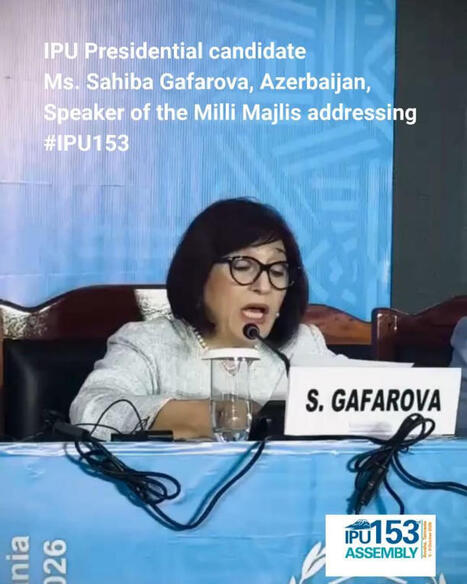
Global lawmakers will vote tomorrow, Friday 9 October, during the 153rd IPU Assembly in Arusha, Tanzania, to elect the next IPU President for a three-year term.
As Dr. Tulia Ackson’s term comes to an end, the three candidates campaigning for the presidency addressed the Assembly and shared their visions for the future of global parliamentary cooperation.
Hear excerpts from the candidates:
Ms Sahiba Gafarova — Azerbaijan
Mr Milton Dick MP — Australia
Mr Rojo Edwards Silva — Chile
Who will lead the IPU from 2026 to 2029?
Join us live from Arusha tomorrow morning for the results.
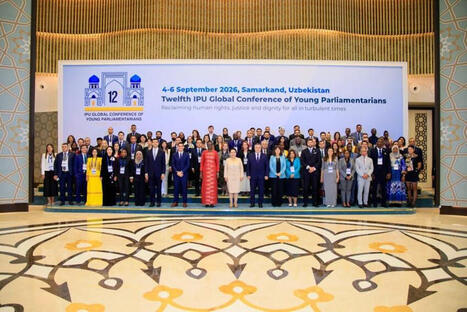
The 153rd Assembly of the Inter-Parliamentary Union (IPU) takes place in Arusha, United Republic of Tanzania, on 5–9 October 2026. All IPU statutory bodies, including the Governing Council, Standing Committees, Committee on the Human Rights of Parliamentarians and Committee on Middle East Questions, as well as the Forum of Women Parliamentarians and the Forum of Young Parliamentarians, are meeting on this occasion.
The Governing Council will be invited to elect a new IPU President at the session in Arusha.
"Enhancing good governance and empowering communities through inclusivity, trust and opportunities for all" is the theme of the General Debate.
The 153rd IPU Assembly will be adopting resolutions on the emergency item and on the subject item titled "Inclusive social development for all: Parliamentary strategies to promote the rights and empowerment of people living with disabilities" taken up by the Standing Committee on Democracy and Human Rights. The Assembly is expected to conclude with the adoption of an outcome document on the overall theme of the General Debate.
Friday, 9 October 2026, Arusha, United Republic of Tanzania
Mr. Milton Dick, the Speaker of the House of Representatives of Australia, has been elected the 32nd President of the Inter-Parliamentary Union (IPU) by hundreds of parliamentarians gathered in Arusha, United Republic of Tanzania, for the 153rd IPU Assembly..
Mr. Dick took the top spot at the IPU with 56% of the vote after one round of voting conducted by secret ballot. He succeeds Dr. Tulia Ackson of the United Republic of Tanzania, who concluded her three-year mandate at the end of the Assembly.
Mr. Dick has represented the federal electoral division of Oxley in Queensland since 2016, following service on Brisbane City Council from 2008 to 2016. After studying at the University of Queensland, he worked as an adviser in the Australian federal government and in local government.
He was elected Speaker of the House of Representatives in 2022 and re-elected unopposed in 2025. As Speaker, Mr. Dick has focused on impartiality, inclusion and engagement, and on efforts to make the chamber a safer and more respectful workplace.
He has also prioritized parliamentary diplomacy, including Parliamentary Friendship Groups and engagement with the diplomatic community. Within the IPU, he currently serves as Vice-President of the Executive Committee representing the Asia-Pacific Group, and as Chairperson of the Sub-Committee on Finance, supporting cooperation, transparency and accountability.
Following the election, Mr. Dick said: “Today, there are no winners or losers. The IPU has spoken with one voice. This is democracy: a reminder that dialogue still matters, a reminder that respect still matters, a reminder that cooperation still matters. We will work together. We will listen to one another. We will seek common ground.”
Two other candidates were on the ballot: Ms. Sahiba Gafarova, Speaker of the Milli Majlis of Azerbaijan, and Mr. Rojo Edwards Silva, member of the Senate of Chile.
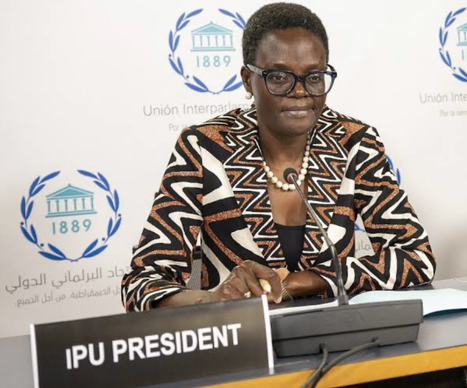
The IPU Presidentis the Organization’s political head. The post carries responsibility for chairing its statutory meetings and representing the IPU at major global events. The President is elected for a term of three years and must remain a sitting member of parliament throughout the mandate.
The new President will work closely with the IPU Secretary General, Ms. Anda Filip, who was elected at the 152nd IPU Assembly, in April 2026, in Istanbul, Türkiye.
Over the past 25 years, the IPU presidency has been held by prominent parliamentarians from Spain, India, Chile, Italy, Namibia, Morocco, Bangladesh, Mexico, Portugal, the United Republic of Tanzania and now Australia.
Global lawmakers find common ground
The 153rd IPU Assembly was attended by close to 700 parliamentarians from over 130 countries, including 50 Speakers and 45 Deputy Speakers of Parliaments. The high-level participation underscored the importance of the Assembly as a global forum for parliamentary leadership and dialogue. Among the lawmakers present, 39.4% were women – a record at an IPU Assembly.
Against a backdrop of multiple conflicts in the world, the parliamentarians found consensus and common language through the expected adoption of the Arusha Communiqué and a series of resolutions addressing some of the most pressing challenges facing the people they represent worldwide.
Placing people at the centre
The Arusha Communiqué, entitled Enhancing good governance and empowering communities through inclusivity, trust and opportunities for all, reaffirms that parliamentary work must be grounded in people’s realities.
It emphasizes that the true test of good governance is how it improves people’s lives, including through equal opportunities for all. The Communiqué calls for laws, policies and budgets to be informed by evidence, including scientific and quantitative data, official statistics, local and community knowledge, and people’s real-life experiences.
It also stresses the importance of parliamentarians being present in, and accessible to, the communities they represent, particularly those living in remote areas or affected by crises.
Advancing disability inclusion
The Assembly is also expected to adopt a resolution on Inclusive social development for all: Parliamentary strategies to promote the rights and empowerment of persons with disabilities, which calls on parliaments to treat disability inclusion as a core issue of human rights, democratic representation and sustainable development.
The resolution urges governments to align national legislation with the United Nations Convention on the Rights of Persons with Disabilities, allocate dedicated resources and ensure the meaningful participation of persons with disabilities in decision-making, in line with the principle of “nothing about us, without us”.
Climate emergency on the agenda
The Assembly is expected to agree on a common position with an emergency-item request submitted by the delegation of Nepal on 5 October 2026, entitled Urgent parliamentary action to address climate-related disasters and strengthen resilience in the Himalayan region and other vulnerable regions.
The request highlights the need for parliaments to take urgent action to strengthen resilience in regions facing growing climate-related risks in the wake of catastrophic flash floods and landslides in Nepal in August 2026, which have left thousands dead and homeless. It calls for international solidarity and reinforces the critical importance of climate justice, welcoming recent international legal instruments that underline the principle of shared responsibility and accountability in this area.
Parliamentary diplomacy amid conflict
The Assembly brought together delegations from several countries affected by conflict, offering a rare platform for dialogue and parliamentary engagement at a time when relations between governments remain strained.
All of the IPU’s parliamentary bodies convened during the Assembly, including its four Standing Committees, the Forums of Women and Young Parliamentarians, the Committee on Middle East Questions and the Task Force for the peaceful resolution of the war in Ukraine.
The Assembly featured sessions on a wide range of issues, including military applications of artificial intelligence, oversight of extractive industries, mental health, AI and children’s rights, the future of work, healthy food in a changing climate, the protection of mountain and ocean ecosystems, the review of the Charter of the United Nations, and maritime security in times of conflict.
Human rights
The IPUe Committee on the Human Rights of Parliamentarians also adopted important decisions in respect of the caseload of parliamentarians around the world who are in danger – including from Argentina, Colombia, the Democratic Republic of the Congo, Eritrea, Myanmar, Tunisia and Türkiye.
The 154th IPU Assembly will take place in Geneva, Switzerland, on 10–14 May 2027.
The IPU is the global organization of national parliaments. It was founded in 1889 as the first multilateral political organization in the world, encouraging cooperation and dialogue between all nations. Today, the IPU comprises 184 national Member Parliaments and 15 regional parliamentary bodies. It promotes peace, democracy and sustainable development. It helps parliaments become stronger, younger, greener and more gender-balanced. It also defends the human rights of parliamentarians through a dedicated committee made up of MPs from around the world.
For more information about the IPU, contact press@ipu.org
General Assembly President Says Dialogue through United Nations, Revitalized Assembly, ‘Is the Way to a Better Future’, as Sixty-Fourth Session Opens
15 September 2009 General AssemblyGA/10857 Department of Public Information • News and Media Division • New York
Sixty-fourth General Assembly
Plenary
1st Meeting (PM)
General Assembly President Says Dialogue through United Nations, Revitalized Assembly, ‘Is the Way to a Better Future’, as Sixty-Fourth Session Opens
Says Session Will Focus on Realizing Peace and Security,
Dialogue of Civilizations, Responsibility for Development
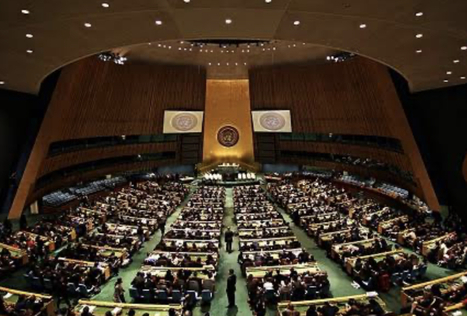
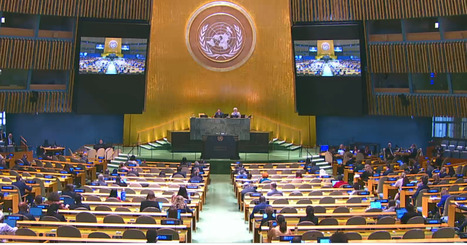
Opening the General Assembly’s sixty-fourth session today, incoming President Ali Abdussalam Treki of Libya underscored that the United Nations and, in particular, the Assembly, “is the way to a better future”, and called on people of all colours, religions and origin to engage in dialogue through the Organization and its most representative body.
Because of advances in information and communication technology, what affected some, affected others, he explained, and while dialogue was the only solution, one should not make light of existing problems. “Dialogue and mutual understanding are the way to resolve our problems,” he said, stressing that embargoes and blockades were fruitless, as they undermined respect for international will.
Continuing, he said everyone believed the United Nations was in need of reform and democratization, and that the Assembly had been hampered by obstacles that prevented it from enforcing its resolutions. The 192-member body must be reformed to regain its international legitimacy, he declared.
He said reform of the Security Council, the expansion of its membership and the realization of equitable geographic representation were also of utmost importance. Africa was comprised of 53 States, none of which was a permanent member. The same was true of Latin America and countries represented by the Forum of Small States, which accounted for over half of the world’s inhabitants. It was vital to reform the Council and revitalize the Assembly so they could comprehensively fulfil their roles.
Turning to other crucial issues, he said the gap between rich and poor had been steadily growing, most often at the expense of the poor and by exploiting resources with which they were endowed. Terrorism had been condemned by all, yet it continued to grow and spread. The international community had to address its roots, whether carried out by individuals, groups or States, which was the harshest form of terrorism.
He said the Middle East situation, unresolved for more than 60 years, was another threat to the global community despite numerous Assembly and Council resolutions. Through the Assembly, the United Nations needed to assume a new, serious role and the many resolutions needed to be respected and implemented. Realizing Palestinians’ aspirations towards independence and the right to return to their land were fundamental conditions for achieving peace and security in that part of the world. Ending settlement activities and removing illegal settlements would also help, he added.
“We are faced with many momentous issues whose resolutions require dialogue, cooperation and community spirit,” he asserted. As such, the theme of the sixty-fourth session encompassed joint responsibility for development, the realization of peace and security, and the dialogue of civilizations. In addition, the summit on climate change, convened by the Secretary-General and set to be held next Tuesday, would be a chance for the Assembly to prepare recommendations ahead of the United Nations Climate Change Conference in Copenhagen, Denmark in December.
During the upcoming session, he said the Assembly would address the development goals for the third millennium as it prepared for a high-level meeting in September 2010. He looked forward to the Assembly’s joint consultations within the framework of resolution 63/302.
Regarding the global economic crisis, he noted that the Assembly’s relevant resolution had established a working group to follow up on that issue and promote any recommendations that could be undertaken jointly to alleviate the crisis. He called on all States to consider the issue and search for solutions.
The goal of disarmament and non-proliferation was shared by all, particularly with respect to weapons of mass destruction. He urged the Assembly to work not only towards non-proliferation and elimination of nuclear weapons, but also the elimination of other weapons of mass destruction.
In closing, Mr. Treki said he would work to ensure the Assembly gave sustained, serious and responsible efforts to reach consensus on ‑‑ and resolve ‑‑ issues brought before the body. He also commended United Nations Secretary-General Ban Ki-Moon for his support, saying that he and the United Nations chief would be working closely together to achieve their goals of development, stability and security.
In other business today, the Assembly also appointed nine members of the Credentials Committee: Brazil; China; Jamaica; Philippines; Russian Federation; Spain; United Republic of Tanzania; United States; and Zambia.
The Assembly authorized (document A/64/348) the following United Nations programmes and bodies would meet during the sixty-fourth session on the strict understanding meetings be accommodated within available facilities and services: Committee on Relations with the Host Country; the Committee on the Exercise of the Inalienable Rights of the Palestinian People; Disarmament Commission; Executive Board of the United Nations International Research and Training Institute for the Advancement of Women (INSTRAW); Executive Board of the United Nations Children’s Fund (UNICEF); United Nations Dispute Tribunal; and the Working Group on the Financing of the United Nations Relief and Works Agency for Palestine Refugees in the Near East (UNRWA).
Finally, delegations took note of a letter from the Secretary-General to the Assembly President (document A/64/345), informing the Assembly that six Member States were in arrears in payment of their financial contributions to the United Nations, under Article 19 of the United Nations Charter.
[According to Article 19 of the Charter, a Member State in arrears in the payment of its financial contributions to the Organization will have no vote in the Assembly, if the amount of those arrears exceeds the amount of the contributions due from the preceding two years.]
The General Assembly will reconvene at a date and time to be announced.
Speaking to journalists ahead of the UN General Assembly’s high-level week, Secretary-General António Guterres today (16 Sep) made a call to accelerate the transition from fossil fuels to renewables for economic and security reasons, “because the wind will always blow and the sun will always shine, there are no limitations. There are no Straits of Hormuz or problems in the Black Sea that will impact on the origins of renewable energy.”
Noting that this will be his last General Assembly as Secretary-General, Guterres said the world had entered “an era of deep uncertainty” and urged governments to embrace international cooperation to address global threats.
He said, “the world is changing. And our institutions must change with it. But updating our structures can never mean abandoning our principles. It must mean applying those principles with even greater determination.”
On the Middle East crises, the Secretary-General said, “de-escalation must be priority one, priority two and priority three. All parties must cease any actions that harm civilians and ensure that humanitarian operations can proceed safely and without obstruction.”
He stressed that “navigational rights and freedoms in and around the Straits of Hormuz and Bab al-Mandab must be fully restored and respected by all, in accordance with international law,” adding that “the only path forward is de-escalation, diplomacy and dialogue.”
Guterres said, “the peace plan for Gaza must be fully implemented with unrestricted humanitarian aid, and the creeping annexation of the West Bank must stop.”
“Well into the fifth year of Russia’s full-scale invasion of Ukraine,” he said, “it is time for an immediate ceasefire as a first step towards a just, lasting and comprehensive peace.”
The Secretary-General dedicated nearly half his remarks to what should be done about the rapid advancement of AI technology.
He recognised AI’s “enormous potential” on issues surrounding health, education and climate, but added that the world “cannot afford to ignore concerns” that AI development is progressing faster than human understanding of its risks.
Taking questions from journalists, Guterres regretted that China’s President XI Jinping will not attend the GA High-level week but noted that he had met with Xi “twice last month, “and added that “he has been a staunch defender of a world order based on multilateralism, with the UN at its centre.”
Asked about the escalator failure last year during United States President Donald Trump’s arrival, he said, “we had an enquiry made last year. That inquiry, I will not I am not going to enter into details but left me relieved, and I can tell you that we took additional measures in order to make sure that whoever goes around does not interact, negatively with the escalator.”
The Secretary-General repeated his condemnation of the attacks by the Houthis on civilian infrastructure in Saudi Arabia and to the obstacles to navigation in the Bab el Mandeb. He asked, “both sides to be able to establish a dialogue in order to end this dramatic aggravation of the conflict in the Middle East.”
Turning to the West Bank, Guterres said, “it's time to stop this creeping annexation. It’s time to stop any actions that might lead to this ethnic cleansing that you referred. And it's time to create the conditions for the two-state solution to be, again, put seriously on the table.”
He said, “there will be no peace in the Middle East without solution of the Palestinian-Israeli crisis,” and also added that “there will be no peace in the Horn of Africa if the Sudan crisis is not solved.”
On the situation of women in Afghanistan, the Secretary-General said, “it is absolutely intolerable that women, first of all, are not allowed even to work in our premises. It is absolutely intolerable that, the access of girls to education is limited, and it's absolutely intolerable that women are not allowed to work except in very specific circumstances. This is, one of the biggest concerns, and we have been very active, mobilising as much as we can the international community and putting pressure on the Taliban and making them understand that what they are doing is in undermining the capacity of the country to move ahead, is undermining humanitarian aid and is putting severe limitations to the development of the country.”
The IPU on air Podcast Series features conversations with MPs and parliamentary experts from around the world on issues that impact citizens and democracies.
Click on the episodes below to find out what parliamentarians think on a plethora of global issues.
When AI makes decisions that affect your life, who is accountable ?
AI has permeated across society and the economy. It can now help decide who gets a loan, who is shortlisted for a job, and who is eligible for a public service. But when those decisions go wrong, can people understand them, challenge them and put them right? That is a democratic governance question, and it is one for parliaments.
In IPU on air #17, the IPU speaks with Lord Nagaraju of Bloomsbury, a member of the House of Lords of the United Kingdom and founder of the think tank AI Policy Labs and Dr Andrei Baciu, a Member of the Chamber of Deputies of Romania with a specialisation in AI policy. They were speaking on the sidelines of AI governance events in Geneva in July 2026. The discussion was moderated by Alex Read, IPU expert on AI.
Interview with outgoing Secretary General Martin Chungong
IPU on air #16 features an interview with Secretary General Martin Chungong as he concludes his 12-year tenure. In 2014, Martin Chungong made history as the first African and first non-European to be elected Secretary General of the IPU, and he was subsequently re-elected twice. In this special edition, Thomas Fitzsimons, IPU Director of Communications, interviews Martin Chungong on 24 February 2026, using photographs as prompts for the conversation.
Championing sexual and reproductive health and rights
In IPU on air #15, Ms. Petra Bayr, a Member of Parliament from Austria, and Ms. Catherine Mumma, Kenyan Senator and Member of the IPU Committee on Health member, discuss strategies for parliamentarians to shape legislation, allocate budgets and mobilize support for sexual and reproductive rights amid challenges to these rights in some countries. Moderated by Miriam Sangiorgio, IPU health expert.
The IPU gratefully acknowledges the financial support of the Swedish International Development Cooperation Agency (Sida) in the production of this podcast.
Championing democracy: A Dialogue with MPs M E Blanc (France) and Ms. L. Fehlmann Rielle (Switzerland) on protecting parliamentarians
In IPU on air #14, on the eve of the 151st Assembly and 216th session of the Governing Council held in Geneva from October 19-24, 2025, representatives from the IPU Committee on the Human Rights of Parliamentarians, President Blanc and Madam Fehlmann Rielle spoke to Rogier Huizenga, Head of the IPU Human Rights Programme. The discussion explores the importance of protecting MPs for the sake of safeguarding the institution of parliament and democracy, and how the CHRP continue to support parliamentarians worldwide.
From parliament to people: Pathways to fund health and the SDGs
In IPU on air #13, on the eve of the 151st Assembly held in Geneva from October 19-24, 2025, Paddy Torsney, IPU Permanent Observer to the United Nations in New York, discusses the current global financing landscape for health, how it is impacting countries, and health taxes as an emerging policy option with Kalipso Chalkidou, Director of Performance, Financing and Delivery at WHO, and Jacqueline Sabao, Zambian Member of Parliament and vice-Chairperson of the Public Accounts Committee.
Holding the Gavel: Behind the role of the speaker with Australia’s Milton Dick
In IPU on air #12, on the eve of the 151st Assembly held in Geneva from October 19-24, 2025, Speaker of the House of Representatives, Milton Dick spoke to IPU’s Kate Brooks on how he approaches the role of Speaker in Australia. The conversation explores the surprises he encountered on taking up the gavel, why the Speakership matters to democracy, what he gains from interacting with the IPU and how he hopes to encourage youth’s excitement about politics.
Holding the Gavel: Behind the role of the speaker with Sweden’s Andreas Norlen
In IPU on air #11, on the eve of the Sixth World Conference of Speakers of Parliament held in Geneva from July 29-31, Speaker of the Parliament of Sweden, Andreas Norlen spoke to IPU’s Kate Brooks on the significant role of the speaker. The conversation explores the multifaceted responsibilities of a Speaker, the challenges they face, and the opportunities they seize to enhance legislative processes.
Holding the Gavel: Behind the role of the speaker with Namibia’s Saara Kuugongelwa-Amadhila
In IPU on air #10, on the eve of the Sixth World Conference of Speakers of Parliament held in Geneva from July 29-31, Speaker of the National Assembly of Namibia, Saara Kuugongelwa-Amadhila spoke to IPU’s Kate Brooks on the significant role of the speaker. The conversation explores the multifaceted responsibilities of a Speaker, the challenges they face, and the opportunities they seize to enhance legislative processes.
Holding the Gavel: Behind the role of the speaker with Malta’s Dr Angelo Farrugia
In IPU on air #9, on the eve of the Sixth World Conference of Speakers of Parliament held in Geneva from July 29-31, Speaker of the Parliament of Malta, Dr Angelo Farrugia spoke to IPU’s Kate Brooks on the significant role of the speaker. The conversation explores the multifaceted responsibilities of a Speaker, the challenges they face, and the opportunities they seize to enhance legislative processes
The Power of Interfaith Dialogue
In IPU on air #8, British MP, Dame Karen Bradley, and UAE parliamentarian, Dr. Ali Al-Nuaimi are hosted by IPU’s Interfaith Dialogue expert, Sarah Markiewicz to discuss the importance of religion and belief in promoting global peace and understanding, and the role MPs and the Inter-Parliamentary Union can play.
Confronting discrimination for health equity
In IPU on air #7 Irish Senator Lorraine Clifford Lee, Chair of IPU’s Committee on Health, hosts Speaker Catherine Gotani Hara of the National Assembly of Malawi, and Claire Somerville, Executive Director of the Graduate Institute’s International and Development Studies Gender Centre to explore legislative frameworks affecting access to health services for women, girls and marginalized populations, and strategies to address harmful social norms.
The IPU gratefully acknowledges the financial support of the National People’s Congress of China in the production of this podcast.
Climate change and health: Bridging policy for a resilient future
In IPU on air #6, Irish Senator Lorraine Clifford Lee, Chair of the IPU Committee on Health, discusses the multi-faceted health impacts of climate change and the need for integrated responses with Mr Soltan Mammadov, Azerbaijan Member of Parliament and rapporteur of COP29’s Parliamentary Meeting and Dr Maria Neira, Director of the Department of Public Health and Environment, WHO.
The IPU gratefully acknowledges the financial support of the National People’s Congress of China in the production of this podcast.
Good practice in climate legislation
In IPU on air #5, Ms. Amanda Ellis, Senior Director at Arizona State University’s Julie Ann Wrigley Global Futures Laboratory, discusses good practice in climate legislation with Dr. Michal Nachmany, founder of Climate Policy Radar and developer of the London School of Economics’ Grantham Research Institute Climate Change Laws of the World database, of which the IPU is a partner.
The IPU gratefully acknowledges the financial support of the National People’s Congress of China in the production of this podcast.
Orphanage trafficking: The hidden crisis aided by good intentions
In IPU on air #4, Communications Director, Thomas Fitzsimons discusses the role of parliaments in addressing orphanage trafficking with Australian Senator Linda Reynolds and Dr. Kate van Doore, International child rights lawyer.
Health: A moving target for migrants and refugees?
In IPU on air #3, our host, Irish Senator Lorraine Clifford-Lee, Chair of the IPU Advisory Group on Health, discusses the role of parliaments in addressing the health of migrants with Ms. Yvonne Apiyo Brändle-Amolo, Delegate for Migration, Swiss Socialist Party; and Prof. Patrick Taran, President of Global Migration Policy Associates.
Access to health: Are parliaments redressing inequalities for women and girls?
IPU on air #2 features a dialogue between host Irish Senator Lorraine Clifford-Lee, Chair of the IPU Advisory Group on Health, and Rt.Hon. Helen Clark, former Prime Minister of New Zealand and Chair of the Board of the Partnership for Maternal, Newborn and Child Health.
Sexual and reproductive health rights: what role for parliamentarians?
In this first IPU podcast, IPU on air #1, Irish Senator Lorraine Clifford-Lee, Chair of the IPU Advisory Group on Health, hosts Dr. Faustine Ndugulile, a fellow MP from the United Republic of Tanzania and Vice-Chair of the IPU Advisory Group on Health; and Dr. Pascale Allotey, Director of the Department of Sexual and Reproductive Health and Research at the World Health Organization.
The IPU is the global organization of national parliaments.
The IPU is inching ever closer to universal membership, with 183 Member Parliaments out of the 193 countries in the world – from huge nations like China, India and Indonesia, to the tiny States of Cabo Verde, San Marino and Palau. Our Members represent the overwhelming majority of the world’s 8 billion people .
Our Organization, created by a small group of parliamentarians in 1889, has grown into a vibrant global entity committed to promoting democracy, equality, human rights, development and peace. Our Members work together for positive change, both in their own countries and internationally.
All parliaments are welcome to join us if they are lawfully established national bodies operating in States or aspirational States recognized by the United Nations. On rare occasions, Members are suspended due to the unconstitutional dissolution of parliament, or their rights are suspended for the non-payment of assessed contributions. Decisions on admitting, readmitting and suspending Members or their rights are taken by our Governing Council.
We also have 15 Associate Members – mostly formal regional parliamentary organizations established under international law. They include the Arab Parliament, the European Parliament, the Pan-African Parliament, the Latin American and Caribbean Parliament (PARLATINO), and other parliamentary organizations.
Non-participating Associate Members (all rights suspended): Andean Parliament, Parliament of the Central African Economic and Monetary Community (CEMAC)
The rights of the Andean Parliament and the Parliament of the Central African Economic and Monetary Community (CEMAC) are currently suspended due to arrears of three or more years of contributions (non-participating Associate Members).
The IPU is the global organization of national parliaments.
What began in 1889 as a small group of parliamentarians, dedicated to promoting peace through parliamentary diplomacy and dialogue, has since grown into a truly global organization with 183 Member Parliaments and 15 Associate Members.
The IPU facilitates parliamentary diplomacy and empowers parliaments and parliamentarians to promote peace, democracy and sustainable development around the world.
Our slogan is: For democracy. For everyone.
Our vision is: We want a world where every voice counts, where democracy and parliaments are at the service of the people for peace and development.
Our mission is: The IPU is the global organization of national parliaments. We promote democratic governance, institutions and values, working with parliaments and parliamentarians to articulate and respond to the needs and aspirations of the people. We work for peace, democracy, human rights, gender equality, youth empowerment, climate action and sustainable development through political dialogue, cooperation and parliamentary action.
We are financed primarily by our Members out of public funds. Our headquarters are in Geneva, Switzerland. We also have offices in New York, United States of America and Vienna, Austria.
The 153rd Assembly of the Inter-Parliamentary Union (IPU) will be held in Arusha, United Republic of Tanzania, from 5 to 9 October 2026, bringing together hundreds of lawmakers from around the world for a week of high-level parliamentary diplomacy.
Hosted by Bunge la Tanzania, the National Assembly of Tanzania, the focus of the Assembly will be on Enhancing good governance and empowering communities through inclusivity, trust and opportunities for all.
Highlights of the Assembly will include:
The expected affiliation of Naoero, growing the IPU to 184 Member Parliaments.
An expected resolution on parliamentary strategies to promote the rights and empowerment of people living with disabilities.
Meetings of all the IPU’s parliamentary bodies, including its four Standing Committees, the Forums of Women and Young Parliamentarians, the Committee on Middle East Questions and the Task Force for the peaceful resolution of the war in Ukraine.
Panel discussions and workshops for parliamentarians on a wide range of subjects including: military artificial intelligence, oversight of extractive industries, mental health, AI and children’s rights, AI and the future of work, healthy food in a changing climate, protecting mountain and ocean ecosystems, reviewing the Charter of the United Nations, and strengthening maritime security in times of conflict.
The award of the 2026 Cremer-Passy Prize, the MP of the year award, to a legislator with an exceptional record on human rights.
The Assembly will end with the election of a new IPU President, the political head of the IPU, to replace Dr. Tulia Ackson of the United Republic of Tanzania, whose three-year term comes to an end in October.
At the time of writing, there are three candidates on the ballot:
Ms. Sahiba Gafarova, the Speaker of the National Assembly of Azerbaijan;
Mr. Milton Dick, the Speaker of the House of Representatives of Australia;
Mr. Rojo Edwards Silva, a Senator from Chile.
Practical details:
Venue: Arusha International Conference Centre, Arusha, United Republic of Tanzania Registration: Media representatives are invited to register here: https://153ipuassembly.vfairs.com/
*****
The IPU is the global organization of national parliaments. It was founded in 1889 as the first multilateral political organization in the world, encouraging cooperation and dialogue between all nations. Today, the IPU comprises 183 national Member Parliaments and 15 regional parliamentary bodies. It promotes peace, democracy and sustainable development. It helps parliaments become stronger, younger, greener and more gender-balanced. It also defends the human rights of parliamentarians through a dedicated committee made up of MPs from around the world.
For more information about the IPU, contact: press@ipu.org.
Human rights are not abstract ideals. They are the laws that protect people from harm, the mechanisms that hold power to account, and the freedoms that make democracy meaningful.
Around the world, however, those rights are under pressure. Hard-won protections are being rolled back. The space for rights is narrowing – slowly, but unmistakably. And parliamentarians are being silenced.
Yet human rights are only as strong as the parliaments that defend them. That is why this campaign exists. Bring human rights into focus is a call to action for parliamentarians everywhere. Because rights don’t defend themselves. They require people with the power to act being willing to use it. In parliament, that power is yours.
This booklet sets out 10 concrete actions across two pillars, all serving one mission. Some of those actions will take an afternoon. Others will take years of sustained commitment. All of them will make a difference.
The future of rights is written in parliaments. Start writing!
The 15th Summit of Women Speakers of Parliament (15SWSP), convened by the Inter-Parliamentary Union (IPU), in close cooperation with the Swiss Parliament, will take place in Geneva, Switzerland, on Monday, 28 July 2025. The Summit will precede the Sixth World Conference of Speakers of Parliament (6WCSP), which will also take place in Geneva, from 29 to 31 July 2025.
The 15th Summit of Women Speakers of Parliament will be held at the premises of the International Labour Organization.
The Summit is intended to bring together women in the highest parliamentary decision-making positions to shape the parliamentary agenda based on emerging political, economic, environmental and social changes that require united and gender-responsive global governance solutions. It offers a platform for women leaders to network and exchange views and experiences.
The 15th Summit is taking place during a year of many milestones for the women and girls of the world. 2025 marks the 30th anniversary of the Beijing Declaration and Platform for Action, as well as the ten-year milestone of implementation of the Sustainable Development Goals (SDGs). The women, peace and security agenda is marking 25 years of existence, and is needed even more today than when it was established.
At this critical juncture, the 15th Summit will be the meeting point for women Speakers from around the world to network, exchange views and experiences, and to build on the milestones being marked in 2025 to craft the next chapter for gender equality and women’s empowerment and leadership.
With this in mind, the Summit will focus on the role of women speakers in Leading for inclusive and lasting peace.
As the Summit will immediately precede the 6WCSP, the results of its deliberations will feed into the proceedings of the 6WCSP, thus offering an opportunity to prioritize gender equality and the empowerment of women and girls on the agenda of all parliaments.
The Summit is open to women Speakers or Presidents of Member Parliaments of the IPU or national parliaments of countries that are recognized by the United Nations. In the case of bicameral parliaments, the Summit is open to women Speakers of both chambers.
Women Speakers who are unable to attend the Summit may only be replaced by women deputy Speakers.
The Summit is also open to the regional and international parliamentary assemblies and organizations that are Associate Members or permanent observers of the IPU and that are presided over by a woman President.
A limited number of high-level international experts will be invited to attend the Summit and contribute to its key focus areas as special guests.
Global and regional percentages of women presiding officers in national parliaments is automatically updated every-time there is a change. Figures correspond to the number of positions filled at the given time. See the full list of women Speakers and regional groupings of countries used to make the regional percentages for more information.
Out of a total of 189 Parliaments, 81 of which are bicameral, there exist 278 posts of Presiding Officers of Parliament or of one of its Houses. The posts are comprised as follows:
265 parliamentary chambers with one presiding officer each;
Three chambers with two presiding officers each (San Marino’s single chamber, the US Senate and the Liberian Senate);
Two chambers with three presiding officers each (Bosnia-Herzegovina’s lower and upper chambers).
Parline is the global reference source for data on national parliaments. The Parline database contains around 600 fields on the structure, composition and functioning of parliament, as well as the results of parliamentary elections. Data in Parline is gathered from national parliaments through a network of Parline Correspondents.
Parline is:
Global: Every national parliament, big or small
Authoritative: Data comes direct from the source – parliaments themselves
Comparative: Creating possibilities for new perspectives
Open: Offering tools that allow users to access, obtain and reuse data freely
Parline is the official source of data for UN SDG indicators 5.5.1(a) on women in national parliaments and 16.7.1(a) on leadership positions held by women and youth.
Here are some of the ways to access data in Parline. For a full list of fields in Parline, see the Data dictionary.
Parliamentary chambers: Every parliamentary chamber has its own page, which contains all data available for that chamber, organized into groups of fields:
Basic information
Elections
Parliamentary mandate
Law-making, oversight and budget
Working methods
Administration
Specialized bodies
Reports: There are different types of reports that bring together data in one place:
The IPU data catalogue provides access to other IPU datasets that are not included as fields in the Parline database
Who uses Parline?
The Parline database is widely used and referenced by parliaments, policymakers and researchers. It is the official source of data for the United Nations Sustainable Development Goal (SDG) indicators 5.5.1 and 16.7.1(a).
Parline users fall into various categories with differing requirements. Broadly, they include:
Parliaments – International relations departments use Parline for up-to-date contact information and changes to parliamentary leadership (Speakers, Secretaries General), and for preparing background information and briefings for bilateral and parliamentary visits. Libraries and research services or staff of parliamentary committees use Parline to conduct topical research to inform their work or draw comparisons between the functions and working methods of other parliaments.
Researchers, students, academics – are big consumers of comparative data and often utilize specific data points from Parline to draw a correlation between larger trends, outcomes or behaviors. For example, a comparison of electoral systems, special measures for women’s representation in parliament, or the percentage of women in parliaments.
International organizations – The United Nations uses Parline data as part of the global SDG indicators to monitor the 2030 Agenda for Sustainable Development. A variety of other international organsations also use Parline data. For example, the Organisation for Economic Co-operation and Development (OECD) uses Parline data in their annual “Government at a Glance” report and Social Institutions and Gender Index, while the Mo Ibrahim Foundation and the World Bank integrate Parline data into their Index of African Governance (IIAG) and World Development Indicators, respectively. Bodies such as the UN Electoral Affairs Division (DPPA), among others, use Parline data to prepare their missions and reports.
Global companies – use Parline data in, for example, their political risk analysis reports.
Journalists – use Parline data to support stories that they are preparing on, for example, salaries of parliamentarians, size of parliamentary staff, etc., or to provide statistical snapshots of given information, derived from aggregated data and maps and charts generated in the Compare data on parliaments section.
The IPU always wants to learn more about how, what and where Parline data is used. This supports our efforts to improve the database to meet the needs of users, and to better understand the impact of Parline. Feel free to contact parline@ipu.org to share feedback on data points and/or past, ongoing or current research that utilizes Parline data. In the future, there may be an opportunity for the IPU to feature select work.
SDG indicators 5.5.1(a) and 16.7.1(a)
Parline is the official source of data for the parliamentary aspects of two UN SDG indicators:
5.5.1 Proportion of seats held by women in (a) national parliaments and (b) local governments
16.7.1 Proportions of positions in national and local institutions, including (a) the legislatures; (b) the public service; and (c) the judiciary, compared to national distributions, by sex, age, persons with disabilities and population groups
SDG indicator 5.5.1(a) reports on number of seats held by women members in single or lower chambers of national parliaments, expressed as a percentage of all occupied seats. It contributes to measuring progress on SDG target 5.5, to “Ensure women’s full and effective participation and equal opportunities for leadership at all levels of decision-making in political, economic and public life.”
SDG indicator 16.7.1(a) aims to measure how representative of the general population are the individuals occupying key decision-making positions in national legislatures. More specifically, this indicator measures the proportional representation of various demographic groups (women, age groups) in the national population amongst individuals occupying the following positions in national legislatures: (1) Members, (2) Speakers and (3) Chairs of permanent committees in charge of the following portfolios: Foreign Affairs, Defence, Finance, Human Rights and Gender Equality.
The IPU has been publishing comparative data on parliaments since at least the 1960s. Initially this data was published in print format. The last print edition of Parliaments of the world: a comparative reference compendium was produced in 1986. An annual record of the results of all elections was published in the Chronicle of Parliamentary Elections between 1967 and 2010.
Since the 1990s, this data has published in the Parline database. The name “Parline” is derived from the words “PARliaments onLINE”. Over the years, the scope of the database has changed, while maintaining the core focus on reference data on the structure, composition and working methods of parliaments. The latest major revision of the fields included in the database took place in 2018. At this time, new fields were added to track data for SDG indicators 5.5.1(a) and 16.7.1(a) on parliamentarians in leadership positions by sex and by age.
IPU has a rich set of data on the number and percentage of women in parliament from 1945 to the current day. Since 1997, IPU has published a monthly ranking of the percentage of women in parliament. Since 2018, these rankings are now updated in Parline every month. Data on the age of parliamentarians was also incorporated into Parline at that time.
The technical architecture has also evolved over time, with the introduction of new features to view, export and reuse data from Parline. Historical time series were introduced to the database in the 2010s, and time series data is available for certain fields since 2013. Since the redevelopment of the technical platform for Parline in 2024, historical records are now kept for almost all fields, so changes over time can be tracked and reported. The 2024 redevelopment also advanced the concept of Parline data as ‘open data’, with the launch of a Parline API and the adoption of a Creative Commons license for the reuse of Parline data.
Parline continues to evolve, in close connection with Parline Correspondents in national parliaments and the Parline user community in parliaments, universities, international organizations and other institutions around the world. We always welcome feedback and suggestions – please do not hesitate to contact us.
South Africa takes it's voice to the global parliamentary stage at the 153rd Assembly of the Inter-Parliamentary Union in Arusha, Tanzania.
In this special broadcast, members of Parliament’s multiparty delegation share insights on South Africa’s priorities, key discussions at the Assembly, and the role of parliamentary diplomacy in strengthening cooperation, inclusion and global dialogue.
Governing Council - Election of the President of the Inter- Parliamentary Union - Decisions on the human rights of MPs - Reports of specialised meetings
General Assembly President Says United Nations Must Be Urgently ‘Reinvented', As Time for Reform Has Passed, in Closing Statement to 63rd Session
14 September 2009 General AssemblyGA/10854 Department of Public Information • News and Media Division • New York
Sixty-third General Assembly
Plenary
105th & 106th Meetings (AM & PM)
General Assembly President Says United Nations Must Be Urgently ‘Reinvented’, As Time for Reform Has Passed, in Closing Statement to 63rd session
Responsibility to Protect, System-Wide Coherence, Assembly Revitalization,
High-Level Dialogue on Development among Issues Addressed in Assembly Texts
With the world and its peoples facing unprecedented challenges, outgoing General Assembly President Miguel d’Escoto Brockmann today decried blatant inequality in the international system, and urged Member States to generate the political will to tackle poverty, provide safety nets for vulnerable countries and, even more importantly, to reinvent the United Nations and its major organs.
Describing the Assembly’s sixty-third session as “one of the most turbulent in years”, as it had taken place in the shadow of a massive global financial contraction and economic recession, deepening impact of climate change and ongoing food shortages, Mr. d’Escoto said that, while the 192-member body had successfully addressed some of those issues: “If we fail to make solidarity and a sense of social and environmental responsibility the main driving force behind our human society, then, quite simply, we will not survive.”
“I am one of those who believe that the United Nations has the potential […] to be indispensable to humanity’s efforts to survive crises,” Mr. d’Escoto said, but apparently, some of the Organization’s founding Members did not support, or even believe in its principles. The problem was that the low level of commitment of some Member States and their willingness to “do whatever they feel like with total and absolute impunity”, with no regard for others, were undermining the Organization’s effectiveness. During this year, he had come to realize that the time had passed for reforming the United Nations: “What we need to do is reinvent it, and we need to do it urgently […] for the good of the Earth and of humanity.”
The Assembly held two meetings to wrap up its work ahead of the opening tomorrow of its sixty-forth session. Mr. d’Escoto’s wide-ranging address capped a day when delegations took action on a number of outstanding issues and adopted key resolutions on matters related to system-wide coherence, “the responsibility to protect”, cooperation between the United Nations and the African Union and Assembly revitalization.
Taking stock of the Assembly’s substantive work over the past year, Mr. d’Escoto highlighted the adoption in July of the outcome document of the United Nations Conference on the World Financial and Economic Crisis and its Impact on Development as an “historic milestone”. That document had established the Assembly as the most appropriate forum to address issues that affected the entire international community. It had also led to the creation of an ad hoc working group charged with follow-up on relevant issues such as reform of the current outdated and unfair global financial system, and the Bretton Woods institutions.
“It is precisely because of our failure to resolve the fundamental problems of the economic system, and the extreme poverty and inequality on which it is based, that we have had to resort to palliative measures such as the Millennium Development Goals,” he continued, stressing that no matter how necessary those targets might be, they did not address the need for indispensable international economic reforms. Right now, the most urgent issue remained the provision of resources to the most vulnerable countries, primarily in the form of donations, or rather, compensation, through a global fund or special drawing rights to finance public goods and agreed development objectives.
He went on to say that Member States were currently at a critical juncture, as the institutions that had been established nearly 65 years ago in San Francisco had undergone a natural and inevitable process of attrition, leading to the present crisis in international economic governance and policy. While noting that there now might be a “light at the end of the tunnel” since the launch earlier this year of intergovernmental negotiations on the nettlesome issue of Security Council reform, he said much remained to be done if the United Nations was to become worthy of the trust and credibility it needed to carry out its mission effectively.
Among other steps that could be taken to that end, he stressed that only a strong General Assembly, which vigorously exercised its deliberative, policy-making and decision-making role, would be capable of enhancing multilateralism as the best option for relations between States. He reminded delegations that the most significant achievement thus far in the exercise to reinvigorate the Assembly had been its capacity this year to address existential economic issues, which it had been unable to tackle for nearly three decades. “[So] revitalization is a political, rather than a technical issue,” he declared.
He expressed satisfaction that during his tenure the Assembly had been able to carry out its agenda and remain attuned to events of international relevance not on its work programme, such as the financial and economic crisis, the recent coup d’état in Honduras, and “the Israeli aggression against Gaza”, at the beginning of the year. At the same time, inertia on the Palestinian issue had been “my greatest frustration this year”, he said. Indeed, the Security Council’s apparent indifference to Israel’s ongoing blockade of Gaza had been “disgraceful”. With the humanitarian situation in Gaza threatening to deteriorate even further, now was the time to demonstrate “with action and not words, a true commitment to the responsibility to protect”.
Turning next to climate change, he said it was now clearer than ever that humankind’s reckless behaviour was putting the planet at risk. To be effective, the international community’s response must be immediate and forceful. In terms of economic resources, at least 1 per cent of global gross domestic product (GDP) would be required to mount such a response. The “major culprits” would have to bear the costs in proportion to their responsibility for the problem, he added.
He also called for the adoption of a “universal declaration on the common good of the Earth and humanity” as a first step to reinventing the Organization, and urged Member States to use the opportunity provided by the upcoming United Nations climate summit in Copenhagen to prove its commitment to Mother Earth and to take the action necessary to defend all life on the planet.
Finally, following a moment of silent reflection, Mr. d’Escoto invited to the podium the President of the sixty-fourth session, Ali Abdussalam Treki, of Libya, and passed him the traditional gavel.
Over the course of the day, the Assembly took a number of forward-looking decisions, including approving the holding of a High-Level Dialogue on Financing for Development, to be held at Headquarters on 23 and 24 November 2009. The two-day meeting aims to follow up the decisions taken by the 2002 International Conference on Financing for Development, held in Monterrey, Mexico, and the review Conference held last year in Doha, Qatar.
Also, the Assembly adopted, as orally amended, a resolution submitted by President d’Escoto, on system-wide coherence (document A/63/L.103). That text took up five key areas of concern: strengthening the institutional arrangements for support of gender equality and women’s empowerment; strengthening governance of operational activities for development of the United Nations system; improving the funding system of operational activities for development of the United Nations system; “delivering as one”; and harmonization of business practices.
In a section on the way forward, the Assembly decided to continue its intergovernmental work on the issues addressed in the resolution during the coming session, with a view to achieving further substantive action in all areas, and it resolves, at the conclusion of its entire process on system-wide coherence, to review and take stock of all its prior actions and deliberations in a single resolution or decision.
Among the resolution’s highlights was an expression of the Assembly’s broad support for a composite entity of a consolidated Office of the Special Adviser on Gender Issues and the Advancement of Women, the Division for the Advancement of Women, the United Nations Development Fund for Women and the United Nations International Research and Training Institute for the Advancement of Women, led by an Under-Secretary-General who would report directly to the Secretary-General.
As for delivering as one, the Assembly requested the Secretary-General to urgently undertake an independent evaluation of lessons learned from “programme country pilots” and to inform it of the modalities and terms of reference of that evaluation at its upcoming session. Concerning harmonization of business practices, the Assembly calls on the Secretary-General, in cooperation with members of the United Nations System Chief Executives Board for Coordination, to continue to simplify and harmonize business practices within the United Nations development system. It asks him to regularly inform the Economic and Social Council about progress and challenges.
Several speakers, explaining their position after adoption of the resolution, thanked the co-facilitators ‑‑ the Permanent Representatives of Namibia and Spain ‑‑ for guiding the process forward throughout the Assembly’s consultations. Generally strong support was expressed for consolidating the four entities in the United Nations system dealing with gender issues into a composite entity, headed by an Under-Secretary-General. Several felt that that reform was a fresh start, a catalyst for bringing an important shift to the work of the United Nations in the area of gender equality and women’s empowerment; one urged that the composite gender entity become operational as soon as possible.
In addition, the issue of funding was also considered a top priority, on which many said it was vital to achieve substantive progress during the coming session, particularly in addressing the persistent imbalance between core and non-core funding. Some held that improving the governance structures and funding modalities for development work was essential for the Organization to be an effective partner for developing countries as they worked towards achieving the Millennium Development Goals.
The representative of the United Republic of Tanzania said that, as a “delivering as one” pilot country, his country could confirm that the reform process of system-wide coherence at the country level had been “transformative” in many development areas at the country level and had conferred national ownership of the development process in partnership with the United Nations. He underscored the need for a speedy execution of the independent evaluation of the pilot country, while stressing that the three issues of gender, governance and funding were very different and, thus, could not move at the same pace. The goal, however, should be to achieve significant results for each.
Japan’s delegate said he had joined consensus in support of reforming the gender architecture, despite “strong dissatisfaction” at the draft’s introduction less than a week before the conclusion of the sixty-third session. Furthermore, there had been no opportunity for open consultation, and he was displeased with that “opaque consultation process”. In order to avoid unnecessary bloating of the new entity, the principle of “scrap-and-build” should be strictly applied when rebuilding a “slim” entity. It was important to conserve United Nations resources by creating an effective United Nations system and investing the saved resources into developing countries. If those resources could not be secure, it would not be possible to achieve the goals of system-wide coherence.
Similarly, the speaker from the Russian Federation regretted that the resolution had been put to a vote before the Assembly had gone through the text and without substantial and open consultations. He also had reservations to certain provisions. In particular, he was not prepared to lend decisive support to creating a composite entity on gender issues before receiving information on institutional arrangements, financing mechanisms and an exhaustive list of answers to the questions that had been raised during discussions held within the framework of the system-wide coherence process. He was concerned that the Assembly made decisions on a text in a way that violated its own rules of procedure. Moreover, there was not really a consensus among Member States on the resolution’s content.
Explanations of position after action were also made by the representatives of Egypt (on behalf of the Joint Coordinating Committee of the Non-Aligned Movement and the “Group of 77” developing countries and China), Sweden (on behalf of the European Union), Iceland (on behalf of the Nordic countries), Australia (on behalf of Canada and New Zealand), United States, Mexico, United Kingdom, Ireland, Republic of Korea, Chile, Rwanda, Switzerland and Barbados.
Also generating a brief debate was the Assembly’s adoption of a resolution that took note of the report of the Secretary-General on “the responsibility to protect”, as well as the “timely and productive” debate on the issue held by the world body in late July, 2009 (document A/L.80/Rev.1). That text, introduced by the representative of Guatemala, also decided the Assembly would continue consideration of the responsibility to protect.
Several speakers took the floor to explain their position after the text’s consensus adoption, including the representatives of Venezuela, Cuba, Syria, Bolivia, Sudan, Iran, Ecuador, Nicaragua and Rwanda. Most held that the text just adopted was procedural in nature and that more time should be devoted to carefully studying the responsibility to protect concept, based on the agreement reached at the 2005 World Summit.
While there was broad agreement that States should “carefully watch over” the well-being of their citizens, concern was expressed that a responsibility to protect mechanism could devolve into interference in the affairs of sovereign and politically independent States and the use of force, thereby undermining the principles of the United Nations Charter.
Among the other reform-minded decisions taken today, delegations adopted a resolution based on recommendations contained in the report of the Ad Hoc Working Group on Revitalization of the General Assembly (document A/63/959), which called on the Assembly to convene the Working Group during its sixty-fourth session “to identify further ways to enhance the role, authority, effectiveness and efficiency of the Assembly”.
Following that action, the representative of Belarus praised the efforts of all those that had participated in discussions on Assembly revitalization, including members of the Security Council. He hoped the five permanent Council members would recognize their special responsibility in facilitating ‑‑ “or sometimes simply allowing” ‑‑ bold and meaningful strides of the wider membership to increase the Assembly’s role, and would regard the overall revitalization process not as an “unavoidable nuisance” but rather an indispensable way to ensure the viability and good health of the entire Organization.
Mexico’s representative, speaking on behalf of the Rio Group, said the resolution laid out the various concerns raised by groups during the negotiations. The Rio Group would, therefore, call on all Member States to step up their efforts to bolster the Assembly’s work, including through rationalizing and streamlining its agenda and improving its voting procedures. Also, the Rio Group was convinced that the Assembly should play a more relevant role in selecting the Secretary-General, in line with the Charter.
The Assembly also adopted a decision based on recommendations contained in the report of its Open-Ended Working Group on the Question of Equitable Representation on and Increase in the membership of the Security Council and other issues related to the Security Council (document A/63/47). By that decision, the Assembly took note of that report and decided to convene the Working Group during its sixty-forth session.
Following that action, President d’Escoto noted that the intergovernmental negotiations were ongoing and the Assembly further agreed to immediately continue that exercise in an informal plenary meeting during the sixty-forth session, building on the progress achieved so far. He urged delegations to turn the negotiations into a practical outcome during the coming session, “because the issue of better Council could not be left for the future”.
The Assembly also adopted a decision on the scope and application of the principle of universal jurisdiction (document A/63/L.100), which placed a relevant item on the agenda of its sixty-fourth session and recommended that it be considered by the Sixth Committee (Legal) during that session.
That text was introduced by the representative of the United Republic of Tanzania on behalf of the African States, who recalled that universal jurisdiction was a well-established international law principle whose purpose was to ensure that individuals who committed grave offences such as piracy, slavery, torture, genocide, war crimes and crimes against humanity did not do so with impunity.
However, he said the extent of its application had never been substantively discussed at the General Assembly, and thus, the African States urged its inclusion on the agenda of the sixty-fourth session for further discussions and agreement on the extent and applicability of the principle in order to create uniformity in its application by domestic courts and further ensure that the doctrine was applied justly by all States without limitations.
Speaking after the decision’s adoption, Rwanda’s representative said the African Group fully subscribed to the principle of universal jurisdiction, as enshrined in international law. However, that noble principle had been left open to abuse and often misguided political interest, as in the case of his own country. That misapplication endangered and undermined the very principles of universal jurisdiction and international law. It was imperative, therefore, that a clear universal mechanism be established to ensure the impartial and appropriate uniform application of universal jurisdiction.
Sweden’s representative, speaking on behalf of the European Union, said that that discussion was first and foremost a legal subject, which rightly belonged in the Sixth Committee (Legal), and he looked forward to discussing it there.
Unanimously adopting a draft resolution on cooperation between the United Nations and the African Union (document A/63/L.101), the Assembly stressed the need for both organizations to develop close cooperation and concrete programmes aimed at addressing the problems in areas such as illicit trafficking in small arms and light weapons. It emphasized the need to bolster existing cooperation in emerging areas of peace and security, and political and humanitarian affairs.
Further by that text, introduced by the representative of Algeria on behalf of the African Group, the Assembly called on the United Nations system to support the African Union and its Member States in their efforts to implement the internationally agreed development goals, including the Millennium Development Goals. The United Nations system was also encouraged to intensify efforts, in collaboration with the African Union, in combating the exploitation of natural resources, particularly in conflict areas.
In other business, the Assembly, at the request of the representative of Serbia, decided to reopen consideration of its item on “request for an advisory opinion of the International Court of Justice on whether the unilateral declaration of independence of Kosovo is in accordance with international law”. That representative said the international community was now awaiting the Court’s decision. Therefore, the issue was open and, as such, should be maintained on the draft agenda of the Assembly’s sixty-fourth session.
Also, the Assembly deferred consideration on a number of items to its sixty-fourth session and placed them in that session’s draft agenda, including on “prevention of armed conflict”; “financing of the United Nations Mission in Timor-Leste”; “Zone of peace and cooperation of the South Atlantic”; “Cooperation between the United Nations and regional and other organizations”; and “Financing the United Nations Mission in Sierra Leone (UNAMSIL)”. It also deferred consideration of the report of the Secretary-General on peacebuilding in the immediate aftermath of conflict (document A/63/881).
In addition, the Assembly deferred consideration of its item on “the situation in the occupied territories of Azerbaijan”. Following that action, Armenia’s representative said that, as in previous years, his delegation would again dissociate itself from the consensus on that decision.
It also concluded its consideration of a number of items, including on “Observer status for the Agency for International Trade Information and Cooperation in the General Assembly”. Finally, a proposed text on a recent agreement by the Food and Agriculture Organization (FAO) Council to convene a world food security summit this coming November, was withdrawn for further consideration.
All delegations taking the floor today expressed appreciation for Mr. d’Escoto’s efforts over the past year and, just before the end of the meeting, the representatives of Iran, Uzbekistan, Brazil, Philippines and Cuba delivered separate statements of appreciation.
The General Assembly will convene the first meeting of its sixty-fourth session at 3 p.m. Tuesday, 15 September.
The President of the European Council, António Costa, will travel to New York to represent the European Union at the 81st United Nations High-Level Week between 20 and 24 September 2026. He will address the UN General Assembly on behalf of the EU on 24 September and co-host the Partners for Multilateralism summit.
Today, more than ever, we must stand together to uphold a rules-based international order and rebuild trust in global governance. No country, however powerful, can meet today’s challenges alone. Cooperation is not an act of idealism - it is a necessity and a matter of survival.
The EU will remain a predictable and reliable partner for the United Nations and we are committed to its modernisation.
António Costa, President of the European Council
General Assembly
President Costa will address the UN General Assembly on behalf of the EU on 24 September. He will reaffirm EU’s support to an effective, inclusive and rules-based multilateral system, firmly rooted in the UN Charter and international law.
The summit, co-hosted by President Costa together with the President of Kenya, William Ruto, and the Prime Minister of Canada, Mark Carney, will aim to defend and strengthen the multilateral system, promote peace and inclusive prosperity by fostering a debate at the highest political level.
In addition to his remarks at the General Assembly on behalf of the EU, President Costa will take part in the event The Road Ahead: One Year after the New York Declaration and the Comprehensive 20-point Peace Plan for Gaza on 22 September. The president will also participate in the Sixth Summit of the International Crimea Platform and in the High-Level Side event on OceanEye International Alliance on 23 September.
President Costa will also participate in the traditional EU-UN principals meeting and the EU-UN-African Union trilateral and will take part in a series of side events and bilateral meetings. For the full list of events in which the President will participate, see announcements and updates:
21 September 2026 19:45 ET / 01:45 CEST (Brussels, 22 September) Press conference following the P4M summit (UN stake out area, livestream)
24 September 2026 TTBC President’s address to the General Assembly (livestream)
Background
The 81st session of the UN General Assembly opened on 8 September 2026. The first day of the high-level general debate will be Tuesday 22 September, under the main theme ‘Restoring trust, managing transformation: a United Nations that delivers for all’.
Following the adoption of a UN General Assembly resolution in May 2011, the EU has been given one of the first opportunities to speak among other major groups and can be represented by the EU’s external representatives.
The President of the European Council addresses each year the General Assembly on behalf of the EU.
As the 81st session of the United Nations General Assembly (UNGA81) progresses, activities at the UN headquarters are intensifying in anticipation of the upcoming High-Level meetings segment. Scheduled to commence on September 22nd - 26, 2026, these meetings will bring together heads of state and government, ministers, and high-ranking officials from around the globe to discuss pressing international issues. The Chairperson of the African Union Commission (AUC), H.E Mahmoud Ali Youssouf, is expected to lead a high-level delegation to participate in the UNGA81.
Preparations have ramped up, with delegations arriving and engaging in pre-meeting consultations. The focus is on fostering collaboration to tackle critical global challenges, such as climate change, sustainable development, peace and security and global health issues.
The UN Secretary-General, Antonio Guterres in a recent keynote address, emphasized the importance of collective action and multilateral cooperation in addressing the challenges facing humanity today. “The world is at a crossroads, and it is imperative that we come together to forge solutions that benefit all”. Stated the UNSG.
After the official opening of the UNGA on September 8, the United Nations (UN) Women Executive Board convened for its first meeting under the auspices of the 81st session of the United Nations General Assembly from September 9-10, 2026. The session focused on advancing gender equality and the empowerment of women globally, addressing pressing challenges and strategies for sustainable development. The Permanent Observer Mission of the African Union to the United Nations is actively represented in all the meetings at the UN.
The UN Women Executive Board members reviewed the progress made since the last session, examining the implementation of UN Women’s strategic plan and assessing the impact of ongoing programs aimed at promoting gender equality. Discussions centered on enhancing collaboration among member states, civil society, and the private sector to address barriers to gender equality, particularly in regions facing conflict and economic instability. The board emphasized the need for increased funding for women’s rights initiatives and programs that support gender-responsive policies, outlining priorities for the upcoming year, including initiatives focused on women's leadership, economic empowerment, education, and health. Special attention was given to the role of technology in advancing gender equality.
The UN Women Executive Board’s first meeting of UNGA 81 concluded with a renewed commitment to championing gender equality and women’s empowerment across the globe. The outcome of this meeting will set the stage for future initiatives and collaborative efforts in the pursuit of a more just and equitable world.
2nd Plenary of the 81st Session of the UNGA: Organization of Work and Adoption of the Agenda
The meeting chaired by the newly sworn in President of the General Assembly (PGA), H.E Khalilur Rahman, on September 11, 2026, focused on the organization of work and the adoption of the UNGA agenda including the highly anticipated General Debate scheduled for September 22 to 26, 2026. This session promises to address critical global issues and enhance international collaboration. The forum will allow heads of state and government to present their perspectives on pressing issues and collectively explore solutions.
A clear organizational framework was established to optimize the Assembly's functioning. This includes the scheduling of thematic discussions and time allocations for member states to share their insights and proposals. Delegates underscored the importance of multilateralism as a cornerstone for addressing global challenges. The Assembly acknowledged that cooperative efforts among nations are essential for achieving sustainable solutions.
Following the adoption of the agenda, the Assembly will prepare for the General Debate, encouraging member states to submit their statements and engage actively in discussions. The agenda adopted by the UN General Assembly typically prioritizes several key areas that address pressing global challenges such as Sustainable Development, Climate Change, Global Health, Peace and Security, Human Rights, Gender Equality, Economic Recovery, and Technological Innovation.
UNGA 81 Pre-Summit Events
Numerous side events and forums are being organized at the Permanent Observer Mission of the African Union to the United Nations and other locations in New York City, addressing topics such as gender equality, human rights, and peacebuilding. These events provide a platform for the Representatives of the African States to the UN, AU Organs and Agencies, partner organizations, civil society, private sector, women and youth representatives to voice their perspectives.
Bilateral Meetings: Delegations including the African Union are scheduling bilateral meetings to strengthen diplomatic ties and address specific continental and international concerns. These discussions are crucial for building consensus on key agenda items.
Media Engagement: A series of press briefings and media engagements will be held at the UN headquarters to ensure transparency and keep the public informed about the discussions and outcomes of the High-Level segment.
Your Excellency, Speaker of the Grand National Assembly of Türkiye, Mr. Numan Kurtulmuş, Mr. Martin Chungong, distinguished Secretary General of the IPU, Amb. Anda Filip, Distinguished Secretary General-elect of the IPU, Honourable Speakers of Parliament, Honourable Deputy Speakers and Heads of Delegation, Ladies and gentlemen, Colleagues, friends,
As this Assembly draws to a close, I am once again struck by the immense potential of parliamentary diplomacy. We have gathered here in Istanbul, a most inspiring place, with 113 Speakers and Deputy Speakers of Parliament and over 700 parliamentarians from 129 countries.
This fact is far from trivial, especially when one takes into account the challenging political realities we faced in the run-up to this 152nd Assembly.
And yet, this Assembly happened. And it has not only happened – it has been a tremendously successful Assembly, with an inclusive emergency item adopted, a new Strategy that will guide our work for the coming years, and the election of the first woman IPU Secretary General. This has been an Assembly for the IPU’s history books!
It is often events like this that lead us to ask: what have we taken for granted? And it is events like this that put into perspective the value and significance of gathering together.
I said in my inaugural speech that we should never take Assemblies for granted. In many ways, our Assemblies embody our peoples’ common will to live in peace and harmony.
Moments like this remind us that we do not promote dialogue and democracy for the sake of it. We do so because they are the means through which differences are resolved peacefully. They are what allow equals to disagree without discord, and societies to balance the interests of the many with those of the few. At the core of IPU Assemblies lies a simple principle: inclusion. And without it, no democracy and no global society can truly stand.
There is no better place than an Assembly to realise that the challenges we face are shared across our borders. This is why the idea of turning our backs on the world and retreating into narrow national interest is a dangerous path. As history has taught us the hard way, that path leads to war, to destruction, and to the endless spiral of violence.
Multilateralism is under threat, and we must resist with conviction. But let me be clear: this is not a new test. Humanity has faced this challenge before, and humanity has prevailed. The League of Nations rose from the ruins of the First World War. The United Nations emerged from the ashes of the bloodiest conflict in human history. Each time the pendulum swung towards destruction, we found the will to come back to the table. And we must find it again. And we will find it again.
We came to Istanbul in record numbers to proclaim that we refuse to accept the immorality of war between nations.
We met in Istanbul against the backdrop of a world screaming for hope, peace and justice for present and future generations.
And parliaments must respond.
We carry the people’s will. We turn commitments into laws, and laws into real change.
In Istanbul, we have adopted a landmark Istanbul Declaration that sets the horizon we are aiming for.
Our Declaration reflects a clear-eyed assessment of the challenges we face and a commitment to act. It reaffirms our belief in multilateralism, in international law, and in long-term, inclusive and accountable governance.
Through this Declaration, we have committed to strengthening democratic representation across generations, addressing the structural drivers of instability, governing emerging technologies responsibly, and advancing parliamentary diplomacy as a force for dialogue and conflict prevention.
Above all, this Declaration is an act of solidarity: intergenerational solidarity. As leaders of today, we commit to shaping for the better the political, social and environmental conditions that future generations will inherit.
This Declaration is not an endpoint. So we must take these choices back to our parliaments, translate them into legislation, oversight and budgets, and ensure that the hope we nurtured here in Istanbul through our speeches and conversations becomes concrete action.
Dear friends and colleagues,
Hope is indeed a powerful, enduring force. And intergenerational solidarity is the choice to breathe that hope into younger generations, to protect their dreams and aspirations, and to remind them that they are not alone.
I urge you to return to your countries carrying this truth: that the challenges humanity faces cannot be faced alone. Share with the children of your countries that there are hundreds of women and men, young and old, from every corner of the world, who gather in places like this not out of habit or obligation, but out of conviction. The conviction that dialogue is stronger than conflict and that cooperation is wiser than competition.
Without doubt, another highlight of this Assembly has been the adoption of an emergency item resolution. As you know, we have not always succeeded in adopting one; nonetheless, this is another example of how parliamentary diplomacy does not wind down in moments of crisis but rises to meet them. At this very moment, when the world, and the Middle East in particular, is drowning in conflict, this Assembly chose not to look away. We chose to speak.
The resolution we adopted is a message to the world that the drums of war ought to be silenced. It is a message to the world that international humanitarian law must be respected in all conflicts without exception; that impunity, wherever it takes root, only feeds the cycles of violence we seek to end; and that parliaments bear a moral responsibility to press for peace. We are the living proof that differences can be voiced, that disagreements can be resolved, and that common ground can be found, through the patient, imperfect, yet indispensable work of talking to one another.
That is the power of this Assembly. That is the promise of Istanbul.
Dear colleagues, dear friends, at the opening of this Assembly I asked three things of you:
1) to choose inclusion,
2) to choose dialogue, 3) and to lead with foresight and a sense of duty to future generations.
Looking back at these past few days, I believe you answered that call. You chose to be here. You chose to speak. You chose to act. And in doing so, you have given meaning to every one of those requests.
Since I opened the General Debate with a proverb about encouragement, allow me to close with a Turkish proverb that captures what we have achieved together: “One hand has nothing; two hands have sound”.
Thank you for your engagement, your support and your commitment to the people you represent and serve. The IPU, now more than ever, remains a place for those who believe in dialogue, respect and solidarity.
The IPU is the global organization of national parliaments.
The IPU is inching ever closer to universal membership, with 183 Member Parliaments out of the 193 countries in the world – from huge nations like China, India and Indonesia, to the tiny States of Cabo Verde, San Marino and Palau. Our Members represent the overwhelming majority of the world’s 8 billion people .
Our Organization, created by a small group of parliamentarians in 1889, has grown into a vibrant global entity committed to promoting democracy, equality, human rights, development and peace. Our Members work together for positive change, both in their own countries and internationally.
All parliaments are welcome to join us if they are lawfully established national bodies operating in States or aspirational States recognized by the United Nations. On rare occasions, Members are suspended due to the unconstitutional dissolution of parliament, or their rights are suspended for the non-payment of assessed contributions. Decisions on admitting, readmitting and suspending Members or their rights are taken by our Governing Council.
We also have 15 Associate Members – mostly formal regional parliamentary organizations established under international law. They include the Arab Parliament, the European Parliament, the Pan-African Parliament, the Latin American and Caribbean Parliament (PARLATINO), and other parliamentary organizations.
Co-hosted by the Senate of the Oliy Majlis of the Republic of Uzbekistan on 4 and 5 September 2026, the Conference was held under the theme Reclaiming human rights, justice and dignity for all in turbulent times.
Over the two days, the young parliamentarians examined how parliaments can protect young people affected by conflict and respond to current challenges including strengthening human rights-based governance of digital technologies, online safety, data privacy, misinformation, climate change, unemployment and political violence.
In their outcome document, the young MPs reaffirmed that human rights are the foundation of safe, dignified and empowered lives. The principles enshrined in the Universal Declaration of Human Rights and reflected in the Sustainable Development Goals (SDGs) are being tested by new conflicts, emerging technologies, environmental crises and growing economic and political uncertainty. But young people should not be defined by the erosion of rights. The young MPs expressed their determination to turn these setbacks into a source of resolve, solidarity and action, committing themselves to reclaiming human rights and upholding the responsibility of parliaments to promote and protect them.
Focus on jobs and the SDGs
A special session at the Conference considered how parliaments can help implement the SDGs, with particular attention to SDG 8 on decent work and economic growth.
The discussion comes as young people face growing insecurity in the labour market and difficult prospects for finding decent employment.
The lawmakers recognized the Host Parliament’s role in promoting parliamentary engagement with the SDGs at the United Nations. Uzbekistan supported a 2022 General Assembly resolution on enhancing the role of parliaments in accelerating implementation of the SDGs, as well as a resolution this year on accelerating social development.
The resolutions reflect a growing recognition that parliaments should not simply monitor progress on the SDGs, but help turn global commitments into action.
Young MPs remain under-represented
The Conference followed the publication earlier this year of the IPU’s latest biennial report on youth participation in national parliaments.
Published in April 2026, the report found that MPs aged 30 or under accounted for just 2.8% of parliamentarians worldwide, unchanged from 2023. It was the first time since the IPU began tracking youth participation in 2014 that progress had stalled, highlighting a significant democratic deficit in the political representation of young people. The report also found that the proportion of young women MPs aged 30 or under has shrunk, from 1.4% in 2023 to 1.2%, signalling an alarming regression. Recognizing high rates of political violence against women as a key obstacle, women and men MPs received training during the Conference to build their skills to combat this, as part of the Women and Youth Democratic Engagement (WYDE) Women’s Leadership Initiative, funded by the European Union.
Background
The IPU’s Global Conference of Young Parliamentarians was established in 2014 to strengthen youth participation in parliamentary work, provide a platform for young people’s perspectives, and promote networking, solidarity and capacity-building.
The Conference usually rotates around the world. Previous editions have taken place in Switzerland, (2014), Japan (2015); Zambia (2016), Canada (2017), Azerbaijan (2018), Paraguay (2019), online (2021), Egypt (2022), Viet Nam (2023), Armenia (2024) and Peru (2025).
IPU urges parliaments to act on AI-driven sexual deepfakes
Thu, 25/06/2026 - 09:57
The Inter-Parliamentary Union (IPU) has published new guidance urging lawmakers to act faster and more decisively against non-consensual intimate imagery (NCII), including sexualized deepfakes generated by artificial intelligence (AI), a phenomenon that disproportionately targets women and girls.
The guide cites data from UN Women, which reports a surge in sexualized deepfakes, particularly affecting women and girls, with deepfake videos alone increasing by 550% between 2019 and 2023.
With little evidence that technology companies are doing enough to prevent the creation and circulation of such content – and indeed with commercial incentives pulling in the opposite direction – the guide underlines that parliaments are uniquely positioned to shape the responsible use of AI.
Five priorities for parliaments
The IPU sets out five priorities for parliamentary action:
legislate to recognize AI-generated NCII as gender-based violence;
create fast takedown mechanisms and victim-support systems;
use parliamentary oversight to track enforcement and platform compliance;
speak out publicly to build awareness and cross-party support;
cooperate internationally to address a borderless harm.
Growing political concern
According to the IPU guide, NCII is not only a technology problem but also a democratic one, with women parliamentarians, journalists, candidates and human rights defenders among those most at risk.
The IPU warns that the pace at which these technologies is advancing, and the concentration of their development among just a few global actors, together poses “one of the defining policy challenges of the moment for democratic institutions”.
Parliamentary solutions
However, the guide refers to dozens of examples of good practice from parliaments around the world that are addressing the problem, including:
The European Union’s 2022 Digital Services Act, which imposes obligations on online platforms to manage illegal and harmful content. The 2024 EU AI Act lays out the first comprehensive regulatory framework for AI, serving as inspiration for many other jurisdictions.
Following a sharp rise in exploitative content among students in 2024, the Republic of Korea’s Parliament responded rapidly. A special parliamentary committee introduced reforms that expanded criminal liability beyond production and distribution of NCII to include possession and viewing of such images.
After a campaign led by women who had experienced online abuse, the Mexican Parliament passed the “Ley Olimpia” which establishes “digital violence” as a legally recognized category and which criminalizes the non-consensual dissemination of intimate material.
These examples show that decisive parliamentary action is possible, and that the most effective responses combine parliaments’ lawmaking, oversight, representative and budgetary functions, working in coordination.
Human rights are essential to democracy and development. One of the IPU’s key roles is defending and promoting the rights of parliamentarians.
Through its Committee on the Human Rights of Parliamentarians, the IPU has a unique mechanism to defend the rights of an increasing number of parliamentarians around the world who face abuse, mistreatment or even death simply for doing their jobs.
We also provide MPs with information, knowledge and training to improve the human rights of the people they represent – especially women, children, minorities and indigenous peoples.
We help parliaments implement the recommendations of the UN Human Rights Council and UN human rights treaty bodies. We also ensure that countries, through their parliaments, sign up to human rights conventions and adopt and implement relevant domestic laws.
We also collect data on parliamentary human rights committees and empower and mobilise them to make human rights a priority for parliaments.
Parliaments have a critical role in protecting people's human rights. We take action to strengthen their work protecting the rights of all citizens, as well as those of MPs themselves.
We help parliaments respect children's rights, by using their powers to pass laws; and also to allocate resources for the implementation of child-rights related programmes and policies.
PARLIAMENTS AND THE UNITED NATIONS TREATY BODIES - How can parliamentarians turn international human rights commitments into reality?
Nine committees are entrusted with monitoring how a State implements the core UN human rights treaties it has ratified, on the basis of periodic State reports.
Human rights are not abstract ideals. They are the laws that protect people from harm, the mechanisms that hold power to account, and the freedoms that make democracy meaningful.
When the public turns hostile: Political violence against parliamentarians
When the public turns hostile: Political violence against parliamentarians reveals that members of parliament (MPs) are facing a worrying rise in intimidation and harassment from the publi
Transforming parliaments: World e-Parliament Report 2026 - key findings
Dec022026
02/12/2026
The World e-Parliament Report 2026 draws on data from 118 parliaments and chambers across 89 countries, together with two supranational parliaments, making it the most comprehensive assessment of parliamentary digital transformation available.
The World e-Parliament Conference is the leading global forum on innovation and the use of digital technologies in parliament, bringing together members of parliament, Secretaries General, and senior parliamentary staff from around the world. The 2026 conference is organized by
IPU PARLIAMENTARY MEETING ON THE OCCASION OF COP31
Nov162026
16/11/2026
Antalya, Türkiye This longstanding initiative will bring together parliamentarians from around the world to turn climate commitments into concrete implementation.
Many women around the world still lack basic human rights and face discrimination and gender-based violence. The world’s parliaments are no exception. Most parliaments remain male-dominated, and women MPs are often under-represented on decision-making bodies.
The IPU has been tracking and empowering women parliamentarians for decades, convinced of the link between strong democracies and gender equality.
To achieve these objectives, the IPU has a wealth of data and tools:
We are the authority on the percentage of women in national parliaments through our monthly rankingof women in parliament, including comparative analyses between countries and annual studies that look at historical trends over decades.
Every year in March we publish an analysis of women in parliament looking at progress and setbacks following the previous year's parliamentary elections.
The IPU partners with International IDEA and Stockholm University in running a global database on gender electoral quotas, which provides country-specific data on existing mechanisms to ensure women’s participation in parliaments.
Practising what we preach, we have adopted groundbreaking practices ourselves to ensure gender equality in our assemblies, committees and staff.
Gender-sensitive parliaments are institutions that are founded on gender equality, where women and men have an equal right to participate without discrimination or recrimination.
Women account for half the world’s population, yet many face discrimination in work, health care and education, or suffer physical and sexual violence.
Addressing violence against women in politics: Institutional responses and good practices by parliaments
This publication, Addressing violence against women in politics: Institutional responses and good practices by parliaments, offers practical evidence and guidance on how parliaments addres
IPU webinar for parliaments of States recently reviewed or scheduled for review by the CEDAW Committee in 2026 and subsequent sessions.
Sep022026
02/09/2026
Following up on the series of webinars held since 2022, and the 2023 edition of the handbook for parliamentarians on CEDAW, this webinar aims to provide targeted support and practical guidance to strengthen parliamentary engagement within the CEDAW review process.
Parline is the global reference source for data on national parliaments. The Parline database contains around 600 fields on the structure, composition and functioning of parliament, as well as the results of parliamentary elections. Data in Parline is gathered from national parliaments through a network of Parline Correspondents.
Parline is:
Global: Every national parliament, big or small
Authoritative: Data comes direct from the source – parliaments themselves
Comparative: Creating possibilities for new perspectives
Open: Offering tools that allow users to access, obtain and reuse data freely
Parline is the official source of data for UN SDG indicators 5.5.1(a) on women in national parliaments and 16.7.1(a) on leadership positions held by women and youth.
To get content containing either thought or leadership enter:
To get content containing both thought and leadership enter:
To get content containing the expression thought leadership enter:
You can enter several keywords and you can refine them whenever you want. Our suggestion engine uses more signals but entering a few keywords here will rapidly give you great content to curate.


 Your new post is loading...