Your new post is loading...
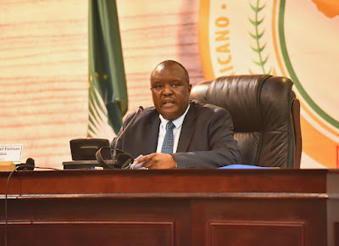
Pan-African Parliament Bureau and Diplomatic Corps forge synergies for “The Africa We Want” Today, the Bureau of the Pan-African Parliament (PAP), led by President H.E. Chief Fortune Charumbira, met with African Ambassadors accredited to South Africa to strengthen their collaborative framework for advancing integration and sustainable development in Africa. This annual engagement serves to reinforce the Pan-African Parliament’s mandate in promoting continental unity and resilience. Over the years, this traditional meeting has focused on fortifying the Parliament’s operational capacities and aligning strategic objectives with those of African diplomats to achieve the “#AfricaWeWant.” The discussions emphasized the critical partnership between African diplomats and parliamentarians in formulating solutions that address the continent’s unique challenges. Through these synergies, the Pan-African Parliament seeks to enhance its legislative reach and leverage diplomatic networks to support effective oversight and policy alignment. In his opening remarks, Chief Charumbira reiterated the vital role of these partnerships in advancing the African Union’s Agenda 2063. He highlighted PAP's dedication to initiatives in peace and security, economic integration, and governance across the continent. Chief Charumbira also underscored PAP’s commitment to inclusive policymaking, affirming that “the Pan-African Parliament remains a vital platform for the voices of African citizens and the diaspora as the 'sixth region' of Africa.” For the first time, today’s 's session included representatives from diverse diplomatic groupings , among them the Group of Latin America and the Caribbean (GRULAC), represented by Brazilian Ambassador H.E. Benedicto Fonseca Filho; the Caribbean Community (CARICOM), represented by High Commissioner Joan Thomas Edwards of Jamaica; and the Arab League, represented by H.E. Mahash Saeed Alhameli of the United Arab Emirates. In anticipation of the 4th Ordinary Session of the 6th Parliament, which will run from 4 to 15 November 2024, the meeting also reviewed the agenda of this significant gathering to ensure alignment with continental priorities. The longstanding partnership between the Pan-African Parliament Bureau and African Ambassadors has become a powerful platform for advancing continental unity. From advocating for the ratification of the Malabo Protocol to fostering efficient information-sharing, this meeting represents a meaningful step towards Africa-centered policies that resonate throughout the continent.
MEDIA ADVISORY - PRESS CONFERENCE INVITATION TO MEDIA REPRESENTATIVES The Fourth Ordinary Session of the Sixth Parliament of the Pan-African Parliament (PAP) will officially run from 4 to 15 November 2024. Pre-session activities will commence on 28 October 2024. WHAT: Press Conference on theFourth Ordinary Session of the Sixth Pan-African Parliament (PAP) - State of Preparations
- Programme Overview
- Objectives and Expected Outcomes of the 4th Ordinary Session
- Expected Guests and Participants
WHEN: 30 October 2024 Time: 14h30 – 15h30 SAST WHERE: Virtual – register here: https://t.ly/uJvnW WHO: President of the Pan-African Parliament, H.E Chief Fortune Charumbira BACKGROUND: The Pan-African Parliament (PAP), as the continental legislature, serves as a platform for representatives from all African states to engage in discussions and decision-making on the continent's challenges. The Rules of Procedure of the PAP mandate that the Parliament holds at least two plenary sessions per year. During these sessions, the plenary reviews reports from various committees and makes recommendations for the Summit of African Heads of State and Government on harmonised policies and laws for the continent. The Parliament also receives reports from other AU Organs and African Institutions. The Parliament is composed of 275 members and is headquartered in Midrand, South Africa. More information about the PAP can be obtained from: https://pap.au.int/en Media representatives are invited to participate in the virtual press conference on 30 October 2024. For more information, please contact: Jeffrey Onganga | Media and Communications | Pan-African Parliament |Mobile: +27 79 074 0005 | E-mail jeffrey.onganga@panafricanparliament.org |
The Arusha Chamber of Commerce urges increased efforts to raise awareness of AfCFTA’s operational mechanisms Governments, regulators and policymakers should take deliberate actions to increase awareness of the operational mechanisms of the African Continental Free Trade Area (AfCFTA) so that businesses can leverage the benefits of the agreement, according to the Arusha branch of the Tanzanian Chamber of Commerce, Industry, and Agriculture. This message was conveyed to the Members of the Pan-African Parliament Committee on Trade, Customs, and Immigration Matters during a meeting held as part of the fact-finding mission conducted by members of the Continental legislature to assess progress made on the implementation the African Continental Free Trade Area (AfCFTA) Guided Trade Initiative (GTI). While Tanzania as a country has embraced the AfCFTA, with numerous adjustments made to trade policies to accommodate the agreement, private sector associations in the Arusha region noted that many businesses across the country were not fully aware of the benefits and operational mechanisms of the agreement and were, therefore, limited in their ability to leverage the agreement for growth. They called on regulators and policymakers must champion awareness campaigns and infrastructure development to ensure businesses are equipped to leverage the opportunities AfCFTA presents, driving growth and cross-border collaboration across the continent. Taking note of the call, Hon. Sen. Prof. Margaret Kamar, leader of the Pan-African Parliament delegation for the fact-finding mission, reiterated the recommendation shared with the Dodoma Chapter of the Chamber of Commerce earlier in the week. This would be further explored by the Pan-African Parliament, particularly in convening a summit of African Chambers of Commerce. “African businesses stand to gain immensely from the AfCFTA, but we understand that awareness is critical. This will constitute a key component of the report to the plenary of the Continental Parliament at the end of this mission. We reiterate the idea of a summit of African Chambers of Commerce to increase awareness and align strategies to ensure that businesses understand their key role in this crucial process,” said Hon. Khamar. The GTI, launched on 7 October 2022, aims to jumpstart trade under the AfCFTA by linking eight countries, including Tanzania, that have fully approved and published their tariffs under the common market's rules.
Pan-African Parliament Delegation Commends Tanzania for Commitment to African Integration Tanzania’s role in driving African integration has been praised by a delegation from the Pan-African Parliament Committee on Trade, Customs and Immigration Matters during a meeting with the country’s Deputy Minister of Foreign Affairs and East African Cooperation, Hon. Cosato Chumi (MP), in Dodoma. The meeting was part of a working visit by the Pan-African Parliament Committee , which is in the country to assess progress on the implementation of the African Continental Free Trade Area (AfCFTA) Guided Trade Initiative (GTI). In his remarks, Deputy Minister Chumi highlighted Tanzania’s strategic role in promoting trade across the continent through AfCFTA, a flagship initiative under the African Union’s Agenda 2063. Tanzania is one of the eight pilot countries selected for the initial phase of the GTI, alongside Kenya, Rwanda, Ghana, Egypt, Mauritius, Cameroon, and Tunisia. "Tanzania has been an active participant in intra-African trade, particularly within the East African region and across the continent through AfCFTA. Being one of the pioneering countries in the GTI reflects our commitment to strengthening trade links across Africa," Chumi stated. Pan-African Parliament delegation leader, Hon. Prof. Margaret Kamar (Kenya), praised Tanzania’s commitment to African integration, noting that the country has always been at the forefront of driving unity across the continent. She pointed out that Tanzania’s history of leadership in African affairs dates back to its founding fathers, who played a key role in establishing the Organisation of African Unity (OAU), the precursor to the African Union. "Tanzania’s legacy in fostering African unity and its early ratification of key protocols under AfCFTA further underscores its commitment to a prosperous and integrated Africa," said Hon. Kamar. "The efforts we’ve witnessed here in Tanzania demonstrate that this nation remains a key player in Africa’s quest for integration and development." During the discussions, the Pan-African Parliament delegation also commended the Government of Tanzania for its successful implementation of business reforms, particularly in infrastructure development. Prof. Kamar noted that improvements in roads, railways, and other essential infrastructure have significantly enhanced Tanzania's connectivity with its neighbors, thereby boosting trade opportunities across the continent. “One of the regions we visited before arriving in Dodoma was Arusha, where we saw firsthand the impact of infrastructure improvements. The well-maintained roads enabled us to travel with ease, reflecting the government’s commitment to facilitating trade,” she added. "This is a great example to other African countries, showing that regional integration can be achieved when solid foundations are laid." The Pan-African Parliament delegation also applauded Tanzania’s efforts in ratifying and domesticating key African Union protocols aimed at advancing regional integration. In particular, Tanzania’s swift action in implementing agreements such as AfCFTA, along with protocols on the free movement of people and goods, positions it as a leader in fostering continental unity. Deputy Minister Chumi further emphasized Tanzania’s efforts to educate local traders on how to tap into new markets under AfCFTA. He noted that collaboration between the government and business associations, such as the Tanzania Private Sector Foundation (TPSF) and the Tanzania Chamber of Commerce, Industry, and Agriculture (TCCIA), is crucial to enhancing traders' understanding of cross-border opportunities. “Public education remains essential in ensuring that our business community fully grasps the opportunities that the AfCFTA brings. We are committed to expanding the market for Tanzanian goods and creating a conducive environment for doing business across Africa,” Chumi said. Ambassador Stephen Mbundi, Permanent Secretary of the Ministry of Foreign Affairs and East African Cooperation, highlighted key achievements in Tanzania’s trade infrastructure, including reliable electricity, modern road networks, an enhanced railway system, and the expansion of the national airline, which now includes cargo planes capable of transporting goods globally. “Tanzania’s investment in infrastructure has greatly facilitated the movement of goods, and the GTI has already enabled us to export value-added products such as sisal, coffee, spices, and peanuts,” said Ambassador Mbundi. The Pan-African Parliament delegation emphasized the importance of further enhancing the free movement of people across African borders, a critical aspect of AfCFTA that is still being refined. They underscored the need for clear guidelines to enable smooth and unrestricted mobility, which will further drive economic integration. Tanzania’s ongoing commitment to African unity, its proactive role in ratifying AU protocols, and its leadership in implementing the AfCFTA place it at the heart of the continent’s drive towards economic integration and prosperity. As the Pan-African Parliament delegation observed, the country’s longstanding dedication to the ideals of unity and cooperation continues to shape its approach to modern African challenges. In this regard, Pan-African Parliamentarians advocated for the ratification of the Protocol to the Treaty Establishing the African Economic Community—related to the Free Movement of Persons, the Right of Residence, and the Right of Establishment—as crucial to unlocking the full potential of the AfCFTA. Tanzania has signed it but has yet to ratify. The Ministry of Foreign Affairs assured that it is diligently working on this, with several measures to facilitate the free movement of Africans already in place in the country.
Djibouti’s Mahmoud Ali Youssouf Elected as New African Union Commission Chairperson at 38th AU Summit AFRICAN PARLIAMENTARY NEWS February 15, 2025 FEATURED, GLOBAL, LEADERSHIP, NEWS, POLITICS,REGIONAL, TRENDING In a historic and closely contested election, Djibouti’s Foreign Minister Mahmoud Ali Youssouf has emerged as the newly elected Chairperson of the African Union Commission (AUC) during the ongoing 38th AU Summit in Addis Ababa. Youssouf succeeds Moussa Faki Mahamat of Chad, following an intense series of voting rounds held on Saturday, February 15. Multi-Round Voting Results The election was marked by multiple rounds of voting, reflecting the tight race between the three main contenders: - First Round
- Mahmoud Ali Youssouf (Djibouti): 18 votes
- Raila Odinga (Kenya): 20 votes
- Richard Randriamandrato (Madagascar): 10 votes
No candidate achieved the required two-thirds majority, leading to a second round. - Second Round
- Mahmoud Ali Youssouf (Djibouti): 19 votes
- Raila Odinga (Kenya): 22 votes
- Richard Randriamandrato (Madagascar): 7 votes
Still no candidate reached the two-thirds threshold, prompting a third round. - Third Round
- Mahmoud Ali Youssouf (Djibouti): 23 votes
- Raila Odinga (Kenya): 20 votes
- Richard Randriamandrato (Madagascar): 5 votes
Randriamandrato trailed, but no one secured the two-thirds majority, leading to a fourth round. - Fourth Round (Raila vs. Youssouf)
- Mahmoud Ali Youssouf (Djibouti): 25 votes
- Raila Odinga (Kenya): 21 votes
No two-thirds majority once again, proceeding to a fifth round. - Fifth Round
- Mahmoud Ali Youssouf (Djibouti): 26 votes
- Raila Odinga (Kenya): 21 votes
Still short of the two-thirds majority, leading to a sixth round. - Sixth Round
- Mahmoud Ali Youssouf (Djibouti): 26 votes
- Raila Odinga (Kenya): 22 votes
Raila Odinga was eliminated going into the seventh round, leaving Youssouf as the sole candidate. - Seventh Round
- Mahmoud Ali Youssouf (Djibouti): 33 votes
Mahmoud Ali Youssouf was declared the new AUC Chairperson after securing the clear majority. Significance of the Election The Chairperson of the African Union Commission is a pivotal figure in shaping the continent’s political, economic, and socio-cultural agenda. As the head of the AU’s executive branch, the Chairperson works closely with member states to implement strategic initiatives in areas such as: - Peace and Security – Addressing conflicts, terrorism, and regional instability.
- Economic Integration – Promoting intra-African trade and bolstering the African Continental Free Trade Area (AfCFTA).
- Infrastructure Development – Enhancing road, rail, and technological linkages across the continent.
- Social Affairs – Driving efforts in health, education, and youth empowerment.
About Mahmoud Ali Youssouf Hailing from Djibouti, Mahmoud Ali Youssouf has served as the country’s Minister of Foreign Affairs and International Cooperation since 2005. Known for his diplomatic acumen, Youssouf has played a critical role in regional peacemaking efforts, economic partnerships, and forging stronger ties between African nations and the international community. Looking Ahead As the new leader of the African Union Commission, Youssouf is expected to build on his predecessor’s accomplishments while introducing fresh perspectives on regional integration, conflict resolution, and sustainable development. The African continent faces evolving challenges and opportunities, and Youssouf’s longstanding diplomatic experience will be instrumental in guiding the AU’s executive arm. Key Priorities for the New AUC Chairperson - Strengthening Continental Unity: Youssouf plans to foster deeper collaboration among AU member states, enhancing cooperation on issues such as border security, the environment, and public health.
- Driving Economic Growth: Building on the AfCFTA, the new Chairperson aims to accelerate industrialization, boost intra-African trade, and attract foreign investment, positioning Africa as a global economic player.
- Promoting Peace and Stability: With ongoing conflicts in various regions, Youssouf’s leadership will focus on mediation, conflict prevention, and building robust peacekeeping frameworks.
- Championing Gender Equality and Youth Empowerment: Recognizing the continent’s youthful demographics, the new Commission head is committed to creating opportunities for women and young people in leadership and entrepreneurship.
About the African Union (AU) Established in 2002, the African Union is composed of 55 member states working toward greater unity, solidarity, and cooperation among African countries. The Union’s Commission, headed by a Chairperson, serves as its administrative and executive branch, responsible for day-to-day management and strategic decision-making. As the 38th AU Summit continues, African leaders and international observers anticipate a new era of leadership under Mahmoud Ali Youssouf, with hopes for unprecedented growth, stability, and integration across the continent.
AU says Tenure of PAP Bureau subsists, Citing Protocol Consistency Concerns (French Translation provided) AFRICAN PARLIAMENTARY NEWS February 13, 2025 FEATURED, GLOBAL, LEADERSHIP, NEWS, POLITICS,TRENDING In a decisive move at the just-concluded Forty-Sixth Ordinary Session in Addis Ababa, Ethiopia, the Executive Council resolved that the tenure of the current Pan African Parliament (PAP) Bureau shall remain in place until February 2026. This effectively sidesteps earlier calls for elections to be held in June 2025—an outcome that has stirred considerable debate and varying reactions among stakeholders. Background: The Inoperative Seven-Month Gap The Bureau’s operations were effectively stalled between August 2023 and March 2024 following the suspension of the PAP’s amended Rules of Procedure. This interruption, precipitated by the Office of the Legal Counsel (OLC) October 2023 legal opinion, left the Bureau inquorate and unable to function. The Executive Council has now instituted a seven-month suspension period starting 1 July 2025, allowing PAP sufficient time to address its structural and procedural deficiencies before elections take place. The Legal Underpinnings: Article 12.3 vs. Suspended Rules At the heart of the controversy is Article 12.3 of the PAP Protocol, which states that the term of office for PAP’s President and Vice Presidents “shall run concurrently with their term as members of the Pan-African Parliament.” Since PAP membership is tied to representation in a national parliament or deliberative body, it has no fixed three-year duration. When the PAP amended its Rules of Procedure in November 2022, inserting a three-year tenure for the Bureau, the Office of the Legal Counsel (OLC) issued an opinion on 4 October 2023 (ref. BC/OLC/23.18/13795.23) declaring that the fixed, non-renewable terms conflicted with the Protocol. The Push for June 2025 Elections—and PAP’s Objection After the suspension of the amended Rules, the OLC provided new draft Rules in November 2024, which—paradoxically—resurrected the notion of a three-year Bureau term and recommended elections in June 2025. PAP strongly objected, citing the OLC’s initial position that such a fixed tenure violated the Protocol. PAP accused the OLC of “shifting the goalpost” and maintained that any measure curtailing the Bureau’s term would be out of step with Article 12.3. Executive Council Directive: Timeline and Task Force Faced with these divergent stances, the Executive Council accepted the findings of the Permanent Representatives Committee (PRC), which proposed extending (or “adjusting”) the Bureau’s time in office through February 2026. The Council underscored that this approach honors the Protocol’s stipulations about concurrent tenure while also ensuring that no Bureau member is unduly deprived of their effective term of office. To resolve lingering inconsistencies, the Council mandated the PRC Sub-Committee on Norms and Standards—in collaboration with the OLC, PAP, and other stakeholders—to thoroughly review the tenure issue and report back in July 2025. This process aims to reconcile the suspended Rules with Article 12.3 and uphold the principle of rotation enshrined in the Protocol. Why the Seven-Month Adjustment? The Executive Council’s directive recognizes that the Bureau effectively lost seven months of its term during the inoperative phase. Allowing this recovery period through early 2026 helps preserve the spirit of the Protocol, ensuring that Bureau members complete an uninterrupted term of service that aligns with their membership in national parliaments. Pundits argue that the Executive Council has pragmatically upheld the supremacy of the Protocol. By giving PAP the full benefit of its mandate, the Council respects regional representation and avoids setting a precedent where administrative decisions overrule foundational legal instruments. Some also questioned why the OLC’s revised recommendations were at odds with its earlier legal opinion. They posit that the PAP Protocol is supreme and commended the Council for placing the Protocol at the forefront which they say, is paramount. Policy Implications for the Pan African Parliament (PAP) Reinforced Primacy of the Protocol: This episode establishes a clear precedent that Article 12.3 of the PAP Protocol outweighs any internal or procedural rule. PAP will need to ensure that future amendments or proposed procedures strictly adhere to the Protocol, minimizing potential legal disputes. Reassessment of Governance Timelines: Extending the Bureau’s tenure until February 2026 effectively replaces a fixed-term system with timelines that reflect the Protocol’s requirement: members serve concurrently with their national parliamentary mandates. This shift will encourage PAP to develop new mechanisms for leadership transitions that uphold the Protocol’s stipulations. Impact on PAP’s Credibility and Autonomy: While these measures aim to preserve PAP’s integrity, they also highlight the delicate balance between PAP’s independence and the authority of the broader AU framework. The strengthened oversight could bolster legal coherence but may also generate discussions on PAP’s legislative autonomy. Overall, the Executive Council’s directive seeks to uphold the PAP Protocol and restore stability to the Pan African Parliament. With a clearer legal and procedural landscape and reinforced collaboration among AU bodies, PAP is positioned to more effectively execute its mandate, contribute to Africa’s legislative development, and maintain the trust of Member States. Lors de la Quarante-Sixième Session Ordinaire qui vient de s’achever à Addis-Abeba, en Éthiopie, le Conseil exécutif a pris une décision ferme : le mandat de l’actuel Bureau du Parlement panafricain (PAP) restera en place jusqu’en février 2026. Cette résolution écarte ainsi les appels précédents en faveur d’élections en juin 2025, un choix qui suscite déjà de vifs débats et des réactions diverses parmi les parties prenantes. Contexte : l’interruption de sept mois Les activités du Bureau ont été pratiquement paralysées entre août 2023 et mars 2024 à la suite de la suspension du Règlement intérieur amendé du PAP. Cette interruption, déclenchée par l’avis juridique d’octobre 2023 émis par le Bureau du Conseiller juridique (OLC), a rendu le Bureau inopérant et sans quorum. Le Conseil exécutif a désormais établi une période de suspension de sept mois à compter du 1ᵉʳ juillet 2025, afin de donner au PAP le temps nécessaire pour remédier à ses carences structurelles et procédurales avant la tenue des élections. Les bases juridiques : l’Article 12.3 face au Règlement suspendu Le cœur de la controverse réside dans l’Article 12.3 du Protocole du PAP, qui stipule que le mandat du/de la Président(e) et des Vice-président(e)s « court parallèlement à leur mandat en tant que membres du Parlement panafricain ». Étant donné que l’adhésion au PAP est liée à la représentation dans un parlement national ou un organe délibérant, la durée du mandat n’est pas fixée à trois ans. Lorsque le PAP a amendé son Règlement intérieur en novembre 2022 pour introduire un mandat de trois ans pour le Bureau, l’OLC a publié un avis, le 4 octobre 2023 (réf. BC/OLC/23.18/13795.23), concluant que des mandats fixes et non renouvelables entraient en conflit avec le Protocole. La proposition d’élections en juin 2025 — et l’opposition du PAP Après la suspension du Règlement amendé, l’OLC a fourni en novembre 2024 un nouveau projet de Règlement qui — paradoxalement — réintroduisait l’idée d’un mandat de trois ans pour le Bureau et recommandait la tenue d’élections en juin 2025. Le PAP s’y est formellement opposé, arguant que la position initiale de l’OLC estimait qu’un tel mandat fixe violait le Protocole. Le PAP a accusé l’OLC de « changer les règles du jeu » et soutenu que toute mesure visant à écourter le mandat du Bureau irait à l’encontre de l’Article 12.3. Directive du Conseil exécutif : calendrier et groupe de travail Face à ces positions divergentes, le Conseil exécutif a entériné les conclusions du Comité des représentants permanents (CRP), qui proposait de prolonger (ou « réajuster ») le mandat du Bureau jusqu’en février 2026. Le Conseil a souligné que cette approche respecte les dispositions du Protocole en matière de mandats concomitants, tout en veillant à ce qu’aucun membre du Bureau ne soit indûment privé de la durée effective de son mandat. Pour résoudre les incohérences persistantes, le Conseil a chargé le Sous-Comité du CRP sur les Normes et Standards — en collaboration avec l’OLC, le PAP et d’autres parties prenantes — d’examiner en profondeur la question de la durée du mandat et de présenter un rapport en juillet 2025. L’objectif de cette démarche est de concilier le Règlement suspendu avec l’Article 12.3 et de faire respecter le principe de rotation inscrit dans le Protocole. Pourquoi ce réajustement de sept mois ? Le Conseil exécutif a reconnu que le Bureau avait effectivement perdu sept mois de mandat durant la période où il n’a pu fonctionner. Accorder cette période de « récupération » jusqu’au début de 2026 contribue à préserver l’esprit du Protocole, assurant que les membres du Bureau bénéficient d’un mandat continu correspondant à leur appartenance aux parlements nationaux. Les observateurs estiment que le Conseil exécutif a, par pragmatisme, réaffirmé la primauté du Protocole. En accordant au PAP le plein bénéfice de son mandat, le Conseil respecte la représentation régionale et évite de créer un précédent où des décisions administratives primeraient sur les textes juridiques fondamentaux. Certains se demandent néanmoins pourquoi les recommandations révisées de l’OLC contredisaient son premier avis juridique. Ils soulignent que le Protocole du PAP est suprême et saluent le Conseil pour avoir replacé ce Protocole au premier plan, estimant que c’est là un principe essentiel. Implications politiques pour le Parlement panafricain (PAP) - Primauté renforcée du Protocole : Cet épisode établit un précédent clair selon lequel l’Article 12.3 du Protocole du PAP l’emporte sur tout règlement interne ou toute règle de procédure. Le PAP devra veiller à ce que les futurs amendements ou procédures proposées respectent strictement le Protocole afin de limiter les litiges.
- Réévaluation du calendrier de gouvernance : La prolongation du mandat du Bureau jusqu’en février 2026 remplace de fait un système à durée fixe par un calendrier conforme à l’exigence du Protocole : les membres doivent servir en parallèle de leurs mandats au sein des parlements nationaux. Ce changement incitera le PAP à élaborer de nouveaux mécanismes de transition à la direction, en adéquation avec les dispositions du Protocole.
- Impact sur la crédibilité et l’autonomie du PAP : Bien que ces mesures visent à préserver l’intégrité du PAP, elles mettent également en évidence l’équilibre délicat entre l’indépendance du PAP et l’autorité du cadre plus large de l’UA. Un contrôle accru pourrait renforcer la cohérence juridique, mais pourrait aussi susciter des débats sur l’autonomie législative du PAP.
Dans l’ensemble, la directive du Conseil exécutif vise à faire respecter le Protocole du PAP et à rétablir la stabilité au Parlement panafricain. Avec un cadre juridique et procédural plus clair et une collaboration renforcée entre les organes de l’UA, le PAP est mieux positionné pour mener à bien son mandat, contribuer au développement législatif de l’Afrique et maintenir la confiance des États membres.
African Parliamentary Press Network Urges Resolution on Journalist Ban in Sierra Leone Parliament AFRICAN PARLIAMENTARY NEWS February 10, 2025 FEATURED, GLOBAL, LEADERSHIP, NEWS, POLITICS,TRENDING The African Parliamentary Press Network (APPN) has called for a swift resolution regarding the indefinite ban imposed on Melvin Tejan Mansaray, a parliamentary journalist, political analyst, and social commentator, from covering proceedings at the Sierra Leone Parliament. Mansaray was declared persona non grata by Speaker of Parliament Hon. Segepoh Solomon Thomas on January 10, 2025, effectively barring him from the Chamber and precincts of Parliament due to allegations of reckless and insulting criticism. The APPN has expressed concern over the lack of a formal complaint lodged with the Independent Media Commission (IMC) and the unsuccessful interventions by the Sierra Leone Parliamentary Press Gallery (PPG) and the Sierra Leone Association of Journalists (SLAJ). Upholding Democratic Principles While the APPN advocates for ethical and responsible journalism, it also emphasizes the crucial role of press freedom in sustaining democracy. Suppressing dissenting voices, it warns, could stifle constructive dialogue, weaken accountability, and undermine democratic governance. The APPN underscores that public officials and institutions must remain open to scrutiny to maintain transparency and uphold democratic values. Potential Implications of the Ban The indefinite barring of Mansaray from parliamentary coverage raises serious concerns about press freedom and sets a dangerous precedent. Such a decision could deter journalists from reporting on parliamentary affairs with the necessary critical analysis, thereby affecting the public’s right to information. An environment where journalists fear repercussions for their work could lead to diminished transparency and weaken governance structures. A Call for Constructive Resolution The APPN aligns with SLAJ and the PPG in urging Parliament to explore alternative measures to address grievances. Allegations of journalistic misconduct, it argues, should be addressed through independent regulatory bodies such as the IMC and SLAJ, which are better equipped to ensure a fair resolution. To this end, the APPN calls on the leadership of the Sierra Leone Parliament to urgently file a formal complaint with the IMC and initiate dialogue with relevant stakeholders. The APPN has also expressed its readiness to facilitate discussions that could lead to an amicable resolution while maintaining both institutional integrity and press freedom. Fostering a Constructive Relationship Beyond resolving the current impasse, the APPN is committed to fostering a constructive and respectful relationship between Parliament and the media. It proposes collaborating with the Sierra Leone Parliament to develop a code of conduct that would guide interactions between legislators and journalists. Such a framework would provide clear guidelines on handling disputes in the future, ensuring adherence to democratic principles while promoting responsible journalism. The APPN urges all stakeholders to act swiftly, reminding them that justice delayed is justice denied. By addressing this matter with urgency and fairness, Sierra Leone’s Parliament can reaffirm its commitment to democratic governance and the principles of free and responsible journalism. The APPN remains steadfast in its mission to promote good governance, transparency, and accountability through responsible journalism and constructive engagement between Parliament and the media.
38th African Union Summit to Focus on Reparatory Justice and Racial Healing AFRICAN PARLIAMENTARY NEWS February 01, 2025 FEATURED, GLOBAL, LEADERSHIP, NEWS, TRENDING Theme: “Justice for Africans and People of African Descent Through Reparations” The African Union (AU) will officially launch its 2025 Theme of the Year—“Justice for Africans and People of African Descent Through Reparations”—during the 38th AU Summit in February 2025. This landmark event will bring together Heads of State and Government to address historical injustices and advance the global reparatory justice agenda. A Historic Step Towards Justice The decision to make reparatory justice the central theme of the AU in 2025 was made during the 37th Ordinary Session of the Assembly of the Union in February 2023. This initiative represents a bold and transformative move to address the historical and systemic injustices that have affected African nations and the African diaspora for centuries. By embracing reparatory justice, the AU seeks to establish itself as a leader in the global movement for reparations. This includes not only acknowledging past atrocities—such as colonialism, the trans-Atlantic slave trade, apartheid, and systemic discrimination—but also pushing for tangible actions that promote healing, justice, and economic empowerment for African communities worldwide. Key Highlights of the 38th AU Summit The summit will serve as a crucial platform for discussions on reparations, featuring dialogues among AU member states, regional economic communities, international partners, and representatives from the African diaspora. Additionally, the summit will be marked by senior leadership elections within the AU, shaping the future trajectory of the union’s policies and initiatives. Understanding Reparatory Justice for Africa Reparatory justice encompasses a comprehensive approach to addressing the long-standing injustices faced by African nations and people of African descent. The AU’s vision for reparations extends beyond financial compensation, encompassing a broad spectrum of initiatives aimed at achieving equity, healing, and recognition. Key areas of focus include: - Historical Acknowledgment
Recognizing and documenting the impacts of colonialism and slavery on African societies is essential. This involves conducting research, public education, and formal acknowledgments of past injustices. - Financial Reparations
Reparations may include compensatory payments to African nations and affected communities. Investments in infrastructure, education, and healthcare will be prioritized to promote long-term economic development. - Land Restitution
Addressing land ownership disparities is crucial, particularly in nations where indigenous lands were taken during colonial rule. This can involve returning land to communities or providing appropriate compensation. - Cultural Preservation
Efforts will be made to restore and promote African cultural heritage that was suppressed during colonial times. This includes funding for cultural institutions, educational initiatives, and the restitution of stolen cultural artifacts. - Policy Reforms
Advocating for systemic reforms in governance, education, healthcare, and economic policies to eliminate structural discrimination and foster equality. - International Accountability
Engaging international bodies to hold former colonial powers accountable for their historical actions. This may involve diplomatic negotiations, legal cases, and advocacy at international forums. - Community Empowerment
Strengthening grassroots movements and empowering African communities to take charge of their own reparatory justice initiatives ensures sustainable and culturally relevant solutions. - Continued Advocacy
Maintaining global conversations on reparations through coalitions, campaigns, and public forums will ensure sustained momentum and awareness. Building a Unified Front for Reparations With reparations as the central theme for 2025, the AU is reinforcing its commitment to a unified and coordinated approach to justice for Africans and the African diaspora. The AU Commission will work closely with its member states, Regional Economic Communities (RECs), key AU organs—including the African Commission on Human and Peoples’ Rights, the African Court on Human and Peoples’ Rights, and the Pan-African Parliament—as well as the United Nations and other global stakeholders. This collaborative effort seeks to bring together Africans and people of African descent worldwide to create a strong and united front in advocating for reparations and addressing historical injustices. Looking Ahead The 38th AU Summit is expected to be a defining moment in the global reparations movement. By prioritizing reparatory justice, the AU aims to foster a legacy of healing, equity, and empowerment for African nations and their descendants. The outcomes of the summit will set the stage for sustained efforts toward achieving justice, ensuring that the voices of Africans and the African diaspora are heard and acknowledged on the world stage.
Pan-African Parliament Convenes Permanent Committees from 18 to 28 February AFRICAN PARLIAMENTARY NEWS January 24, 2025 FEATURED, GLOBAL, LEADERSHIP, NEWS, POLITICS,TRENDING The Pan-African Parliament (PAP), the legislative arm of the African Union (AU), has announced the Sitting of its Permanent Committees and related meetings of the Sixth Parliament. In alignment with the African Union Theme of the Year for 2025, “Justice for Africans and People of African Descent through Reparations,” the sitting will take place at the PAP precincts in Midrand, Republic of South Africa, from 18 to 28 February 2025. PAP invites the general public, media representatives, national and regional parliaments, African Union organs, Member States, international organizations, ambassadors and partners to take note of and participate in its public sessions. The Sitting of the Permanent Committees aims to strengthen the PAP’s oversight, advisory, and consultative roles through committee deliberations, caucus sessions, and strategic engagements. Key Dates and Sessions Public Sessions - Meeting of the PAP Bureau with African Ambassadors and Permanent Representatives, and Deans of other Regions, accredited to the Republic of South Africa
Date: Thursday 20 February 2025 Time: 9:00 AM SAST - Official Opening of the Sitting of Committees
Date: Monday 24 February 2025 Time: 9:00 AM SAST - Meetings of Permanent Committees
Date: 24–28 February 2025 Time: 9:00 AM SAST Closed Sessions - Meeting of the 6th PAP Bureau
Date: 18–19 February 2025 Time: 9:00 AM SAST - Joint Meeting of the PAP Bureau and Bureaus of Permanent Committees and Caucuses
Date: 21 February 2025 Time: 9:00 AM SAST - Meeting of the Rules, Privileges and Disciplinary Committee
Date: 17–20 February 2025 Time: 9:00 AM SAST - Meeting of the Committee on Monetary and Financial Affairs
Date: 18–20 February 2025 Time: 9:00 AM SAST - Meeting of the Committee on Audit and Public Accounts
Date: 18–20 February 2025 Time: 9:00 AM SAST - Orientation Meeting for New Members
Date: 23 February 2025 Time: 9:00 AM SAST - Sitting of the Regional Caucuses
Date: 23 February 2025 Time: 9:00 AM SAST Purpose and Background The Pan-African Parliament currently operates through eleven Permanent Committees, each mirroring the work and objectives of the corresponding African Union Commissions. These Committees, each comprising a maximum of thirty Members—except the Committee on Audit and Public Accounts, which has fifteen—are critical in fulfilling PAP’s mandate. They convene to: - Provide Oversight: Through evaluation and scrutiny of AU programs and policies.
- Offer Advisory and Consultative Functions: Ensuring that the voices of African citizens and people of African descent are represented in policy-making.
- Conduct Detailed Investigations: Enabling Parliament to address diverse issues of concern in a timely and thorough manner.
- Implement Programs and Projects: Aligned with the recently approved PAP Strategic Plan 2024 - 2028 and guided by the vision of the Parliament, the African Union’s Agenda 2063 and the AU’s theme for 2025.
By convening twice a year for Committee Sittings and two plenary sessions, the Pan-African Parliament (PAP) ensures sustained engagement with pressing continental issues. This Sitting is expected to set the stage for deliberations on the Theme of the Year, “Justice for Africans and People of African Descent through Reparations,” with discussions centered on strategies and legislative proposals that promote justice, equity, and reconciliation. Expected Outcomes - Refined Legislative Agenda: Committees will discuss and refine legislation and recommendations that advance the AU’s theme and the PAP’s strategic goals.
- Enhanced Oversight Mechanisms: Review of PAP’s oversight framework to ensure alignment with Agenda 2063’s aspirations.
- Strengthened Partnerships: Collaboration with African Ambassadors, Permanent Representatives, and various stakeholders will foster mutual understanding and collective action.
- Capacity Building: Through the Orientation Meeting for new Members, the PAP will bolster the knowledge base and effectiveness of its legislative body.
Contact and Further Information For additional details on logistics, sessions, and participation, kindly contact the individuals below: - General inquiries about the Sitting: Ms. Lindiwe Khumalo- Clerk of the Pan-African Parliament
Email: clerk@panafricanparliament.org - Accreditation and Security: Mr. Kenneth Akibate
Email: Kenneth.akibate@panafricanparliament.org - Meetings of the Permanent Committees: Dr. Ndidi Abanno
Email: ndidi.abanno@panafricanparliament.org - Documentation: Mr. Jan Jalloh
Email: jan.jalloh@panafricanparliament.org - Protocol Services:
Mr. Kennedy Emeana
Email: EmeanaK@panafricanparliament.org Mr. Ndi Essissima
Email: ndi.essissima@panafricanparliament.org Mr. Daniel Bucane
Email: Daniel.Bucuane@panafricanparliament.org - Media: Mr. Jeffrey Onganga
Email: jeffrey.onganga@panafricanparliament.org - IT Support Services: Mr. Jacob Odada
Email: Jacob.odada@panafricanparliament.org About the Pan-African Parliament (PAP) The Pan-African Parliament, established under Article 17 of the Constitutive Act of the African Union, is mandated to ensure the full participation of African peoples in governance, democracy, and economic integration. Through robust debates, committee work, and stakeholder engagement, PAP seeks to drive the continent’s progressive agenda, echoing African aspirations for unity, peace, and sustainable development. The February 2025 Sitting offers a crucial platform to galvanize legislative efforts and uphold the ideals enshrined in the African Union’s theme—“Justice for Africans and People of African Descent through Reparations.”
Why the tenure for the members of the PAP Bureau Cannot be Three-Years AFRICAN PARLIAMENTARY NEWS January 21, 2025 COMMENTARY, FEATURED, GLOBAL, LEADERSHIP,NEWS, POLITICS, TRENDING By Olu Ibekwe The Pan-African Parliament (PAP) operates under a clear legal mandate derived from the Protocol to the Constitutive Act of the African Union Relating to the Pan-African Parliament (“PAP Protocol”). At the core of this mandate is Article 12.3, which explicitly links the tenure of the PAP Bureau’s President and Vice Presidents to their membership in their respective national parliaments. Recently, a Draft Rules of Procedure proposed imposing a three-year, non-renewable term on Bureau members, a measure that conflicts with both the PAP Protocol and the Office of the Legal Counsel’s (OLC) binding opinion (BC/OLC/23.18/13795.23 dated October 4, 2023). This discussion explores why the OLC cannot supersede the Protocol’s stipulations on tenure and clarifies the implications of any attempt to do so. Legal Constraints on the OLC’s Role When the OLC determined in its 04 October 2023 opinion that Article 12.3 rules out a fixed three-year term, it effectively shaped the AU’s official legal stance on the matter. Any contrary OLC position would require a new directive or guidance from the relevant policy organs, including the Executive Council or the Assembly of the African Union. Tenure of the members of the PAP Bureau is Determined by Article 12.3 - Provision of Article 12.3: Article 12.3 of the PAP Protocol sets forth a direct linkage between a Bureau member’s term and their service in their national legislature:
“The terms of office of the President and the Vice-Presidents shall run with the National Parliament or the deliberative organ which elects or designates them.” This provision clearly requires that a Bureau member’s PAP tenure ends when their term in the national parliament (or equivalent body) concludes, leaving no room for a rigid, predetermined time limit. - Conflict with a Fixed Three-Year Term: A three-year, non-renewable arrangement for Bureau members ignores the national-parliament-based mandate conferred upon them by Article 12.3. If the OLC were to insist on a three-year cap, irrespective of the status of a Bureau member’s seat in their home legislature, it would contradict the Protocol’s explicit provisions.
- Authority of Article 12.3: Within the hierarchy of AU legal instruments, the Protocol’s direct command supersedes any conflicting procedural rules. Unless the Protocol is formally amended, no rule of procedure—or subsequent legal opinion—may override or narrow the reach of Article 12.3.
Implications of Insisting on Three-Year Tenure - Legal Inconsistency: If the OLC were to demand three-year tenure without first amending or withdrawing its October 4, 2023, opinion, it would invalidate its own prior reasoning. Such an action undermines legal certainty and coherence, exposing the AU to accusations of shifting interpretations that reduce the reliability of its legal framework.
- Policy Confusion: The PAP relies on clear, consistent directives. Attempting to impose a fixed term—despite the Protocol’s coextensive tenure requirement—creates confusion for PAP leadership and casts doubt on which norms should be followed. This undermines the PAP’s efforts to finalize its Rules of Procedure in line with Article 12.3.
- Institutional Trust: The credibility of AU governance partly rests on the reliability of the OLC’s advice. Contradictory legal stances from the same advisory body can erode trust among AU organs, member states, and the broader public, weakening the perceived legitimacy of the African Union’s decision-making processes.
What Should Be the Way Forward? - Respecting Article 12.3: The current and future tenure of PAP Bureau members must be strictly determined by Article 12.3 of the PAP Protocol, meaning their terms end when their national parliamentary service ends (or if they are no longer designated by the relevant organ).
- Clarity from the OLC: Should the OLC believe that changes are necessary, it should propose a formal revision of its opinion to the Executive Council or the Assembly, detailing the legal basis for any modifications. Only after receiving approval can the OLC legitimately shift its stance on the fixed-term question.
- Maintaining Rotation and Legitimacy: In accordance with Article 12.3, a vacancy arises when a national parliament’s term expires, allowing the next region in the rotation to immediately assume the vacant seat. This arrangement reinforces the PAP’s democratic legitimacy—ensuring Bureau members consistently maintain the support of their home institutions—while leaving the underlying rotation system fully intact.
- Accelerating the Ratification of the Revised PAP Protocol: Given that the PAP Protocol ranks above any procedural rule or OLC opinion, stakeholders who believe a fixed Bureau tenure is preferable should focus on speeding up the ratification of the Revised PAP Protocol (Malabo Protocol), which addresses concerns related to Article 12.3. However, until the Revised Protocol enters into force, Article 12.3 remains binding and must be upheld.
Conclusion The OLC cannot unilaterally impose a three-year term for PAP Bureau members or override Article 12.3 of the PAP Protocol. Any insistence on a fixed tenure—absent the necessary legal and policy procedures—would conflict with both the OLC’s October 4, 2023 opinion and the clear language of the current Protocol. Consequently, Article 12.3 under which Bureau members serve coextensively with their national legislative terms subsists. If the AU or PAP wishes to establish a fixed tenure, the proper avenue is to accelerate ratification of the Revised PAP Protocol (Malabo Protocol), which addresses concerns related to Article 12.3. Until that revised instrument takes effect, the existing Protocol remains binding, thereby upholding the legal integrity and institutional credibility of the Pan-African Parliament.
The Pan-African Parliament’s Disputed Rules of Procedure: A Case Study in Protocol Supremacy, Institutional Oversight, and the Question of Functus Officio AFRICAN PARLIAMENTARY NEWS January 13, 2025 COMMENTARY, FEATURED, GLOBAL, LEADERSHIP,NEWS, TRENDING By Olu Ibekwe - Introduction
On November 4, 2022, the Pan-African Parliament (PAP) adopted amendments to its Rules of Procedure (RoP). Less than a year later, on August 21, 2023, PAP Members filed a complaint alleging conflicts between these amended Rules and the Protocol to the Treaty Establishing the African Economic Community Relating to the Pan-African Parliament (“PAP Protocol”). The primary area of contention revolved around Articles 5 and 12 of the Protocol, particularly regarding the terms of office for the PAP’s President and Vice Presidents (collectively the “Bureau”). The Office of the Legal Counsel (OLC) of the African Union (AU), acting under directives Assembly/AU/Dec.757(XXXIII) (February 2020) and EX.CL/Dec.1128(XXXIX) (October 2021), reviewed the amended Rules. In its Legal Opinion (BC/OLC/23.18/13795.23, October 4, 2023), the OLC identified inconsistencies—chiefly, a new three-year, non-renewable term for Bureau members in Rule 16(14)—which it deemed incompatible with Article 12(3) of the PAP Protocol. Consequently, the Chairperson of the African Union Commission (AUC) suspended the amended Rules in October 2023. In February 2024, the Executive Council, via EX.CL/Dec.1242(XLIV), directed that the PAP Plenary should reconsider the suspended Rules in light of the OLC’s identified inconsistencies. However, before the PAP Plenary could act, the OLC unilaterally revised the Rules and reversed its earlier position on Article 12(3), now claiming that a three-year term did not contravene the Protocol. This shift raised questions about whether the OLC’s “technical revision” complied with the letter and spirit of the Executive Council’s decision—and whether, having already issued a final, binding legal opinion, the OLC was effectively functus officio (barred from revisiting its own conclusive determination). - The PAP Plenary’s Response: Resolution PAP.6/PLN/PLN/RES/07/NOV.24
Acting in good faith and strictly adhering to EX.CL/Dec.1242(XLIV), the PAP Plenary considered the report of its Committee on Rules, Privileges and Discipline. On November 12, 2024, the Plenary adopted Resolution PAP.6/PLN/PLN/RES/07/NOV.24, which implemented a series of corrective measures to bring the Rules into full compliance with the PAP Protocol and the Executive Council directive. Specifically, the Resolution: - Nullifies provisions identified by the OLC as violating the PAP Protocol.
- Deletes and aligns Rule 1 & Rule 8(1) with Article 5(4)(g) of the Protocol.
- Replaces Rule 8(1)(f) with the exact text of Article 5(4) of the Protocol.
- Deletes the definition of “Returning Member” to comply with Article 13 of the Protocol.
- Deletes and replaces Rule 9(3) regarding the Oath of Office for “Returning Members” to align with Article 13 of the Protocol.
- Deletes and replaces Rule 16(14) verbatim with Article 12(3) of the Protocol regarding the terms of office for the President and Vice-Presidents.
- Deletes the phrase “through the development of Model Laws” in Rule 26(8)(a) to align with Article 11 of the Protocol.
- Directs the Clerk to immediately delete or replace all incompatible provisions as identified.
- Directs the Clerk to produce a clean copy of the Rules of Procedure confirming full compliance with the Executive Council Decision.
By taking these steps, the PAP underscored its commitment to abiding by the Protocol and ensuring that its Rules accurately reflect higher-order legal requirements. Through this Resolution, the Plenary reasserted its legislative authority to correct its own procedural framework, bringing an end to the period of suspension. - The OLC’s Initial Opinion and Subsequent Reversal
3.1. Original Findings The OLC’s initial Legal Opinion concluded that Article 12(3) of the PAP Protocol requires that Bureau Members’ terms at PAP be co-extensive with their national parliamentary tenure. Imposing a fixed, non-renewable three-year term was deemed inconsistent with this principle, effectively revising the Protocol via procedural rules instead of going through a formal amendment process. 3.2. Reversal Through “Technical Revision” Despite its earlier stance, the OLC’s “technical revision” reversed the initial conclusion and asserted that fixed three-year terms would not violate the Protocol. The OLC then submitted an extensively revised version of the Rules—reportedly over 120 amendments—prior to the PAP Plenary’s own deliberations. This move raised several issues: - Compliance with EX.CL/Dec.1242(XLIV): Whether the OLC’s unilateral action bypassed the Executive Council’s directive that the Plenary should undertake the reconsideration.
- Scope of Revisions: Whether the OLC expanded its mandate by introducing changes beyond those aimed at correcting the identified inconsistencies.
- Functus Officio Doctrine: Whether the OLC, having provided a conclusive legal interpretation resulting in the suspension of the Rules, retained authority to reverse that interpretation without new legal directives.
- Functus Officioand the Authority of the OLC
The principle of functus officio—Latin for “having performed one’s office”—holds that once an official entity has issued a final decision or legal opinion within its mandate, it ordinarily cannot revisit or alter that decision unless explicitly empowered to do so. In this context: - OLC’s Original Mandate
o The OLC was tasked with reviewing the PAP’s amended RoP for consistency with the PAP Protocol, culminating in a Legal Opinion (BC/OLC/23.18/13795.23) declaring the amendments incompatible with Article 12(3). o This Opinion underpinned the Chairperson of the African Union Commission’s decision to suspend the RoP. - Is the OLC Functus Officio?
o If the OLC’s Legal Opinion is considered conclusive for that specific inquiry, then its subsequent unilateral “technical revision” runs afoul of functus officio principles. o Typically, a new directive or manifest error would be required to justify overturning or materially altering such a definitive position. - Practical Implications
o The clarity of AU governance could be undermined if an official advisory body reinterprets its own final opinion absent transparent procedures or explicit directives. o The PAP Plenary’s role as the legislative body is diminished if the OLC preempts plenary-based reconsideration with a unilateral revision. - Did the PAP Plenary Comply with the Executive Council Directive?
5.1. Faithful Implementation of EX.CL/Dec.1242(XLIV) Through Resolution PAP.6/PLN/PLN/RES/07/NOV.24, the PAP Plenary: - Addressed Identified Inconsistencies: It nullified or amended all rules flagged by the OLC’s initial opinion, ensuring they conformed with Articles 5, 11, 12, and 13 of the PAP Protocol.
- Reinstated Protocol Supremacy: By replacing Rule 16(14) with the verbatim text of Article 12(3), the Plenary reaffirmed that the Protocol outranks any conflicting internal rule.
- Preserved PAP’s Legislative Autonomy: This corrective process proceeded through a transparent approach, demonstrating that a parliamentary institution can—and should—modify its own rules using its established procedures.
5.2. Production of a Clean Copy By directing the Clerk to compile a “clean copy” of the RoP that reflects these amendments, the PAP ensures transparency and finality. Stakeholders can now rely on a single authoritative text that aligns with both the PAP Protocol and the Executive Council directive. - Evolving Legal Framework: The 2014 Revised Protocol
Notably, many of the tenure-related controversies referenced above have already been addressed in the Protocol to the Constitutive Act of the African Union Relating to the Pan-African Parliament (the “Malabo Protocol”), adopted by the AU Assembly on June 27, 2014, in Malabo, Equatorial Guinea. However, this Malabo Protocol is still undergoing ratification by AU Member States. Until the ratification process is completed: - Current Protocol Provisions Remain Controlling: Pending full ratification, Article 12(3)of the existing PAP Protocol (where a PAP Member’s term is co-extensive with that member’s national legislative mandate) continues to apply.
- New Tenure Rules in the Revised Protocol:
o Article 6(1) sets a uniform five-year term for PAP Members, renewable once. o Article 12(5) stipulates that the President and Vice Presidents of the PAP Bureau serve two and a half years, renewable once. Once ratified, these new provisions will supersede the tenure clauses in the current Protocol, including Article 12(3). For now, however, the previously existing Protocol remains in force and remains the definitive legal touchstone for issues related to the terms of office at the PAP. - Conclusion and Recommendations
- Reaffirmation of Plenary Authority
The PAP Plenary has acted decisively to align its Rules of Procedure with the PAP Protocol and the Executive Council’s directives. The final authority to amend or repeal PAP’s RoP rests with the Plenary, even as it avails itself of the OLC’s legal counsel. - Lessons on Functus Officio
o The OLC’s unilateral reversal of its own final opinion raises concerns related to functus officio and the legitimate scope of its mandate. o Unless specifically tasked or given new legal grounds, an official advisory body should not undo its own definitive rulings. - Legal Certainty and Institutional Harmony
o Maintaining the primacy of the PAP Protocol is central to ensuring legal consistency. The Plenary’s approach—replacing problematic rules with the exact language of the Protocol—demonstrates fidelity to this principle. o Going forward, the AU Commission, the OLC, and the PAP should collaborate more closely to avert similar controversies and uphold the clear delineation of roles as contained in the Constitutive Act of the African Union, the PAP Protocol, and decisions of the AU’s policy organs. - Transition to the Revised Protocol
o Although the Revised Protocol of 2014 addresses many of the tenure concerns in a uniform and structured manner, its provisions will not take effect until the necessary ratifications are secured. o In the meantime, Article 12(3) of the current Protocol remains controlling. As soon as the Revised Protocol enters into force, its provisions on tenure (5-year membership terms and 2.5-year Bureau terms) will supersede the existing framework. In summation, the PAP’s adoption of Resolution PAP.6/PLN/PLN/RES/07/NOV.24 brings its Rules of Procedure into alignment with the current Protocol and the Executive Council’s directive. Simultaneously, the evolution toward a ratified Revised Protocol offers the prospect of a more standardized tenure system—one that stands to further clarify and strengthen the institutional integrity of the Pan-African Parliament once it formally takes effect. French Translation: Le Règlement intérieur contesté du Parlement panafricain :
Étude de cas sur la suprématie du Protocole, le contrôle institutionnel et la question du functus officio 1. Introduction Le 4 novembre 2022, le Parlement panafricain (PAP) a adopté des amendements à son Règlement intérieur (RI). Moins d’un an plus tard, le 21 août 2023, des membres du PAP ont déposé une plainte alléguant que ces Règlements amendés étaient en conflit avec le Protocole relatif au Traité instituant la Communauté économique africaine portant création du Parlement panafricain (« Protocole du PAP »). La principale controverse portait sur les articles 5 et 12 du Protocole, notamment en ce qui concerne la durée du mandat du Président et des Vice-Présidents du PAP (collectivement appelés « le Bureau »). Le Bureau du Conseiller juridique (Office of the Legal Counsel, OLC) de l’Union africaine (UA), agissant conformément aux directives de l’Assembly/AU/Dec.757(XXXIII) (février 2020) et de l’EX.CL/Dec.1128(XXXIX)(octobre 2021), a procédé à l’examen des Règlements amendés. Dans son Avis juridique (BC/OLC/23.18/13795.23, daté du 4 octobre 2023), l’OLC a identifié plusieurs incompatibilités — principalement l’instauration d’un mandat de trois ans non renouvelable pour les membres du Bureau (règle 16(14)) — qu’il a jugé contraire à l’article 12(3) du Protocole du PAP. En conséquence, le Président de la Commission de l’Union africaine (CUA) a suspendu les Règlements amendés en octobre 2023. En février 2024, le Conseil exécutif, à travers la décision EX.CL/Dec.1242(XLIV), a ordonné que la plénière du PAP réexamine ces Règlements suspendus à la lumière des incompatibilités relevées par l’OLC. Cependant, avant que la plénière du PAP ne puisse agir, l’OLC a unilatéralement révisé les Règlements et est revenu sur sa position initiale relative à l’article 12(3), affirmant désormais qu’un mandat de trois ans ne contrevenait pas au Protocole. Ce revirement a suscité des interrogations quant à la conformité de cette « révision technique » de l’OLC avec la lettre et l’esprit de la décision du Conseil exécutif — et quant à savoir si, ayant déjà rendu un avis juridique final et contraignant, l’OLC n’était pas functus officio (c’est-à-dire qu’il n’avait plus la compétence pour reconsidérer sa propre détermination définitive). 2. Réaction de la plénière du PAP : Résolution PAP.6/PLN/PLN/RES/07/NOV.24 Agissant de bonne foi et conformément à la décision EX.CL/Dec.1242(XLIV), la plénière du PAP a examiné le rapport de son Comité des Règles, des privilèges et de la discipline. Le ___ novembre 2024, la plénière a adopté la Résolution PAP.6/PLN/PLN/RES/07/NOV.24, mettant en œuvre une série de mesures correctives pour mettre le Règlement en parfaite adéquation avec le Protocole du PAP et la décision du Conseil exécutif. Plus précisément, cette Résolution : - Annule les dispositions identifiées par l’OLC comme violant le Protocole du PAP.
- Supprime et aligne la Règle 1 et la Règle 8(1) sur l’article 5(4)(g) du Protocole.
- Remplace la Règle 8(1)(f) par le texte exact de l’article 5(4) du Protocole.
- Supprime la définition de « membre revenant » (Returning Member) pour se conformer à l’article 13 du Protocole.
- Supprime et remplace la Règle 9(3) concernant le serment d’office des « membres revenants » afin de se conformer à l’article 13 du Protocole.
- Supprime et remplace la Règle 16(14) en reprenant textuellement l’article 12(3) du Protocole en ce qui concerne la durée du mandat du Président et des Vice-Présidents.
- Supprime la mention « through the development of Model Laws » à la Règle 26(8)(a) pour l’aligner sur l’article 11 du Protocole.
- Ordonne au Greffier de supprimer ou remplacer immédiatement toutes les dispositions incompatibles identifiées.
- Ordonne au Greffier de produire une version consolidée du Règlement intérieur confirmant la pleine conformité avec la décision du Conseil exécutif.
En prenant ces mesures, le PAP a réaffirmé son engagement à respecter le Protocole et à s’assurer que son Règlement reflète avec précision les prescriptions juridiques de niveau supérieur. Grâce à cette Résolution, la plénière a rétabli son autorité législative afin de corriger son propre cadre procédural, mettant un terme à la période de suspension. 3. L’avis initial de l’OLC et son revirement ultérieur 3.1. Conclusions initiales Dans son Avis juridique initial, l’OLC a jugé que l’article 12(3) du Protocole du PAP exige que la durée du mandat des membres du Bureau au sein du PAP coïncide avec celle de leur mandat dans leur parlement national. L’instauration d’un mandat fixe et non renouvelable de trois ans était dès lors considérée comme incompatible avec ce principe, équivalant à modifier le Protocole par de simples dispositions règlementaires au lieu de recourir à un processus formel de révision du Protocole. 3.2. Revirement via une « révision technique » En dépit de son point de vue initial, l’OLC a, par la suite, renversé sa conclusion et affirmé qu’un mandat fixe de trois ans ne violerait pas le Protocole. L’OLC a alors soumis une version révisée du Règlement — selon certains, avec plus de 120 amendements — avant même la délibération de la plénière du PAP. Cette démarche a soulevé plusieurs interrogations : - Conformité avec EX.CL/Dec.1242(XLIV) : l’action unilatérale de l’OLC a-t-elle contourné la directive du Conseil exécutif selon laquelle la plénière devait entreprendre le réexamen ?
- Champ des révisions : l’OLC a-t-il outrepassé son mandat en introduisant des modifications allant au-delà de la simple correction des incompatibilités identifiées ?
- Principe de functus officio : l’OLC, ayant rendu un avis juridique concluant à la suspension du Règlement, était-il encore en droit de revenir sur cette interprétation sans directive légale nouvelle ?
4. Functus officio et l’autorité de l’OLC Le principe de functus officio — expression latine signifiant « ayant accompli sa fonction » — stipule qu’une entité officielle, après avoir rendu une décision ou un avis final dans le cadre de son mandat, ne peut en principe plus réviser ou modifier cette décision, sauf si elle y est expressément autorisée. Dans ce contexte : - Mandat initial de l’OLC
- L’OLC était chargé d’examiner le Règlement amendé du PAP pour vérifier sa conformité avec le Protocole du PAP, aboutissant à un Avis juridique (BC/OLC/23.18/13795.23) qui a conclu à l’incompatibilité des amendements avec l’article 12(3).
- Cet avis a motivé la décision du Président de la Commission de l’UA de suspendre le Règlement.
- L’OLC est-il functus officio ?
- Si l’on considère que l’Avis juridique de l’OLC était définitif pour cette requête particulière, sa « révision technique » unilatérale pourrait sembler contraire au principe de functus officio.
- En général, une directive nouvelle ou la découverte d’une erreur manifeste sont nécessaires pour justifier l’annulation ou la modification d’une telle position finale.
- Implications pratiques
- La clarté de la gouvernance au sein de l’UA peut être compromise si un organe consultatif officiel revoit sa propre conclusion finale sans procéder à des démarches transparentes ou sans directives explicites.
- Le rôle de la plénière du PAP en tant qu’organe législatif est affaibli si l’OLC devance le réexamen plénier en produisant de sa propre initiative une révision unilatérale.
5. La plénière du PAP a-t-elle respecté la directive du Conseil exécutif ? 5.1. Mise en œuvre fidèle de EX.CL/Dec.1242(XLIV) Grâce à la Résolution PAP.6/PLN/PLN/RES/07/NOV.24, la plénière du PAP : - A traité les incompatibilités identifiées : Elle a annulé ou modifié toutes les règles signalées par l’avis initial de l’OLC, les alignant sur les articles 5, 11, 12 et 13 du Protocole du PAP.
- A rétabli la suprématie du Protocole : En remplaçant la Règle 16(14) par le texte exact de l’article 12(3), la plénière a réaffirmé la primauté du Protocole sur tout règlement intérieur contradictoire.
- A préservé l’autonomie législative du PAP : Ce processus correctif a été conduit de manière transparente et sous l’impulsion de ses membres, démontrant ainsi qu’une institution parlementaire peut — et doit — réviser son propre règlement conformément à ses procédures internes.
5.2. Production d’une version consolidée En ordonnant au Greffier de produire une version « propre » du Règlement intérieur prenant en compte ces amendements, le PAP assure la transparence et le caractère définitif du résultat. Les parties prenantes peuvent désormais se référer à un texte unique et officiel, conforme à la fois au Protocole du PAP et à la directive du Conseil exécutif. 6. Un cadre juridique en évolution : le Protocole révisé de 2014 Il convient de noter que nombre de questions relatives à la durée des mandats, évoquées ci-dessus, ont déjà été résolues dans le Protocole à l’Acte constitutif de l’Union africaine relatif au Parlement panafricain (le « Protocole révisé »), adopté par la Conférence de l’UA le 27 juin 2014 à Malabo, en Guinée équatoriale. Toutefois, ce Protocole révisé est encore en cours de ratification par les États membres de l’UA. Tant que ce processus de ratification n’est pas achevé : - Les dispositions actuelles du Protocole restent d’application : En attendant la ratification complète, l’article 12(3) du Protocole du PAP actuellement en vigueur (qui stipule qu’un membre du PAP conserve son mandat tant qu’il siège au parlement national) demeure la référence juridique.
- Nouvelles règles sur la durée des mandats dans le Protocole révisé :
- Article 6(1) fixe un mandat uniforme de cinq (5) ans pour les membres du PAP, renouvelable une (1) seule fois.
- Article 12(5) prévoit que le Président et les Vice-Présidents du Bureau exercent leur mandat pendant deux ans et demi, renouvelables une fois.
Une fois ratifiées, ces nouvelles dispositions remplaceront les clauses en vigueur du Protocole actuel sur la durée des mandats, y compris l’article 12(3). Pour le moment, toutefois, le Protocole en vigueur continue de prévaloir et constitue la référence légale déterminante en matière de durée du mandat au PAP. 7. Conclusion et recommandations - Réaffirmation de l’autorité de la plénière
La plénière du PAP a agi de façon résolue pour aligner son Règlement intérieur sur le Protocole du PAP et la directive du Conseil exécutif. Le pouvoir final de modifier ou d’abroger le Règlement intérieur du PAP appartient à la plénière, même si elle peut s’appuyer sur l’expertise juridique de l’OLC. - Enseignements sur le functus officio
- Le revirement unilatéral de l’OLC par rapport à son avis final suscite des interrogations à l’égard du principe de functus officio et de l’étendue légitime de son mandat.
- Sauf mission explicite ou découverte d’une erreur manifeste, un organe consultatif officiel ne devrait pas annuler ses propres conclusions définitives.
- Sécurité juridique et harmonie institutionnelle
- Le maintien de la primauté du Protocole du PAP demeure essentiel pour garantir la cohérence juridique. L’initiative de la plénière — qui consiste à remplacer les dispositions litigieuses par la formulation exacte du Protocole — démontre sa fidélité à ce principe.
- À l’avenir, la Commission de l’UA, l’OLC et le PAP devraient collaborer plus étroitement pour éviter des controverses similaires et respecter la délimitation claire des rôles énoncés dans l’Acte constitutif de l’Union africaine, le Protocole du PAP et les décisions des organes de politique de l’UA.
- Transition vers le Protocole révisé
- Même si le Protocole révisé de 2014 traite de nombreuses questions relatives aux mandats de manière plus uniforme et structurée, il n’entrera en vigueur qu’après l’obtention des ratifications requises.
- En attendant, l’article 12(3) du Protocole actuel reste la disposition applicable. Dès l’entrée en vigueur du Protocole révisé, ses stipulations sur les mandats (cinq ans pour les membres et deux ans et demi renouvelables une fois pour le Bureau) primeront sur le dispositif actuel.
En résumé, l’adoption par le PAP de la Résolution PAP.6/PLN/PLN/RES/07/NOV.24 met fin aux divergences en alignant le Règlement intérieur sur le Protocole en vigueur et sur la directive du Conseil exécutif. Parallèlement, la perspective d’un Protocole révisé ratifié laisse entrevoir un système de mandat plus standardisé — de nature à clarifier davantage et à renforcer l’intégrité institutionnelle du Parlement panafricain une fois qu’il sera effectivement en vigueur.
Chief Fortune Charumbira Honored at Zimbabwe Achievers Awards for Transforming Pan-African Parliament The President of the Pan-African Parliament (PAP), His Excellency Chief Fortune Charumbira, was last weekend honored with the 2024 Zimbabwe Achievers Awards (ZAA) Chairman’s Special Recognition Award in a grand ceremony that brought together luminaries from across the African continent. This accolade celebrates his exceptional leadership in transforming the PAP into a vibrant institution that actively promotes the participation of African people in the continent's economic development and integration. Chief Charumbira's recognition comes as a testament to his unwavering commitment to advancing the African Union’s Agenda 2063 through inclusive governance and diplomatic engagement. Over the past two years, he has been instrumental in revitalizing the PAP, ensuring it serves as a robust platform where the voices of ordinary Africans are amplified in policymaking processes that shape the continent's future. Transforming the Pan-African Parliament Under Chief Charumbira's stewardship, the PAP has witnessed a significant shift towards greater effectiveness and responsiveness. He has championed initiatives aimed at strengthening democratic institutions, fostering economic collaboration, and promoting human rights across member states. His vision centers on harnessing the collective potential of African nations to address common challenges such as poverty, inequality, and underdevelopment. Chief Charumbira has also prioritized youth and women empowerment within the PAP's agenda, recognizing that sustainable development hinges on inclusive participation. By advocating for policies that support education, entrepreneurship, and equitable representation, he has laid the groundwork for a more progressive and united Africa. About the Zimbabwe Achievers Awards The Zimbabwe Achievers Awards are esteemed accolades that recognize, celebrate, and honor high achievement within Zimbabwean communities both at home and abroad. Established to highlight the accomplishments of Zimbabweans excelling in various fields such as business, arts, sports, and community development, the awards serve as an inspiration for others to strive for excellence. The Chairman’s Special Recognition Award, in particular, is bestowed upon individuals who have demonstrated outstanding service and made significant contributions that have a profound impact on society. Chief Charumbira's receipt of this award underscores his influence as a leader who not only envisions progress but actively works towards it. A Legacy of Leadership and Service Chief Fortune Charumbira's journey is marked by a deep commitment to public service and traditional leadership. Prior to his role at the PAP, he served in various capacities within Zimbabwe's government and held esteemed positions in traditional leadership structures. His unique blend of traditional wisdom and modern political acumen enables him to navigate complex socio-political landscapes effectively. His tenure at the PAP is characterized by efforts to enhance the institution's role in facilitating dialogue among African nations. By promoting transparency, accountability, and collaboration, he has sought to build a stronger, more cohesive African Union that can effectively address the continent's challenges. Looking Ahead In accepting the award, Chief Charumbira who was represented by the Director of Bureau at the PAP, Mr. Ndamuka Marimo, expressed gratitude to the Zimbabwe Achievers Awards and reaffirmed his commitment to the ideals of Pan-Africanism. He emphasized the importance of unity, saying that the continent's strength lies in its ability to work together towards common goals. Chief Fortune Charumbira's honor at the Zimbabwe Achievers Awards is a celebration of his dedication to transforming the Pan-African Parliament into a beacon of hope and progress for Africa. His leadership exemplifies the positive change that can be achieved through determination, collaboration, and a steadfast commitment to uplifting communities. The award not only acknowledges his past accomplishments but also sets the stage for continued efforts to realize the full potential of the African continent.
WEBINAR Africa Launch | The Role of Parliamentarians in Enhancing Responsible Investments in Agriculture for the Transition Toward More Sustainable Food Systems in Africa December 15, 2020 2:00 pm CET (Open to public) * Un version française de cette page est disponible. Veuillez cliquez sur French en haut de la page au dessus de la photo. The Food and Agriculture Organization of the United Nations (FAO), International Institute For Sustainable Development (IISD), the Pan-African Parliament, East African Legislative Assembly (EALA) and the Economic Community of West African States (ECOWAS) Parliament jointly organized an event on the role of parliamentarians in enhancing responsible investments in agriculture for the transition toward more sustainable food systems in Africa on Tuesday, December 15, 2020. Because of the agricultural sector’s influence on people and development, investment in the sector and in food systems is critical to supporting economic growth and reducing poverty and food insecurity. At the same time, it contributes to rural development and creating job opportunities, especially for young people, women, and other vulnerable social groups. In the context of the current COVID-19 pandemic, additional investment in agriculture is required to reduce its consequences and support recovery efforts toward the achievement of the UN’s Sustainable Development Goals (SDGs). In order to generate sustainable benefits for all, it is essential to ensure not only more, but above all, better investments that prioritize people’s food security and nutrition, uphold decent work, secure land rights and resources, recognize participation in consultation, and protect the most vulnerable. Parliamentarians’ strategic position is fundamental to promoting enhanced public investments in the agricultural sector, such as the provision of public goods and services, including infrastructure, energy, research and development, especially in rural areas. These investments can also contribute to the emergence of the conditions to increase private investments, made by smallholders, by youth-led and women-led small and medium-sized enterprises (SMEs), and by larger-scale agribusiness investors, while ensuring well-defined safeguards are in place to protect legitimate interests and prevent damages to the environment and communities. Finally, they can act to facilitate complementarity between different kinds of investments. Members of parliament and parliamentary advisors also play a central role in building public awareness about the challenges and opportunities related to responsible investment in agriculture and food systems while ensuring that investments do not jeopardize vulnerable groups. Based on their experience working with parliamentarians, in 2020, FAO and the IISD joined forces to develop a practical handbook that provides a comprehensive and systematic overview of the role that parliamentarians can play in the creation of “enabling environments” in several areas related to investment in agriculture and food systems. It includes guidance notes alongside examples of legislation and good practices. This event aimed to
• Raise awareness of the importance of responsible investment in agriculture and food systems for the achievement of the SDGs.
• Bring together parliamentarians from different parties and catalyze discussions on their concrete role in the enhancement of responsible agricultural investment (RAI) within Africa.
• Launch Responsible Investments in Agriculture and Food Systems. A Practical Handbook for Parliamentarians and Parliamentary advisors. Watch the full recording of the event
Download the Handbook here. The E-Book version of the report is now available at the following links Check out a related story written by Francine Picard, Emma Jessie McGhie and Carin Smaller: More and Better Investments Are Needed in Agriculture and Food Systems - What can parliamentarians do about it? Related -
Europe Launch | The role of responsible investments in agriculture for the transition towards more sustainable food systems WEBINAR December 7, 2020 12:00 pm - 1:30 pm CET -
Responsible Investments in Agriculture and Food Systems -
DIGITAL STORY - More and Better Investments Are Needed in Agriculture and Food … Speakers Moderator Ms. Femi Oke , Senior Host/Journalist Presenter Mr. Abebe Haile-Gabriel, Assistant Director-General and Regional Representative for Africa, FAO Mr. Sidie Mohamed Tunis, Speaker of the ECOWAS Parliament Hon. Martin Ngoga, Speaker of EALA Ms. Aleksandra Blagojevic, Programme Manager for International Development, IPU Hon. Halimatou Mamane ECOWAS network of parliamentarians on gender equality and investments in Agriculture and Food Security Hon. Yves Fernand Manfoumbi, Secretary General, Network of Parliamentary Alliances for Food and Nutritional Security, Central African countries Hon. Ruhakana Albert, Member of the Chamber of Deputies, Rwanda Mr. Jean Leonard Touadi, FAO Ms. Emma Mc Ghie, FAO Hon. Jean Kouka, National Assembly of Congo, Representative from l’Alliance Parlementaire Congolaise pour la Sécurité Alimentaire et Nutritionnelle (APCSAN) Dr. Mrs Jehad Alfadhel, Deputy Chairwoman of the parliamentary network for food security in Africa and the Arab World Hon. Kone Dognon, Member of the Pan African Parliament Related events Parliamentarians Action #4 |Engaging young women and men in rural and agriculture development and resilience building in the face of COVID-19 and beyond The fourth virtual dialogue in the Parliamentarians’ Action for Gender Equality and Resilient Food Systems in Response to COVID-19 series was held on November 12, 2020, from 11 a.m. to 1.30 p.m. CEST WEBINAR November 12, 2020 Parliamentarians Action #3 | Protecting and Promoting Women’s Land Rights in the Face of COVID-19 and Beyond The third virtual dialogue in the Parliamentarians' Actions for Gender Equality and Resilient Food Systems in Response to COVID-19 series was held on September 17, 2020, from 10:30 AM to 1:00 PM (CEST). WEBINAR September 17, 2020 Parliamentarian Action #2 | Advancing gender equality in the context of family farming The second virtual dialogue in the Parliamentarians' Actions for Gender Equality and Resilient Food Systems in Response to COVID-19 series was held on July 22, 2020, from 12:30 p.m. to 3:00 p.m. (CEST). Parliamentarians' Action for Gender Equality and Food Security as a Response to COVID-19 During this webinar, parliamentarians from Africa, Europe, Latin America, and the Caribbean adopted a call for action in response to the impacts of Covid-19 on gender equality, food secutiry and nutrition. The declaration is available at the bottom of this page in English and in French.
|
Pan-African Parliament Committee on Education, Culture, Tourism, and Human Resources hosts Workshop to bolster Vocational Education and #AfricaEducatesHer Campaign The Pan-African Parliament (PAP) has commenced a three-day workshop in Pretoria, South Africa, focused on advancing Phase II of the #AfricaEducatesHer Campaign and promoting vocational education as part of the African Union (AU) theme for 2024, “Educate an African Fit for the 21st Century.” Led by the Committee on Education, Culture, Tourism, and Human Resources, with participation from the Committee on Gender Equality, Family, Youth, and People with Disabilities, the workshop convenes representatives from AU’s Department of Education, Science, Technology, and Innovation (ESTI), the African Union International Centre for the Education of Girls and Women in Africa (AU-CIEFFA), and civil society members. Aligned with the AU's 2024 theme, the workshop underscores the role of vocational education in tackling youth unemployment, gender stereotypes, and economic inequalities. By expanding skill-building pathways, participants aim to make vocational training inclusive, accessible, and relevant, especially for underserved communities. The workshop also supports Phase II of the #AfricaEducatesHer Campaign, an advocacy initiative urging AU Member States to safeguard girls’ education rights, particularly in emergencies. This phase focuses on recovery strategies to sustain educational access for girls and young women across Africa. Representing the PAP President, H.E. Chief Fortune Charumbira, PAP’s 4th Vice President, Hon. Djidda Mamar Mahamat, welcomed participants and emphasized the transformative potential of education, noting, “Education is one of the most powerful tools for transforming our society. It can change lives, uplift communities, and build nations.” He further highlighted the critical role of vocational education in addressing the continent’s high youth unemployment and meeting labor market demands. Hon. Mahamat also emphasized parliamentarians' role as "architects of legislation and decision-makers in public policy through budget allocation," encouraging them to champion reforms that align educational programs with market needs. Leveraging their influence, he called on PAP members to prioritize "legislation, oversight, and budget allocation" that supports vocational training, empowering young Africans to thrive in a competitive world. The workshop includes discussions on the #AfricaEducatesHer Campaign and vocational education, emphasizing the modernization of Technical and Vocational Education and Training (TVET) to address labor market demands while breaking down gender stereotypes. Attendees will engage in best-practice sharing and dialogue, with practical sessions and site visits deepening their understanding of vocational education challenges and opportunities in the host country. The workshop is expected to conclude with resolutions aimed at revitalizing TVET systems, linking vocational education to Africa’s socio-economic goals, and ensuring educational accessibility. By advancing Phase II of #AfricaEducatesHer, PAP aims to build momentum toward a future where every young African has access to quality education, driving continental development and unity.
Pan-African Parliamentarians visit Namanga One Stop Border Post, a symbol of East African Integration The Namanga One Stop Border Post (OSBP) between Tanzania and Kenya constituted the last stop in the week-long fact-finding mission led by Members of the Pan-African Parliament (PAP) Committee on Trade, Customs, and Immigration Matters in the United Republic of Tanzania. Namanga, located about 160 km southeast of Nairobi and 100 km north of Arusha, serves as a prominent border crossing between southern Kenya and northern Tanzania. The Kenyan side of the border is in Kajiado County, while the Tanzanian side lies in Longido District.Namanga’s strategic location between two major cities makes it one of the busiest border crossings between the two countries. During the visit, Pan-African Parliamentarians observed firsthand how cross-border trade facilitates the free movement of people, goods, and services between Tanzania and Kenya. The delegation received a briefing on the OSBP's benefits, which include reduced clearance times and enhanced cooperation among border agencies through a coordinated border management framework. Authorities on both sides engaged the Parliamentarians in discussions on how the OSBP simplifies trade and travel by minimizing the number of stops required at the border. This is achieved by co-locating exit and entry controls on each side of the border or in a shared facility with streamlined procedures and joint controls where possible. The tour allowed members of the Pan-African Parliament Committee to reflect on the importance of easing the movement of people, goods, and services across borders, particularly in advancing the OSBP model across the African continent. The findings from this fact-finding mission in Tanzania will be presented to the Plenary Session of the Pan-African Parliament for resolutions and recommendations on the progress of the African Continental Free Trade Area (AfCFTA) through the Guided Trade Initiative (GTI) in Tanzania and how these insights can support AfCFTA implementation in other countries. The Pan-African Parliament delegation in Tanzania was led by Hon. Sen. Prof. Margaret Kamar (Kenya) and included Hon. Hannaa Benkhair (Morocco), Hon. Mathurin Massckini (Central African Republic), Hon. Wavel Joseph Woodcock (Seychelles), and Hon. Anatropia Lwehikila Theonest (Tanzania).
PAP Committee on Trade Briefed on Tanzania's Adjustments to Trade Policy to Accommodate AfCFTA During a meeting with Members of the Pan-African Parliament Committee on Trade, Customs, and Immigration Matters , the Minister for Trade and Industry of the United Republic of Tanzania, Dr. Selemani Jafo, highlighted the government’s adjustments to the trade policy aimed at accommodating new developments, such as regional trade agreements. In September 2021, Tanzania ratified the African Continental Free Trade Area (AfCFTA), which had not been addressed in the previous trade policy. Additionally, Tanzania is one of the pioneers of the AfCFTA Guided Trade Initiative (GTI). The GTI aims to test the operational, institutional, legal, and trade policy environment under the AfCFTA, while also sending a positive message to African economic operators. The eight pioneer countries participating in this initiative are Tanzania, Cameroon, Egypt, Ghana, Kenya, Mauritius, Tunisia, and Rwanda. The fact-finding mission by the Pan-African Parliament delegation seeks to gather information on Tanzania's progress in implementing the GTI. Pan-African Parliamentarians expressed hope that many African countries will follow Tanzania’s example, as trade policies have often posed the greatest challenge to regional trade. Dr. Jafo emphasized that the revised National Trade Policy effected last year is designed to enhance Tanzania’s participation and integration in trade with neighboring countries, regionally and internationally. Some of the success stories include the growth of trade with the East African Community (EAC), Southern African Development Community (SADC), and AfCFTA, as well as the expansion into markets such as China—where 98 percent of Tanzanian products are sold duty-free—India, the African Growth and Opportunity Act (AGOA), and the European Union. As part of the fact-finding mission, which includes engagements with various government and business stakeholders, the Pan-African Parliament delegation will visit the Namanga One Stop Border Post (OSBP)—a critical crossing point between Tanzania and Kenya. This visit will offer firsthand insights into how the OSBP, along with improvements in road infrastructure and customs procedures, has facilitated the free movement of people and goods between the two countries. The findings from this mission will be compiled into a report to be presented at the next Pan-African Parliament Ordinary Session. This report will help the Parliament assess the progress of AfCFTA implementation through the GTI and promote its adoption across other African nations, with free movement of goods and people as a key element.
Ambassador Selma Malka Haddadi of Algeria Elected as Deputy Chairperson of the African Union Commission AFRICAN PARLIAMENTARY NEWS February 15, 2025 FEATURED, GLOBAL, LEADERSHIP, NEWS, POLITICS,REGIONAL, TRENDING In a remarkable and keenly contested election at the ongoing African Union (AU) Summit, Ambassador Selma Malka Haddadi of Algeria has been elected as the new Deputy Chairperson of the African Union Commission (AUC). A career diplomat currently serving as Algeria’s Ambassador to Ethiopia and Permanent Representative to the African Union, Ambassador Haddadi emerged victorious after seven rounds of voting, securing the required two-thirds majority. She succeeds Dr. Monique Nsanzabaganwa. A Multi-Round Election The race for Deputy Chairperson was fiercely competitive, involving three distinguished candidates: - Amb. Selma Malka Haddadi (Algeria)
- Dr. Hanan Morsy (Egypt)
- Latifa Akharbach (Morocco)
Despite Ambassador Haddadi and Latifa Akharbach leading in the initial rounds, neither candidate achieved the two-thirds majority until the seventh and final round of voting. Vote Tally by Round: - First Round
- Amb. Haddadi (Algeria): 21
- Dr. Morsy (Egypt): 6
- Akharbach (Morocco): 21
- Second Round
- Amb. Haddadi (Algeria): 23
- Dr. Morsy (Egypt): 7
- Akharbach (Morocco): 18
- Third Round
- Amb. Haddadi (Algeria): 24
- Dr. Morsy (Egypt): 2
- Akharbach (Morocco): 22
- Fourth Round
- Amb. Haddadi (Algeria): 26
- Akharbach (Morocco): 22
- Fifth Round
- Amb. Haddadi (Algeria): 26
- Akharbach (Morocco): 22
- Sixth Round
- Amb. Haddadi (Algeria): 26
- Akharbach (Morocco): 22
- Seventh Round (Haddadi unopposed)
- Amb. Haddadi (Algeria): 33 votes
Ambassador Haddadi ultimately secured 33 votes, surpassing the required threshold and cementing her position as the Deputy Chairperson of the African Union Commission. Profile of Ambassador Selma Malka Haddadi A seasoned diplomat, Ambassador Haddadi has extensive experience in international relations, regional cooperation, and African affairs. Her background includes: - Current Role: Algeria’s Ambassador to Ethiopia and Permanent Representative to the AU.
- Areas of Expertise: Conflict resolution, development policy, and promoting collaborative initiatives among African nations and international partners.
- Diplomatic Milestones: Known for her commitment to strengthening multilateral engagements and fostering economic and social development across the African continent.
Vision and Responsibilities As Deputy Chairperson of the African Union Commission, Ambassador Haddadi will play a critical supporting role in: - Facilitating Policy Execution: Working alongside the Chairperson to implement AU policies, programs, and decisions.
- Administrative Coordination: Overseeing the day-to-day administration of the Commission, ensuring efficiency and accountability.
- Strengthening Regional Cooperation: Collaborating with member states on vital agendas such as peace and security, economic integration, and social development.
- Championing Gender and Youth Empowerment: Upholding inclusive strategies to ensure equitable opportunities for women and young people in AU initiatives.
Ambassador Haddadi’s election marks a significant moment, reflecting Algeria’s longstanding commitment to the African Union’s values and objectives. As the new Deputy Chairperson, she will work closely with AUC Chairperson Mahmoud Ali Youssouf and AU member states to build a more united, prosperous, and peaceful continent. About the African Union (AU) The African Union, established in 2002, is composed of 55 member states dedicated to promoting unity, peace, and development across the African continent. The AU Commission, led by a Chairperson and a Deputy Chairperson, serves as the Union’s administrative and executive arm.
Charumbira-Led Bureau Scores Major Win as Executive Council Revisits PAP Budget and Allowances AFRICAN PARLIAMENTARY NEWS February 14, 2025 FEATURED, GLOBAL, LEADERSHIP, NEWS, REGIONAL,TRENDING In what has been described as a major breakthrough for the Pan-African Parliament (PAP), the Bureau under the leadership of H.E. Hon. Chief Fortune Charumbira has secured new commitments from the African Union (AU) Executive Council. At its Forty-Sixth Ordinary Session in Addis Ababa, Ethiopia, the Executive Council issued directives aimed at enhancing the PAP’s operational capacity, reinstating member allowances, and ensuring the legislative body can effectively fulfill its continental mandate. Directives from the Executive Council - Reconsideration of the 2025 Budget and a 2025 Supplementary Budget
The Council requested the Permanent Representatives’ Committee (PRC), through the relevant Sub-Committee, to revisit the 2025 budget of the PAP as well as a 2025 Supplementary Budget. This move seeks to secure sufficient resources for: - Recruiting senior management and critical parliamentary and language services staff,
- Fully digitizing the Parliamentary Chamber, and
- Reducing unavoidable pressure on the PAP’s operational budget.
- Review of the Harmonization of Allowances and Benefits:
The Council further requested that its earlier decision, EX.CL/Dec.1057(XXXV) (adopted in 2019), be revisited with a view to restoring the allowances of PAP Members. This addresses longstanding concerns that the reduced allowances have hampered the Parliament’s ability to attract committed representatives and foster a cohesive organizational culture. The Importance of Adequate Allowances Established by Article 17 of the Constitutive Act of the AU as the voice of African citizens, the Pan-African Parliament has a mandate to promote democracy, good governance, and regional integration. In carrying out these vital responsibilities, PAP members are often faced with unique challenges: - Loss of National Parliamentary Sitting Allowances: When serving PAP, members forfeit allowances they would otherwise receive from their national legislatures, leading to significant personal financial drawbacks.
- Regional and International Parity: Prior to 2019, PAP allowances roughly aligned with or mirrored best practices elsewhere on the continent and globally. After the adoption of Decision EX.CL/Dec.1057(XXXV), those allowances were cut, falling well below comparable standards.
- Impact on Motivation and Cohesion: Insufficient compensation lowered morale, leading to poor attendance at parliamentary activities and ultimately weakening the institution's effectiveness.
Recognizing these concerns, Article 10 of the PAP Protocol stipulates that members should receive allowances sufficient to cover the costs of their parliamentary duties. By revisiting the 2019 harmonization decision, the Executive Council acknowledges that PAP members require robust support to execute their legislative and oversight functions efficiently and to maintain institutional cohesion. The Bureau’s Persistent Advocacy Since taking office, Hon. Fortune Charumbira and his fellow Bureau members have maintained a consistent stance: PAP’s operational efficacy depends on realistic budget allocations and fair compensation structures. By relentlessly championing these issues, the Bureau has: - Brought Attention to the 2019 Cuts: Demonstrating how reduced allowances negatively impacted member engagement and the Parliament’s broader objectives.
- Emphasized Alignment with the PAP Protocol: Insisting that any adjustments to members’ benefits or institutional budgets must be consistent with PAP’s founding legal framework.
This persistent advocacy has culminated in the Executive Council’s decision to review EX.CL/Dec.1057(XXXV) on harmonization of allowances and benefits. In effect, the Council has acknowledged the long-standing call for ensuring that PAP members and the Bureau are adequately compensated, while also providing the resources necessary for the Parliament to discharge its responsibilities effectively. Enhancing PAP’s Operational Capacity Beyond member allowances, the directive to re-examine the 2026 Budget and implement a 2025 Supplementary Budget holds broader implications for the Parliament’s efficiency: - Senior Management and Critical Staff Recruitment: With additional resources, PAP will be able to fill key roles, including parliamentary and language services personnel, ensuring effective communication and legislative drafting support.
- Digitization of the Parliamentary Chamber: Modernizing the Chamber will enhance transparency, streamline proceedings, and enable remote collaboration—an increasingly vital feature for multinational bodies like PAP.
- Improved Financial Stability: A recalibrated budget can alleviate pressure on PAP’s operational funds, thereby avoiding ad hoc spending constraints that risk undermining the Parliament’s mission.
Looking Ahead The Executive Council’s latest decisions represent a turning point for the Pan-African Parliament. Through restored allowances and an augmented budget, PAP will be able to strengthen its role as a platform for continental dialogue and legislative collaboration. The Charumbira-led Bureau’s success in this regard not only showcases dogged leadership but also reaffirms the principle that Africa’s premier legislative institution must be resourced adequately to foster democracy, unity, and development. As the Parliament moves forward, attention now turns to implementing these directives. Proper allocation and management of funds, coupled with a transparent review of member benefits, will be critical in bolstering PAP’s visibility, legitimacy and capacity. If these measures are carried out successfully, the institution will emerge stronger, more aligned with its founding vision, and fully equipped to unite African voices in tackling the continent’s most pressing challenges.
PAP President Urges Harmonization of Peacekeeping Efforts in Sudan The President of the Pan-African Parliament (PAP), His Excellency Chief Fortune Zephania Charumbira, has urged the African Union (AU) and other stakeholders to unify their peacekeeping efforts in Sudan to bring an end to the ongoing conflict in the country. Speaking at the Political Meeting of the AGA-APSA Platform held in Addis Ababa, Ethiopia, Chief Charumbiraexpressed concern over the lack of coordination among various intervention efforts, which he argued has hindered the peace process. The meeting, held under the theme “Sudan’s Costly War Towards a Peaceful Resolution: How Can Relevant AU Organs/Institutions/RECs/RMs Improve Coordinated Intervention,” provided a platform for leaders to discuss more effective conflict resolution strategies. In his address, Chief Charumbira criticized the proliferation of disparate peace initiatives, stating, “This high-level intervention is established today and another mushrooms tomorrow, and some of them even work at cross-purposes. These efforts need to be coordinated through a structured governance framework if they are to bring meaningful results.” His remarks underscored the need for a more streamlined approach to conflict resolution within the continent. A key challenge to resolving the Sudanese conflict, according to the PAP President, is external interference. He called on the AU to confront external actors who are fueling the crisis, stating that their involvement is well known and must be directly addressed. Furthermore, Chief Charumbira lamented the exclusion of the PAP from AU-led peacekeeping efforts, despite the PAP Protocol’s Article 3(5), which mandates the institution to “Promote peace, security, and stability on the continent.” Despite this sidelining, the PAP has taken independent steps to amplify Sudanese voices, including those of refugees displaced by the conflict and currently residing in South Africa. The PAP President emphasized that parliamentary diplomacy can serve as a powerful tool in conflict resolution and peacekeeping. He urged the AU Commission to ensure that all relevant AU organs are included in intervention strategies to enhance effectiveness. Chief Charumbira is currently leading the PAP Bureau in attending pre-session meetings ahead of the 46th Ordinary Session of the Executive Council on February 12-13, 2025, and the 38th Ordinary Session of the Assembly of Heads of State and Government scheduled for February 15-16, 2025. The upcoming 38th AU Summit will focus on “Justice for Africans and People of African Descent Through Reparations,” with reparatory justice and racial healing as key agenda items. Senior leadership elections are also set to take place during the summit. #Pan-African Parliament #Sudan conflict #AU peacekeeping #Chief Fortune Charumbira #Africa conflict resolution #parliamentary diplomacy #Sudan peace process #African Union Summit #reparatory justice #Sudan crisis
Raila Odinga Leads Race for African Union Commission Chairperson Ahead of 2025 Election AFRICAN PARLIAMENTARY NEWS February 03, 2025 FEATURED, GLOBAL, LEADERSHIP, NEWS, POLITICS,TRENDING Kenyan statesman and veteran politician Raila Odinga has emerged as the leading contender for the African Union Commission Chairperson position. With endorsements from over 25 African nations, Odinga’s strategic diplomacy and coalition-building efforts could secure a historic victory in the February 2025 election. His campaign has garnered significant momentum, making him the front-runner in what is shaping up to be a fiercely contested election. Stiff Competition and Diplomatic Efforts Despite his strong lead, Raila Odinga’s African Union Commission Chairperson bid faces competition from Djibouti’s Foreign Minister Mahmoud Ali Youssouf and former Madagascar Foreign Minister Richard James Randriamandrato. Both contenders have mounted campaigns within their respective regions, with Youssouf securing backing from the Arab League’s 27 states. However, Odinga’s ability to build alliances across multiple regional economic blocs has given him a strategic edge. A recent survey by Pan African Forum (UK) Ltd placed Odinga at 52% support, but to secure the AU Chairperson seat, he must win either by consensus or by securing a two-thirds majority of the 55 African heads of state. His diplomatic outreach continues as he crisscrosses the continent to consolidate support, underscoring the importance of every single vote. Growing Support for Odinga’s Candidature Raila Odinga’s quest to be the next African Union Commission Chairperson is getting clearer by the day with 25 member countries having pledged to support Kenya’s candidature. The government’s campaign team, led by the Foreign Affairs Ministry, has reported progress in convincing seven other African countries to support the country’s quest. This will increase Kenya’s numbers to 32 out of the 48 Heads of State that will vote in February. According to the Africa Union rules governing the election, the successful candidate needs two-thirds of the votes cast, which this season is 32 since only 48 countries are eligible to vote. Building a Continental Coalition Starting at Home: The East African Community (EAC) Odinga’s campaign began within the East African Community (EAC), where Kenya, Burundi, the Democratic Republic of the Congo (DRC), Rwanda, South Sudan, Tanzania, and Uganda have pledged their support. This seven-nation bloc provides a strong foundation for Odinga’s pan-African leadership ambitions. IGAD Endorsements In December 2024, Odinga extended his campaign to the Intergovernmental Authority on Development (IGAD) region, securing the support of Eritrea despite IGAD also fielding a candidate in Djibouti’s Mahmoud Youssouf. With Uganda and South Sudan already backing him under EAC, Odinga has established a strong foothold in East Africa. Gaining Ground in SADC Early 2025 saw Odinga focusing on the Southern African Development Community (SADC), where he visited Mauritius, Zimbabwe, Namibia, Botswana, South Africa, Lesotho, and Mozambique within ten days. South Africa’s endorsement, in particular, has been a diplomatic milestone in his AU leadership bid. With Zambia and Angola also backing him, Odinga’s influence in SADC is solidifying. ECOWAS and West African Support The Economic Community of West African States (ECOWAS) has been another crucial battleground. Odinga has secured backing from Togo, Nigeria, The Gambia, Senegal, Ghana, Guinea-Bissau, Liberia, and Côte d’Ivoire. Analysts highlight ECOWAS’s considerable influence within the African Union, making these endorsements a diplomatic triumph. COMESA and North Africa Engagement Odinga’s outreach extends to the Common Market for Eastern and Southern Africa (COMESA), where 10 member states have thrown their weight behind him. Additionally, his diplomatic visits to Tunisia, Algeria, and Mauritania aim to consolidate crucial votes in North Africa, reinforcing his continental coalition. A Proven Pan-African Champion Odinga’s extensive political résumé strengthens his campaign. As Kenya’s Prime Minister (2008–2013), he guided the country through a power-sharing agreement while driving national unity and economic reforms. From 2018 to 2023, he served as the African Union High Representative for Infrastructure Development, where he championed cross-border projects to boost regional trade. These initiatives have cemented his pan-African leadership credentials. Agenda 2063 and the Road Ahead At the core of Odinga’s platform is a vision aligned with the African Union Agenda 2063, focusing on: • Economic integration and expansion of the African Continental Free Trade Area (AfCFTA) • Infrastructure development for enhanced connectivity • Conflict resolution and strengthened continental security frameworks Although Odinga’s expanding coalition places him as the clear front-runner, the February 2025 election remains unpredictable. With the two-thirds majority threshold in mind, his final weeks will focus on diplomatic maneuvering and securing political consensus. The world is now watching to see whether Odinga’s pan-African vision will propel him to victory and usher in a new era of transformative AU leadership. #Raila Odinga# African Union Commission #AUC Chairperson election #African politics #AU leadership #diplomatic endorsements #Africa 2025 #pan-African leadership #continental coalition #African Union Agenda 2063.
Hon. Lucia Dos Passos Calls for Amending the PAP Rules of Procedure in Light of the MoU with the State of the African Diaspora AFRICAN PARLIAMENTARY NEWS January 31, 2025 FEATURED, GLOBAL, LEADERSHIP, NEWS, TRENDING The Third Vice President of the Pan-African Parliament (PAP), Hon. Lucia Dos Passos, has called for amendments to the Parliament’s Rules of Procedure following the recently signed Memorandum of Understanding (MoU) for Cooperation with the State of the African Diaspora (SOAD). This partnership represents a significant milestone in broadening PAP’s global engagement. Concurrently, the African Union’s (AU) 2025 theme—“Justice for Africans and People of African Descent through Reparations”—highlights the urgent need for PAP to align its procedural framework with its evolving vision of inclusivity, collaboration, and justice. Areas Requiring Amendment 1. Recognition of Diaspora Representation The MoU grants SOAD observer status with some advisory seats in PAP. To formalize this arrangement, PAP’s Rules of Procedure should explicitly integrate diaspora representation. Such a framework would welcome advisory voices while preserving PAP’s legislative autonomy, underscoring the commitment to represent Africans both on the continent and in the diaspora. 2. Creation of a Committee on Diaspora Affairs Hon. Dos Passos proposed establishing a Committee on Diaspora Affairs to ensure structured and ongoing engagement with SOAD and other diaspora organizations. This committee could: - Facilitate cooperation on key areas outlined in the MoU, such as agribusiness, health, education, restitution, and tourism.
- Serve as a focal point for diaspora contributions to reparations and justice, aligning with the AU’s 2025 theme.
- Spearhead initiatives including the Africa and Diaspora Global Development Fund and the proposed Africa and Diaspora Summit.
3. Inclusion of Restitution and Reparations in the PAP Agenda In light of the AU’s focus on reparations and SOAD’s active restitution campaign, PAP should adopt mechanisms to engage with these initiatives. Possible steps include: - Instituting periodic reviews of restitution and reparations efforts.
- Developing clear guidelines for endorsing campaigns or proposals from diaspora stakeholders.
4. Collaboration on Sustainable Development Goals (SDGs) The joint Africa and Diaspora Global Development Fund aims to advance the United Nations’ 17 SDGs. Accordingly, PAP’s Rules of Procedure should incorporate provisions for monitoring, evaluating, and reporting on projects undertaken with SOAD to ensure accountability and tangible impact. 5. Recognition of Cultural and Historical Symbolism Article 1 of the MoU emphasizes Marcus Garvey as a unifying figure between Africa and the diaspora. To honor this legacy, PAP could adopt cultural commemorations—such as a Marcus Garvey Day—to strengthen ties with the diaspora and celebrate shared heritage. Opportunities for Alignment with the AU’s 2025 Theme The AU’s 2025 theme, “Justice for Africans and People of African Descent through Reparations,” provides a crucial backdrop for these procedural reforms. In this context, PAP should prioritize: - Advocacy for Reparations: Amplifying its voice on global platforms to promote justice and reparations.
- Engagement with Diaspora Stakeholders: Encouraging meaningful dialogue on reparations and justice with diaspora communities.
- Promotion of Restitution: Collaborating with SOAD and AU member states to expedite the return of African artifacts and cultural heritage.
Additional Voices in Support of Reform A member of the Gambian delegation to PAP, Hon. Sulayman Saho echoed these calls for reform. He underscored the importance of representing the African diaspora—recognized as the AU’s “sixth region”—within PAP’s committees. Emphasizing the diaspora’s substantial role in Africa’s socio-economic development and its contribution to AU Agenda 2063, Hon. Saho noted that many diaspora communities face hostilities, marginalization, and discrimination, yet maintain strong cultural ties to their ancestral homeland. He further argued that SOAD, as the most organized diaspora body, merits permanent membership in PAP rather than mere observer status—an adjustment that would require amending PAP’s Rules of Procedure to allow full participation in its activities. Conclusion Amending the Pan-African Parliament’s Rules of Procedure is not a mere administrative exercise; it is a transformative opportunity to institutionalize diaspora engagement and honor the principles set forth in the MoU with SOAD. By enacting these reforms, PAP can enhance its capacity to advocate for all Africans, including those in the diaspora, and to champion the ideals of unity, development, and justice laid out by Pan-African visionaries like Marcus Garvey. In the collective pursuit of reparations, restitution, and strengthened partnerships with the diaspora, these amendments will ensure that PAP remains a vital instrument of African solidarity and progress in the 21st century.
President Mahama Nominates PAP Member Muntaka for Interior Ministry AFRICAN PARLIAMENTARY NEWS January 22, 2025 FEATURED, GLOBAL, LEADERSHIP, NEWS, POLITICS,REGIONAL, TRENDING President John Dramani Mahama has announced the nomination of Alhaji Mubarak Mohammed Muntaka, Member of Parliament (MP) for the Asawase Constituency in the Ashanti Region, and Member of Ghana’s delegation to the Pan-African Parliament (PAP) as the Minister designate for the Ministry of the Interior. This appointment is subject to vetting and confirmation by Parliament’s Appointments Committee at a date yet to be announced. A statement signed by the Acting Spokesperson for the President, Mr. Felix Kwakye Ofosu, also revealed two additional ministerial nominations: - Samuel Nartey George, MP for Ningo-Prampram, as the Minister designate for the Ministry of Communications.
- Emmanuel Armah-Kofi Buah, MP for Ellembelle, as the Minister designate for the Ministry of Lands and Natural Resources.
A Distinguished Parliamentary Career Alhaji Mohammed Muntaka has been a prominent figure in Ghana’s legislative affairs for the past two decades. First elected to Parliament in 2005, he has successfully secured re-election in subsequent polls, including the 2008, 2012, and 2020 general elections. Over the years, he has represented his constituents under the banner of the 4th, 5th, 6th, 7th, 8th, and 9th Parliaments of Ghana’s Fourth Republic. During the 8th Parliament, Alhaji Muntaka served as the Minority Chief Whip, playing a pivotal role in coordinating and galvanizing the Minority’s input into legislative debates. His commitment to parliamentary procedure and governance has earned him respect across the political spectrum. Role in the Pan-African Parliament Beyond his service within Ghana’s legislature, Alhaji Muntaka is an active member of the Pan-African Parliament (PAP). Notably, he chairs the Committee on Monetary and Financial Affairs, which is responsible for examining the draft estimates of the continental body. Recently, his committee developed a draft Model Law on Cooperatives for Africa, submitted for consideration during the last session of the PAP in Midrand, South Africa. Alhaji Muntaka explained that the committee agreed to develop an African model law on the cooperative model due to its potential to empower people socially and economically. He further noted that one of the ways to achieve the objectives of the African Union is by harnessing the collective efforts of various associations of the people of Africa and their governments. Personal Life and Faith A devout Muslim, Alhaji Muntaka is married to Mrs. Meimuna Ezideen Adul Wahab. The couple is blessed with five children. His strong family values and dedication to faith have consistently guided his political endeavors, reinforcing his reputation as a principled public servant. The Confirmation Process As with all ministerial nominations, Alhaji Muntaka’s appointment to the Interior Ministry must undergo scrutiny by the Appointments Committee of Parliament. This constitutionally mandated process involves a thorough vetting of his qualifications, track record, and vision for the Interior Ministry. The committee’s recommendation will be presented to the full Parliament for approval or rejection. With significant parliamentary and international experience behind him, Alhaji Muntaka is poised to bring a wealth of expertise to the Interior Ministry—a critical portfolio tasked with maintaining internal security, overseeing immigration, and ensuring the safety and welfare of all citizens and residents of Ghana.
Mjadala Afrika Leadership Debate: Candidates for African Union Commission Chairperson Articulate Bold Visions for the Continent's Future AFRICAN PARLIAMENTARY NEWS January 14, 2025 FEATURED, GLOBAL, LEADERSHIP, NEWS, POLITICS,TRENDING The highly anticipated Mjadala Afrika Leadership Debate took place on December 13, 2024, at the African Union (AU) Headquarters in Addis Ababa. This debate provided a platform for the three candidates vying for the position of Chairperson of the African Union Commission (AUC) to present their vision for Africa's development, focusing on key issues critical to the continent's progress. The candidates—Raila Odinga of Kenya, Mahamoud Ali Youssouf of Djibouti, and Richard Randriamandrato of Madagascar—delved into discussions on regional security, inter-African trade, AU structural reforms, and Africa's role on the global stage. With the election set for February 2025 during the AU Summit of Heads of State and Government, the debate offered a glimpse into the future leadership of the AU Commission. Key Highlights from the Debate Africa's Representation on the Global Stage All three candidates were unified in their call for Africa to secure two permanent seats with veto power on the United Nations Security Council. They underscored the necessity for Africa to have an amplified voice in global affairs, highlighting the continent's unique challenges and opportunities that require representation at the highest levels of decision-making. Regional Security and Sovereignty The candidates discussed strategies to enhance Africa's self-reliance in security matters. A central proposal was the bolstering of the African Standby Force to reduce dependence on foreign military bases and interventions. They emphasized the need for an autonomous security framework capable of responding to regional conflicts and crises. Boosting Inter-African Trade The debate also focused on unlocking the potential of Africa’s domestic market, emphasizing the African Continental Free Trade Area (AfCFTA). The candidates proposed initiatives to streamline trade across member states, including the possibility of introducing a single currency and developing payment compensation systems. These measures aim to eliminate trade barriers and stimulate economic growth within the continent. Structural Reforms in the AU All three candidates committed to implementing structural and leadership reforms within the AU. They acknowledged the current funding challenges and pledged to strengthen cooperation among member states. The reforms would focus on improving efficiency, transparency, and accountability to ensure the AU is better equipped to address the continent's pressing challenges. Candidate Visions - Raila Odinga (Kenya): Odinga emphasized the importance of empowering Africa’s youth and women, proposing policies that harness their potential as drivers of innovation and economic growth. He also stressed the need for improved infrastructure to facilitate connectivity across the continent.
- Mahamoud Ali Youssouf (Djibouti): Youssouf focused on Africa’s strategic geopolitical position and advocated for stronger partnerships with the global community. He highlighted the role of technology and innovation in transforming Africa into a competitive player in the global economy.
- Richard Randriamandrato (Madagascar): Randriamandrato outlined his vision for environmental sustainability, proposing policies to address climate change and biodiversity loss. He also prioritized education and healthcare as fundamental pillars for long-term development.
Recall of Senator Danson Mungatana's Statement It is important to recall that during the last session of the Pan-African Parliament (PAP), Kenya’s delegation leader, Senator Danson Mungatana, stressed the significance of involving the PAP in the election of the next AUC Chairperson. With the election scheduled for February 2025, Mungatana highlighted the importance of candidates presenting their vision directly to the African people through their elected representatives in the PAP. Citing Article 17 of the AU’s Constitutive Act, which established the PAP as a forum for people’s participation in continental affairs, Mungatana argued that aspiring AUC Chairpersons should use the PAP platform to communicate their vision for Africa’s future. He strongly emphasized that “this engagement must be televised,” advocating for transparency and accountability in the African Union leadership elections. Looking Ahead The Mjadala Afrika Leadership Debate set the stage for a robust and competitive election process. The candidates' diverse visions reflect the multifaceted challenges and opportunities facing Africa today. With the election just weeks away, member states and stakeholders will closely evaluate the candidates' proposals as they prepare to vote for the next AUC Chairperson. The incoming Chairperson will play a pivotal role in steering the African Union towards achieving its Agenda 2063 goals—a strategic framework aimed at transforming Africa into a global powerhouse of the future. The election will take place during the AU Summit in February 2025, where the continent's leaders will choose a leader to guide Africa’s collective destiny.
Ensuring Protocol Adherence and Policy Consistency in the Pan-African Parliament: A Two-Part Analysis of Article 12.3 and the OLC Opinion AFRICAN PARLIAMENTARY NEWS January 09, 2025 COMMENTARY, FEATURED, GLOBAL, LEADERSHIP,NEWS, REGIONAL PART I: Implications of Article 12.3 of the PAP Protocol on the Tenure of the President and Vice Presidents 1. Background and Context On November 4, 2022, the Pan-African Parliament (PAP) adopted amendments to its Rules of Procedure. However, on August 21, 2023, a complaint was filed by PAP members, alleging conflicts between the amended Rules and Articles 5 and 12 of the Protocol to the Treaty Establishing the African Economic Community Relating to the Pan-African Parliament (“PAP Protocol”). These allegations centered on discrepancies concerning the tenure and terms of office of the PAP President and Vice Presidents (the “Bureau”). The Office of the Legal Counsel (OLC) of the African Union (AU) reviewed the amended Rules pursuant to directives under Assembly/AU/Dec.757(XXXIII) (February 2020) and EX.CL/Dec.1128(XXXIX) (October 2021). The OLC’s findings identified inconsistencies with the PAP Protocol, leading to the suspension of the amended Rules by the Chairperson of the African Union Commission (AUC) in October 2023. 2. AUC Chairperson’s Remarks on the PAP Crisis In his remarks at the 47th Ordinary Session of the Permanent Representatives Committee (PRC) on January 15, 2024, the AUC Chairperson, H.E. Moussa Faki Mahamat, highlighted the urgency of resolving the recurring crisis within the PAP. He stressed the importance of making “clear and courageous decisions, in accordance with the relevant law and sound practices” and underscored the need for immediate and legally grounded measures to restore institutional stability. The Chairperson’s remarks reinforce the necessity of addressing issues undermining the PAP through adherence to established legal frameworks, rather than revisiting contentious provisions that caused the crisis. 3. The October 4, 2023, OLC Opinion and Its Conclusions In its October 4, 2023, legal opinion (reference BC/OLC/23.18/13795.23), the OLC identified key issues with the amended Rules, particularly Rule 16(14), which imposed a fixed, non-renewable three-year term for Bureau members. The OLC’s conclusions included: v Article 12.3 links the tenure of PAP Bureau members to their membership in their respective national legislatures. v A fixed three-year term violates this linkage and contravenes the Protocol. v Procedural rules are intended to implement the Protocol, not amend it. v Any deviation from the Protocol, such as introducing fixed terms, requires a formal amendment to the Protocol, not unilateral action through internal Rules. v Departing from the Protocol’s linkage between Bureau tenure and national parliamentary terms introduces ambiguity, risking further disputes over legality and compliance. 4. Subsequent Reversal and Issues of “Approbation and Reprobation” Despite its initial position, a subsequent OLC technical team reportedly revised its interpretation, suggesting that a three-year term does not violate the Protocol. This reversal was documented in a report titled “Report on the Review of the Suspended Rules of Procedure of the Pan-African Parliament.” However, this report lacked a reference number, signatures, and the names of review team members, raising serious procedural and credibility concerns. v Lack of Procedural Credibility: The absence of formal documentation undermines the report’s authenticity and raises questions about its status as an official legal opinion. v No Evidence of Formal Revised Opinion: There is no documented submission to the Executive Council reflecting this altered stance. v Contradiction of Established Principles: The reversal undermines policy consistency, as the OLC affirms its original opinion to suspend the Rules while simultaneously repudiating its substance. v Functus Officio: Once the Executive Council acted on the OLC’s original opinion, the OLC’s mandate on the matter ended unless directed otherwise by the Executive Council or Assembly. 5. Limitations of the OLC in Reversing Legal Opinions The OLC cannot unilaterally reverse its earlier opinion on Article 12.3, given the implications for the Rules of Procedure and the PAP’s functioning. Such a reversal requires recourse to the policy organs of the AU as stipulated in Article 20 of the PAP Protocol. v Article 20 of the PAP Protocol: Matters of Protocol interpretation fall under the jurisdiction of the Court of Justice or, in its absence, the Assembly, which decides by a two-thirds majority. v Supremacy of the Assembly: The Assembly, as the AU’s supreme decision-making body, must resolve disputes over Protocol interpretation. v Procedural Legitimacy: Reversing the OLC’s original opinion without Assembly endorsement undermines procedural legitimacy and institutional trust. v Advisory Role of the OLC: The OLC’s role is to provide legal guidance, not to unilaterally reinterpret foundational documents after formal decisions have been made. 6. Conclusion Article 12.3 of the PAP Protocol mandates that the President and Vice Presidents of the PAP retain their Bureau positions only as long as they are members of their national legislatures. Any departure from this principle, such as imposing a fixed three-year term, requires a formal amendment to the Protocol. The OLC’s original opinion, which led to the suspension of the amended Rules, remains the authoritative reference point. A unilateral reversal of this stance, absent recourse to the Assembly or Executive Council, raises serious legal and policy concerns. In light of these considerations, the AU’s policy organs should reject any recommendation to reinstate fixed three-year tenure for the Bureau. Stability and institutional coherence can only be achieved by adhering to the Protocol and resolving the crisis through legally grounded and transparent measures, as emphasized by the AUC Chairperson.
Understanding the Removal of Nullified Provisions from the Pan-African Parliament's Rules Without Voting AFRICAN PARLIAMENTARY NEWS November 27, 2024 COMMENTARY, FEATURED, GLOBAL, LEADERSHIP,NEWS, TRENDING By OLU IBEKWE During the recent Fourth Ordinary Session of the Pan-African Parliament (PAP), the Chairperson of the Permanent Committee on Rules, Privileges, and Discipline, Hon. Steve Mikaya, presented a report on aligning the suspended rules with the PAP Protocol. This report which served as a formal notification to the Parliament is instrumental in advancing the African Union's principles of unity, accountability, and good governance. However, some have questioned whether the Parliament was not required to vote to remove provisions from the PAP Rules of Procedure that have already been deemed incompatible with the PAP Protocol and suspended by the Executive Council. A closer examination reveals that the Parliament lacks the power to vote on an issue concerning violation of the Protocol especially where the Executive Council has made a pronouncement. The removal of these nullified provisions is an administrative task, not a legislative action requiring extensive debate or consensus and I will explain why. - The Executive Council’s Directive and Suspension of Provisions
In February 2024, the Executive Council, through Decision EX.CL/DEC.1242(XLIV), acted decisively on recommendations from the Office of Legal Counsel (OLC). Specific provisions within the PAP Rules of Procedure were identified as violating the Protocol and were subsequently suspended. This suspension rendered the provisions legally ineffective, effectively nullifying them within the Rules. To drive home the point, the Executive Council stated that “Any decision made based on the suspended revised Rules of Procedure of the PAP dated 4 November 2022, should be considered null and void.” It was also as a result of the nullification of certain definitions in Rule 1, identified by the OLC as violating the Protocol that elections were mandated by the Executive Council and held on 25 March, 2024. These definitions included “ceases to be a member”, “returning member” and “vacancy”. The Executive Council's directive is binding and leaves no room for ambiguity. It required the PAP to align its Rules with the Protocol by removing inconsistencies identified by the OLC. Since these provisions have already been deemed incompatible and suspended, their removal is a logical administrative step, not a policy debate requiring a vote. - Legal Nullification of the Provisions
Legally, provisions that contravene a superior legal framework like the PAP Protocol are automatically null and void. They lack enforceable authority and are considered as though they never existed within the governing framework. The OLC's opinion and the Executive Council's directive confirm this position. Consequently, these provisions are no longer part of the active Rules of Procedure. Their formal removal is merely a procedural update to reflect their nullification, not an act of legislation. This legal context eliminates the need for a two-thirds vote, which is traditionally reserved for substantive amendments to valid and enforceable rules. - Administrative Action, Not Legislative Amendment
The removal of nullified provisions is an administrative function rather than a legislative amendment. Legislative amendments involve active, enforceable provisions that require deliberation and agreement to change. In contrast, administrative actions ensure that the legal and procedural framework accurately reflects decisions already made by a higher authority—in this case, the Executive Council. The PAP's Rules of Procedure stipulate that amendments typically require a two-thirds majority to ensure stability and consensus. However, this requirement applies to valid provisions. Nullified provisions, having lost their legal force, do not warrant such a threshold because their removal does not alter the substantive framework but aligns it with existing legal realities. - Obligation to Revise and Align
The Executive Council explicitly directed the PAP to review and revise its Rules of Procedure in accordance with the OLC’s findings. This directive obligates the PAP to comply without deviation or delay. The PAP's role here is to implement the directive by ensuring the Rules accurately reflect the nullification of invalid provisions. The Permanent Committee on Rules, Privileges, and Discipline has already acknowledged the binding nature of the Executive Council's decision and the necessity of aligning the Rules with the Protocol. Removing nullified provisions is a compliance measure, not a legislative initiative. It fulfills the mandate of alignment rather than introducing new rules or altering existing ones. Conclusion: A Procedural Update, Not a Vote-Driven Decision The removal of nullified provisions from the PAP Rules of Procedure does not require a two-thirds vote because it is not a legislative amendment in the traditional sense. It is an administrative update mandated by the Executive Council's directive, supported by the OLC's legal opinion, and necessitated by the supremacy of the PAP Protocol. The provisions in question have already been rendered ineffective and invalid; their formal removal merely ensures the Rules reflect this reality. As the PAP continues its efforts to align its framework with the Protocol, it is essential to focus on efficiency, compliance, and adherence to the directives of the African Union's policy organs. Requiring a supermajority for this administrative process would not only be redundant but could also delay necessary reforms aimed at strengthening the governance and credibility of the Pan-African Parliament.
|