A conversation with Sonali Ojha, Ashoka Fellow and founder of the Dreamcatchers Foundation
Ashoka: How do you build a school culture in which empathy is practiced daily?
Ojha: One of the things that’s very important in terms of transforming a school, or inviting the empathy piece into parents’ teachings, is that people need to understand that empathy is not about, “let’s take 20 minutes today and be empathetic.” It’s about creating a spiraling level of activity and engagement in school life, where no matter where you go. From the moment you walk into the school to the time you leave the school, no matter the nature of your engagement, you are invariably asked questions and placed in positions and placed in dichotomies where you will be forced to transact empathetically.
Ashoka is launching a global initiative to ensure that children master empathy, enabling them to be effective citizens, leaders and trailblazers. Empathy is a critical skill in a world defined by rapid change–one that is foundational to the social, teamwork and leadership skills required to contribute successfully to society.
Activating Empathy: Transforming Schools to Teach What Matters, the challenge is open to teachers, principals, parents, students, and other innovators to share ideas—whether by a project, a program, or a new learning experience—for advancing empathy in education.
The Roots of Empathy program running at various schools throughout the Division is planting the seeds of empathy and positive parenting in many of our elementary and middle school children....
“Roots of Empathy is an anti-bullying, positive parenting program that brings a baby and the baby’s family into the school to teach the students skills to deal with bullies and to recognize a bully and also teach the student positive parenting skills as well,” said Ross.
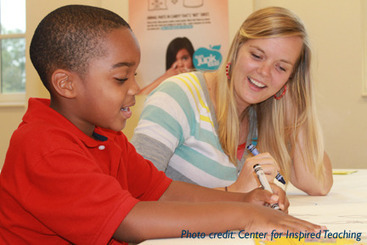
We recently profiled Wings for Kids -- one of few after school programs dedicated to social and emotional learning. As most principals will tell you, however, building an in-school culture of empathy, respect, and self-awareness requires more than just an outside program. We spoke recently to Principal Lynn Owings of James Simons Elementary School in North Charleston, South Carolina. Her school features the Wings for Kids program, but cultivating empathy doesn't stop there. Principal Owings sprinkles a variety of techniques and activities throughout the school day. Here are a few that any other school could try too:
1. The Morning Empathy Ritual: Every morning, teachers host meetings during which every student gets the opportunity to share.
I want to start a chain reaction of kindness and compassion that will make a ripple around the world.” --
The video, a documentary chronicling the Columbine tragedy, features interviews with Scott’s family and friends and excerpts from her writings and the philosophy.
“Compassion is the greatest form of love humans have to offer,” Scott wrote. “My definition of compassion is forgiving, loving, helping, leading and showing mercy for others. I have this theory that if one person can go out of their way to show compassion then it will start a chain reaction of the same. People will never know how far a little kindness can go.”
The presence of clear molecular mechanisms underlying altruism and empathy is all the more interesting given the complex social, biological, evolutionary and chemical properties of these behaviors. Altruism consists of actions performed for the benefit of others, even at a loss to oneself, while empathy involves feeling sympathy for the suffering of others, often with a desire to help. Since the time of Aristotle, many scholars have noted the close association of altruism and empathy. It has long been thought that both are acquired from ones parents, with societal and religious influences also playing strong roles. However, clear examples of empathetic/altruistic behaviors are seen in many species ranging from bats to chimpanzees —; species which that do not appear to teach their offspring the rules of “being nice.”
Babies are being brought into classrooms to cut bullying and teach children empathy...
Primary schools in Lewisham and Croydon will be the first in England to use infants to educate children as young as four about emotional literacy.
Babies have been brought into lessons before to highlight the realities of teenage parenthood, but this is the first time they will have been used as so-called "tiny teachers" for such young children, showing them how to be kind and nurturing.
The Roots of Empathy scheme, aimed primarily at five- to 10-year-olds from problem homes, has reduced rates of bullying in schools in the US, Canada and New Zealand. The Big Lottery today announced two grants of £900,000 to fund the scheme in the south London boroughs.
Ashoka Changemakers® is launching a global competition today titled: Activating Empathy: Transforming Schools to Teach What Matters. More than $70,000 in cash and in-kind prizes will be awarded to the best ideas, programs, and learning models that ensure children master empathy, enabling them to be effective citizens, leaders, and trailblazers.
The Activating Empathy competition seeks to spark greater collaboration between efforts such as those that encourage social and emotional development, address bullying in ways that advance understanding of others' perspectives, promote community diversity and respect for differences, and champion children as real-world problem-solvers.
"Empathy is essential for success in a rapidly changing world," said Danielle Goldstone, director of Ashoka's Empathy Initiative. "We are calling on teachers, administrators, parents, students, and innovators to share their ideas for integrating empathy into the core of the student learning experience."
Hillside Elementary School adopts "Walk in My Shoes" program to teach students to support and empathize with their peers who have learning challenges.
It is a truth universally acknowledged that elementary schools can teach kids to sound out words, recite multiplication tables and draw turkeys for Thanksgiving by tracing their hands and adding feathers...but can schools teach kids to empathize?
"Yes," says Hastings' Hillside Elementary School Principal Laura Sullivan....
Starting last week, Hastings adopted the education initiative "Walk in My Shoes,"—an experiential learning program that allows mainstream kids to feel what it's like to have sensory challenges—like movement disabilities, dyslexia, Asperger's Syndrome and Attention Deficit Disorder.
Corina Andronache writes about the three stages of self-compassion and their larger implication in creating a better world when practiced...
Self-compassion is a choice. With intention, we can choose to feed the nurturing and caring voice. I am choosing to believe that at all times I have been exactly where I’m supposed to be. The desire to change “what is” can become the source of my suffering. Loving what is at all times is a true sign of self-compassion. Not accepting reality as is will create a vicious cycle that will become difficult to overcome. In the end, we would have to fight not only the reality of the unfolding events, but the thoughts, feelings and emotions associated with that situation. Self-compassion requires us to learn how to be with what is in a way that we allow life to take its course and not go against the grain.
I'm a bereaved parent. My 2-year old son passed away in 2007 of a rare blood disease. I need self-compassion more than ever. The hard part of what you are saying is discerning between allowing life to take its course and when to work towards finding justice in an unjust situation. The most common language regarding a deathly ill child is "fight." "Fight the battle." "We are going to fight every step of the way and do everything we can to make our child well again." These are common statements, which for right or wrong, I denied using during my own son's 16 month illness. There are times when my husband and I think we did not do enough. For the most part, we believe we did very well regarding our son. However, it has left us with "The desire to change 'what is'..." and the suffering part becomes a lack of progress in finding justice for dying children.
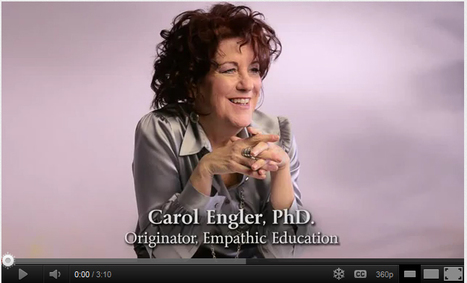
American education is broken and no one knows how to fix it. The No Child Left Behind Act of 2002 has declared that the mark of an educated person is a number, a test score. Our educational system, based on an agrarian calendar of 100 years ago, designed to produce highly competitive, emotionally detached worker bees, is hopelessly outdated. Our educational system is designed to send graduates out into the world to literally "beat the pants" off one another...
Empathic Education is a belief that our schools must help children aspire to be collaborative and cooperative human beings who interact in a world where energy sources are diminiPublishshing, commerce has become global and the rise of social media has made our "neighbor" not just someone who lives down the block, but also across the globe.
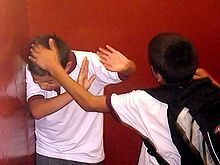
Meyer Middle School in River Falls, Wis., is looking to fight bullying and instill values in its students by building their character.
"Teaching empathy is the number one way to prevent the bullies from bullying," Cleary said. "Through the mediation process, they are in a position where they have to actively listen to the feelings of the victim. We don't see the same kids coming back because they are learning to identify with the victim."
Our mission is to help lead the integration of mindfulness into education... Our in-school program brings dramatic improvements in concentration, attention, and empathy among students, while building a climate of calm in the classroom....
having a mind that is calm, focused, and empathetic allows children to increase their scholastic aptitude, particularly if they experience a high degree of stress outside of school....
Mindfulness Fundamentals This class is for teachers, parents, psychologists and anyone who would like to learn mindfulness for themselves. This six-week course covers the basic techniques of mindfulness, and will help you build your own practice. The course is available both online and in-person. More…
Curriculum Training This second level training, based on the Mindful Schools Elementary School curriculum, explains how to teach mindfulness to children in a classroom setting. Lessons can easily be adapted for use at home, in afterschool programs, or in private therapy practice. More…
With the passage of health-care reform, President Obama has turned his attention to reforming education in America. In his State of the Union Message, he called for a significant increase in support for his "Educate to Innovate" campaign, which puts renewed emphasis on science, technology, engineering, and mathematics to ensure "our nation's economic competitiveness." The goal, according to the White House, is to equip every student with the knowledge that he or she needs to become a productive worker in the global economy...
Historians tell us that empathy is the social glue that allows increasingly individualized and diverse populations to forge bonds of solidarity across broader domains so that society can cohere as a whole. To empathize is to civilize.
A CAMBUSLANG woman last week took her fourth session at a primary school in a project aimed at teaching empathy to children.
Babies are being employed as “tiny teachers” in classrooms throughout South Lanarkshire as part of a pioneering Action for Children programme to reduce levels of bullying and aggression in schools. Birch Drive resident Alison Gilroy, mum of six-month-old Jacob, volunteered to help out after hearing of the programme.
Roots of Empathy - ‘empathy’ being the ability to identify and understand another’s feelings - is being rolled out in nine primary schools in the region,..
1. The Morning Empathy Ritual: Every morning, teachers host meetings during which every student gets the opportunity to share. Kids give a thumbs up or thumb down to indicate how they’re feeling, and then talk about it. The ritual builds community, creates a safe space for sharing, and encourages students to begin their days not only aware of their own feelings, but also feeling for those around them.
Have ideas about how to activate empathy in schools? Know of a principal, teacher, or education leader who has made empathy core to student and adult learning? We want to hear about them! Enter Ashoka's Changemakers competition for a chance to share your ideas with the world, and to win up to $100K in total prizes.
Consider what an “official” of the curriculum company told an Atlanta Journal-Constitution reporter: “It’s important for kids to have some empathy for other people in the world.”
Really?
When did schools get into the empathy business?
But this official’s admission illustrates how prevalent this belief is among educators. Educators have swung sharply from what most citizens believe schools should be doing, and that is imparting knowledge objectively and teaching students how to present written and oral arguments using logic and evidence...
This is the femininization of the schools. They are not more concern with indoctrination than learning.
This very concept of “putting yourself in others’ shoes” was taken literally by my daughter’s middle school, which has recently started a club called the “Shoe Club,” which she elected to join. As I was driving my daughter to attend the first meeting of this newly founded “Shoe Club,” I asked, “What is this club all about?” Anticipating the answer, and as this school activity is self-explanatory, I was pleased to hear from her well-spoken answer how the school is teaching the kids, early on, the essential basics of empathy!
I am sharing this personal experience to add other factors that can enhance empathy within us as humans. While I do not mean to underestimate the power of reading in reinforcing empathy — via self-transporting and personal reflection — as emphasized by Pearson, I would like to add other factors that can enhance empathy, including parenting, early schooling, mentoring and role modeling and the various activities of community centers and religious and other social aggregations.
What was needed was an approach that armed students as changemakers: one that enabled students to feel and act on empathy for one another and those surrounding them, giving them, as Eric puts it, “the belief that they can effect change in their proximal world—that they can reverse the cycle.”
Eric’s approach is two-fold: for one hour each week, all students—from Pre-K to 5th grade—hone their skills as peacemakers through weekly lessons focused on conflict resolution and civic engagement through real-life problem-solving and service learning. Students learn to resolve conflicts, help one another, and make tangible change in their school and community.
As we kick-off a global competition on “activating empathy in schools,” we thought it might help to start with a few stories that showcase what we mean.
These are by no means meant to be prescriptive: there’s a vast array of strategies and practices for cultivating empathy, and many that we have yet to conceive of—hence the purpose of the competition. Solutions might focus on effective ways to teach or unlock empathic skills: building better listeners, deepening communication and cooperation skills, and helping people of any age to understand and act on new perspectives...
The following are a few schools and organizations that are taking powerful and innovative approaches to re-imagining school culture and curricula. Your approach may look entirely different: the chalkboard is wide open. So grab some chalk, and let’s start innovating.
“Empathy is at the core of academic programs. This is so incredibly important. We are not preparing our children well if we are not explicitly teaching it. We think about it as part of our responsibility.”
– Katherine Dinh, Head of School, Prospect Sierra
At Prospect Sierra, an independent K-8 school in the San Francisco Bay Area, learning has to do with engaging the heart just as much as it does with engaging the mind. It is a place where compassion is not a program or unit, but a cornerstone of the entire school community. Teachers, students, administrators, and parents are all deeply interconnected and dedicated to making school both challenging and joyous....
We recently spoke with the folks at Prospect Sierra to see what tips they had to offer about activating empathy in schools. Here are few:...
While watching a brilliant teacher in action, you too may have wondered: "What is it that makes them excellent?...
Empathy and emotional intelligence are the keys to what our blogger calls "the T Factor"...
Emotional intelligence and empathy are two huge features of a T factor teacher's practice. Knowing how, when, and what to say in order to bring about conditions in which educational attachment flourishes, is an incredibly subtle yet powerful tool. I believe that these skills can be somewhat coached and taught; although it is clear that some individuals have a natural propensity towards innately interacting in an emotionally intelligent manner, without coaching or training...
The T Factor approach to education via empathetic and emotionally intelligent interactions helps us recognise and appeal to the humanity in people; educating them from the inside out, and not the outside in.
A budget deficit isn't the REAL problem with Congress - it's an empathy deficit. Luckily - researchers at the University of Chicago may have just discovered a solution to that problem. According to a new study published this month in Science magazine - the latest animal discovered to be able to empathize with others is...rats! That's right - rats are empathetic. The experiment went like this: two rats that normally share a cage were placed in a new cage in which one of the rats were restrained in a tube that could only be opened from the outside of the cage.
To get content containing either thought or leadership enter:
To get content containing both thought and leadership enter:
To get content containing the expression thought leadership enter:
You can enter several keywords and you can refine them whenever you want. Our suggestion engine uses more signals but entering a few keywords here will rapidly give you great content to curate.


 Your new post is loading...