PD: You wrote a lot about impressive empathy, which is the ability to understand others who disagree with you; how can we educate our students on that concept?
MF: This is really part of our curriculum conversation. If you look at 21st century goals, they have to deal with race and cultural diversity. We have to teach students about understanding diversity and citizenship. We do not have to look at these issues one item at a time. Rather, we need to look at these issues and build empathy as an integrated system and teach students these things in an effort to educate them on how to be a global citizen. By Peter DeWitt
November said he was talking with a senior executive at a global investment bank recently, and he asked the executive: What is the most important skill for today’s students to learn so they are prepared to succeed in the new global economy?
“Empathy,” the executive replied—the ability to understand and respect different points of view.
Most of today’s companies do business with customers all over the world, and several also have branches in multiple countries. Chances are good that when students enter the workforce, they’ll be working with—or doing business with—someone from another nation, with its own culture and its own unique perspective, at some point in their career.
Picture a college student appealing for a higher grade in his professor's office. The student admits to a mixed performance during the semester, but he still doesn't understand why the professor gave him such a low grade.
"Can't my worst grades just be dropped, including those zeros on the missed quizzes?" the student asks. "That way, my final grade would represent my best work in the class."
The first two were meetings that represented parallel, powerful constituencies and ideas - an Imagination Summit hosted by the Lincoln Center Institute in New York City; and an Empathy in Action working group, hosted by Ashoka in Washington, DC. At each gathering, I heard stories and insights from some of the world's most influential thinkers - from Sir Ken Robinson to Deepak Chopra to Kiran Bir Sethi.
I heard compelling cases for helping our education system become more effective at ensuring that all children become empathetic, and develop the ability to think imaginatively, act creatively, and behave innovatively.
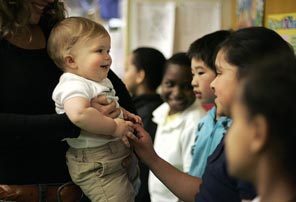
Mary Gordon - The founder and president of Roots of Empathy, a program that brings babies into classrooms to teach children compassion, shares stories and research from her program’s worldwide success.
When I talk to city officials, I speak of the fact that there is fluoride in our water supply to prevent tooth decay. I tell them we need empathy in the water supply to prevent social decay. Mary Gordon - Roots Of Empathy http://bit.ly/hut0rI
Video on PBS News Hour: At Banana Kelly HS in New York, ninth graders embarked on a multi-part refugee curriculum. The lessons went far beyond just the classroom. or many high school students, the struggles of others are often distant problems.
Producer John Tulenko went to Banana Kelly — situated in the poorest Congressional district in America — to film a piece on a remarkable curriculum developed by the Morningside Center. These ninth grade students went through several phases of activities related to refugees, discovering important life lessons in the process.
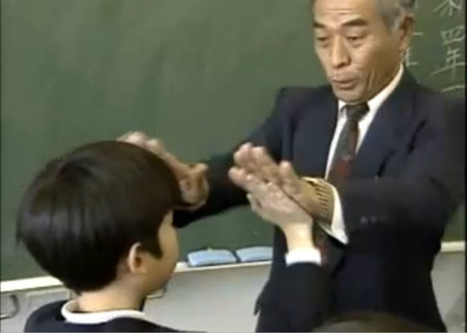
Lila Jokanovic shared this documentary with me, "Children Full of Life" about a Japanese classroom with a teacher who nurtures the empathy between his students. It's fascinating how much more developed children can be in such an environment.
What an extraordinary teacher, full of wisdom. He creates a safe place for children to explore their full range of emotions and be fully alive. It seems to me that he is equipping them for life by creating a compassionate classroom culture, a place where everyone can experience their common humanity and feel connected. Thank you for sharing this.
Empathy is a tool being employed to curb the amount of aggression amongst school children all over the world, including here in the Boundary.
The world-renowned Roots of Empathy (ROE) program aims to raise social and emotional levels in children.
While there is curriculum for Kindergarten through Grade 8, the focus in the Boundary is on the youngest of citizens in the school system – Kindergartners.
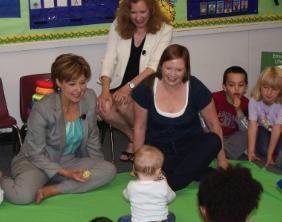
Two programs to teach young children empathy and preempt homophobic and racist bullying from an early age will get $800,000 annually for five years from the province, Premier Christy Clark announced in Burnaby on June 13. ..
The Roots of Empathy and Seeds of Empathy programs are about bullying prevention rather than intervention, says founder Mary Gordon. "Homophobic bullying is one kind of very prevalent bullying that is out there," Clark notes. "What we need to do is make sure that every school in the province is armed with the information on how to deal with bullying better."
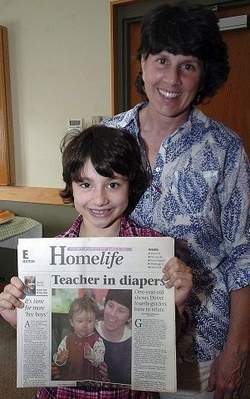
John Huff/Staff photographer Julie Person and her daughter Madison hold a copy of Foster's Daily Democrat from 2003 when they participated in a Empathy Project at Garrison School.
Students were invited to the Dover Career and Technical Center for lunch to look over photographs, birthday cards and letters written by students to Madison over the years.
What makes Asa Berg such an effective third-grade teacher is that he is not quite 11 months old.
It's an ideal age for the subject he's been teaching for more than half his life. The course is called Roots of Empathy. Asa is teaching the students about emotions, and his are right on the surface, easy to observe.
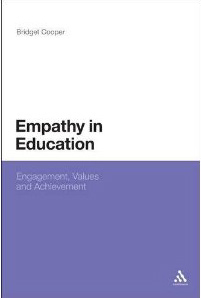
A thorough exploration of the role empathy plays in learning throughout all levels of education and its crucial relationship to motivation, values development and achievement.
Empathy in Education discusses the role of empathy in learning throughout all levels of education and its crucial relationship to motivation, values development and achievement, impacting from the micro to the macro levels of society. Using initial research involving interviews with teachers and student teachers in many different contexts, from nursery to sixth form lessons along side neuroscience, psychology and educational research, the author considers the intrinsic nature of affect and empathic human relationships in learning.
Think back to your third-grade report card. Remember the subjects? Math, Reading, Science, and Physical Education probably come to mind. But Empathy? Probably not.
You’re not alone. In fact, you’re in the company of billions – stretching across decades – who have mastered these basic skills by the time they turn twelve. The education system has valued them for centuries. And they are what our society believes essential for success.
Enter Ashoka – and its new “Every Child Must Master Empathy” initiative, a global effort beginning in North America to revise the roster of skills-to-master by adding one of the most fundamental for this new century (whether or not it ever shows up on that report card): empathy.
In higher education, should colleges affirmatively seek to teach students empathy or is doing so inappropriate because it is unrelated to academic achievement and might be overtly political?
According to a recent article by Eric Leake in Miller-McCune, Capital University, a private college located near Columbus, Ohio, is engaged in the “Empathy Experiment,” an eight-week program in which students spend a day in a wheelchair, go a night without eating, experience a temporary eviction, and sleep in a homeless shelter.
Expanding your empathy might offer just what you are looking for. Empathising is an avant-garde form of travel in which you step into the shoes of another person and see the world from their perspective.
It is the ultimate adventure holiday – far more challenging than a bungee jump off Victoria Falls or trekking solo across the Gobi desert. Here are my five top tips for transforming yourself into an empathetic adventurer over the coming months.
1.CULTIVATE CURIOSITY ABOUT STRANGERS... 2.LEARN FROM YOUR EXPERIENCES.... 3.TACKLE YOUR FAMILY EMPATHY DEFICIT... 4.TAKE AN IMAGINATIVE JOURNEY... 5.CHALLENGE YOUR PREJUDICES...
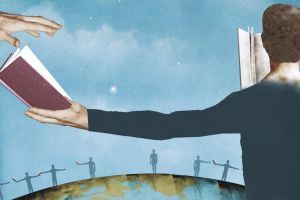
The realization that we are an empathic species, that empathy has evolved over history, and that we are as interconnected in the biosphere as we are in the blogosphere, has profound implications for rethinking the mission of education. New teaching models designed to transform education from a competitive contest to a collaborative and empathic learning experience are emerging as schools and colleges try to reach a generation that has grown up on the Internet and is used to interacting in open social networks where information is shared rather than hoarded.
Teachers have a huge responsibility for teaching empathy in their education classrooms. Not all students learn the art of caring and being empathetic at home. Sometimes schools have to step in and teach this skill. There are many lesson plans that teach empathy, but some stand above others. Empathy can be taught, but is best done through role-playing excercises, according to a 1992 article presented by Dr. Adam Blatner at the American Psychiatric Association Annual Meeting.
"As bullying among school-aged children continues to be a growing concern for communities and parents across the nation, it is now more critical than ever – and never too soon – to start building empathy in young, preschool-aged children," said Sandy Wax, president of Sprout.
"Empathy and kindness are a consistent theme with Sprout's gold-standard programming and trusted characters, so Sprout is uniquely positioned to deliver our 'Kindness Counts' message to families of preschoolers all across the country."
Students learn that physical & developmental challenges can be overcome
“It’s a mind-set thing,” she explained, adding, the hope is to help the children develop “empathy for even the students in this building. “We have a lot of children with autism and Asperger’s [an autism spectrum disorder] and we have all of the rooms just to provide them with the perspective that everyone is different and it’s OK to be different,” she said.
The Roots of Empathy Program, an internationally recognized anti-bullying teaching program, will be expanded into an estimated 360 kindergarten classrooms this year.
The Seeds of Empathy program, aimed at teaching four- and five-year-olds, also will be expanded to 22 preschools and/or child care facilities next year.
The Ministry of Children and Family Development and the Ministry of Education will jointly fund the two initatives over the next five years with an annual amount of $800,000.
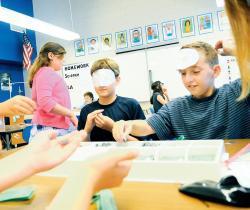
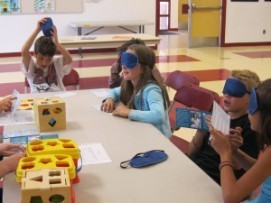
Yerba Buena students were taught the importance of empathy for those with disabilities at the school’s second annual Ability Awareness Workshop on Thursday. The workshop, geared for first and second graders, was modeled after a similar program at Lindero Canyon Middle School, according to Julie Van Note, a special education teacher.
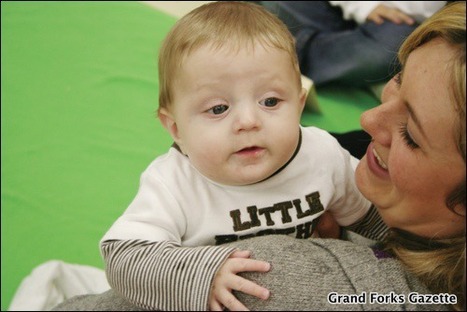
Rarely do parents get the chance to show-and-tell like they did when they were kids. But for mother of four, Karen Huyter, that’s exactly what she was able to do through a program called Roots of Empathy -- sharing her fourth son Jackson, with a classroom of curious students.
An evidence-based program, Roots of Empathy brings parents and their infants into the classroom in an effort to reduce aggression and bullying.
To get content containing either thought or leadership enter:
To get content containing both thought and leadership enter:
To get content containing the expression thought leadership enter:
You can enter several keywords and you can refine them whenever you want. Our suggestion engine uses more signals but entering a few keywords here will rapidly give you great content to curate.


 Your new post is loading...