Your new post is loading...

|
Scooped by
Kim Flintoff
July 21, 2012 1:21 AM
|
Overview We have devised an interactive curriculum aimed to support teachers of secondary students (approximately ages 13-17). The curriculum helps educate students on topics like: - YouTube’s policies - How to report content on YouTube - How to protect their privacy online - How to be responsible YouTube community members - How to be responsible digital citizens We hope that students and educators gain useful skills and a holistic understanding about responsible digital citizenship, not only on YouTube, but in all online activity.
|
|
Scooped by
Kim Flintoff
July 20, 2012 3:18 AM
|
KF: A reasonably comprehensive report on Tappestry - a new social network for learning. "What did you learn today? With Tappestry, you can track what you have learned and catalog it. Then you can tell everyone. Don’t be shy, you might just meet someone. You can use Tappestry to create and curate your own learning stream. Tappestry is a great place to store your learning and your thoughts and check in those little “A-ha!” moments you have. Think of it as your own learning journal or notebook for things you pick up over the course of your day all woven together to create your own distinct learning fabric, your Tappestry."

|
Scooped by
Peter Mellow
July 19, 2012 10:43 PM
|
Flowers says the new breed of free, high-quality higher education courses, or open online courses, will ultimately prove to be a fad. The future lies in marrying content and courses in high-quality video, animation and gaming technology.
|
|
Scooped by
Kim Flintoff
July 18, 2012 11:21 PM
|
UNIVERSITIES are traditionally seen as exclusive institutions for the few, not the many. But that is changing as a new wave of online courses throws open the doors of academia to all. Led by world renowned American institutions like MIT and Harvard, this push to democratise learning is being taken up in Australia too.
|
|
Scooped by
Kim Flintoff
July 18, 2012 8:59 PM
|
KF: This is an interesting article that serves to demonstrate in quite graphic ways the tensions that arise when we approach post-human modalities as normal. While the reasons for the attck remain unclear the incident is a worrying example of how technology-mediated engagement seems to worry many people. It will be interesting tio see how these issues become manifest in the Higher Education sector as more augmented and alternate forms of engagement are employed.
|
|
Scooped by
Kim Flintoff
July 18, 2012 10:14 AM
|
Not to be confused with Coursera, Coursemodo is a new interactive learning management system emerging from stealth mode today which focuses on student engagement in the classroom. Currently, that platform includes four key components: a web-enabled application which can be used from any Internet-connected device, including phones, tablets or computers; a polling feature for getting instant feedback from students; a quizzes feature which supports instant grading an export to a teacher’s preferred LMS, and an announcements feature for teacher-student communication which extends outside of course hours through SMS messaging.
|
|
Scooped by
Kim Flintoff
July 17, 2012 8:52 PM
|
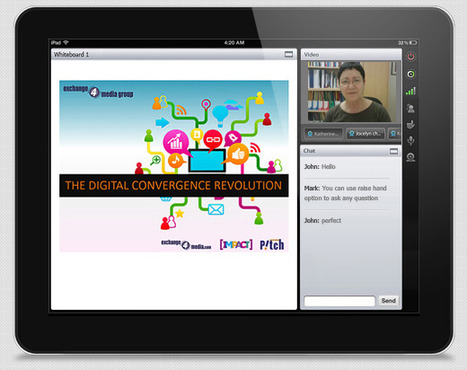
BOSTON, MA--(Marketwire - Jul 16, 2012) - WizIQ, a web-based education platform, announced its WizIQ Virtual Classroom App for the iPad today. KF: WizIQ is a web-based platform for online classes. Several prominent elearning celebrities have adopted the platform and the system currently boasts about 2M users. The system can be used for open-access and paid classes. The release of their mobile application means they are keeping pace with much bigger LMS like Blackboard and Moodle.

|
Suggested by
Learning Futures
July 17, 2012 7:56 PM
|
The “design-thinking” process for education championed by IDEO and the d.school at Stanford are a method to problem-solving and improving the learning process from K-12 and especially in post-secondary. Students and lifelong learners who experiment with the design process are often the most inspired people I’ve met in my life.
Adding a new dimension to presentations everywhere, three-year-old startup Prezi is providing its unorthodox presenters with 3D and fade-in animation tools to help them express their big ideas in ...
Via Baiba Svenca
|
|
Scooped by
Kim Flintoff
July 17, 2012 4:08 AM
|
part of the MSc in E-learning at the University of Edinburgh... The manifesto for teaching online was a key output from the Student Writing project at the University of Edinburgh. It is a series of brief statements that attempt to capture what is generative and productive about online teaching, course design, writing, assessment and community. It is, and may remain, a living document that is reviewed and reworked periodically with colleagues, students and amongst the programme team of the MSc in E-learning programme. Its primary purpose is to spark discussion, and to articulate a position about e-learning that informs the work of the project team, and the MSc in E-learning programme more broadly. This position is best summarised by the first of the manifesto statements: Distance is a positive principle, not a deficit. Online can be the privileged mode.
|
|
Scooped by
Kim Flintoff
July 17, 2012 12:49 AM
|
UChoose is an online application for authoring and delivering computer simulations of real-life scenarios, decision paths and maze-like activities for the purpose of training, education, and assessment.
While the original purpose of the system was to support the creation and delivery of Virtual Patient Scenarios based upon and driven by the Medbiquitous Virtual Patient standard this has been broadened out to any interactive case based scenario.
|
|
Scooped by
Kim Flintoff
July 16, 2012 10:16 PM
|
“Where the Leaders Discuss the Future of Serious Games” Serious Play Conference speakers include the leading thinkers, consultants, authors and analysts in the serious games industry as well as project directors already creating sims and games for education, corporate and military training, healthcare and non profits. Highlights for this year include new research on the market and growth trends for the serious games industry and presentations of the latest measurement and assessment strategiers.
|
|
Rescooped by
Kim Flintoff
from Cultura y Comunicación
July 16, 2012 10:24 AM
|
Interpersonal learning , personalized learning, second life learning , 3d learning, collaborative learning and virtual learning , these are just some of the few buzz words you would be hearing so often in today’s educational literature.
Via Dr. Susan Bainbridge, Mónica Stillo
|
|
|
Scooped by
Kim Flintoff
July 21, 2012 12:38 AM
|
KF: This edition (006) looks at "student engagement" - 5 minutes of video that might just introduce a few new ideas about getting students to engage.
|
|
Scooped by
Kim Flintoff
July 20, 2012 3:13 AM
|
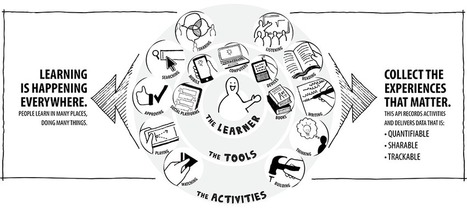
Learning happens everywhere - track it with the Tin Can API. The Tin Can API is simple and flexible. It lifts many restrictions of older specifications. The Tin Can API is a brand new learning technology specification that opens up an entire world of experiences (online and offline). This API captures the activities that happen as part of a learning experience. A wide range of systems can now communicate with a simple vocabulary that captures this stream of activities. Previous specification were difficult and had limitations — the Tin Can API is simple and flexible. It lifts many of the older restrictions. Mobile learning, simulations, virtual worlds, serious games, real-world activities, experiential learning, social learning, offline learning, and collaborative learning are just are some of the things that can now be recognized and communicated well with the Tin Can API.
|
|
Scooped by
Kim Flintoff
July 18, 2012 11:55 PM
|
The Global Education Conference is a collaborative, inclusive, world-wide community initiative involving students, educators, and organizations at all levels. It is designed to significantly increase opportunities for building education-related connections around the globe while supporting cultural awareness and recognition of diversity. Last year’s conference featured 340 general sessions and 18 keynote addresses from all over the world with over 10,000 participant logins. To attend this year's conference and to be kept informed of the latest conference news and updates, please join this network.
|
|
Suggested by
Learning Futures
July 18, 2012 10:14 PM
|
The physical classroom is becoming a distant memory for some students. Distance and online learning is a big deal in higher education. Not only are more students taking online classes at traditional four-year colleges, but also the rise of innovative for-profit online schools is changing the landscape. We all know it’s happening, but now we can quantify the affect of online learning with these 50 striking statistics.
|
|
Rescooped by
Peter Mellow
from Web 2.0 OER
July 17, 2012 10:03 PM
|
A quick guide on the use of social networking tools in education by ProfDrAmin in How-To Guides/Manuals, web 2.0, and ukm...
Via Mohamed Amin Embi

|
Scooped by
Judy Schrape
July 17, 2012 8:48 PM
|
For the past few months Michael Drennan's GCSE and A level students have been doing all their writing via student blogs. Writing in classrooms seems to me to have two wildly different, conflicting purposes: a limited, traditional and strict purpose - because exams, like many decent jobs, will be about written skill; and a wider, idealistic one: the ultimate method of exchange of ideas in depth.
|
|
Scooped by
Peter Mellow
July 17, 2012 10:23 AM
|
nside Higher Ed’s survey about faculty views of online educationis on point. Since I had participated by filling out the survey, I was curious about its findings. My interest surged after reading the related article by Steve Kolowich -- who noted that for professors “the rise of online education excites them more than it frightens them.” According to the survey’s composite data, I fit the profile of Academic Everyman. So, to flesh out the statistical bones, here are some observations by an archetypal Old Prof who wonders as he wanders through the new terrain of distance learning.
|
|
Rescooped by
Kim Flintoff
from Mobile Learning
July 17, 2012 2:47 AM
|
Microsoft revamps Office, looks to the cloud... "It makes use of cloud computing by storing documents and settings on the internet by default, and is compatible with touch screens widely used in tablets. It also incorporates Skype, the video-calling service Microsoft bought for $US8.5 billion in 2011."
|
|
Scooped by
Peter Mellow
July 16, 2012 11:48 PM
|
UNIVERSITY students owe the Federal Government more than $23 billion - the biggest loans debt in history. Taxation data compiled for The Daily Telegraph shows the average student racks up $14,400 in debt to pay for university tuition. PM- Universities often push flexible learning options as a way for the University to save money. Is there some way we can use flexible learning to save stidents money also? Discounted courses if they are taken online instead of on campus?
|
|
Scooped by
Peter Mellow
July 16, 2012 8:30 PM
|
Australian university students have followed the lead of their overseas counterparts in creating Facebook pages that document campus life through memes. Although the first university meme page reportedly appeared in October 2011, the phenomenon gained momentum in February when students across the US and UK began posting humorous image macros relevant to their universities, including Yale and Cambridge. Quick to embrace the trend, students of several local institutions including UTS, Newcastle University, ANU and Monash set up their own versions early in the autumn semester.
|