

K-12 education isn't using technology effectively and isn't investing nearly enough in IT infrastructure to enable next-generation learning.


|
Scooped by
EDTECH@UTRGV
onto Educational Technology News September 15, 2011 1:07 PM
|
 Scoop.it!
K-12 education isn't using technology effectively and isn't investing nearly enough in IT infrastructure to enable next-generation learning.

 Your new post is loading...
 Your new post is loading...
Your new post is loading...
Scoop.it!
|
|
|
Scooped by
EDTECH@UTRGV
Today, 8:47 AM
|
Scoop.it!


The latest AI tutoring research points to a stubbornly human problem — getting students to engage. “Access was nearly universal but engagement was thin,” a new study found.
"[R]esearch on AI in education is nascent, but an early theme is that students often won’t use it for learning. 'When given AI tutors, many students do not engage'”
|
|
Scooped by
EDTECH@UTRGV
Today, 8:39 AM
|
Scoop.it!

Helping multilingual students spot deepfakes in the age of AI will help them better assess authenticity of online content.
"[I]f we use visuals as a bridge to understanding, we must also teach students to question their source, context, and credibility."
|
|
Scooped by
EDTECH@UTRGV
Today, 8:34 AM
|
Scoop.it!
"For a few years now, the UX research field has been arguing with itself over whether AI is coming to replace us or whether AI can’t do “real” research and we need to hold the line. Is AI coming to replace us? Should we use AI to automate research? Can AI conduct “real” research? Research is about asking questions. However, we can ask better questions about AI in UXR."
"We don’t need to ask whether AI can do research. It’s already doing it, and it’s doing it in your org right now, whether or not a researcher is involved. So the real question is: when everyone can do research, who keeps it honest?"
|
|
Scooped by
EDTECH@UTRGV
August 21, 2:19 PM
|
Scoop.it!
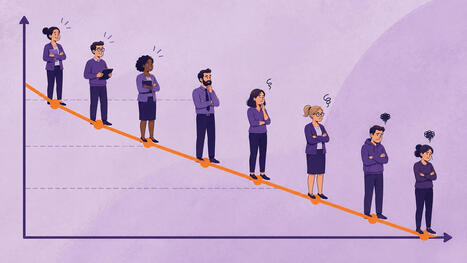
What research reveals about the absence of training, policy, and institutional support
"Teachers with higher self-efficacy perceived more benefits, fewer concerns, and reported more trust."
|
|
Scooped by
EDTECH@UTRGV
August 21, 2:14 PM
|
Scoop.it!

The letter emphasizes outcomes and evidence but stops short of issuing federal regulations.
"Responsible design is the floor. Not only do we need to know if the tool works, but if it works; why does it work, for whom does it work, and under what conditions.”
|
|
Scooped by
EDTECH@UTRGV
August 21, 2:09 PM
|
Scoop.it!

A new Wharton study shows that people feel more positively about ethical advice from AI once they see how good it can be.
"Most people would not prefer to take ethical advice from a computer, but a new Wharton study shows how attitudes change when users see how good AI guidance can be."
|
|
Scooped by
EDTECH@UTRGV
August 20, 10:01 AM
|
Scoop.it!

Plunging assessment scores show reading skills are vanishing, with an instructor complaining his pupils can't understand basic assignments.
“There is a measurable, generational collapse in sustained reading and writing, and the academy is responding to it with improvisation and exhaustion rather than the structural overhaul it requires.”
|
|
Scooped by
EDTECH@UTRGV
August 20, 9:52 AM
|
Scoop.it!
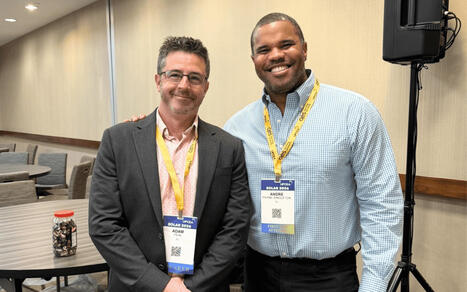
Adam Fein, Vice President of Academic Innovation and Strategic Partnerships at 2U, explores how online education is becoming central to university strategy and why institutional alignment and the right partnerships matter.
"As online learning takes on a bigger role, the success of an institution’s portfolio depends on more than the strength of any individual program. It requires a perspective shift, in which online strategy becomes inseparable from institutional strategy."
|
|
Scooped by
EDTECH@UTRGV
August 20, 9:45 AM
|
Scoop.it!
"We built it to sound sure of everything. The best thing it can learn to say is “I’m not sure.”
"[W]hat you actually get from Claude or ChatGPT is a play-by-play that tells you nothing. “Analyzing your request” or “Working on it.” Cool. You never see the one thing that matters, how it got from your question to its answer."
|
|
Scooped by
EDTECH@UTRGV
August 20, 9:39 AM
|
Scoop.it!

"Alright, let’s talk about something that’s got everyone buzzing, from college dorms to faculty lounges: the dramatic entrance of AI into the academic world. Google, ever the titan of technology, isn’t just dipping its toes in; it’s diving headfirst with a brand-new suite of AI study tools. This isn’t some beta test tucked away in a corner; this is a full-throttle initiative, aptly named ‘Back to School 2026,’ integrating these powerful capabilities right into Gemini and Google Search. And here’s the kicker: eligible college students in the U.S. are getting a free year of Google AI Pro"
"[W]hile AI makes the process of getting answers incredibly efficient, it might inadvertently make the process of learning less profound."
|
|
Scooped by
EDTECH@UTRGV
August 19, 11:18 AM
|
Scoop.it!
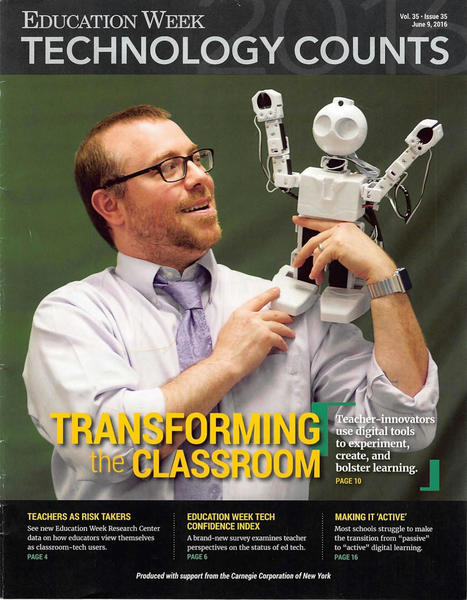
"Pretty soon, everyone is going to see that I do not belong here.
Whether it was as a student, an athlete, a teacher, and now in the business world, some version of that sentence has always run through my head."
"The feeling that you do not belong can hang over everything you do. Every meeting and every presentation feels like a performance where you are just waiting for someone in the audience to start booing because they have finally figured out that you have no idea what the heck you are doing."
|
|
Scooped by
EDTECH@UTRGV
August 19, 11:11 AM
|
Scoop.it!

To serve today’s most driven students and prepare all learners for what comes next, we have to rethink long-held assumptions about education.
"Walk into almost any classroom in America, and you’ll see a system designed for consistency: same lesson, same pace, same expectations for every student. For decades, that model has served millions well. But today’s learners are changing, and some of the most driven among them are quietly outgrowing the structure meant to support them."
|
|
Scooped by
EDTECH@UTRGV
Today, 8:55 AM
|
Scoop.it!

Kevin Ramsey says the glasses can read menus to him and help him track walking routes.
"UK courts recently banned people using the glasses inside their buildings and a number of restaurants and theatres have done the same. Ramsey is concerned more places might ban them which could negatively affect visually impaired people using them."
|
|
Scooped by
EDTECH@UTRGV
Today, 8:44 AM
|
Scoop.it!

Most teachers recognize the scene: a room full of students copying down slides word-for-word or neatly filing away handouts under the assumption that having the record means having the knowledge.
"When participants recorded words knowing they could look at their notes during a recall test, their initial encoding became exceptionally superficial...Knowing a backup existed did not merely reduce study effort; it actively undercut retention."
|
|
Scooped by
EDTECH@UTRGV
Today, 8:37 AM
|
Scoop.it!

Before restricting screens, schools should ask what students will lose, including access to books, translation, accessibility features, and more.
"At a time when many students are struggling to read, schools should increase access to high-interest books, not limit ways students find and read them...Digital books do not replace paper, but expand access, choice, privacy, and independence."
|
|
Scooped by
EDTECH@UTRGV
Today, 8:32 AM
|
Scoop.it!
"Artificial Intelligence (AI) has the potential to address some of the biggest challenges in education today, innovate teaching and learning practices, and ultimately accelerate the progress towards SDG 4. However, these rapid technological developments inevitably bring multiple risks and challenges, which have so far outpaced policy debates and regulatory frameworks."
"This publication offers guidance for policy-makers on how best to leverage the opportunities and address the risks, presented by the growing connection between AI and education."
|
|
Scooped by
EDTECH@UTRGV
August 21, 2:16 PM
|
Scoop.it!
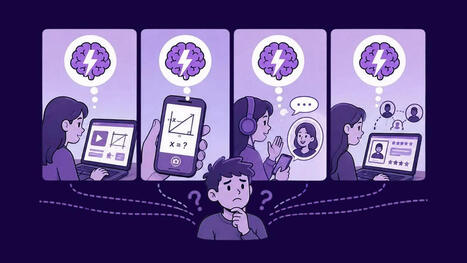
As the catch-all term “AI tutoring” captures the public imagination, it’s time to define and measure what actually meets the bar for a “tutor.”
"Homework helpers (and off-the-shelf LLMs) are designed to resolve the task a user brings in real time: to get to an answer. Great tutors don’t provide answers."
|
|
Scooped by
EDTECH@UTRGV
August 21, 2:12 PM
|
Scoop.it!

The best AI-powered tutors guide students towards genuine learning
"While students may welcome the ability to quickly get answers without much work, educators and education leaders have been deeply uneasy about the potential effects of AI on learning."
|
|
Scooped by
EDTECH@UTRGV
August 21, 2:08 PM
|
Scoop.it!
"The film feared a superintelligence that would rise up and rule us, but the generative AI we built asks for our trust instead — and mostly gets it."
"The Matrix feared a machine that would wake up, decide we were the problem, and seize control. Generative AI did the opposite. It asked politely — a summarizer here, a copilot there — and we said yes, one convenient task at a time. No war, no red pill. The takeover, if that is the word, came by invitation."
|
|
Scooped by
EDTECH@UTRGV
August 20, 9:54 AM
|
Scoop.it!

Instead of banning the technology, schools have a unique opportunity to promote digital citizenship and authentic student engagement.
"It has become a concerning cycle in education: When any new technology becomes prevalent in our kids’ world — from TV to video games, and computers to the rise of AI — policymakers’ first instinct is to ban the technology rather than attempt to understand it."
|
|
Scooped by
EDTECH@UTRGV
August 20, 9:49 AM
|
Scoop.it!

The cyberattack that rocked Canvas offered a lesson for higher ed: Institutions must move faster to stay ahead of emerging threats.
"Experts at Instructure recognized earlier this year that conventional security practices were being challenged by AI-powered threats,...The company’s renewed defenses remained unfinished when the attack occurred."
|
|
Scooped by
EDTECH@UTRGV
August 20, 9:43 AM
|
Scoop.it!
"Why making the human behind the machine visible changes what we call morally right, and what that does to the alignment of AI with human values"
"Who do we blame when an AI makes a wrong prediction or a harmful decision? The obvious suspects are the machine itself, or the company that built it. Recent experimental research evidence points in a new direction."
|
|
Scooped by
EDTECH@UTRGV
August 19, 11:19 AM
|
Scoop.it!

Access to AI is not the same as readiness to use it well. This article sets out what an AI-ready workforce actually needs.
"An AI-ready workforce is not one where everybody becomes an expert or uses AI for everything. It is one where people can make an informed call about where AI belongs in their work and where it does not."
|
|
Scooped by
EDTECH@UTRGV
August 19, 11:15 AM
|
Scoop.it!

AI cheating will decrease, the techlash will continue, and other predictions for the coming school year.
"I think we’re going to see more institutional responses and more cultural responses to this. Encouraging trends include the movement toward watermarking from some of the tech giants"
|
|
Scooped by
EDTECH@UTRGV
August 19, 11:09 AM
|
Scoop.it!
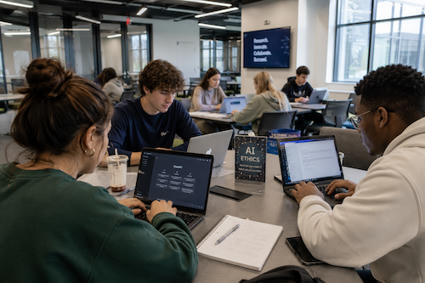
Higher education needs a more precise definition of cheating and plagiarism in the age of generative AI--the issue is a complicated one.
"AI-generated content is not automatically plagiarism...Students can cheat with AI, but higher education cannot respond intelligently while using one label for every form of misconduct."





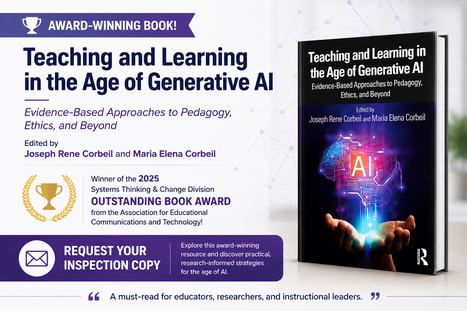




I chose this resource because I found it interesting that the author mentions that we aren't doing enough as far as the integration of technology, and I in fact agree. I hope that this article will provide our educators with creative and effective ways that we can make technology more prevalent in our schools.