Is the future of ePortfolios in your pocket? Creating electronic portfolios using mobile devices.
Via Dr. Susan Bainbridge


|
Rescooped by
EDTECH@UTRGV
from The 21st Century
onto Educational Technology News September 1, 2011 2:47 PM
|
 Scoop.it!
Is the future of ePortfolios in your pocket? Creating electronic portfolios using mobile devices.

 Your new post is loading...
 Your new post is loading...
Your new post is loading...
Scoop.it!
|
|
|
Scooped by
EDTECH@UTRGV
Today, 10:25 AM
|
Scoop.it!

"I have been a high school teacher for almost three decades, spending almost all that time teaching seniors about American civics. My teaching tenure has overlapped with the rise of the very trends now engulfing our educational system: I have watched my students embrace smartphones, social media, online learning and now artificial intelligence.
But recently I have noticed something I never expected.
Many of my more thoughtful and honest students are becoming critics of the very technologies that shaped them."
"The generation that grew up on iPhones, spending much of every waking hour online, now seems to be awakening to the perils of a digital world neither they nor their parents fully understood."
|
|
Scooped by
EDTECH@UTRGV
Today, 10:20 AM
|
Scoop.it!

"University students who view artificial intelligence through the lens of ethics and social good may be more effective at planning, monitoring, and evaluating their learning with the technology, according to new research."
"A study of 333 university students found that critical thinking, autonomy, and views of AI’s ethical and social value were associated with how learners managed their work with the technology."
|
|
Scooped by
EDTECH@UTRGV
Today, 10:11 AM
|
Scoop.it!
“Teachers, just like students or coders, might be using AI as a crutch,...Instead of doing the actual work, they’re using AI to delegate the task, and that lowers the quality of their teaching.”
|
|
Scooped by
EDTECH@UTRGV
July 13, 3:33 PM
|
Scoop.it!


A snapshot of where districts stand on AI and what it reveals.
"What we found is a snapshot of a field that is neither panicking nor confidently leading: it is waiting, watching and managing uncertainty one teacher-directed decision at a time."
|
|
Scooped by
EDTECH@UTRGV
July 13, 3:30 PM
|
Scoop.it!

Uncover the significance of AI personalization in learning platforms and the vital role of system infrastructure for success.
"Adaptive learning platforms often fail not because of weak AI models, but weak architecture: shallow learner data, flat content libraries, one-time routing, and slow infrastructure. Real personalization requires continuous data, structured content, live feedback loops, and real-time response."
|
|
Scooped by
EDTECH@UTRGV
July 13, 3:26 PM
|
Scoop.it!

"If you feel like things are accelerating in AI, you are probably right. Better AI models from the leading American AI labs have been releasing more quickly than ever (though government interventions stopped access temporarily to two of the most powerful models, Claude Fable and GPT-5.6)."
"As AIs can do longer and longer tasks, the way people are using AI is changing. Until recently, the dominant way to use AI was as a co-intelligence. You would ask the AI to do something, check the results, and then ask for it to do the next step of your job. By careful prompting and human attention, you could guide AIs to do complex and long-term tasks."
|
|
Scooped by
EDTECH@UTRGV
July 13, 3:20 PM
|
Scoop.it!

AI chatbot warning labels may not stop users from trusting hallucinated answers, raising new audit, compliance, and escalation questions for enterprise teams.
"Researchers found that hallucination warnings had weak and mixed effects among interventions studied for organization-backed AI advisors."
|
|
Scooped by
EDTECH@UTRGV
July 13, 3:17 PM
|
Scoop.it!
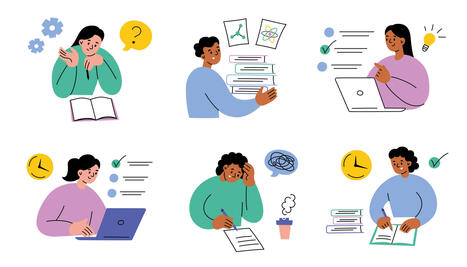
Discover practical assessment strategies that promote academic integrity and meaningful learning in the age of AI and generative technology.
"As institutions explore how to move forward, one thing is becoming clear: we must rethink how learning is assessed."
|
|
Scooped by
EDTECH@UTRGV
July 10, 11:38 AM
|
Scoop.it!

"Typically, a company identifies a pain point (document processing, customer churn prediction, etc.) and spins up a proof of concept with a small team. It works in the lab, and leadership gets excited. Then it tries to operationalize it, and everything falls apart."
"The companies that fail at AI are failing because they treat AI as a product to install rather than a capability to develop."
|
|
Scooped by
EDTECH@UTRGV
July 10, 11:33 AM
|
Scoop.it!
"As online education expands, educators face growing challenges in maintaining emotional connections with students while sustaining their own well-being. Emotional intelligence has long been recognized as a cornerstone of effective teaching, yet in digital spaces, cues are harder to read, and connection requires new strategies. This article explores how AI, when applied ethically, can amplify, not replace, the human touch in online classrooms"
"The use of sentiment analysis tools is a proactive way to help spot the emotional undercurrents by analyzing tone, language, and emotional indicators in students’ discussion posts, their emails, and their assignments."
|
|
Scooped by
EDTECH@UTRGV
July 10, 11:27 AM
|
Scoop.it!

Why most organizations measure deployment, but can't close the adoption gap—and the leadership discipline that changes outcomes.
"Most organizations believe digital transformation is a technology problem. It isn't. Technology is the easy part. It scales fast. It deploys cleanly. It looks impressive in dashboards. What doesn't scale at the same speed is behavior. And that is where transformation quietly breaks: the adoption gap."
|
|
Scooped by
EDTECH@UTRGV
July 9, 10:43 AM
|
Scoop.it!

Want to better understand how you're using Claude? Try this feature.
"Claude's new 'reflect' tool is designed to help users answer complex questions about their AI use."
|
|
Scooped by
EDTECH@UTRGV
Today, 10:29 AM
|
Scoop.it!

Manjee: Students use screens only for end-of-lesson check-ins — giving teachers real-time info about who's on track and who's falling behind.
"[T]he fight playing out in city councils and statehouses over screens versus no screens. But that is the wrong battle. Screens are not the enemy of learning. The real enemy is older than any device: a classroom where students sit isolated and a teacher is too swamped with grading and paperwork to notice who is falling behind until it is too late to help."
|
|
Scooped by
EDTECH@UTRGV
Today, 10:22 AM
|
Scoop.it!

Teachers shouldn't fear that AI and advancements in technology will diminish their expertise--instead, they amplify it.
"When we combine the timeless art of great teaching with the new science of artificial intelligence, we create classrooms where every student can truly thrive."
|
|
Scooped by
EDTECH@UTRGV
Today, 10:18 AM
|
Scoop.it!

Schools try to block kids from accessing dangerous content and games online but often fall short. Parents and educators say if devices are here to stay, districts need to have more control, transparency.
"We need better training, better guidelines and better knowledge of how to use all the apps in a way that’s going to be beneficial"
|
|
Scooped by
EDTECH@UTRGV
July 13, 3:35 PM
|
Scoop.it!
Despite challenges, teachers believe AI can broaden students’ horizons.
“Our big urban and suburban school districts, they have technology integration coaches who have been diving into the AI work for the past three years...Rural school districts often don’t.”
|
|
Scooped by
EDTECH@UTRGV
July 13, 3:32 PM
|
Scoop.it!

eLearning platforms with AI features completely rebuilt their core systems. Here's what they actually engineered behind the scenes.
"eLearning platforms are adding AI in specific places where it solves a problem. But they're also running into real constraints. And they're discovering that rebuilding a platform around AI costs significantly more than bolting AI onto an existing system."
|
|
Scooped by
EDTECH@UTRGV
July 13, 3:29 PM
|
Scoop.it!

Technology should make teachers' work lives easier and their impact more powerful, not have students spend more time on screens.
"Paper and curriculum for the human work of learning. Technology for the logistics of running a room."
|
|
Scooped by
EDTECH@UTRGV
July 13, 3:23 PM
|
Scoop.it!
Everyone is selling you this pitch about AI and design: it’s faster. Ten times faster. Ship in an afternoon what used to take a month, watch a prototype assemble itself while you sip your coffee…
"When you optimize a creative process for raw speed, you don’t get better products. You get the same products, just sloppier, sooner and shortsighted."
|
|
Scooped by
EDTECH@UTRGV
July 13, 3:18 PM
|
Scoop.it!

AI detectors are struggling against increasingly realistic deepfakes. Researchers say people can dramatically improve their ability to identify fake AI faces through structured training and pattern recognition.
"Researchers say spotting AI faces may soon depend more on people than software"
|
|
Scooped by
EDTECH@UTRGV
July 13, 3:16 PM
|
Scoop.it!

In the AI era, as knowledge becomes more abundant and intellectual work widely distributed, the defining challenge for university leaders is no
"If AI is reshaping how knowledge is produced, universities must reconsider one of higher education’s foundational assumptions: the scarcity of knowledge. Specifically, they must ask which educational resources remain scarce – and therefore valuable."
|
|
Scooped by
EDTECH@UTRGV
July 10, 11:36 AM
|
Scoop.it!

Aligned to existing ISTE standards and principles, the expanded Profile of an AI-Ready Graduate defines six roles and associated skills and practices students should have mastered when they graduate.
“This profile is not about getting your foundational knowledge about AI..It’s not about all of the deeply critical thinking that you need to learn to do with AI. It’s about the skills that you’re going to be expected to apply in the workforce when you graduate.”
|
|
Scooped by
EDTECH@UTRGV
July 10, 11:31 AM
|
Scoop.it!
"Here’s the quip nobody wants on a mug: revolutions don’t build things. A revolution hands you a new way of seeing, a great story, and a merch table. The building happens after, and it’s slow and unglamorous and done entirely by the people willing to raise a hand and say this isn’t right yet. That’s evolution and that’s where the actual work lives. And here’s the part worth saying out loud: it worked."
"A revolution, at its core, is a new way of seeing. It walks in, rearranges what you thought was possible, and hands you a blank page. Jakob Nielsen frames AI as the fourth great economic revolution, after tools, agriculture, and industry. Each one took something scarce and made it stupidly abundant: muscle, then food, then power, now cognition."
|
|
Scooped by
EDTECH@UTRGV
July 9, 10:53 AM
|
Scoop.it!

An evolutionary psychologist is challenging the popular understanding of kids and technology.
"School policies were not the only things that changed from 2009 to 2013; smartphone use, for example, skyrocketed across the same few years. But lots of evidence affirms the notion that in America, at least, children are more stressed out by school than by any other aspect of their lives."
|
|
Scooped by
EDTECH@UTRGV
July 9, 10:41 AM
|
Scoop.it!

Students take a photo of their environment, at school, home, or in the community, and ask AI to identify problems within that setting without offering solutions.
"Artificial Intelligence (AI) has the potential to be a powerful tool for student learning when paired with strong foundations in ethics, integrity, data privacy, bias awareness, and the ability to detect misinformation."