


Though segregation was officially ended in America decades ago, unofficially the problem persists. A US Circuit Judge recently had to step in to comba

ED 262 KCKCC Su '26
5.8K views |
+10 today
 Your new post is loading...
 Scoop.it! 
In developed countries around the world, people think immigrant populations are much larger than they actually are.
Americans consistently mention immigration as one of the nation’s most pressing political concerns, and it has become a signature issue in the presidential campaign. But while many Americans consider immigration one of the biggest issues for the future president, surveys suggest that they also have little understanding of the scale of the problem. The United States wasn’t alone in this tendency to exaggerate.
Tags: migration, statistics, political. 

Alex Smiga's curator insight,
August 3, 2017 10:03 AM
Support immigration debates with some solid facts
Scoop.it!
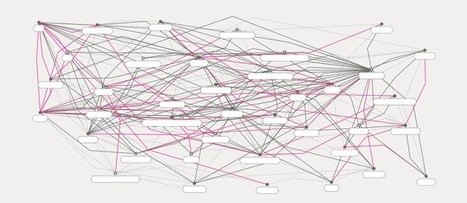
An interactive network visualisation of key players & notable relationships in the Middle East region. Continually updated. Awesome looking.

Taylor Doonan's curator insight,
March 24, 2018 4:40 PM
This infograph is fun to play with and it shows who like who and who hates who in the middle east. it is interesting when you only look at the "love" reationships and realize how many nations don't have any. Though there are nations that have no "love" relationships every one, but Oman, has at least two hate relationships, this is a great learning tool.

brielle blais's curator insight,
April 1, 2018 4:45 PM
In geography it is important to understand what countries are enemies, what countries are alibis, and what countries have strained relationships. Without this knowledge, you really are left clueless to important relationships or causes to wars, or how each place affects another economy, politics, etc.

Corey Rogers's curator insight,
December 15, 2018 12:40 AM
This chart is interesting, in that it shows the complex webbing of how each region is back by a certain country. It such a mess that trying to view this chart is such an eye sore, which is exactly how this region is, just a huge mess of a spider's web.
Scoop.it!

I thought the U.S. overthrow of the Taliban would end the wars I’d seen growing up in Afghanistan. But it brought more war.
Dennis Swender's insight:
Essay topic: Is there a double standard for the United States and for other countries, e.g., Russia? Why is it okay for the United States to invade and/or support rebel groups against the current and former legitimate governments of Iraq, Libya, Egypt, and now Syria while opposing any similar invasion and/or cyber attacks from foreign nations?
Scoop.it!

Dennis Swender's insight:
The one time when students don't come first in assigning "first responder" blame for poor performance on tests and assignments. Content and pedagogy play decisive roles.
Scoop.it!

When it comes to education, the Finnish know what they’re doing. The Scandinavian country has one of the top education systems in the world, and this year, ranked number one in literacy. So what’s Finland’s secret? It’s simple: more play, less work.
Learn more / En savoir plus / Mehr erfahren:
http://www.scoop.it/t/21st-century-learning-and-teaching/?tag=Finland
Via Gust MEES

Gust MEES's curator insight,
October 9, 2016 3:27 PM
When it comes to education, the Finnish know what they’re doing. The Scandinavian country has one of the top education systems in the world, and this year, ranked number one in literacy. So what’s Finland’s secret? It’s simple: more play, less work.
Learn more / En savoir plus / Mehr erfahren:
http://www.scoop.it/t/21st-century-learning-and-teaching/?tag=Finland

John Rudkin's curator insight,
October 10, 2016 2:58 AM
...how wrong can we be. Finland show that the intelligent way is naturally engaging.

Dennis Swender's curator insight,
October 13, 2016 10:03 AM
Finland still remains as one of the leading PISA achievement nations.
Scoop.it!

To better serve his students, professor Michael Wesch decided to have his students teach him about their lives. Via Society for College and University Planning (SCUP)
Scoop.it!

A new museum in Washington shows the personal side of African Americans' suffering, perseverance, and triumphs.
Scoop.it!

A lawsuit filed on behalf of seven Detroit students on Tuesday accuses state officials of allowing high rates of illiteracy at several poorly functioning schools in the city, arguing it is a violation of the children's constitutional rights. Via Lynnette Van Dyke
Scoop.it!

Forty percent of students who will begin work on a four-year college degree this September will finish in four years. If you allow six years, the figure rises to 59 percent. For two-year degrees, the completion rate is 30 percent. Before spending billions to get more kids in college we should make sure that won’t simply lead to a boom in college failure. Via Jim Lerman
Scoop.it!

This is the future of learning, I thought as I settled behind a linoleum-lined coffee table, ready to guinea-pig my way through a distance-education c
Scoop.it!

A new survey finds that even college-educated Americans have a lot to learn about the world around them. Take our quizzes to see how much you know.

Lee Hancock's curator insight,
November 1, 2016 5:44 PM
Are you smarter than a well educated young American? Take the quiz to see. |
Scoop.it!

NowComment makes it easy to have rich, engaging discussions of online documents no matter how large (or small) your class or collaboration group. Via Nik Peachey

Nik Peachey's curator insight,
November 16, 2016 1:11 AM
A great tool for creating online discussion around documents.
Scoop.it!

They aim to do this by combining an extreme form of "peer-to-peer learning" with project-based learning. Both are popular methods among education researchers, but they usually involve the supervision of a teacher. Via Nik Peachey
Scoop.it!
The Global Digital Citizen Foundation resources list has got something for every teacher, administrator, and student living in the digital age. Via Beth Dichter

Beth Dichter's curator insight,
April 11, 2015 8:03 AM
If you are looking for excellent resources in the following areas you may want to click through to the Global Digital Citizen Foundation website. They provide a wealth of resources that you may download. Below is a list of their current resources. Consider bookmarking this page as they continue to add new resources. * Solution Fluency Quickstart Guide * Information Fluency Quickstart Guide * Creative Fluency Quickstart Guide * Media Fluency Quickstart Guide * Collaboration Fluency Quickstart Guide * World of Colour: Colour Theory in Marketing and Media * PBL in the Classroom - this is a series and includes 3 resources * 10 Things to Know Before Starting a BYOD Program * Fluency Snapshot Quickstart Guide * Tools for Teachers - Media Production * Tools for Teachers - Writing * Digital Citizenship Agreements
Scoop.it!

Engage your students with high-quality informational text that allows them to explore their own interests at these 5 fabulous websites.
Scoop.it!

Blogging is an essential part of my business, and I can tell you firsthand how difficult it can be. Via Daniel Watson

Brett.Ashley.Crawford's curator insight,
September 9, 2016 9:08 AM
All true. Writing is hard but writing is essential for content generation. Writing can take many forms (video, audio, etc.) but it is a mental pursuit to find the structure and meaning you intend to convey.
Scoop.it!

"Of course text will never die, but the ability to communicate through alphabet is now slowly becoming a privilege dedicated to a small elite in many societies. Quite like middle ages where only politicians and monks enjoyed the ability to communicate through alphabet. The rest are going to be the 21st century illiterates who can mainly communicate through images, videos – and of course, emojis.
"The emerging illiterate class, hooked onto their old television sets or to their Facebook-centred mobile personal televisions (i.e. smart phones), is good news for demagogues. Look at how Donald Trump has mastered the formula of television to turn it into his free-of-charge public relations machine. His capture of the spirit of television has helped him transform all threats into opportunities, garbage into gold, and waste into energy – like a perfect incineration plant.
""Neil Postman perfectly explained why in his 1985 book. To him, the difference between 16th to 19th century public discourse in the US and now is that public opinion in the age of television is more a set of “emotions rather than opinions, which would account for the fact that they change from week to week, as the pollsters tell us.” He sees the entertaining nature of television as only producing disinformation, which “does not mean false information. It means misleading information — misplaced, irrelevant, fragmented or superficial information — information that creates the illusion of knowing something but which in fact leads one away from knowing.” Via Jim Lerman
Dennis Swender's insight:
Expanding literacy domains regardless of political affiliations

Jim Lerman's curator insight,
October 12, 2016 11:57 AM
I very much agree with this argument that the decline of text consumption (reading) leads to the rise of something antithetical to democracy.
Scoop.it!

Students learned more when their first instructor in a discipline was not on the tenure track, as compared with those whose introductory professor was tenured.
Scoop.it!
Dennis Swender's insight:
A "Shame of the Nation" update
Scoop.it!

Among the many things young people have to do to succeed in school is learn to respect procedures they haven’t created or approved. Just think: A teenager sitting in class follows a lesson formulated by her teacher and a curriculum written by distant policymakers. On the walls, posters she didn’t choose inform her of her school’s goals and values. Throughout the day, she eats, talks, and even dresses according to rules determined by her principal. Her day begins and ends at times the school board and superintendent established. Via Mel Riddile, Lynnette Van Dyke

Mel Riddile's curator insight,
September 14, 2016 3:35 PM
"When schools find ways to welcome student opinions — to partner with students “as stakeholders in their own learning,” especially at the secondary level — they do more than equip students with tools for lifelong success. They also wind up creating programs and policies that are more effective at meeting the schools’ own goals for supporting young people in their healthy development."
Scoop.it!

News, voices and jobs for education professionals. Optimized for your mobile phone.
Scoop.it!

LOWER LAKE, CA (KTRK) -- A teacher lowered participation grades of two students because they opted out of reciting the Pledge of Allegiance in school. Via Community Village Sites

Community Village Sites's curator insight,
September 17, 2016 12:57 AM
Teacher says this to Native American child as an argument to stand and pledge allegiance to the U.S. flag >> "...those people [Native Americans], they're not alive anymore. Your ancestors."
Scoop.it!

Colleges are increasingly using adaptive technology in large online or blended courses to help students learn at their own pace. But while these solutions make learning more efficient, they’re perpetuating an outdated form of learning, Siemens says. Via Nik Peachey

Carlos Fosca's curator insight,
September 15, 2016 8:37 AM
Las tecnologías están siendo usadas hasta el momento para mantener el status-quo del sistema educativo. |






