ED 262 KCKCC Su '26
5.8K views | +10 today
ED 262 KCKCC Su '26
Your new post is loading...
Scooped by Dennis Swender
July 17, 2018 4:17 AM
Scoop.it!

California college students can take free online course from any state institution

California college students can take free online course from any state institution | ED 262 KCKCC Su '26 | Scoop.it
Program allows students to take one online class at no charge from any of the state's 23 colleges and universities.
No comment yet.
Scooped by Dennis Swender from Educational Leadership
July 4, 2018 12:33 AM
Scoop.it!

Do College Grades Matter Less If Students Can Take Classes Twice?

Do College Grades Matter Less If Students Can Take Classes Twice? | ED 262 KCKCC Su '26 | Scoop.it
Universities are letting students take classes over again—a consequence of the pressure schools feel to ensure their “customers” are satisfied.

Via Peter Mellow
No comment yet.
Scooped by Dennis Swender
July 3, 2018 7:40 PM
Scoop.it!

FIRE:  The First Amendment is for all Americans, regardless of their politics

"But policies adopted under conditions where all sides have a right to be heard carry the legitimacy they do precisely because free discussion and debate increase people’s confidence in the conclusions that are ultimately reached.... Whether in science, in a criminal trial, or in society at large, there is no reason to trust a conclusion that was reached without access to and consideration of all of the relevant information—the very information that censors wish to suppress.... Trying to see the argument from the other side is hard work. But then, governing a heterogeneous nation of more than 300,000,000 is hard work, and in our political system, we all share in that responsibility."
Dennis Swender's insight:
Share your insight
No comment yet.
Scooped by Dennis Swender
July 2, 2018 1:23 PM
Scoop.it!

Facts for Features: The Fourth of July: 2017

Facts for Features: The Fourth of July: 2017 | ED 262 KCKCC Su '26 | Scoop.it
On this day in 1776, the Continental Congress approved the Declaration of Independence, setting the 13 colonies on the road to freedom as a sovereign nation.
No comment yet.
Scooped by Dennis Swender from Humanitarian & Cultural Causes in Africa
July 2, 2018 5:09 AM
Scoop.it!

#Mexico’s #Oil Crescent Faces A Perfect Storm

#Mexico’s #Oil Crescent Faces A Perfect Storm | ED 262 KCKCC Su '26 | Scoop.it
Mexico struggles to recover from the 2014 oil bust as gang violence, declining production and crime within its state-owned oil company PEMEX hold back upstream investment

Via Igor Espanhol
Igor Espanhol's curator insight, July 1, 2018 10:00 PM

"Mexico had been struggling with declining oil and gas production for years before Enrique Pena Nieto’s government passed a major energy sector reform in 2013. The timing of the reform was ill-fated, however. The changed went into effect in 2014 as prices began to slide, dampening foreign investor appetite for Mexican oil and gas exploration."

Scooped by Dennis Swender from Edumorfosis.it
June 25, 2018 3:20 PM
Scoop.it!

Invisible Learning: The (r)evolution outside of the classroom

Invisible Learning: The (r)evolution outside of the classroom | ED 262 KCKCC Su '26 | Scoop.it

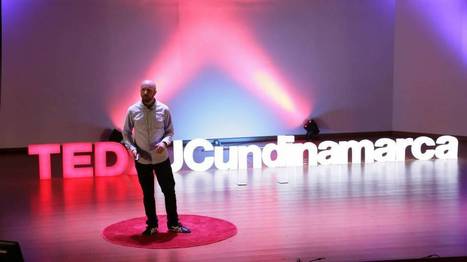
Who gets to decide what kids learn? For whose benefit is all this, really? We make learning visible for the people who get to decide. But, what if we could invisibilize learning?

Dr. John Moravec share that the Theory for Invisible Learning is that we learn more, and do so invisibly, when we separate structures of control that restrict freedom and self-determination from learning experiences. Learning becomes invisible when we empower each of us to learn our own way. Removing structures of control opens possibilities. The end outcomes or goals of an experience are neither dictated nor determined from the start, but instead emerge as learning develops. Such experiences include free play, self-organized learning communities, authentic problem-based learning, and experimentation to acquire new knowledge. This talk was given at TEDxUCundinamarca in Colombia using the TED conference format but independently organized by a local community.


Via Edumorfosis
No comment yet.
Scooped by Dennis Swender
June 25, 2018 3:17 PM
Scoop.it!

Bad TV Maps

Bad TV Maps | ED 262 KCKCC Su '26 | Scoop.it

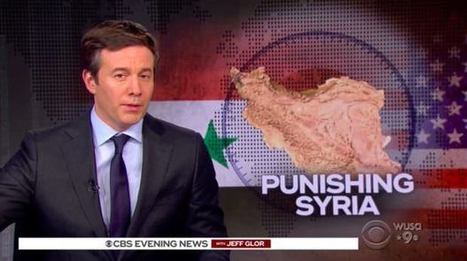
"If you have been on social media this week, you have seen screenshots of this week’s CBS News broadcast on Syria, which in fact displayed a map of Iran. Many jokes were made, many tweets went viral. As connoisseurs of hilariously wrong TV news maps, this is nothing. Kids’ stuff. We have dug deep into our collection, gathered lovingly over the years, and now invite you to follow along on a tour of the world according to TV news."

PIRatE Lab's curator insight, June 25, 2018 12:11 PM
You must always have solid maps!
Albahae Geography's curator insight, June 29, 2018 6:45 PM
This is why geography is so important!
Scooped by Dennis Swender
June 25, 2018 3:13 PM
Scoop.it!

Cheers, Profanity, and Free Speech in College Sports by Howard Wasserman :: SSRN

Cheers, Profanity, and Free Speech in College Sports by Howard Wasserman :: SSRN | ED 262 KCKCC Su '26 | Scoop.it
In this essay, Professor Wasserman discusses the First Amendment implications of recent controversies over offensive and profane cheering speech at college spor
No comment yet.
Scooped by Dennis Swender from Edumorfosis.it
June 20, 2018 11:17 AM
Scoop.it!

For online students, price matters but doesn't dictate choice

For online students, price matters but doesn't dictate choice | ED 262 KCKCC Su '26 | Scoop.it

Ask online students about the most important factors in choosing to enroll in a particular academic program, and total tuition and fees tops the list. Price clearly matters -- a lot.

But if you ask them whether they chose the least expensive program -- or if price trumped other factors such as convenience, program fit or reputation -- the answer gets a good bit more complex.

That is clear from the 2018 edition of Online College Students, an annual survey conducted by the Learning House, an online program management company, and Aslanian Research. The survey of 1,500 current or soon-to-be students in fully online academic programs (for degrees, certificates or licensure) has been conducted for seven years and examines their attitudes and behaviors on a range of topics.


Via Edumorfosis
No comment yet.
Scooped by Dennis Swender
June 15, 2018 2:44 PM
Scoop.it!

An Ultra-Selective University Just Dropped the ACT/SAT. So What?

An Ultra-Selective University Just Dropped the ACT/SAT. So What? | ED 262 KCKCC Su '26 | Scoop.it
By going test-optional, the University of Chicago just caused a disturbance in The Force. 
No comment yet.
Scooped by Dennis Swender
June 15, 2018 2:20 PM
Scoop.it!

Last Year, Google Entered the Job Search Space. Now, It’s Entered the College Search Space. | EdSurge News

Per a recent announcement, Google is entering the college search space. In a blog post, the tech company announced a new search feature where student
No comment yet.
Scooped by Dennis Swender from Edumorfosis.it
June 12, 2018 11:43 AM
Scoop.it!

5 reasons why taking an Online Course beats the Analog Classroom

5 reasons why taking an Online Course beats the Analog Classroom | ED 262 KCKCC Su '26 | Scoop.it

Are you considering taking an online course? If all your previous learning experiences were in the traditional face-to-face (or analog) classroom, then it’s quite understandable if you’re somewhat apprehensive at the thought of pursing elearning.

Here are five reasons to ditch those fears and start embracing the many benefits of online study.


Via Edumorfosis
No comment yet.
Scooped by Dennis Swender from Edumorfosis.it
June 6, 2018 4:52 AM
Scoop.it!

[Opinion] Top colleges are cheaper than you think (unless you’re rich)

[Opinion] Top colleges are cheaper than you think (unless you’re rich) | ED 262 KCKCC Su '26 | Scoop.it

The cost of college is a notoriously complex subject. The list price at many private colleges, including tuition, fees, room and board, has reached the bewildering sum of $70,000 a year. But the real price, taking into account financial aid, is often vastly lower.

How much lower? We’re here to help answer that question.

More than 30 top colleges now participate in a simple online calculator that provides cost estimates to families. (And those 30 typically charge similar prices to other selective colleges.) The New York Times has analyzed the data from the calculator and is publishing the results here. It’s a snapshot of what college really costs.


Via Edumorfosis
No comment yet.
Scooped by Dennis Swender
July 8, 2018 2:24 AM
Scoop.it!

Facebook Flagged The Declaration Of Independence As Hate Speech

Facebook Flagged The Declaration Of Independence As Hate Speech | ED 262 KCKCC Su '26 | Scoop.it
Facebook flagged the Declaration of Independence as hate speech because of the not-so-nice things stated within the document about King George III.
No comment yet.
Scooped by Dennis Swender
July 3, 2018 8:08 PM
Scoop.it!

U.S. Peace Memorial Foundation

U.S. Peace Memorial Foundation | ED 262 KCKCC Su '26 | Scoop.it
Since 2005, the US Peace Memorial Foundation has directed a nationwide effort to honor Americans who stand for peace by publishing the US Peace Registry, awarding an annual Peace Prize, and planning for the US Peace Memorial in Washington, DC. These projects help move the United States toward a culture of peace by recognizing thoughtful and courageous Americans and U.S. organizations that have taken a public stand against one or more U.S. wars or who have devoted their time, energy, and other resources to finding peaceful solutions to international conflicts. We celebrate these role models to inspire other Americans to speak out against war and to work for peace.
No comment yet.
Scooped by Dennis Swender from Edumorfosis.it
July 3, 2018 1:53 AM
Scoop.it!

Current term enrollment estimates – Spring 2018

Current term enrollment estimates – Spring 2018 | ED 262 KCKCC Su '26 | Scoop.it

In spring 2018, overall postsecondary enrollments decreased1.3 percent from the previous spring. Figure1 shows the 12-month percentage change (fall-to-fall and spring-to-spring) for each term over the last three years. Enrollments decreased among four-year for-profit institutions (-6.8 percent), two-year public institutions (-2.0 percent), four-year private nonprofit institutions (-0.4 percent), and four-year public institutions (-0.2 percent). Taken as a whole, public sector enrollments (two year and four-year combined) declined by 0.9 percent this spring.

Current Term Enrollment Estimates, published every December and May by the National Student Clearinghouse Research Center, include national enrollment estimates by institutional sector, state, enrollment intensity, age group, and gender. Enrollment estimates are adjusted for Clearinghouse data coverage rates by institutional sector, state, and year. As of spring 2018, postsecondary institutions actively submitting enrollment data to the Clearinghouse account for 97 percent of enrollments at U.S. Title IV, degree-granting institutions. Most institutions submit enrollment data to the Clearinghouse several times per term, resulting in highly current data. Moreover, since the Clearinghouse collects data at the student level, it is possible to report an unduplicated headcount, which avoids double-counting students who are simultaneously enrolled at multiple institutions.


Via Edumorfosis
No comment yet.
Scooped by Dennis Swender from Humanitarian & Cultural Causes in Africa
July 2, 2018 5:10 AM
Scoop.it!

#Oil Rallies On #Libyan Oil Crisis

#Oil Rallies On #Libyan Oil Crisis | ED 262 KCKCC Su '26 | Scoop.it
The supply disruptions in Libya could last longer than previously thought, tightening oil markets as driving season boosts crude demand

Via Igor Espanhol
Igor Espanhol's curator insight, July 1, 2018 9:56 PM

"Oil prices responded to the news, but traded up only modestly. In contrast, oil prices spiked in early May when the Trump administration pulled out of the Iran nuclear deal, which at the time, was thought to lead to the disruption of around 400,000 bpd of Iranian supply. In other words, the expected Iran outage – which hadn’t even happened yet – added several dollars to the price of crude while an outage in Libya of similar size barely moved the market."

Scooped by Dennis Swender from Leading Schools
June 27, 2018 12:19 AM
Scoop.it!

Facts don’t change people’s minds. Here’s what does. 

The mind doesn’t follow the facts. Facts, as John Adams put it, are stubborn things, but our minds are even more stubborn. Doubt isn’t always resolved in the face of facts for even the most enlightened among us, however credible and convincing those facts might be.

As a result of the well-documented confirmation bias, we tend to undervalue evidence that contradicts our beliefs and overvalue evidence that confirms them. We filter out inconvenient truths and arguments on the opposing side. As a result, our opinions solidify, and it becomes increasingly harder to disrupt established patterns of thinking.

We believe in alternative facts if they support our pre-existing beliefs. Aggressively mediocre corporate executives remain in office because we interpret the evidence to confirm the accuracy of our initial hiring decision. Doctors continue to preach the ills of dietary fat despite emerging research to the contrary.

If you have any doubts about the power of the confirmation bias, think back to the last time you Googled a question. Did you meticulously read each link to get a broad objective picture? Or did you simply skim through the links looking for the page that confirms what you already believed was true? And let’s face it, you’ll always find that page, especially if you’re willing to click through to Page 12 on the Google search results.

If facts don’t work, how do you change a mind – whether it’s your own or your neighbor’s?

Give the mind an out

We’re reluctant to acknowledge mistakes. To avoid admitting we were wrong, we’ll twist ourselves into positions that even seasoned yogis can’t hold.

The key is to trick the mind by giving it an excuse. Convince your own mind (or your friend) that your prior decision or prior belief was the right one given what you knew, but now that the underlying facts have changed, so should the mind.

Via Mel Riddile
No comment yet.
Scooped by Dennis Swender from Future of Work
June 25, 2018 3:18 PM
Scoop.it!

Going cashless: the true cost of your empty wallet - ABC News (Australian Broadcasting Corporation)

Going cashless: the true cost of your empty wallet - ABC News (Australian Broadcasting Corporation) | ED 262 KCKCC Su '26 | Scoop.it
Having a wallet, a pile of the folding stuff, a pineapple in our pockets has been our habit for generations. But after thousands of years, we've gone cash-free. This be one of the swiftest and most pain-free social transformations we've experienced, James Valentine writes.

Via NextLearning
No comment yet.
Scooped by Dennis Swender from iPads, MakerEd and More in Education
June 25, 2018 3:15 PM
Scoop.it!

Generation Z: What will be the legacy they leave behind? - National | Globalnews.ca

Generation Z: What will be the legacy they leave behind? - National | Globalnews.ca | ED 262 KCKCC Su '26 | Scoop.it
Gen Z’s present has always been one marked by upheaval and rapid change — economic, social and technological — with their futures imperilled by big problems like global warming, international terrorism and resource scarcity. But as they contend with, and build upon, the legacies of past cohorts, they are also laying the foundations for their own.

So the question becomes, what kind of world will gen Z leave to their children and grandchildren?


Previous Posts in the Series:


7. Generation Z and the rise of digital influencers as celebrities


6. Generation Z and the (achievable) dream jobs they want


5. Generation Z — Online, connected and set on fixing the world


4. Generation Z isn’t interested in dating or sex — or so we thought


3. Generation Z: Waiting — often months — to get mental health help


2. Is generation Z glued to technology? ‘It’s not an addiction; it’s an extension of themselves’


1. Generation Z: Make room for Canada’s connected, open and optimistic generation


Via John Evans
No comment yet.
Scooped by Dennis Swender
June 23, 2018 12:28 AM
Scoop.it!

Useful Apps for University Students

Useful Apps for University Students | ED 262 KCKCC Su '26 | Scoop.it
Free resource of educational web tools, 21st century skills, tips and tutorials on how teachers and students integrate technology into education...
No comment yet.
Scooped by Dennis Swender
June 18, 2018 11:39 AM
Scoop.it!

Demographic Turning Points for the United States

Demographic Turning Points for the United States | ED 262 KCKCC Su '26 | Scoop.it
The U.S. population is projected to grow slowly, to age considerably, and to become more racially and ethnically diverse in coming decades.
No comment yet.
Scooped by Dennis Swender
June 15, 2018 2:39 PM
Scoop.it!

Average Teacher Salary Is Below the Living Wage in Half the Country, Report Says - Teacher Beat - Education Week

Average Teacher Salary Is Below the Living Wage in Half the Country, Report Says - Teacher Beat - Education Week | ED 262 KCKCC Su '26 | Scoop.it
A new report by Education Resource Strategies found that teacher compensation has been largely stagnant over the past few decades.
No comment yet.
Scooped by Dennis Swender from Collaborationweb
June 15, 2018 1:34 PM
Scoop.it!

Evolving Knowledge

Evolving Knowledge | ED 262 KCKCC Su '26 | Scoop.it
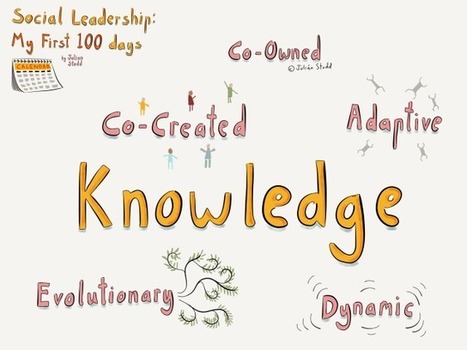
Today, much of our knowledge, and sense making, takes place within our communities. Multiple, overlapping, often conflicted, social structures. Historically, we would access knowledge directly, but on the right hand side of the illustration, i’ve tried to capture something of the dynamic of how we access it today. Clearly we interact directly, but there are also layers of social filtering, social amplification, and social validation (and be clear that i am not saying that all of these things are good!). To large extent, the knowledge that we access it both influenced by our community, and constricted by it, but also processed and filtered.

Good leaders, Social Leaders, have a responsibility to understand just how: to be able to build out a broader, more balanced, dynamic community, and to understand how bias and influence flows through it. Put simply, the more interconnected and diverse, our community, the more balanced and diverse our access to knowledge, and ability to find true meaning.

Via David Hain
Dennis Swender's insight:
Aligned with James Banks' "knowledge construction" dimension of multicultural education
No comment yet.
Scooped by Dennis Swender
June 12, 2018 11:41 AM
Scoop.it!

The four-day school week: Research behind the trend

The four-day school week: Research behind the trend | ED 262 KCKCC Su '26 | Scoop.it
To save money and help with teacher recruitment, more schools are taking Fridays off. Here's the newest research on four-day school weeks.
No comment yet.