


L’ANSSI est l'autorité nationale en matière de sécurité et de défense des systèmes d’information. Prévention, protection, réaction, formation et labellisation de solutions et de services pour la sécurité numérique de la Nation.

 Your new post is loading...
 Scoop.it!
L’ANSSI est l'autorité nationale en matière de sécurité et de défense des systèmes d’information. Prévention, protection, réaction, formation et labellisation de solutions et de services pour la sécurité numérique de la Nation.

No comment yet.
Sign up to comment
Scoop.it!

Le sommet #OGP16 a été co-construit avec les sociétés civiles. Près de 660 propositions ont été déposées>https://t.co/wy6AD6KAEy cc @Etalab
Scoop.it!

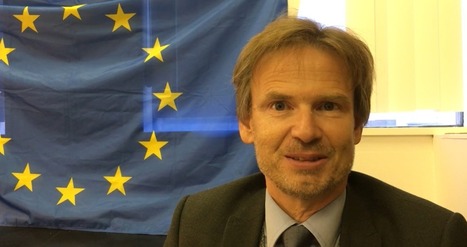
This series of stockshots contains images of the European Council, the Council of the European Union, the European Commission, the European Parliament, the European Economic and Social Committee, the Committee of the Regions of the European Union, the European Central Bank, the European External Actio
Scoop.it!

Où en est la recherche nationale et internationale dans les domaines juridiques et judiciaires ? Quels grands thèmes sont aujourd’hui traités ? Quelles seront les grandes questions de demain en matière de droit et de justice ? Quelles sont les futures perspectives de la recherche sur le droit et la justice ? C’est pour essayer de répondre à ces grandes questions que la Mission de recherche Droit et Justice, interface entre le monde de la recherche et le monde judiciaire et administratif, et le Secrétariat d’État en charge de l’Enseignement supérieur et de la Recherche, organisent les États généraux de la recherche sur le Droit et la Justice, en partenariat avec l’ENM, le CNRS et le ministère de la Justice. Ces quatre journées de rencontres, structurées autour de tables rondes et d’ateliers, ont été pensées pour encourager le débat entre professionnels du droit (magistrats, avocats, notaires, etc.) et chercheurs. Elles visent également à faire dialoguer les dynamiques de recherche entre elles et à réfléchir aux nouveaux défis politiques, économiques, technologiques et sociétaux de notre monde contemporain. Les États généraux de la recherche sur le Droit et la Justice auront lieu du 30 janvier au 2 février 2017 et se tiendront sur le Campus Gérard-Mégie du CNRS, 3 rue Michel-Ange 75016 Paris. Inscriptions jusqu’au 18 janvier 2017 sur : etatsgeneraux2017@gip-recherche-justice.fr Pour tous renseignements : clement@gip-recherche-justice.fr ou renucci@gip-recherche-justice.fr Consulter le programme
Scoop.it!

Definition of algorithm :
noun al·go·rithm \ˈal-gə-ˌri-thəm\ - a step-by-step procedure for solving a problem or accomplishing some end especially by a computer When I attended the WestPAC Law Librarian meeting in Jackson Hole, WY a couple of months ago, I had the opportunity to sit in on University of Colorado Law School's Susan Nevelow Mart's presentation on legal researcher's reliance on algorithms for online legal research. Susan's presentation discussed her SSRN Paper entitled "The Algorithm as a Human Artifact: Implications for Legal {Re}Search" where she breaks down the algorithmic affects of Westlaw, Lexis Advance, Fastcase, Google Scholar, Ravel Law, and Casetext. The key thing to remember, says Mart, is that we "need to remember that the algorithms that are returning results to them were designed by humans." That includes all the "biases and assumptions" that come with the human experience. In other words a little bias and assumption on the part of the people developing the computer algorithms can cause dramatic changes in the results produced with similar content and search terms. As a researcher, Mart states that it is important that we "acquire some expertise about the technology at the meta-level." How can you trust the results if you are not familiar with the way the tools are designed to index, search, and retrieve those results? The problem with this argument is that most legal research providers don't want to reveal very much about the processes that go on behind the scenes to pull those top 10, 25, 50, or 1000 results. Mart is calling for more "Algorithmic Accountability" from our legal databases in order to help legal researchers better understand the biases present in the retrieved results. Mart's paper and research behind it attempt to test the different legal research databases on same search terms and same data content, and evaluate the results to see where results overlap and differ. The experiment wields results that are, in Mart's words "a remarkable testament to the variability of human problem solving." The top ten results from each resource showed very little consistency, and "hardly any overlap in the cases, and only about 7% of the cases returned were in all six database results. That low of a return rate should cause a bit of a shudder to run up the spine of legal researchers. What is a researcher to do in this day and age of very little Algorithmic Accountability? First, researchers need to call upon these database providers to give us more detailed information about how their algorithms are set up, and the technical biases that result from these rules. Mart states that "the systems we use are block boxes," that prevent us from understanding how these technical biases skew the results of our searches. "Algorithmic accountability will help researchers understand the best way to manipulate the input into the black box, and be more certain of the strengths and weaknesses of the output." Until we better understand the processes that go on in the background, researchers today should expand their searches, and use multiple databases in order to reduce the effects of technological bias. Mart explains that, "[t]he uniqueness of results may show something about the world view of each database that suggests that searching in multiple databases may be the 21st century version of making sure that multiple authorial viewpoints are highlighted in a library collection’s holdings." Within the SSRN paper, Susan Nevelow Mart presents the findings of her Empirical Study and breaks out the results by: Uniqueness of Cases Relevance Relevant and Unique Number of Results Returned by Each Query Age of Cases The different databases have individual strengths and weaknesses in each category, and the results, read as a whole, back up Mart's suggestion of searching multiple databases. Until legal research providers begin to open up their black boxes and adopt more Algorithmic Accountability, researchers will need to expand our own legal information literacy with a better understanding of how each database compiles, categorizes, indexes, searches, and prioritizes the results. Hopefully, Mart's research, and pressure from lawyers and researchers will help push these providers to shine a little more light into their algorithmic black boxes. [ed. note - Updated at 11:30 CT to include Ravel Law as part of the databases reviewed by Susan Nevelow Mart. - GL]
Scoop.it!

Le gouvernement a promis hier que trois millions d’euros seraient alloués au « service public de la donnée », tel que prévu par la récente loi Numérique. L’exécutif reste toutefois bien plus discret sur la date de parution du décret d’application de ce
Scoop.it!

A blog about court technology, court e-filing, and E-Courts by the National Center for State Courts, USA.
Scoop.it!
Le Village de la Justice a publié en mai 2015 une étude sur l'accès au droit et les besoin en matière d'information juridique en (...)
Scoop.it!

Long time coming for us but here is Version 2.01 of our #SCOTUS Paper … We have added three times the number years to the prediction model and now predict out-of-sample nearly two centuries of historical decisions (1816-2015).
Scoop.it!
Dans cette interview, le Professeur Loïc Grard, nous livre ses réflexions sur l'Open Access, propos libres d'un enseignant-chercheur expérimenté, souhaitant valoriser sa recherche au bénéfice du plus grand...
Scoop.it!

L’Observatoire national de la délinquance et des réponses pénales a publié mercredi son enquête annuelle auprès des victimes.
Scoop.it!

VIOLATIONS DES DROITS DE L'HOMME DES PARLEMENTAIRES – 2016 Le Comité des droits de l'homme des parlementaires de l'UIP est le seul mécanisme international dont le mandat est de protéger et défendre les parlementaires victimes de violations des droits de l'homme. Cette carte présente une vue d’ensemble des cas de violations des droits de l’homme en cours d’examen par le Comité en 2016. Versions PDF
Scoop.it!
Publics concernés : services déconcentrés de l'Etat ; agents publics et usagers de l'administration. Objet : fixation du nom, de la composition et du chef-lieu des circonscriptions administratives régionales. Entrée en vigueur : le décret entre en vigueur le 1er janvier 2017 . Notice : le décret définit, dans un texte unique, le nom, la composition et le chef-lieu de l'ensemble des circonscriptions administratives régionales et abroge, par voie de conséquence, le décret n° 60-516 du 2 juin 1960 portant harmonisation des circonscriptions administratives. Il procède, par ailleurs, à l'adaptation du nom de certaines circonscriptions administratives régionales conformément au nom définitif des régions fusionnées en application de l'article 2 de la loi n° 2015-29 du 16 janvier 2015 relatif à la délimitation des régions. Il prévoit également l'actualisation du nom des circonscriptions administratives dans les textes réglementaires en vigueur. Le texte abroge enfin le décret n° 65-73 du 27 janvier 1965 modifiant les circonscriptions des directions interrégionales des services pénitentiaires. Un décret relatif au ressort territorial, à l'organisation et aux attributions des directions interrégionales des services pénitentiaires, qui entrera en vigueur le 1er janvier 2017, sera publié ultérieurement. Références : le décret peut être consulté sur le site Légifrance (http://www.legifrance.gouv.fr).
|
Scoop.it!

we present Part 2 of our look into Music and the Law where we polled our staff to determine their favorite songs/musical works regarding the law
Scoop.it!

Artificial Intelligence (AI) and its impact and applications in the legal profession is examined in this white paper by Michael Mills, Co-Founder & Chief Strategy Officer of Neota Logic, a provider of intelligent software. Mills analyzes AI – what the author calls a “big forest of academic and commercial work around ‘the science and engineering …
Scoop.it!

by Dean Duane Strojny Let's face it. The cost of the current big three legal research databases is staggering. Over the years, both Lexis and Westlaw tend to have multi-year price increases followed by multi-year price holds. This lulls directors in thinking the prices are not going up, but they are. Since most of us…
Scoop.it!

[Ed. Note: I asked Katie Brown, Law Library Director of the University of Charlotte School of Law, and fellow geek, to write a review of last week's NCCSLM meeting in Boston. Please welcome guest blogger Katie Brown. - GL]
Last week (12/2/16) I had the opportunity to attend the Boston University Law School/ AALL hosted -National Conference on Copyright of State Legal Materials. This topic has seen an uptick in interest in recent years, mostly among law librarians and on legal blogs, as state copyright issues have arisen and have greatly affects both patron access to material and publisher pricing. As a self –proclaimed “IP Junkie,” was looking forward to this all-day event to further explore these musings with an audience of folks whom I knew would be just as passionate about this copyright issue as I am, and I can tell you AALL an BU did not disappoint. The daylong event covered a host of subtopics within the state copyright arena. The agenda boasted everything, from a copyright issue overview; to a panel addressing who owns the copyright in the work of the United States Government; to how we make the content easily available to people; to journalists limited access to legal materials changing what stories find their way to print; and finally several organizations discussing aspirational examples for expansive, accurate and open access to state legal materials. I think the experience of the full day was best stated by one attendee, who after the event, shared on social media that he was now suffering from, “Gov’t info Overload.” It is important to note his use of the word “overload” instead of overwhelmed. For me, the positive overload of content was a direct result of the wide breadth of speakers, who spoke passionately throughout the day about how they have been touched and limited by the copyright status of and access to United States law. Another wonderful take away I gleaned from the day’s event was each speaker seemed to be striving for a positive way to improve access and discussing exploring ways that this original public domain content will easily be available to all in the future. You can always gauge if the content from your event is hitting a nerve with the speakers, audience and experts outside the forum when it gets the folks on twitter typing away. The event hashtag #NCCSLM throughout the day was aflutter with zippy one liners, links to resources, shout outs and retweets. A few of my favorite tweets from the day are: "Access to legal information is a straight up civil rights issue for our times." It's this simple and this big. @seamuskraft #NCCSLM — Mary Jenkins (@jenkinsm) December 2, 2016 A horde of angry law librarians at #NCCSLM who don’t give a damn about red states and blue states. They want green states. Free the law. https://t.co/oGEUJlBo1N — Carl Malamud (@carlmalamud) December 2, 2016 Many states are just "renting their law back" from companies like Lexis Nexis, says Ed Walters #NCCSLM — sarah jeong (@sarahjeong) December 2, 2016 .@govinfogal told Gov Brown not all Cali law is in PD. His reaction: what? that's crazy, of course they are! Conversations needed. #nccslm — Meg (@mak506) December 2, 2016 Notice at bottom of DC Code page: "Please do not scrape. Instead, bulk download the HTML or XML"!! https://t.co/P11rdVblLi #nccslm — Meg (@mak506) December 2, 2016 Completion of digitalized case law slated for Jan '17. Goal is open state case law with no paywall. https://t.co/ey5pBiQSxT #NCCSLM — Mary Jenkins (@jenkinsm) December 2, 2016 @sarahjeong "Where there is low hanging fruit journalists are going to pick it. Law should be lower hanging fruit than it is." #NCCSLM — Margie Maes (@mkmaes) December 2, 2016 As @JSilbey says: law may inspire love, hate, fear, passion, but law is not poetry. #nccslm — Roger Skalbeck (@weblawlib) December 2, 2016 I encourage you to take a look at all the tweets from the day by searching #NCCSLM and listen to the day’s recording that will be made available from AALL in the near future.
Scoop.it!
L’ANSSI est l'autorité nationale en matière de sécurité et de défense des systèmes d’information. Prévention, protection, réaction, formation et labellisation de solutions et de services pour la sécurité numérique de la Nation.
Scoop.it!

L’analyse du jugement juridique par ce que l’on appelle le réalisme juridique entend souligner la dimension subjective qu’implique l’acte de juger et la part importante de pouvoir discrétionnaire dont bénéficient les juges. Néanmoins, loin de verser dans une analyse psychologisante et naïve, le réalisme d’hier et celui d’aujourd’hui, sollicitent les outils et exploitent les résultats que les autres sciences sociales leur offrent pour mettre en évidence la complexité du jugement juridique qui ne saurait être réduit à une opération purement logique et déductive ni avoir l’ampleur d’une argumentation philosophique.
Scoop.it!
A blog about court technology, court e-filing, and E-Courts by the National Center for State Courts, USA.
Scoop.it!

Aiming to help give legal tech startups a leg up, LexisNexis today announced the launch of a legal tech accelerator. It will be located in the Menlo Park,
Scoop.it!
December 5, 2016: “HathiTrust today announces the release of a significantly expanded open dataset, the HathiTrust Research Center (HTRC) Extracted Features (EF) Dataset, Version 1.0.
Scoop.it!

L’article 30 de la loi République numérique octroie aux chercheurs le droit de publier en ligne gratuitement la version finale de leurs travaux, y compris lorsque ceux-ci ont fait l’objet d’une publication...
Scoop.it!

En France, la laïcité est un principe constitutionnel. Mais savez-vous comment il se traduit dans la vie quotidienne ?
Scoop.it!
Language shapes and reflects how we think about the world. It engages and intrigues us. Our everyday use of language is quite effortless — we are all experts on
|




