Moodle for Teachers (M4T) http://moodle4teachers.org free online professional development network is opening its doors to educators and schools around the globe by offering space to organize events such as MOOCs, online conferences, webinars, and online courses for free. Fill in the following form to apply and we'll get back to you.
Please contact Dr. Nellie Deutsch nelliedeutsch@gmail.com for further information.
Participate Learning, formerly called appoLearning, has launched Collections, a new curation and collaboration tool for educators.
Participate Learning's Collections feature lets teachers create a digital folder of online educational resources, such as Web sites, apps and videos, and organize them according to subject, unit, lesson, topic or other organizational criteria. They can even add their own files from Dropbox, Google Drive or other cloud storage services. Any resource with a Web address can be added to a collection.
Teachers can then share their collections with colleagues and invite them to discuss items in real time. They also have the option of building collaborative collections on topics of shared interest.
The other day I had the pleasure of interviewing Dr Hennie Esterhuizen, the Manager of e-Learning Support at North-West University in South Africa. He and a colleague had come to USQ on a bit of a
A video about how technology is transforming our system of education, generating equal opportunities for all. SCRIPT & DIRECTION: Daniel Sierra, Ricardo Haba...
The opposite of open is not closed; the opposite of open is broken. The more I think about it, the more this cogent observation, made by John Wilbanks, resonates with me. It is true for scholarly p…
In light of further data provided by Tim Gowers on unsustainable costs of journal subscriptions for academic libraries and stretched university budgets, Stevan Harnad finds that plans for universities to fund open access alternatives will also be a burden as 80% of journals are still subscription-based. What is needed now is for universities and funders to develop mutually reinforcing self-archiving policies, like HEFCE’s new open access policy for the Research Excellence Framework.
Although faculty and students are the primary learning management system users, administrators and IT experts often select the system. This article stresses the importance of involving all stakeholders in the selection process, offers a step-by-step guide to LMS selection, and enables readers to develop a customized list of LMS features that align with their institution's instructional and learning priorities.
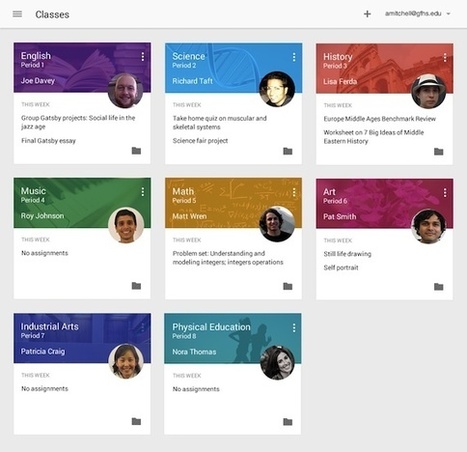
Classroom is a new product in Google Apps for Education that enables teachers to send assignments, make announcements, and conduct question & answer with students. Classroom was designed hand-in-hand with teachers to help them save time, keep their classes organized, and improve communication with students.
Google for Education recently released mobile apps for its Classroom product. The announcement details their features, including the ability to attach pictures to assignments and attach features from other apps (such as paint, drawing, audio, or mind-mapping apps) and the offline caching of assignments and other classroom content. ... This announcement puts Classroom squarely into learning management system (LMS) turf; Google for Education can no longer brush off its parallels to other big, for-
Today's LMS needs to be supplemented with (and perhaps later replaced by) a new digital architecture and new learning components—the NGDLE—to enable current transitions in higher education.
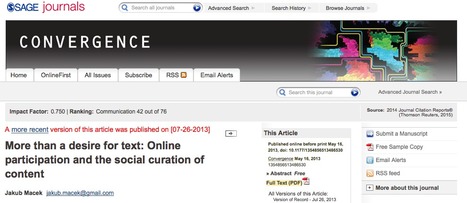
Why and on what bases do people choose content and share it in an online environment? At the centre of Henry Jenkins’ theory of convergence culture lie in the transforming links between active, participative audiences, media content and media corporations. However, the ‘textually motivated’ desire to participate in the circulation of and control over texts is just one among other key motives for the dissemination and recirculation of content. Ethnography-based research conducted at Masaryk University in the Czech Republic suggests that when exploring participation in textuality, performative self-exposure and self-presentation must be taken into account as well as the context of audiences’ everyday life. Thus, I propose to approach participation as based not only on a ‘will to text’ but also on a dialectical relationship between a ‘will to self-performance’ and a ‘will to conformity’. These three factors then impact on the social curation of content – a reflexive process in which members of the audience construct texts for consumption and recirculation.
"There are no dramatic changes to the market in general this year. The same players keep growing (primarily Canvas, followed by Moodle and Desire2Learn), and the same players keep shrinking (primarily Blackboard). The only new potential system of interest this year is OpenEdX."
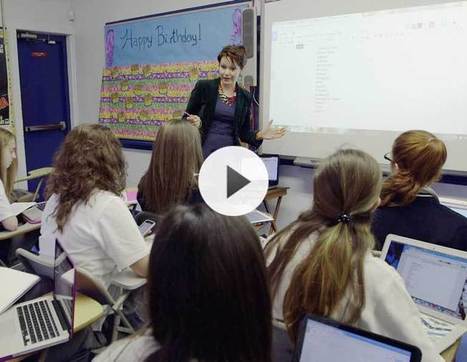
Large class sizes make it infinitely more challenging for college instructors to connect and communicate with individual students. This might not be a big issue if professors have an army of teaching assistants running smaller tutorial groups, but that's not always the case; in my courses, for example, hundreds of students meet in a single learning space for a weekly lecture or webinar. As in online classes of any size, having a massive group of students in a single location creates the real risk that students will feel anonymous and disengaged due to a lack of meaningful interaction with their professor and peers.
The Blackboard Innovative Teaching Series (BITS) is a training initiative to help augment (not replace) your internal training efforts. Harnessing our community of Blackboard users, BITS will share the top strategies and pedagogy for both increasing educator efficiency and improving learning outcomes. BITS is free to Blackboard's clients and is easy to participate. The program consists of weekly faculty training webinars that are taught by faculty and supported by Blackboard experts.
Google is now taking applications for a limited preview of a new app called Google Classroom — a tool that brings learning management functionality to the Google Apps for Education suite.
Find out how Blackboard can actually save you time in not only making assignments, but also in helping you grade students' work quickly and accurately, giving them immediate feedback and letting them see where they stand in your class.
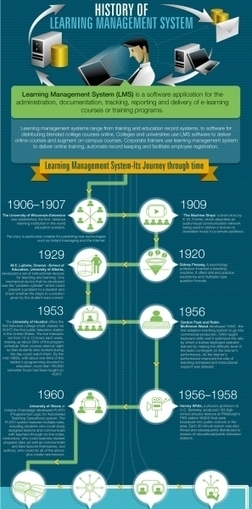
The Top Learning Management System Statistics and Facts For 2015! Check also the The Top LMS Statistics and Facts For 2015 You Need To Know Infographic!
To get content containing either thought or leadership enter:
To get content containing both thought and leadership enter:
To get content containing the expression thought leadership enter:
You can enter several keywords and you can refine them whenever you want. Our suggestion engine uses more signals but entering a few keywords here will rapidly give you great content to curate.


 Your new post is loading...