


A blog about the use of educational technology in language learning and teaching

 Your new post is loading...
 Scoop.it! A blog about the use of educational technology in language learning and teaching 
No comment yet.
Sign up to comment
Scoop.it!

Are we close to practical uses of AR and VR for learning, skill development, and performance? Here are some answers.
Scoop.it!

TeacherGaming brings educational games to classrooms, catering to the K-12 age range and a wide array of topics from math to typing.
Scoop.it!

Carlos Fosca's curator insight,
June 17, 2017 4:34 PM
“To fully benefit from the potential of Artificial Intelligence and Autonomous Systems (AI/AS), we need to make sure that these technologies are aligned to humans in terms of our moral values and ethical principles. AI/AS have to behave in a way that is beneficial to people beyond reaching functional goals and addressing technical problems. This will allow for an elevated level of trust between humans and our technology that is needed for a fruitful pervasive use of AI/AS in our daily lives.” (IEE).
Scoop.it!
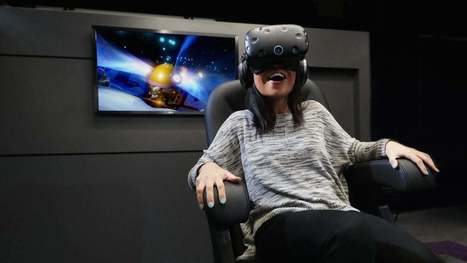
Exorbitant costs, confused customers, and fire risks: bringing VR to the people is proving tricky.
Scoop.it!
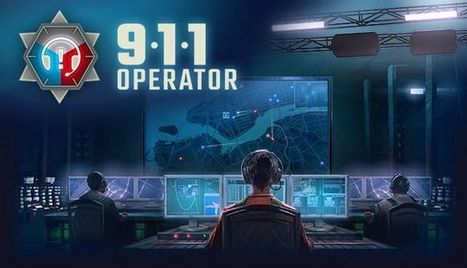
An emergency phone line operator isn't the first job I'd think of that needs excellent language skills, but you'd be hard-pressed to find lots of better examples of work where your listening and speaking skills really make the difference between life and death. I've been fortunate enough never to have made a call to 911…
Scoop.it!

The Turning Forest is a fairy-tale using 3D sound, recorded on-location in a forest using a 20 microphones and experienced in glorious virtual reality.
Scoop.it!

The emerging “right to an explanation” movement is focused on providing consumers with personalized, easy to understand algorithmic transparency.
Scoop.it!
Explore a futuristic, alien planet as you solve problems and complete quests, learning real-world science with your friends. SIGN UP FOR A FREE TRIAL A
|
Scoop.it!
Ana Cristina Pratas's insight:
Mirra allows people to build, share, and explore immersive experiences. Anyone can simply create or visit a new experience by just diving in.
Scoop.it!

There are several strategies for gamifying your classwork, and they’re not mutually exclusive—you can combine them.
Ana Cristina Pratas's insight:
What exactly is game-based learning, anyway? Is it a roomful of children playing video games? Is it students designing games? Or is it both of these? Good games—as opposed to candy-coated, multiple-choice quiz games—provide immersive experiences for students. Like novels, films, plays, and other media, games can be high-quality materials a teacher uses to enable students to access the curriculum. In my research, classrooms with high-functioning game-based learning are not ones in which the teacher hands a game to students to play. Nor do the teachers gamify their rooms, turning them into a game. Instead, effective game-based classrooms involve each of these components. Students are provided with gameful learning experiences driven by play. The following are three approaches to bringing game-based learning to your classroom. They’re not distinct from one another—try mixing two or all three. GAMES AS SHARED EXPERIENCEWhile on an iCivics panel at the International Society for Technology in Education conference in 2015, Benjamin Stokes compared the experience of playing games to taking a class on a field trip. With a field trip, you first let students know what to expect and then give them freedom to explore an out-of-school location. Back in the classroom, you facilitate connections to the curriculum. Games, like field trips, provide meaning for students. I put students in Minecraft and have them build structures. When night comes and creepers attack, only the students who stayed in fortified structures survive. After play, we discuss the difficulties of setting up a colony in a hostile environment, like Jamestown. Students understand the dangers of settling new worlds because they have experienced them. GAMES AS TEXTSome games use player choice to tell a story. Examples include Firewatch, an open-world game about being a park ranger; Life Is Strange, an emotional tale of friendships and bullying at a private school; Her Story, a nonlinear, police procedural whodunit; and 1979 Revolution: Black Friday, a political thriller set in the Iranian Revolution. Each game tells a story. 2017 will bring even more narrative-driven games, like Walden, a Game, based on Henry David Thoreau’s book, and Ever, Jane, a multiplayer game that takes place in the universe of Jane Austen. (As with all commercial media, research first to find out appropriateness for your learners.) Many books and movies use the hero’s journey template to tell a story. Examples range from Harry Potter to The Hunger Games to Star Wars. Games also use the hero’s journey. Have your class play the award-winning Brothers: A Tale of Two Sons, a fairy tale that relies on cooperative play; Never Alone, based on an Alaska Native folktale; or Journey, which puts players on the monomyth quest. To assess learning when using a game as a text, use Office 365 or Google Docs. English literature teacher Paul Darvasi has his students play the point-and-click exploration game Gone Home, which is about a dysfunctional family. Set in 1995, the game uses literary devices like mood, tone, and theme. He has students take screenshots as evidence, and add them to a shared document. Collected screenshots later lead to projects like comparing reviews and then writing their own. GAMES AS MODELSGames are particularly useful to model real-world systems. I have students play Werewolf and discuss different actions that mirror the events of the Salem witch trials, McCarthyism, and other witch hunts. I also have students play the board game Pandemic, as well as the mobile game Plague, Inc. These games illustrate how diseases travel the interconnected networks of the world. Students learn how the bubonic plague traveled along the Silk Road. The games model causes that have effects, which have subsequent effects—thus the game teaches the 21st-century skill of systems thinking. To go further, give students an opportunity to mod the games you use as models. I have students play Mission US for a bit. Rather than depend on the game to create a sense of historical empathy in students, I ask them to create experiences using free interactive fiction tools, like Inklewriter or Twine, to make their own choice-based stories. Remaking a game to be about different content is engaging, and it gives students a sense of agency, affording an opportunity for deeper learning. THE GAME IS NOT THE TEACHERWhen using games in your classroom, remember that the game is not the teacher—you are. The game is just an activity. When using games, try to avoid intervening when students are figuring something out. This affords students the opportunity to play with games as systems. And do not grade play; instead, assess the learning transfer that you facilitate from the game experience to the curriculum. In what ways have you used games to deepen your students’ learning experiences? Please share in the comments below.
Scoop.it!

Last week saw another Tweet-storm from Minecraft creator Notch. A series of unapologetic statements, replies and foul language which website The Gamer called a "melt down". He was happy to attack fans and critics alike. Interestingly, a number of educators, often vocal about the game were quick to distance 'their game' (Minecraft Edu) from Minecraft…
Scoop.it!

Products with Kokoa Education Standard label represent high educational value and have validated pedagogical approach.
Scoop.it!

Our tendency to become emotionally attached to chatbots could be exploited by companies seeking a profit.
Scoop.it!
12 AI will help redesign the entire shopping experience, optimizing everything with more and better data. Retailers will seamlessly stock the precise number of…
Scoop.it!

Whether or not you were caught up in the phenomenon of 2016 that was Pokémon Go, you were surely aware of the craze. The game, developed by Google spin-off Niantic, popularized location-based and augmented reality (AR) technology. It became one…Read more ›
Scoop.it!

Around 8 months ago I was introduced to a new game that I immediately wanted to write about for this site. It's taken awhile, but here it is. You see, it's not all digital and mobile phone games here at ExLT, this time we are looking at a board game - well, actually a card…
Scoop.it!

Augmented Reality (AR) is a technology that allows users to view and interact in real time with virtual images seamlessly superimposed over the real world. AR systems can be used to create unique coll
Ana Cristina Pratas's insight:
Abstract
Augmented Reality (AR) is a technology that allows users to view and interact in real time with virtual images seamlessly superimposed over the real world. AR systems can be used to create unique collaborative experiences. For example, co-located users can see shared 3D virtual objects that they interact with, or a user can annotate the live video view of a remote worker, enabling them to collaborate at a distance. The overall goal is to augment the face-to-face collaborative experience, or to enable remote people to feel that they are virtually co-located. In this special issue on collaboration in augmented reality, we begin with the visions of science fiction authors of future technologies that might significantly improve collaboration, then introduce research articles which describe progress towards these visions, finally we outline a research agenda discussing the work still to be done.
|






