 Your new post is loading...

|
Scooped by
Mickael Ruau
November 4, 2021 7:54 AM
|
Table of Contents
1. Project Management Foundations: Principles and Practices
2. Strategy, Project Selection, and Portfolio Management
3. Project Initiation, Scope, and Structure
4. Procurement
5. Team Formation, Team Management, and Project Leadership
6. Project Planning
7. Project Scheduling
8. Managing Project Risks
9. Managing Project Value, Budgets, and Costs
10. Allocating and Managing Constrained Resources
11. Project Monitoring, Analytics, and Control
12. Critical Project Management Skill: Negotiation
13. Project Closure and Audits
14. Personal and Organizational Project Management Growth
15. Putting It All Together
|
|
Scooped by
Mickael Ruau
November 4, 2021 1:27 AM
|
To meet schedules, deliver valuable products, and exceed your stakeholder’s expectations, you need the ability to flex scope and offer an actual minimum marketable product. You need to know how to break down your work to be forced by technology or business processes to deliver anything more than the minimum.
|
|
Scooped by
Mickael Ruau
November 4, 2021 12:52 AM
|
Product leaders from over 20 companies share what it takes to build truly excellent products in Productboard’s new eBook, “The Path to Product Excellence.”
|
|
Scooped by
Mickael Ruau
November 3, 2021 11:47 AM
|
La faille en question a été découverte par des chercheurs de l'université de Cambridge, en Angleterre, qui l'ont appelée la vulnérabilité "Trojan Source". Trojan Source repose sur l'utilisation de caractères de contrôle bidirectionnels dans les commentaires du code source. Aussi connus sous le nom de caractères BiDi, ces caractères de contrôle Unicode sont utilisés dans une ligne de texte pour signaler le passage d'un mode LTR (gauche à droite) à un mode RTL (droite à gauche) ou vice versa. Dans la pratique, ces caractères sont en effet destinés uniquement aux applications logicielles et sont invisibles à l'œil humain.
Ils ne sont utilisés que pour intégrer du texte dans un sens de lecture différent à l'intérieur de grands blocs de texte (comme l'insertion de chaînes arabes ou hébraïques dans de grands blocs de texte latin). L'équipe de recherche a déclaré avoir découvert que la plupart des compilateurs et éditeurs de code ne disposent pas de protocoles permettant de gérer les caractères BiDi ou de signaler leur présence dans les commentaires du code source. Les chercheurs ont déclaré que les attaquants pourraient insérer des caractères de contrôle BiDi à l'intérieur des commentaires que les réviseurs humains ne pourront pas voir.
« Vous pouvez les [les caractères BiDi] utiliser dans un code source qui semble inoffensif pour un examinateur humain et qui peut en fait faire quelque chose de méchant », a déclaré Ross Anderson, professeur de sécurité informatique à Cambridge et co-auteur de l'étude, dans un billet de blogue publié lundi. « C'est une mauvaise nouvelle pour des projets comme Linux et Webkit qui acceptent des contributions de personnes aléatoires, les soumettent à un examen manuel, puis les incorporent dans du code critique. Cette vulnérabilité est, pour autant que je sache, la première à affecter presque tout », a-t-il ajouté.
Ainsi, une fois compilés, ces caractères déplaceront le texte du champ de commentaire dans le code exécutable ou déplaceront le code (lié à la sécurité) dans une section commentée, ouvrant les applications aux attaques ou annulant les contrôles de sécurité. « Nous avons vérifié que cette attaque fonctionne contre C, C++, C#, JavaScript, Java, Rust, Go et Python, et nous soupçonnons qu'elle fonctionnera contre la plupart des autres langages modernes », explique Anderson. Selon lui, une telle attaque pourrait être difficile à détecter pour un examinateur de code humain, car le code source rendu semble parfaitement acceptable.
|
|
Scooped by
Mickael Ruau
November 3, 2021 11:08 AM
|
Projects Fail Because of People
Teams - on Different Pages
Teams - on Different Pages getty
All of the software, tools and management elixirs in the world will not save project management. Only people can save project management. We can implement project management software, we can train and train, we can give awards for the smartest PM student in the class, we can hire consultants to tell us how to manage our most precious projects, and we’ll still fail unless we focus on the real reasons why so many projects fail.
Years ago I wrote a book – IT's All about the People: Technology Management That Overcomes Disaffected People, Stupid Processes and Deranged Corporate Cultures – that focused on the human element in technology. The premise is as correct today as it was then. All of our efforts to avoid technology project failures can be simplified if we focus primarily on the humans who plan, fund and execute technology projects.
This is not a new concept. Listen to what Matt Asay (and Gartner) said about big data projects:
“A year ago, Gartner estimated that 60% of big data projects fail. As bad as that sounds, the reality is actually worse. According to Gartner analyst Nick Heudecker this week, Gartner was ‘too conservative’ with its 60% estimate. The real failure rate? ‘[C]loser to 85 percent.’ In other words, abandon hope all ye who enter here, especially because "[T]he problem isn't technology," Heudecker said. It's you.”
Many analyses of project failures focus on humans, usually defined around poor leadership and teaming. Skills, competencies and communications are also often mentioned. Even corporate culture is identified as a culprit. So what’s the answer? How do we reduce the number of technology project failures?
Vet, Vet & Vet Some More
It’s hard to assess people objectively. But it’s necessary if we want to reduce the number of project failures. All of the people involved in project management must be vetted according to their previous successful project experience, their leadership abilities, their soft skills, their ability to work in teams and the basic skills and competencies necessary to complete technology projects successfully. This is a tall and always incomplete order primarily because no company has an abundance of experienced successful project managers (PMs) or teams. How do we know this? Because experienced project managers know just who to recruit for their next projects. How many times have we seen PMs searching again and again for David, Jen or Robin for their next project? They know the chances of success are improved dramatically with the right people (and dismal with the wrong ones).
|
|
Scooped by
Mickael Ruau
November 3, 2021 10:52 AM
|
Home page for the bestselling book Rescue the Problem Project
|
|
Scooped by
Mickael Ruau
November 3, 2021 10:49 AM
|
Enter Todd Williams, PMP who wrote the book “Rescue the Problem Project: A Complete Guide to Identifying, Preventing, and Recovering from Project Failure”. Todd and I sat down at the PMI® Global Congress last year and in this interview, we discuss the approaches to project rescue.
|
|
Scooped by
Mickael Ruau
November 3, 2021 10:46 AM
|
Back from the brink—the first fail-safe recovery plan for turning around troubled projects. When budgets are dwindling, deadlines passing, and tempers flaring, the usual response is to browbeat the project … - Selection from Rescue the Problem Project [Book]
|
|
Scooped by
Mickael Ruau
November 3, 2021 10:21 AM
|
Key Takeaways
Evolutionary Architecture comes from both technical and organizational excellence.
The architecture adapts faster to the changes when business and IT work as a single team.
Not all business subdomains evolve in a similar manner, and neither does the architecture.
Experimentation mindset helps validating the architecture against actual needs.
System thinking is required to avoid ending up with unbalanced architecture.
|
|
Scooped by
Mickael Ruau
November 3, 2021 10:12 AM
|
Chris Richardson, James Lewis, and Katie Gamanji discuss what the industry has learned over the last decade building and delivering Microservices architectures.
|
|
Scooped by
Mickael Ruau
November 3, 2021 8:51 AM
|
See some ideas that might help you ease the transition to feature flagging on a process and cultural level.
|
|
Scooped by
Mickael Ruau
November 3, 2021 8:48 AM
|
Project development using agile methods is nothing new. In this article, we will discuss how the system's architecture design fits into Agile development.
|
|
Scooped by
Mickael Ruau
November 3, 2021 8:46 AM
|
Learn the best practices to properly start an infrastructure as code project, from the source code to collaboration exercises and tools.
|
|
|
Scooped by
Mickael Ruau
November 4, 2021 1:31 AM
|
This blog post discusses how the Circles of Improvement from the book by Stephen R. Covey: The 7 Habits of Highly Effective People, work in Scrum.
|
|
Scooped by
Mickael Ruau
November 4, 2021 1:15 AM
|
Key Takeaways
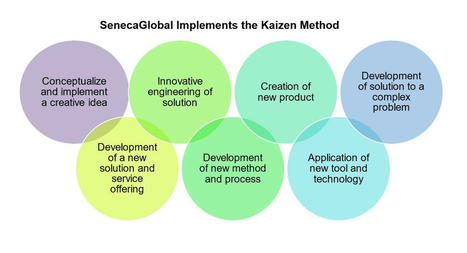
Adoption of the Kaizen methodology is a proven way to foster software development teams that are innovators, not just implementers.
The Kaizen mindset encourages developers to combine technical skills with creative thinking.
There are three models of the Kaizen method to apply to the software development process: reactive, proactive and innovative.
Participants in implementing the Kaizen methodology at their organization also realize significant personal benefits.
Implementation of the Kaizen methodology requires careful planning, training and ongoing nurturing to produce results.
|
|
Scooped by
Mickael Ruau
November 3, 2021 11:54 AM
|
Extraire des données sur base de critères complexes avec les filtres avancés en Excel et en VBA Pierre Fauconnier
|
|
Scooped by
Mickael Ruau
November 3, 2021 11:09 AM
|
What are the common pitfalls and challenges that project managers face in 2021? How do you handle them? Read on to find out more.
|
|
Scooped by
Mickael Ruau
November 3, 2021 11:05 AM
|
No-one Ever Avoids the Sunk-Cost Fallacy
Every project we have seen that has been in trouble has really had at it's heart a problem with sunk-cost chasing whether than is something as plain as being tied to spent budget or more complex reasons like the need to meet a deadline or the sheer effort that went into the project's early stages and that most dangerous of things; momentum.
Remember the longer you delay seeking a remedy the more your sunk cost actually grows and that typically means less resources for a solution, and it can mean a very painful inquest with a board. In just about every example Arc has seen people probably know about this concept even if they do not know the name and yet they cannot see that it is actually the situation that their project is in i.e it surely only happens to other organisations and not mine!
|
|
Scooped by
Mickael Ruau
November 3, 2021 10:50 AM
|
How to Rescue a Project
After years of experience in both New Zealand and the United Kingdom, Qusain has seen first-hand what’s required to rescue and recover a troubled project, and says identifying the problem early is crucial.
“If issues are identified at their initial stages and an appropriate rescue plan is initiated, you have a far greater chance of successful resolution. Unfortunately, given the complexity of construction projects, situations very rarely ‘sort themselves out’. Avoidance is a poor strategy, and one to be avoided!”
A good rescue plan should align with the original definition and drivers of the project, and be fully understood by all – including the existing project manager, rescue project manager, stakeholders and wider contractor leadership team.
“The rescue process should have clear start and end dates, objectives and deliverables. It needs a well-defined methodology for determining the sources of trouble, so you can tackle any potential issues head-on. It should also get progressively more detailed as the project is better understood and recovery phases are developed.
“By using the right rescue and recovery team, you’ll be able to create plans for recovery and execute these with meticulously detailed monitoring, ideally nursing the project back to a healthy state. Or, you can make a well-informed decision to terminate the project if things aren’t recoverable.”
|
|
Scooped by
Mickael Ruau
November 3, 2021 10:48 AM
|
Todd Williams’ book, Rescue the Problem Project: A Complete Guide to Identifying, Preventing, and Recovering from Project Failure, really does live up to its name. If you were ever in doubt about how to spot a project teetering on the brink of going ‘red’, then this is the book for you.
A five step recovery approach
Williams presents a five step approach to project recovery. The steps are:
Realisation: you must recognise that there is a problem before you can attempt to solve it.
Audit: carry out an objective project audit to determine the problems.
Analysis: analyse the data from the audit to establish root causes and begin to form the solutions.
Negotiation: mediate between the parties involved to establish an acceptable solution.
Execution: implement the recovery plan.
|
|
Scooped by
Mickael Ruau
November 3, 2021 10:22 AM
|
The first part of this article series discussed architecture evolution and strategic architecture patterns for technology trends like microservices, serverless, and containerization. Architectures based on principles such as loose coupling, extensibility, and interface-based design will be more resilient during major shifts in technology platforms. Well-designed solutions stand the test of time by insulating business logic from technology components that become obsolete over time.
The second part focused on architecture stabilization gaps and anti-patterns such as distributed monoliths and "Death Star architecture." It demonstrates the need to balance architecture and technology stability.
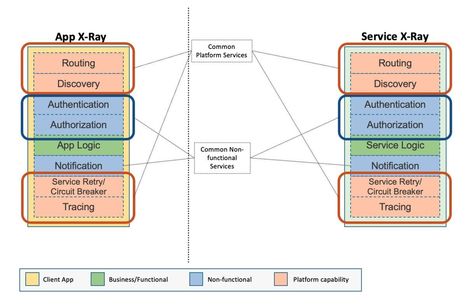
This third part explores the importance of service interaction in a microservices-based architecture, the typical challenges of distributed systems, and how advanced architecture patterns like service orchestration and service mesh can help address those challenges.
|
|
Scooped by
Mickael Ruau
November 3, 2021 10:20 AM
|
Key Takeaways
When managing dependencies for distributed microservices, you must consider different types of growth when evolving the product, such as the number of users, user behavior, and the interactions between services and subsystems.
Stateless services are often easier to manage than stateful ones.
Colocate service components for greater performance, easier failure isolation, and SLO alignment.
Having isolated serving stacks may prevent a global outage of your service. This includes the dependencies of your service run by 3rd parties or in the Cloud.
Some architectural strategies may allow your service to have a graceful degradation during an outage instead of immediately returning errors to the user, e.g., having a cache between the API and the database.
When building an SLO, take into account the current SLO of all backends and the different user journeys, including edge cases for bad responses and degraded experiences.
Work with backend owners and allow extra time for resource allocation and architectural changes.
Last year, during QCon Plus, I shared some of the Pitfalls and Patterns in Microservice Dependency Management that I encountered while working at Google for over 10 years. Rather than being focused on any particular product or team, this talk was about sharing my own experiences and personal learnings as a software engineer at Google.
With that in mind, I presented. Each of these scenarios had key moments of epiphany, where I realized the importance of various aspects within the microservices environment.
|
|
Scooped by
Mickael Ruau
November 3, 2021 9:03 AM
|
Est-ce que quelqu'un peut m'expliquer dans quel cas il faut utiliser le Design Pattern Strategy et pourquoi ? Je ne vois vraiment pas l'intérêt… Merci
|
|
Scooped by
Mickael Ruau
November 3, 2021 8:49 AM
|
Among the most fundamental of distributed computing concepts is the endpoint. We know every piece of software – objects, microservices, applications, you name it – by its inputs and outputs, and we call such points of interaction endpoints.
Over the history of distributed computing, endpoints have come in many flavors: sockets, IP addresses, interfaces, Web Services, and ingress, to name a few. Regardless of their nature, other pieces of software must be able to find the appropriate endpoints, connect (or bind) to them, and interact with them.
Endpoints also represent holes in our attack surface, so securing them is always of tantamount importance. At their most basic, endpoints are part of our physical distributed computing architecture. However, if all we had to work with were physical endpoints, we’d have little to no flexibility, and hence, limited programmability and severe limitations to their usability. For these reasons, we’ve implemented many approaches to abstracting endpoints over the years. Today we must continue this trend as we build out our cloud-native infrastructure.
Within the new cloud-native computing paradigm, however, abstracted endpoints take on a new meaning.
|
|
Scooped by
Mickael Ruau
November 3, 2021 8:47 AM
|
University didn't teach us about debugging; we learned that ourselves. This tutorial fills the blanks in the core techniques and covers some obscure tricks.
|














The Technical Project Management class is designed to help students build on their past experiences and develop effective strategies for managing complex technical projects, with an emphasis on applying project management concepts to real-world problems. In the weekly web conferences, the class comes together in community to discuss the lesson topics, considering the practical applications of the concepts in each subject area.