Devops for Growth
121.1K views | +0 today
Devops for Growth
For Product Owners/Product Managers and Scrum Teams: Growth Hacking, Devops, Agile, Lean for IT, Lean Startup, customer centric, software quality...
Curated by Mickael Ruau
Your new post is loading...

Popular Tags

Scooped by Mickael Ruau
November 3, 2021 1:41 AM
Scoop.it!

What Makes Scrum Teams Effective? A scientific investigation of 1.200 Scrum teams

What Makes Scrum Teams Effective? A scientific investigation of 1.200 Scrum teams | Devops for Growth | Scoop.it
A scientific investigation of ~1.200 Scrum teams to identify core factors and offer evidence-based guidance on how 
to support and diagnose Scrum teams
No comment yet.
Scooped by Mickael Ruau
November 3, 2021 1:25 AM
Scoop.it!

Hiring a Professional Product Owner

Hiring a Professional Product Owner | Devops for Growth | Scoop.it


Role Summary (Accountabilities)

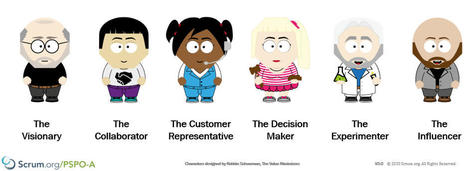
This Product Owner is a key position that sets the tone for product leadership and the definition of success in the organization. As such, modern product management practices and mindset are expected to be put into practice daily. This Product Owner is accountable for and has the authority to maximize the value of the product and the effectiveness of the Product Backlog by using, but not limited to, these 6 key stances:

  • The Visionary
    • Articulating the strategic vision of the product;
    • Developing and explicitly communicating intermediate strategic goals;
    • Propose how the product can tactically increase its value each Sprint;
    • Understand and shape the impact of the product on our company;
    • Each Sprint ensuring that the Scrum Team is prepared to discuss the most important Product Backlog items;
  • The Influencer
    • Actively manage stakeholders, their desires, expectations, and outcomes;
    • Create an effective communication strategy;
    • Influence the Developers during Backlog Items Sizing by helping them select and understand trade-offs;
    • Work with Developers daily to clarify and renegotiate the Scope of the Sprint;
  • The Collaborator
    • Collaborating closely with the Developers & Stakeholders daily;
    • Developing and communicating budget, investments, roadmaps, vision, & strategy;
    • Developing controls for a change, risk, quality, & incident management to enable professional Scrum;
    • Developing and influencing commercial contracts that align with the agile values and principles;
  • The Customer Representative
    • Understand the desired outcomes of customers within the bounds of the business constraints
    • Defining our product(s) and services and how customers will interact with them
  • The Decision Maker
    • Ensuring that the Product Backlog is transparent, visible and understood;
    • Ordering Product Backlog items;
    • Choosing what and when to release;
  • The Experimenter
    • Using evidence-based management techniques to optimise outcomes and value delivered;
    • Create hypothesis and craft experiments to test that hypothesis quickly;
    • Tracking product use and impact on end-users and drive consistent approaches across all Product Verticals;

The Product Owner may do the above work or may delegate the responsibility to others. Regardless, the Product Owner remains accountable.

Mickael Ruau's insight:

Role Requirements

The successful candidate must have the following attributes:

  • First level Scrum Product Owner certification (CSPO, PSPO I);
  • Product Owner Experience; Demonstrable experience of product ownership;
  • Business domain knowledge; a keen understanding of the [business domain], market, and other influencers;
  • Entrepreneurial focus; A keen understanding of evidence-based techniques to inform strategic and tactical milestones;
  • Excellent ideation skills; with a proven track record of successful hypothesis-driven ideation and sustainable feedback loops;
  • Excellent communication skills; Communicating Vision, Goals, and Backlog Items with both the Developers and other Stakeholders;

In addition, the successful candidate will have some or all of the following attributes:

  • Second level Scrum Product Owner certification (A-CSPO, PSPO II);
  • Experience fulfilling the Product Owner role for at least two years;
  • Knowledge and/or experience with complimentary Agile product management techniques: Evidence-based Management, Goal-orientated Product Roadmap, Business Model Canvas, Growth Experiment Canvas, Delegation Poker, Liberating Structures, Three Horizons Innovation, Stakeholder Mapping, Impact Mapping, Value Pyramids;

I would love to get your feedback and discussion on this job specification so that we can make it better!

No comment yet.
Scooped by Mickael Ruau
November 3, 2021 12:59 AM
Scoop.it!

Leveraging Small Teams to Scale Agility - a Red Hat Case Study

Leveraging Small Teams to Scale Agility - a Red Hat Case Study | Devops for Growth | Scoop.it
This article gives you a sneak peek into the adoption of Agile methodology at Red Hat. It shows how they have split the existing large subsystem team into smaller durable Scrum teams. Small teams scale well. They can more easily clarify dependencies and increase focus, leading to an increase in the ability to complete work, can mature faster, and can learn from a “fail fast” mentality more easily.
Mickael Ruau's insight:

Key Takeaways

  • Desizing teams helps to scale agility in large organizations by increasing opportunities to build trust, fail and learn faster
  • Cultural change within organizations takes time and requires “buy in” from all stakeholders
  • Organizations adopting an agile methodology need to have the will to move away from a “command and control” mindset 
  • It is not enough to reorganize the individual teams working on parts of a project for agile; success requires that the entire product development organization be structured correctly
  • It's important to have clear role definitions during Scrum implementation; properly defined roles and goals enable team members to act as cross-team contributors and enables better coordination within the larger organization
No comment yet.
Scooped by Mickael Ruau
November 2, 2021 1:05 PM
Scoop.it!

Guide for Getting Projects Back on Track (Part II: Baselines & Leadership)

Guide for Getting Projects Back on Track (Part II: Baselines & Leadership) | Devops for Growth | Scoop.it
Guide for Getting Projects Back on Track (Part II: Baselines & Leadership). Read More
No comment yet.
Scooped by Mickael Ruau
November 2, 2021 1:03 PM
Scoop.it!

Back On Track: How Do You Get A Project Back On Schedule?

Back On Track: How Do You Get A Project Back On Schedule? | Devops for Growth | Scoop.it
POSITIVE REINFORCEMENT

“People like to point fingers when problems arise. I harness my communication skills and emotional intelligence to avoid the blame game and push past project obstacles. Whatever new tasks are assigned or changes are made to get the project back on track, it’s crucial to remind everyone that their contributions are noticed and appreciated. It might seem silly, but I bring everyone together and relay specifically, one-by-one, a positive attribute I admire about each team member. Normally I’m met with a laugh at first. But, in the end, I see people’s appreciation. I truly believe there’s greatness in everyone. And it’s important that project managers don’t lose sight of that when facing an obstacle.”

—Rachel Chandlee, electrical project engineer, Hypower Inc., Melbourne, Florida, USA
No comment yet.
Scooped by Mickael Ruau
November 2, 2021 11:33 AM
Scoop.it!

Analyse et redressement de projet et gestion de crise

Analyse et redressement de projet et gestion de crise | Devops for Growth | Scoop.it


Quelques indicateurs/évènements qui risquent de mettre vos projets en difficulté:

Départ de personne clés (chef de projet, responsable technique, contrôleur de projet, responsable construction…)
Le périmètre du projet semble remis en cause ou évolue,
La qualité des équipements reçus ne correspond pas aux attentes du client,
Plusieurs dossiers de contentieux commencent à être préparés par vos sous-traitants ou vos fournisseurs

Les sources de ces dérives sont potentiellement nombreuses et il est important d’en faire l’évaluation avant de mettre en place des mesures correctives adaptées.
No comment yet.
Scooped by Mickael Ruau
November 2, 2021 8:09 AM
Scoop.it!

Deloitte BrandVoice: These 12 Innovators Are Transforming The Future Of Education

Deloitte BrandVoice: These 12 Innovators Are Transforming The Future Of Education | Devops for Growth | Scoop.it
How can you manage an underperforming team as a new leader? Here are a few ideas to help design your approach to transforming your team into superstars.
No comment yet.
Scooped by Mickael Ruau
November 2, 2021 8:06 AM
Scoop.it!

Dérapage de projets informatiques: le cas de l'affaire MAIF-IBM

Dérapage de projets informatiques: le cas de l'affaire MAIF-IBM | Devops for Growth | Scoop.it


CE QU’IL FAUT RETENIR

La rédaction de protocoles postérieurs au contrat initial peut s’avérer un remède ef ficace en cas de dérapage de projet informatique, mais est particulièrement délicate. Il convient de formaliser avec la plus grande clarté la portée des obligations nouvellement souscrites au regard des engagements initiaux.
No comment yet.
Scooped by Mickael Ruau
November 2, 2021 8:00 AM
Scoop.it!

Point d'avancement projet : maîtriser les dérapages

Point d'avancement projet : maîtriser les dérapages | Devops for Growth | Scoop.it
Les trois composantes RCD sont liées entre-elles par les deux notions suivantes, qui évaluent à date :

L’efficacité mesure la capacité à livrer ce qui est attendu.
La productivité mesure la capacité à un usage maîtrisé des ressources respectant les allocations.

Ces deux notions sont intégrées dans la notion globale de performance (ou efficience).

En excluant les situations inacceptables, le tableau suivant présente les huit scénarios possibles pour le pronostic à terminaison (Attendu = Vert et Acceptable = Orange), donnant lieu à quatre niveaux de « dérapage » : A, B, C et D.

Chaque réunion d’avancement est l’occasion d’estimer et de valider un pronostic à terminaison. En se positionnant clairement sur l’un des cas précédents, chacun a conscience de la situation effective de son projet et des implications pour la suite. Les risques d’être pris de court par défaut d’anticipation sont ainsi limités.

Nous pouvons observer que tout ce qui a été abordé ici pour un projet global et des objectifs à terminaison peut être transposé à tous les niveaux d’activité dans un projet, des responsables de lots aux contributeurs ponctuels, ainsi qu’aux objectifs intermédiaires.
Quelques points de vue et perspectives

Un objectif a vocation à être atteint.
Atteindre un objectif donne confiance en soi.
Rencontrer des difficultés pour atteindre un objectif donne l’occasion d’apprendre et de progresser.
Un objectif doit être assez important à nos yeux pour ne pas le perdre de vue lorsqu’on a la tête dans le guidon.
No comment yet.
Scooped by Mickael Ruau
November 2, 2021 5:59 AM
Scoop.it!

Gestion / Sauvetage de Projets

Notre approche s’articule généralement autour des étapes suivantes :


  1. évaluation de la situation actuelle
  2. redéfinition d’objectifs clairs
  3. identification des principaux utilisateurs et intervenants
  4. définition d’une approche graduelle basée sur la « méthode Agile », de manière à obtenir immédiatement des résultats
  5. reprise en main du projet
  6. debriefing avec tous les intervenants afin d’éviter que cette situation ne se reproduise à l’avenir
No comment yet.
Rescooped by Mickael Ruau from LEAP EntrepreneurshiԀPassion - lasting enterprise action practices
November 2, 2021 4:11 AM
Scoop.it!

Create a winning pitch : Startup Accelerator

Create a winning pitch : Startup Accelerator | Devops for Growth | Scoop.it
Microlearning for startups and founders – free training videos, pdfs, games and tools
Via Oliver Durrer swissleap.com
No comment yet.
Scooped by Mickael Ruau
November 2, 2021 2:20 AM
Scoop.it!

Theory of Constraints · Blog ·

Theory of Constraints · Blog · | Devops for Growth | Scoop.it

The goal of Theory of Constraints

The Theory of Constraints hypotheses that every complex system, including manufacturing processes, consists of multiple linked activities, where one of them can disrupt the whole system (i.e. “weakest link in the chain”).

The goal of Theory of Constraints is to make a profit. Tools that will help you achieve that goal are:

  • The Five Focusing Steps - a methodology that helps you identify and eliminate constraints.
  • The Thinking Processes - tools that help you analyze and resolve problems.
  • Throughput Accounting - a method that helps you measure performance and guide management decisions.
Mickael Ruau's insight:

The benefits of Theory of Constraints

One of the most beneficial characteristics of the Theory of Constraints is that it emphasizes the process of improvement.

In environments where there is an urgent need to improve, TOC offers the best solution as it focuses primarily on creating rapid improvements.

A successful implementation of Theory of Constraints has a number of advantages:

  • It improves capacity by optimizing the constraint
  • It enables more product to be manufactured
  • It increases profit
  • It reduces lead time by optimizing the constraint
  • It creates a smoother and faster product flow
  • It lets you improve faster because you can focus all attention on one critical are, ie. the system constraint
  • It reduces inventory and work-in-progress by eliminating bottlenecks

Theory of Constraints has had a tremendous impact on the business world and has produced remarkable results for companies worldwide.

No comment yet.
Scooped by Mickael Ruau
November 1, 2021 4:17 AM
Scoop.it!

Agile Coaching Report 2021 : Mais au fait, c’est quoi un(e) Agile Coach ? –

Agile Coaching Report 2021 : Mais au fait, c’est quoi un(e) Agile Coach ? – | Devops for Growth | Scoop.it
Ce rapport permet de mieux comprendre d’où ils et elles viennent, quels niveaux d’étude, quelles expériences, quels types de jobs et de contrats de travail, quelles réputations elles et ils se sont forgés…

Et vous y lirez également quels services sont fournis par les coach Agiles, comment leurs performances sont évaluées, en bref qu’en espérer et pour quels impacts ?
Mickael Ruau's insight:

Commençons par la définition proposée dans ce rapport réalisé par Scrum Alliance et le Business Agility Institute du Coach Agile.

« Un coach agile aide les organisations, les équipes et les individus à adopter des pratiques et des méthodes agiles tout en intégrant des valeurs et des mentalités agiles. L’objectif d’un coach agile est de rendre les équipes plus efficaces, transparentes et cohésives, et de permettre de meilleurs résultats, solutions et produits/services pour les clients. Les coachs Agile ne sont plus seulement responsables d’aider les équipes technologiques, ils aident également l’entreprise à adopter l’agilité comme un changement de culture. Un coach agile ne préconise pas une méthode particulière par rapport à d’autres, mais donne plutôt aux gens les moyens de travailler plus intelligemment, plus rapidement et avec moins de risques. »

No comment yet.
Scooped by Mickael Ruau
November 3, 2021 1:29 AM
Scoop.it!

How to Effectively Eliminate Dependencies with Sociotechnical Learning

How to Effectively Eliminate Dependencies with Sociotechnical Learning | Devops for Growth | Scoop.it
Organizations need to move fast and receive ongoing feedback from customers to drive sustainable innovation through continuous discovery and value delivery. But there is a problem — dependencies.
No comment yet.
Scooped by Mickael Ruau
November 3, 2021 1:17 AM
Scoop.it!

Gartner : pas d’agilité aboutie sans compétences techniques ni mentalité adaptée

Gartner : pas d’agilité aboutie sans compétences techniques ni mentalité adaptée | Devops for Growth | Scoop.it
Dans une note de recherche, Mike West pointe du doigt la nécessité de combiner Scrum et Extreme Programming à une mentalité purement agile au risque de voir les gains de l’agilité fondre comme neige au soleil. DevOps compris.
No comment yet.
Scooped by Mickael Ruau
November 2, 2021 1:06 PM
Scoop.it!

Putting Projects Back on Track: a Practical Approach

Putting Projects Back on Track: a Practical Approach | Devops for Growth | Scoop.it
Projects can get out of control which is the nightmare of the Read More
No comment yet.
Scooped by Mickael Ruau
November 2, 2021 1:04 PM
Scoop.it!

Ten Tips For Taming That Chaotic Project

Ten Tips For Taming That Chaotic Project | Devops for Growth | Scoop.it
The reasons for getting off track can be many but typically it’s a resource management problem. Here are 10 tips to get your chaotic project back on track.
Mickael Ruau's insight:

5. Look for new solutions.

Look at the project scope, and ask yourself:

  • Is there anything planned that doesn’t need to be here?
  • Are there any activities or deliverables being added or gold-plated that could be dropped or scaled back without falling short of the original requirement? (A zero-tolerance approach to scope creep can often save the day).

A note of caution: When re-planning or re-prioritizing, be wary of sacrificing quality for expediency. Time can often be saved by cutting test and validation activities, but this is a false economy as you’ll end up doing the work later, post-delivery. And then it will be even costlier. Review the planned deliverables and activities and strip out the non-essentials.

6. Talk to your client.

None of us likes to share our woes with our clients, but if the relationship is sound, your client will work with you to find a solution. Get a dialogue going and develop a workable plan. Start by changing parts of the plan with your client, like the delivery schedule, or agreed-upon delivery phases, rather than overhauling the one big deadline. Who knows—you might be able to extend the overall schedule but still get your client the key deliverables when they need them.

No comment yet.
Scooped by Mickael Ruau
November 2, 2021 11:36 AM
Scoop.it!

Accueil

Accueil | Devops for Growth | Scoop.it
Après deux années de projet, ce dernier a été suspendu et le dialogue entre les parties était proche de la rupture. Le projet avait dérivé de plusieurs millions d’Euros, avec peu d’espoir de sauvegarder les investissements réalisés.

CE QUE NOUS AVONS FAIT

Nous avons établi un état des lieux sur la base de notre méthode de modélisation des causes de dérive et d’échec des projets IT. Nous avons mené plusieurs interviews aussi bien coté client que prestataire.
Nous nous sommes employés à solutionner 3 points de blocages : les arbitrages des anomalies considérées comme des évolutions, l’absence d’une réelle équipe projet coté client et la renégociation d’une enveloppe financière nécessaire à l’aboutissement du projet.
Nous avons accompagné le chef de projet de notre client afin de renforcer sa gestion de projet et son rôle de « chef d’orchestre » et nous sommes intervenus en facilitateur avec la SSII afin qu’elle augmente la qualité de ses prestations.
Nous reportions régulièrement au DSI de notre client ainsi qu’au COMEX.
No comment yet.
Scooped by Mickael Ruau
November 2, 2021 8:24 AM
Scoop.it!

After the Gold Rush

After the Gold Rush | Devops for Growth | Scoop.it


Gold rush software development is a high risk activity. The practices employed during a software gold rush are usually associated with hacking rather than engineering: small team sizes, informal processes, long hours, little documentation, bare-bones quality assurance practices—practices I refer to collectively as “commitment-based development” (Rapid Development, Microsoft Press 1996). Use of these practices puts all but the smallest software projects at high risk of failure.

The odds of striking it rich during a software gold rush are about as good as they were during the California gold rush—for every success story, there are hundreds or even thousands of projects that bust out. But the failures aren’t nearly as interesting as the successes, and so we don’t hear very much about them. As with the California gold rush, projects run with commitment-based development are successful just often enough, and are so enormously lucrative when they do succeed, that they convince software developers that such high-risk practices can work, thus keeping the entrepreneurial dream alive.
Mickael Ruau's insight:


Gold rush style development practices have even lower odds of working in a post–gold rush phase. In the early days of a new technology, there are few established players or products. The technological barriers to entry are low, and early products can be small and still succeed. The first version of Microsoft Word for Windows consisted of just 249,000 lines of code. As with the California gold rush, fewer people and less capital are needed to stake a claim during the early days of a new technology. Two guys in a garage have a chance to compete against the major corporations when a successful product can be built with 249,000 lines of code. As the technology matures, however, the easy gold runs out, and successful companies have to compete on the basis of more capital intensive projects. The current version of Word for Windows, for example, consists of more than 5 million lines of code. One of the most damaging mistakes that successful gold rush companies make is to persist in using gold rush development approaches as the technology matures and their projects scale up. To compete successfully in the post–gold rush phase, the successful project needs to do a lot more than simply multiply the number of guys and get a bigger garage.

No comment yet.
Scooped by Mickael Ruau
November 2, 2021 8:06 AM
Scoop.it!

Gestion des risques d'un projet — Wikipédia

Gestion des risques d'un projet - Wikipédia

La gestion des risques d'un projet est un cas particulier de gestion des risques, appliquée dans le domaine de la gestion de projet. Un projet présente le plus souvent la double caractéristique de se dérouler suivant un processus défini pour l'occasion, et d'avoir une organisation et des objectifs qui évoluent très fortement dans le temps avec l'avancement du projet.

No comment yet.
Scooped by Mickael Ruau
November 2, 2021 8:01 AM
Scoop.it!

Principale raison des dérapages : une évolution des besoins en cours de projet

Principale raison des dérapages : une évolution des besoins en cours de projet | Devops for Growth | Scoop.it
Pour Panorama Consulting, les dépassements de délais dont souffrent les projets d'ERP sont principalement dus à un manque de préparation des entreprises. Les impacts d'un tel déploiement ne seraient pas suffisamment bien anticipés, notamment en termes d'organisation et de gestion du changement. Principale conséquence ? Une extension des objectifs initiaux du projet afin de corriger les conséquences néfastes liées à ces éléments "non-prévus". Le cabinet constate que ces difficultés sont globalement plus importantes qu'en 2011.

"Une évaluation sérieuse des risques organisationnels et la mise en place d'une politique de gestion du changement en amont permettent de faire face à un grand nombre de ces problématiques", commente Panorama Consulting, soulignant notamment l'importance d'une telle démarche au sein des PME qui, du fait de leur taille, ont tendance à mettre moins que leurs grandes sœurs les moyens nécessaires pour gérer correctement ce type d'enjeux.
No comment yet.
Scooped by Mickael Ruau
November 2, 2021 6:20 AM
Scoop.it!

Sauvetage et remise en trajectoire de projet | IBSOLUTION FRANCE

Il s’agit ici de positionner un architecte solution ou un consultant expérimenté en régie auprès du métier ou de la DSI pour éclairer et challenger les choix pris par l’intégrateur notamment en termes d’architecture, de modélisation, de limitation et de mise en place d’extension spécifique.
No comment yet.
Scooped by Mickael Ruau
November 2, 2021 5:28 AM
Scoop.it!

Message Processing: The Science of Creating Understanding

Message Processing: The Science of Creating Understanding | Devops for Growth | Scoop.it
Table of Contents

Chapter 1: Introduction to Message Processing
Chapter 2: Foundational Concepts
Chapter 3: Media
Chapter 4: Communicative Codes
Chapter 5: Traditional Models of Human Communication
Chapter 6: The Inferential Model of Human Communication
No comment yet.
Scooped by Mickael Ruau
November 2, 2021 3:32 AM
Scoop.it!

Tout le monde prétend suivre les méthodes agiles dans son travail mais en réalité, peu de personnes le font vraiment

Tout le monde prétend suivre les méthodes agiles dans son travail mais en réalité, peu de personnes le font vraiment | Devops for Growth | Scoop.it
On entend très régulièrement parler de méthodes agiles et plusieurs personnes d'ailleurs disent les utiliser dans leur travail, mais bien souvent la réalité est toute autre. Il se trouve que ces personnes se servent plutôt de quelque chose de très différent des méthodes agiles conventionnelles. Tout d'abord, il faut savoir qu'une méthode agile est une méthode de gestion et de développement de projets ou programmes informatiques qui vise à satisfaire les besoins du client au terme du contrat d
No comment yet.
Scooped by Mickael Ruau
November 1, 2021 9:28 AM
Scoop.it!

Dans le Cloud computing - le tutoriel pour débutant

Dans le Cloud computing - le tutoriel pour débutant | Devops for Growth | Scoop.it
Dans le Cloud computing - le tutoriel pour débutant
Mickael Ruau's insight:
No comment yet.