Your new post is loading...

|
Scooped by
Mickael Ruau
January 8, 2022 2:40 AM
|
Abstract
Industrial manufacturers are innovating their business models by shifting from selling products to selling outcome-based services, where the provider (manufacturer) guarantees to deliver the performance outcomes of the products and services. This form of business model innovation requires a profound yet little understood shift in how value is created, delivered, and captured. To address this research gap, our study examines two successful and four unsuccessful cases of this shift. We find that effectiveness in business model innovation hinges on the three process phases that unfold in collaboration with the customers: value proposition definition, value provision design, and value-in-use delivery. We also find that that success is determined by the alignment of specific value creation and value capture activities in each phase: identifying value creation opportunities—agreeing on value distribution in value proposition definition, designing the value offering—deciding on the profit formula in the value provision design, and finally refining value creation processes—regulating incentive structures in the value-in-use delivery. Our process model contributes to the literature and practice on business model innovation by providing a thorough understanding of how alignment of value creation and value capture processes is ensured, whilst paying special attention to their interdependence and the interactions between provider and customer.
|
|
Scooped by
Mickael Ruau
January 7, 2022 4:48 AM
|
Lean LaunchPad is an entrepreneurship methodology created by Steve Blank to test and develop business models based on querying and learning from customers. It is based on the scientific method and combines experiential learning with the three building blocks of a successful lean startup: Alexander Osterwalder's " Business Model Canvas", Steve Blank's " Customer Development Model", and Agile Engineering.
Lean LaunchPad is an entrepreneurship methodology created by Steve Blank to test and develop business models based on querying and learning from customers. It is based on the scientific method and combines experiential learning with the three building blocks of a successful lean startup: Alexander Osterwalder's "Business Model Canvas", Steve Blank's "Customer Development Model", and Agile Engineering.
Students of Lean LaunchPad propose and immediately test business hypotheses. They get out of the building to talk with prospective customers and partners, using this customer feedback acquired in these interviews to refine their product or service; ensure their product or service meets a customer need or solves a customer problem; and validate that they have created a repeatable, scalable business model.
Methodology
Lean LaunchPad pedagogy combines three elements: a Flipped Classroom, Experiential learning and Team-based learning. During the course, students interview potential customers in order to validate or invalidate their hypotheses, as expressed in the Business Model Canvas. Students listen to recorded lectures and presentations before each class, and use class time to present what they learned from customer interviews the previous week. Students present their findings which creates the basis for discussion, critiques, and brain-storming by both professors and students.[1]
As of 2021, the Lean LaunchPad has been taught in more than 300 universities worldwide to over 20,000 teams. More than 300,000 people have signed up for a free online version of the class[citation needed].
|
|
Scooped by
Mickael Ruau
January 6, 2022 5:41 AM
|
rès souvent, en tant que Product Marketing Manager, on nous demande "Dis Jamy, comment on s'assure que l'on n'oublie rien dans notre Go To Market" ? Alors on s'est mis au travail et on a constitué une checklist de tous les must-have que l'on doit avoir checké pour une release majeure. Bien sûr, elle n'est pas forcément exhaustive ni 100% adaptés à vos besoins. C'est pour cette raison que nous la mettons à disposition sur Notion afin que vous puissiez vous l'approprier. En espérant qu'elle vous soit utile ! Hortense & Mathieu
|
|
Scooped by
Mickael Ruau
January 6, 2022 1:51 AM
|
Step 3: Set up the war room
Project failure
Okay, general. This is your shtick. You get to assemble a team, seat them all together, and work through a rescue workshop. You’re in the mentality of “kill” or “fix—” you’re done fact finding, asking question for further research, or finding other excuses to delay the process. That should all have been done in step two. You’re ready to figure out what the heck to do with your project.
The “war room” will be intense. The decision-making process could take two hours, all day, or, rarely, all week. All key decision makers must be present. I realize that might not be possible, especially if the project is an all-day affair. Some executives may prefer to be called in as the meeting is nearing its end, where team members can present prepared options (such as “kill” versus “worst case”).
To get the most out of the workshop, take the meeting offline. If possible, conduct the entire meeting face-to-face or, if you must, over web conferencing software. Try to limit the meeting to ten people, including the most important stakeholders (like the sponsors), project manager, senior team members, and maybe a technical representative to give insight to plan feasibility.
Of course, the war room isn’t something to mess around with. Prepare for it. Create an agenda to go over findings, from quantitative reporting to team member interviews. Encourage pre-war-room collaboration toward the ideal shared result.
When you start the war room meeting, all project material should be readily available. That’s your fact base. Without it, you’ll start to make assumptions and decisions without facts to back them up.
|
|
Scooped by
Mickael Ruau
January 6, 2022 1:05 AM
|
Making sure old systems don’t hold you back
Moving away from established legacy systems and software is not always feasible. It may be just a timing issue, replacement may be cost prohibitive or perhaps they are so integrated within the business infrastructure that finding the time and impetus to change is a daunting prospect.
Whatever the reason for retaining legacy systems, it is important to ensure that they continue to benefit the business. This can be achieved through ongoing support and development or simply ensuring effective integration with new processes and systems being introduced.
How we can support legacy software
At Evergreen we can provide a range of support for your old software system.
We can undertake an initial assessment of your current processes to help you ascertain the limitations of your existing systems and identify gaps in your requirements that are not being fully supported.
We can then create a programme of support and development to maintain your existing arrangements and, over time, bridge the gaps, either through enhancements to your existing software or through the development of, and integration with, new systems.
If required, we can then work with you to plan the replacement of current legacy software so that data and process flows are maintained. This can all be planned and delivered on a phased basis to spread not only the cost but the time drain on internal resources as well as prevent the risks of business interruption.
Case Study
The work that Evergreen did was a factor in us winning that contract. Without them we wouldn’t have won.
Karen Inwood, Business Development Lead
Southside
If you remain static, you are going to get overtaken.
By remaining static, you make life easy for your competitors and you make life hard for yourself.
We were approached by Southside, a Bath-based charity, providing families with expert, independent and reliable support who were in danger of just that.
|
|
Scooped by
Mickael Ruau
January 5, 2022 1:30 AM
|
Le déroulement du redressement
Le redressement d’un projet se déroule typiquement en trois phases. En voici un bref survol.
Pré-intervention
Lors de la pré-intervention, on introduit le mandat et le contexte à la nouvelle gouvernance (le nouveau gestionnaire de projet). C’est souvent une étape où plusieurs discussions de corridor ont lieu, de même que des réunions secrètes.
On convient d’un plan d’action précis à mettre en place.
La phase de pré-intervention est relativement courte, de une à deux semaines. Peut-être un peu plus pour des projets majeurs.
Intervention
Lors de l’intervention, c’est là qu’on débute l’exécution du plan d’action. Habituellement, on remercie, remplace ou on transfère le gestionnaire de projet. On pourra également remplacer ou remercier plusieurs membres de l’équipe de projet (personnel TI ou des lignes d’affaires).
Le nouveau gestionnaire de projet se présente à l’équipe et annonce ses couleurs en présentant son approche de gouvernance et les mécanismes mis en place. Typiquement, des mesures strictes de contrôle de la portée sont annoncées et mises en place.
La phase d’intervention est également courte, on parle de deux semaines au plus.
Stabilisation
Lors de cette phase, les actions déterminées dans le plan ont été pour la plupart réalisées et on s’affaire alors à poursuivre le projet avec les nouveaux mécanismes mis en place lors du redressement.
Cette phase dure tant et aussi longtemps que le projet a lieu.
|
|
Scooped by
Mickael Ruau
January 5, 2022 1:08 AM
|
So, let’s summarize the five project turnaround steps we’ll be following. You can click the links to skip straight to each step:
Spot the Signs of Project Failure
The first step is to recognize you have a problem, and trigger your Project Turnaround process.
Evaluate the Situation
Now you need to make a critical analysis of what has gone wrong, and what your options are to recover your failing project.
Steady your Project
This is the step where you start to stabilize your project to prevent a worsening of your situation.
Rebuild Your Project
Now it’s time to implement your full project turnaround plan, to get everything back on track.
Maintain Your Project
The last step is to create a sustainable project, which will continue to deliver to your plan, with the minimum of drama.
Now it is time to work our way through these five Project Turnaround steps, one at a time.
|
|
Scooped by
Mickael Ruau
January 4, 2022 1:43 AM
|
Step No. 1: Issue a "stop work" order
To stop spending time and money on a major project or program is easier said than done. Rescue effort planning can last weeks, disrupting time allocated to skilled resources. It's easier to stop purchasing hardware and software, harder to break up a team of people. Are valuable, productive reassignments available? How long will it be until the team reassembles?
Step No. 2: Talk with everyone
Interview all major stakeholders or their representatives (usually fewer than 10 people). Guarantee anonymity to encourage frank and honest assessments of problems and issues. It's important that these interviews assess politics and culture, and that they gather all stakeholders' positions on what they consider to be allowable and viable rescue outcomes.
Step No. 3: Set boundaries
Define the point of failure. How much cost or investment is too much for a rescue? Not all projects or programs can be rescued, so build an agreement with stakeholders on when to stop trying.
“ Killing the project or program should always be an option ”
Step No. 4: Find root causes
Stakeholder interviews typically identify several problems in general terms, such as "high complexity" or "unclear objectives." These kind of responses lack the situational specificity needed to address issues effectively. Probe these causes with increasingly detailed questions that reveal specific details. One technique used for this kind of questioning is the lean management approach of "the five whys."
For example: Your car is not starting.
First why: The battery is dead.
Second why: The alternator is not functioning.
Third why: The alternator belt has broken.
Fourth why: The alternator belt was well beyond its useful service life and not replaced.
Fifth why: The vehicle was not maintained according to the recommended service schedule (root cause).
Step No. 5: Assess the risks
If delivery has been unsuccessful so far, there is a risk that the root causes are not addressable, and it is therefore not a good idea to attempt a rescue. Moreover, new risks may become significant in the process of rescue. Identify the risks involved in rescue and have a plan to mitigate them. Key areas of risk include: complexity, technology, operational, external, organizational, schedule and financial.
Step No. 6: Prepare for "war"
Prepare to meet with key stakeholders and decision makers to hammer out a plan of action. This includes:
Creating a timed agenda in advance
Soliciting input and feedback from all who will be present
Building a collaborative workspace to share information and encourage preparation and discussion before the workshop begins
Preparing all materials and information ready to support discussion and analysis with facts and statistics
|
|
Scooped by
Mickael Ruau
January 4, 2022 1:17 AM
|
Projets en péril. Y a-t-il vraiment des projets en péril? Est-ce un mythe ou une réalité? Dans le monde informatique par exemple, plusieurs statistiques nous…
|
|
Scooped by
Mickael Ruau
January 3, 2022 1:14 AM
|
Lancer simultanément trop de projets fait déborder les plannings des collaborateurs, ralentit tous les processus de l’organisation et augmente mécaniquement tous les délais. On est bien loin de l’objectif initial de vouloir réagir plus vite dans un monde qui bouge en permanence ! Alors que si l’on restreint le nombre de projets menés en parallèle, on disposera des ressources nécessaires pour les traiter correctement en se concentrant d’abord sur l’un avant de passer à l’autre. Cela réduit non seulement le temps de réalisation de chaque projet mais permet également de bénéficier des gains attendus plus rapidement comme l'illustre ce schéma :
Paralléliser les projets permet de les faire aboutir plus rapidement
La loi de Little est donc un excellent principe à retenir lorsqu’il s’agit de piloter des portefeuilles de projets de transformation puisqu’elle permet de ne pas perdre la vue d’ensemble et de bien s’assurer de l’efficience de toute l’organisation.
|
|
Scooped by
Mickael Ruau
January 3, 2022 1:03 AM
|
What Is Trunk-Based Development?
When to Use Trunk-Based Development
What Is Feature-Driven Development?
When to Use Feature-Driven Development
Other Development Models
How to Choose the Right One
|
|
Scooped by
Mickael Ruau
December 31, 2021 1:31 AM
|
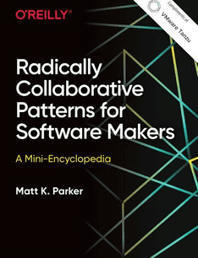
Get a unique collection of radically collaborative patterns for building software with others. In this mini-encyclopedia, third-generation programmer Matthew Parker introduces you to 27 successful patterns used in organizations that follow distinctive methodologies such as Scrum, Extreme Programming, Scaled Agile Framework (SAFe), and others.
|
|
Scooped by
Mickael Ruau
December 30, 2021 1:24 AM
|
This article explains the DevOps process and principles. It gives you insights to implement the DevOps methodology in your software development process.
|
|
|
Scooped by
Mickael Ruau
January 7, 2022 12:53 PM
|
Terraform voit le jour en 2014. Il s’agit d’un environnement open source d'Infrastructure as Code (IaC). Edité par l'américain HashiCorp, il a pour finalité d'automatiser le provisioning et le management de n'importe quelle infrastructure cloud ou ressources IT.
En amont, les opérations à réaliser seront codées dans un langage ad hoc propre à Terraform et baptisé HashiCorp Configuration Language (HCL). Une fois créés, les fichiers de configuration HCL seront exécutés via l'interface en lignes de commande Terraform CLI. L'ensemble des tâches spécifiées dans le fichier seront alors appliquées. Il pourra s'agit de déployer ou paramétrer des serveurs physiques (bare metal), des machines virtuelles, des containers logiciels, des clusters, ou encore des équipements réseau. Aux côtés du langage HCL, Terraform prend également en charge les fichiers de configuration au format Json.
|
|
Scooped by
Mickael Ruau
January 7, 2022 1:48 AM
|
Accelerate vous connaissez ? Découvrez un atelier simple et ludique vous permettant de comprendre Accelerate - La science derrière DevOps.
|
|
Scooped by
Mickael Ruau
January 6, 2022 1:53 AM
|
Types of Software Metrics
Formal code metrics—Such as Lines of Code (LOC), code complexity, Instruction Path Length, etc. In modern development environments, these are considered less useful.
Developer productivity metrics—Such as active days, assignment scope, efficiency and code churn. These metrics can help you understand how much time and work developers are investing in a software project.
Agile process metrics—Such as lead time, cycle time and velocity. They measure the progress of a dev team in producing working, shipping-quality software features.
Operational metrics—Such as Mean Time Between Failures (MTBF) and Mean Time to Recover (MTTR). This checks how software is running in production and how effective operations staff are at maintaining it.
Test metrics—Such as code coverage, percent of automated tests, and defects in production. This measures how comprehensively a system is tested, which should be correlated with software quality.
Customer satisfaction—Such as Net Promoter Score (NPS), Customer Effort Score (CES) and Customer Satisfaction Score (CSAT). The ultimate measurement of how customers experience the software and their interaction with the software vendor.
|
|
Scooped by
Mickael Ruau
January 6, 2022 1:14 AM
|
Check out the components of Trunk-based Development as implemented by Facebook and Google, and see how it helps resolve and prevent merge conflicts.
|
|
Scooped by
Mickael Ruau
January 5, 2022 1:40 AM
|
Scrum vs XP Both are very similar that are aligned with each other and complement each other. If you walked to a team then it very is very hard to recognize which practice team is using if they are using one of the above practices. XP is Scrum with technical practices. It’s mindset/behavior and a more prescriptive approach with a strong feedback loop. Scrum XP The iteration is between 2 to 4 weeks. The iterations are 1-2 weeks or less. For very aggressive teams, it can go up to a day. In Scrum product owner prioritizes the product backlog but the Scrum team has a privilege to chose a lower priority item in a sprint to work on before the high priority XP teams must always work in priority order as features to be developed are prioritized by the customer. Changes in the sprint are not allowed XP Teams are much more amenable to change within their iterations, but change can only be made if the team hasn’t started working on a feature and at the same time the change is of the equivalent of the swapped item. The validation of the software is completed almost at the end of each sprint, (i.e. Sprint Review) The software needs to be validated at all times, to the extent that the tests are written prior to the actual software. Scrum doesn’t prescribe any engineering practices The XP does. The Scrum Master is responsible for what is done in the Sprint, including the code that is written A developer can modify or refactor the parts of the code as and when the need arises.
|
|
Scooped by
Mickael Ruau
January 5, 2022 1:17 AM
|
Into every project manager’s life a few clunkers must fall. Some failures are preventable; others are out of our hands. But all of us like to imagine we can avoid the worst of the catastrophes… or at least escape with our reputations intact.
How can you tell that your project is aimed directly at #headdesk territory? Take heed of these warning signs. If you identify the uh-oh moments soon enough, perhaps you can take remedial action and save the situation. Maybe you can walk away, take a deep breath, reanalyze the requirements, and reset the team. We’d like to think so!
|
|
Scooped by
Mickael Ruau
January 4, 2022 1:46 AM
|
In the most recent CHAOS Manifesto, Standish Group analysts strongly recommended two key practices concerning solution scope:
Break the project into small independent Components or Features that can be delivered independently.
Focus on high value features and eliminate features that provide little or no value.
|
|
Scooped by
Mickael Ruau
January 4, 2022 1:23 AM
|
Le modèle de gestion sans budgets ne se limite pas à la simple élimination des budgets et des objectifs, ou à l’ajout de nouvelles technologies intelligentes. Il fait intervenir un ensemble complètement distinct de processus de gestion et un style de leaderhip différent, lesquels exploitent le plein potentiel du personnel, des systèmes de TI et des outils en place. Le modèle délaisse également le style de gestion axé sur une structure hiérarchique, aujourd’hui obsolète, pour un style de gestion plus dynamique et modulable, qui habilite les employés en leur confiant des renseignements de grande qualité sur lesquels fonder leurs décisions.
Selon le livre Beyond Budgeting: How Managers Can Break Free from the Annual Performance Trap, de Jeremy Hope et Robin Fraser, le modèle de gestion sans budgets repose sur les six principes de gestion qui suivent, assortis de processus d’adaptation :
Des objectifs ambitieux en vue d’une amélioration relative. Dans le modèle conventionnel, les objectifs sont établis à partir d’étalons externes plutôt que sur des objectifs déterminés en interne. Dans le modèle de gestion sans budgets, plutôt que de s’employer à surclasser d’autres gestionnaires, l’accent est mis sur le travail d’équipe pour battre la concurrence. Les objectifs sont ambitieux, mais réalistes, ce qui encourage les gestionnaires à repousser leurs limites.
Une évaluation des employés et des récompenses fondées sur des ententes d’amélioration relative avec examen rétrospectif. Dans ce nouveau modèle, les gestionnaires sont stimulés par les défis qu’on leur propose et par les responsabilités qu’on leur confie plutôt que par la peur de rater un objectif. Les récompenses sont également offertes aux équipes plutôt qu’aux individus, ce qui favorise la collaboration.
Une planification des actions réalisée à partir d’un processus continu et inclusif. L’accent est davantage mis sur l’expertise des gens qui interagissent véritablement avec les clients, et le processus est continu plutôt que ponctuel.
Une disponibilité des ressources nécessaires. Dans le modèle de gestion sans budgets, les gestionnaires peuvent accéder aux ressources dont ils ont besoin, lorsqu’ils en ont besoin, ce qui leur permet de répondre de manière plus dynamique à ces besoins en ressources, qui évoluent sans cesse.
Des actions coordonnées dans l’ensemble de l’entreprise en fonction de la demande prédominante des clients. Les équipes axées sur les clients collaborent pour s’adapter constamment à la demande des clients, aussi en constante évolution.
Des mesures de contrôle fondées sur une gouvernance efficace et sur une gamme d’indicateurs de rendement relatif. Grâce à l’échange ouvert, transparent et en temps réel de renseignements, la haute direction n’a pas besoin d’exercer son « pouvoir hiérarchique »; elle n’a qu’à veiller à ce que tout soit sur la bonne voie.
|
|
Scooped by
Mickael Ruau
January 3, 2022 1:39 AM
|
When a promising project doesn’t deliver, chances are the problem wasn’t the idea but how it was carried out. Here’s a way to design projects that guards against unnecessary failure.
|
|
Scooped by
Mickael Ruau
January 3, 2022 1:06 AM
|
The foundational code might be there, but it results in an awful UI/UX design, so your users don’t enjoy using your product.
Demos are built, and show off some rough functionality, but you are no longer seeing progress or the completion of various features and functionality.
The development team doesn’t seem to understand your requests, and you are experiencing communication issues.
Excessive delays are stretching your time to market, and your launch date keeps getting pushed back.
Performance is questionable, and the existing code quality is not up to standards.
Despite your best efforts, you are receiving subpar reviews and ratings. Your app is not delivering the value or engagement your users expect.
You’re exceeding your budget due to unforeseen expenses.
The leaders of the project have left, so you are experiencing a knowledge gap.
The software is not fit for the desired purpose.
You have little to no access to progress reports or timelines.
Your web application is built, but the agency isn’t capable of mobile (or vice versa). This means that you have to find somewhere else to bring your mobile version to life and worry about your web and mobile product design matching.
You’ve made it past the initial planning phase, and now realize there’s no established process. No one is clear on how the end product will look and operate.
|
|
Scooped by
Mickael Ruau
December 31, 2021 3:51 AM
|
Part I: Fostering Change. Examine the principles of small-batch thinking, user-centric design, and shifting from functional teams to product teams.
Part II: Cloud Native Cookbook for Leadership. Apply those principles across your organization, from creating and communicating your strategy through building your pipeline and choosing the right cloud platform.
|
|
Scooped by
Mickael Ruau
December 30, 2021 1:39 AM
|
Points Clés
Le coaching technique consiste à aider les développeurs à changer leurs habitudes quotidiennes et leurs méthodes de travail pour prendre en charge Agile et DevOps.
Peu d'organisations réussissent à adopter le TDD. Les développeurs ont généralement besoin d'aide pour passer des exercices pratiques TDD à une base de code de production à grande échelle.
Ensemble travailler avec un praticien expérimenté est efficace pour apprendre le TDD, en particulier en combinaison avec des sessions de formation pratiques régulières.
« Samman » est une approche du coaching technique. Il comporte deux parties principales : les heures de travail et d'apprentissage de l'ensemble.
Il y a trop peu de coachs techniques ; une méthode concrète comme Samman peut aider les développeurs à commencer à coacher.
L'un des facteurs de succès pour Agile et DevOps est que les développeurs changent leur façon de travailler et adoptent des pratiques telles que le développement piloté par les tests (TDD). Ce n'est pas quelque chose qui se produit tout seul, et bon nombre des manières « habituelles » d'introduire le changement échouent pour TDD. Dans cet article, je décrirai certaines des choses que j'ai essayées qui fonctionnent réellement. Je vais vous expliquer « Samman », qui est la méthode de coaching que j'utilise avec les développeurs.
|