Devops for Growth
121.1K views | +5 today
Devops for Growth
For Product Owners/Product Managers and Scrum Teams: Growth Hacking, Devops, Agile, Lean for IT, Lean Startup, customer centric, software quality...
Curated by Mickael Ruau
Your new post is loading...

Popular Tags

Scooped by Mickael Ruau
February 4, 2022 1:17 AM
Scoop.it!

A roadmap for “the” product roadmap: Teresa Torres’s OST in action | by Mohammad Eskandari | Dec, 2021

A roadmap for “the” product roadmap: Teresa Torres’s OST in action | by Mohammad Eskandari | Dec, 2021 | Devops for Growth | Scoop.it
Roadmap is a pretty controversial word in tech jargon. Basically everyone agrees that we should have one — but no one agrees on what it actually is. Executives usually want the roadmap to predict the…
Mickael Ruau's insight:

Roadmaps vs OKRs

Traditionally, the roadmap was a prioritized list of features with due dates and deadlines that were to be built by the technical team. It was a solution-based approach to define the tasks needed to be done. Now while the concept of a roadmap has changed a lot by the lean movement, it is still solution-based: any document labeled “roadmap” is one filled with solutions and maybe some fuzzy deadlines.

OKRs on the other hand, are a problem-based approach to define the tasks that should be done. When we talk about Objectives and Key Results, we want to define which problems are best to work on, somewhat independent of what the best solution is.

One can easily see that the best way to reconcile the two is to put OKRs first, dig up solutions that address both customer needs and business requirements and then put them in a document labeled the roadmap.

There are quite a few models around that aspire to do just that. One of the best I’ve tried is the Opportunity Solution Tree (OST).

Teresa Torres’s Opportunity Solution Tree

Described in the fantastic read Continuous Discovery Habits, the Opportunity Solution Tree is a structured approach to build the right thing in a right way

No comment yet.
Scooped by Mickael Ruau
February 4, 2022 12:57 AM
Scoop.it!

Matthew Skelton - Accidental Architects: how HR designs software systems (EN)

Flowcon online 2020

Who designs the architecture of your software systems? Conway's Law suggests that HR may be strongly shaping software architecture by deciding how teams are composed and interrelate. Do you want HR designing your software architecture?

Organization architecture and software system architecture need to be co-designed to avoid friction from Conway's Law.
No comment yet.
Scooped by Mickael Ruau
February 3, 2022 1:05 AM
Scoop.it!

Four Frameworks to Help You Define Product Metrics | by Anthony Murphy | Dec, 2021 | Product Coalition

Four Frameworks to Help You Define Product Metrics | by Anthony Murphy | Dec, 2021 | Product Coalition | Devops for Growth | Scoop.it
Metrics Management is a core skill for a Product Manager and a core task within that is defining product metrics. The Association of Product Professionals defines Metrics Management as “Defines…
No comment yet.
Scooped by Mickael Ruau
February 2, 2022 8:06 AM
Scoop.it!

5 software architecture patterns: How to make the right choice

5 software architecture patterns: How to make the right choice | Devops for Growth | Scoop.it
There are five key software architecture patterns in wide use. Here's what apps they're best for—and their challenges.
Mickael Ruau's insight:

Mark Richards, a software architect based in Boston, has pondered for more than 30 years about how software should work. His free book, Software Architecture Patterns, describes five architectures that are seen repeatedly in software systems.  

Here are Richards' five foundational architectures, distilled into a quick reference of their strengths and weaknesses, as well as optimal use cases. For many cases, one single architecture is the best choice that will unite your code. For others, it may make sense to optimize each section of code with the best architecture for it.

No comment yet.
Scooped by Mickael Ruau
February 1, 2022 1:45 AM
Scoop.it!

Motivational Aspects of Scrum: How the Process Drives Focus and Helps Mobilize Creative Energy

Motivational Aspects of Scrum: How the Process Drives Focus and Helps Mobilize Creative Energy | Devops for Growth | Scoop.it


In his new book, “The Rise of Superman: Decoding the Science of Ultimate Human Performance,” Steven Kotler discusses flow triggers – circumstances that facilitate the entry into the flow state Kotler groups the 17 flow triggers into several buckets: psychological, environmental, social and creative. Since we are attempting to explain team performance, our interest lies primarily in the social triggers, defined as “ways to alter social conditions to produce more group flow”. It is uncanny how Scrum is almost precisely designed around these triggers. Could this be the reason why, as Scrum evangelists claim, you can get more done faster, with fewer people, and with higher quality, effectively breaking the “iron triangle”?

Most of Kotler’s social and environmental flow triggers map closely to Scrum practices or principles. Let’s look at the ones that fit:

Serious concentration: To create flow in social settings, you need to ensure everyone has their maximum attention to the here and now, and is blocked off from other distractions. Scrum practices frozen scope for timeboxed iterations, i.e. no changes in the team’s direction are allowed during a sprint. This is done in order to create the necessary period of uninterrupted, focused work, which is precisely what the teams need to achieve higher levels of productivity.
Shared, clear goals: Groups need to be clear about what their collective goal is in order for flow to happen. Practices described above, like information radiators and visualizing things like scope, progress and task status serve exactly that purpose.
Good communication: This one is almost self-explanatory. Constant communication is necessary for group flow, according to Kotler. Scrum practically forces constant, open, intense many-to-many communication, where everyone not only has a voice, but is fully expected to use it.
Familiarity/common language: Kotler stresses the importance of common language, a shared knowledge base and a communication style based on unspoken understandings. This is almost precisely the description of the emergent tacit knowledge emphasized by all Agile methods.
Equal participation: Flow is most likely to happen in a group setting when all participants have an equal role in the project. This is reflected in the cross-functional and self-organizing nature of Scrum teams, as well as such practices as collective code ownership (which stems from Extreme Programming but is widely used by many Scrum teams).
Risk: There’s no creativity without failure, and there’s no group flow without the risk of failure. The group has to have some skin in the game to produce group flow. Scrum teams are constantly making clear commitments to their customer (internal or external, in the case of outside partner teams) and there is always the risk of underdelivering on those commitments.
Sense of control: Kotler defines sense of control as the combination of autonomy (being free to do what you want) and competence (being good at what you do). Again, this is precisely how Scrum is set up: competent, highly motivated, self-organizing, cross-functional teams that are not micromanaged, but rather choose their own implementation path and are accountable to the customer for the ultimate results.
No comment yet.
Scooped by Mickael Ruau
January 31, 2022 10:47 AM
Scoop.it!

Un bogue vieux de 12 ans dans polkit permet d'obtenir des privilèges « root » sur les principales distributions GNU/Linux, Ubuntu et Red Hat ont déjà publié des correctifs

Un bogue vieux de 12 ans dans polkit permet d'obtenir des privilèges « root » sur les principales distributions GNU/Linux, Ubuntu et Red Hat ont déjà publié des correctifs | Devops for Growth | Scoop.it
L'équipe de recherche Qualys a découvert une vulnérabilité de corruption de mémoire dans pkexec de polkit, un programme racine SUID qui est installé par défaut sur toutes les principales distributions Linux.
No comment yet.
Scooped by Mickael Ruau
January 31, 2022 1:16 AM
Scoop.it!

Le blog d’Emmanuel GEORJON – La gestion de projet en 11 règles

Le blog d’Emmanuel GEORJON – La gestion de projet en 11 règles | Devops for Growth | Scoop.it
Quelle que soit la méthode employée, les projets suivent toujours des règles auxquelles il est quasiment impossible d’échapper.
No comment yet.
Scooped by Mickael Ruau
January 29, 2022 2:28 AM
Scoop.it!

Quick Reference: Customer Development's Four Steps

Quick Reference: Customer Development's Four Steps | Devops for Growth | Scoop.it
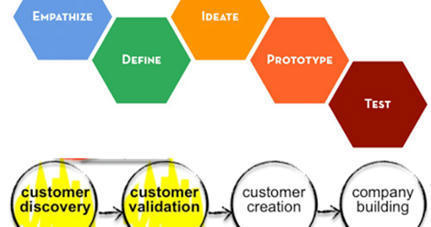
Customer Discovery

At this step, the team should be focused on relatively open-ended discovery, learning who their customer is and what’s actually on their A-list in your area of interest. I would consider moving on when you have a clear view of an early market persona and problem scenario and a working hypothesis about a value proposition you want to test. At this point, you’re at the end of what you can learn from open-ended questions and you need to be able to observe how your hypothetical customer reacts to an MVP (a la Lean Startup).
Customer Validation

At the beginning of this phase, you are still (hopefully) pre-product in the sense of having invested in actual, working software. You are using techniques from Lean Startup to if and how your customer is motivated with regard to your hypothetical problem/solution(proposition) fit and then your specific product/market fit.
Customer Creation

Here you are taking what might be called an early product/market fit and seeing if how you can apply growth hacking recipes to scale it. You’re not exactly popping the cork yet- you’re still grinding through growth experiments to see if you can expand to a large market.
No comment yet.
Scooped by Mickael Ruau
January 28, 2022 9:31 AM
Scoop.it!

Teaching Customer Development and the Lean Startup – Topological Homeomorphism

Teaching Customer Development and the Lean Startup – Topological Homeomorphism | Devops for Growth | Scoop.it
Customer Development was a way to quickly search outside the building for a profitable business model when customer needs are unknown. Eric observed that an Agile Development model was the right match for engineering to build a product when the initial feature set was unknown. The sum of solving for both unknown customer needs and unknown features became the Lean Startup.

Topological Homeomorphism
This year I decided the Customer Development class needed to morph into the Lean Startup class. We needed to teach both Customer Development and Agile methodologies. I drafted Eric to help teach the class and we began to transform the curriculum.
No comment yet.
Scooped by Mickael Ruau
January 28, 2022 1:03 AM
Scoop.it!

Why you should hire DevOps enablers, not experts

Why you should hire DevOps enablers, not experts | Devops for Growth | Scoop.it
Learning organizations smoothly morph as they adapt to new challenges—and they unlearn existing ways of working when those become limitations.
Mickael Ruau's insight:

We are regularly asked if we know any DevOps or site reliability engineering (SRE) experts available for hire. Our answer is, invariably, "Not really." It's a tough market out there.

DevOps and SRE (for large-scale software, at least) are critical approaches for success in modern software delivery and operations, as widely demonstrated every year in the State of DevOps report or the array of presentations at the DevOps Enterprise Summit.

But if you think you can achieve DevOps by hiring "DevOps experts," you are missing some contextual awareness. What exactly are you trying to improve in the first place?


If your software delivery is slow because of work you're handing off among multiple teams with diverse schedules and priorities, will a new hire really help?


We're not suggesting that you not hire people with diverse skills and backgrounds—that can be quite valuable to bring in new perspectives and approaches.

But conventional hiring based on expertise alone is ineffective and prevents organizations from developing the "learning muscles" that can help teams traverse the latest trends (DevOps, SRE, etc.) to their benefit at the right time, and in the right context.


Hiring experts for every need is like engaging in palliative care for organizational health. Preventive care would be to incorporate the necessary team structures and interactions—as well as a focus on people growth and sufficient slack—to effectively take in process, technology, and business changes.


Learning organizations smoothly morph as they adapt to new challenges, and they unlearn existing ways of working when they become limitations rather than enablers.

No comment yet.
Scooped by Mickael Ruau
January 27, 2022 1:58 AM
Scoop.it!

Recovery Framework for Troubled Projects

Recovery Framework for Troubled Projects | Devops for Growth | Scoop.it
Project Management practices are designed for a project to meet requirements, stay on budget and finish on time. Real life, however, intervenes.
Mickael Ruau's insight:


Top Five Actions for Project Recovery. Project recoveries are highly successful once firms decide to focus on addressing the issues that caused the project to become troubled in the first place. The top five actions most often taken in a project recovery intervention according to a survey are:

1.    Improving communication, stakeholder management (62%).

2.    Redefining the project—reducing the scope, re-justifying the project financially (60%).

3.    Adding and/or removing resources (58%).

4.    Resolving problematic technical issues (49%).

5.    Replacing the project manager or bringing in a consultant to manage recovery (36%).

 A Recovery Framework

The rest of this article presents an approach for dealing with troubled projects with confidence and control. The approach deals with redefining project objectives and identifying and fixing problems across people, process, and product dimensions. The recovery process is broken down into distinct phases to improve control. Details are at a high level at this point. Simple project adjustments might be feasible in relatively small troubled projects. In larger projects, the complexity and nature of problems, strongly recommend that a recovery be treated as a project.

There have been several attempts to deal with Troubled/Failing Projects. A notable one is: Moura, H. (2012). How to deal with troubled projects. Paper presented at PMI® Global Congress 2012—EMEA, Marsailles, France. Newtown Square, PA: Project Management Institute.

The Recovery Framework is a structured approach for dealing with troubled projects, broken down into distinct steps:

· Recognition — Formally recognizes that the project is in trouble and commits to fixing it. Authority and support are obtained to manage resources, reset expectations, negotiate objectives, and implement fixes.

· Assessment — Assesses the project, based on documentation, questionnaires, checklists, and interviews.

· Revision — Redefines the project, setting a new preliminary scope, schedule, and budget. Processes, teams, and communication are redesigned to fit a recovery process.

· Redress — Implements remedial actions and risk responses. Monitors the troubled project until meaningful and credible baselines can be established.

· Execute — Executes project management steps and monitors progress using established and approved plans.

No comment yet.
Scooped by Mickael Ruau
January 27, 2022 1:27 AM
Scoop.it!

Example of a Project Recovery Plan Template: Free Download With Tips for Customization - BrightHub Project Management

The following project recovery plan template is a generic example designed to suit several kinds of projects. This project recovery plan template can also be freely downloaded as a Word document, so you can add information and amend it as necessary.
Mickael Ruau's insight:


Project Recovery Plan Template

Purpose

This first section is an introduction for the project recovery plan. Here you need to state the overall purpose of this document and briefly describe what is covered within its pages (i.e. the roles and responsibilities of the project team in the risk management processes, the steps that will be carried out to minimize the effects of the stop gaps, the time line and budget for process of project recovery, etc.).

Project Team

Provide the names and roles of the project management team members. Describe what responsibilities each team member has in regards to the project recovery plan.

Project Assessment

First, provide an overall picture of where the project is currently holding. What milestones have been achieved and what has yet to be accomplished. Next, define the core problems, obstacles, and risks that are preventing or slowing down project completion, and list them in order of importance, starting with the most critical issues. Include or reference here any risk-related documentation and any other supporting documents that help define these core issues.


Project Recovery Strategies

In this section you will define the steps the project team will take to minimize the damage, as well as re-organize project priorities, project scheduling, and the project budget to bring the project back on track and steer it towards completion.

In short, at least five elements must be included in this section:

  1. A breakdown of steps to be taken
  2. A schedule for the project recovery
  3. The project recovery budget
  4. Methods for monitoring the project recovery process
  5. A list of any needed tools or information

Conclusion and Appendix

In section, you should summarize the project recovery strategies mentioned above as well as the overall goals of the project recovery plan. You should also include in the appendix any supporting documentation mentioned in the project recovery plan.

Use this generic project recovery plan template to help you successfully recover from a potential project disaster and ultimately, project failure.

No comment yet.
Scooped by Mickael Ruau
January 26, 2022 7:51 AM
Scoop.it!

Le Design Thinking au quotidien

Le Design Thinking au quotidien | Devops for Growth | Scoop.it
Le Design Thinking devient un mode de travail incontournable pour les entreprises innovantes. Il favorise le "cocktail des intelligences" et la co-création.
No comment yet.
Scooped by Mickael Ruau
February 4, 2022 1:16 AM
Scoop.it!

Software Engineering at Google • Dylan Meeus

Software Engineering at Google • Dylan Meeus | Devops for Growth | Scoop.it
If there was one book this year that it was hard to avoid hearing about, it was “Software Engineering at Google”. As such, it was only a matter of time before I jumped on the bandwagon and decided to give it a read, but I’m happy I finally did!
I track my highlights and notes through my kindle / goodreads, and ended up with about 80 of them. In this blogpost, I’ll just go over some of what that I thought stood out in the book in one way or another.
No comment yet.
Scooped by Mickael Ruau
February 3, 2022 1:43 AM
Scoop.it!

Scrum, velocity, and driving down the motorway the wrong way

Scrum, velocity, and driving down the motorway the wrong way | Devops for Growth | Scoop.it


Velocity is in essence a negative metric - it can tell you that something is wrong, but not that something is good. Blood pressure is a good example of a negative metric: high blood pressure is a clear signal that something is wrong, but a normal blood pressure does not give anyone enough information to conclude anything about someone’s health. Even worse, the easiest way to instantly reduce high blood pressure would be to chop someone’s head off, but it would be a far stretch to claim that the patient would be healthier. Many managers new to Scrum, and metric-obsessed Scrum masters, do exactly that to their teams by slavishly using velocity as the primary measure of progress.
No comment yet.
Scooped by Mickael Ruau
February 3, 2022 1:01 AM
Scoop.it!

Forget monoliths vs. microservices. Cognitive load is what matters.

Forget monoliths vs. microservices. Cognitive load is what matters. | Devops for Growth | Scoop.it
For innovative software organizations, managing the overall cognitive load on their teams is a guiding development and operational principle.
Mickael Ruau's insight:

The "monoliths versus microservices" debate often focuses on technological aspects, ignoring strategy and team dynamics. But instead of starting with technology, smart-thinking organizations are beginning with the team's cognitive load as the guiding principle for the effective delivery and operation of modern software systems. 

Excessive cognitive load works against effective team ownership and supportability of software. Here's why, and how to approach the problem.

No comment yet.
Scooped by Mickael Ruau
February 2, 2022 1:10 AM
Scoop.it!

Story Pointless (Part 1 of 3). The first in a three-part series on… | by Nick Brown | Nationwide Technology

Story Pointless (Part 1 of 3). The first in a three-part series on… | by Nick Brown | Nationwide Technology | Devops for Growth | Scoop.it
Summary — Single Item Forecasting

In terms of a story pointless approach to estimating a single item, try the following:

Prioritise your backlog
Use your Cycle Time scatter plot and 85th percentile
Take the next highest priority item on your backlog
As a team, ask — “Do we think this can be delivered within our 85th percentile?”
(Note: you can probe further and ask ‘can this be delivered within our 50th percentile?” to promote further slicing/refinement)
If yes, then let’s get started/move it to ‘Ready’
(considering your work-in-progress)
If no, then find out why/break it down till it is small enough
Once we start work on items, use Work Item Age as a leading indicator for flow
Manage Work Item Age as part of your Daily Scrum, if it looks like it may exceed the 85th percentile — swarm/slice!

Please note: it’s best to familiarise yourself with what your 85th percentile is first (particularly in comparison to your cadence).
If it’s 100+ days then you should be focusing initially on reducing that time — this can be done through various means such as pairing, mobbing, story mapping, story slicing, lowering WIP, etc.
No comment yet.
Scooped by Mickael Ruau
February 1, 2022 1:03 AM
Scoop.it!

A Modern Roadmap. While a traditional roadmap is not… | by Cláudia Delgado | Geek Culture

A Modern Roadmap. While a traditional roadmap is not… | by Cláudia Delgado | Geek Culture | Devops for Growth | Scoop.it
How can we be agile, experiment, and be outcome-oriented while keeping a detailed plan of all the output that will happen in the next quarters? Promising a product plan that’s filled with certainty…
Mickael Ruau's insight:

The foundation of this roadmap aligns everyone around a common cause:

  • Vision — It sets the ultimate direction and provides meaning for everything that follows. The rest of the roadmap describes how we intend to achieve this vision.
  • Business Intents — They communicate the current areas of focus to make a big leap forward.
  • Product Initiatives —They answer how we can reach the intents by optimizing our products. The best answers are linked to real problems that users want to have solved.
  • Broad Timeframe — It provides guidance on when the product initiatives will happen. It reminds us of traditional roadmaps while preserving flexibility.

Secondarily, we can add sub-items to the Product Initiatives:

  • Options — They’re the possible solutions to explore. Some of them will turn into shipped features. It’s probably a good idea to only include them when there’s a degree of confidence in them.

Finally, we can tag the items (particularly Product Initiatives and Options) with additional information such as:

  • Stage of development
  • Confidence
  • Target customers
  • Product areas
  • Schedule and resources
  • Dependencies and risks

That’s it, we’ve got our roadmap, with an all-modern look. Can we now frame it and hang it on an office wall? You guessed it — it’s not that easy. Modern or not, roadmaps shouldn’t be set in stone. They need to be updated.

No comment yet.
Scooped by Mickael Ruau
January 31, 2022 1:28 AM
Scoop.it!

Remote-first Team Interactions with Team Topologies

Remote-first Team Interactions with Team Topologies | Devops for Growth | Scoop.it
Remote-first work is the "new normal" for companies around the world. There is no shortage of advice on how individual teams can bond and work effectively remotely. However, there is not much on how to address remote interactions between different teams that need to collaborate remotely,
No comment yet.
Scooped by Mickael Ruau
January 29, 2022 3:42 AM
Scoop.it!

How to Acquire Customers: 19 "Traction" Channels to Start Testing Today

How to Acquire Customers: 19 "Traction" Channels to Start Testing Today | Devops for Growth | Scoop.it
How much of your time as an entrepreneur or member of a young company should be focused on acquiring customers versus developing your product or service?
According to Gabriel Weinberg and Justin Mares, the answer is 50%—split time evenly between building your product or service and bringing i
No comment yet.
Scooped by Mickael Ruau
January 28, 2022 12:47 PM
Scoop.it!

Connections and differences between Customer Development and Design Thinking: where does one start and the other end? | Blog de Mikel Niño: Industria 4.0, Big Data Analytics, emprendimiento digital...

Connections and differences between Customer Development and Design Thinking: where does one start and the other end? | Blog de Mikel Niño: Industria 4.0, Big Data Analytics, emprendimiento digital... | Devops for Growth | Scoop.it

Interestingly enough, the article written by Steve Blank does intend to draw a clear line dividing those two approaches. The two main arguments supporting this division, according to Blank, are based on the different features of a startup compared to those of a established company, and they are as follows:

- A startup has a pressure and a sense of urgency (so that they don't run out of resources before validating their innovative proposal, which would imply to close that emerging company and to fire the team) much more noticeable than in the case of an established company that wants to explore an innovative project. This makes innovation processes (and, among them, learning from customers) to be different in one case or the other.

- Customer Development was conceived by Blank thinking about startups launched by "visionaries" that startup with a solid idea about a product and search for customers and markets wanting it. Thus, they have that pressure and sense of urgency to find those customer segments (and reaching product/market fit) before running out of resources. Design Thinking (at least according to Blank) is not devised thinking of an entrepreneur's vision of the product he/she wants to build. Instead, it focuses on "searching for problems/needs" using a process that attempts to reduce risk through learning and iterative refinement using prototypes.
No comment yet.
Scooped by Mickael Ruau
January 28, 2022 1:41 AM
Scoop.it!

Shock Therapy: Self-organisation in Scrum, Jeff Sutherland

Shock Therapy: Self-organisation in Scrum, Jeff Sutherland | Devops for Growth | Scoop.it


In a show of hands, half the people in the room doing Scrum admit to passing the first 3 questions of the Nokia Test.

Only 10% of teams meet all criteria. (I'd say only one of our two teams is currently doing this)

Even ScrumButt brought a measured 35% benefit to teams using it.

Challenges for new agile developers:

They can't self-organise.
They spend weeks arguing about the format of the board and get nothing done.
They don't follow priorities - everyone does their own thing and the sprint fails.
They can't get DONE at the end of the sprint.
They allow not-READY things to enter the sprint.
They can take years to work this out. Some don't.

As investors, Jeffs VC group invests only in Scrum+XP companies. Scrum is driven at board level. Many run management team, marketing, client services and support with Scrum.

What's the secret sauce? They want to change the face of investment in the US.

Implement basic Scrum practices and pass Nokia tets
Involve management, understand velocity

Some companies see 300% improvement in 3 2-week sprints - it used to take years.

Waterfall : 2 function points/dev pcm.
Scrum: 17.8 function points/dev pcm (w/ Mike Cohn test)
SirsiDynix: linearly scalability of a distributed team, 15.3 function points/dev pcm with team split between Moscow and US.
Xebia: half the team in Holland, half India. 15.1 function points/dev pcm. Their definition of "done" is the customer doing acceptance tests and judging complete before the end of a sprint.

Takes MySpace as an example: 1/3 of the company is waterfall, 1/3 ScrumButt, 1/3 Scrum. They have hundreds of developers, owned by Fox News, have founders running development. Management doesn't understand Agile and isn't committed. They brought in 30 project leaders who tried Scrum and thought it was "getting in the way of controlling projects". They've been trying to get rid of it.

They've tried "shock therapy": a set of good practices, but no choice. In agile, we want self-managing teams, but when the team doesn't know how to do this there's a problem.

Leadership changes from directing (telling the team) to coaching (involving the team) to supporting (team takes the lead) to delegating (team does it all). The goal of a Scrummaster is to work themselves out of a job as fast as possible.

Shows Aikido picture.

It's like learning the tango. You need a coach. "There are many of us in agile practice who have worked in martial arts, and there are lots of similarities".

Scott at Myspace takes 2.9 days per team member to improve team velocity by 240%. He's not necessarily popular!

Scrum as a framework gives teams lots of options. In practice, this overwhelms many teams. Just as customers don't know what they want, many agile teams don't know what to do til they're doing it. Scott's rules stay in effect until a team meets their goals for 3 sprints.
No comment yet.
Scooped by Mickael Ruau
January 27, 2022 9:36 AM
Scoop.it!

Review: Team Topologies

Review: Team Topologies | Devops for Growth | Scoop.it


The book explains the seven core ideas behind team topologies:

Conway’s law. “Organizations which design systems … are constrained to produce designs which are copies of the communication structures of these organizations.” Conway’s law tells us that an organization’s structure and the actual communication paths between teams persevere in the resulting architecture of the system built
Team first. Start with the team for effective software delivery. There are multiple aspects to consider and nurture: team size, team lifespan, team relationships, and team cognition. Organizational groupings should follow Dunbar’s number, beginning with around 5-8 people, then increasing to around 15 people, then 50, then 150, then 500, and so on. Cognitive load: “The total amount of mental effort being used in the working memory.” Restrict team responsibilities to match the maximum team cognitive load. The following three different kinds of cognitive load are explained:

Intrinsic cognitive load – relates to aspects of the task fundamental to the problem space
Extraneous cognitive load – relates to the environment in which the task is being done
Germane cognitive load – relates to aspects of the task that need special attention for learning or high performance.

Four fundamental topologies. The four fundamental team topologies are explained including expected behavior and capabilities:

Stream-Aligned Team: a team aligned to the main flow of business change, with cross-functional skills mix and the ability to deliver significant increments without waiting on another team (some would call these teams “product or feature teams” but talking about streams makes more sense)
Platform team: a team that works on the underlying platform supporting stream-aligned teams in delivery. The platform simplifies otherwise complex technology and reduces cognitive load for teams that use it (a good platform is “just big enough”)
Enabling team: a team that assists other teams in adopting and modifying software as part of a transition or learning period
Complicated-Subsystem Team: a team with a special remit for a subsystem that is too complicated to be dealt with by a normal stream-aligned team or platform team. Optional and only used when really necessary.

Team interaction modes. The primary interaction modes for the 4 fundamental team topologies are:

Collaboration: working closely together with another team
X-as-a Service: consuming or providing something with minimal collaboration
Facilitating: helping (or being helped by) another team to clear impediments

Organizational sensing. Expect to adapt and evolve your organization structure.
Topology evolution. An organization should expect to see different kinds of interactions between different kinds of teams at any given time as the organization responds to new challenges
Team API. A description of the entire interactions with the team: code, versioning, wiki and documentation, practices and principles, communication, work information and other.

Combine a team-first approach with Conway’s lay, the four fundamental topologies, team interaction modes, topology evolution, and organization sensing. Get started: begin with the team, identify streams, identify the thinnest viable platform, identify capability gaps, and practice team interactions.
No comment yet.
Scooped by Mickael Ruau
January 27, 2022 1:39 AM
Scoop.it!

Key Concepts —

Key Concepts — | Devops for Growth | Scoop.it

Four fundamental topologies

Stream-aligned team: aligned to a flow of work from (usually) a segment of the business domain

Enabling team: helps a Stream-aligned team to overcome obstacles. Also detects missing capabilities.

Complicated Subsystem team: where significant mathematics/calculation/technical expertise is needed.

Platform team: a grouping of other team types that provide a compelling internal product to accelerate delivery by Stream-aligned teams

Four fundamental topologies - with the flow of change

The flow of change is shown left-to-right. Stream-aligned teams own an entire slice of the business domain (or other flow) end-to-end. The Stream-aligned teams are “You Built It, You Run It” teams. There are no hand-offs to other teams for any purpose.

This diagram is a snapshot in time. The team relationships WILL change as new goals are set and the teams discover new things.

3 team interaction modes
Three team interaction modes

There are only three ways in which team should interact:

Collaboration: working together for a defined period of time to discover new things (APIs, practices, technologies, etc.)

X-as-a-Service: one team provides and one team consumes something “as a Service”

Facilitation: one team helps and mentors another team

No comment yet.
Scooped by Mickael Ruau
January 26, 2022 2:38 PM
Scoop.it!

Moving beyond static team structures to interactions and dynamic evolution —

Moving beyond static team structures to interactions and dynamic evolution — | Devops for Growth | Scoop.it
I think that’s one of the main things that comes out of the book isn’t it? The interactions between teams, the connections between different parts of the organization as a system which are some of the new ideas in the book that haven’t really been talked about before. Going back to the original kind of DevOps Topologies - they’re quite static. Lots of organizations have found them really useful, so we know that Netflix, for example, found them very useful in thinking about how the teams in Netflix were organized and we also know that a big publishing company Condé Nast International - they found them really useful too. Lots of other organizations have found them to be helpful in thinking about how their teams into-relate.

But the thing that’s new in the “Team Topologies” book is (several things): one is this - the way in which teams interact what we call ‘team interaction modes’ - that’s about setting expectations for people in teams to know how they should talk to other teams. Some other things as well, like like cognitive load and Conway’s law and things that we have brought together. As far as we know this is the first time that someone has brought them together in this way to talk about team interactions and the kind of organization as a system or organism in this way, isn’t it?
No comment yet.