Your new post is loading...

|
Scooped by
Nicolas Weil
February 1, 2012 11:39 AM
|
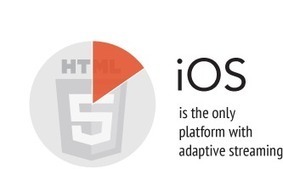
HTML5 has entered the online video market, which is both exciting and challenging for developers in the industry. With the HTML5 specification and the various browser implementations in constant flux, we at LongTail Video spend a signficant amount of time understanding the limitations of the technology and optimizing our own products for HTML5.
In developing the JW Player, we perform routine tests across the various browsers and devices to help determine the current state of online video. Our State of HTML5 Video Report is a compilation of our research and latest test results, focused on HTML5 Video playback. We are excited to share our findings with other developers/users in the industry as we explore just what HTML5 can and cannot support.
|
|
Scooped by
Nicolas Weil
January 21, 2012 4:46 AM
|
Building a browser-based turntable prototype using HTML, CSS, JavaScript and Flash: A bit of history, screenshots, explanation of the approach taken, limitations found and sample code. ...
|
|
Scooped by
Nicolas Weil
January 12, 2012 5:59 PM
|
Maybe it’s all the time I spend with startups, but while I strongly value Scrum’s ideas behind self-organizing teams & continual feedback – I can’t help but feel Kanban represents the next level of agility, giving us more flexibility and capitalizing on the lessons we’ve learned from Lean.
|
|
Scooped by
Nicolas Weil
January 3, 2012 3:24 PM
|
2011 has been a great year for JavaScript. Web browsers have given us great new tools to use and we have taken web applications to new heights, competing with native applications and bringing sexy back to the web with countless impressive demos. A week or so ago, we put out a survey to all of you asking what you thought the most badass JavaScript demo of 2011 was. Of course, this would be a boring post if we just said what the outcome was, so we’re going to list the top JavaScript accomplishments of 2011 here, from demos to libraries and applications themselves. And to all of you in the JS community, Happy New Year and keep up the good work in 2012!
|
|
Scooped by
Nicolas Weil
January 1, 2012 4:15 PM
|
The rise of cloud computing over the past few years has been incredible. Unfortunately, many still do not see the interest or do not comprehend its importance.
This is not a post about cloud computing and its benefits, but rather a refresher about understanding some basic rules of scalability and how to get started with building scalable apps while keeping in mind that most people and companies have limited budgets.
The concept of shared-nothing architectures is well known in the scalability community — if such a thing even exists — but it seems to be frequently forgotten when it comes to building web apps.
|
|
Scooped by
Nicolas Weil
January 1, 2012 1:27 PM
|
Jeremy Cole, a DBA Team Lead/Database Architect at Twitter, gave a really good talk at the O'Reilly MySQL conference: Big and Small Data at @Twitter, where the topic was thinking of Twitter from the data perspective.
One of the interesting stories he told was of the transition from Twitter's old way of storing tweets using temporal sharding, to a more distributed approach using a new tweet store called T-bird, which is built on top of Gizzard, which is built using MySQL.
|
|
Scooped by
Nicolas Weil
December 28, 2011 4:43 AM
|
Eric Bidelman, an engineer on Google's Chrome team, has released a JavaScript wrapper library for the HTML5 Filesystem API. Called filer.js, the library is available on GitHub under the Apache 2.0 License.
|
|
Scooped by
Nicolas Weil
December 11, 2011 12:32 PM
|
Emerging as popular standard to create Rich Internet Applications and competing with technology stacks like Adobe's Flex/Flash and Microsoft's Silverlight is HTML5. HTML5 brings several new features and functionalities that allow developers to create really attractive and robust applications. These applications can run on any browser and platform, although with some limitations. HTML5 applications are also supported by mobile devices. Hence, you can create your application once and run it on several devices and browsers. Each time, every new technology stack throws up new security challenges and vulnerabilities. HTML 5, though very promising, is no different. There are security concerns that need to be addressed when creating applications. Let us look at the top 10 possible attack vectors associated with HTML5 and modern browser architecture.
|
|
Scooped by
Nicolas Weil
December 11, 2011 6:45 AM
|
While browser-based operating systems haven't taken over the world, 2011 has been a pretty good year for Web developers. It's an exciting time to be working in Web development, and there's never been a better crop of tools to work with. Web standards are eclipsing proprietary toolkits, and the development community is creating its own set of open source tools to work with. Here's a look at some of the best we've seen in 2011.
|
|
Scooped by
Nicolas Weil
December 10, 2011 2:11 AM
|
Look what just came out, and well in time to beat the Christmas rush :) Yes, it's Silverlight 5. We had originally announced that Silverlight 5 would be out by the end of this year, and I'm glad to report that it has made it in in time to give everyone something interesting to play with over the holidays. My congratulations to the engineering, marketing, support, and documentation teams for pulling off yet another amazing release. // Some interesting features : - XNA 3D API - Hardware decoding of unprotected H.264 media - Videovariable Speed Playback and Trick-play (new since beta) - In-browser HTML for trusted in-browser applications - 64 bit browser support for Windows
|
|
Scooped by
Nicolas Weil
December 3, 2011 10:13 AM
|
One of the questions we always get asked at meet-ups and conversations with other engineers is, “what’s your stack?” We thought it would be fun to give a sense of all the systems that power Instagram, at a high-level; you can look forward to more in-depth descriptions of some of these systems in the future. This is how our system has evolved in the just-over-1-year that we’ve been live, and while there are parts we’re always re-working, this is a glimpse of how a startup with a small engineering team can scale to our 14 million+ users in a little over a year. Our core principles when choosing a system are: - Keep it very simple - Don’t re-invent the wheel - Go with proven and solid technologies when you can
|
|
Scooped by
Nicolas Weil
November 27, 2011 3:02 PM
|
CAAT is a multi-instance director-based scene-graph manager. It is able to render using Canvas, WebGL and CSS with the same code base. Features actors, containers, scene transitions, behaviors, interpolators, paths, custom affine transformation stack, timers, elements lifecycle, etc. Watch some demos here.
|
|
Scooped by
Nicolas Weil
November 27, 2011 2:12 PM
|
The idea of N-Screen (demo) is to have real-time small-group non-text communication – so for example, sharing a programme (or perhaps a specific point in a programme) with a person, with a TV, or with a group, using drag and drop. N-Screen related content screenshot We had a number of very specific requirements: - Real time communication - Different types of receivers (people, TV/video players, others) - Structured data transfer - Anonymous usage We also needed good, open tools and libraries available because of the limited amount of time we had to implement.
|
|
|
Scooped by
Nicolas Weil
January 28, 2012 4:52 AM
|
Seriously.js is a real-time, node-based video compositor for the web. Inspired by professional software such as After Effects and Nuke, Seriously.js renders high-quality video effects, but allows them to be dynamic and interactive.
|
|
Scooped by
Nicolas Weil
January 20, 2012 8:12 AM
|
Video.js, the open source HTML5 and Flash video player created by Steve Heffernan, cofounder of cloud-encoder Zencoder, has just been updated to version 3.0. The result promises to make life easier for developers by letting them write in HTML5, but get results in both HTML5 and Flash.
|
|
Scooped by
Nicolas Weil
January 3, 2012 4:32 PM
|
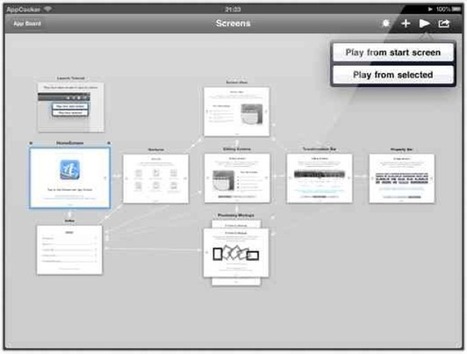
Competition in Apple’s App Store is so tough that even strong concepts must be planned to perfection before any development should start. So enter App Cooker: A hot new iPad app that makes sure other apps have the right ingredients in place before any development begins. App Cooker ($19.99) from Sophia-Antipolis, France-based Hot Apps Factoryhelps aspiring designers organize, plan and get app projects ready for production.
30-year-old Xavier Veyrat — the designer of App Cooker — spoke to Mashable about the development of the platform and the steps that go into creating a masterpiece app recipe.
|
|
Scooped by
Nicolas Weil
January 2, 2012 6:18 AM
|
jQuery-inlog allows you to easily debug your jQuery code. See exactly what you pass to functions, what they return and in which context (this-value) they were executed.
- No more alert($obj.length) to see if your selector worked. - No more pain when chaining many calls and figuring out which one fails
NEW: See nested or recursive calls in the right order. Wooot.
Without changing any of your code! I call it black-box magic. Or short: black magic. Or even shorter: js
|
|
Scooped by
Nicolas Weil
January 1, 2012 3:52 PM
|
Here’s another AIR native extension for iOS I’m currently working on – Apple Push Notification Service (APNs) support.
It’s almost complete – the most important things are there. You can register to APNs, get your device token and receive remote notification in ActionScript – everything that you need to build a great app.
|
|
Scooped by
Nicolas Weil
January 1, 2012 1:13 PM
|
Cube is an open-source system for visualizing time series data, built on MongoDB, Node and D3. If you send Cube timestamped events (with optional structured data), you can easily build realtime visualizations of aggregate metrics for internal dashboards.
Cube speaks WebSockets for low-latency, asynchronous input and output: new events are streamed in, and requested metrics are streamed out as they are computed. (You can also POST events to Cube, if that’s your thing, and collectd integration is included!) Metrics are cached in capped collections, and simple reductions such as sum and max use pyramidal aggregation to improve performance. Visualizations are generated client-side and assembled into dashboards with a few mouse clicks.
|
|
Scooped by
Nicolas Weil
December 18, 2011 4:56 PM
|
With all the recent Goruck-ness it’s time to throw out a tech post. I’ve been prepping for a NodeJS presentation recently and wanted a unique demo. I had also come across the experimental build of Opera which supports accessing the native webcam of a mobile device. So I threw these two technologies together and came up with a Javascript powered way to stream a video camera from a mobile device to a bunch of desktop (or mobile) clients.
|
|
Scooped by
Nicolas Weil
December 11, 2011 7:06 AM
|
I've been fooling around with PhoneGap Build, and I really love it. I love that I don't need to fire up Eclipse or XCode to start fooling around with an app. All I need is a text editor and a browser. What I especially love is the ability to integrate a github repository to the whole process. It makes following proper development practice, while living in the cloud, very easy. But I've been spoiled for the last year or so. Being able to immediately preview on a connected device has ruined me for the command line, multi-step, manual crap. So at least on Android I've fixed it for myself by building a nice shell script that takes advantage of PhoneGap Build's Web APIs to create a one-step build.
|
|
Scooped by
Nicolas Weil
December 11, 2011 6:41 AM
|
This project provides a set of Node.js packages that make it easy to access the Windows Azure storage and queue services. --Features-- -Tables : create and delete tablescreate, query, insert, update, merge, and delete entities - Blobs : create, list, and delete containers, work with container metadata and permissions, list blobs in containercreate block and page blobs (from a stream, a file, or a string), work with blob blocks and pages, delete blobswork with blob properties, metadata, leases, snapshot a blob - Queues : create, list, and delete queues, and work with queue metadatacreate, get, peek, update, delete messages
|
|
Scooped by
Nicolas Weil
December 5, 2011 6:08 PM
|
Arduino is an open-source electronics prototyping platform based on flexible, easy-to-use hardware and software. Due to it’s low price tag it has become extremely popular among artists, designers, hobbyists, and anyone interested in creating interactive objects or environments. Arduino hardware is programmed using a Wiring-based language (syntax and libraries), similar to C++ with some simplifications and modifications, and a processing-based integrated development environment. You can purchase you own board from Arduino homepage where the distributors are listed alphabetically by region for about from 40$ depending on model.
Below I have listed top 5 Arduino DIY projects that have impressed me.
|
|
Scooped by
Nicolas Weil
November 27, 2011 3:19 PM
|
The Stanford Javascript Crypto Library is a project by the Stanford Computer Security Lab to build a secure, powerful, fast, small, easy-to-use, cross-browser library for cryptography in Javascript. SJCL is secure. It uses the industry-standard AES algorithm at 128, 192 or 256 bits; the SHA256 hash function; the HMAC authentication code; the PBKDF2 password strengthener; and the CCM and OCB authenticated-encryption modes.
|
|
Scooped by
Nicolas Weil
November 27, 2011 2:57 PM
|
The goal of this talk is to explore the gain of functionality and productivity that can be achieved by introducing XQuery into PHP applications.
|