Your new post is loading...

|
Scooped by
Nicolas Weil
August 30, 2011 4:51 PM
|
One certain limitation in Web development is time and how long it takes to get things up and running. Thankfully, frameworks and libraries can help us focus on creating rather than figuring stuff out. Here, we’ve collected 10 frameworks and libraries that will help you save up your time and energy to create the actual website or application and make your web development more effective. Here is the guest-list: DHTMLX Touch, LimeJS, Mobl, 960 Grid on jQuery-Mobile, Zepto.js, Not Just A Grid, Wijmo, MooModel, Gury, SproutCore
|
|
Scooped by
Nicolas Weil
August 27, 2011 3:48 AM
|
Diffbot is a geeky and incredibly interesting technology that uses bots, algorithms, computer vision and artificial intelligence to process the content on the Web the way a human being can. “The entire Internet can be broken down into 30 different page types” explains Co-founder Mike Tung, also known as “Diffbot Mike,” and “Diffbot can identify them all.” Diffbot knows the difference between a social network profile, a blog post, a site’s front page, a product page, an event page and dozens more. Today, Diffbot is releasing its first set of APIs, now open to all developers for free. The launch has the potential to dramatically impact the types of applications developers can build, and for consumers, it means a whole host of intelligent applications are about to emerge.
|
|
Scooped by
Nicolas Weil
August 25, 2011 4:06 PM
|
The OAuth2 Framework allows you to protect your web resources using the next generation OAuth, (http://oauth.net/2/) as well as accessing OAuth2 protected resources, most notably the Facebook Graph API. The API consists of libraries for building your own OAuth2 server as well as client side access. The standard is still in draft mode so expect some level of changes. Currently version 10 of the OAuth 2 specification is the one being supported. API page here : https://labs.ericsson.com/apis/oauth2-framework/
|
|
Scooped by
Nicolas Weil
August 24, 2011 7:09 PM
|
Distributed Shared Memory enables a distributed in- memory database for JavaScript applications. It lets web developers focus on developing highly interactive and responsive web-based collaboration software without having to deal with complicated issues such as networking protocols, database management, concurrency control. This is good for implementing group-wares or collaborative web services supporting simultaneous real-time interactions.
|
|
Scooped by
Nicolas Weil
August 20, 2011 5:41 AM
|
Text-to-Speech (TTS) can make content more accessible, but there is so far no simple and universal way to do that on the web. One possible approach is shown in this demo, which is powered by speak.js, a new 100% pure JavaScript/HTML5 TTS implementation. speak.js is a port of eSpeak, an open source speech synthesizer, from C++ to JavaScript using Emscripten.
|
|
Scooped by
Nicolas Weil
August 20, 2011 5:16 AM
|
Unlike most MEAPs on the market today, Convertigo offers a core technology platform that can instantly extract and process data from any enterprise data source or application. This means we can offer the following unique capabilities: - No need to rewrite legacy and mainframe applications to fit your modern infrastructure – use them as is - Instant access to any resource --whether or not there is an API - You can combine any business logic for reuse across your enterprise Cross-platform Mobile Development Features : - Native support for all major mobile operating systems -- iOS, Android, BlackBerry - The ability to use and leverage industry standard development tools and open source mobile frameworks -- Sencha, jQuery Mobile, and PhoneGap - Support for SQL and web services including SOAP, REST and JSONPowerful server-based business logic assembly (and add yours as needed) - Convertigo does not hold any business logic in the mobile application, which ensures reuse for different applications
|
|
Scooped by
Nicolas Weil
August 17, 2011 6:15 AM
|
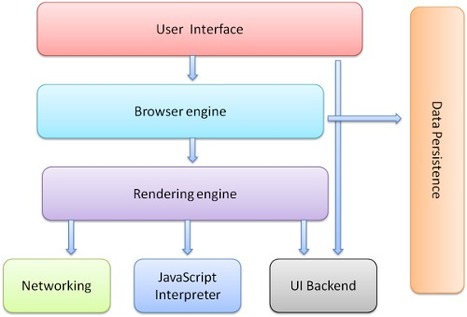
This comprehensive primer on the internal operations of WebKit and Gecko is the result of much research done by Israeli developer Tali Garsiel. Over a few years, she reviewed all the published data about browser internals (see Resources) and spent a lot of time reading web browser source code. As a web developer, learning the internals of browser operations helps you make better decisions and know the justifications behind development best practices. While this is a rather lengthy document, we recommend you spend some time digging in; we guarantee you'll be glad you did.
|
|
Scooped by
Nicolas Weil
August 17, 2011 1:08 AM
|
Developing software can be a complicated process because it combines multiple activities and modules at the same time. The waterfall model, which splits the process into tasks (much like the manufacturing method of assembling a unit) was the preferred software development for many years. That is, until the Agile methodology came along. Unlike the waterfall model, Agile is quick, dynamic, and iterative. It can also be chaotic.
This week, we will look at a solution that makes this process less chaotic and more structured. We will review Pivotal Tracker – a project management software for Agile development projects. We will look at its interface, functionality, and see how it can be of use to you.
|
|
Scooped by
Nicolas Weil
August 16, 2011 4:13 AM
|
The Real Time Component Framework (RTCF) is designed to provide a light-weight mechanism to help developers build modular Flash Media Server (FMS) applications. RTCF makes it easy for a client-side component to access a component on the server via a proxy object. The proxy represents a component on the server and provides access to the server-side component's remote methods, streams, and shared objects. RTMFP and Peer-to-Peer are supported (peer-to-peer communications requires the Enterprise edition of Flash Media Server or the use of a cloud service from companies like Influxis).
|
|
Scooped by
Nicolas Weil
August 11, 2011 8:19 AM
|
|
|
Scooped by
Nicolas Weil
August 8, 2011 10:25 AM
|
Couchbase, the NoSQL database company formed by the merger of Membase and CouchOne, has big plans to take NoSQL mainstream. It unveiled two of them today: Couchbase 2.0, which combines the Membase Server key-value store with the CouchDB document database in a single product, and UnQL (Unstructured Query Language), an open query language designed to bring uniformity to the diverse landscape of NoSQL products. The bigger news for the industry most likely is UnQL, which Couchbase Co-Founder and SVP of Products James Phillips hopes will become the equivalent of SQL for unstructured databases. A standard query language could be very beneficial to the NoSQL space, which is characterized by many different products with different functions and different syntaxes.
|
|
Scooped by
Nicolas Weil
July 28, 2011 5:51 AM
|
Tame (or "TameJs") is an extension to JavaScript, written in JavaScript, that makes event programming easier to write, read, and edit. Tame is very easy to use in Node and other V8 projects. And it can be dropped into projects where desired - no need to rewrite any existing code.
|
|
Scooped by
Nicolas Weil
July 28, 2011 5:44 AM
|
SocketStream is a new full stack web framework built around the Single-page Application paradigm. It embraces websockets, in-memory datastores (Redis), and client-side rendering to provide an ultra-responsive experience that will amaze your users.
Features (extract) :
- True bi-directional communication using websockets (or flashsockets)
- Works great on iPads and iPhones using Mobile Safari (iOS 4.2 and above), even over 3G
- In-built User model with modular authentication. Automatically keeps track of users online.
|
|
|
Scooped by
Nicolas Weil
August 27, 2011 3:50 AM
|
NodePing’s server monitoring service was built from the front-end webapp to the backend SMTP requests, in 100% Node.js. For those who may not be familiar with it, Node.js is server-side javascript using Google’s famed V8 engine. It’s that engine that makes your Chrome browser so fast at javascript processing and NodePing so efficient at service monitoring. Arguably, Node.js’ most interesting feature is the performance of its evented, asynchronous, non-blocking IO. In javascript fashion, the vast majority of IO functions use callbacks to handle the ‘results’. This allows the logic of NodePing to branch out in several directions without IO processes blocking others. This handling works when talking to databases, reading and writing files, and talking to other machines via network protocols.
|
|
Scooped by
Nicolas Weil
August 24, 2011 6:48 PM
|
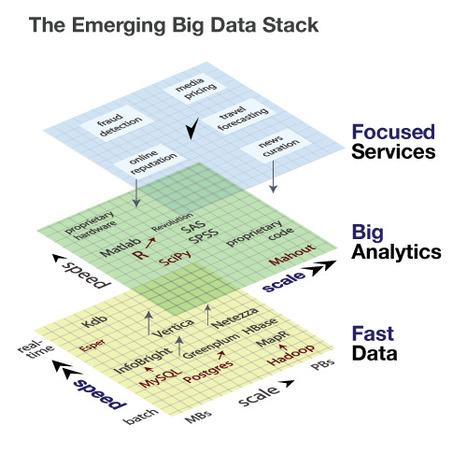
A new breed of startup is emerging, built to take advantage of the rising tides of data across a variety of verticals and the maturing ecosystem of tools for its large-scale analysis. These are data startups, and they are the sumo wrestlers on the startup stage. The weight of data is a source of their competitive advantage. But like their sumo mentors, size alone is not enough. The most successful of data startups must be fast (with data), big (with analytics), and focused (with services).
|
|
Scooped by
Nicolas Weil
August 24, 2011 8:04 PM
|
One of the more common questions I see on forums and get from colleagues is how to debug Error 1009, also known as the “Null Object Reference Error.” Or, as I call it, the “Annoying Mosquito Error From Hell.” It crops up a lot, and unfortunately the error itself does not contain much information about the source of the error. In this quick tip, we’ll take a look at some steps you can take to track down this mosquito and squash it good.
|
|
Scooped by
Nicolas Weil
August 24, 2011 6:59 PM
|
Mozilla has an idea how it can bridge the gap between native apps and web applications: WebAPI will be developed as a set of HTML5 APIs and deliver consistent, web-based application interfaces that can be accessed by any HTML5-capable device, specifically smartphones. For Mozilla, WebAPI will be a critical component of its battle against closed OS environments such as iOS, Windows and Android, and enables developers to write one application and run it anywhere. It is unclear how its rivals will react to this proposal, which is quite apparently a building block of Boot-to-Gecko, and whether they will support WebAPI.
|
|
Scooped by
Nicolas Weil
August 20, 2011 5:19 AM
|
Phono Mobile is an extension that lets you run your existing PhonoSDK applications on iOS and Android devices using the PhoneGap mobile platform. With Phono Mobile, you can now add voice, IM, and real-time messaging to your mobile applications with just a few lines of code! Uses cases : - Games - Social Apps - Collaboration - Click-to-Call - Customer service How-to video : http://www.youtube.com/watch?v=6l_MEVKNnD0&width=640&height=390
|
|
Scooped by
Nicolas Weil
August 17, 2011 6:24 AM
|
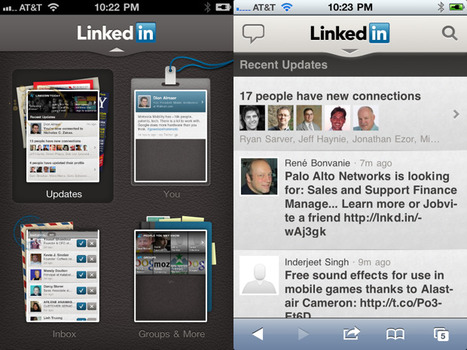
Kiran Prasad (running mobile development at LinkedIn), talks about their approach to building hybrid applications: - Reuse of HTML5 code across all three applications (mobile web, iOS and Android) - Client framework : Backbone + Zepto + Underscore + Handlebars + Stylus - Server-side : node + socket.io (WebSockets) + redis + mongo On the specific node.js topic, see : http://venturebeat.com/2011/08/16/linkedin-node/
|
|
Scooped by
Nicolas Weil
August 17, 2011 4:21 AM
|
The latest Firefox release includes a new tool for web developers: Scratchpad. The idea behind Scratchpad is simple: the browser is a fantastic place to experiment with JavaScript. Most JavaScript developers already know this and they use tools like the Web Console or Firebug’s command line to take advantage of the one environment that knows everything about their web page. Tools like the Web Console are optimized for entering a single line of code. (ProTip: you can use shift-enter to put multiple lines of code into the Web Console.) Firebug has a button you can click to get into a multi-line input mode. Even with that multi-line input, the workflow is still centered around performing operations step-by-step and linearly. Interaction with Scratchpad is quite different. It throws away the “one line of input gives you a line of output” interaction in favor of a text editor that knows how to run JavaScript. Interesting historical aside: Scratchpad was heavily inspired by the Workspaces feature of Smalltalk environments. Thirty years in, we’re still reinventing Smalltalk ;-)
|
|
Scooped by
Nicolas Weil
August 16, 2011 4:24 AM
|
When writing jQuery plugins some recurring steps need to be taken to fullfill the best practices for jQuery plugins. ModPlug aims to encapsulate those steps so you can focus on the real logic of your plugin. It also provides the possiblity to make your plugin modular.
|
|
Scooped by
Nicolas Weil
August 13, 2011 3:05 AM
|
Ready to kick your Javascript Unit Testing up to the next level? Or even to the very first level? Javascript Unit Testing suffers from lack of standardization. There is no universal 'JUnit' or 'PHPUnit' to 'rule them all'. There are lots of very good Javascript testing frameworks available, especially YUI3's test framework. But there's not a lot beyond that, so now JUTE is throwing its hat into the Javascript 'do-it-all' testing environments showcase showdown! YUI3's framework provides the foundation for writing unit tests, collecting them into test cases and suites, and even mocking objects. And that's great. But we can do more, and do it easier! The Javascript Unit Test Environment (JUTE) combines the YUI3 testing framework, automatic dynamic code coverage, a web UI, a command line interface, seamless client- and server-side Javascript testing and 3 testing back ends (Capture, Selenium, and V8) in one easy to setup and use package. This is all provided with very little setup by you - just like we all like it! Since JUTE can be fully controlled from the command line it plays very nicely within your build environment - gmake, ant, hudson, whatever! JUTE is a recently open-sourced internal project. JUTE is used extensively by Yahoo! Mail and other properties within Yahoo!. Yahoo! Mail has thousands of individual unit tests all running through JUTE as part of Mail's build process.
|
|
Scooped by
Nicolas Weil
August 10, 2011 11:55 AM
|
|
|
Scooped by
Nicolas Weil
August 8, 2011 11:13 AM
|
1.0 release puts the focus on accessing native device APIs, which is new ground for the web. Other improvements include: * Overall API stability and “pluggable” architecture
* W3C DAP API compatibility
* Contacts API
* Remove debugging tools The release also includes a new unifying bridge interface that makes adding platforms and platform extensions easy. Plus, developers will be pleased to see that the plugin development process has been simplified.
|
|
Scooped by
Nicolas Weil
July 28, 2011 5:49 AM
|
First implementation in Sublime Video Player, working on Safari 5.1.
The WebKit/Safari fullscreen implementation is actually based on Mozilla’s Fullscreen API Proposal, so hopefully this will soon be added to Firefox.
|