Your new post is loading...

|
Scooped by
Romain
April 24, 2013 2:24 PM
|
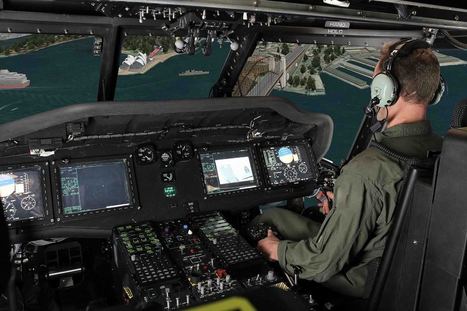
CAE USA today announced that the United States Navy has declared an updated MH-60S “Sierra” operational flight trainer (OFT) as ready-for-training at Naval Air Station (NAS) North Island near San Diego, California. This MH-60S OFT, originally manufactured by Lockheed Martin, was completely upgraded by CAE to add new technologies and ensure concurrency with other MH-60S training devices as well as the operational MH-60S helicopters. “We were able to complete this major technology refresh on the original MH-60S operational flight trainer on-schedule while working closely with the Navy to ensure minimal training downtime,” said John Lenyo, President and General Manager, CAE USA. “CAE is very proud of the partnership we have established with the Navy on both the MH-60S and MH-60R training programs, and will continue to leverage our experience and world-class simulation technologies to help the Navy lower risk, reduce costs and most importantly, prepare helicopter aircrews for mission success.” The technology refresh and updates to the fixed-based MH-60S OFT included the addition of motion seats, upgraded image generator visual system, and a new Barco CD2260 visual display system. CAE also performed significant engineering updates to re-architect the hardware and software computing designs to bring this MH-60S OFT to a common architecture with the Navy’s suite of CAE-built MH-60S training devices. CAE is currently the prime contractor responsible for the design and manufacture of MH-60S OFTs and weapons tactics trainers (WTTs), as well as MH-60R tactical operational flight trainers (TOFTs), for the U.S. Navy. CAE began work on the MH-60S training program in June 2004. At that time, CAE won a competitive procurement to design and manufacture MH-60S OFTs and WTTs. Prior to CAE’s involvement on the MH-60S training program, the Navy had already procured two MH-60S OFTs, including the first MH-60S OFT that CAE has now updated. Since June 2004, CAE has designed and manufactured seven additional MH-60S OFTs as well as five MH-60S WTTs for the U.S. Navy. CAE is a global leader in modelling, simulation and training for civil aviation and defence. The company employs approximately 8,000 people at more than 100 sites and training locations in approximately 30 countries. CAE offers civil aviation, military and helicopter training services in more than 45 locations worldwide and trains approximately 100,000 crew members yearly. In addition, the CAE Oxford Aviation Academy offers training to aspiring pilot cadets in 11 CAE-operated flight schools. CAE’s business is diversified, ranging from the sale of simulation products to providing comprehensive services such as training and aviation services, integrated enterprise solutions, in-service support and crew sourcing. The company applies simulation expertise and operational experience to help customers enhance safety, improve efficiency, maintain readiness and solve challenging problems. CAE is now leveraging its simulation capabilities in new markets such as healthcare and mining.
|
|
Scooped by
Romain
April 24, 2013 2:16 PM
|
The US has confirmed its intention to sell the V-22 Osprey tiltrotor to Israel as part of a comprehensive defence package, in what will be the first international export of the aircraft, it has been confirmed. Speaking at a press conference in Tel Aviv on 22 April, US defence secretary Chuck Hagel revealed that the new defence package for Israel includes an unconfirmed number of V-22 Ospreys as well as KC-135 refuelling aircraft and new anti-radiation missiles and radars. ‘The new radar and anti-radiation missiles, along with Israel's participation in the Joint Strike Fighter programme, ensures that Israel will maintain air superiority for the next generation. The introduction of the V-22 into the Israeli Air Force will give the Israeli Air Force long-range, high-speed, maritime search-and-rescue capabilities to deal with a number of threats and contingencies,’ Hagel stated. He noted that despite the current financial constraints, the US administration had ensured that Israel will receive a record $3.1 billion in foreign military financing this year and was working on a new multi-year memorandum of understanding to extend funding beyond 2017. Hagel also stated that the Department of Defense had requested another $220 million in the fiscal year 2014 defence budget request for Israel to acquire additional Iron Dome batteries. Confirmation of Israel’s potential purchase of the V-22 is a significant boost to the Bell-Boeing team behind the development of the tiltrotor, which has until now only been able to highlight several government-to-government exchanges about the capabilities of the Osprey without any FMS materialising. Bell-Boeing is also currently trying to convince the US Navy that the Osprey would be a suitable replacement for the current C-2 cargo transport aircraft for the carrier onboard delivery role. In December 2011, the impressions of two Israeli Air Force (IAF) helicopter pilots who test flew the V-22 Osprey at MCAS New River, North Carolina earlier that year were revealed. The pilots were quoted on the IAF’s website as saying that the V-22 would need to find a new role within the air arm rather than replace another aircraft. 'We realised that the plane will absolutely change the name of the game. It will be able to carry out operations that we never imagined that one of our planes could execute. If we purchase the plane, our ranges of activity will dramatically change and we'll be able to reach points we've never even dreamed of,' one pilot was quoted as saying. While the evaluation team recognised the V-22’s long-range capabilities, they also felt that the aircraft offered only a few advantages over traditional helicopters. 'While some of the operations would have changed completely with its help, there are some that would not have been altered at all. For example, in the situation in which we needed to bring back forces from Lebanon, I suspect that the [V-22] had no real advantages. It's safe to assume that when evacuating injured people inside Israel, the plane would be a less efficient choice, but when rescuing from far away land, using the plane would make a significant difference.'
|
|
Rescooped by
Romain
from Newsletter navale
April 24, 2013 2:00 PM
|
BEIJING, April 23 (Xinhua) -- A senior officer with the People's Liberation Army (PLA) Navy said on Tuesday that "China will have more than one aircraft carrier."
Song Xue, deputy chief of staff of the PLA Navy, told foreign military attaches at a ceremony to celebrate the Navy's 64th founding anniversary in Beijing, "The next aircraft carrier we need will be larger and carry more fighters."
However, Song said some foreign media reports on China's building new aircraft carriers in Shanghai were not accurate.
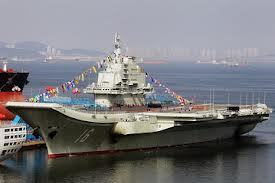
Currently, China operates one aircraft carrier, the Liaoning, which was refitted based on a Russian-made unfinished carrier and delivered to the Navy on Sept. 25, 2012. The PLA Navy was founded on April 23, 1949.
Song, a Real Admiral of the Navy, said the Liaoning does not belong to any of the Navy's three fleets, but under direct command and management of the Navy's headquarters.
Zhang Zheng, the Liaoning's Captain, told foreign military attaches that his crew members have mastered independently operations of all the weapon systems on the carrier.
The Liaoning has a full displacement of more than 50,000 tonnes. The carrier's original design allows it to carry about 30 fixed-wing aircraft.Song Xue said the Navy hoped that the next carrier could be larger to load more aircraft.
He also revealed that the Navy is building naval aviation force for the Liaoning, and there will be at least two aviation regiments on one carrier, including fighters, reconnaissance aircraft, anti-submarine aircraft, electronic countermeasure (ECM) planes and rotary-wing aircraft.
The Liaoning has conducted successful take-off and landing tests of its carrier-borne J-15 fighters, the main striking force of China's carrier group.
Song said the J-15 still needs a lot more trial tests before being operational on the carrier, and there will be more J-15 fighters as the Navy conducts more test flights.
The officer said China's future carrier group will be composed of carrier, destroyers, frigates, submarines and supply ship.
According to Song, more than one thousand Chinese enterprises have participated in the construction and refitting work of the Liaoning.
The officer also promised that the Navy will invite foreign military attaches to visit the Liaoning.
Via Patrick H.
|
|
Rescooped by
Romain
from Newsletter navale
April 24, 2013 2:00 PM
|
Iran started equipping its Air Force fighter jets with air-to-surface Nour cruise missiles in a project dubbed as Qaem. Nour has a range of 120 kilometers.
Nour is a well-known cruise missile used by the Iranian army and the Islamic Revolution Guards Corps (IRGC) in different wargames and can be launched from coast, vessels and aircraft against enemy vessels, oil facilities and naval positions.
In September 2011, Iran unveiled its 200-km range Qader anti-ship cruise missile with a high-precision striking capability and the Iranian defense industries have mass-produced the powerful missile.
The missile enjoys automatic digital pilot system, high-precision navigation systems, high-precision striking capability, anti-jamming radar systems and a rapid deployment capability.
Its coast-to-sea and surface-to-surface versions have previously been tested by Iranian armed forces and now the air-launched version of the Qader missile was unveiled by the Iranian Army during the military parades held in Tehran on Thursday on the occasion of the National Army Day.
Arming Iranian aircraft and choppers with 200-km range Qader cruise missile will boost the Iranian Armed Forces' power for combating and repelling naval threats.
Via Patrick H.
|
|
Scooped by
Romain
April 23, 2013 6:53 PM
|
La Russie pourrait dans les plus brefs délais relancer la production de chasseurs de type MiG-31, appareils susceptibles d’améliorer significativement la capacité défensive du pays, estime Vladimir Kamoïedov, président du comité parlementaire chargé de la sécurité et de la défense. « Cet avion est sans égal. Il ne fera pas d’ombre au Su, mais le complètera », a déclaré le responsable lors des discussions parlementaires sur la possibilité de relancer la production de cet appareil, arrêtée dans les 1990. Conjointement avec les systèmes de défense antiaérienne, l’aviation russe est capable de détruire jusqu’à 65% des avions de tous types ayant violé l’espace aérien du pays, a poursuivi l’expert. Et de rappeler que l’Union soviétique avait construit près de 500 MiG-31 et leurs versions, seuls 120 appareils de ce type équipant à l’heure actuelle les forces armées russes. M.Kamoïedov a par ailleurs ajouté que modernisé, ce chasseur n’aurait pas d’égal dans le monde d’ici 10 ou 15 ans, ses capacités d’interception et de destruction des vecteurs aériens, maritimes et terrestres de missiles de croisière étant uniques. Pour conclure, le parlementaire russe a expliqué que le chasseur MiG-31 était le seul avion de combat capable d’assurer une couverture efficace de l’espace aérien russe dans l’Arctique, et notamment de garantir la sécurité des sites du secteur pétro-gazier y installés.
|
|
Rescooped by
Romain
from Newsletter navale
April 23, 2013 3:16 PM
|
New Zealand will acquire eight Kaman SH-2G (I) Super Seasprite naval helicopters, with two additional airframes to be purchased as spares. The total package is worth NZ$242 million ($204 million) and includes a full motion simulator, Penguin anti-ship missiles and additional components, the New Zealand government said in a statement. "This package from Kaman Aerospace will provide the Navy with an upgraded variant, the Seasprite SH-2G (I), and increase the fleet from five to eight helicopters," says defence minister Jonathan Coleman. "It will allow helicopters to be embarked on the two ANZAC-class frigates [Te Mana and Te Kaha] as well as the offshore patrol vessels and the multi-role ship HMNZS Canterbury." Wellington's current fleet of five SH-2Gs have been in service since the late 1990s and will be retired. The airframes were originally built for Australia, but in 2009, Canberra cancelled the contract after cost overruns and persistent technical issues. "The New Zealand Defence Force and Ministry of Defence officials are acutely aware that the Australian government decided not to fully introduce these aircraft into service after concerns about a range of technical issues," says Coleman. "As a consequence the New Zealand Ministry of Defence has invested considerable resources into examining all aspects of this project over the last two years. This included commissioning an independent study by Marinvent Corporation of Canada." The airframes are in storage in Connecticut, and Wellington will receive the entire complement of aircraft between 2014-2016. New Zealand's defence ministry says they will have a service life "out to 2030". Coleman says the navy requires a larger fleet of Seasprites, given that five New Zealand navy ships can operate a helicopter. The present fleet of five SH-2Gs means only two helicopters can be deployed simultaneously. Having more aircraft available will allow Wellington to get "full value" from its ship investments. Aside from new communications equipment and sensors, the SH-2G (I) helicopters will be armed with the Kongsberg Penguin anti-ship missile. The ministry says this weapon is superior in the anti-shipping role to the Raytheon AGM-65 Maverick used by New Zealand's SH-2Gs. Canberra scrapped its Seasprite acquisition in March 2008 with the project seven years late and 47% over budget. It ordered 11 upgraded former US Navy SH-2Fs in 1997 under a A$746 million deal with Kaman, and had expected deliveries from 2001. But problems, primarily with the aircraft's integrated tactical avionics system (ITAS), forced it to provisionally accept nine aircraft from 2003 in an interim configuration. These were grounded by March 2006 due to automatic flight control system problems. "A key issue was the Australian Defence Force specified an aircraft that could be flown by a two-person crew and have a computer flight system that could operate the aircraft with 'no hands' on the controls," says New Zealand's defence ministry. "[New Zealand] has a different requirement. It will operate the aircraft with a three-person crew, as is current practice with its standard operating procedure for pilots to retain a hold on the controls at all times. The 'no-hands' requirement is not being adopted." Of the acquisition's total cost of NZ$242 million, NZ$147 million covers the eight operational aircraft, with the balance covering the remainder of the package.
Via Patrick H.
|
|
Rescooped by
Romain
from Newsletter navale
April 23, 2013 3:15 PM
|
The Royal Thai Navy has chosen a South Korean naval ship manufacturer to build a new frigate that will cost about 13 billion baht. An RTN selection committee announced on Friday it had chosen Daewoo Shipbuilding and Marine Engineering to manufacture the frigate, a navy source said. The company was one of the last two South Korean firms to enter the final round of the bid organised by the RTN panel. The other three foreign firms ousted from the previous rounds were from Spain, Italy and China. RTN chief of staff Chakchai Phucharoenyot, who chaired the panel, said Daewoo Shipbuilding and Marine Engineering was selected because it had proposed specifications for the frigate that were in line with the navy's demands. The navy also asked the company to manufacture a Combat Management System (CMS) which can be allied to the systems installed in the frigates HTMS Naresuan and HTMS Taksin, he said. The frigate, which will be the first South Korean-manufactured navy ship in Thailand, is expected to be commissioned in two years' time, Adm Chakchai said. The new frigate will have a displacement of between 3,000 and 4,000 tonnes. The cabinet earlier approved the RTN's procurement of two frigates with a budget of 30 billion baht. The frigates will be considered for manufacturing one by one. According to the navy source, the RTN preferred European frigates but they were too expensive. Meanwhile, a Defence Ministry source revealed that Defence Minister Sukumpol Suwanatat will lead military top brass on a visit to Russia between Tuesday and next Monday to bolster military ties. Thai delegates will inspect the armaments industry in Russia, the source said.
Via Patrick H.
|
|
Rescooped by
Romain
from Newsletter navale
April 23, 2013 3:14 PM
|
The Indonesian Ministry of Defence (MoD) has awarded a contract to VSTEP to deliver its Class-A NAUTIS full mission bridge (FMB) simulators to train the Indonesian Navy's Sigma-classcorvette bridge personnel. Under the contract, the navy's Kobangdikal marine training facility in Surabaya, Indonesia, will receive two NAUTIS FMB simulators, which are designed with a 270° field of view projected on a cylindrical screen to enable realistic training. The company will also supply five custom-built ports and navigation screens for the Indonesian navy as part of its modernising programme to more effectively combat maritime crime and piracy. VSTEP director Cristijn Sarvaas said the company would support the delivery and commissioning of the simulators, as well as training of local instructors. In order to enhance the local content, VSTEP has partnered with Terravision to install two of bothNAUTIS instructor stations and desktop training simulators at the facility. Delivering an affordable alternative for training maritime officers and crews, the maritime training simulator is a new generation of advanced Det Norske Veritas (DNV) certified maritime training solution for the military and civilian maritime industry. quipped with a suite of flexible editor tools, NAUTIS simulators enable instructors to quickly and easily prepare training scenarios and manage exercises in real-time. Easily adaptable to specific training needs, the simulators can train large numbers of trainees simultaneously and provides highest level of graphical detail and realism, user-friendly set of instructor tools and standard interface to connect to external equipment. Damen Schelde Naval Shipbuilding (DSNS) built SIGMA-class frigates have been designed to support missions, including maritime search-and-rescue, fishery and natural resources protection and law enforcement duties.
Via Patrick H.
|
|
Scooped by
Romain
April 23, 2013 3:08 PM
|
Les tests d'Etat du chasseur russe de cinquième génération T-50 (PAK FA) débuteront en 2014, a déclaré mardi aux journalistes le président du Consortium aéronautique unifié (OAK) Mikhaïl Pogossian. "En 2013, nous devons achever les essais provisoires de cet appareil et entamer son exploitation de test. En 2014, nous procéderons aux tests d'Etat, dont la première étape devrait être achevée en 2015", a indiqué M.Pogossian. Le T-50 est un chasseur de cinquième génération doté d'un radar unique à balayage électronique actif. L'appareil possède une faible signature radar et thermique, une vitesse de croisière supersonique et un niveau élevé d'intégration des systèmes de commande. Conçu pour remplacer les MIG-29 et les Su-27 en service dans l'armée russe, le T-50 conjugue les caractéristiques d'un avion de frappe et d'un chasseur classique. Il est développé en Russie depuis les années 1990. Le premier décollage du chasseur T-50 remonte au 29 janvier 2010. L'avion a été présenté pour la première fois au public le 17 août 2011, lors du Salon aérospatial MAKS-2011 à Joukovski, dans la région de Moscou.
|
|
Scooped by
Romain
April 23, 2013 3:02 PM
|
L'industrie de défense livrera en 2013, à l'Armée de l'air russe près de 100 nouveaux avions de combat, a déclaré mardi à Moscou le président de la Compagnie aéronautique unifiée (OAK), Mikhaïl Pogossian.
"Dans le cadre du programme d'Etat d'armement, nous devons, d'ici quelques années, doubler le nombre d'avions livrés au ministère de la Défense. En 2012, nous avons livré 35 avions, cette année leur nombre a été porté à 60 et en 2014 nous devrons fournir près de 100 appareils", a indiqué le responsable devant les journalistes.
Selon lui, ceci ne sera possible que grâce à une coopération étroite entre le ministère de la Défense et l'industrie aéronautique.
"Pour 2013, en ce qui concerne les livraisons de matériel, pratiquement tous les contrats ont été signés (avec le ministère de la Défense). C'est important pour la réalisation de nos projets", a souligné le président de l'OAK.
|
|
Scooped by
Romain
April 23, 2013 3:01 PM
|
La Russie compte déployer une base aérienne en Biélorussie, le premier groupe de chasseurs y sera livré dès 2013, a annoncé mardi le ministre russe de la Défense Sergueï Choïgou.
"Nous espérons qu'en 2015, un régiment d'aviation y apparaîtra pour surveiller nos frontières. Nous étudions le projet de déploiement en Biélorussie d'une base aérienne russe dotée de chasseurs. En 2013, nous allons créer un commandement d'aviation et fournirons le premier groupe de chasseurs", a déclaré le ministre lors d'une rencontre avec le président biélorusse Alexandre Loukachenko.
|
|
Scooped by
Romain
April 23, 2013 2:54 PM
|
Un programme de conception d'une arme hypersonique sera mis au point d'ici l'été prochain, a annoncé mardi aux journalistes le PDG du consortium russe "Missiles tactiques" Boris Obnossov. "Sur la base du consortium, un groupe de travail réunissant dix subdivisions chargées des divers aspects a été créé. Nous avons pour objectif d'élaborer un programme complexe d'ici l'été. Il s'agit d'une tâche très ambitieuse et très difficile", a déclaré M.Obnossov. Selon lui, plus de 60 entreprises sont impliquées dans le développement du programme. M.Obnossov a également rappelé que des projets de missiles hypersoniques avaient été développés en Russie à l'époque soviétique, et espéré que les travaux actuels se solderaient par un succès.
|
|
Scooped by
Romain
April 23, 2013 2:51 PM
|
C’est un signe fort peu encouragent pour l’avenir du Rafale aux Emirats arabes unis, pays qui envisage d’en acquérir 60 exemplaires depuis 2008. Ce marché, visé également par le consortium Eurofighter, a jusqu’à présent fait l’objet de négociations aux multiples rebondissements. Récemment, à l’occasion du salon de défense IDEX, à organisé en février à Abou Dhabi, l’optimisme était dans le camp français. “Nous sommes confiants qu’on finira par réussir à le vendre”, confiait même Christian Mons, le président du Conseil des industries de défense françaises (CIDEF), au sujet du Rafale. “Il y a une grande chance que le client (émirati) souhaite acheter en 2015/2016 et que nous commencions les livraisons en 2017/2018″, avait-il ajouté. Seulement, dans la rivalité entre Dassault Aviation et Eurofighter, laquelle avait pris corps en novembre 2011, époque à laquelle les Emirats avaient anoncé s’intéresser de près au Typhoon en faisant savoir que l’offre du constructeur français n’était pas assez “compétitive”, un troisième acteur a semble-t-il poussé ses pions. Au printemps 2012, il était alors dit que la vente du Rafale aux Emirats allait aboutir quelques semaines avant l’élection présidentielle française. Seulement, avec l’alternance politique à Paris, il y eut un nouveau refroidissement. Le président sortant, Nicolas Sarkozy ayant été battu, il n’était “plus là pour mettre une pression énorme sur les Emiratis ainsi que sur son entourage pour finaliser coûte que coûte le contrat”, écrivait La Tribune. De son côté, Abu Dhabi attendait un signe du nouveau locataire de l’Elysée. Ce fut donc à cette époque, d’après certains médias spécialisés d’outre-Atlantique, que le constructeur américain Lockheed-Martin joua sa carte, en proposant aux Emirats de compléter leur flotte d’avions F-16 E/F Desert Falcon avec des exemplaires supplémentaires de dernière génération, l’idée étant de se placer pour soumettre, le cas échéant, des F-35. Et visiblement, cette option a dû séduire les Emirats arabes unis car, d’après des responsables du Pentagone, il est question de leur vendre 26 F-16E/F Block 60 pour “un peu moins de 5 milliards de dollars.” Le dossier devrait être évoqué lors de la tournée au Moyen Orient de Chuck Hagel, le secrétaire américain à la Défense. Jusqu’à présent, les forces aériennes émiraties mettent en oeuvre 79 F-16 (l’un d’entre eux ayant été perdu en 2006) ainsi que 68 Mirage 2000-9, lesquels doivent être théoriquement remplacés par un nouvel appareil. Dans les négociations portant sur un éventuel achat du Rafale, il est d’ailleurs question que la France les reprenne. Mais l’achat de 26 F-16 supplémentaires risque fort de modifier la donne étant donné qu’il va rendre moins urgent le remplacement des Mirage 2000-9 émiratis, lesquels ont d’ailleurs encore du potentiel.
|
|
|
Scooped by
Romain
April 24, 2013 2:17 PM
|
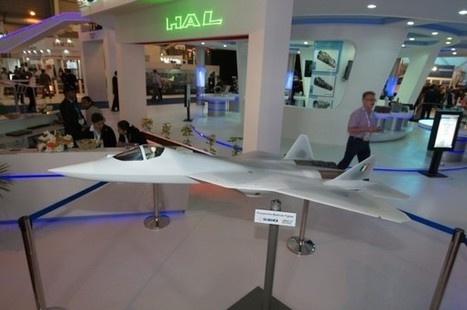
The contract to develop a sketch and technical project of the Russian-Indian perspective multi-functional 5th-generation fighter (PMI/FGFA) was completed. The fighter design was fully developed.
Both parties have agreed upon on the amount and division of work during the research and development (R&D) stage. A contract for the R&D is being prepared. It is to be signed this year.
The agreement on the joint development and production of the 5th-generation fighter aircraft was signed on October 18, 2007 in Moscow at the 7th Session of the joint Russian-Indian Intergovernmental Commission on Military and Technical Cooperation. It is the largest joint project of the Russian-Indian military and technical cooperation.
In December 2010, Rosoboronexport, Sukhoi Company and the Hindustan Aeronautics Limited signed a contract to develop a sketch and technical project of the fighter. In the course of the first stage of the project the Russian side has trained Indian professionals, provided them with the original data and the software to create a single working environment.
The Indian working group of experts has been working in Russia since January 2012 and a group of Russian specialists in India. Both parties exchange the necessary information.
The PMI/FGFA fighter developed by the parties will have some differences from the Russian prototype due to specific requirements of the Indian Air Force.
|
|
Scooped by
Romain
April 24, 2013 2:15 PM
|
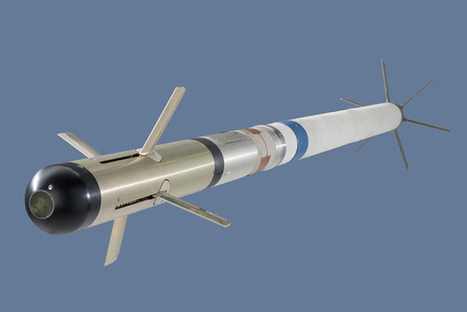
ATK has announced a $3.2 million contract to provide a precision guided rocket for evaluation by US Special Operation Command (USSOCOM). Awarded through the Defence Acquisition Challenge (DAC) programme, the new project supports a USSOCOM requirement ATK aims to fulfil with its Guided Advanced Tactical Rocket (GATR) and Precision Guided Rocket Launcher (PGRL), the company said in a statement. ‘Our on-going investment and expertise in precision strike weapons, including the GATR system, provide a mature capability that fulfils the requirements of our military customers,’ said Dan Olson, General Manager for ATK Armament Systems. The DAC project calls for validation of desired operational and ballistic performance of ATK’s GATR and PGRL digital smart launcher while deployed from USSOCOM airborne platforms. Operational evaluation and environment testing will be carried out on the weapon systems on MH-60L/M helicopters. The GATR rocket incorporates the same semi-active laser seeker used in the Joint Direct Attack Munition (JDAM) weapon, providing a robust seeker field of view. In addition, the guided rocket employs a digitally-fuzed M282 multi-purpose penetrating warhead that is programmed from the cockpit to provide point detonating fuzing to defeat soft targets, or delayed fuzing to penetrate hardened targets. Providing a tactical employment envelope up to 50% greater than currently fielded laser-guided rockets, according to ATK, GATR also features optimized terminal performance against hardened stationary and moving targets. Fired from ATK’s PGRL digital launcher, the GATR is available in three, seven and 19 tube variants, and is compatible with legacy unguided Hydra rockets. The PGRL can be integrated into air platforms using existing digital and analogue fire control systems, and can provide digital stores management for all loaded weapons.
|
|
Rescooped by
Romain
from Newsletter navale
April 24, 2013 2:00 PM
|
The Asia-Pacific will comprise 26 percent — nearly $200 billion — of global naval and maritime security builds in the next 20 years as complex relationships and rivalries drive procurements designed for particular regional challenges. New builds in Asia and Australia include six aircraft carriers, 128 amphibious and 21 auxiliary ships, 12 corvettes, two cruisers, 42 destroyers, 235 fast attack craft, 115 frigates, 34 mine countermeasures, 82 offshore patrol vessels (OPVs), 255 patrol craft and 116 submarines, said Bob Nugent, vice president of advisory services at AMI International, a naval analysis firm based in Bremerton, Wash. This list includes China with 172 hulls, South Korea at 145 and Japan at 74, he said. The OPV market in particular is maturing, with a total regional market forecast for 2013-2030 of $4.6 billion.
Via Patrick H.
|
|
Rescooped by
Romain
from Newsletter navale
April 24, 2013 1:59 PM
|
24.04.2013 Diesel-electric submarine (SSK) of a series of 677 "Lada" "Saint Petersburg" is now preparing to move to the Northern Fleet, where he will test the boat. This was at a conference on "Russia's shipbuilding industry: the rise or decline of the industry?" Held on April 24 in St. Petersburg, the first deputy general director of OAO "CKB" Rubin "Valentin Alexandrovich Frolov.
The crew of the Northern Fleet has already made diesel-electric submarine "Saint Petersburg", replacing the sailors of the Baltic Fleet.
According to Valentin Frolov, the date of transfer of the boat to the Northern Fleet Command depends on the decision of the Navy Rosii, as is currently considering a proposal to participate in the boat 6th International Maritime Defense Show (IMDS 2013). In addition, the diesel-electric submarine "Saint Petersburg" to take part in providing test export submarines for the Vietnamese Navy and built by Severnaya Verf ships.
Recall the construction of two submarines "Sevastopol" and "Kronstadt" Project 677 "Lada" to "Admiralty Shipyards" was frozen previous commander in chief of the Russian Navy Admiral Vladimir Vysotsky, because the lead ship of a series of "St. Petersburg" has not shown stated in the project characteristics.
Boats are designed to destroy submarines, surface ships and enemy ships, protection of naval bases, sea, and the sea lines of communication, reconnaissance. The ship's tonnage of 1,765 tons, a maximum depth - 350 m, speed - 21 knots, the crew - 36 people, autonomy - 45 days, armed with torpedoes and rocket-torpedoes, air defense systems "Igla-1M".
Via Patrick H.
|
|
Scooped by
Romain
April 23, 2013 6:52 PM
|
Le Guatemala a signé un contrat pour l’acquisition d’un réseau complet de surveillance avec Embraer, comprenant 6 avions EMB-314 / A-29 Super Tucano armés et un ensemble de 3 radars 3D (source : Embraer). L’EMB-314/A-29 Super Tucano d’Embraer est conçu comme un patrouilleur de combat. Il jouera un rôle essentiel dans le projet SIVAM (System for the Vigilance of the Amazon) qui veille à l’immense bassin amazonien. Ce système de surveillance permettra aux autorités guatémaltèques d’identifier et de combattre la déforestation, les incendies de forêt, l’occupation illégale et les activités économiques illicites, comme l’extraction des ressources naturelles. La réserve de la biosphère Maya, qui couvre une superficie de 21,602 km⊃2; dans le nord du Guatemala, est aussi gravement menacée par les cartels de la drogue mexicains qui étendent leurs lignes d’approvisionnement sur cette région et veulent consolider leur emprise. Mais à quoi peuvent servir des radars dans une jungle guatémaltèque ? Il y aura des cibles au sol en abondance pour les A-29, mais pour la surveillance ils ne pourront couvrir une zone aussi étendue. Le Guatemala espère changer cette équation en supprimant les « trous » non surveillés par des radars tridimensionnels même si un écho radar est moins efficace qu’un repérage à vue. Avec cette commande, le Guatemala devient aussi le 6ème client latino-américain pour le Super Tucano après le Brésil, le Chili, la Colombie, la République dominicaine et l’Équateur. Hors de l’Amérique latine, le Super Tucano est opéré par l’Afghanistan, l’Angola, le Burkina Fasso, l’Indonésie, l’île Maurice, et le Sénégal. En relation :
|
|
Rescooped by
Romain
from Newsletter navale
April 23, 2013 3:16 PM
|
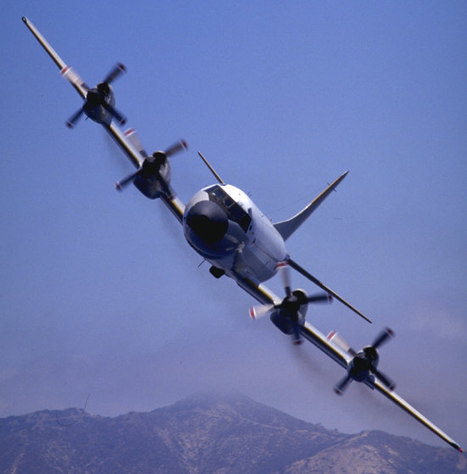
Le représentant du constructeur d’avions américain Lockheed Martin a déclaré dans une interview que les forces navales du Vietnam pourraient commander six avions de patrouille P-3C Orion.Ces avions devraient être livrés au Vietnam sans l’armement dans un premier temps. Cependant, avec le renforcement des relations américano-vietnamiennes, ces appareils pourraient être équipés d’armes. Le Vietnam recevra les avions P-3C qui proviennent de la réserve de la flotte américaine. Il s’agit des avions relativement récents qui pourront servir encore 20 ans après leur modernisation.Le Vietnam, il ne peut pas vraiment choisir parmi les fournisseurs d’avions de patrouille. Ces appareils sont les principaux instruments de lutte contre les sous-marins. La Russie a depuis longtemps cessé la production des Il-38 etTu-142. Pour l’instant, elle procède à la modernisation de son parc existant. Ces avions ne sont pas très nombreux en Russie, c’est pourquoi il ne serait pas rationnel de les exporter. L’Europe a également arrêté de fabriquer ce type d’avions. Seuls les Etats-Unis ont lancé un programme de production d’avions de patrouille P-8 Poseidon. Les P-3C Orion qui n’ont pas encore entièrement exploité leur réserve, devraient donc être radiés de l’exploitation.Le P-3C est un avion anti-sous-marin puissant et efficace. La livraison des avions de ce type au Vietnam, surtout s’ils sont armés, peut être une raison de préoccupation pour le commandement de la Marine chinoise. La base pour les sous-marins nucléaires Yulin se trouve sur l’île de Hainan au Sud de la Chine. Cette base qui coûte des milliards de dollars renferme aussi des abris souterrains pour les bateaux, les entrepôts, des arsenaux, et un système complexe de protection. C’est ici que devraient se trouver des sous-marins de la classe 094 Jin dotés de missiles balistiques. Ensuite, ils devraient être remplacés par des sous-marins de la classe 096 Tan. La mer de Chine du Sud est la zone principale de patrouille pour les sous-marins nucléaires chinois. Et toute activité de renseignement de la marine américaine et de ses alliés dans cette zone provoque une réaction nerveuse de la part du gouvernement chinois. Par le passé, cela n’a déjà provoqué des incidents dangereux. En comparaison avec les navires russes, les sous-marins chinois ont un certain retard technologique, considèrent les experts. Les avions P-3C étaient considérés comme un moyen très efficace pour faire face aux sous-marins soviétiques et russes, ce qui veut dire qu’ils représentent un danger encore plus important pour la Chine. En décollant des bases vietnamiennes, les aéronefs P-3C peuvent assurer la surveillance des réions de patrouille des sous-marins chinois. La Chine devra prendre des mesures pour garantir la sécurité de ses sous-marins, notamment avec le porte-avions Liaoning. Ce dernier pourrait fermer une zone importante en mer de Chine méridionale pour les avions P-3C vietnamiens. Le premier porte-avions soviétique Amiral Kuznetsov, construit selon le même projet que Liaoning, était destiné à la même mission. Ce navire était destiné à protéger la zone de patrouille des sous-marins nucléaires et prendre sur soi les premiers tirs de l'ennemi, permettant ainsi de faire gagner du temps au gouvernement du pays afin que ce dernier puisse prendre une décision de riposte.
Via Patrick H.
|
|
Rescooped by
Romain
from Newsletter navale
April 23, 2013 3:15 PM
|
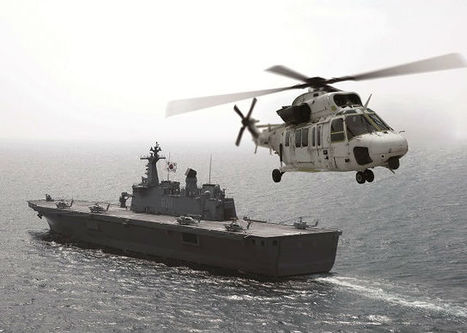
Korea Aerospace Industries (KAI) has been selected by the Republic of Korea (ROK) Defense Acquisition Program Administration (DAPA) as the priority negotiator in support of the ROK Marine Corps' Surion-amphibious task helicopter development programme. Under the KRW800bn ($713m) development programme, the company will design and develop the amphibious assault variant of its existing Surion Korea utility helicopter (KUH), which was designed to meet the needs of the South Korean Army and Air Force. Development of the Surion-based helicopter variant is expected to start in July and be complete by the end of 2015, followed by mass production of the aircraft. In an email, KAI was quoted by Flightglobal as saying that around 40 Surion amphibious helicopter variants are likely to be acquired by the Marine Corps to enhance its ability to transport troops and equipment in the littoral environment. Modifications to the existing helicopter will include integrated flotation system, an auxiliary fuel tank and specialised radio equipment to support missions as part of the development programme. The aircraft are expected to operate from the Republic of Korea Navy's (ROKN) Dokdo-class landing platform helicopter (LPH) assault ships, which are capable of accommodating up to 15 helicopters, the news agency reported. Developed by KAI and Eurocopter, Surion KUH is a twin-engine light utility helicopter designed to support missions such as troop assault, search-and-rescue, tactical lift, liaison and medical evacuation. With a range and service ceiling of 260km and 3,000m respectively, the helicopter is armed with six BGM-71 tube-launched optically tracked (TOW) air-to-air missiles or four rocket pods and can accommodate a pilot, co-pilot, two gunners and nine troops.
Via Patrick H.
|
|
Scooped by
Romain
April 23, 2013 3:09 PM
|
Les missiles balistiques intercontinentaux modernisés de 5e génération Iars-M seront livrés à l'armée russe en 2013, a annoncé jeudi à Moscou le commandant des Troupes balistiques stratégiques Sergueï Karakaïev. "Oui", a indiqué le général Karakaïev à la question si l'armée russe recevrait les premiers missiles balistiques modernisés Iars-M dès cette année. Le commandant a refusé de répondre à d'autres questions à ce sujet. Le RS-24 Iars (code OTAN SS-X-29), missile à propergol solide et à trois étages, est une version modernisée du missile monobloc RS-12M2 Topol-M. Il est doté d'ogives multiples de 150 à 300 kt à guidage individuel et a une portée de 11.000 km Le RS-24 constituera, avec le Topol-M monobloc (RS-12M2), le noyau des forces nucléaires russes.
|
|
Scooped by
Romain
April 23, 2013 3:03 PM
|
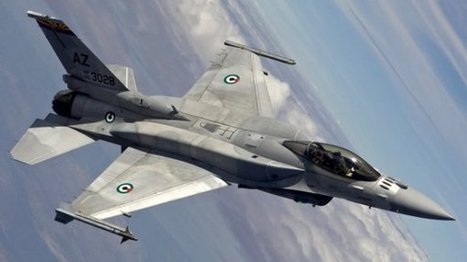
Les Emirats Arabes Unis commandent 25 F-16E/F Block 60 supplémentaires. C'est le challenger que l'on n'attendait plus vraiment. Alors que Dassault Aviation et Eurofighter s'affrontent publiquement depuis près de deux ans aux Emirats Arabes Unis pour tenter d'imposer leurs avions de combat respectifs, Lockheed Martin a discrètement emporté la mise suite à l'annonce officielle par Washington, le 19 avril, de la signature d'un accord avec Abou Dhabi pour la vente de 25 F-16E/F Block 60, version la plus évoluée à ce jour du F-16.
Selon le Pentagone, le montant de ce contrat est évalué à "un peu moins de 5 milliards de dollars". Abou Dhabi exploite déjà 80 appareils du même type, dont les livraisons avaient commencé au début des années 2000. Ils forment l'ossature de l'aviation de combat émirienne aux côtés de 60 Mirage 2000-9.
Faut-il enterrer tout espoir de vendre un jour le Rafale aux EAU ? Difficile à dire, même si cette vente de F-16 n'est pas un signe encourageant. Non content de rappeler s'il en était besoin que l'influence de Washington dans la zone est énorme, ce nouvel achat repousse encore un peu plus la nécessité pour l'armée de l'air émirienne de remplacer ses Mirage 2000-9 par un avion de combat plus moderne.
En tournée au Moyen-Orient, le patron du Pentagone Chuck Hagel a également annoncé la vente à Israël d'avions ravitailleurs KC-135 et du convertible V-22 Osprey de Boeing, qui trouve là son premier client export. De nouveaux radars pour aviosn de combat ont également été vendus à Israël, sans plus de précisions. Probablement des radars à antenne active destinés à moderniser les F-15I ou F-16I israéliens, face à un voisin saoudien qui disposera bientôt de cette même technologie sur ses F-15SA.
|
|
Scooped by
Romain
April 23, 2013 3:01 PM
|
L'Institut de technologie thermique (MIT) de Moscou a commencé les travaux de conception expérimentale de systèmes de lancement de missiles de combat installés sur une plateforme ferroviaire (BJRK), a annoncé mardi aux journalistes le vice-ministre russe de la Défense Iouri Borissov. "Les travaux de développement de BJRK ont commencé. Menés par l'Institut de technologie thermique, ils sont actuellement en phase de conception expérimentale", a indiqué le vice-ministre. Le MIT compte parmi ses conceptions les missiles balistiques intercontinentaux russes de type Iars, Topol et Boulava. La fabrication des missiles sur rail soviétiques a été suspendue en 2005 en conformité avec le traité russo-américain de désarmement nucléaire START, signé en 1993 par les présidents russe et américain de l'époque, Boris Eltsine et Georges Bush. Le traité START 3 ne prohibe pas le développement de nouveaux systèmes de missiles, y compris des BJRK.
|
|
Scooped by
Romain
April 23, 2013 2:57 PM
|
C'est sa maison-mère, Safran, qui l'annonce. Turboméca va poursuivre seul la production du
programme de turbines aéronautique RTM322, qui propulse notamment le NH90. A l'origine, Rolls-Royce était partenaire à 50% avec le Français, mais change donc, ce 23 avril, son fusil d'épaule.
Cette turbine developpant entre 2100 et 2600 cv équipe en outre les WAH-64 Apache britanniques et l'EH101 d'Agusta Westland, vendu en version civile et militaire.
Créé en 1937 par Joseph Szydlowski, Turboméca est devenu dans l'après-guerre la référence française des turbines aéronautiques, avant de s'imposer également au niveau mondial.
|
|
Scooped by
Romain
April 23, 2013 2:53 PM
|
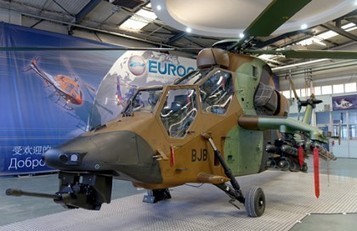
Eurocopter’s first production Tiger helicopter in the HAD attack configuration was delivered to France’s DGA armament procurement agency today for operation by French Army Aviation units, providing a highly capable combat weapon system that is tailored to the world’s evolving battlefield conditions. This milestone followed DGA qualification of the Tiger HAD version on April 10, and marked the delivery startup for Eurocopter’s latest variant of a rotorcraft product line which has already been combat proven during military operations in Afghanistan, Libya and today in Mali. “With the Tiger HAD, Eurocopter further expands the operational capabilities of a combat helicopter family which has demonstrated its mission effectiveness and performance in highly challenging military deployments,” said Dominique Maudet, the Eurocopter group’s Executive Officer for France, and Vice President of Global Business and Services. To date, France has ordered 40 Tiger combat helicopters in HAD configuration for its French Army Aviation units. Another 24 helicopters has been ordered by the Spanish government to equip the Spanish Army (which includes six Tiger HAP support and escort versions retrofitted for fire support and attack missions). Feature improvements of the Tiger HAD variant include two enhanced MTR390 turboshaft engines that provide 14 percent more power, improved ballistic protection, a new optronic sighting system, the capability to target and launch Hellfire air-to-surface missiles, an evolved electronic warfare suite, and an IFF (identification, friend or foe) interrogation system. 97 multi-role Tiger family currently are in service in four countries: France, Germany, Spain and Australia; which have ordered a total of 206 helicopters.
|