 Your new post is loading...
 Your new post is loading...
|
Scooped by
Romain
May 29, 2013 2:21 PM
|
A Brazilian air force KC-137 crashed on 26 May with no injuries to the 141 people aboard while attempting to take-off from the Toussaint Louverture International Airport in Port au Prince, Haiti. The Brazilian air force released a statement saying only that a "technical problem" caused the KC-137 to exit the runway around 15:30 Brasilia local time. The aircraft was loaded with 131 Brazilian troops who were returning to Brazil after a six-month deployment in support of the United Nations stabilisation mission in Haiti (MINUSTAH). The UN force said in a news release that the runway overrun caused the aircraft's landing gear to collapse. Other news reports in Brazil quoted local airport officials saying that one of the converted Boeing 707's four engines exploded moments after take-off, and the gear collapsed after the flight crew cut power and fuel to land the heavily-loaded aircraft on the runway. The airport was shut down to commercial aircraft for several hours before the KC-137 was removed from the tarmac. Brazilian air force officials have launched an investigation of the crash. Brazil's two KC-137 tanker transports were built as airliners in the 1960s, but entered service with the Brazilian air force in 1986. Israel Aerospace Industries (IAI) was selected two months ago by the air force to convert two Boeing 767-300ER airliners into aerial refuelling transports to replace the KC-137s.
|
Scooped by
Romain
May 29, 2013 2:20 PM
|
A request for information (RFI) has been issued by the Danish Defence Acquisition and Logistics Organization (DALO) seeking a new 155mm self-propelled gun for replacement of the national army's ageing M109A3 155mm self-propelled howitzer fleet. Primarily aimed at replacing the army's remaining 32 M109A3 howitzers, the RFI is seeking 15 new weapons that can either be wheeled or tracked, and should support installation of a self-defence weapon, as reported by Shephard. Capable of carrying a crew of five, the weapons should be able to achieve a range of at least 40km firing extended range ammunition, and a burst rate of six rounds per minute. The RFI seeks submission of bids for between nine and 21 systems by 17 June, while evaluation of the responses resulting in selection of three or four manufacturers is scheduled to take place throughout July. Short-listed candidates will proceed to a comprehensive evaluation programme that will complete in late 2013 or early 2014, followed by the signing of the procurement contract in the middle of the same year. The contract will also feature a ten-year support, spare parts and maintenance package. Likely contenders include BAE Systems Bofors' 155/52calibre wheeled Archer, Krauss-Maffei Wegmann-built 155/52calibre tracked Panzerhaubitze 2000 (PzH 2000), and Nexter 155/52-calibre wheeled CAmion Equipé d'un Système d'ARtillerie (CAESAR), amongst others. DALO reportedly discussed the production and acquisition of Archer with Norway and Sweden, but withdrew in 2007 before signing a co-operation agreement. Around 48 Archer systems, including 24 units each for Sweden and Norway, are currently being manufactured by BAE Systems Bofors. The Danish Artillery Regiment features one artillery battalion and an ISTAR battalion, which is also responsible for training recuits. In addition, the regiment deployed M/10 120mm towed mortars in support of the Danish troops serving with the International Security Assistance Force (ISAF) in Afghanistan.
|
Scooped by
Romain
May 29, 2013 2:18 PM
|
Australia, Japan and the United States have concluded Exercise Southern Jackaroo, the first ground exercise involving the three nations held in Australia. The inaugural exercise took place from 18 to 26 May 2013. An important step forward in trilateral defence cooperation between the nations, Exercise Southern Jackaroo saw Australian Army, Japan Ground Self Defense Force and US Army personnel participate in skills-based live-fire training and adventurous training, at Puckapunyal and Melbourne. During the exercise, 14 personnel from each of the three nations participated in live-firing activities focused on advanced marksmanship skills within urban terrain, as well as adventurous training including abseiling from buildings in the Melbourne CBD. Over the last year, trilateral ground cooperation between Australia, Japan and the US has strengthened, with the Chief of the Australian Army attending the Senior Level Seminar between the Japanese Ground Self Defense Force, US Army Pacific and US Marines Forces Pacific. Earlier this month, Japan and the US participated in the Australian Army’s Skill at Arms Meeting held at Puckapunyal, Victoria. Exercise Southern Jackaroo reflects the shared commitments of Australia, Japan and the US to strengthening defence and security cooperation, and working closely together to promote regional stability, peace and prosperity. The three nations share several common security interests. Practical cooperation, through exercises such as Southern Jackaroo, is a central part of our trilateral defence relationship. The importance of trilateral defence cooperation was demonstrated in the response to the Great East Japan Earthquake in 2011, when the Australian Defence Force, Japanese Self Defense Forces and US Forces Japan worked together to provide rapid humanitarian and disaster relief assistance.
|
Scooped by
Romain
May 29, 2013 2:14 PM
|
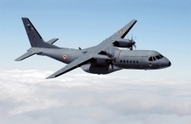
Airbus Military continue à valoriser son C295, dont une nouvelle variante vient d'être dévoilée devant une quarantaine de représentants de la presse mondiale. Le C295W intègre à la fois des winglets (1), représentant un surcroît de poids de 90 kg, mais apportant une réduction de consommation estimée par AM entre 3 et 6%. Avec une amélioration qualifiée sur les turbines, l'appareil va afficher des performances très nettement améliorées en conditions hot and high, assure l'avionneur. Jusqu'à 2,5 tonnes et demie de charge utile pourraient donc prendre place en plus dans le cargo dans cet environnement, ce qui intéresse particulièrement les pays de la cordillère des Andes, d'Afrique de l'ouest et du Moyen-Orient. Airbus Military a par ailleurs confirmé qu'il était en train de choisir un canon de 27 ou 30 mm pour une version armée de son appareil.
|
Scooped by
Romain
May 29, 2013 2:12 PM
|
Sillinger (groupe Marck) vient de remporter un appel d'offres lancé par le Service logistique de la Marine et pourrait, au cours des 7 prochaines années, livrer jusqu'à 600 embarcations pneumatiques aux brigades de surveillance du littoral, en particulier de la Gendarmerie maritime, et à l'armée de terre qui renouvelle sa flotte d'embarcations de franchissement biplace. Il s'agit d'un marché à bons de commande. Un contrat d'une valeur ma&ximale de 3 millions d'euros. Sillinger a commencé ses livraisons en Libye et à Singapour dont l'armée de terre a acheté une centaine de bateaux de franchissements en fin d'année dernière.
|
Scooped by
Romain
May 29, 2013 2:06 PM
|
The Royal Thai Air Force has a strong bond with the IAF: six months ago, two IAF pilots flew to Thailand for a training visit to the royal force's bases. Last week, aerial Thai air crew members arrived in Israel for a visit to IAF bases The IAF has developed many strong bonds with allies across the seas: one of the important relationships is with the Royal Thai Air Force. Accordingly, ten Thai air crew members arrived in Israel last week for a special visit around the country and IAF bases. "We came here to observe the IAF's activities, their air crew qualification process, and the technological advancements", said Colonel Napaj Dofatmia, commander of the delegation and deputy commander of the operational formation of the Royal Thai Air Force. "Regardless, this is our first visit to Israel and it completely changed my entire perception of the country. I imagined Israel in a very different way". Once every two years, two IAF air crew members of the combat formation are sent for a visit to Thailand, in order to conduct various seminars for small groups of Thai air crew members. Their arrival in Israel is a reciprocal visit. Members of the Thai delegation visited Hatzerim and Nevatim airbases and were impressed by the IAF's Aviation Academy. "This visit is a chance for us to see things we have never seen before", added commander of the delegacy, "There are many cultural differences between both forces, yet many things to learn from one another".
|
Rescooped by
Romain
from Newsletter navale
May 29, 2013 1:46 PM
|
Carrier-based flight trials of the U.S. Navy’s X-47B Unmanned Combat Air System-Demonstrator (UCAS-D) aboard the USS George H.W. Bush were briefly brought to a halt last week due to an unlikely frequency-sharing issue between the air vehicle and officials of the National Oceanic and Atmospheric Administration, which is trying to fix a problem with a faulty weather satellite. The U.S. Navy was able to restart flights of the Northrop Grumman X-47B demonstrator quickly after a brief stand down, which was necessitated because priority use of the Wallops Island facility in Virginia, the UCAS-D backup landing site, was given to NOAA as it worked to recover control of its Geostationary Operational Environmental Satellite (GOES)-13. Trials are now complete and the X-47B performed nine touch-and-go landings on the carrier deck, according to Capt. Jamie Engdahl, Navy program manager. NOAA began losing data from GOES-13 on May 21 when the satellite lost attitude control. NOAA officials operate the GOES satellites from a Command and Acquisition Data Station at Wallops. Without a backup landing site, UCAS-D was stuck on the carrier. At issue was the fact that both NOAA’s GOES data and the Navy’s UCAS telemetry are transmitted in the same S-band frequency, according to program officials. GOES-13, the first of a three-satellite series made by Boeing, is parked 22,000 mi. over the Eastern U.S. It is instrumental in predicting hurricane activity. Because it is so far from the receivers at Wallops, those receivers are designed to be very sensitive. UCAS blasts its communications, by contrast. Thus, NOAA was worried about harming its antennas if UCAS diverted to land while operators were communicating with the satellite. Because NOAA officials have been working on a software fix for the GOES-13 attitude control problem, they require constant use of the antennas. NOAA officials are still working on a fix for GOES-13 and are temporarily using data from GOES-14, its in-orbit backup, to maintain some continuity, though the latter is orbiting farther west than the primary GOES-13. The temperamental satellite and unavailability of the backup landing site at Wallops prompted Navy officials to cancel the UCAS flight from the carrier deck on May 22. “There have been no other impacts to our [carrier] operations due to the GOES-13 failure,” Engdahl says. The primary landing site for the carrier operations was NAS Patuxent River, Md. The X-47B began the first-ever flight trials of a stealthy, tailless unmanned air vehicle with a historic catapult launch from the deck of the aircraft carrier on May 14. The two Northrop Grumman X-47B aircraft are designed for intelligence collection and limited strike. They are being used by the Navy to demonstrate whether such aircraft can function on and around the carrier deck without interrupting the tempo of the air wing’s operations. The frequency conflict only affected one planned flight, and the ship-based portion of the UCAS-D trials wrapped up last week.
Via Patrick H.
|
Rescooped by
Romain
from Newsletter navale
May 29, 2013 1:45 PM
|
Russia’s Ministry of Defense has issued a contract for the modernization of the Navy’s fleet of Ilyushin Il-38 maritime patrol aircraft. The Novella mission system will be installed in an unspecified but “large” number of aircraft serving in the Northern Fleet, making them Il-38Ns. Of the 59 aircraft produced between 1967 and 1972, some 18 are currently in operation. The work was initially planned for the Ministry of Defence’s aircraft repair plant No. 20 at Pushkino, but instead the MoD has contracted UAC’s Ilyushin and Myasishchev to undertake it at the Zhukovsky airbase near Moscow. The Novella is another version of the Sea Dragon mission system that was designed by the Leninets company in St. Petersburg and exported to India for an upgrade to five Il-38s serving with the Indian Navy. This $150 million contract was placed in 2001, but delays in development and problems in meeting the specification prompted the Indian Navy to halt contract payments temporarily. The Sea Dragon system was supposed to track 32 targets simultaneously (ships, submarines, mines, aircraft) within a 320-km radius, with aerial target detection up to 90 km away. The Indian Navy eventually accepted the aircraft in 2010, but dropped plans to install the system on eight larger Tu-142MKI maritime patrol and attack aircraft, opting instead to replace them with the Boeing P-8I Poseidon. Together with the Su-30MKI fighter, the Il-38SD is to be armed with the air-launched version of the BrahMosPJ-10 supersonic cruise missile. It will supplement the Kh-35 Uran and Sea Eagle subsonic anti-ship missiles already in the airplane’s arsenal, and for which the Indian examples were outfitted with external hard points on the fuselage sides. Unlike the Sea Dragon, the Novella has a non-exportable electronic reconnaissance module. The core system is based on modern digital computers and features two operator consoles each with two LCD screens and the commander’s “big picture” tactical situation on a large LCD; a highly sensitive magnetic anomaly detector; a high-resolution thermal imager; and various other sensors. Research and development started in the 1980s, leading to a prototype trials aircraft in 2001. The ambitious program suffered repeated delays and several revisions of the original specification, driven by the need to add new technologies that became available over time. The decision to upgrade the Il-38s was a hard one for the MoD, which long hesitated whether to outfit a relatively small fleet needing extensive airframe life extension work. The Indian aircraft have received a 40-year life extension. The Il-38N retains the original airplane’s crew of seven, 68-tonne mtow and 5.5- to 8.5-ton internal payload capability for various buoys, torpedoes, mines and depth charges. The Russian Navy already has one Il-38N (side number 15). It has been employed on operational trials since 2011 and on combat duty since January this year. This airplane is a specimen for other Il-38s to be reworked with the Novella system.
Via Patrick H.
|
Rescooped by
Romain
from Newsletter navale
May 29, 2013 1:44 PM
|
By Kim Eun-jung SEOUL, May 26 (Yonhap) -- The South Korean military has approved a plan to buy 20 maritime patrol aircraft to improve the Navy's surveillance capabilities of North Korea, a military source said Sunday. The Joint Chiefs of Staff has recently approved the Navy's request to add 20 maritime patrol aircraft to supplement the aging squadron of 16 Lockheed Martin P-3C Orions. "The Defense Acquisition Program Administration is currently working on a plan, which is likely to be an overseas purchase program," the source said, asking for anonymity as it is not yet open to the public. The budget for the project is estimated at 1 trillion won (US$889 million). Among the potential candidates are Airbus Military's C-295 MPA, Boeing's P-8 Poseidon, Lockheed Martin's SC-130J Sea Hercules, according to officials. The U.S. Navy has recently received the seventh production of Boeing's P-8 Poseidon to replace its P-3Cs. Separately, a naval modernization program has been underway to upgrade P-3C's radar and censor system by 2016. Deployed in 1995, the maritime aircraft is capable of conducting various operations in anti-submarine and anti-ship warfare. It is armed with Harpoon Block II air-to-ground missiles and a tactical information system interoperable with the KF-16 fighter jet. The latest decision comes as Seoul has been putting more resources into coastal warfare and defense capabilities in frontline border islands in the face of North Korea's growing threat near the tensely guarded western sea. North Korea has a large fleet of submarines, and one of them is blamed for torpedoing the South Korean warship Cheonan in the Yellow Sea in March 2010, killing 46 sailors. The North also shelled a South Korean border island later that year, killing four people.
Via Patrick H.
|
Rescooped by
Romain
from Newsletter navale
May 29, 2013 1:44 PM
|
The Nigerian Navy will receive two more ex-United States vessels next year, the US Navy Survey Ship John McDonnell and the US Coast Guard Cutter Gallatin. Chief of Naval Staff, Vice Admiral Dele Ezeoba, on Friday said that the two vessels would be inspected between May and August next year, reports Nigeria’s National Mirror. Ezeoba was represented by Rear Admiral Emmanuel Ogbor, Chief of Policy and Plans, who said that the United States has transferred several ships to Nigeria over the last decade. These include the NNS Thunder, Obula, Nwamba, Kyanwa and Ologbo. “These ships have contributed immensely to the security of the nation’s maritime environment and the Gulf of Guinea,” he said. The vessels are donated as part of the US military’s Excess Defence Articles system. The USNS John McDonnell was deactivated on August 25, 2010, as the US Navy streamlined survey operations. The 63 metre, 2 054 ton oceanographic survey vessel can launch two 34 foot launches. The 115 metre long 3 250 ton Gallatin is a member of the Hamilton class – the Nigerian Navy has already taken delivery of the Hamilton class cutter Chase (now NNS Thunder), which was commissioned in January 2012. Gallatin, introduced into Coast Guard service in 1968, is equipped with a helicopter flight deck, retractable hangar and a fast boat. The 115 metre High Endurance Cutter (WHEC) has four main engines and can be driven by either twin diesel engines or twin gas turbines via two controllable-pitch propellers. Over the weekend the Nigerian Navy said it had impounded more than 40 vessels suspected of being involved in the illegal oil trade, as the Navy steps up its fight against maritime crime. Ezeoba said that the Navy’s fleet was expanding, with the commissioning of five Seaward Defence Boats earlier this year and the construction of another indigenous Andoni class boat and the construction of two 95 metre offshore patrol vessels, which are expected to arrive before the end of next year.
Via Patrick H.
|
Rescooped by
Romain
from Newsletter navale
May 29, 2013 1:43 PM
|
The Nigerian Navy has opened a maritime surveillance and intelligence fusion centre to monitor piracy and ship movements throughout the Gulf of Guinea from the Eastern Naval Command base in Calabar. Speaking at the centre’s inauguration ceremony, Flag Officer Commanding the Eastern Naval Command, Rear Admiral Joseph Aikhomu said the new facility, which is equipped with radar and satellite monitoring equipment, will enhance the navy’s intelligence gathering capacity as it continues to battle piracy and oil bunkering across the Gulf of Guinea. The United States, which is already funding a number of joint border security projects with Nigeria, has pledged to donate more surveillance equipment to monitor the country’s porous borders in a broader crackdown on illegal immigration. The Interior Minister Patrick Abba Moro said more than 19,000 illegal immigrants have been deported from the country since the latest resurgence of fighting between Boko Haram insurgents and the security forces.
Via Patrick H.
|
Rescooped by
Romain
from Newsletter navale
May 29, 2013 1:43 PM
|
Carrier-based flight trials of the U.S. Navy’s X-47B Unmanned Combat Air System-Demonstrator (UCAS-D) aboard the USS George H.W. Bush were briefly brought to a halt last week due to an unlikely frequency-sharing issue between the air vehicle and officials of the National Oceanic and Atmospheric Administration, which is trying to fix a problem with a faulty weather satellite. The U.S. Navy was able to restart flights of the Northrop Grumman X-47B demonstrator quickly after a brief stand down, which was necessitated because priority use of the Wallops Island facility in Virginia, the UCAS-D backup landing site, was given to NOAA as it worked to recover control of its Geostationary Operational Environmental Satellite (GOES)-13. Trials are now complete and the X-47B performed nine touch-and-go landings on the carrier deck, according to Capt. Jamie Engdahl, Navy program manager. NOAA began losing data from GOES-13 on May 21 when the satellite lost attitude control. NOAA officials operate the GOES satellites from a Command and Acquisition Data Station at Wallops. Without a backup landing site, UCAS-D was stuck on the carrier. At issue was the fact that both NOAA’s GOES data and the Navy’s UCAS telemetry are transmitted in the same S-band frequency, according to program officials. GOES-13, the first of a three-satellite series made by Boeing, is parked 22,000 mi. over the Eastern U.S. It is instrumental in predicting hurricane activity. Because it is so far from the receivers at Wallops, those receivers are designed to be very sensitive. UCAS blasts its communications, by contrast. Thus, NOAA was worried about harming its antennas if UCAS diverted to land while operators were communicating with the satellite. Because NOAA officials have been working on a software fix for the GOES-13 attitude control problem, they require constant use of the antennas. NOAA officials are still working on a fix for GOES-13 and are temporarily using data from GOES-14, its in-orbit backup, to maintain some continuity, though the latter is orbiting farther west than the primary GOES-13. The temperamental satellite and unavailability of the backup landing site at Wallops prompted Navy officials to cancel the UCAS flight from the carrier deck on May 22. “There have been no other impacts to our [carrier] operations due to the GOES-13 failure,” Engdahl says. The primary landing site for the carrier operations was NAS Patuxent River, Md. The X-47B began the first-ever flight trials of a stealthy, tailless unmanned air vehicle with a historic catapult launch from the deck of the aircraft carrier on May 14. The two Northrop Grumman X-47B aircraft are designed for intelligence collection and limited strike. They are being used by the Navy to demonstrate whether such aircraft can function on and around the carrier deck without interrupting the tempo of the air wing’s operations. The frequency conflict only affected one planned flight, and the ship-based portion of the UCAS-D trials wrapped up last week.
Via Patrick H.
|
Rescooped by
Romain
from Newsletter navale
May 29, 2013 1:42 PM
|
The coast guard division of Russia’s Federal Security Service (FSB) will deploy four new warships to protect the nation’s Arctic zone by 2020, the FSB press service said on Monday. Eleven border protection facilities are to be built in the Arctic, while automated surveillance systems are to be deployed in the area as part of the Russian Federation State Border Protection program for 2012-2020, an FSB representative said. Russia has officially set a goal of deploying a combined-arms force by 2020 to protect its political and economic interests in the Arctic, including military, border, and coast guard units. Deputy Prime Minister Dmitry Rogozin said in December 2012 that Russia risks losing its sovereignty by the mid-21st century if it does not assert its national interests in the Arctic today.
Via Patrick H.
|
|
Scooped by
Romain
May 29, 2013 2:20 PM
|
The Republic of Korea (ROK) Navy has received approval from the country's joint chiefs of staff to procure maritime patrol aircraft, to boost surveillance capabilities. An unnamed military source told Yonhap News Agency that the navy is considering purchasing a total of 20 maritime patrol aircraft to strengthen its surveillance capabilities against North Korea near the guarded western sea. The aircraft will complement the ageing squadron of 16 Lockheed Martin-built P-3C anti-submarine warfare (ASW) aircraft. The state arms procurement agency Defense Acquisition Program Administration is currently working on the plan, which is likely to cost approximately $889m. Potential bidders for the acquisition programme include Airbus Military's C295 multirole maritime patrol aircraft (MPA), Boeing's P-8 Poseidon aircraft, and Lockheed Martin's SC-130J Sea Hercules. Meanwhile, the South Korean Navy has placed orders with L-3 Mission Integration and Korean Air team to upgrade its eight P-3C Orion aircraft to Lot 2 standards by 2016, according to Flightglobal. Upgrades to the P-3C aircraft include installation of multipurpose radar to enable detection of fixed and moving targets, high-definition electro-optical/infrared cameras, digital acoustic analysis equipment and a magnetic anomaly detector, according to Defense News. L-3 Mission Integration surveillance systems senior director Brent Billingslea said that the aircraft would be equipped with mission system to enhance capabilities, while being completely compatible and interoperable with existing P-3 fleet for the navy. Under the contract, L-3 will be responsible for the design and development of upgrades, while Korean Air will integrate the equipment on to the aircraft. Armed with Harpoon Block II air-to-ground missiles, the P-3C aircraft is equipped with four Allison T56-A-14 turboprop engines, as well as tactical information system interoperable with the KF-16 fighter jet.
|
Scooped by
Romain
May 29, 2013 2:19 PM
|
L'armée de l'air russe a reçu un système de guerre électronique capable de déconnecter de manière ciblée les radars ennemis et les systèmes de contrôle de drones, sans pour autant brouiller ses propres communications, écrit mercredi le quotidien Izvestia. Les essais du nouveau brouilleur, baptisé Poroubchtchik, se sont achevés début mai à l'Institut de recherche Gromov à Joukovski, dans la région de Moscou. Avant le Poroubchtchik, les brouilleurs bloquaient tous les systèmes électroniques, ennemis et amis. Aujourd’hui il est possible de "débrancher" des cibles précises. Le nouveau brouilleur devrait être efficace contre le système américain de détection et de commandement aéroporté AWACS, les missiles sol-air de classe Patriot, et permettra de bloquer le contrôle des drones activement utilisés par les pays de l'Otan. "Le nouveau système détecte des communications sans fil ou les rayons radar en régime passif sans rien émettre lui-même, il analyse la fréquence des canaux et émet un brouillage ciblé actif ou passif. Par ailleurs, le signal est bloqué dans une certaine direction sur une certaine fréquence sans affecter d'autres sources", a déclaré l'un des participants aux essais. En l'absence d'avions modernes bénéficiant d’une longue autonomie, le brouilleur a été installé sur un ancien Il-22 construit en 1979. L'appareil a été intégralement remis en état à l'usine Miasnitsev et doté d'équipements spéciaux, dont des antennes latérales et des transmetteurs tractés qui se déroulent en vol sur plusieurs centaines de mètres. Une source du ministère de la Défense a expliqué qu'en raison de l'ancienneté du Il-22 le commandement de l'armée de l'air insistait sur l'installation du brouilleur sur un autre appareil, mais aucun avion affichant les performances nécessaires - vitesse et autonomie de vol - n'était disponible. A l'heure actuelle, l'avion équipé du nouveau brouilleur est en essais d'usine et sera mis en service d'ici la fin de l'année. L'armée de l'air devrait recevoir cinq avions de ce type. "Même en dépit de la modernisation du Il-22 l'appareil sera retiré du service dans 10 ans, après quoi il faudra installer le brouilleur sur un autre moyen de transport", remarque une source de l'armée de l'air. Selon elle, des modifications significatives au niveau du fuselage et de l'électronique seront nécessaires pour installer le brouilleur sur l'appareil. "Il faut incorporer des antennes, modifier le système d'alimentation, installer des canaux supplémentaires pour les câbles, les trappes de service, etc. Et le brouilleur doit être installé de sorte à ne pas interférer avec les équipements de l'appareil et ne pas faire écran avec les ailes et le corps de l'avion", explique la source. Dmitri Kornev, rédacteur en chef du site Military Russia, a déclaré que le brouilleur Poroubchtchik était très demandé dans les guerres modernes. "Les armes des plus grandes armées du monde disposent aujourd'hui de systèmes électroniques complexes, y compris les drones, par conséquent les systèmes de brouillage ciblé deviendront une arme très puissante", explique Dmitri Kornev. Les travaux sur le nouveau brouilleur ont commencé en 2009 après la signature d'un contrat entre le ministère de la Défense et l'usine Miasnitsev. L'installation des équipements sur un Il-22 a commencé en 2010. Les premiers vols de l'appareil modifié se sont déroulés en 2012. Le système a coûté plus de 5 millions d'euros.
|
Scooped by
Romain
May 29, 2013 2:16 PM
|
Quand arrivera le premier A400M ? Ce ne sera pas fin mai, sans doute pas non plus début juin, comme annoncé lors du dernier point d'Airbus Military, en début d'année. Peut-être au Bourget, voire fin juin-début juillet. L'industriel évoque "la fin du deuxième trimestre", mais ne donne pas de date, et à Paris, on ne se hasarde plus à la moindre annonce. Quoiqu'une date non officielle circule dans l'armée de l'air, celle du 12 juillet. Après la remise en selle du programme, sous Hervé Morin, le 1er A400M devait être livré à l'automne 2012. Puis l'été dernier, on avait appris un nouveau décalage, et un second, de mars 2013 à la fin du deuxième trimestre 2013. En tout état de cause, le CEAM avait prévu de le prendre en compte début juillet. Et, tout le monde l'espère, de l'amener au-dessus des Champs Elysées, pour le 14 juillet. Difficile néanmoins, si vraiment l'appareil arrive le 12 juillet. Plusieurs équipages sont désormais qualifiés dans l'armée de l'air mais le délai semble court. Un A400M doit être présent lundi prochain, à Mont-de-Marsan pour les 80 ans du CEAM : à ce stade, on ignore encore de quel appareil il s'agira. Comme je le révélais également il y a peu, la France pourrait être tentée de décaler la livraison du 3e appareil prévu en 2013. D'abord, cela laisse éventuellement du temps pour y intégrer quelques éventuelles améliorations à partir de ce qui aura été constaté sur les deux premiers. Et d'un point de vue budgétaire, une livraison le 30 décembre ou le 5 janvier n'est pas tout à fait la même chose. Deux clichés récents (photos Jean-Marc Tanguy) pris à Séville, pour conclure. Le premier illustre le MSN007 -qui a encore décollé de Séville ce midi-, et le deuxième, un des Grizzlys utilisés manifestement pour une campagne de ravitaillement en vol, comme l'attestent les pods sous chaque aile. Des Caracal de l'armée de l'air ont réalisé une campagne avec des Caracal de l'armée de l'air, à la mi-mai : ce qui n'était qu'un photomontage est donc devenu réalité.
|
Scooped by
Romain
May 29, 2013 2:13 PM
|
Le Livre blanc australien sur la Défense de 2013 (voir mon post du 3 mai) a conforté le "plan Beersheba" dont l'objectif est de restructurer l'armée de terre en l'articulant, en particulier, autour de trois brigades de combat multirôles. Effectifs: près de 3 700 hommes par brigade. Objectif: disposer d'unités lourdes et autonomes, capables de déploiements prolongés. Ces brigades: la 1e à Darwin (actuellement mécanisée), la 3e à Townsville (actuellement une brigade légère) et la 7e à Brisbane (actuellement une brigade motorisée), vont être refondues et disposeront toutes d'élements blindées, d'infanterie (deux bataillons), d'artillerie, d'unités des transmissions et du génie, et de leur propre soutien logistique. En gros des "GTIA" permanents, s'entraînant jusqu'au niveau brigade et capables d'une projection autonome. Elles pourront être soutenues par la 6e Brigade (soutien, renseignement, reconnaissance), par la 16e brigade aéromobile et la 17e brigade logistique. Elles pourront aussi être renforcés par des éléments des six brigades de réserve de la 2e division. Chacune des brigades multirôles disposera d'un "Armoured Cavalry Regiment", un régiment blindé avec des chars Abrams et des Busmaster, l'infanterie disposant de LAV et de M113 qui sont appelés à être remplacés par un véhicule blindé de transport de troupes tel que décidé dans le projet Land 400. En juillet/août prochains, lors de l'exercice Hamel 2013, une manoeuvre au niveau brigade va permettre une première expérimentation.
|
Scooped by
Romain
May 29, 2013 2:08 PM
|
Bien qu’elle n’ait pas apporté son soutien aux rebelles syriens comme l’a fait la Turquie, il n’en reste pas moins que la Jordanie est affectée par les évènements en Syrie, étant donné qu’elle accueille sur son territoire environ 500.000 civils ayant fui les combats. Et au vu de l’évolution des évènements, le royaume hachémite craint un débordement du conflit. Depuis le début de la guerre civile syrienne, en mars 2011, la Jordanie n’a pas eu à déplorer d’importants incidents le long des 370 km de frontière qu’elle partage avec la Syrie. Toutefois, la prudence est apparemment de mise au sein du gouvernement jordanien puisque son ministre de l’Information, Mohammad al-Momani, a annoncé l’intention d’Amman de déployer des batteries antimissiles “Patriot” afin de protéger son espace aérien. En novembre dernier, la Turquie avait demandé la même chose auprès de l’Otan, notamment après plusieurs incidents frontaliers avec la Syrie. Les Etats-Unis, l’Allemagne et les Pays-Bas ont depuis déployé chacun 2 batteries antimissiles Patriot sur le territoire turc. “Nous souhaiterions nous équiper de ce système de défense afin de renforcer notre capacité défensive et de protéger l’espace aérien du pays”, a ainsi affirmé le ministre jordanien, lequel a aussi précisé qu’Amman était déjà en “négocation avec des pays amis” à cette fin. Il est fort probable qu’une requête allant dans ce sens ait été adressée à Washington étant donné que les Etats-Unis sont de proches alliés de la Jordanie, où, d’ailleurs, ils y ont récemment renforcé leur présence militaire, avec l’envoi de 150 soldats en plus des 150 membres des forces spéciales déjà présents, officiellement pour former leurs homologues jordaniens.
|
Scooped by
Romain
May 29, 2013 2:06 PM
|
Weapon system to be fitted with Multiple Independently Targetable Re-entry Vehicles The configuration of Agni-V, India’s long-range nuclear weapons capable ballistic missile, is set to be changed to make the 5,000-km weapon system deadlier and capable of attacking multiple targets. The modification is to enable fitting Agni-V with Multiple Independently Targetable Re-entry Vehicles (MIRVs), V.K. Saraswat, Director-General of the Defence Research and Development Organisation and Scientific Advisor to the Defence Minister, told The Hindu . Another test in the present configuration of the three-stage missile would be conducted later this year. Besides imparting canister-launch capability, Agni-V would be equipped with MIRVs. “Work on that is going on and it is at design stage.” The resounding success of the maiden flight test of Agni-V in April 2012 catapulted India into a select league of nations having the technological prowess to develop Inter-Continental Ballistic Missiles, he said. The Agni series will form the bulwark of land version of India’s nuclear deterrence triad. Meanwhile, the reactor on board the indigenously-built nuclear powered submarine, INS Arihant, is expected to go critical in a few weeks. The powering of the system should happen in a week or two, Dr. Saraswat said. (Once that happens, the 80-MWt (thermal) reactor would be in a position to deliver power to the platform and sea trials of Arihant would begin subsequently when the submarine is expected to move at the designed speed, go to the diving depth, attain maximum speed and perform all safety and emergency operations). New interceptor missile Referring to the home-grown Ballistic Missile Defence programme, he said the next interceptor missile test to be conducted at a higher altitude of 100-150 km in July would be the most important one. “We have developed a new interceptor missile for it.” Another crucial DRDO missile test this year would be a “repeat launch” of ‘Nirbhay’. During the maiden trial of the subsonic cruise missile, the flight had to be terminated midway after it strayed from its trajectory. Dr. Saraswat attributed the problem to a manufacturing defect in the navigation sensor. Flight tests of air-to-air Astra and anti-tank Nag missiles would be also conducted.
|
Rescooped by
Romain
from Newsletter navale
May 29, 2013 1:45 PM
|
The U.S. Navy has identified “several specific initiatives on the flight deck” of landing helicopter dock (LHD) amphibious assault ships the service says the vessels will need to accommodate the F-35. Adm. Jonathan Greenert, chief of naval operations, acknowledged Wasp-class ship modifications have been designed for the F-35 Joint Strike Fighter (JSF) vertical lift-and-takeoff variants. “We did some mods on the Wasp,” Greenert said at a media briefing during the International Maritime and Defense Exhibition (Imdex) Asia 2013 in Singapore. Navy officials say the modifications “are intended to offset the increased stresses associated with JSF exhaust. The exhaust patterns and flight characteristics of the F-35 required the shielding, relocation and removal of vulnerable systems that could sustain damage during flight operations, such as antennas, life rafts, life rails, safety nets and JP-5 fuel stations.” Additionally, the Navy says, “The unique heat signature of the F-35 has required reinforcement of the flight deck to alleviate stresses from the heat of the jet, as well as modifying the flight deck coating to reduce erosion caused by jet exhaust associated with increased thrust. Specific system modifications that are unique to F-35 will also require the installation of new voltage regulators and rectifiers. Expanded mission capabilities of the F-35 have also required enhanced munitions throughput and systems capabilities to facilitate increased ordnance delivery and aircraft associated support equipment.” Some of the detailed modifications include relocating or shielding features such as the Phalanx close-in-weapon system and Rolling Airframe Missile and NATO Sea Sparrow missile launchers, and protecting fueling stations. The WSC-8 satcoms antenna will also be moved, and the aqueous film-forming foam (AFFF) system is being expanded. The changes confirm that Lockheed Martin and the Marine Corps issued erroneous statements in early 2010 regarding the environmental effects of the F-35B’s exhaust. At that time, a company spokesman said that “extensive tests” had shown that “the difference between F-35B main-engine exhaust temperature and that of the AV-8B is very small, and is not anticipated to require any significant CONOPS changes for F-35B.” The Navy has not disclosed how long it will take to implement the modifications across the LHD/LHA fleet. The F-35 program schedule calls for the first Marine F-35B unit, VMFA-121, to be ready for a “contingency deployment” by late 2015. However, there is no firm date for a second squadron. The mission for VFA-121 and other early F-35B units is uncertain. Out of the weapons cleared in the Block2B/3I software standard, only the laser-guided bomb is considered useful for close air support (CAS), which is the primary mission of embarked AV-8Bs, and none of the 2B weapons are suitable for use against quickly moving targets or for a situation in which the risk of collateral damage is high. (The centerline gun pod is not included in 2B/3I.) The F-35B lacks the Rover (remote video receiver) technology, developed since the requirement for the aircraft was written. Rover has been defined as minimum essential equipment for CAS in some theaters; according to some military sources, the Marines have explored the idea of adding a Rover-equipped external targeting pod to the F-35B until an internal solution is available. At the same time, the Navy has slowed its planned F-35B/C production rate by 20%, according to the latest Pentagon Selected Acquisition Report, resulting in a longer planned lifetime for the AV-8B. According to a Boeing briefing last week, “a majority” of the 134-strong Marine Corps Harrier force will be in service in 2027, and the type will not be retired before 2030. Radar and other upgrades are being studied to keep the aircraft combat-worthy and avoid obsolescence.
Via Patrick H.
|
Rescooped by
Romain
from Newsletter navale
May 29, 2013 1:45 PM
|
ANKARA — Turkey has engaged with a major U.S. ballistic missile defense project. Turkey’s state-owned Havelsan has been participating in the U.S. Aegis program, designed to intercept ballistic missiles from the sea. Havelsan has contributed naval combat management capabilities to enhance Aegis, led by Lockheed Martin. Aegis has been procured by the navies of Australia, Japan, Norway, Spain and the United States. L-M did not say how the Havelsan management system differed from other Aegis models. “We’ve now witnessed in real time how well our systems work together, which also speaks to the strong and significant partnership of our two companies within the industry,” Carl Bannar, a vice president at Lockheed Martin’s Mission Systems and Training business, said. The partnership was demonstrated during a naval combat system mockup at IDEF-2013 in Istanbul in May. Executives said Havelsan and L-M — which in 2011 signed an agreement to cooperate on naval combat systems — developed interfaces to combine their technologies in what was meant to be marketed to Middle East states, particularly the Gulf Cooperation Council. “We have demonstrated that we can enhance our existing naval combat management system capabilities by using data from the naval radar, Spy-1,” Havelsan chief executive officer Sadik Yamac said. Yamac said Havelsan, a contractor for the Turkish Navy, leveraged the capabilities of Aegis to produce what he termed a “total naval combat system for the most stressing operational requirements of many countries.” The executive did not report any Turkish Navy interest in Aegis, which was preparing to receive a new interceptor variant, SM-3 Block 1B. “The combined technology of Turkish-Aegis combat system can be a considerable solution for the countries in Middle East region and some other countries,” L-M said on May 9.
Via Patrick H.
|
Rescooped by
Romain
from Newsletter navale
May 29, 2013 1:44 PM
|
According to rumors that emerged recently in the Spanish press, the Philippines as well as several Arab countries have expressed interest in purchasing the former Spanish Navy Aircraft Carrier Principe de Asturias. In case of a sale, the contract would include refit and upgrading of the vessel by Spanish shipyard Navantia. It is reported that Indonesia already expressed interest in the vessel earlier this year. Following an official visit by TNI AL (Indonesian Navy) delegation to the El Ferrol naval base however, Indonesia decided not to purchase the aircraft carrier. Principe de Asturias was officially decommissioned in February 2013, with the initial intention to dismantle it for scrap. However this initial plan changed when Spanish Ministry of Defense reportedly received several requests for the aircraft carrier from several countries. Spanish Navy confirmed that there are potential buyers, but has yet to materialize any sales transaction.
Via Patrick H.
|
Rescooped by
Romain
from Newsletter navale
May 29, 2013 1:43 PM
|
Chinese hackers have obtained designs for more than two dozen U.S. weapon systems — including the Aegis Ballistic Missile Defense System, the F-35 Lighting II Joint Strike Fighter, the Littoral Combat Ship and electromagnetic railguns — according to a Monday report from The Washington Post. The detailed list was part of a classified version of a January report from the Pentagon’s Defense Science Board on U.S. cyber posture. The Post obtained the full version of the report that included a detailed list of the compromised designs. The itemized list gives more weight to the Pentagon’s “Annual Report to Congress: Military and Security Developments Involving the People’s Republic of China 2013,” which stated China uses the technical information it obtains to modernize the growing defense sector designed to modernize the People’s Liberation Army weapons programs. “China utilized its intelligence services and employed other illicit approaches that involve violations of U.S. laws and export controls to obtain key national security technologies, controlled equipment, and other materials not readily obtainable through commercial means or academia,” read the report to Congress. While China has a growing military-industrial base, they still fall far behind the U.S. in technology development. A shortcut to intensive research and development is obtaining technical designs and reverse engineer the technology for domestic production. During the Cold War, the Soviet Union copied several U.S. and NATO member country designs and developed domestically developed versions of stolen weapon designs. The designs listed in the Post story include several key BMD capabilities: the U.S. Army’s Terminal High Altitude Area Defense (THAAD),Patriot Advanced Capability-3 (PAC-3) in addition to the Aegis BMD programs. The systems make up the bulk of the U.S. BMD capability and are keystones to future plans for the U.S. to protect against ballistic missile threats. A 2007 theft of terabytes of data on the F-35 program is often blamed on the speed China was able to develop its stealth Chengdu J-20 aircraft. The Chinese government has long denied it employs hackers to steal U.S. secrets. In February, U.S. cyber security firm Mandiant accused China of using a government-backed cyber espionage cell designed to steal U.S. technology secrets.
Via Patrick H.
|
Rescooped by
Romain
from Newsletter navale
May 29, 2013 1:43 PM
|
The Philippine Navy's (PN) second Hamilton Class cutter, the BRP Ramon Alcaraz (PF-16), will be fitted with anti-submarine warfare (ASW) capability, a military spokesman said. Alcaraz, now undergoing sea trial off the waters off South Carolina, is expected to leave the US and sail to the Philippines first week June. The ship is scheduled to arrive in the country by August. Lt. Cmdr. Gregory Fabic, the PN spokesman, said the ASW capability will be installed on the Alcaraz and a helicopter that will be assigned to her. ASW or Anti-submarine warfare capability refers to the capability to detect, track and destroy submarines. "As an additional asset it will greatly improve our maritime domain/situational awareness (capability) because of its capable of long range deployment," said Fabic. At present, the Filipino warship is believed to be carrying an 76mm Oto Melara automatic cannon, two 25 Bushmaster guns and assorted machine guns. It is also reported to be carrying a Harpoon anti-ship missile system. Also, since the ship is fitted with hangar facilities, the BRP Ramon Alcaraz can embark a naval helicopter that can further extend its monitoring and detection capability. "A helicopter can be launched from the vessel allowing wider and further coverage," said Fabic, who also disclosed that additional surveillance equipment like radar can also be installed on the ship. "As a platform, radar equipment like that of the littoral observation stations (coast watch stations) can be mounted for wider range data gathering. All of these will be linked in a shore facility for better command and control for effective decision making," the PN spokesman stressed. According to Fabic, Alcaraz is "fully mission capable" on her arrival.
Via Patrick H.
|
Rescooped by
Romain
from Newsletter navale
May 29, 2013 1:42 PM
|
The Pentagon attempted to allay fears Tuesday it had lost an edge in technology development following a Monday revelation China had hacked more than two dozen weapons programs from the U.S. “Suggestions that cyber intrusions have somehow led to the erosion of our capabilities or technological edge are incorrect,” Pentagon spokesman George Little said in a Tuesday statement. “We maintain confidence in our weapons platforms. The Department of Defense takes the threat of cyber espionage and cyber security very seriously, which is why we have taken a number of steps to increase funding to strengthen our capabilities, harden our networks, and work with the defense industrial base to achieve greater visibility into the threats our industrial partners are facing.” On Monday, The Washington Post published a classified addendum to of a January report from the Pentagon’s Defense Science Board on U.S. cyber posture. The report named several weapon systems — including the Aegis Ballistic Missile Defense System, the F-35 Lighting II Joint Strike Fighter, the Littoral Combat Ship, V-22 Osprey tilt-rotor aircraft, electromagnetic railguns and the U.S. Army’s Terminal High Altitude Area Defense (THAAD) and Patriot Advanced Capability-3 (PAC-3) — that may have had designs stolen. A Pentagon report to Congress issued earlier this year blamed China for an extensive espionage campaign to give the nation’s growing defense industry a leg up in technology development. “It is a key concern that we have,” said White House spokesman Jay Carney in a Tuesday briefing with reporters. “ It is an issue that we raise at every level in our meetings with our Chinese counterparts and I’m sure will be a topic of discussion when the President meets with President Xi [Jinping] in California in early June. It was certainly a topic of conversation when National Security Advisor [Tom] Donilon was having meetings in China, from which he is just returning now.”
Via Patrick H.
|