Your new post is loading...
In the Age of Recurring Systemic Crises, UNESCO Futures Literacy Becomes a Core Global Policy Task By Roland Benedikter - 06 July 2022 Roland Benedikter argues that UNESCO's Futures Literacy approach is key to ensuring global policies are appropriate for and taken up by local communities. UNESCO is the educational, scientific and cultural organization of the United Nations. Its mission is to unite humanity through shared ideas – and by the joint work on those ideas. The goal is to develop common global policies that help all people on the planet. To this end, for several years UNESCO has developed as one of its centerpieces the “Futures Literacy” approach. Futures Literacy is about the question: How can we overcome the poverty of imagination by the means of “horizontal”, participatory and equality-based communication processes to develop better policies? To answer this question, Futures Literacy builds on the organization of futures dialogues between people of all ages, professions, genders, classes and social, ethnic and cultural affiliations. The dialogue is organized territorially within and across nations. It is intended to open up new option for participation in socially constructed futures in schools, universities and civil society – and thus to allow these futures to develop and mature together as an open social project. Politicians and citizens alike can be inspired by these processes for innovation design approaches. Employees and managers from a wide range of organizations and sectors – from the skilled trades to banking, finance, business and technology – can be trained in “futures readiness,” as recommended by the United Nations as the new transversal basic skill to master current and upcoming crises. Futures Literacy takes dealing with possible futures to a new level, as it is about “learning a new skill for deep transformation”. This strengthens the resilience and self-renewal capacity of people and organizations for times of both prosperity and crisis. It allows a diversity of ideas to sprout; makes existing ideas clearer; aligns different expectations, hopes and concerns; and is a project of joy in the panhuman spirit of UNESCO. Here, “future” is understood not primarily as a desired or projected place or space, but as a primordial human capacity accessible to every human being. It is not somewhere far away, but here and now in the existing human beings themselves. Because of all this, UNESCO Futures Literacy is recommended by the UN as an integrative education, training and policy approach for all societal fields, and in particular to policy-makers. Applied broadly across social sectors, it can bring about change in the sign of improvement – including in people’s feelings and sense of belonging. Being included in a Futures Literacy dialogue, people feel involved, and politics achieves a broader scope. Futures Literacy also serves as a catalyst for inter- and trans-disciplinarity in the social sciences; as a basis for regional development (including economics, law, politics and the educational sector); and for the integration of strategic approaches, including territories’ sustainability and resilience strategies. Futures Literacy Design becomes important here. According to UNESCO, thinking about the future – and learning how to think about it – is an educational task in the first place that should be introduced at all levels. To achieve this, UNESCO Futures Literacy explicitly combines theory (“Futures Literacy”, short: FL) with inclusive work on the ground and by the means of practices of “real world laboratories” (“Futures Literacy Laboratories”, short: FLL). In this way, Futures Literacy is intended to serve as a bridge between science and practice and between policy-makers and citizens, managers and employees. As the Futures Literacy Summit 2020 exemplarily pointed out, the basic idea of Futures Literacy is that there is not one future, but many futures. These exist simultaneously side by side and interact with each other in a constant interplay between the people who carry them. Moreover, they all change with the passage of time. Therefore, it is necessary to consider them in their both synchronic and diachronic diversity – and to integrate them, which requires mediation and dialogue. This dialogue should not only take place for a certain period of time, but basically all the time, and it should be organized by societies as a constant work-in-progress since it is an open and never-ending process. UNESCO is therefore not so much concerned with “future education”" (singular), but rather with “futures education” (plural). Importantly, this future education should not only take place “from top to bottom”, but also “bottom up”, ie. reciprocally and transversally. It is thus not only an individual human process of development, but also a social process. The goal of this process is easy to tell. Futures Literacy as a new basic human capacity should make it possible to work better with those futures which play an essential identity- and reality-forming role in individuals as well as in communities. It should make people more aware of the role of futures and allow them to make better use of these as consciousness-forming building blocks through community reappraisal and renewal. This involves images and feelings, thought and action in equal measure. Special attention is given to “teach the teacher”, i.e. to the training of teachers, stimulators, leaders and multipliers. As the main framework for this, the UNESCO Strategy 2022-29 is concerned with gender, the Global South and, in particular, with the youth, which, according to the UN, will play a crucial role in the post-Covid 19 phase of transnational and global development. To inspire, reduce uncertainty and provide courage the task is to train the new generations in futures knowledge, and even more in futures preparedness. This is a skill that, given the ever-shorter half-lives of skills and technologies in our time, must become a fundamental cross-cutting capacity – and thus also a school subject as part of social and participatory education. All of this should be accomplished according to a few guiding principles. In them, the spirit and goals of this initiative are nicely summarized in a short form and are easy to remember. It is first the UNESCO motto: “Building peace in the minds of men and women”. And it is, then, the three “Futures Literacy” slogans in particular: “Overcoming the Poverty of Imagination,” “Building Learning Futures,” and “Democratizing People’s Images of the Future.” Together, these four slogans describe a grand and inspiring task. The formal foundations of UNESCO’s Futures Literacy are found in UNESCO’s 2022-29 Strategy, and in the strategy for the UN Decade 2030, on which the achievement of the global Sustainable Development Goals (SDGs) depends. But Futures Literacy is also related to the overall UN vision for the same period, as presented by UN Secretary-General António Guterres in two speeches on the occasion of the 75th anniversary of the United Nations in 2020, where he sketched a comprehensive future of humanity. Together with other UN sub-strategies, the image of a desirable future is to gradually appear by means of futures education – a “futures nod” that is not “made only from above” but is also actively shaped “from below”, ie. by as many people as possible and shared in feeling, thinking and wanting in concrete life environments. In essence, UNESCO’s future education is based on three core methodological approaches in dealing with futures. These are 1. planning ahead (“Forecast”); 2. looking to future scenarios (“foresight”); and 3. anticipating futures in the present (“anticipation”). These three approaches address different levels of expectation and reality. They use different, complementary methods. 1. Forecast. Governments, diplomats, public officials, and business leaders usually operate in criteria of “planning ahead”: i.e., planning for 4-5-year terms in office in the short term, with a high degree of precision in details and particulars. 2. Foresight. In contrast, beyond-tenure strategy advisory bodies such as the “Future Circle” (Zukunftskreis) for the German federal government, which is supposed to anticipate the society of the future for Germany, operate in terms of “looking ahead”: that is, drafting possible and probable scenarios in the medium- to long-term perspective of 10-30 years. 3. Anticipation. UNESCO adds to this the nascent discipline of “anticipation”. Anticipation is the work with possible futures in the present. Here, individual and community expectations of the future in the macro-perspective of 30-50 years are confronted with each other in conversation and concretized in options for awareness and action here and now, ie. in the present. This creates an atmosphere of readiness and inspiration. The people concerned become more awake, attentive, flexible, and joyful. They acquire an array of futures, instead of concentrating only on one while neglecting others. UNESCO’s goal is bringing these approaches together. This goal is connected to the emergence of a first veritable “glocal” future consciousness of a population in a particular and concrete – and for a particular and concrete – territory, but in global exchange and in cross-language, cross-generational, cross-social and cross-cultural stimulation. To this end, UNESCO has developed sophisticated theoretical foundations and a unique methodology. It includes the broad application of “Futures Literacy Laboratories” (FLL) for civil society or for individual groups by means of an adapted “real world laboratory” approach on site. This can happen in the village or in the city, in public or private institutions. A variety of different formats and events for large and small groups are conceivable. The only important thing is that the UNESCO approach is only called so if it is also applied exactly according to its rules. There are many methods of “working with futures” nowadays, and most if not all of them are of great value. But there is only one UNESCO “Futures Literacy” approach. If we summarize all this and look at the options: what can the UNESCO futures education approach bring to global policy? Can it help to better implement the fundamental tool of anticipation for fostering and shaping forward-oriented policies? Can it better connect the periphery and the center of discourses and narratives? Can it motivate the younger generations to participate more actively in policy life? Can it maybe even... just be fun, provide for conversations and bring people together both in their ideas and hearts, thus strengthening the contextual politics of policy-making? Can it get generations and genders, leaders and employees thinking and talking together about the essence of what is needed? As diverse these paths are, they all converge in the need for future(s). Conclusion? The UNESCO “Futures Literacy” approach incorporates both traditional futures research, transformation research and sustainability research thus inspiring global policy by searching for syntheses in a strategic direction of vision. While traditional futures research and futures education are usually about the development and application of “tools”, UNESCO’s “Futures Literacy” is about understanding futures as a personal and collective human capacity. To this end, UNESCO includes the mentality aspect, both individually and collectively. This has to do with personal maturation processes as well as with the organization of processes of collective intelligence, as recommended today by brain research and cybernetics. With the upgrading of the future to a human ability, a grand task of humanity in times of re-globalization is described. Because networking is so important in our fast-moving times, a network of UNESCO/UNITWIN “Futures Literacy Chairs” is emerging world-wide. These are “chairs” at research and teaching institutions that investigate, theorize and practice Futures Literacy. Their activities are intended to reflect the global spirit of UNESCO, to take it up locally, to apply it in a “glocal” perspective and to constantly develop it together with people in their practical living environments – in all liveliness and diversity and in the meeting space between imagination and policy. In the end, the UNESCO “Futures Literacy” approach is concerned with reforming global policy by means of a “re-globalization” process that today opens up a new field of research and teaching. One of the aspects of this field is exactly “glocalization”. It involves adapting global policies more precisely to specific territories, in other words: to “contextualizing” them so that they have less negative and more positive effects that are better suited to the needs of local populations. “Re-globalization” and “glocalization” are to be transformed from slogans into concrete abilities, activities and practices of global policy. Global policy can benefit from futures education – especially from one that, among many other effects, features a community-building effect. Roland Benedikter is Co-Head of the Center for Advanced Studies of Eurac Research Bozen-Bolzano, Italy, and Research Professor of Multidisciplinary Political Analysis in residence at the Willy Brandt Centre of the University of Wroclaw, Poland. Homepage / Contact: roland.benedikter@eurac.edu.
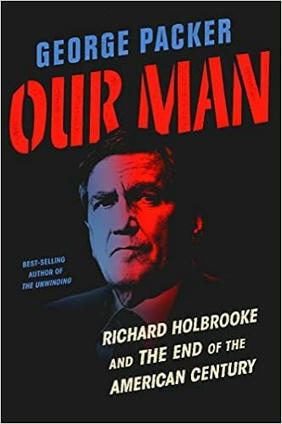
Book Review – Tales of Titans By David Bargueño - 11 July 2019 The Back Channel: A Memoir of American Diplomacy and the Case for its Renewal by William J. Burns. New York: Random House, 2019. Our Man: Richard Holbrooke and the End of the American Century by George Packer. New York: Alfred A. Knopf, 2019. Diplomatic memoirs encounter the same challenges as blind men who try to describe an elephant by touch for the first time. In the parable common across Hindu, Jain, and Buddhist texts, one man concludes an elephant must be similar to a snake after feeling the trunk. Another decides the animal is more like a tree trunk from the leg, and still another imagines some kind of fan from the ear. Each certain of his own perception, the men come to blows. They only resolve the conflict once they stop talking, start listening, and collaborate to “see” the elephant in its entirety. The parable applies to US diplomats making sense of their role in the “American century,” a moniker used to describe the hegemonic ascent of the United States since the mid-twentieth century. American diplomats held hostage in Iran in 1979 view their country’s golden hour through a different lens than those, for example, who negotiated the expansion of the North Atlantic Treaty Organization in European capitals after the Cold War. But their inevitable subjectivity – the inability of any diplomat to tell the whole story of the American century – should not relegate biographies to irrelevance on dusty bookshelves. Amid heated debates over the future of global order, two recent books have done a valuable service to the study of diplomacy: a professional practice with as many roles as it has metrics of effectiveness (for economic and political analyses, consular affairs, management, and crisis response). Far more than any neat theory of international relations, personal accounts reveal the values and interests of individuals who articulated and defended the United States during an unprecedented period in world history. In divulging their own successes and failures, two quintessential US diplomats shed light on future possibilities for the next generation. The Personal and the Professional Greatness, and one man’s relentless pursuit thereof, is the central question that animates George Packer’s novelesque biography, Our Man, Richard Holbrooke and the End of the American Century. The energy, ambition, and appetites of the late Richard Holbrooke come to represent the fallible character of his country, as well as the revolving door between the State Department, Wall Street, primetime news, academia, and think tanks. He served as a primary architect of the “foreign policy blob,” a community dismissed by the former deputy national security advisor for President Barack Obama. Holbrooke “lets us ogle ambition in the nude,” Packer writes; he did nothing to disguise his lobbying to become secretary of state and, after the Dayton Accords, to receive the Nobel Peace Prize (both efforts failed). An entirely different question concerns William J. Burns, the current president of the Carnegie Endowment of International Peace, in his autobiography: The Back Channel, A Memoir of American Diplomacy and the Case for Its Renewal. Recommending a clearer diplomatic strategy and a more rigorous operational doctrine, Burns shares lessons from a thirty-three year career in the foreign service, which culminated in his appointment as deputy secretary of state, undersecretary of state for political affairs, as well as ambassador to Russia and Jordan. Here is a career ambassador who ascended to the second-highest position in the State Department, above any rank achieved by Holbrooke, calling for the “self-awareness to be humble.” Unique Paths in the Jungle When read together, these books attest to the unique Weltanschauung of card-carrying members of the foreign policy establishment, wise (white) men batting on the same team at roughly the same time. Both accounts have received rave reviews for vivid insider coverage on some of the most consequential US foreign policy decisions of the era, from Vietnam and the Balkans for Holbrooke, to the Middle East and Russia for Burns. No fewer than seven former US secretaries of state praise Burns on the book jacket: “one of the finest US diplomats of the last half century,” according to James A. Baker III. Mainstream media outlets from the New York Times to the Financial Times – and several prominent authors whom Holbrooke nurtured with leaks throughout his career – celebrated Our Man as a masterpiece of reporting. Yet readers will draw distinct conclusions from the two books, not just in terms of the style and conduct of diplomacy as a profession, but more broadly on the role of the United States in the world. Both careers transpire at the high table of diplomacy, their protagonists’ mettle forged through bureaucratic setbacks and high-profile policy disagreements. (Neither Africa nor Latin America feature once in Holbrooke’s 600-page biography; Burns mentions the two regions five times in 500 pages.) But their paths diverge, not due to political partisanship or any academic theory, but simply because of the unique character of the two men. Holbrooke’s sharp elbows with colleagues and voracious appetites for speed and power (and women) rarely conformed to what Burns prescribes as crucial characteristics of “effective diplomats,” namely: discipline, balance, and judgment. Time and again in Packer’s biography, Holbrooke settles scores and self-promotes, from his first job as an entry-level diplomat in rural Vietnam (he served seven years in the foreign service) to his last political appointment as President Obama’s Special Representative for Afghanistan and Pakistan (AF-PAK). Burns compares diplomats to gardeners, “always alert to the need to prune, weed, and preempt problems,” borrowing the idea from the statesmen George Kennan and George Schultz. It is easy to picture Holbrooke sneering at that metaphor, if not responding with one of his favorite put-downs: “typical foreign service officer.” A Case Study The US invasion of Iraq casts the two men in sharp relief. Then serving as assistant secretary of state for Near Eastern Affairs (the geographic bureau responsible for Iraq), Burns countered the “recklessly rosy assumptions of the Bush administration” with a widely circulated memo called the “Perfect Storm.” He cautioned against the US invasion by citing the dangers of deep sectarian conflict, institutional collapse, and regional instability. With remarkable candor, Burns reflects in his memoir: “Having tried to highlight all the things that could go wrong, all the unanswered strategic and practical questions, and all the flaws in going it alone, why didn’t I go to the mat in my opposition or quit?...I still find my own answer garbled and unsatisfying.” He acknowledges the personal and professional variables that informed his calculus, including the “conceit we could still help avoid even worse policy blunders from within the system than from outside it.” Holbrooke, on the other hand, suffered a well-paid exile from public service on Wall Street during the Bush administration. But he also went out of his way to support the US invasion – in a region of the world where he had no expertise. As Congress debated a war resolution on Iraq, Holbrooke told John Kerry he needed to support the invasion to become a viable presidential candidate. Holbrooke, the former US ambassador to the United Nations, described the UN’s support of the US invasion as “desirable but not necessary” in testimony before the Senate Foreign Relations Committee. The US government’s (failed) attempts at counter-insurgency and nation-building in Vietnam haunted Holbrooke for his entire career, to the point he exasperated President Obama by drawing regular comparisons in the White House Situation Room. But Vietnam had also “taught him again and again that a soft Democrat was politically doomed,” and US domestic politics took precedent. The Iraq war proceeded (from 2003 until the present), Kerry lost the presidential election despite supporting the US invasion, and Holbrooke continued to earn several million dollars per year on Wall Street from banking, boards, and speeches. In an otherwise sympathetic portrait of Holbrooke, Packer concludes: “a whole class of people in Washington and New York sent other peoples’ children to fight in Afghanistan and Iraq while they found ways to get rich.” Years later, when a young foreign service officer stationed in Afghanistan asked Holbrooke “about our other war, Iraq,” President Obama’s AF-PAK envoy tersely responded: “I see no need to go to Iraq.” Burns disagreed, and he visited Iraq several times before resigning in 2014. Burns and Holbrooke, two titans of US diplomacy, exemplified unique strengths and limitations of an American century during their respective careers. Their successors would be wise to learn from their legacies. David Bargueño is a US foreign service officer and Global Governance Futures 2030 Fellow. The views expressed here are his own; the US government in no way endorses these views.
From pariah to protector? South Africa, genocide, and the world court By Imogen Saunders - 07 March 2024 South Africa’s case against Israel at the International Court of Justice belies its recent history of ignoring international law, writes Imogen Saunders. But the case could have long term consequences for how international justice operates. On 29 December 2023, South Africa instituted proceedings against Israel in the International Court of Justice in The Hague. Pretoria accused Israel of failing to prevent genocide in the Gaza strip and of committing genocide there. South Africa’s recent history with international law has been checkered. In 2015, South African authorities refused to arrest Sudanese President Omar al-Bashir despite an outstanding warrant for his arrest which lead to a ruling against South Africa by the ICC. In 2023, there was doubt about whether South Africa would arrest Russian President Putin (also subject to an ICC arrest warrant) on his planned visit to the BRICS summit in Johannesburg. Ultimately Putin chose not to visit in person, freeing Pretoria from choosing between following international law and protecting their ally. South Africa has now turned to a different court – the International Court of Justice (ICJ) – to enforce international law. There are of course political aspects to this decision: Israel had a close relationship with the apartheid South African government in the 1970s and 1980s, and there are clear parallels between the colonialism imposed on Africa and the situation in Gaza. Legal issues The use of the ICJ by an African state is unusual. African nations have been involved (as applicant or respondent) in 37 contentious cases before the so-called ‘World Court’ since its inception in 1945. Over two-thirds of these cases have had African nations as both applicant and respondent. Most of these are regional disputes over territory, border incursions and delimitation. South Africa’s decision to enforce an international treaty designed for preventing atrocities is thus outside the normal use of the Court by African states. Historically the use of human rights law, international criminal law and/or atrocity-prevention instruments has predominantly been by non-African states against African States: not the other way round. This usually occurs in one of two ways. In one, the non-African state will bring domestic criminal proceedings against an African official accused of international crimes; this may result in the African ‘target’ state bringing an ICJ challenge to this non-African state’s exercise of jurisdiction (such as the Democratic Republic of the Congo’s challenge to Belgium’s prosecution of the then Congolese Foreign Affairs Minister; or the Republic of the Congo’s challenge of France’s prosecution of certain Congolese officials). In the other scenario, the non-African state will use the ICJ to directly enforce an international convention against the African State – such as Belgium’s invocation of the Convention Against Torture against Senegal in 2009 accusing Senegal of failing to prosecute Hissène Habré for acts of torture. Normally in international law, a state enforcing a right owed to it must show it is affected by breach of that right: usually by direct injury to it or one of its nationals. But there is a doctrine of Erga omnes partes – meaning ‘owed to all parties’ – which allows a state that has not suffered direct injury from a breach of a treaty obligation to nonetheless enforce that obligation against the breaching state. It is the quality and nature of the obligation – one that all humanity has an interest in upholding – that gives rise to the right of an otherwise ‘unaffected’ state to enforce it. This is particularly important for breaches of grave human rights and/or atrocity crimes. This is because the victims of the alleged abuses and crimes are often either the nationals of the state perpetrating the crime or may not be nationals of a state recognised in international law at all, as is the case in Gaza. Implications South Africa’s case is significant, because it builds on international acceptance of this common interest as a route to international accountability. To be clear, the ICJ has not concluded anything on the merits of the case against Israel. However it has, by a majority in the provisional measures stage of the South Africa case, accepted the right of South Africa to bring the case. There is a certain irony that South Africa has contributed in this way to the development of the erga omnes partes doctrine. Prior to the current proceedings, the only ICJ cases involving South Africa were the two South-West Africa cases, brought against the apartheid South African government in 1960 by Ethiopia and Liberia. Ethiopia and Liberia claimed that the discriminatory apartheid policies of the Pretoria regime clearly violated the terms of the mandate that the League of Nations (the predecessor to the United Nations) had set up over (then) South-West Africa (present-day Namibia). That case was dismissed for lack of a legal interest, or standing, on behalf of Ethiopia and Liberia, as they were seeking to enforce the rights of foreign nationals rather than their own citizens. The court held that ‘an actio popularis, or right resident in any member of a community to take legal action in vindication of a public interest . . . is not known to international law as it stands at present.’ Fast forward 60-odd years and the rights of states to take legal actions through the doctrine known as erga omnes partes is solidifying as an accepted part of international law, in part because of the actions of South Africa. The past interactions South Africa has had with international law cannot be underestimated. The grave human rights abuses of the apartheid era were well known at the time – and further confirmed in the ICJ hearings in the South-West Africa cases. Nonetheless, other states chose to use rhetoric to condemn the regime rather than take real action to repress or stop it. When the World Court was called on, as outlined above, it found itself with its hands tied by a procedural bar. The international adjudicatory system could not prevent or stop South Africa’s occupation of South-West Africa, or apartheid in South Africa. In this context the pleadings from South Africa in the provisional measures phase of the case against Israel in February 2024 take on a special significance: ‘We are also particularly mindful of Israel’s institutionalized régime of discriminatory laws, policies, and practices designed and maintained to establish domination, subjecting the Palestinian people to apartheid…’ – His Excellency Mr Vusimuzi Madonsela, is South Africa’s ambassador to the Netherlands. ‘The people of South Africa and of Israel both have a history of suffering. Both States have become parties to the Genocide Convention in the determination to end suffering… It is in terms of this Convention, dedicated to saving humanity, that South Africa brings this dispute before the Court.’ – John Dugard, Professor of International Law at the University of Pretoria. South Africa, in its pleadings, invoked its own history to give itself a right and justification (morally, if not legally) that extends beyond the common interest required for erga omnes partes standing. Its case against Israel is grounded in the historical injustice that South Africa itself suffered, and it is striking that this is the first use of the World Court by post-apartheid South Africa. However, the transformation from pariah to protector cannot be considered complete while South Africa picks and chooses which international laws (and international institutions) it will support. In 2023 after much prevaricating, Pretoria took steps so that it could arrest Putin if he did travel to South Africa: but it resolve this was never tested. It will be interesting to see how South Africa approaches its new found interest in international law if the Russian president does ever visit South Africa. Associate Professor Imogen Saunders is the Director of the Centre for International and Public Law at the Australian National University College of Law. She researches in international law, including on the history of women in international law, backlashes against international law and institutions, and international law and territory. This first appeared on Africa@LSE. Photo by Clayton
Europe’s Legitimacy Crisis isn’t just about Identity, it’s about Institutions By Matt Wood - 03 August 2017 The UK’s decision to vote for Brexit has been viewed by many observers as proof that the European Union suffers from a deep crisis of legitimacy. As Matt Wood highlights, this crisis is often conceived of in identity terms, with a large number of EU citizens no longer feeling ‘European’ or identifying with the goals of European integration. However, he argues that while public identification with Europe is important, the roots of the EU’s legitimacy crisis lie within the EU institutions and their perceived distance from citizens. The debate on Europe’s legitimacy since Britain’s Brexit vote has tended to focus on issues of identity and meaning. Why did the British public not feel ‘European’ enough to remain? How could campaigners fail so spectacularly to communicate the benefits of single market membership? Did we simply take the Union for granted and allow the rise of far-right xenophobic populism to take hold? The debate takes on an almost hysterical character. How could the British be so selfish as to put Europe’s stability under threat at a time of heightened political and security threats? Brexit is characterised as an act of ‘self-harm’ or ‘political malfeasance’ with strong emotional connotations for the ‘heart and soul’ of the European project. While questions of identity and nationalism are clearly important to explaining Brexit and the EU’s wider legitimacy ‘crisis’, at the end of June, scholars from across the continent met in Berlin to discuss the issue from a different angle. We aimed to study how the EU’s commitment to different forms of legitimacy has changed over time, and to show the institutional dynamics that support or threaten democracy at the EU level. These, we believe, are at the root of the current legitimacy ‘crisis’, as well as showcasing some of the Union’s strengths and future areas for development. On the one hand, the EU has surprisingly high levels of transparency by international standards. Publicly available websites track the range of meetings European Commissioners have with interest groups, corporate representatives and media organisations, providing a very clear and accessible picture of all the contacts of Commissioners, MEPs and other representatives at the EU level. For such a complex range of institutions, this is an impressive commitment to accessibility, something the UK only recently followed in 2010. EU institutions are also remarkably accountable compared to UK government departments. An unwieldy system of committees (‘comitology’ in EU-speak) checks and double checks the Commission’s different agencies, departments and projects run strictly according to standards of good governance, with tight controls on spending and requirements for constantly reporting budgetary minutiae. The EU even provides funding for interest groups to scrutinise the Commission’s activities and represent usually marginalised communities, for example through its ‘umbrella’ interest groups who are given a say directly on Commission panels. However, when we look at how open and inclusive EU bodies are, there are a lot more problems. EU ‘umbrella’ groups for interest groups around the continent tend to be populated by a small clique of well-resourced and active organisations who can navigate the complex accountability process. When the Parliament calls for evidence from ‘civil society’, these same groups tend to focus. A similar ‘insular’ game tends to evolve where scientific evidence is concerned – similar universities, think tanks and corporations tend to present evidence, and get invited again to present. To some extent this ends up looking a bit like a vicious circle where the same people tend to get represented. Despite making efforts to engage civil society – often more so than national governments – the Parliament and Commission end up looking distant and cloistered. This is an ironic state of affairs. The Union has increasingly opened up since the early 2000s to appear, very self-consciously, an accountable and transparent set of institutions. Arguably however, by engaging in this agenda of accountability and transparency, the EU set itself on a course to become so complex and unwieldy that it paradoxically increased its democratic deficit and alienated the public even more. Perhaps this made Brexit more likely. At the very least, it’s difficult to see the accountability agenda as helping the Union in this regard. Nevertheless, as recent months have shown, the Union remains strong in the face of legitimacy challenges. Emmanuel Macron’s crushing election victory and his victory speech, sound-tracked by the Ode to Joy, symbolised this most of all. The other side of the story is that the Union’s work to improve connections with civil society seems to have reaped some rewards. As Kathleen McNamara notes in her book The Politics of Everyday Europe, we’ve seen the EU become increasingly embedded in Europe’s subconscious since the turn of the century. From the labels on food and medicines to the EU passport and the euro itself, we’ve seen EU institutions increase their ‘reach’ and ‘visibility’ in the public sphere. Since Britain’s vote to leave, support for the EU has grown as Europeans seem to be more wary of losing the freedoms they’ve gained since the Union was formed. The EU’s democracy is hardly perfect. Indeed, efforts to improve it in recent years through a transparency and accountability agenda have ended up making the EU seem increasingly impenetrable and inaccessible. This produced the complex administrative and legal context in which the European Court of Justice became increasingly prominent as an arbiter of European matters, and its growing prominence exposed it as a target of Brexiteer rage. And yet, the growing everyday influence of EU institutions has also meant that, once they came under threat from the Brexit vote, the risk of losing them perhaps led Europe to rally to their aid. Macron’s election, and Geert Wilders’ failure in the Dutch election are evidence of this. The politics of Europe’s legitimacy crisis is complex and multifaceted, and at our workshop in Berlin we aimed to pick apart this complexity and see where its strengths and weaknesses lie. Our aim was to get beyond the mainstream media debate about identity, with its saccharine depictions of young, photogenic women shedding quiet tears down Union flag-painted faces. While public identification may be crucial to understanding the electoral dynamics of this ‘crisis’, its roots lie in the institutions themselves; how they work, and the support and contention they create. Matt Wood is a Lecturer and Deputy Director of the Sir Bernard Crick Centre for the Public Understanding of Politics at the University of Sheffield. His is an ESRC Future Research Leaders Fellow, focusing on stakeholder engagement and legitimacy in the EU. This article first appeared on EUROPP – European Politics and Policy, and it gives the views of the author, and not the position of LSE Brexit nor of the London School of Economics. Photo credit: quapan via Foter.com / CC BY FacebookTwitterShare
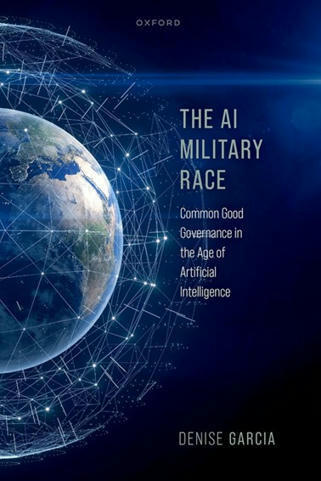
Book Review - The AI Military Race: Common Good Governance in the Age of Artificial Intelligence By Allison Pytlak - 10 September 2024 The AI Military Race: Common Good Governance in the Age of Artificial Intelligence by Denise Garcia. Oxford: Oxford University Press 2023. 320 pp., £30 hardcover 9780192864604 Denise Garcia’s The AI Military Race: Common Good Governance in the Age of Artificial Intelligence is a valuable contribution to the growing literature on a complex and rapidly evolving topic—the military uses of artificial intelligence (AI). She observes that the militarization of AI will, and already is, significantly impacting global peace and security, and relations between states. Garcia argues that there is an urgent need to build international norms on the basis of ‘common good governance’, a framework that she details throughout the book. By zooming in on a particular aspect of militarized AI—the development of autonomous weapon systems, or so-called ‘killer robots’—Garcia argues that ‘transnational networked cooperation’ presents the best response to the weaponization of technology and for safeguarding human security. Garcia begins by presenting the state of play concerning the extent to which AI can and is being invested in and used by the militaries of a few “technologically powerful countries” (p.7). The volume then narrows to focus in mainly on the issue of autonomy in weapon systems. As Garcia notes, the use of autonomy and AI computation in military operations is not the problem per se; the lack of adequate human involvement in overseeing the life-cycle stages of weapon design and operations are what is most concerning, particularly when AI and machine learning are used as the basis for selecting and engaging with targets: “In other words, it is the delegation of decisions to target and to kill to an autonomous system, and to an algorithm, that is more likely to contravene moral, ethical, and legal frameworks.” (p.10). The book goes on to describe efforts from the scientific and technology communities, international organizations like the International Committee of the Red Cross (ICRC), and global civil society more broadly to challenge the development and use of autonomous weapons, notably through a diplomatic process at the United Nations (UN). Garcia helpfully details not only the history of this process and its related political dynamics, but she also describes the applicability of international law and relevant political frameworks to the issue, including where they fall short or raise fundamental questions. This is the basis from which Garcia posits that because of the extent to which the weaponization of AI disrupts international law, new norms and laws are required. To this end, she highlights the global efforts to achieve a treaty banning autonomous weapons and in particular the work of the Campaign to Stop Killer Robots, a civil society-led advocacy coalition over the last decade. Herein lies what I took to be her central call to action—a treaty to prohibit autonomous weapons. In different sections of the book, Garcia points to earlier successful cooperation and international law-making in other areas—the bans on nuclear and chemical weapons; legal restrictions on conventional arms; and agreements that govern global commons such as the ozone, the oceans, and outer space. Garcia argues that previous successes in global cooperation can inform the development of common good governance on military uses of AI, notably autonomous weapons. She identifies several common precepts that unite efforts in these areas, including frameworks to reduce distrust, precautionary frameworks, a role for science and the scientific community, and the creation of spheres of peace. Foundational to Garcia’s overarching thesis are the mutually reinforcing concepts of common good governance and transnational networked cooperation. Both are reiterated and stressed continuously throughout the volume. As she explains, common good governance arises from “the combined efforts of multiple governments and other entities’ endeavoring to create global public goods to ensure the mutual benefit and common good of all peoples.” (p.22). It occurs when different networks and communities work together to cooperatively address a mutual challenge. Not surprisingly then, her articulation of transnational networked cooperation “offers an inclusive way to look at the solutions for the contemporary problems of global cooperation.” She presents five requisite criteria for such cooperation: authoritative knowledge, precautionary governing frameworks, the presence of epistemic communities, the existence of transnational advocacy networks, and cooperation to promote urgency (p.40). Underwriting both concepts is a third critical pillar of Garcia’s volume, humanity’s security. Overall, the volume is a significant contribution to academic literature on a topic that is not only complex but rapidly evolving and therefore challenging to explain and keep abreast of. Garcia deftly navigates and presents in relatively equal degrees the ethical, technical, legal, policy, and diplomatic dimensions of the autonomous weapons issue. She helpfully presents and breaks down complex topics like meaningful human control, and frameworks including international humanitarian law in ways that are highly accessible, and that acknowledge where there are differences in opinion and approach. I also found her approach of looking at what has worked in other issue and threat areas valuable, having undertaken a similar approach in my recently published study of cyber accountability. The author’s mapping of the contributions of diverse stakeholders over the last decade, including from the private sector, the scientific community, technologists, academia, activists and others accurately portrays the breadth of concerns and perspectives that exist about “killer robots”, thereby making a robust argument against these weapon systems. She effectively situates her call to action on killer robots within a broader set of concerns and trends about the militarization and weaponization of technology, and the importance of safeguarding what she refers to as ‘humanity’s security’. While the author does not shy away from advocating for her own perspectives and positions, she acknowledges and to some extent explains opposing views and approaches to the killer robots issue. In some places, she further unpacks how divergent views on ideas like meaningful human control have become obstacles to agreeing new norms or policies. A particularly unique value add of this publication is the author’s personal experience as a participant in several of the initiatives that she describes. This enables a closer look inside of negotiating rooms and campaigning initiatives than is often seen in academic research and helps to capture the complexity and challenges involved in rendering change. It also helps to demonstrate the widening gulf between technological advancement and the efforts of policymakers, in a bid for urgent solutions. Like any publication on a topic that is rapidly evolving, there is a risk that real-world events will outpace what is captured in this volume. As well, readers who are seeking a wider examination of the role of AI in militaries may find the book’s focus on autonomous weapons somewhat limiting. It can also be at times slightly repetitive of arguments or concepts that surface frequently but are sometimes presented differently, which in some places can be challenging for a reader. That said, by reiterating the core concepts on which the volume is premised and rooting her research in both theory and policy, Garcia compellingly constructs a sound argument for why and how to challenge the weaponization of technology. Allison Pytlak is the Senior Fellow and Director of the Cyber Program at the Stimson Center. In her former role with the Women's International League for Peace and Freedom, Pytlak served on the Steering Committee of the Campaign to Stop Killer Robots. FacebookTwitterShare
Noam Chomsky: Moral Depravity Defines US Politics By C. J. Polychroniou - 23 November 2018 The US midterm elections of November 6, 2018, produced a divided Congress and essentially reaffirmed the existence of two nations in one country. But they also revealed, once again, the deep state of moral and political depravity that prevails in the country’s political culture — at least insofar as political campaigns go. In the interview below, world-renowned scholar and public intellectual Noam Chomsky discusses how the major issues confronting the United States and the world at large were barely addressed by the majority of candidates of both parties. C.J. Polychroniou: Noam, with people still arguing about winners and losers from the 2018 midterm elections (and there is clearly a lot to say about what those elections mean), what do you consider to be the most striking features of the latest manifestation of American democracy in action? Noam Chomsky: The most striking features are brutally clear. Humanity faces two imminent existential threats: environmental catastrophe and nuclear war. These were virtually ignored in the campaign rhetoric and general coverage. There was plenty of criticism of the Trump administration, but scarcely a word about by far the most ominous positions the administration has taken: increasing the already dire threat of nuclear war, and racing to destroy the physical environment that organized human society needs in order to survive. These are the most critical and urgent questions that have arisen in all of human history. The fact that they scarcely arose in the campaign is truly stunning — and carries some important, if unpleasant, lessons about our moral and intellectual culture. To be sure, not everyone was ignoring these matters. They were front and center for those who are constantly vigilant in their bitter class war to preserve their immense power and privilege. Several states had important ballot initiatives addressing the impending environmental catastrophe. The fossil fuel industry spent huge, sometimes record-breaking, sums to defeat the initiatives — including a carbon tax in the mostly Democratic state of Washington — and mostly succeeded. We should recognize that these are extraordinary crimes against humanity. They proceed with little notice. The Democrats helped defeat these critically important initiatives by ignoring them. They scarcely mentioned them “in digital or TV ads, in their campaign literature or on social media,” a New York Times surveyfound. Nor, of course, were they mentioned by the Republicans, whose leadership is dedicated to driving humanity off the cliff as soon as possible — in full knowledge of what they are doing, as easily demonstrated. The Times article goes on to explain that “Environmental activists and political scientists say it is a reflection of the issue’s perpetual low ranking among voters, even Democratic voters, and of the intense polarization along party lines that has developed around global warming.” The article failed to add that this assessment is an incredible indictment of the country and its political, social, economic and media institutions, all of which, so the assessment claims, have sunk to such a level of depravity that the question of whether organized human society can survive in any minimally tolerable form, in the near future, is of little consequence. Whether that unspoken indictment is correct, we cannot be sure. It is perhaps of some significance that one Democratic candidate, Sean Casten, flipped a Republican district while making impending climate disaster the centerpiece of his campaign. There is plenty of competition for moral depravity in the current remarkable moment of human history. Perhaps the prize goes to a bureaucracy, maybe in honor of Kafka: Trump’s National Highway Traffic Safety Administration. Right in the midst of the campaign, it produced a detailed study calling for an end to regulations on emissions, with a rational argument: extrapolating current trends, it turns out that by the end of the century the game will be over. Automotive emissions don’t contribute very much to the catastrophe, so there isn’t any point trying to limit them. In brief, let’s rob while the planet burns, putting poor Nero in the shadows. This surely qualifies as a contender for the most evil document in history. Again, not an issue in the campaign. There have been many monsters in the past … but it would be hard to find one who was dedicated to undermining the prospects for survival of organized human society, not in the distant future — in order to put a few more dollars in overstuffed pockets. It’s hard to find words to describe what is happening before our eyes. The same is true of the second truly existential threat: nuclear war. A few weeks before the election, Trump announced that the US is withdrawing from the INF treaty, which eliminated short-range missiles deployed in Western Europe and Russia — extremely hazardous weapons, which have only a few minutes flight-time to Moscow, posing a decapitation threat, a sudden attack that would destroy any possibility of response. That, of course, sharply increases the danger of a nuclear response to warnings given by automated systems that have often failed in the past, thus ending all of us. Anyone familiar with the record knows that it’s a virtual miracle that we have so far avoided terminal nuclear war. The threat, which was already grave, was heightened by the Trump nuclear posture review that authorized new destabilizing weapons and lowered the threshold for nuclear attack. This latest move increases the threat further. Scarcely a mention on the campaign trail or in coverage. The US is withdrawing from the treaty on the grounds that China is not a partner and that the Russians have violated it — they in turn claim that the US has violated it. It’s plain how to address these problems: through inspections and diplomacy, neither of which has been attempted. Rather, let’s just blithely increase the threat of total destruction. And let’s ignore all of this in the vast outpourings during the political campaign. Again, we have to ask some serious questions about the prevailing moral and intellectual culture — and about the urgency of providing remedies, very soon. Let’s put aside what are merely the most significant questions in human history, and turn to what is within the realm of discussion. A striking fact about the election is that it once again demonstrated the failure of the Democratic Party as a whole to deal with issues that matter to working people. While working-class people of color largely supported the Democratic Party, even more than before, the party lost the non–college educated white population. What’s more, it seems to be of little concern, at least to Democratic Party leaders, the “Wall Street Democrats” as they are sometimes called. They were exultant about their successes in the affluent suburbs, where normally Republican voters were disgusted by Trump’s vulgarity. Whether they come naturally or are feigned, Trump’s antics help keep his white working-class constituency in line while his party stabs them in the back at every turn, meanwhile serving its real constituency, great wealth and corporate power, with impressive dedication. The betrayal of working-class America could hardly be clearer, though fortunately, some are breaking free of the treachery. One positive feature of the midterms was the success of a diverse group of young progressive candidates, mostly women — a tribute to the popular activism of recent years, and a hopeful sign for the future, if it can expand and flourish. On the surface, it seems that Trump’s success with much of the voting constituency can be attributed to racist and xenophobic appeals, particularly concerning the imminent threat of “invasion” by hordes of terrorists and criminals approaching our borders that he focused his tantrums on up to the election – then dropping the topic when it was no longer needed to rally the faithful. Few seem to have recalled that Trump was pulling a leaf from Reagan’s playbook. In 1985, our intrepid leader strapped on his cowboy boots and declared a national emergency because Nicaraguan troops were a two days’ drive from Harlingen, Texas — and people didn’t collapse in laughter. Trump made a similar move in warning that if people fleeing from misery and oppression (misery and oppression for which we are largely responsible) reach our borders they’ll try to kill us all. Heavily armed militias travelled to the border to back up the thousands of troops deployed to defend us, and it seems to have worked. Surveys report that people did vote for Trump because only he could save us from destruction by these criminal hordes. That also carries some lessons. But when we ask why Trump’s strategy works, we find something deeper, which extends pretty much worldwide, with particularities from place to place. In conditions of economic distress, a sense of hopelessness, justified contempt for institutions, and understandable anger and resentment about what is being done to them, people can become easy prey to demagogues who direct their anger toward scapegoats, typically those even more vulnerable, and who foster the symptoms that tend to rise to the surface under such circumstances. That’s been happening, worldwide. We see it in election after election in many countries, and in other ways. In the US, working-class people have suffered 40 years of stagnation while wealth concentrates in very few hands, leading to staggering inequality. The Democrats have ignored all this, and worse, have carried forward the neoliberal policies that took off with Reagan and Thatcher and have imposed these consequences, by design. And for the designers, the neoliberal programs have been brilliantly successful, in ways that we need not review here. Despite low unemployment, wage growth, after a rise in 2014-15, is now barely keeping up with inflation while corporate profits are skyrocketing, particularly for the predatory financial institutions, which emerged from the crisis for which they were responsible even richer and more powerful than before. A side effect is that the country’s wealth is being shifted from R&D, innovation and product development, to financial transactions in the interests of the very rich. Fine for them, but disastrous for the health and future of the society. The concentration of wealth and enhancement of corporate power translate automatically to decline of democracy. Research in academic political science has revealed that a large majority of voters are literally disenfranchised, in that their own representatives pay no attention to their wishes but listen to the voices of the donor class. It is furthermore well established that elections are pretty much bought: electability, hence policy, is predictable with remarkable precision from the single variable of campaign spending, both for the executive and Congress. Thomas Ferguson’s work is particularly revealing, going far back and including the 2016 election. And that is a bare beginning. Legislation is commonly shaped, even written, by corporate lobbyists, while representatives who sign it have their eyes on funding for the next election. The midterms highlighted other ominous developments. The Republicans increased their Senate majority — with barely 40 percent of the votes cast. Right now, 60 senators are elected by states with 25 percent of the population, which means some 15 percent of the vote (mostly rural, white, religious, skeptical of science, heavily armed). And the tendency is increasing. It’s hard to see how some form of civil conflict can be avoided unless the Democrats reverse course sharply and become a political party that doesn’t simply abandon the working class to its bitter class enemy, as they have done for 40 years. How do we explain the fact that while US politics seems nastier, more polarized and more divided than any other time in recent history, both parties stay away from addressing the most critical issues facing the country and the world at large? In 1895, the highly successful campaign manager Mark Hanna famously said: “There are two things that are important in politics. The first ismoney, and I can’t remember what the second one is.” Those who control the wealth of the country have their own priorities, primarily self-enrichment and enhancement of decision-making power. And these are the priorities that prevail in a neoliberal democracy with the annoying public dismissed to the back rooms where they belong. The CEOs of major banks surely understand the extraordinary threat of environmental catastrophe but are increasing investment in fossil fuels because that’s where the money is. Like the energy corporations, they are hardly eager to support candidates warning of the serious crimes they are committing. Lockheed-Martin and its cohorts are quite happy to see vast increases in the military budget and are surely delighted with such declarations as the Trump administration’s new National Defense Strategy, just released by the US Institute of Peace (lacking a sense of irony, the bureaucracy is quite happy to caricature Orwell). This somber document warns that our dangerously depleted military, which almost overwhelms the rest of the world combined, might not be able to prevail in a two-front war against Russia and China. Of course, neither military industry nor the distinguished authors of the report believe that such a war could even be fought without terminal destruction, but it’s a great way to siphon taxpayer dollars away from absurdities like health and education and into the deserving pockets of the captains of industry and finance. Not many political figures will dare to dismiss such awesome threats to our security. As for the nastiness, it’s largely a result of the drift to the right of both parties during the neoliberal years, the Democrats becoming what used to be called “moderate Republicans” (or often worse) and the Republicans drifting off the spectrum, with devotion to wealth and corporate power so extreme that they cannot possibly win elections on their actual policies. They have therefore been compelled to mobilize voting constituencies on “cultural issues,” diverting attention away from actual policies. To keep them in line, it’s natural for the leadership to demonize the political opposition as not merely wrong but intent on demolishing their most deeply held values — and for the latter to resort to contempt for the “deplorables.” Soon antagonisms degenerate to warfare. There are many illustrations of how the Republican leadership has sought to organize a voting constituency, some of which we’ve discussed before. One revealing case is abortion rights. In the ‘60s, the Republican Party was strongly pro-choice, including the leadership (Reagan, Ford, George H.W. Bush and others). Same with voters. In 1972, two-thirds of Republicans believed abortion to be a private matter, with no government involvement. Nixon and his cohorts realized that they could attract the Catholic vote, traditionally Democratic, by adopting an anti-abortion plank. Later in the ‘70s, evangelicals began to organize for political action. Among their demands was maintaining segregated schools. Republican operative Paul Weyrich recognized an opportunity. An open call for segregated schools wouldn’t work, but if the Republican Party pretended to oppose abortion, it could pick up the huge evangelical vote, now a core part of Trump’s voting base. The leadership accordingly shifted to passionate “pro-life” advocates, including those who it is sometimes believed had some character and honesty, like Bush I, who shifted along with the rest. Meanwhile the actual constituency of the Republican Party remains great wealth and corporate power, even more dramatically so under Trump. It is quite an achievement to serve this actual constituency with dedication while maintaining a hold on the voting base. As their voting base shrinks, Republican leaders understand that the GOP is becoming a minority party, which is why they are so dedicated to finding modes of voter suppression and packing the courts with reactionaries who will support their efforts. It should also be noted that popular opinion differs from the party leadership on many central issues. But as already mentioned, since the majority of the population is disenfranchised, it doesn’t matter much. To take just one example, for 40 years of polling the population has strongly favored higher taxes on the rich — as taxes on the rich decline. Bernie Sanders was re-elected to the Senate while his protégé Alexandria Ocasio-Cortez won a smashing victory over her Republican opponent for New York’s 14th District and became, in fact, the youngest woman elected to Congress. In fact, there are now probably as many Democratic Socialists in the House as there are conservative Democrats, so the question is whether progressives should go on to form a third party or try to change the Democratic Party from within. What’s your take on this matter? In the 18th century, with all of its extreme flaws, the US constitutional system was a major step forward in democratic participation as compared with Europe. Even the concept “we the people,” though grossly misleading, was a conceptual breakthrough. Over the years, however, by comparative standards the system increasingly ranks as quite regressive. It is doubtful, for example, that Europe would admit a country with the US system as a new member. In particular, the system is radically rigged against any challenge to the governing duopoly. To develop a basis for a third party would require a serious and sustained effort in popular mobilization — not impossible, but not now on the horizon. There do seem to be possibilities to shift the character of the Democratic Party, at least back to its modern New Deal origins, and beyond (it already is considerably beyond in some respects as a result of the civilizing effect of the activism of the ‘60s and its aftermath). There are possibilities for development of independent parties, beginning at the local level, adopting fusion policies for more general elections, perhaps gaining enough traction to take part more actively in the political system. But we should never forget that electoral politics, while not to be dismissed, should not be the prime focus of serious radical political action, which aims to change the basic institutions that undergird the political system, to dismantle hegemonic ideologies, and to help develop the kind of mass consciousness that must be the basis for badly — even desperately — needed social and political change. C.J. Polychroniou is a political economist/political scientist who has taught and worked in universities and research centers in Europe and the United States. His main research interests are in European economic integration, globalization, the political economy of the United States and the deconstruction of neoliberalism's politico-economic project. He is a regular contributor to Truthout as well as a member of Truthout's Public Intellectual Project. He has published several books and his articles have appeared in a variety of journals, magazines, newspapers and popular news websites. Many of his publications have been translated into several foreign languages, including Croatian, French, Greek, Italian, Portuguese, Spanish and Turkish. He is the author of Optimism Over Despair: Noam Chomsky On Capitalism, Empire, and Social Change, an anthology of interviews with Chomsky originally published at Truthout and collected by Haymarket Books. This first appeared on TruthOut and was reposted with permission. Image credit: oinonio via Flickr (CC BY-SA 2.0) FacebookTwitterShare
Madame Secretary-General: A Modest Proposal By Thomas Hale - 29 November 2011 In 2008 Hillary Rodham Clinton earned the support of millions by running for President of the United States. In 2009 she surprised the world by going to work for her former rival. In 2016 she could do both, by running a global campaign to become Secretary-General of the United Nations. Seeking the top UN job, and pursuing it in a way that resembles a political campaign, would be good for the United Nations and good for the world. Implausible? Ms. Clinton’s political career has defied conventional wisdom before. Secretaries- General are nominated by the Security Council and approved by the General Assembly for five-year, renewable terms. By convention, the process has unfolded in closed-door meetings where powerful countries agree on a mutually acceptable candidate, whom they then present to a generally passive General Assembly. While the legal elements—nomination by the Security Council and approval by the General Assembly—cannot be changed, nowhere is it written that the selection process must be a backroom bargain between powerful countries. What if a candidate for Secretary-General actively campaigned for the job? What if she earned the support of governments by appealing directly to their people? While citizens cannot vote for the Secretary-General, governments would at least have to consider a candidate who could demonstrate—through public opinion polls, a petition drive, and other means—that she had broad global support. From Tahrir Square to Wall Street, 2011 has reminded us that people power can move world politics. Combined with a behind-the-scenes lobbying effort that appealed to governments directly, such a global campaign could remake the rules for selecting the world’s top diplomat, and redefine both the position of Secretary-General and the United Nations itself in the process. A popular mandate, even a symbolic one, would give the Secretary-General a potent bully pulpit from which to press for peace, macroeconomic stability, development, health, and other global priorities. Given multilateral gridlock on these and other crucial global issues, the world cannot afford a weak UN Secretariat. Such a strategy would be quixotic for almost any candidate. But Ms. Clinton—with abundant qualifications and experience, global name recognition and popularity, proven campaigning skills, and vast networks of supporters—could just pull it off. Power from the People
The world needs a strong, effective United Nations, and the United Nations needs a strong, effective leader. There is now widespread consensus that Ban Ki-moon has not become a forceful advocate for peace, development, human rights, environmental protection, and the other goals of the United Nations. The Secretary-General is, technically, the agent of the very member states he or she must, in reality, lead. Precisely because the Secretary-General has little formal power, it is crucial that the holder of the position be able to persuade and cajole member states to take action on global problems. A popular mandate, even an informal one, would be an invaluable asset in this role. The Secretary-General can never dictate to countries—and we would not want her to. Instead, the UN leader relies on soft power. She sets the global agenda, she frames the discussion, and she focuses attention on the issues that matter. When necessary, she harnesses the weight of global opprobrium to pressure violators of the UN’s goals. The tools available to the Secretary-General would be considerably strengthened if she could credibly speak not just in the name of the world’s governments—who are often part of the problem—but also for its peoples. Consider some recent tasks on the Secretary-General’s agenda: persuading Iran to comply with non-proliferation rules; convincing rich nations to relieve the food crisis in the developing world; achieving global agreement in relation to tackling climate change. In each of these cases some countries are working against the interests of their own people or people elsewhere. The Secretary-General can speak for these interests—our interests—far more effectively if he or she has our explicit consent. There is also a democratic principle at stake. The UN Charter begins with the words, ‘We the peoples of the United Nations...’, but historically these ‘peoples’ have been conspicuously absent from the workings of the UN. As the process of globalization has intensified, popular anger has been directed at international organizations that are seen as aloof and unconnected to the people whose lives they affect. Building a stronger link between people and their international public servants, even a symbolic one, would arguably reduce what has been called globalization’s democratic deficit. Not only would a more democratically legitimate Secretary-General find it easier to convince member states to tackle difficult issues, he or she would also give the UN Secretariat greater influence with respect to the sprawling family of UN institutions. Reform-minded governments, such as the United States, have long advocated a stronger UN executive officer, who could improve the efficiency of the global body’s operations. A publicly approved Secretary-General would have a stronger mandate to effectively tackle the vested bureaucratic interests that impede the UN’s work, and could mould the organization into a more coherent and competent institution. A United Nations that is reinvigorated with a popular leader would clearly be in the interests of the billions of people in the world suffering from war, poverty, disease, and oppression who depend on the world body for effective solutions and relief. But it would also be good for powerful countries like the United States, which, despite conservatives’ fears, needs stronger and more effective multilateral institutions to tackle global problems. A popularly supported Secretary-General could also help in overcoming lingering American doubts about the legitimacy of the UN by giving citizens a greater role in the selection of its leader. That this leader might be an American herself—one for whom millions of Americans have voted in the domestic context— also raise American goodwill towards the post-holder. How it would work In order to become Secretary-General, a candidate must receive the support of at least nine of 16 Security Council members, including all five veto-wielding members (Britain, China, France, Russia and, the United States), and 97 of 192 members of the General Assembly. A successful campaign would need two components. First, a global public campaign involving rallies, public appearances, endorsements, town meetings, advertising, debates, field offices, and all the other hallmarks of a political campaign. The goal would not be to secure votes, but rather to mobilize citizens of all UN member states to declare support for the candidate. This support would be quantified though an independently verified online petition or similar mechanism. A global election has never been done before. But global campaigns of this type—albeit for causes, not candidates—have proven successful in the past. Transnational networks of activists have persuaded governments to enact real policy changes on issues like such as landmines, the international criminal court, and the situation conflict in Darfur. A political campaign for Secretary-General would be no different. Second, the campaign would need a sophisticated, behind-the-scenes lobbying effort to persuade key governments—especially China and Russia—to support, or at least not to oppose, the candidate. Without the agreement of such states, no global campaign, no matter how popular, could succeed. A number of countries and interest groups could likely be counted on to support a global campaign for Secretary-General. First, if the case could be made that a popular Secretary-General would mean a more effective UN—and one that the United States would value more highly—the idea would likely prove attractive to pro-UN governments (e.g. Europe, Japan, Canada). These countries could become powerful advocates for the candidate. Second, many global NGOs also want a stronger, more effective UN, and their social networks would be invaluable in gaining grassroots support. However, NGOs would surely lobby for issue-specific platform planks that may pull the candidate in different directions. Ms. Clinton would be likely to have a special appeal to women’s groups, as she did in her US presidential campaign. Of course, not everyone would be so enthusiastic. First, governments clearly enjoy being able to select the Secretary-General without democratic interference. This is particularly true of governments that worry that the United Nations may act against their interests. On the Security Council, this means Russia and China. Because these governments are potentially hostile to a popularly empowered Secretary-General, are traditionally suspicious of greater American influence in international institutions and are insulated from levers of popular influence, a candidate for Secretary-General would have to convince them that their core interests would be protected. Second, the United States is also a potential source of opposition. While Ms. Clinton would no doubt receive support from the Obama administration (if it supported this novel selection process), American conservatives disposed against both the UN and Ms. Clinton would find the combination of the two anathema. While Ms. Clinton’s performance as a senator, a presidential candidate, and now Secretary of State appears to have gained her the respect of many Republicans, some elements of the American right would no doubt vociferously protest against a popularly supported Secretary-General by the name of Clinton. Third, Ms. Clinton would confront two long-established conventions. There has never been a female Secretary-General, and in all too many places in the world female leadership is still considered oxymoronic. Breaking this barrier would be another potent symbol of the organization’s revitalization. More problematic is the issue of nationality. Citizens of the permanent members of the Security Council are not usually considered as candidates for Secretary-General. Ms. Clinton would have to make the case—as many have done—that the post should go to the best-qualified candidate, not the least-common denominator to emerge from the system of regional rotation. Moreover, as an American, Ms. Clinton would have to convince skeptical publics that she would work for the interests of the entire world public. Her stance on the Palestinian question, for example, would be the subject of considerable scrutiny. The world would need to know that she seeks to act not only in her nation’s service, but in the service of all nations. Run, Hilary, Run None of these obstacles are insurmountable. Of course, much depends on what happens during the remainder of Ms. Clinton’s tenure as Secretary of State. If American foreign policy promotes common interests, her reputation as a global superstar will grow. But if the United States falters abroad, or finds itself forced to take unpopular actions, or puts narrow interests over the global good, the path for Ms. Clinton’s popular campaign would become more difficult. One can only speculate about whether running a global campaign for Secretary-General would interest Ms. Clinton, but it certainly would be a fitting capstone to her career. If she tries and succeeds she could redefine the nature of global institutions—a remarkable legacy. Of course, she would also risk failure given the unconventional nature of the endeavor. Ms. Clinton has made similar choices before. For those who think a stronger, more effective United Nations is necessary, let us hope she remains true to form.
Thomas is a Doctoral candidate at Princeton.
FacebookTwitterShare
Cricket and the Politics of Representation In the current round of the never-ending grind that is now international cricket, there are strong reminders that the game, like sport generally, carries strong social and political symbolism with powerful meaning and resonance within the broader communities involved. Take the Australia-Sri Lanka series, for example, in which a rebuilding home side is inflicting heavy losses on the South Asian visitors. Just off the cricket pages there are signs that the Sri Lankans may be about to experience what South Africa and Zimbabwe have in the past: a boycott of the cricket team on the basis of domestic politics. The growing whisper concerns the apparent domination of Sri Lankan cricket by the Mahinda Rajapaksa government that is alleged to have directed the mass killings of perhaps up to 40,000 Tamil civilians towards the end of the bloody civil war sparked by Tamil separatists, and in some quarters is charged with running a current campaign of ethnic cleansing among Tamils. Small protests have occurred throughout the current tour, getting good media attention viaTrevor Grant, a former chief cricket writer for The Age in Melbourne and now a leading figure for the Boycott Sri Lanka Cricket Campaign. Among other things, Grant suggests that the Sri Lankan High Commission in Australia is running covert intelligence gathering on protestors. The fact that the current High Commissioner is Admiral Thisara Samarasinghe, a clear product of both the regime and the military, perhaps adds a little credence to that possibility. The claim that Tamil cricketers are under-represented in the side is a little difficult to substantiate, because they have at least been selected in the past, unlike in the earlier protests that fuelled the campaign against apartheid South Africa where non-whites were specifically prohibited from playing for the national team. Until very recently, the major star in the Sri Lankan team was Muttiah Muralitharan, the genius off-spinner. What is more telling, however, is the connection between the Singhalese players and the ruling government – another former star, Sanath Jayasuriya, is now a member of that government as is Arjuna Ranatunga, a former Sri Lankan captain. Ajantha Mendis, a current new player, is a serving officer in the artillery for the Sri Lankan army. This story, then, is getting some traction, and demonstrates the powerful interconnections between sport, politics, international relations and soft power diplomacy. For sports organisations this gets uncomfortable: the sport-politics nexus is fine when it is positive, but problematic when negative. The International Cricket Council will be watching this closely and trying to prevent it becoming a major issue, because it has had bitter experiences with South Africa earlier and Zimbabwe more recently. The on-flow possibilities from such developments are also on display currently in both the England v India and South Africa v New Zealand series. As my brother pointed out to me, in the latter case it was almost South Africa v South Africa, because there are at least five South African-born players in the New Zealand short and long form game squads, and yet another was left back in New Zealand. That is, over thirty percent of the New Zealand squads originated in South Africa – another player was born in Western Australia. That trend began in England during the aftermath of the apartheid protests when disenfranchised, stateless players sought professional homes elsewhere. Current England star and polarising figure Kevin Pietersen effectively left South Africa in protest at the then “quota” system under which a minimum number of non-white players had to be selected. He represents England now against a side whose leading players include Hashim Amla, the Indian Muslim who is among the world’s leading batsmen. Pietersen is joined in the England test team by three other players of South African origin, and yet more again in the one day and T20 squads. Incidentally, that South African migration to England was assisted substantially at a later point by the Kolpak ruling in the European courts that affirmed the free rights of players to full European Union access if they came from countries having formal agreements with EU members, a clear sports consequence of a political action. The issue of race has long underpinned many of the potential political and ideological dimensions of cricket. Back in the nineteenth century Sam Morris, the son of black West Indians, played just one test for Australia, and it was not until the late twentieth century that Jason Gillespie became perhaps the first indigenous player to represent Australia. In the 1930s, it is very clear that Eddie Gilbert, probably the fastest bowler in the world at that point, did not play for Australia as much because of his indigenous status as for any other reason. Many of the pre- and even post-independence black stars in Caribbean cricket had difficult careers because of their colour, and the C.L.R. James-led campaign that culminated in Frank Worrell becoming West Indies’ first black captain was a turning point in the evolution of the game there. The South African and Zimbabwe stories followed, and Sri Lanka might well be the next, albeit with a twist. The advent of Usman Khawaja and Moises Henriques reaching Australian selection indicates change there, although the troubled story of Kumar Sarna perhaps suggests there is still some way to go. Born in New Delhi, he came to captain the Australian under-19 team and seemed destined for great things – but he then left his Melbourne club abruptly and went back to India, suggesting that the nature of club culture in Australia unsettled him. He is now in the underworld of league cricket in England and struggling in grade cricket in Australia. The political dimensions to cricket perhaps come no greater than when represented in series between India and Pakistan. Following the bloody partition of 1947 which saw up to one million people dying during the transmigration of Hindus and Muslims, cricket rapidly became a barometer of strained relations between the two states. For long periods no matches have occurred as the two nations were in stand-offs over major incidents like clashes along the Line of Control in Jammu and Kashmir, tensions over missile capability, or passions inflamed by terrorist actions. Inevitably, any thaw in relations has been marked by a cricket series when opportunities are taken to allow a more free passage of peoples between the two countries and to allow politicians to talk more informally. Because of that, these cricket contests are keenly fought, the results carry weight far beyond the cricket arena, and a huge range of readings placed upon those results. As India went into the recent series, it did so against the background of a serious form slump in which the former top ranked side had suffered substantial defeats to England both away and at home, then against Australia. Drawing the T20 series against Pakistan, among the world’s best at that form, was satisfactory enough, but losing the first two of the three One Day Internationals and then barely winning the inconsequential third sent the country’s media into a frenzy as pundits came from everywhere to demand change for the better, seek inquiries into the state of Indian cricket and assign blame to layers who apparently lacked sufficient patriotic fervour. The Pakistan team, on the other hand, returned home to large scale welcomes and cries of Pakistan Zindabad (Long Live Pakistan). The recent series also saw a muted attempt to assess the possibility of staging a similar one between Pakistan and Bangladesh, which would occur against as just a lurid backdrop. It is estimated that during the war in which Bangladesh came into being during 1971, over three million people died and at least one million East Bengali women were raped. It is only now that the war crimes aspects of all this are slowly being confronted. The war ended only with India’s intervention as millions of refugees swamped the country. Over the ensuing years, Bangladesh has slowly risen as a competitive cricket nation, so any match against Pakistan is soaked in symbolic meaning. For Pakistan itself, contemporary politics dominate its thinking as, for example, it plays almost all its “home” matches somewhere else in the world. That is because its internal security condition is so fragile that, after a terrorist attack on a Sri Lankan team bus in 2009, few if any world teams will venture there. In that respect, Pakistani cricket exemplifies the results of a political condition which ended up seeing Taliban forces within striking distance of Islamabad and Osama bin Laden killed on Pakistani territory. While there has long been a clear case for arguing that there has always been a sport-politics-ideology nexus, there is possibly an emerging one to suggest that the nexus is gathering pace, at least in cricket, as demonstrated by widening power struggles within the ICC between the “traditional” cricket world and the “emerging” one. Put simply, that is, between the old guard of England and its former Dominions on the one hand, and the Asia/Africa/Caribbean one on the other. If that is so, then the ICC will struggle to deal with it unless its policies and practices become far more insightful than they have been to date, even in wake of the sweeping Woolf Report that is to usher in a new governance approach.
FacebookTwitterShare
Changing Perspectives on Global Sport, International Relations and World Politics Any lingering doubt about the extant relationship between sport, foreign policy and international relations should be removed by news that London Olympics security measures will cost approximately £1 billion (around $1.5 billion). Some might argue that the Olympics are atypical, more media spectacle than sporting event. That, however, would overlook a long history of international relations/politics being attendant on the Games. Even the ancient Olympics had clear city state political dimensions, while the international relations aspect has been ever-present in the modern era. In resurrecting the modern Games, Baron Pierre de Coubertin had an overtly politicised “European agenda “, seeing sport as an alternative international interaction mechanism that might release tensions extant in other planes. The three outstanding recent Olympic examples of this sport-politics and policy nexus are Berlin 1936, Munich 1976, and Moscow 1980. Hitler and his architects had the clear objective of demonstrating German power and ideology through the Games, with the first modern media angle pioneered through Leni Riefenstahl’s idealising Olympia. Munich and Black September were, sadly, the inevitable next step, with the Games’ increasing visibility rendering them a potential stage for the display of wider, more serious concerns. From there, security at the Games became paramount, leading to the latest huge spending in London. In 1980, a range of world governments extended that sports leverage differently – by staying away, protesting the Soviet Union’s Afghanistan intervention. That probably marked the effective end of futile attempts to maintain separation between “sport” and “politics”. The “keep sport separated from politics” refrain, emanating from Victorian England’s “amateur” ethos and taken up by de Coubertin, has bedeviled the study of sport in international relations (and much else) until very recently. The irony is that sport has always represented a rich vein of study for these issues in both the applied and theoretical dimensions. At present, for example, sport contributes significantly to issues such as globalization, the actions and activities of NGOs, international negotiation and reconciliation, nation state development, power relations, aid and development, transnational organisations and alignment, to name just some. The attempt to split “sport” and “politics” created another false dichotomy. Because the two were assumed to be separate, any attempts to match them up automatically began from that assumption. The result was that any analysis began by trying to determine whether sport was a “causative”, affective factor in international affairs, or simply an “effect” of them. That is, the thought was to determine how sport might generate an international issue, or be used to illustrate or influence one. “Causative” examples are rare to the point of being non-existent, of course. The most cited case is the so-called 1969 “football war “ between Honduras and El Salvador when a World Cup football qualifier sparked a four day conflict and approximately 3, 000 deaths. In truth, football was catalyst rather than cause, the latter rooted in cross-border migration and land ownership problems. The 1932-33 English cricket tour of Australia was an earlier example. English on-field tactics caused enough discontent to produce serious Canberra-Whitehall political relationship issues. Again, though, the incident was based in financial and sovereignty policy issues, the sport was simply catalytic. The point is that these examples, and the increasing numbers of sports-related issues now arising, are embedded in the complex system of global politics, relations, negotiations and behavior patterns. Rather than see sport as an “effect”, that is, it is more productive to consider how sport became incorporated into international ebb and flow patterns. The immediate starting point in the post-World War II period is with state-building and international image projection. The best examples involve the German Democratic Republic, the USSR, China and, more recently, India. Sport was central to the GDR’s international showcasing of national progress and achievement. Between the 1960s and the 1980s, before the Wall fell, the GDR was a leading Olympics medal winner. To that end, it built an elaborate system of local sports and training centres, and what became the world’s first systematic sports doping regime. That regime led directly to a global tracking and policing system, supported by world governments, in the World Anti-Doping Agency (WADA). Like other multilateral agencies, WADA has its own sectional and regional dogfights, demonstrated by the struggle to install Australian ex-politician John Fahey as boss. The Soviet Union was also a major player in sport as state building, international representation, and drugs. From 1952, when the USSR re-entered the Olympics, until the empire’s 1990s collapse, “big power politics” were manifest in the struggle for supremacy in the Olympics medal count. It became commonplace to measure the state of the Cold War through the Olympic prism. The double-sided potential here appeared at the 1956 Melbourne Olympics when Russia met Hungary in water polo just after Soviet troops rolled in to annexe their neighbour. The match was a bloody replay of the wider struggle: the depiction of sport as state power could be reversed. China and India took this aspect of sport to another dimension. The 2000 Olympic Games being awarded to China was interpreted widely as recognition of its “new” global position. Chinese authorities emphasised that view, which is why the spectacular architecture and successful events management were so important. Inadvertently, the unswerving commitment raised several human rights issues internationally, principally as people were forcibly relocated to allow for Olympic construction. India was far less successful. It calculated that a successful 2010 Commonwealth Games would position “New India” to host an Olympics that would signify the country’s “arrival” as a great power. Unfortunately, graft scandals and venue construction dramas combined with poor events management to produce nightmare rather than dream. The spotlight picked out India’s broader corruption, governance and reliability issues rather than India “shining”. Sport’s greatest centrality in international relations and politics came with the boycott movements mobilized against South Africa’s apartheid system. From the 1960s onwards, world sports organisations were drawn into unwanted debate as activist groups and NGOs found in sport major leverage for their cause. Specific sports like cricket and rugby union, the archetypal imperial/post-imperial games, came under pressure in countries like Australia and New Zealand to forego contests with South Africa because of its racial exclusivity in team selection. Importantly, otherwise “small powers” like the constituent members of the West Indies cricket organization (“West Indies” exist as an entity only in cricket and in a university system), because of their playing power, found themselves enabled to exert pressure on stronger states. This movement spread into international arenas such as the Olympics so that South Africa, itself placing great store in mainline sports demonstrating its global importance, became isolated. That was instrumental in helping open up South Africa in the 1990s and beyond. Nelson Mandela confirmed the importance of this in his support for the “new” approach to multiracial sport, especially through his public advocacy for South Africa’s new “rainbow” rugby team that hosted and won the 1995 Rugby World Cup, allocated by the International Rugby Board as a means of re-integrating this major playing power into the world system. (The moment was captured in the Clint Eastwood-directed film Invictus, starring Morgan Freeman as Mandela). This process was replicated later in cricket, and through South Africa’s hosting the 2010 football World Cup. That highlights the role of major international sporting organisations that, over recent years, have considered themselves as important beyond sport itself. An excellent example is the International Olympic Committee’s interaction with the United Nations through the environmental movement. In 1992, the IOC attended the Rio Earth Summit, and from there worked towards achieving observer status in the General Assembly. Many athletes have become UN Goodwill Ambassadors, such as Sachin Tendulkar (cricket), Didier Drogba (football), and Nicol David (squash). Many critics see this as beyond the capabilities of those sporting organisations and their leaders, but the development indicates just how integral sport has become to the international political system. While the IOC now pushes a “green” agenda for its Games venues, it is arguable just how much real impact that has, with London a highly contentious case. Similarly, the IOC-UN approach to sport, peace and reconciliation through sport has created a lot of offshoots, initiating projects such as a youth football program in the tougher suburbs of Dili, the capital of Timor-Leste, but the results and impact are debatable. Paradoxically, the IOC is also criticized for not taking a political stand elsewhere. The most recent debate has concerned whether or not Saudi Arabia should be barred from London because of its treatment of female athletes. Just prior to the Games the Saudi leadership announced it would permit women to compete so long as they dressed moderately, were accompanied by a male guardian, and did not mix with other men. By exerting some pressure, the IOC headed into a contentious area of relations with Islam, but was seen to respond to pressure from within and without concerning gender development in a financially important member state. The IOC was also involved in another long standing international issue pre-London, defending its acceptance of major sponsorship from Dow Chemical Co. Dow is now the Union Carbide parent company, so the IOC incurred severe criticism from India, still pursuing the dreadful 1984 Bhopal industrial accident that left up to 20, 000 dead. The IOC persisted with the sponsorship, but it is interesting to speculate what might have happened had India had greater leverage. The role of sport as an international political agency is now widespread. In Europe, the 1995 Bosman case declared that it illegal under European law to restrict EU citizens from playing where they wanted inside the EU. That opened up labour migration generally. The 2003 Kolpak case extended the principle, declaring that citizens of countries having agreements with the EU had the same playing rights as EU citizens themselves. In 2007, the EU adopted its White Paper on Sport, with the specific purpose of “sharing our values” with the world. Then, Indo-Pakistani relations are constantly measured by whether or not they are playing cricket against each other, the periodic thaws usually initiated by a game or a series. Pakistan now plays its “home” games abroad, mainly in the United Arab Emirates, ever since 2009 when the visiting Sri Lankan team bus was attacked in Lahore by men armed with grenades and rocket launchers. In the lead up to the Euro12 football championships, the British Government announced it would send no Ministers to attend matches in the Ukraine because of on-going concerns about that country’s human rights record (an echo of the anti-apartheid movement). In the same tournament, the Greece –Germany match was widely interpreted as representing the evolving complexity between the two amidst the Eurozone currency and financial crisis. Sport, then, is inevitably a major factor in all aspects of contemporary international politics and relations. On the one hand, governments now have to think more creatively and incisively about what consequences might emerge from sports developments. On the other, major sports leaders have to know about a great deal more than just the games they oversee. As well as his columns for Global Policy, Professor Brian Stoddart also writes on his blog at www.professorbrianstoddart.com FacebookTwitterShare
Book Review - ‘Framing the EU Global Strategy’ By Mary Kaldor - 15 December 2017 In this post Mary Kaldor reviews Nathalie Tocci’s book: Framing the EU Global Strategy: A Stronger Europe in a Fragile World Palgrave Studies in European Union Politics, Palgrave, Macmillan, 2017 During the referendum on British membership of the European Union, one of the many charges against the European Union put forward by the leave campaign was fear of a European army. There has also been talk of an emerging European ‘security-industrial complex’ as a range of surveillance systems are introduced as part of EU counter-terror measures and as defence research and defence co-operation are stepped up (see Chris Jones, OpenDemocracy, 31 August 2017). But the situation is much more complex and contradictory than these negative depictions suggest. It is important that those of us who still believe in ‘normative Europe’ – the idea of the European Union as a peace and human rights project – understand these contradictions and the possibilities they open up for a more transformational agenda. Nathalie Tocci’s book is a useful corrective to the more pessimistic portrayals of current developments within the European Union. Tocci is Director of the Italian Institute for International Affairs and advisor to Federica Mogherini, the High Representative for Common Foreign and Security Policy and Vice President of the European Commission. She was tasked with drafting two documents – an initial statement of the strategic context facing the EU, presented to the European Council in June 2015, entitled ‘The European Union in a Changing Global Environment: A More Connected, Contested and Complex World’ , which paved the way for a European strategy document, presented to the European Council the day after the Brexit vote, entitled ‘Shared Vision, Common Action: A Stronger Europe. A Global Strategy for the European Union’s Foreign and Security Policy’ (EUGS). The book offers a fascinating insight into how these collective documents are produced, even though both documents are unusual in that they both involved greater public consultation than normally happens while at the same time, probably owing to the deft steerage of both Mogherini and Tocci, they both manage to be coherent and readable. The book also provides a guide to reading the global strategy and an explanation of some of the concepts developed in the document, and gives some indication of what has happened since in terms of implementation. The book starts by contrasting the European Security Strategy (ESS) produced when Javier Solana was High Representative entitled ‘A Secure Europe in a Better World’ that was approved by the European Council in December 2003. First of all, the EUGS is a global strategy not a security strategy even though, of course, it includes security. It is global not only in the sense of encompassing EU relations with the whole world but also in the sense of bringing together a whole range of instruments. Mogherini, like Cathy Ashton before her, is double hatted. She represents both the European Council, composed of member states where the main instruments are defence and diplomacy, and the European Commission, where the instruments are much broader including aid, development policy, conditionality, dialogue, humanitarian assistance, support for civil society, research and education, transport and so on –all necessary 21 st century elements of a global strategy. Secondly, the ESS is a strategic vision rather than an actionable policy document. The policy options were much easier for Solana in the early 2000s, so he was keen to get agreement on the overall direction of ESDP rather than specific policies, which might have diluted and complicated the document. The global strategy as can be seen from its website has become a policy framework for Mogherini and her team. Thirdly, and most importantly, the international context has utterly changed. The ESS was drafted in a mood of optimism about the international liberal order despite the US invasion of Iraq earlier that year. Indeed it was a European response to the invasion – an attempt to overcome the cleavage created by the support of some countries for the invasion (most notably the UK and Spain). It represented a contrast to the US National Security Strategy published that year, which made the case for pre-emptive defence (the illegal grounds on which the invasion was justified) and counter-proliferation as a new militaristic approach to the spread of nuclear weapons; the ESS counterposed ‘preventive engagement’ and the most successful example of that were the negotiations with Iran initiated by Solana but completed under Cathy Ashton. The situation facing the EU in 2015 was very different and about to get worse. There were internal cleavages over the Euro, over refugees and migrants and over the aggressive role of Russia; and far from moving towards a liberal international order, the EU faces worsening violence and disorder in its Southern neighbourhood, especially Syria, Libya, Mali, Somalia, DRC, S. Sudan, Yemen and more; growing reversals of democratic achievements especially in Turkey and Egypt; not to mention growing geopolitical rivalries as well as poverty and deprivation, climate change, and transnational crime. The aim of the EUGS was to preserve the transformational agenda of the ESS while being realistic about the context. The title of Tocci’s book ‘A Stronger Europe in a Fragile World’ was initially planned as the title of EUGS, deliberately playing on the title of the ESS ‘ A More Secure Europe in a Better World’. The term used to express this ambition is ‘principled pragmatism’. Tocci explains this in terms of a ‘pragmatic philosophy’ that ‘looks at the world as it is and not as it [the EU] would like to see it …… that entails a rejection of universal truths, an emphasis on the practical consequences of acts and a focus on local practices and dynamics……In doing so, however, the Union should not fall into the trap of cultural relativism. EU pragmatism should be principled. While different pathways, recipes and models are to be embraced, international law and its underlying norms should be the benchmark of what is acceptable to the EU and what is not.’ Loc 1314 In terms of content, the EUGS is divided into four sections: interests, principles, priorities and ‘from vision to action’. Some argued that it ought to begin with values rather than interests, but as Tocci points out, any constructivist understands that interests and values are much the same. ‘Our interests and our values go hand in hand. We have an interest in promoting our values in the world. At the same time our fundamental values are embedded in our interests.’ Interests, as laid out in the EUGS include security, prosperity, democracy, and a rules-based global order. As Tocci points out, the fourth is necessary for the first three: ‘When walls and fences are built to keep away refugees in search of protection in the EU, the moral blow to our internal democratic system is incalculable.’ Principles include engagement, responsibility, unity and partnership. Priorities include security; the resilience of states and societies in the East and South; an integrated approach to conflicts and crises; cooperative regional orders; and global governance for the 21st century. The last part of the EUGS contains concrete proposals for a more credible, responsive and joined-up union. In terms of implementation, it is the defence and security part and the conflict and crises part that has, in the jargon, been actioned. In the case of defence and security, this is where the critics get nervous. The reason for the prioritisation of security is partly public opinion. Eurobarometer figures show that public support for European security is greater than any other area even in the UK. But another reason is Brexit. Although the European Security and Defence Policy (ESDP) was originally propelled forward by Franco-British cooperation in the Blair years, Conservative governments have acted as a brake on European security co-operation since they favour NATO. Now without the UK, the Commission has been able to produce a European Defence Action Plan and is providing financial incentives for developing joint defence capabilities (funding would be exempt from the Stability and Growth pact, eg austerity constraints) and is supporting defence research projects. But what is proposed for European defence is very different from classic national and Nato defence, and this has to be understood. National and Nato defence are about defending borders from geo-political threats; they are about planning for the next war. European defence, as stated in EUGS is about external crisis response – peace-keeping for example, building the security and defence capabilities of partners, and about the protection of the Union and its citizens. This is about citizens rather than territory – it is about the cross-over between internal and external security and about new issues like cyber security, terrorism, or the protection of critical infrastructure. It is more about policing and intelligence than tanks and aircraft. In other words European defence and security policy does not consist of a European army. It involves a different combination of capabilities designed for situations other than classic inter-state war. It is an expression of the EU as a new kind of polity, not a super state in the making but a regional organisation aimed at preserving the advantages of trans-European society by extending those advantages outwards. Of course there are some inconsistent elements in the EUGS, the geographical reasoning from which, as Tocci explains, it was so difficult to escape, for example. And of course, Mogherini faces huge obstacles. Many member states are moving in opposite directions, building walls and fences and dismantling the machinery of rights. The traditional defence industries are keen to get in on the act and may impose their own trajectories on defence co-operation. The whole migrant response has constructed a self-reproducing border industry, counter-terror imperatives are leading to terrifying degrees of surveillance, although it must be pointed out that EU cyber security policy emphasises human rights and privacy in contrast to national policies. But a reading of Tocci’s book demonstrates the earnestness of the collective effort involved in the EUGS to lay out a new kind of 21st century approach to peace and security. One final comment. The EUGS was steered through by two powerful women. I am left with the question what role gender played, not only in the personal resistance they must have faced, but in the elaboration of a more inclusive, less muscular, and, as Mogherini points out in her foreword, more ‘incisive’, conception of security. Mary Kaldor is Professor of Global Governance and Director of both the Civil Society and Human Security Research Unit and the Justice and Security Research Programme at the London School of Economics. This first appeared on the LSE's 'Euro Crisis in the Press' blog. Note: This article gives the views of the author, and not the position of the Euro Crisis in the Press blog nor of the London School of Economics. FacebookTwitterShare
Will The Young Save America? GP Columnist Scott L. Montgomery argues that young people have an opportunity to play the leading role in reverting the USA’s democratic backslide. It seems time that two vital truths be brought together. The first is this: young people are more likely to be the solution for America’s political social and political than their elders. There are many reasons for this, but one of the most important is that people under 30 are no longer apathetic or cynical about politics; on the contrary. In large numbers, they have become more engaged than ever before, and though they still remain the lowest voting group of any age, their participation has been rising rapidly, especially for Democrats. Here, then, would seem to be an opportunity. Compared to those who have committed themselves to a disastrous present, young people are far more invested in a future for functional democracy. They are more inclined to accept modern science, the looming threat of climate change, the value of vaccines, the folly of “alternate facts,” the appalling legacies of racism, the need for serious political reform, and, not least, the absolute necessity to reorient the country away from ever-more violent and threatening actions that have darkened a new century already swollen with planetary challenges. In a word, America, land of youthfulness, needs the young for more than evidence of beauty, ambition, and self-concern. A key fact to consider: people 18-35 now comprise the largest population—some 83 million—now eligible to vote. By the end of this decade, another 34 million will have turned 18. If birth rates continue to fall or remain as low as they now are (1.6 births per woman, well below the 2.1replacement level), those under-35 will comprise the largest cohort of potential voters to mid-century 2050 and even after. No other age group, therefore, is more important for turning the country in a new direction. What, then, about voter turnout rates? The age cohort for young people commonly includes those under 30 (18-29), with older groups at 30-44, 45-59, and 60+. Data along these lines shows higher turnout with age: those over 60 with rates varying from 65% to 72% for presidential elections, 55% - 70% for midterms, while the 45-59 age group has similar rates for presidential and 45%-55% for midterm elections. Those aged 30-44 come in at about 10% lower than the 45-59 group. Under-30s exhibit a unique trend: for presidential elections, consistently 32%-42% until 2004, when rates began to rise, as high as 50% in 2008 and 53% in 2020. These are not trivial or minor changes. Younger voters have become more engaged in the new century, not least because of problems that affect them directly, such as the “forever wars” of Iraq and Afghanistan, the assaults on democratic freedom, the resurgence of overt racism, the growing impacts of climate change, and the aggressive realms of misinformation. The second truth returns to the U.S. situation itself. Commentators continue to portray America wavering at the edges of an historic crisis. Warning signs seem clarion; last year, 2021, confirmed that its democracy could soon fail if the country does not pull back and shore itself up. Such diagnoses, however, lag the reality. The crisis is here; we inhabitants are the frogs in the pot, watching steam rise from the water’s surface. The Big Lie of a stolen election, the attack on the Capitol, Republican denial of its significance, their re-embrace of Donald Trump—all of this, along with the widespread rejection of masks and vaccines, counts as evidence the U.S. has gone over the cliff. The GOP has worked very hard, with ferric discipline and strategic audacity, to damage American democracy in their favor. They now find themselves chained to a sizeable minority that inhabits an alternative world of conspiracies and fear of “radical socialism.” But this is not a problem for a majority of Republicans, since so many of them apparently adhere to the same beliefs. They now seek, at the state level, to impose new laws and rules that restrict voting, not least by minorities, employing the democratic process to further destroy democracy itself. Experts on political violence now talk about what was once called “the unthinkable.” Scenarios for actual domestic war are only too conceivable, in fact. The spark could be a fiercely contested 2022 or 2024 election, unleashing weakly bottled rage on the far right. Based on patterns seen in other democratic states of the past century, the result would be guerilla-type violence of varied form. Attacks like the 1995 Oklahoma City bombing, the 2020 plot to kidnap and execute Michigan’s governor, as well as armed assaults on government and civilian targets describe the pattern. A decadal civil war, as in the neo-Nazi manifesto, Turner Diaries (admired by far-right extremists), meant to create instability and open space for an autocratic leader, could be the plan. A case could even be made, based on the growing scope of domestic terrorism, that something along these lines has already begun or been in preparation. The massive scale of youth non-voting has been called the “slumbering leviathan” of U.S. democracy. Though somewhat condescending, the label is partly apt in that it suggests the phenomenon will prove temporary. To date, the most successful effort to mobilize younger voters was by the Obama campaign in the 2008 election, which utilized young volunteers to recruit young voters, using venues especially familiar to them at the time (social media). Compared to a 53% showing for Democrats as a whole that year, the under-30 vote went 66% to Obama. Creating a highly committed brigade of youth campaign workers also did good things for Joe Biden in 2020, as the youth vote was key to his victory. One should not discount, however, the reactive dimension involved as well. The collective disasters of the Bush and Trump years played their part to engage young people at a higher level. Since 2004, in fact, the youth vote has increasingly swung Democrat for both presidential and midterm elections. The midterm year 2018 was especially strong, with 18-29 year-olds voting 67% Democrat and only 32% Republican. For the 2020 presidential election, the numbers were 61% for Biden, 36% for Trump. These figures are not surprising. Republicans have whittled their message down such that it appeals mainly to anti-abortionists and scared, angry older white voters. The GOP largely sees the youth of today as an enemy—racially and ethnically diverse, pro LBGTQ+ rights, unmoved by the presumed terrors of socialism. Republican efforts to deny and overturn the legitimacy of the 2020 election are attempts to erase the youth vote more than anything else. No less, GOP state laws to restrict voting are squarely aimed at young people as well as people of color. These are facts that Democrats can use assertively to their advantage. That the GOP has largely turned its back on the youth vote opens a considerable field. It pays to be honest, though. Encouraging a much greater portion of young people to vote and to do so in favor of liberal democratic values will not be quick or easy. Nor can it be done in lukewarm fashion or on the cheap. It will take improved unity, loyalty to cause, sacrifice, money, and, not least, time. Studies offer a number of reasons for lower turnout among the young—confusion about the process; a busy life with no time off; disappointment with candidates. Among these (and others), the first tends to be especially determining. It counts as a real problem that voting has been removed from federal protections and given over to local decisions. Individual states have created an absurd patchwork of different systems and rules. In many cases, the procedure that must be followed from registration to ballot is both cumbersome and unclear. Shortening the time period for registration, restricting mail-in voting, preventing voting on weekends, and tossing out ballots whose signature is not exactly the same as on a registration form, are only a few examples. This has gotten worse for minorities in the wake of recent Supreme Court decisions that weakened the 1965 Voting Rights Act, allowing states to impose more restrictive voter ID laws legislated by GOP-dominated legislatures. But another reason more young people don’t vote, often overlooked, is the limited outreach to contact individuals It took Republicans an entire generation to succeed in local and national elections as a minority party of extremists. Should Democrats wish to break America’s fall and build democracy back to a better circumstance of stability, they have their opponent’s example to consider. As it has come to exist, the GOP has chosen a dead end. In alienating so many of those under 30, they have estranged themselves from the future. For Democrats, one helpful idea might be to “grow voters.” This means teaching primary and secondary school students the history and power of the vote, the battles that have been won, lost, and fought again over democracy’s most fundamental right. Programs with this type of approach in mind, like Generation Citizen, already exist in the non-profit sector. They have done much good and could be greatly expanded if included in the party platform. In general, however, Democrats might consider that young voters are not like those of former decades. They reject apathy, attend to political news, discuss related matters with friends, worry about the country. Surveys indicate many want “to make a difference” on issues they care about—healthcare, gun violence, racism, social justice, climate change. For young women, the availability of abortion is a real concern as well. In the 2020 election, young people strongly rejected the Republican agenda. This doesn’t necessarily mean they favored progressive positions on everything. But they strongly sided with arguments to expand government involvement in infrastructure, public health, affordable education, housing, and climate-related programs. Young Americans understand that deep change must happen for the country to revitalize its commitment to values of equality, tolerance, and openness. As the largest cohort of eligible voters in U.S. history, they lean more left than right by a wide and growing margin. There are no certainties in this, to be sure. Yet, should the urges to violence be kept at bay, America might once again find a way out of an era of self-created darkness. Scott L. Montgomery is an author, geoscientist, and affiliate faculty member in the Jackson School of International Studies, University of Washington, Seattle. He has 25 years' experience in the energy industry, where he worked on projects in many parts of the world. His many technical publications include papers, monographs, articles, and textbooks, mainly focused on cutting edge hydrocarbon plays, technologies, related impacts and issues. The views in this post do not represent GP or any of its parent organisations and are the author's own. Photo by Afta Putta Gunawan from Pexels FacebookTwitterShare
Noam Chomsky: Trump's First 100 Days Are Undermining Our Prospects for Survival By Interviewed by C. J. Polychroniou - 30 March 2017 The first 100 days are considered to be a benchmark for presidential performance. This is part of the legacy of FDR, who managed to reshape the US government's role in the economy within the first 100 days of his administration. However, the fact of the matter is that usually, a first-time president doesn't have the slightest inkling of what governing from the Oval Office is all about. There's no better proof of that than the early records of the most recent US presidents, from Nixon to Obama. Nonetheless, no recent US president has demonstrated such an overwhelming ignorance about governing as the current occupant of the White House. But is Trump's apparent inability to govern and conduct himself in a remotely conventional manner an innate character flaw or part of a well-conceived strategy aimed at a society that loves reality TV? Is Trump's fondness for Putin simply an "infatuation" with a strongman and admiration for autocratic rule, or something of a more political and strategic nature? And what does Trump mean when he says "jobs?" In this exclusive Truthout interview, world-revered public intellectual Noam Chomsky shares for the first time his views about the first 100 days of the Trump administration. C. J. Polychroniou: The first 100 days of Donald Trump in the White House are characterized by complete disrespect for the truth and the freedom of the press and, overall, a style of political leadership that is not merely authoritarian but also smacks of fascism. In your view, is all this part of a preconceived strategy or simply a reflection of the whims of a person with a very fragile ego? Noam Chomsky: I don't pretend to have any special insight into the mind of this strange person, though the people around him have been fairly coherent, in particular Steve Bannon, who seems to be the shadowed figure behind the throne. What is happening before our eyes appears to be a two-pronged operation, I presume planned. Bannon/Trump (and the pathetic Sean Spicer, who has to defend the latest shenanigans in public) have the task of dominating TV and headlines with one wild performance after another, the assumption apparently being that his fabrications will quickly be forgotten as the next episode displaces them, and the base will be satisfied for a time, believing that their champion is standing up for them. So, who remembers the millions of undocumented immigrants who "voted for Clinton," or the charge that that really bad guy Obama ("sad!") literally wiretapped poor Trump -- a claim now downgraded to irrelevance, but not withdrawn -- and so on? Look how well the birther tales played for many years, ending hilariously with Trump blaming Clinton for initiating the farce. Meanwhile, the real work is going on more quietly, spearheaded by Paul Ryan, a different and more malicious kind of posturer, who represents the most brutal fringe of the Republican establishment and somehow manages to present himself as a man of ideas, maybe because -- as Paul Krugman argues -- he rolls up his sleeves and uses PowerPoint. The ideas are quite familiar. They are the standard fare of the component of the Republican establishment dedicated with unusual ferocity to enriching the rich and powerful -- bankers, CEOs, and other types who matter -- while kicking in the face the vulnerable, the poor and Trump's rural and working-class constituency. All of this abetted by the ultra-right billionaire cabinet and other appointees, selected very carefully to destroy whatever within their domains might be helpful to mere humans, but not to the chosen few of extreme wealth and power. The consistency is impressive, if not breathtaking. With the collapse of the shameful GOP health care proposals, we are likely to see this scenario enacted with real passion. The White House and its congressional allies have many ways to undermine the current health care system, which, with all its flaws, is a considerable improvement over what preceded it though still well behind comparable societies, let alone what the population wants and deserves, as polls continue to show: a rational single-payer universal health care system. That is a fairly resilient phenomenon over many years, with some variation, quite remarkable in that there is virtually no articulate elite advocacy of this sane and popular position. Of course, undermining the system will harm a great many people, but that cannot be a consideration. After all, Ryancare was going to add some 24 million to the ranks of uninsured, which might kill more than 40,000 people annually according to an analysis by health care specialists Steffie Woolhandler and David Himmelstein. If the health system can be substantially damaged, and people really do suffer sufficiently, then the propaganda drumbeat can proceed to blame the disaster on the political opposition, and maybe even get away with it. A good deal is possible in the era of "alternative facts." We are already witnessing the early stages. The lead character in the show does indeed present himself as a thin-skinned megalomaniac whose only ideology is Me. But his appointments, and the policies for which all of this is a cover, are too systematic to be merely random shots. As I mentioned, the policies being formulated and enacted are drawn from the playbook of the most reactionary fringe of the Republican establishment. The abject service to private wealth and power is accompanied with an authoritarian and fundamentalist program to transform US society. The project is driven by the Bannon-Sessions vision of a society devoted to Judeo-Christian roots and white supremacy, eliminating such pernicious and threatening nonsense as arts and humanities, upholding the Betsy DeVos doctrine that public education has to be dismantled, while if science conflicts with religion, then too bad for science. Meanwhile, we are to wave a mailed fist at the world while cowering behind walls and rebuilding the "depleted military" that is the most powerful force in human history, dwarfing any collection of competitors. All of this resonates with at least parts of a society that has long been the safest and most terrified in the world. The fundamentalist project goes well beyond getting rid of arts and humanities. Science is also in the crosshairs. Trump's budget cuts medical research. There's been considerable attention to his dismantling of the EPA [Environmental Protection Agency], now pretty much in the hands of associates of James Inhofe, the Senate's leading climate denier, who has explained that if God has decided to warm the Earth, so be it. But that's the least of it. For action and research on climate, EPA is a small actor. Far more important is the Department of Energy. Its Office of Science is scheduled to lose $900 million, nearly 20 percent of its budget. DOE's $300 million ARPA-Energy program is eliminated completely. That's in addition to deep cuts to the research programs at the EPA and the National Oceanic and Atmospheric Administration (NOAA), and a 5 percent cut to NASA's earth science budget. In Congress, the science-deniers can scarcely contain their glee now that the wrecking ball has opened the path for demolition of the heresies of the modern world. Lamar Smith, who for years has used his position as chair of the House science committee to harass scientists, now feels free to openly acknowledge that "the committee is now a tool to advance his political agenda rather than a forum to examine important issues facing the U.S. research community." An appropriate comment on all of this was made by Stephen Colbert, when the Republican-run legislature in North Carolina responded to a scientific study predicting rapid sea level rise by barring state and local agencies from developing regulations or planning documents anticipating a rise in sea level. "This is a brilliant solution," Colbert said. "If your science gives you a result that you don't like, pass a law saying the result is illegal. Problem solved." Most important of everything that is happening is the attack against future generations, in fact even against those coming of age today, as Trump and allies, departing from the world, cheerily lead the race to environmental destruction while the rest take at least halting steps toward averting a looming catastrophe -- which doesn't weigh in the balance against fabulous profits tomorrow for the select few. A few years ago Republican governor of Louisiana Bobby Jindal took a little time off from his campaign to drive the state even deeper into the abyss to warn that Republicans are becoming "the stupid party." The respected conservative analyst [Norman J.] Ornstein of the American Enterprise Institute described the current party as a "radical insurgency" that has abandoned parliamentary politics.... Has any other organization dedicated itself with such enthusiasm to undermining our prospects for decent survival? And not in the distant future. What do you make of Trump's recent attacks over FBI Russia leaks? Clearly, this is not the sort of thing one would ever expect from a US president, so what do you think it's all about? Very little that comes out of the White House would be expected from a US president. But another question comes to mind as well. What is this all about? When Obama was presenting himself to the public before the 2008 primaries, one of his proudest accomplishments -- in fact, one of the very few of his senatorial career -- was impassioned support for Israel's murderous invasion of Lebanon. He even went so far as to cosponsor legislation calling for strong action against any country that might impede the assault. Has anyone on the Trump team been accused of similar support for Russian crimes? True, there have been some entirely improper acts, notably Michael Flynn's failure to register as an agent of Turkey. But that is not the focus of the anger of the Democrats, whose primary concern in this affair seems to be to extinguish one of the few rays of light in the Trump performances, his indications of concern to reduce tensions with Russia that might well explode to terminal nuclear war. It's perhaps of some interest that one may turn to the leading establishment journal, Foreign Affairs, to find an informed analysis of the fierce liberal opposition to such sensible moves and its background. An argument could be made that a major part of the explanation for Trump's apparent infatuation with Vladimir Putin is not only the fact that "The Donald" is naturally drawn to strongmen, but also that he sees Russia and the United States as the only stalwarts left that are able and willing to halt what they see as the "decline" of Western Christian civilization by targeting large numbers of Muslims, thereby preventing the alleged "Islamization" of the Western world. Do you see any validity behind this way of conceptualizing Trump's mindset? As I said, I don't claim any particular insight into his thinking. The term "infatuation" seems to me too strong, at least on the basis of what I have seen, though he has expressed admiration for Putin, much like Marine Le Pen and other unsavory political figures who are rising in the West. If Trump's concern is "rolling back the Muslim hordes," he need go no further than Europe, where a majority of the population favors a complete ban on Muslim immigrants, including those fleeing from countries ravaged by Europe, in some cases for centuries. These are among the signs of the severe moral-cultural crisis of the West that is mislabeled a "refugee crisis." NATO troops recently held a military exercise near the Norwegian-Russian border. This is clearly an act of provocation, so one wonders if Trump supported this move. Any thoughts on the matter? Very clearly. These are among the provocations that increased under Obama-Clinton and apparently continue without change under Trump. I don't think he and his associates have had much to say about these provocations, which trace back to NATO expansion after the collapse of the Soviet Union. The mounting provocations on both sides of the border underscore the wisdom of European historian Richard Sakwa's observation that NATO's prime mission today is "to manage the risks created by its existence." And it's worth remembering that it's the Russian border, not the Mexican border, and a border that is on the invasion route through which Russia was virtually destroyed twice by Germany alone in the past century. In Trump's "America first" vision, military superiority over other nations includes the US being "on top of the pack" on nuclear weapons. Do you think we will see the end of Pax Americana under Donald Trump's presidency? Trump's position on nuclear weapons is unclear, but many of his comments have been worrisome, in particular his dismissal of the New START treaty on mutual Russia-US reduction of nuclear weapons as a bad deal for the US, in a phone call with Putin. The treaty is a good deal not only for the US but for the world, even though partial. And it would be bad news indeed if Trump chooses not to renew it. In general, on nuclear programs he seems to have kept so far to Obama's dangerous modernization program. And being "on top of the pack" on nuclear weapons means little, since even a small number would be enough to destroy everything. Trump has, of course, proposed sharp increases in the already bloated military budget, at the cost of social programs despised by the establishment Republicans who pretty much run the show. And he has relaxed conditions on use of force, removing oversight, decisions that have already led to several major atrocities. As for Pax Americana, it has hardly been much of a Pax. It is not coming to an end, but it is continuing to decline, just as American power has declined since its peak at the end of World War II. In this connection, however, it is important to bear in mind revealing insights developed in recent work by political economist Sean Starrs, exploring some significant consequences of the neoliberal globalization of the world economy of the past generation. As he discusses, corporate ownership of the world's wealth is becoming a more realistic measure of global power than national wealth as the world departs more than before from the model of nationally discrete political economies. The results of his investigations are quite striking. It turns out that in virtually every economic sector -- manufacturing, finance, services, retail and others -- US corporations are well in the lead in ownership of the global economy. Overall, their ownership is close to 50 percent of the total, roughly the maximum figure of estimated US national wealth in 1945. This was the figure used by the revered figure of American diplomacy George Kennan, for example, when he advised in 1948 that our central policy goal must be to maintain the "position of disparity" that separated our enormous wealth from the poverty of others, referring specifically to Asia, though the import was more general. To achieve that goal, he advised, "We should cease to talk about vague and ... unreal objectives, such as human rights, the raising of the living standards, and democratization," and must "deal in straight power concepts," not "hampered by idealistic slogans" about "altruism and world-benefaction." Kennan was soon removed from the decision-making apparatus because he was considered too soft-hearted to deal with this harsh world. Much as today, there may then have been real opportunities for détente at the time, dismissed in favor of much harsher policies. These soon contributed to threats registered by the Bulletin of Atomic Scientists expert advisers, who moved the hands of the famous doomsday clock forward to two minutes to midnight in 1953 after the US and Russia exploded hydrogen bombs. That's the closest it has ever been to terminal disaster. It is hardly comforting to note that a few days into Trump's term, the clock was moved again to 2 ½ minutes to midnight, the closest to doom since 1953, advancing from an ominous three minutes to midnight during the two preceding years. Returning to Pax Americana, American decline is real, in state power, while US ownership of the world economy is overwhelming. These changes in the nature of world order, commonly overlooked, are of no slight significance. Trump ran on an "anti-establishment" platform, yet his budget cut proposals and overall economic policy agenda favor the rich and will make life for struggling Americans even more difficult. First, what are your thoughts on his budget cuts, and, second, do you think this will make his supporters realize that he pulled the biggest trick on them in the history of US politics? Trump's budget proposals are very clear: expand the military and lavish gifts on the rich and powerful, while the rest are somehow to fend for themselves, including his rural and working class constituency. For the moment, they seem to be keeping to the faith that somehow Trump meant what he said and will bring back jobs. On this matter, we should recall that for a long time the word "jobs" in US political discourse has been the conventional way to pronounce an obscene seven-letter word -- which I will not spell, out of concern for the thought police. It begins "p-r-o" and ends "f-i-t-s." The resort to the euphemism goes back many years. Some will remember George H.W. Bush's trip to Asia in order to gain "jobs, jobs, jobs," as he proclaimed. Others fall into line, including the media. It will take creative propaganda initiatives to sustain the con game in Trump's case. Sooner or later, the veil will fall away, just as it did with Obama's "hope" and "change," at that time shifting working-class votes to their bitter class enemy. If that happens, we can expect that the Trump-Bannon crowd will seek to divert attention in one of the many familiar ways -- perhaps conjuring up some threat to American security (or if there is one, exploiting it). Or, perhaps, scapegoating the most vulnerable: immigrants, Muslims, welfare recipients (one of Reagan's disgusting techniques), and other available targets. That could turn very ugly. It could lead to the "friendly fascism" that sociologist Bertram Gross predicted 30 years ago. Or worse. At the same time, there are very promising opportunities ahead. A serious program to heal the pathologies of the neoliberal era could attract very broad popular support. There already is popular support for progressive programs. One example I've already mentioned: Most Americans continue to prefer a government health care program of the kind that functions far better than ours in other developed countries. Another example was provided recently by Fox News. They conducted a poll asking who is the most popular political figure in the country. In the lead, by a very large margin, was Bernie Sanders -- even more so among the young, the hope for the future. The success of the Sanders campaign was quite remarkable, a sharp break from political history. For over a century, elections in the US have been mostly bought. But here was someone who was scarcely known, who had virtually no support from the wealthy or corporate sector and was dismissed by the media, and even used the scare word "socialism." He would very likely have won the Democratic nomination had it not been for the shenanigans of the Obama-Clinton clique that dominates the party -- and that has almost ruined it at local and state levels in recent years. And he might very well have become president. Sanders called for a "political revolution," and with the sharp rightward drift of the past 30 years of the neoliberal assault, the term may not be inappropriate. His basically New Deal proposals, however, would not have surprised Dwight Eisenhower. It is useful to recall the nature of conservatism at the outset of Eisenhower's term in 1952, when he said, for example, that he has no use for those -- regardless of their political party -- who hold some foolish dream of spinning the clock back to days when unorganized labor was a huddled, almost helpless mass.... Today in America unions have a secure place in our industrial life. Only a handful of unreconstructed reactionaries harbor the ugly thought of breaking unions. Only a fool would try to deprive working men and women of the right to join the union of their choice. And more generally, Eisenhower held that those who question New Deal policies have no place in the US political system. Such ideas are not far below the surface, even as the political class has shifted very far to the right, with Clinton Democrats becoming what used to be called "moderate Republicans," and Republicans mostly drifting off the spectrum. They can be revived. The Sanders campaign was a dramatic illustration -- not the only one. And those are by no means the limits of legitimate aspirations. It's easy to succumb to a sense of futility and despair, but objective circumstances provide no justification for that stance. There have been many gains over past years thanks to struggles undertaken under far harsher conditions than those of today. These gains provide us with a legacy that offers a great many opportunities to avoid the worst, and to move on to a much better future. C.J. Polychroniou is a political economist/political scientist who has taught and worked in universities and research centers in Europe and the United States. His main research interests are in European economic integration, globalization, the political economy of the United States and the deconstruction of neoliberalism's politico-economic project. He is a regular contributor to Truthout as well as a member of Truthout's Public Intellectual Project. He has published several books and his articles have appeared in a variety of journals, magazines, newspapers and popular news websites. Many of his publications have been translated into several foreign languages, including Croatian, French, Greek, Italian, Portuguese, Spanish and Turkish. This post was reposted with permission from TruthOut. Photo credit: Chris Piascik via Foter.com / CC BY-NC-ND FacebookTwitterShare
Trump in the White House: An Interview With Noam Chomsky
Trump in the White House: An Interview With Noam Chomsky By By C.J. Polychroniou - 16 November 2016 On November 8, 2016, Donald Trump managed to pull the biggest upset in US politics by tapping successfully into the anger of white voters and appealing to the lowest inclinations of people in a manner that would have probably impressed Nazi propagandist Joseph Goebbels himself. But what exactly does Trump's victory mean, and what can one expect from this megalomaniac when he takes over the reins of power on January 20, 2017? What is Trump's political ideology, if any, and is "Trumpism" a movement? Will US foreign policy be any different under a Trump administration? Some years ago, public intellectual Noam Chomsky warned that the political climate in the US was ripe for the rise of an authoritarian figure. Now, he shares his thoughts on the aftermath of this election, the moribund state of the US political system and why Trump is a real threat to the world and the planet in general. C.J. Polychroniou for Truthout: Noam, the unthinkable has happened: In contrast to all forecasts, Donald Trump scored a decisive victory over Hillary Clinton, and the man that Michael Moore described as a "wretched, ignorant, dangerous part-time clown and full-time sociopath" will be the next president of the United States. In your view, what were the deciding factors that led American voters to produce the biggest upset in the history of US politics? Noam Chomsky: Before turning to this question, I think it is important to spend a few moments pondering just what happened on November 8, a date that might turn out to be one of the most important in human history, depending on how we react. No exaggeration. The most important news of November 8 was barely noted, a fact of some significance in itself. On November 8, the World Meteorological Organization (WMO) delivered a report at the international conference on climate change in Morocco (COP22) which was called in order to carry forward the Paris agreement of COP21. The WMO reported that the past five years were the hottest on record. It reported rising sea levels, soon to increase as a result of the unexpectedly rapid melting of polar ice, most ominously the huge Antarctic glaciers. Already, Arctic sea ice over the past five years is 28 percent below the average of the previous 29 years, not only raising sea levels, but also reducing the cooling effect of polar ice reflection of solar rays, thereby accelerating the grim effects of global warming. The WMO reported further that temperatures are approaching dangerously close to the goal established by COP21, along with other dire reports and forecasts. Another event took place on November 8, which also may turn out to be of unusual historical significance for reasons that, once again, were barely noted. On November 8, the most powerful country in world history, which will set its stamp on what comes next, had an election. The outcome placed total control of the government -- executive, Congress, the Supreme Court -- in the hands of the Republican Party, which has become the most dangerous organization in world history. Apart from the last phrase, all of this is uncontroversial. The last phrase may seem outlandish, even outrageous. But is it? The facts suggest otherwise. The Party is dedicated to racing as rapidly as possible to destruction of organized human life. There is no historical precedent for such a stand. Is this an exaggeration? Consider what we have just been witnessing. During the Republican primaries, every candidate denied that what is happening is happening -- with the exception of the sensible moderates, like Jeb Bush, who said it's all uncertain, but we don't have to do anything because we're producing more natural gas, thanks to fracking. Or John Kasich, who agreed that global warming is taking place, but added that "we are going to burn [coal] in Ohio and we are not going to apologize for it." The winning candidate, now the president-elect, calls for rapid increase in use of fossil fuels, including coal; dismantling of regulations; rejection of help to developing countries that are seeking to move to sustainable energy; and in general, racing to the cliff as fast as possible. Trump has already taken steps to dismantle the Environmental Protection Agency (EPA) by placing in charge of the EPA transition a notorious (and proud) climate change denier, Myron Ebell. Trump's top adviser on energy, billionaire oil executive Harold Hamm, announced his expectations, which were predictable: dismantling regulations, tax cuts for the industry (and the wealthy and corporate sector generally), more fossil fuel production, lifting Obama's temporary block on the Dakota Access pipeline. The market reacted quickly. Shares in energy corporations boomed, including the world's largest coal miner, Peabody Energy, which had filed for bankruptcy, but after Trump's victory, registered a 50 percent gain. The effects of Republican denialism had already been felt. There had been hopes that the COP21 Paris agreement would lead to a verifiable treaty, but any such thoughts were abandoned because the Republican Congress would not accept any binding commitments, so what emerged was a voluntary agreement, evidently much weaker. Effects may soon become even more vividly apparent than they already are. In Bangladesh alone, tens of millions are expected to have to flee from low-lying plains in coming years because of sea level rise and more severe weather, creating a migrant crisis that will make today's pale in significance. With considerable justice, Bangladesh's leading climate scientist says that "These migrants should have the right to move to the countries from which all these greenhouse gases are coming. Millions should be able to go to the United States." And to the other rich countries that have grown wealthy while bringing about a new geological era, the Anthropocene, marked by radical human transformation of the environment. These catastrophic consequences can only increase, not just in Bangladesh, but in all of South Asia as temperatures, already intolerable for the poor, inexorably rise and the Himalayan glaciers melt, threatening the entire water supply. Already in India, some 300 million people are reported to lack adequate drinking water. And the effects will reach far beyond. It is hard to find words to capture the fact that humans are facing the most important question in their history -- whether organized human life will survive in anything like the form we know -- and are answering it by accelerating the race to disaster. Similar observations hold for the other huge issue concerning human survival: the threat of nuclear destruction, which has been looming over our heads for 70 years and is now increasing. It is no less difficult to find words to capture the utterly astonishing fact that in all of the massive coverage of the electoral extravaganza, none of this receives more than passing mention. At least I am at a loss to find appropriate words. Turning finally to the question raised, to be precise, it appears that Clinton received a slight majority of the vote. The apparent decisive victory has to do with curious features of American politics: among other factors, the Electoral College residue of the founding of the country as an alliance of separate states; the winner-take-all system in each state; the arrangement of congressional districts (sometimes by gerrymandering) to provide greater weight to rural votes (in past elections, and probably this one too, Democrats have had a comfortable margin of victory in the popular vote for the House, but hold a minority of seats); the very high rate of abstention (usually close to half in presidential elections, this one included). Of some significance for the future is the fact that in the age 18-25 range, Clinton won handily, and Sanders had an even higher level of support. How much this matters depends on what kind of future humanity will face. According to current information, Trump broke all records in the support he received from white voters, working class and lower middle class, particularly in the $50,000 to $90,000 income range, rural and suburban, primarily those without college education. These groups share the anger throughout the West at the centrist establishment, revealed as well in the unanticipated Brexit vote and the collapse of centrist parties in continental Europe. [Many of] the angry and disaffected are victims of the neoliberal policies of the past generation, the policies described in congressional testimony by Fed chair Alan Greenspan -- "St. Alan," as he was called reverentially by the economics profession and other admirers until the miraculous economy he was supervising crashed in 2007-2008, threatening to bring the whole world economy down with it. As Greenspan explained during his glory days, his successes in economic management were based substantially on "growing worker insecurity." Intimidated working people would not ask for higher wages, benefits and security, but would be satisfied with the stagnating wages and reduced benefits that signal a healthy economy by neoliberal standards. Working people, who have been the subjects of these experiments in economic theory, are not particularly happy about the outcome. They are not, for example, overjoyed at the fact that in 2007, at the peak of the neoliberal miracle, real wages for nonsupervisory workers were lower than they had been years earlier, or that real wages for male workers are about at 1960s levels while spectacular gains have gone to the pockets of a very few at the top, disproportionately a fraction of 1%. Not the result of market forces, achievement or merit, but rather of definite policy decisions, matters reviewed carefully by economist Dean Baker in recently published work. The fate of the minimum wage illustrates what has been happening. Through the periods of high and egalitarian growth in the '50s and '60s, the minimum wage -- which sets a floor for other wages -- tracked productivity. That ended with the onset of neoliberal doctrine. Since then, the minimum wage has stagnated (in real value). Had it continued as before, it would probably be close to $20 per hour. Today, it is considered a political revolution to raise it to $15. With all the talk of near-full employment today, labor force participation remains below the earlier norm. And for working people, there is a great difference between a steady job in manufacturing with union wages and benefits, as in earlier years, and a temporary job with little security in some service profession. Apart from wages, benefits and security, there is a loss of dignity, of hope for the future, of a sense that this is a world in which I belong and play a worthwhile role. The impact is captured well in Arlie Hochschild's sensitive and illuminating portrayal of a Trump stronghold in Louisiana, where she lived and worked for many years. She uses the image of a line in which residents are standing, expecting to move forward steadily as they work hard and keep to all the conventional values. But their position in the line has stalled. Ahead of them, they see people leaping forward, but that does not cause much distress, because it is "the American way" for (alleged) merit to be rewarded. What does cause real distress is what is happening behind them. They believe that "undeserving people" who do not "follow the rules" are being moved in front of them by federal government programs they erroneously see as designed to benefit African-Americans, immigrants and others they often regard with contempt. All of this is exacerbated by [Ronald] Reagan's racist fabrications about "welfare queens" (by implication Black) stealing white people's hard-earned money and other fantasies. Sometimes failure to explain, itself a form of contempt, plays a role in fostering hatred of government. I once met a house painter in Boston who had turned bitterly against the "evil" government after a Washington bureaucrat who knew nothing about painting organized a meeting of painting contractors to inform them that they could no longer use lead paint -- "the only kind that works" -- as they all knew, but the suit didn't understand. That destroyed his small business, compelling him to paint houses on his own with substandard stuff forced on him by government elites. Sometimes there are also some real reasons for these attitudes toward government bureaucracies. Hochschild describes a man whose family and friends are suffering bitterly from the lethal effects of chemical pollution but who despises the government and the "liberal elites," because for him, the EPA means some ignorant guy who tells him he can't fish, but does nothing about the chemical plants. These are just samples of the real lives of Trump supporters, who are led to believe that Trump will do something to remedy their plight, though the merest look at his fiscal and other proposals demonstrates the opposite -- posing a task for activists who hope to fend off the worst and to advance desperately needed changes. Exit polls reveal that the passionate support for Trump was inspired primarily by the belief that he represented change, while Clinton was perceived as the candidate who would perpetuate their distress. The "change" that Trump is likely to bring will be harmful or worse, but it is understandable that the consequences are not clear to isolated people in an atomized society lacking the kinds of associations (like unions) that can educate and organize. That is a crucial difference between today's despair and the generally hopeful attitudes of many working people under much greater economic duress during the Great Depression of the 1930s. There are other factors in Trump's success. Comparative studies show that doctrines of white supremacy have had an even more powerful grip on American culture than in South Africa, and it's no secret that the white population is declining. In a decade or two, whites are projected to be a minority of the work force, and not too much later, a minority of the population. The traditional conservative culture is also perceived as under attack by the successes of identity politics, regarded as the province of elites who have only contempt for the ''hard-working, patriotic, church-going [white] Americans with real family values'' who see their familiar country as disappearing before their eyes. One of the difficulties in raising public concern over the very severe threats of global warming is that 40 percent of the US population does not see why it is a problem, since Christ is returning in a few decades. About the same percentage believe that the world was created a few thousand years ago. If science conflicts with the Bible, so much the worse for science. It would be hard to find an analogue in other societies. The Democratic Party abandoned any real concern for working people by the 1970s, and they have therefore been drawn to the ranks of their bitter class enemies, who at least pretend to speak their language -- Reagan's folksy style of making little jokes while eating jelly beans, George W. Bush's carefully cultivated image of a regular guy you could meet in a bar who loved to cut brush on the ranch in 100-degree heat and his probably faked mispronunciations (it's unlikely that he talked like that at Yale), and now Trump, who gives voice to people with legitimate grievances -- people who have lost not just jobs, but also a sense of personal self-worth -- and who rails against the government that they perceive as having undermined their lives (not without reason). One of the great achievements of the doctrinal system has been to divert anger from the corporate sector to the government that implements the programs that the corporate sector designs, such as the highly protectionist corporate/investor rights agreements that are uniformly mis-described as "free trade agreements" in the media and commentary. With all its flaws, the government is, to some extent, under popular influence and control, unlike the corporate sector. It is highly advantageous for the business world to foster hatred for pointy-headed government bureaucrats and to drive out of people's minds the subversive idea that the government might become an instrument of popular will, a government of, by and for the people. Is Trump representing a new movement in American politics, or was the outcome of this election primarily a rejection of Hillary Clinton by voters who hate the Clintons and are fed-up with "politics as usual?" It's by no means new. Both political parties have moved to the right during the neoliberal period. Today's New Democrats are pretty much what used to be called "moderate Republicans." The "political revolution" that Bernie Sanders called for, rightly, would not have greatly surprised Dwight Eisenhower. The Republicans have moved so far toward a dedication to the wealthy and the corporate sector that they cannot hope to get votes on their actual programs, and have turned to mobilizing sectors of the population that have always been there, but not as an organized coalitional political force: evangelicals, nativists, racists and the victims of the forms of globalization designed to set working people around the world in competition with one another while protecting the privileged and undermining the legal and other measures that provided working people with some protection, and with ways to influence decision-making in the closely linked public and private sectors, notably with effective labor unions. The consequences have been evident in recent Republican primaries. Every candidate that has emerged from the base -- such as [Michele] Bachmann, [Herman] Cain or [Rick] Santorum -- has been so extreme that the Republican establishment had to use its ample resources to beat them down. The difference in 2016 is that the establishment failed, much to its chagrin, as we have seen. Deservedly or not, Clinton represented the policies that were feared and hated, while Trump was seen as the symbol of "change" -- change of what kind requires a careful look at his actual proposals, something largely missing in what reached the public. The campaign itself was remarkable in its avoidance of issues, and media commentary generally complied, keeping to the concept that true "objectivity" means reporting accurately what is "within the beltway," but not venturing beyond. Trump said following the outcome of the election that he "will represent all Americans." How is he going to do that when the nation is so divided and he has already expressed deep hatred for many groups in the United States, including women and minorities? Do you see any resemblance between Brexit and Donald Trump's victory? There are definite similarities to Brexit, and also to the rise of the ultranationalist far-right parties in Europe -- whose leaders were quick to congratulate Trump on his victory, perceiving him as one of their own: [Nigel] Farage, [Marine] Le Pen, [Viktor] Orban and others like them. And these developments are quite frightening. A look at the polls in Austria and Germany -- Austria and Germany -- cannot fail to evoke unpleasant memories for those familiar with the 1930s, even more so for those who watched directly, as I did as a child. I can still recall listening to Hitler's speeches, not understanding the words, though the tone and audience reaction were chilling enough. The first article that I remember writing was in February 1939, after the fall of Barcelona, on the seemingly inexorable spread of the fascist plague. And by strange coincidence, it was from Barcelona that my wife and I watched the results of the 2016 US presidential election unfold. As to how Trump will handle what he has brought forth -- not created, but brought forth -- we cannot say. Perhaps his most striking characteristic is unpredictability. A lot will depend on the reactions of those appalled by his performance and the visions he has projected, such as they are. Trump has no identifiable political ideology guiding his stance on economic, social and political issues, yet there are clear authoritarian tendencies in his behavior. Therefore, do you find any validity behind the claims that Trump may represent the emergence of "fascism with a friendly face?" in the United States? For many years, I have been writing and speaking about the danger of the rise of an honest and charismatic ideologue in the United States, someone who could exploit the fear and anger that has long been boiling in much of the society, and who could direct it away from the actual agents of malaise to vulnerable targets. That could indeed lead to what sociologist Bertram Gross called "friendly fascism" in a perceptive study 35 years ago. But that requires an honest ideologue, a Hitler type, not someone whose only detectable ideology is Me. The dangers, however, have been real for many years, perhaps even more so in the light of the forces that Trump has unleashed. With the Republicans in the White House, but also controlling both houses and the future shape of the Supreme Court, what will the US look like for at least the next four years? A good deal depends on his appointments and circle of advisers. Early indications are unattractive, to put it mildly. The Supreme Court will be in the hands of reactionaries for many years, with predictable consequences. If Trump follows through on his Paul Ryan-style fiscal programs, there will be huge benefits for the very rich -- estimated by the Tax Policy Center as a tax cut of over 14 percent for the top 0.1 percent and a substantial cut more generally at the upper end of the income scale, but with virtually no tax relief for others, who will also face major new burdens. The respected economics correspondent of the Financial Times, Martin Wolf, writes that, "The tax proposals would shower huge benefits on already rich Americans such as Mr Trump," while leaving others in the lurch, including, of course, his constituency. The immediate reaction of the business world reveals that Big Pharma, Wall Street, the military industry, energy industries and other such wonderful institutions expect a very bright future. One positive development might be the infrastructure program that Trump has promised while (along with much reporting and commentary) concealing the fact that it is essentially the Obama stimulus program that would have been of great benefit to the economy and to the society generally, but was killed by the Republican Congress on the pretext that it would explode the deficit. While that charge was spurious at the time, given the very low interest rates, it holds in spades for Trump's program, now accompanied by radical tax cuts for the rich and corporate sector and increased Pentagon spending. There is, however, an escape, provided by Dick Cheney when he explained to Bush's Treasury Secretary Paul O'Neill that "Reagan proved that deficits don't matter" -- meaning deficits that we Republicans create in order to gain popular support, leaving it to someone else, preferably Democrats, to somehow clean up the mess. The technique might work, for a while at least. There are also many questions about foreign policy consequences, mostly unanswered. There is mutual admiration between Trump and Putin. How likely is it therefore that we may see a new era in US-Russia relations? One hopeful prospect is that there might be reduction of the very dangerous and mounting tensions at the Russian border: note "the Russian border," not the Mexican border. Thereby lies a tale that we cannot go into here. It is also possible that Europe might distance itself from Trump's America, as already suggested by [German] Chancellor [Angela] Merkel and other European leaders -- and from the British voice of American power, after Brexit. That might possibly lead to European efforts to defuse the tensions, and perhaps even efforts to move towards something like Mikhail Gorbachev's vision of an integrated Eurasian security system without military alliances, rejected by the US in favor of NATO expansion, a vision revived recently by Putin, whether seriously or not, we do not know, since the gesture was dismissed. Is US foreign policy under a Trump administration likely to be more or less militaristic than what we have seen under the Obama administration, or even the George W. Bush administration? I don't think one can answer with any confidence. Trump is too unpredictable. There are too many open questions. What we can say is that popular mobilization and activism, properly organized and conducted, can make a large difference. And we should bear in mind that the stakes are very large. C.J. Polychroniou is a political economist/political scientist who has taught and worked in universities and research centers in Europe and the United States. His main research interests are in European economic integration, globalization, the political economy of the United States and the deconstruction of neoliberalism's politico-economic project. He is a regular contributor to Truthout as well as a member of Truthout's Public Intellectual Project. He has published several books and his articles have appeared in a variety of journals, magazines, newspapers and popular news websites. Many of his publications have been translated into several foreign languages, including Croatian, French, Greek, Italian, Portuguese, Spanish and Turkish. This first appeared on Truthout.
Photo credit: Ministerio de Cultura de la Nación via Foter.com / CC BY-SA Photo credit: Adrian Gray via Foter.com / CC BY-NC
|
The Fragile Lightness of Freedom: The Berlin Wall, Thirty Years On By Alvaro Vasconcelos - 18 November 2019 What the fall of the Wall and the last thirty years should have taught us is that without freedom there is no equality, and without equality freedom is fragile and vulnerable. Thirty years after it disappeared, the memory of the Wall that divided Berlin cries out to us as a protest against all the walls that must be broken down so that we can complete the more fraternal world that, in the euphoria of the surprising and unexpected celebration that November 9, 1989 became, seemed then within our reach. The democratic revolutions that followed were "velvet revolutions", as Vaclav Havel had described the Czech revolution. In them, unlike in Hungary in 1956, there were no more tanks in the streets, rolling through the blood of their martyrs. Political and social rights in the kidnapped “Central Europe," of which Milan Kundera spoke in 1984, still progress, showing us that the utopia of a united and democratic Europe can still be achieved. Once the fear of nuclear holocaust, Gorbachev's primary motivation for ending the Cold War, had vanished, peace became possible. And with it came an unprecedented decade of international cooperation, based on revived multilateralism, regional integration and meaningful progress to protect fundamental rights, symbolized by the creation of the International Criminal Court. Further, during the 1990s – a decade of hope above all – we witnessed the end of Apartheid, the independence of East Timor, the consolidation of democracy in Latin America and a vast movement of economic reform in Asia, ushering in an end to the poverty and misery of hundreds of millions of people. Profit and consumption Liberal democracy, it seemed then, should have triumphed forever, as Fukuyama rashly predicted it would, in his End of History. But little attention was paid to those who were left behind, those for whom this democratic feast left a bitter after-taste. From the Balkans, from the mass graves of Srebrenica, came a tragic warning –claims of there being no alternative to liberal democracy were premature, to say the least. Identity nationalism had returned to Europe, with a demagogic discourse drawn from past chimera and made up of historical resentments, resentment that was to be fed by the 2008 financial crisis and the vast discontent with social inequality. In short, in the frenetic pace of those early years of a new era, after the implosion of the Soviet Union, we overlooked the fact that it was not only freedom, but also a particular vision of society that had triumphed, a vision in which profit and consumption were the supreme good. The triumphalism of the major victors of the Cold War, freed from the spectre of communism, was based on the conviction that nothing could still oppose neoliberal globalization, that the risk of social revolt which had legitimized social democracy, had collapsed like the stones of the Wall that they had demolished. However, the proposed remedy, embodied in the Washington Consensus, was to prove deadly for the transition from a centrally-planned economy to one based on capitalism. The democratic transition in Russia was the first victim. Capitalism had to be restored in full immediately and those left behind were the ‘undeserving’ who did not know how to adapt to a new world in which economic success was the barometer of happiness. When I visited Moscow in 1991, in the years of Yeltsin’s and Jeffrey Sachs' experiment in “shock therapy”, I saw how the brutal deregulation of the economy had left many starving in poverty. I also saw the oligarchy that today, under the arch-nationalist, Vladimir Putin, holds power, being built on a policy of unrestrained privatisation. It struck me then that the opening of the world's largest McDonald's, inaugurated in 1990 with pomp and splendor in Moscow, bizarrely mirrored the Soviet flag hoist over Berlin in 1945. It proved a salutary insight. Now, when we read that nationalism and the extreme-right is rising in East Germany, we should recall François Mitterrand's cautious words to his friend Helmut Kohl about the dangers of rushing the absorption of East and West Germany into a single state in 1991. Another way There could, though, have been another way; for freedom could have been combined with equality and social justice. That was, after all, the model that had transformed the European Union into the ideal to which those who had freed themselves from totalitarianism aspired. With the defeat of the communist model, it had become clear that the suggestion that equality could be guaranteed without freedom was no more than a delusion, for it is only through freedom that equality and social justice can be achieved. Sadly, even though freedom has brought about enormous progress in achieving equal rights since the fall of the Wall, social inequalities have become much worse. Today, populist politicians are the heralds of inequality, with their defence of white supremacy, their attacks on women and minority rights, and their hate-speech towards migrants and Muslims. Even worse, they are in power in critical democratic countries including the United States. Yet there is no point in continuing to debate whether freedom or equality should prevail. What the fall of the Wall and the last thirty years should have taught us is that without freedom there is no equality, and without equality freedom is fragile and vulnerable. The European Union is still our greatest hope, but only if political Europe can become a community of values, enshrined, as Edgar Morin proposed at the IEEI Lisbon Conference in 1993, in a destiny seeking a ‘community of shared humanity'. Alvaro de Vasconcelos, Chevalier of the Order of the Légion d’Honneur (France), and a Comendador do Ordem do Rio Branco (Brazil), is a prolific writer, author and columnist in the Portuguese and international press. His last book 25 de Abril no Futuro da Democracia ( 2019) deals with the Portuguese revolution and the future of democracy. This first appeared on: Image: foundin_a_attic via Flickr (CC BY 2.0)
AI Governance in Practice: A View from the Non-Profit Sector By Laura C. Mahrenbach - 07 June 2023 This is the first of two commentaries providing practice-based insights into how AI is being used, regulated and governed around the world. I had the pleasure of speaking with Claudia Juech of Bloomberg Philanthropies, Government Innovation on January 18, 2023 regarding how AI is being put to work in the non-profit world. Much has been made about the potential of AI to enhance social good, and commentators have suggested that non-profits, as proponents of social good, may reap benefits as well. For instance, machine learning could help enhance fundraising or automate repetitive tasks, thereby freeing up resources and personnel for other tasks. But how does this play out in practice? Claudia notes that a crucial starting point for understanding the trajectory of AI in non-profits is to clarify what kinds of data analysis are needed to achieve their strategic goals. “It’s sometimes machine learning, sometimes more sophisticated statistical methods or data science, but self-learning, imitating human behavior? I would be very hard pressed to point to non-profit organizations I have worked with” these advanced AI technologies. In fact, the use of AI technologies in non-profits is very much an ongoing process. Claudia noted that, in the initial phases, there was a dichotomous view of these technologies. Some actors, drawing on the hype about AI as a tool and looking towards tech companies and the private sector, “believed that there’s outsized potential to realize opportunities and impact” by using AI. Others, often involved in advocacy or with concerns about surveillance capitalism, were more hesitant, worrying about data rights and privacy violations that would accompany these technologies. These “camps weren’t talking to one another in the beginning” but have now “become more realistic and less entrenched,” focused on how you can use AI while “adhering to high standards of ethical and responsible behavior.” Challenges of AI in practice Nonetheless, Claudia says her conversations with over 400 partners working around the world over the past 6 years have revealed that, despite evolving understandings of AI and its social uses, many non-profits continue to face significant challenges in employing these technologies. Sometimes there are issues of organizational culture as employees question whether these technologies are the “best way how we can help people.” Other challenges relate to problems of implementation. “Many [non-profits are very early in their digital journey. They don’t have a digital strategy. They have to develop their vision of data use across the organization. They, especially the smaller ones, have very few resources, whether financial or talent.” Funding comes from a variety of sources. For instance, some foundations provide non-profits with funding because they’re focused on technological issues, others because a project could benefit from AI. These philanthropic pots of money “are often small…but tend to be the most flexible” from a use perspective. Public agencies offer larger grants. However, these “might require more of an administrative effort on behalf of the nonprofits and processes might take more time.” Alternatively, they may be too large for non-profits unless working through a collective. The private sector offers resources as well, often as part of corporate social responsibility initiatives. These are diverse, including money, products, software licenses – resources which Claudia describes as “very common and non-negligible.” Where the money comes from can affect how AI is used in the short term, the extent to which human capital is developed, and strategic implications for employing AI in future projects. Other challenges arise from the approach a non-profit takes when choosing a vendor as well as the conditions under which help is received and implemented. Like other actors, non-profits face strong pressure to choose a vendor based on price. As a result, the non-profit might “end up with a solution that is not the best for their problem” because that offer was accompanied by the best conditions. Relevant conditions include whether help comes in the form of a donation as well as whether “in-kind implementation help” is part of the deal. Moreover, in some instances, non-profits may “hire a consultant to manage a project because they might not have funding to bring someone on full-time.” This runs the risk of “losing that knowledge once the consultant leaves.” Even if they do develop sufficient technological skills during the project, “they have to think about how to deal with now being locked into a specific technology and the efforts it might take to migrate the solution to another vendor or product line” once project funding and license donations end. Data security is another challenge looming large for non-profits using AI and digital technologies, albeit one not unique to non-profits. As Claudia noted, credit rating agencies also have data breaches, and we hear about it on the news for a few days after the leak. But such leaks are likely to have more permanent consequences for non-profits, both due to the nature of non-profits’ data and their financial dependence on others for their work. “When [a data breach] happens to a non-profit, it’s almost a permanent stain on there on their track record as these organizations deal with vulnerable populations and donor expectations are high.” Moreover, it can negatively affect multiple funding sources. “We have seen small individual donors as well as foundations adjust funding after data breaches (or in response to questions around data use).” Finally, social and technological contexts affect how non-profits engage with AI and digital technologies. Claudia noted that, while in technologically more advanced countries in Africa like Nigeria, South Africa or Kenya “there’s more activity evolving [regarding how non-profits can use technology], there are a lot of countries where even internet access continues to still be a problem in rural areas.” Non-profits around the world seek to “adopt solutions developed in the corporate sector, for example, in health” but they must do so realizing that using them in some contexts will be more difficult than others. For instance, in India, with its wealth of technological talent, there are global players such as the AAPTI Institute who work on data governance issues alongside the Open Data Institute (ODI) in the UK and many others. Yet bringing these “world-class people and world-class efforts to a farmers’ collaborative or women’s collaborative in rural India” remains a challenge. Importantly, this is also true in the United States, where Claudia noted organizations like Pecan Street also seek to provide farmers with data products. Nonetheless, a relative lack of technological skill and infrastructure may make such challenges potentially more difficult to solve in developing countries than in other parts of the world. What role for regulation? The immensity of the opportunities and hurdles facing non-profits interested in using AI raises the question of how and if regulatory bodies and governments can play a role in facilitating the former and mediating the latter. A traditional approach toward regulation would see governments setting limits and creating incentives to encourage non-profits to use these technologies to amplify their impact. In fact, regulations like the EU’s proposed AI Act and its General Data Protection Regulation as well as (sub-)national spin-offs like the California Privacy Rights Act “are on non-profits’ minds […] and are part of their compliance work.” Similarly, we have seen initiatives by organizations like the UNICEF Manifesto on Good Governance of Children’s Data addressing data privacy issues related to children. As Claudia notes, “those things have become quasi standards in the sector and others are definitely looking to that and applying that” in their work. Yet non-profits are also taking different paths to influence government regulations and are setting their own standards through bottom-up processes. Larger non-profits, such as Germany’s Arbeiterwohlfahrt, are engaging deeply with issues of data use, considering both “how can they use these tools to increase their [social] impact, but also how can they play a role in the societal discourse around data.” In other settings, we see so-called “implementation agencies” going to countries in Africa without a fully developed data strategy and “implementing digital health solutions on the ground on behalf of the government. But they are doing it in this space where there is no GDPR, there is no kind of data privacy act and similar things. So, in a way these non-profits are setting quasi standards from the bottom up.” Nonetheless, it’s important to note that, for non-profits, AI is “an instrument and not the solution for every problem. We need many different instruments, and data is just one of them. But it has enormous potential to change how we operate.” How? Claudia notes that much non-profit work “still treats a lot of people the same way” regardless of the social, medical or other challenges they are facing. “If we have more data, we can understand what’s working in certain contexts and work with people to deliver better solutions for them.” Claudia Juech leads program development and program design for the Government Innovation portfolio at Bloomberg Philanthropies. As a former Senior Executive at the Rockefeller Foundation, the founding CEO of the Cloudera Foundation, and most recently, the VP of Data and Society at the Patrick J. McGovern Foundation (PJMF), Claudia has more than 15 years of experience leading programs and operations across geographies. At Cloudera and PJMF, she implemented a new foundation model designed to deliver the key elements nonprofits need to use data effectively: appropriate funding in combination with direct access to technology, data expertise, and long-term technical support. Laura Mahrenbach is an adjunct professor at the School of Social Sciences and Technology at the Technical University of Munich. Her research explores how global power shifts and technology interact, with a special focus on the implications of this interaction for the countries of the Global South as well as related governance dilemmas at the national and global levels. More information available at www.mahrenbach.com. This work was supported by Deutsche Forschungsgemeinschaft (Grant No. 3698966954). Photo by cottonbro studio FacebookTwitterShare
Global Governance of AI Songwriting By Patrycja Rozbicka, Simon Barber, Nicholas Gebhardt and Craig Hamilton - 31 May 2023 Patrycja Rozbicka, Simon Barber, Nicholas Gebhardt and Craig Hamilton explore the implications and possible responses to the rise of AI in the music industry. This is the sixth post in a EGG commentary series exploring how AI’s development is affecting economic, social and political decision-making around the world. Over the last few decades, artificial intelligence has begun to profoundly reshape our musical experiences (Miranda, 2021; Behr, Negus and Street 2018). Technologies designed to assist musicians in creating songs have proliferated, while streaming services have transformed our listening habits through their use of algorithms (Hamilton, 2019). While AI has been used within music-making since the 1960s, we still lack an adequate understanding of its social and cultural impact. This is particularly the case when it comes to the governance structures involved in AI song production, from frameworks for regulating data to copyright issues. These are crucial questions given the size and influence of the global music industry, which generated US$26.2 billion in 2022. Below, we zoom in on a number of explanatory examples and pinpoint a need for more robust governance mechanisms to face challenges accompanying AI-assisted songwriting. How AI is transforming songwriting One change accompanying the rise of AI in the music industry relates to the intent of AI-assisted, as opposed to human-only, songwriting. Consider the following three examples. Incubation activity within Abbey Road Red, the innovation department of Abbey Road Studios, has led to a high level of investment in the growth of AI music companies like Humtap, Lickd, Vochlea and Lifescore. Projects like DeepMind’s Wavenet (2016), MuseGAN (2017) and MuseNet (2019) have been built on music generation in various musical genres and styles using subsets of AI activity such as natural language processing, neural networks, and machine learning. OpenAI's Jukebox, a neural net that generates vocal performances, has produced an alternative genre devoted to uncanny ‘deep fakes’ of famous performers like Frank Sinatra (Robertson, 2020). Despite a strong sense of collaboration between artists and AI, the ultimate aim of these technologies is to create ‘a hyper-realistic and expressive voice that is not distinguishable from real humans’ (Stassen 2021). This raises questions about the integrity of existing bodies of musical work as AI uses these as data to improve its own songwriting abilities and generate new content. Scholars have also begun to examine how AI is transforming musical creativity. MIMIC (Musically Intelligent Machines Interacting Creatively, 2018-2021) created a space to share creative javascript projects that use machine learning. Shimon, a musical robot created by researchers at the Georgia Tech Center for Music Technology, was fed a dataset of 50,000 lyrics covering genres including rock, hip-hop and jazz. The songs produced were composed by humans and robots together. Such advances highlight the constructive capacity of AI but potentially transform how humans can best contribute to collaborative songwriting processes. These questions are becoming more pressing as major companies such as IBM, Sony, Google and Spotify have established labs to experiment with AI music creation. François Pachet, who leads the AI research arm at Spotify, oversaw the development of Sony’s ‘Flow Machines’, using them to generate material in the style of The Beatles. He invited songwriter Benoît Carré (aka SKYGGE) to complete the songs, culminating in the 2018 release of Hello World, which was ‘the first multi-artist commercial album created using artificial intelligence’ (Nazim, 2018). Societal and governance implications While changes to songwriting processes and creativity or the technological investment decisions of media companies may seem far removed from social and governance processes, these transformations are in fact raising several important issues related to societal and governance challenges. For instance, the examples above open a Pandora’s box when thinking about copyright law. Copyright law is one of the cornerstones of business activity in the music industries (Drott, 2020) and rests on the right of individual(s) to be recognised as creators. It is not currently clear how the music generated with AI systems will impact the legal framework within which creators currently operate, and especially the organisations which control and administer copyright. Who will own the work in question? How will creators establish copyright? And what happens when the relationships between different parties break down? Further, as major companies get more involved in AI-facilitated songwriting, critics worry that these decisions may reinforce existing social biases while doing little to enhance accountability for socio-cultural outcomes. Debates around Google's treatment of AI researchers (Simonite, 2021), as well as reports of inherent biases in its Vision AI architecture, for example, have highlighted many of the tensions within the AI community asking 'Who Is Making Sure the A.I. Machines Aren’t Racist?' (Metz, 2021). The representative bodies for marginalised groups such as Queer in AI, Black in AI and Widening NLP have taken steps to publicly denounce funding opportunities from Google. In 2022, Capitol Music Group severed ties with popular AI rapper, FN Meka, after complaints from the black community about how the musician represented “gross stereotypes” and used offensive language on recordings (Cain, 2022). These implications are all the more concerning for their potential to exaggerate, or at a minimum perpetuate, general and pre-existing social biases in AI research and technologies. A 2019 Nesta report on Gender Diversity in AI Research noted that only 14 per cent of authors are women, and in the UK just 27 per cent of AI papers have at least one female co-author. A lack of racial diversity is similarly apparent. This has implications for how we understand the usefulness of AI technologies as well as how they are applied. A key challenge for AI developers and governance, therefore, is understanding how to address historical biases and inequities which human-technological collaboration – intentionally or unintentionally - preserves. What next? In this context, examining how governance can contribute to better outcomes for society and the music industry seems sensible. Given the global character of the creative industries and a high-level investment from audio streaming services and companies (e.g. Spotify, Google), we recommend a double-tier approach. First, we need a global governance solution that provides unified standards for AI songwriting (including for example, copyright regulation). Second, we should look into self-governance by companies and large conglomerates based on voluntary agreements and the creation of ‘watch dogs’ and initiatives to monitor corporate behaviour in the field. Within academia, these issues are being explored through initiatives like Just AI, a network of researchers at the Ada Lovelace Institute, who are developing ethical policies and best practices in AI, particularly regarding concerns about privacy, algorithmic bias, fairness, trust and transparency. In the music industries, despite the backdrop of the recent DCMS enquiry into the economics of music streaming, there are continuous challenges to the fair remuneration of music creators and rights holders. Multinational music corporations like Universal Music Group devote much energy to blocking ‘infringing’ content, including working with Spotify and Apple to police the emergence of AI-generated songs cloning the sounds of popular artists (Nicolaou, 2023). However, the recent controversy caused by the release, and subsequent takedown, of the song ‘heart on my sleeve’ by Ghostwriter, which provided an AI illusion of a new collaboration between Drake and The Weeknd, demonstrated that important legal and creative questions may remain unanswered for some time to come. Dr. Patrycja Rozbicka is a Senior Lecturer in Politics and International Relations at Aston University, Birmingham, UK. Her research focuses on regulation around live music industry, interest groups and lobbying. She is a coordinator of the Live Music Project (LMP) and a head of the Birmingham Live Music Project (BLMP). Dr. Simon Barber is a Senior Research Fellow at Birmingham City University. He leads the Songwriting Studies Research Network and is the co-producer and co-presenter of the popular Sodajerker songwriting podcast. Nicholas Gebhardt is Professor of Jazz and Popular Music Studies at Birmingham City University and the author of Vaudeville Melodies: Popular Musicians and Mass Entertainment in American Culture, 1870-1929 (University of Chicago Press, 2017). Dr. Craig Hamilton was Research Fellow in the Birmingham Centre for Media and Cultural Research (BCMCR) at Birmingham City University, UK. His research explores the role of digital, data and 13 internet technologies in the business and cultural environments of popular music. Photo by TStudio
Want Democracy to win President Biden? Start at the United Nations By Tad Daley - 05 August 2021 Tad Daley urges President Biden to support a proposal to expand the democratic character of the United Nations. In his foreign policy pronouncements since Inauguration Day, President Joe Biden has put forth what, if no one has done so already, we might as well call “The Biden Doctrine.” The 21st century, he insists, will render a verdict on a grand historical showdown between democracy and autocracy. If that is the case, then the president can emphatically advance toward victory in that battle, in a stroke, by supporting the provocative proposal to establish a new body on the world stage – a United Nations Parliamentary Assembly. Can democracy prevail within nations? “China and other countries are closing in fast,” said the president during his first speech before a joint session of Congress on April 28th. President Xi Jinping is “deadly earnest about (China) becoming the most significant, consequential nation in the world. He and others, autocrats, think that democracy can’t compete in the 21st century with autocracies.” These sentences were apparently ad libbed at the podium – revealing how much the subject is on his mind. President Biden has riffed on this theme again and again since his inauguration. He has emphasized that for him, it’s about much more than whether one nation will prevail over another in the eternal struggle for advantage in the international arena. On his first foreign trip in June, at the G-7 summit in Wales, he said in his closing remarks: “I think we’re in a contest not with China per se, but a contest with autocrats … as to whether or not democracies can compete with them in in a rapidly changing 21st century. And I think how we act, whether we pull together as democracies, is going to determine whether …. democracies (remain) as relevant and powerful as they have been.” And at his first presidential press conference in March , the president peered through the long lens of future history. “I predict to you your children or grandchildren are going to be doing their doctoral thesis on the issue of who succeeded, autocracy or democracy,” he said. “This is a battle between the utility of democracies in the 21st century and autocracies. … We’ve got to prove democracy works.” Democracy’s absence among nations One forum where President Biden might transform his passion for democratic institutions into immediate action might be at our most undemocratic of international bodies, the United Nations. The UN Charter, signed in San Francisco on June 26, 1945, opens with the words: “We the peoples of the United Nations …” But that is the last reference in the Charter to ordinary people! It provides no vehicle for the citizens of any nation to engage with the work of the United Nations in any way. The UN was designed to serve exclusively as a forum for traditional intergovernmental diplomacy. That’s why E.B. White, in his 1946 book The Wild Flag: Editorials from THE NEW YORKER on Federal World Government and Other Matters, complained that the document would have been much more accurate (albeit less elegant) if it had opened with the words “We the high contracting powers …” Few things could be more profoundly undemocratic than the structure of the United Nations Security Council (UNSC). Its five “permanent members,” known as the P5, are the winners of a great global war … that ended more than 3/4 of a century ago. And those five nations don’t act at the UNSC to serve the planetary interest. They act to serve their individual national interests. Moreover, each one can “veto” any UNSC action. Yes, in this age of existential planetary challenges, one UN member state can block all 192 other member states from engaging in cooperative international action. And this enormous power isn’t only exercised when a veto is actually cast. Since anything can be blocked by any one of the P5 at any time, every single global policy initiative before the Security Council must pass muster with every single one of them. (James Paul and Celine Nahory call this “the hidden veto.”) Many such initiatives, consequently, are never even proposed at all. Are American politics largely gridlocked today? Absolutely. But imagine if the federal government could not move forward with any kind of national policy at all without the affirmative approval of each of the five largest or most important states. Actually, let’s make that, the five largest or most important states back when Franklin Roosevelt was president. While that’s perhaps not a perfect parallel, it should convey some sense of the constraints on global public policymaking at the United Nations today. The UN General Assembly (UNGA), by contrast, is the closest thing we have, at this point in history, to a body which represents all of humanity. One former president of the UNGA, the Ecuadorian scholar and diplomat Maria Fernanda Espinosa, says we ought to call it the “G-193.” Such a label demonstrates at once that the “G-7” and the “G-20,” the self-appointed “most important” countries in the world, are the opposite of inclusive. Alas, however, for all its virtue as a universal forum, the UNGA is every bit as undemocratic as the UNSC – but for entirely different reasons. There we see the preposterous situation where Tuvalu and San Marino and Grenada, with a combined population of 160,000, wield the same voting power as China and India and the United States, with a combined population of 3.1 billion. This is quite similar to the United States Senate, where Wyoming (population 580,000) wields the same voting power as California (population 39 million). The UNGA is often described as “one nation, one vote, no power.” Unlike the UNSC, the decisions of the UNGA do not hold the force of international law. And the problem isn’t just that it’s only national governments represented at the UN, but that it’s only the executive branches of those governments. A rough analogy for the US might be if every single member of the US Congress was not elected by voters, but appointed by state governors. The ability of individual citizens to connect to deliberations at the UN could hardly be feebler. That link often proves even more tenuous for the economically impoverished, ethnic minorities, women in highly-patriarchal cultures and countries, and other marginalized groups. Perhaps most importantly, a UN ambassador appointed by an executive branch doesn’t represent in any way the political parties not currently occupying that nation’s executive mansion – or any of the citizens who voted for them. Neither the UNSC nor the UNGA, however, are likely to change their basic structures anytime soon. Under Article 108 , amendments to the UN Charter require an affirmative vote from 2/3 of the members of the General Assembly – including each one of the five permanent Security Council members. Many years ago The Economist magazine captured the Sisyphean nature of efforts to diminish the dominance of the P5, observing simply , “the vetoers can veto a veto of the veto.” The drafters of the UN Charter, not unlike the framers of the U.S. Constitution, made it close to impossible to alter its fundamental structures. So the undemocratic UN General Assembly, the five permanent Security Council members, and the power of the veto are likely to remain with us for a very long time to come. Advancing transnational democracy But a pragmatic and powerful proposal, which President Biden might endorse right now, could provide a potent antidote to this dearth of democratic accountability at the United Nations. It’s the idea of establishing a brand new body called a United Nations Parliamentary Assembly (UNPA). It would provide an official forum where national legislators around the world, already sitting in the U.S. Congress or Japanese Diet or Nigerian National Assembly, could convene together at the United Nations to deliberate upon the great transnational issues which all living Homo sapiens now are facing together. Many variations have been suggested on the details of the UNPA proposal as discussed in a recent paper on the subject. Individual national legislatures would likely devise their own procedures for choosing which of their members would represent them at this UNPA – but crucially would be required to provide a voice for more than just the ruling parties du jour. Gender equality might also be openly established as a positive obligation. And some sort of system of weighted voting would almost certainly be necessary, to prevent the most populous states from dominating all proceedings. A UNPA, at least at the outset, would almost certainly hold no kind of formal international lawmaking authority – any more than the UNGA does today. But let us imagine all that nonetheless it still might do. A UNPA could form committees and hold hearings, performing the same kind of oversight and accountability functions as national legislatures. UNPA legislators could forge all manner of cross-border political alliances with member legislators from other countries. This might even lead to the nascent formation of worldwide political parties. Civil society and international NGOs could push their agendas directly with individual UNPA parliamentarians, in a way that it’s almost impossible to do with appointed “UN ambassadors” today. UNPA parliamentarians from state X could openly criticize the foreign policies of state X in a way that those UN ambassadors from state X never would. The UNPA could cultivate an ethic of global citizenship, planetary patriotism, and allegiance to humanity. It would provide a unique forum for discerning and expressing global public opinion. And it would likely become the leading forum for exploring other improvements in the UN system to meet the intricate global challenges not of 1945 but of the unfolding 21st century, envisioning what Maurice Bertrand called the “Third Generation World Organization.” That’s why just this April, a joint international statement from more than 100 civil society organizations, including ActionAid, Avaaz, Greenpeace, the Nature Conservancy and the Open Society Foundations, called directly for the establishment of a UNPA. Imagine, to choose just one example regarding just one issue, if those kinds of organizations, along with the millions of young people so energized about climate by young leaders like Xiye Bastida of the United States, Luisa Neubauer of Germany, Eyal Weintraub of Argentina, Leah Namugerwa of Uganda, and Greta Thunberg of Sweden, could work with lawmakers on formal resolutions at the UNPA about our collective climate emergency. Today, they have nowhere to go other than back to their own national governments, to plead with them to “do more” to stave off climate catastrophe. An enduring idea The UNPA proposal is neither novel nor unprecedented. Something like it was first suggested at the founding of the League of Nations in 1919, and then again as diplomats drafted the United Nations Charter in 1945. Now today the World Bank, NATO, the International Monetary Fund, the World Trade Organization, and the African Union all have some kind of parliamentary networks in active operation. Why not the United Nations? The European Union (EU) has gone further. The original European Coal and Steel Community (ECSC) launched a “Common Assembly” in 1952, consisting of representatives appointed by the national parliaments from its six original member states. The ECSC, of course, evolved into today’s EU, and the Common Assembly was transformed in 1979 into today’s directly-elected European Parliament. And in 2018 , that very European Parliament passed a resolution calling for the creation of a UNPA. It first began to study the proposal back in 1994, on the eve of the UN’s 50th anniversary. Many UNPA proponents hope that this new body would develop in much the same way. After all, in democracies all over the world, we elect particular individuals to represent us at the city level, the state or provincial or regional level, and the national level. (And in the case of the EU at the continental level as well.) Why can’t we, as individual citizens, choose someone to serve as our voice in a forum which gathers together the whole of our One World? The UNPA proposal isn’t nearly as obscure worldwide as it might seem in the United States. It’s been pushed indefatigably for more than a decade now by the international civil society organization Democracy Without Borders which also helped launch the civil society statement mentioned before. The centerpiece of their effort is to secure support from those who would initially sit in a UNPA – national legislators. Today the campaign has gotten 1729 such parliamentarians, present and past, from 135 countries, to endorse their “Appeal” to establish a UNPA. More than 500 of those hold seats in national legislatures right now. It is a significant international movement that has been almost wholly ignored in the United States. Number of members of the U.S. House or Senate who have endorsed the appeal? Six. Number of those currently holding seats in the U.S. Congress? Zero. To appreciate how irrelevant the UN has become to U.S. foreign policy, compare today’s deafening silence – on the relatively modest UNPA proposal – to 1949, when a joint resolution put forth by 133 U.S. senators and members of the House declared that “it should be a fundamental objective of the foreign policy of the United States to support and strengthen the United Nations and to seek its development into a world federation, capable of enacting, interpreting, and enforcing world law.” Cosponsors of this measure included giants of the future U.S. political landscape like Mike Mansfield, Peter Rodino, Henry Jackson, Jacob Javits, Paul Douglas, future secretary of state Christian Herter, future vice-president Hubert H. Humphrey, and future presidents Gerald R. Ford and John F. Kennedy. Perhaps the most promising element of the UNPA proposal is that it doesn’t require a change in the UN Charter, and it doesn’t require the permission of the P5. Why not? Because Article 22 of the UN Charter states : “The General Assembly may establish such subsidiary organs as it deems necessary for the performance of its functions.” So the UNGA could vote upon the UNPA proposal, with each nation having one vote, with no nation having a veto … and with the UNGA holding an opportunity to dramatically democratize the global political arena. In 2015 the Commission on Global Security, Justice, and Governance, led by former U.S. Secretary of State Madeleine Albright and former UN Under-Secretary-General Ibrahim Gambari, proposed a “United Nations Parliamentary Network” as an interim step toward a UNPA. Why? Because this wouldn’t even require an Article 22 vote even if the commission thought that would be useful. A few dozen national parliamentarians in just a handful of countries could establish a UNPN on their own initiative – and thereby get the ball rolling toward an official new body. Democratizing our One World It is often the case that if you just put a bunch of smart people together in a room, all dedicated to largely the same mission, it won’t be long before imagination, purpose, and focused direct actions burst forth. Let me offer as one example my own member of the U.S. House of Representatives, Congresswoman Karen Bass of Los Angeles. She serves as Chair of the House Foreign Affairs Committee’s Subcommittee on Africa. She holds both a deep expertise on the region and a deep commitment to making a difference there. However, her role as chair of this subcommittee can only affect the policies of the United States government toward Africa. Moreover, while U.S. policies toward Africa might improve the lives of many Africans, their primary purpose is to serve the interests of the United States. Not Africa. But imagine if Congresswoman Bass also held a seat in a United Nations Parliamentary Assembly. There she could work on tangible initiatives with both her counterparts in major developed countries who lead something like their own “Africa subcommittees,” and with the representatives from the parliaments of the African nations themselves. Who knows what kinds of policy imperatives, transnational collaborations, and global statements of moral clarity might emerge in such a forum? The thorniest issue, of course, is what to do about the many states that don’t actually maintain freely-elected legislatures today. Freedom House counts only 118 of the 193 states in the world today as legitimate electoral democracies. No matter how much Beijing might claim otherwise, it’s hard to imagine any scenario where the seats for China wouldn’t be held by Chinese Communist Party loyalists. Perhaps the UNPA might demand not that these states transform themselves into genuine constitutional republics overnight, but that they hold something resembling a free election just for the seats in the UNPA. If that cannot be accomplished, perhaps the UNPA might appoint some kind of trustees to sit in the UNPA on behalf of those states. There are no easy answers to this conundrum. But the right course is clearly not to say that we can’t even try to establish anything like an UNPA until every state in the world holds free and fair elections. That would be to concede defeat already in the great competition which the current U.S. president is so eager to openly pursue. Perhaps President Biden, as part of his next major foreign policy address, could announce that he supports this quintessential proposal to expand the democratic character of the United Nations. He could place it squarely in the context of his emerging “Biden Doctrine” regarding the historical faceoff between democracy and autocracy. He could dare Russia and China to follow his lead – or declare their intent to prevent any kind of people’s participation in politics, both within their own countries and among the 7.9 billion denizens of our indivisible 21st Century global civilization. And he could declare that a UNPA could be a major historical step not just for the expansion of pluralism and freedom within individual countries, but toward the democratization of our One World. “Humanity first,” he might even say, “trumps America First.” Tad Daley, JD, PhD, is author of the book Apocalypse Never: Forging the Path to a Nuclear Weapon-Free World from Rutgers University Press. He has held affiliations with several think tanks and peace advocacy organizations including the State of the World Forum, Physicians for Social Responsibility, and the RAND Corporation, and he has worked as a policy advisor, speechwriter, or coauthor with Congressman Dennis Kucinich, the late U.S. Senator Harris Wofford and the late U.S. Senator Alan Cranston. He serves now as Director of Policy Analysis at Citizens for Global Solutions. This first appeared on Democracy Without Borders and was reposted with permission. Image: Presidential candidate Joe Biden pledged to convene a summit of democracies. The image was taken at an event in Iowa in 2019. Source: Flickr/Gage Skidmore, CC BY-SA 2.0 FacebookTwitter
From Shore to Shore: Regional Collapse and Human Insecurity By David Held and Kyle McNally - 11 May 2015 David Held and Kyle McNally argue that current policies, whilst having a humanitarian veneer, radically exacerbate the burdens of migrants and displaced persons from and in countries such as Libya, Syria, Eritrea, and Somalia.
On April 15, 1912 a cruise liner set sail from England to New York City. As is widely known, it collided en route with an iceberg and since has forever been immortalised; books have been written, movies made, and recovery expeditions launched. What is striking is that whilst 1,517 people died on the Titanic, more than 1,700 have died already this year in the Mediterranean. The deaths in the Titanic have been recalled countlessly, but they also remind us about the way the class system played itself out in life and death – status determining who lived, and who were left to die. A century later, we see something of the same but on a much larger, geopolitical, scale. Here it is not class playing itself out directly, but North-South relations, race and ethnicity, the failures of western foreign policy, and the problematic role national borders still play as fences and walls in an increasingly globalised world. But all that will be remembered from the current Mediterranean crisis, most likely, is the shocking number of deaths; the individuals and families in question appearing just as statistics. Migration from North Africa to Europe is certainly not a new trend. For years the Mediterranean has been a thoroughfare for migrants trying to reach the shores of Europe. Whilst migrants have started their journeys from many African countries, they are typically bound by a common goal to escape persecution, to flee conflict, and to find greater economic and social opportunities. However, there are notable differences in migration patterns over the last few years. First, there has been a generalised increase of would-be-migrants attempting to reach Europe. Second, there has been a dramatic rise in the departures that travel via the Central Mediterranean route. In fact, the EU Border Agency, Frontex, estimates that between 2013 and 2014 there was a 277% increase (see figure 1 below). Figure 1: 2013-2014 Increase in Migration Flows (Frontex 2015 Annual Risk Report) Across the board it is clear that migration is increasing, but nowhere more dramatically than from Libya. From figure 2 below, one can see the apparent correlation between migration flows through the Central Mediterranean and the regional instability in North Africa. 2011 was a period of optimism and migration from Libya declined; but it has been exponentially rising since. The majority of the migrants are not Libyan per se. Rather, the greatest number of migrants to date have originated from Syria, Eritrea and Somalia. The instability and chaos that grips Libya has created a vacuum for armed groups, smugglers, gangsters and human traffickers to operate at will; hence, Libya has become the dominant point of departure for many. Figure 2: Migration Route Trends (Frontex in BBC) When the UN authorised the intervention in Libya through Resolution 1973, the aspects of military engagement were focused on a no-fly-zone as well as the protection of civilians. What actually happened, of course, was something very different – the intervention quickly shifted to toppling the regime and Gaddafi was swiftly ousted as a result. What was then celebrated and hailed as a victory has now led to a Libya utterly fractured along sectarian lines, with no semblance of a functioning state and rampant human rights abuses. There is now little room for debate about the results of western intervention in Libya. Of course, Libya is part of a larger pattern of failed western intervention post-9/11. All of these wars were ill-conceived, poorly operationalised, short sighted and the product of western hubris. In some part, these were also opportunistic wars, whereby western politicians clamoured for war in order to shore up their own domestic positions. The record, however, is clear: the region is now more unstable and insecure than ever before, and Libya in particular is a broken country. What we now see in the Mediterranean migration crisis is in many respects an extension of western failure in two ways. First, the failed intervention created the instability that led to the Central Mediterranean route becoming so popular as a passage to Europe. Second, the European countries scaled back recovery efforts just at a time when they were needed the most. From late 2013 to November/December 2014 the Italian government ran a relatively effective operation called Mare Nostrum, during which time more than 100,000 migrants were rescued at sea. However, the operation was costly at €9 million a month, and Italy cancelled it at the end of 2014 claiming that it was unsustainable without more EU financial backing. At the time, the debate within the EU amounted to little more than denials of responsibility and justifications for inaction. British Foreign Office Minister, Lady Anelay, went so far as to say at the time that ‘we do not support planned search and rescue operations in the Mediterranean’; and that search and rescue operations created ‘an unintended “pull factor”’ encouraging more migration. In place of Mare Nostrum the EU launched the much-scaled back operation Triton. Under Mare Nostrum the Italian Navy carried out search and rescue operations across 27,000 miles of the Mediterranean. Under Triton, the mandate only covered border surveillance within 30 miles of the Italian coast. The EU budget for Triton was only a third of what was spent on Mare Nostrum. To those who paid attention at the time, this was a huge, bright, waving red flag. Human rights groups and migration experts warned, with virtual consensus, that this would lead to a much larger migration crisis with many more deaths in the Mediterranean. Enter, today. This was not a crisis that came out of the blue; it was not an unexpected shock; it was anticipated and predicted – yet these warnings fell on deaf ears and now we see the consequences. In the face of renewed crisis the EU has initiated discussions about how to address the Mediterranean migrant dilemma. On April 29, the EU Council released its summary of their four-day, 28 country talks. The agenda moving forward can be summarised three-fold: confront and prevent smugglers and human traffickers; triple the financial resources for EU border operations including the increase of ships and other necessary capacity; and enhance refugee protection. For the latter, this includes implementing a ‘Common European Asylum System to ensure the same standards in all Member States, an increase of emergency aid to front-line Member States, and the deployment of support teams to help process asylum claims’. If the EU can reinstate effective search and rescue operations it will go a long way towards mitigating the escalating tragedy in the Mediterranean. However, it would be a mistake to consider the matter closed and problem solved, even if the EU is able to bring casualties to zero. Upon close inspection of the EU’s action plan, it is clear that it is driven primarily by exclusionary regional interest. What can be called ‘containment policies’ are there to manage and control migration into Europe. These are policies that, whilst having a humanitarian veneer, radically exacerbate the burdens of migrants and displaced persons from and in countries like Libya, Syria, Eritrea, and Somalia, alike. Recent reports detail how some migrants waiting to set sail off the shores of Libya are kept in cages in a zoo, how they are tortured, and how women are often forced into prostitution. This is the fate of those waiting to leave and one that will likely be imposed on many more if/when EU’s new containment policies begin to have an effect. Stefan Kessler, senior policy officer with the Jesuit Refugee Service, captures the underlying motive behind the EU’s new approach: ‘Keep protection-seekers far, far away from Europe so that their deaths don’t make the headlines in European media’. The needs of those crossing the Mediterranean must be met; the search and rescue operations must be bolstered and given adequate support; lives must be protected. But we should not pretend that this solves the problem. Rather, these necessary measures are treating a symptom of a much bigger, much more difficult problem. Since the end of the Cold War forced migration has taken on a new shape as patterns of conflict have shifted. The combination of increased civil conflict, military interventions, and western containment policies has led to the dramatic rise of forced migration overall, and internally displaced persons (IDPs) in particular – would-be refugees who simply have not yet crossed an international border. Refugees and IDPs are two sides of the same coin, some separated by border fences and some, in this case, by the Mediterranean. The containment policies of the EU – basically seeking to prevent people from migrating – will simply make things worse, not better. They will exacerbate the widespread human insecurity stemming from civil conflicts, failed interventions, regional collapse, and the widespread threats to human life chances in many parts of North Africa. These are the problems – not those desperately trying to run away from poverty and conflict in search of a brighter future. To be sure, these issues are much more difficult to solve. But that does not mean they should be ignored; especially not by the self-proclaimed human rights champions of the EU. The issue of refugees and displaced peoples is one of the great tests of the international humanitarian ideals of the 21st century and the cosmopolitan aspirations of a Europe shaped by the ambition to project its soft power and good governance across the world. However, when cosmopolitanism meets state interests under economic pressure, the former is often cast aside. Europe, racked by the Euro crisis, has become a sorrowful champion of humanitarian values. There is a paradox wherein most states are cosmopolitan when it comes to championing the ideals, but the very same states are sectarian when it comes to implementation. There were huge steps that Europe took in the postwar period to move from a region of bitter conflict and strife to a pacific union in which (still) the idea of war among European countries is almost inconceivable – a regional polity shaped by human rights, common frameworks and the rule of law. But like in so much of European history, there are rights for citizens and exclusions for others. This divide is constantly policed and a bridge between these poles remains hard to build.
This post first appeared on OpenDemocracy.
Photo credit: noborder network / Bobs Furniture / CC BY FacebookTwitterShare
Authoritarian Populism in the Americas: A Symptom of Democratic Crisis By Luis Aguasvivas and Vaclav Masek - 08 July 2020 Luis Aguasvivas and Vaclav Masek argue that El Salvador and Brazil’s democracies are falling foul of autocratic agendas, and draw lessons for others keen to avoid similar fates. Populism is a discursive political style inherent to democracy whose emergence is intrinsically linked to economic, political, and social decay within democratic systems. The rise of authoritarian populist leaders in El Salvador and Brazil is an electoral reaction to a real or perceived corrupt political establishment that has led to voter dissatisfaction and apathy. Once in office, these leaders utilize security forces, through Mano/Mão Dura (“firm hand”) policies, to regulate public life. Ultimately, the erosion of democracy resulting from Nayib Bukele and Jair Bolsonaro’s populist rhetoric and authoritarian tendencies is a means to enforce their political agenda and to capitalize on a historical moment, the impact of COVID-19, when a concentration of power in the executive is perceived as justified given the pandemic’s reconfiguration of social life. This article will analyze how liberal democratic institutions, adopting a Third Way mode of governance, failed to connect with grassroots grievances and paved the way for populist leaders in El Salvador and Brazil to assume power. By doing so, we draw out the tension inherent within populist politics, that enables political entrepreneurs to capitalize on democratic public sentiment for establishing authoritarian regimes. As such, we argue that rather than outrightly dismissing populism as undemocratic, we should engage with the causes that make it viable. The Populism Dialectic Populism is an ethereal force within the democratic system that exposes a nation’s inequalities, policy failures, and unsavory parts of its national narrative. Contrary to other opinions, populism has no ideology of origin and re-emerges whenever the political hegemonic bloc splinters or breaks. Political theorists Ernesto Laclau and Chantal Mouffe define populism “as a discursive strategy of constructing a political frontier dividing society into two camps and calling for the mobilization of the ‘underdog' against ‘those in power’… [which] cannot be attributed to a specific programmatic content. Nor is it a political regime.” The lack of an embedded ideology in its conceptual framework allows for populism to mean different things to different people. According to the Director of the University of Florida’s Center for Latin American Studies Carlos de la Torre, a populist’s diagnosis of problems are often correct, but the solutions do not deepen democracy in any meaningful way and are often detrimental to democracy.(1) Populists can and have used their positions in office to corrode the democratic process and challenge democratic institutions. To better appreciate our current populist moment, however, de la Torre emphasizes that observers need to understand that previous populist leaders such as Juan Perón in Argentina and Getúlio Vargas in Brazil won elections and consolidated power by promising and ultimately delivering on expanding suffrage and increasing social protections. These leaders empowered the disenfranchised and ultimately expanded the boundaries of their prospective countries' democracies, while paradoxically eroding democracy by strengthening the executive branch and weakening the legislature and judicial branches of government. The extension of rights within representative democracies that expand political representation, like universal suffrage, civic and labor protections, have changed the discursive strategy of a more recent generation of populists. Today, this is the political landscape in Brazil and El Salvador, and much of the democratic world. As a result, populist leaders in contemporary liberal democracies cannot convincingly offer an expansion of democratic rights to their followers. Instead, they have to rely upon presenting their political movements as crusades against corruption, promising economic growth, and establishing law and order through the Mano/Mão Dura and concentrating power in the executive. The Authoritarian Populist Moment in El Salvador and Brazil Authoritarian populists in El Salvador and Brazil have exploitedthe ongoing COVID-19 pandemic by expanding their executive power, posing a direct affront to the legislative and judicial branches of their governments, prompting a political tug-of-war. Belonging to a new generation of authoritarians, their rhetoric and governing styles present a potential risk of democratic backsliding aided by lockdown orders and limited civic engagement due to the nature of the pandemic. The Salvadoran and Brazilian presidents have displayed a contempt for democratic norms buttressed by personalistic behavior, a growing tendency for the centralization of power, and a distaste for the political elites at home and abroad. In consolidating and expanding their grip on power, Presidents Nayib Bukele and Jair Bolsonaro have sought to invigorate their electoral base through emphasizing the importance of Mano/Mão Dura security campaigns that grant their domestic militaries executive roles and allow the military to police civic life through the use of punitive and aggressiveenforcement policies. For example, during his first year in office, the Salvadorian President Nayib Bukele initiated a populist campaign offiring public officers and issuing decrees via Twitter, and using celebrity meetings on Instagram Live to discuss his policy agenda. But when the president entered the Legislative Assembly with the country's military to bully lawmakersinto financing his anti-gang program on February 9th, the international community began to express serious concern about Bukele’s quasi-dictatorial actions that were described by some in the Salvadorian diaspora in the United States as neofascist in nature. Following El Salvador reporting its first coronavirus case on March 18th, Bukele deployed Salvadoran soldiers and police to enforce lockdowns and to detain those seen as breaking the country’s curfew in “quarantine centers”. Bukele subsequently tweeted an authorization for use of lethal force by police and military and officials released images showing the “inhumane treatment” of prisoners at the Izalco prison in San Salvador. Despite the punitive public safety actions of his administration that “puts human rights at risk” according to Amnesty International, Bukele remains themost popular president in the hemisphere, bringing violence indicators to a historic low as he pursues a crackdown on organized crime. But one hundred days into the pandemic's spread through El Salvador, the complete breakdown of cooperation between the executive and legislative branches of government continues, with Bukele essentially ruling by decree and reinforcing the centralization of executive power in El Salvador. Similar disruptions in democratic politics have also generated a populist moment in Brazil. The election of anti-establishment candidate Jair Bolsonaro represented the first rightwing government in four elections to assume office in Brasilia after accruing 55% of the popular vote. Prior to his election, Bolsonaro’s reputation included previous remarkssupporting torture and calling for political opponents to be shot, as well as comments disparaging women, minorities, and the LGBTQ community, all hallmarks of the discursive strategy of divisive populism. Bolsonaro’s subsequent lax attitude towards the COVID-19 response--perhaps the most important difference with his Salvadoran counterpart--has caused deep rifts in his administration. Facing an internal legitimacy crisis, after losing former Justice Minister Sergio Moro’s support, and at 33% popularity in the polls in late May, Bolsonaro’s base remains loyal to his nationalism, but his threadbare political coalition is weakening as coronavirus cases soar. According to Ilona Szabó in an interview given to the Chicago Council on Global Affairs, Bolsonaro has increased the number of military personnel serving in his government to about 3,000, and assigned the military to head the country’s lackluster pandemic response, further reinforcing Mano/Mão Dura policies. Bolsonaro has perpetuated myths about the effectiveness of military rule in Brazil from 1964 to 1985 and has joined anti-lockdown protests in a demonstration of his rejection of traditional political responses to crises. As presidential candidates, both Bukele and Bolsanaro were political mavericks that ran anti-corruption campaigns to challenge hegemonic parties riddled with graft scandals and relied on a large percentage of discontented voters seeking change in the political system. On the campaign trail, and in office, Bukele and Bolsonaro have continued to rely on discursive populism and the exaltation of militaristic Mano/Mão Dura policies as solutions to political problems. Though both populists Mano/Mão Dura policies vary slightly, they amount to the same thing: the expansion of the power of the military into social and civilian life, and the formation of an alliance between these democratically-elected leaders with institutional forces that are not beholden to, nor follow democratic norms and values. Lessons for Democracy from El Salvador and Brazil Our current democratic crisis has brought about the use of populism as a pejorative term. This is a product of scholars, political pundits and politicians conforming and propagating a nonpolitical form of democracy that leaves no room for citizens and their political movements to stake a popular claim upon their political system. There are many inherent dangers of using populism pejoratively and simply assuming that populism is anti-democratic. Populists are often in the social zeitgeist and rearticulate important and relevant grievances that should not and cannot be ignored. Though Bolsonaro exhibits many unfavorable traits, the main issue that propelled him to power, widespread corruption by government officials and the country’s worst recorded recession, were the result of political issues that many countries face. To counteract the populist appeal, the politics of recognition must be taken seriously by political parties. According to Dr. Cynthia J. Arnson, populism emerges when there are crises of representation.(2) The catalyst to our current populism is the failure of The Third Way in the West and in Latin America, due to the dismissal of political struggle and participation. Third Way politicians took voters for granted, saw the state’s main role as a firm whose primary purpose was simply management, and politics were treated and dealt with as technical issues best left to experts. In the 1980s and 1990s liberal democracy spread to most of the world. El Salvador enacted their new Constitution in 1983 following a succession of military juntas; Brazil ratified its new post-dictatorship Constitution in 1988. These liberal constitutions use the United States’ checks and balances between the three branches of government as a model for stable governance. However, the current presidents of El Salvador and Brazil, and the implementation of their populist Mano/Mão Dura policies are a clear example of the fragility of governance that relies upon institutional accountability and the spirit of liberalism in protecting the newly-acquired constitutional order. From a global perspective, some have attributed the weakening of mainstream political parties and the erosion of institutions and liberalism to policies undertaken by Third Way center-left and center-right governments in democratic countries like the United States and Europe, that have subsequently been adopted by other democracies around the world. However, even if some of these liberal projects were transformative, like the grassroots movement that powered the PT in Brazil and the strong ARENA and FMLN bipartisanship in postwar El Salvador, the hegemonic parties that followed were unable to create policies that consistently met the needs and demands of their citizenry. Today, these traditional parties are seen by many voters as ineffective and corrupt. This disenchantment with established “old guard” party politics has provided the foundations for populist leaders like Bukele and Bolsonaro to run as outsiders supported by non-traditional political organizations. No democratic country is immune to democratically-elected forces pursuing an autocratic agenda once in office. What is needed to combat this inherent problem are political coalitions that focus on acknowledging new grievances, expanding democratic empowerment and self-determination amongst groups in need of representation and civil protection. In our current moment, any democratic system that favors an electoral minority of elites, the ultra-wealthy and political oligarchs, and is riddled with long standing social problems, will be prone to democratic disruption via the ballot box. The future of both El Salvador and Brazil’s democracies appears to be in peril, yet the best way to understand and deal with authoritarian populists is through the same avenue that brought these leaders to power: the democratic process. The specters of populism and the Mano/Mão Dura shadow democracy everywhere, not just in Latin America. Vaclav Masek is a Guatemalan researcher and translator who will pursue his Ph.D. in Sociology at the University of Southern California this upcoming fall. His research revolves around post-conflict societies and their attempt to consolidate incipient democracies. He is a monthly columnist in CNN en Español, where he discusses contemporary Central America. These are the sole views of the author and do not reflect any organizational affiliations. Luis Alberto Aguasvivas is a researcher, translator and recent MA graduate from New York University Gallatinwhose work focuses on the welfare-state, political participation and movements in Latin America. His work has been published by NYU’s Urban Democracy Lab and the Hunter College New York City Food Policy Center. These are the sole views of the author and do not reflect any organizational affiliations. The authors are grateful for insights provided by Dr. Carlos de la Torre and Dr. Cynthia Arnson.
Notes (1) Authors’ interview with Dr. Carlos de la Torre, Director of the UF Center for Latin American Studies, on June 1, 2020 via videoconference De la Torre has a Ph.D. from the New School for Social Research. He was a fellow at the Simon Guggenheim Foundation, and the Woodrow Wilson Center for Scholars. His most recent books are The Routledge Handbook of Global Populism, (Routlege, 2019); Populisms a Quick Immersion, (Tibidabo Editions, 2019), and De Velasco a Correa: Insurreciones, populismo y elecciones en Ecuador, (Universidad Andina Simón Bolívar, 2015). (2) Authors’ interview with Dr. Cynthia Arnson, Director of the Wilson Center’s Latin American Program, on June 10, 2020 via videoconference. Arnson is editor of Comparative Peace Processes in Latin America (Stanford, 1998); In the Wake of War: Democratization and Internal Armed Conflict in Latin America (Stanford, 2012); and co-editor of Latin American Populism in the Twenty-First Century (Johns Hopkins 2013). Photo by Element5 Digital from Pexels
Book Review - Contending Orders: Legal Pluralism and the Rule of Law By Sapna Reheem Shaila - 05 October 2023 Contending Orders: Legal Pluralism and the Rule of Law by Geoffrey Swenson. New York: Oxford University Press 2022. 273 pp., £56 hardcover 9780197530429 What happens when multiple avenues exist beyond the state judicial system where individuals / groups can resolve their disputes, rights infringements, and entitlements? Geoffrey Swenson’s Contending Orders engages with such a reality, especially in the post-conflict and developing world, where about 80 to 90 percent of disputes continue to be dealt with outside the state judicial system. Legal pluralism is an issue that has captured the attention of scholars in the legal and political science field for many years: it was the lens through which many studied normative orders beyond the state (Griffiths 1986; Benton and Ross 2013; Grenfell 2013); and for some, it provided a means to describe the normative discordance or accordance of non-state legal systems with state-backed forms of justice (see Berman 2009; Helmke and Levitsky 2004). As for practitioners, legal pluralism is a reality they must navigate in the societies where they work to bring reforms to strengthen the state justice sector (Swenson 2018). Contending Orders engages with these issues by discussing how state and non-state authorities can interact with each other to enable the rule of law. It places the significance of non-state order in legitimising and realising the rule of law in many societies and initiates a dialogue between scholars and practitioners. This is also what sets apart Contending Orders from similar titles that have dealt with the topic of legal pluralism. One of the main contributions of the book is that Swenson provides a framework to understand how state and non-state justice systems interact. He identifies four types of interactive arrangements i) combative ii) competitive iii) cooperative, and iv) complementary. Swenson explains that his typology is distinct from Helmke and Levitsky’s (2004) in understanding the interactions between formal and informal institutions. He argues that his typology captures not just the “convergence and effectiveness” between informal and formal institutions but places the multiple possibilities of having legal orders with different normative foundations (p.51). Swenson distinguishes his approach as a more holistic way of understanding legal pluralism, where a non-state justice system can potentially challenge the state justice sector or actively undermine it. Furthermore, Swenson points out that his typology does not just explain “the dynamics of legal pluralism in any setting” (p.8), but it also allows practitioners to design the most promising approaches and strategies that they can undertake in legally pluralistic environments (p.9). He explains that with the right strategies, practitioners can assist in transforming, for example, a combative legally pluralistic environment where state and non-state systems are overtly hostile to one another (p.59) into a cooperative or a complementary one, where non-state and state judicial actors retain their authority and legitimacy but work towards shared goals. To demonstrate his arguments further, Swenson relies on two case studies: international justice sector reforms in East Timor and in Afghanistan. He studies the different policies undertaken by the international community in these countries to strengthen the justice sector. East Timor is used as a success story, where the international community could transform a competitive non-state order into a cooperative one with the state system, and the Afghan case study as a failed one, where the non-state order, which was competitive to begin with, deteriorated into a combative one because of unsuccessful policy interventions. While the strengths of Swenson’s arguments are many, there are a few gaps, which are left for the reader to contemplate. As mentioned above, Contending Orders provides a typology of the different relations between state and non-state order, and Swenson offers a set of strategies (p.64-74), which he argues can enable the practitioners to transform the state order to engage with the non-state order in constructive ways. But the book leaves little guidance on whether the transition from combative to more constructive engagements – cooperative/ complementary – with the state justice order takes a linear or a non-linear trajectory. As for the prescribed strategies, Swenson cautions that they do not guarantee success; rather, the “results of the efforts will reflect domestic or international actors’ ability to persuade, or in some cases coerce, non-state authorities and society at large” (p. 65). Contending Orders mainly takes account of the policy materials of international donor agencies in East Timor and Afghanistan to show how policy actors engaged with local decision makers in creating a conducive environment for non-state and state justice to interact. As a result, the analysis overlooks the human element of judicial sector rebuilding and the interests of actors who are part of the process. For instance, while international partners can posture as supporting non-state justice institutions to further their interests (Reheem Shaila 2019), local elites might do the same because they may be necessary to sustain their positions locally (Goodhand and Sedra 2007; Perera 2017; Ingram 2018). As decision makers, both local and international actors can shift the trajectory of how non-state and state orders interact; thus, whether it is the international practitioners or the local elite who have the upper hand in deciding the path may vary from one context to the other. Swenson is silent about these dynamics and instead takes a more optimistic stance in observing that his proposed strategies can lead to a more constructive engagement between the state and non-state systems. As for the case studies, one wonders whether comparing international engagements in East Timor and Afghanistan is reasonable. While the two case studies are helpful in describing the status of state and the non-state order, they are less convincing in explaining comparatively the transformation of state and non-state order. As Swenson points out, the nation-building projects in Afghanistan and East Timor had different trajectories. In Afghanistan, religious and tribal leaders exercised more social and political capital, which capitalised on tribal structures and religious beliefs, and they were much more reluctant to engage with the international community. In East Timor, the Timorese elite were open to cooperating with the international community, as this was fundamental to further their economic and cultural aspirations. As for the international donors, Swenson points out that in Afghanistan they were much more hesitant to engage with the local shuras and jirgas, whereas in East Timor, the opposite was the case. Although Swenson recognises the political, social and cultural environment of both post-conflict settings to be widely different from each other, in his evaluation of the international engagements, he doesn’t weigh these factors too heavily. As a result, one wonders whether some legally pluralistic societies are more adaptable to transforming into cooperative/complementary societies than others. If so, is there any scope for international rule of law practitioners to attempt to change legally pluralistic societies that are more hostile to state-backed judicial systems? Finally, Swenson’s parameters of what makes a cooperative and complementary legally pluralistic order are vague. For example, he observes that under Portuguese colonial rule in East Timor, the traditional normative order competed with the state order, which transformed into a combative one under the Indonesian occupation, and then into a cooperative one post 2012 (p.63). Swenson concludes that the present environment in East Timor is cooperative because the non-state authorities recognise the state building as a legitimate endeavour and are open to constructive engagements with the state authorities (p.63). Further along in the book, Swenson also provides examples of how traditional authorities have been incorporated into the state authority at the regional levels as evidence of such cooperation (p.103-108). Even though, on paper, both the state and non-state justice orders are recognised in the country, it is far from a cooperative model. The vast majority of the Timorese population continue to rely on the traditional legal system, especially to resolve disputes within the private sphere, sometimes even at the risk of contradicting the normative standards set under the state-based law and compromising the rule of law (Kovar 2012). Moreover, Timorese judicial actors persist in their struggle to establish their authority and legitimacy in a society that continues to revere traditional authorities more than state officials (Reheem Shaila 2022). It may be that the situation in East Timor is not as hostile as in Afghanistan, but it is still far away from an ideal example of a cooperative non-state order that furthers the rule of law. Despite the above reservations, Swenson’s monograph is a welcome change in the scholarship on legal pluralism. Swenson emphasises the importance of taking non-state judicial institutions and its instruments seriously as tools for pursuing the rule of law. His writing is clear and leaves the reader to appreciate why there should be more positive and optimistic engagement with normative orders beyond the state. Swenson reminds us that non-state orders do not necessarily need to compete with the state order; instead, there are a number of different combinations of how the non-state order can engage with state-backed institutions. As for researchers working on legal pluralism, Swenson’s typology on interactions between the state and non-state orders opens new avenues to examine why a particular interactive relationship exists in a setting, whose interests are pursued as a result, and how that impacts the rule of law. Finally, as someone who has worked as a practitioner in many post conflict and developing states, Swenson marries academic inquiry with realisable policy solutions. His monograph is invaluable in demonstrating how pursuing theoretical concerns need not be an end in itself and that it can also facilitate constructive policy engagements. Thus, Contending Orders is a book not just for scholars who are interested in legal pluralism: it is also a valuable resource for those who are in the field as practitioners assisting with justice sector building initiatives in societies where the non-state justice system thrives. Dr. Sapna Reheem Shaila is a Max Weber Fellow in the Department of Law at the European University Institute. References Benton, L., & Ross, R. J. (Eds.). (2013). Legal pluralism and empires, 1500-1850. NYU Press. Berman, P. S. (2009). The new legal pluralism. Annual Review of Law and Social Science, 5, 225-242. Goodhand, J., & Sedra, M. (2007). Bribes or bargains? Peace conditionalities and ‘post-conflict’ reconstruction in Afghanistan. International Peacekeeping, 14(1), 41-61. Griffiths, J. (1986). What is legal pluralism?. The journal of legal pluralism and unofficial law, 18(24), 1-55. Helmke, G., & Levitsky, S. (2004). Informal institutions and comparative politics: A research agenda. Perspectives on politics, 2(4), 725-740. Ingram, S. (2018). Parties, personalities and political power: legacies of liberal peace-building in Timor-Leste. Conflict, Security & Development 18 (5), 365-386. Kovar, A. (2012). Approaches to domestic violence against women in Timor-Leste: a review and critique. Human Rights Education in Asia Pacific, 3, 207-252. Perera, S. (2017). Burning the Tent Down: Violence Political Settlements in the Democratic Republic of Congo. Journal of International Development 29 (5), 628- 644. Reheem Shaila, S. (2019). Shifting the Legal Borderlands of Rule of Law Programs - Brazilian Cooperation Agency (ABC) and Public Defenders’ Office in East Timor. Rei-Revista Estudos Institucionais, 5(2), 747-776. Reheem Shaila, S. (2022). A 'good enough' rule-of-law transfer and adaptation?: a case study of transnational rule-of-law promotion in East Timor (Doctoral dissertation, King's College London). Swenson, G. (2018). Legal pluralism in theory and practice. International Studies Review, 20(3), 438-462.
“A Tragic Illusion” - Did the Atom Bomb Make the United Nations Obsolete Three Weeks After its Birth? By Tad Daley - 16 July 2020 On the 75th anniversary of the dawn of the atomic age, Tad Daley reminds readers that today's sovereign state system was once up for debate. On this day 75 years ago the atomic age was born, with the first nuclear detonation near Alamogordo, New Mexico on July 16th, 1945. Only 20 days earlier, on June 26th, the United Nations had been established with the signing of the UN Charter in San Francisco. Did the bomb make the United Nations obsolete three weeks after its birth? The single most important individual in these events, U.S. President Harry S. Truman, certainly seemed to think so. Consider the unique position of the man and the moment. Although Alamogordo was still three weeks away, Truman’s advisors had assured him by then that “success” was virtually certain. And he knew that he was the one human being on whom the yoke of decision would soon fall – regarding not only whether and how to use the ghastly new device against Imperial Japan, but what to do thereafter about the apocalyptic predicament about to descend upon all humanity. So what did he say at the signing of the document in San Francisco? This is only a first step to a lasting peace … With our eye always on the final objective let us march forward … This Charter, like our own Constitution, will be expanded and improved as time goes on. No one claims that it is now a final or perfect instrument. Changing world conditions will require readjustments … to find a way to end wars. It was quite curious, to say the least, to emphasize so bluntly the shortcomings of a document less than one hour old. Two days later, after traveling from San Francisco by train to receive an honorary degree from Kansas City University in his own hometown, President Truman’s thoughts turned to both his own burdens and that final objective. “I have a tremendous task, one that I dare not look at too closely.” Not a single person in that audience, almost certainly, knew what he was referencing. But we can make a pretty good guess that it had something to do with the “changing world conditions” he knew were soon to come: We live, in this country at least, in an age of law. Now we must do that internationally. It will be just as easy for nations to get along in a republic of the world as it is for us to get along in the republic of the United States. Now, if Kansas and Colorado have a quarrel over a watershed they don't call out the National Guard in each state and go to war over it. They bring suit in the Supreme Court and abide by its decision. There isn't a reason in the world why we can't do that internationally. This contrast – between the law that prevails within a society of citizens and its absence among the society of nations -- was hardly original to Harry S. Truman. It had been expressed over the course of many centuries by Great Minds like Dante, Rousseau, Kant, Baha’u’llah, Charlotte Bronte, Victor Hugo, and H.G. Wells. Indeed, when Truman evoked our own Supreme Court as analogy he echoed his own predecessor, President Ulysses S. Grant, who said in 1869: "I believe that at some future day the nations of Earth will agree on some sort of congress ... whose decisions will be as binding as the decisions of the Supreme Court are on us.” Nor was it the first time it had ever occurred to Harry S. Truman. Former Brookings Institution president and U.S. Deputy Secretary of State Strobe Talbott, in his extraordinary 2008 book The Great Experiment (half memoir and half history of the world republic idea), tells us that the 33rd American president carried in his wallet the verses of Alfred Lord Tennyson of 1835: “Till the war-drum throbb’d no longer, and the battle-flags were furl’d, In the Parliament of man, the Federation of the world.” Talbott says as his wallet copy crumbled, Truman recopied these words over by hand perhaps 40 separate times throughout his adult life. It is difficult not to conclude that at this excruciating moment of truth, unlike any before in human history, President Harry S. Truman feared the spectre of atomic war, concluded that the only solution was to abolish war, and understood that the new United Nations could not, as its Charter proclaimed, “save succeeding generations from the scourge of war.” Flash forward a few months. Hiroshima and Nagasaki had come, a dreadful WWII had come to its end, but the ceaseless dread of an infinitely cataclysmic WWIII had only just begun. And exactly two weeks before the UN Charter came into force on October 24th, 1945, an extraordinary letter appeared in the New York Times. “The San Francisco Charter is a tragic illusion,” wrote U.S. Senator J. William Fulbright, U.S. Supreme Court Justice Owen J. Roberts, and Albert Einstein. “By maintaining the absolute sovereignty of the rival nation states, (it prevents) the creation of superior law in world relations … We must aim at a Federal Constitution of the World, a working worldwide legal order, if we hope to prevent an atomic war.” The authors later expanded this letter, added more than a dozen other prominent signatories, and attached it to the 1945 book jacket of The Anatomy of Peace by Emery Reves. This manifesto of the world republic idea was translated into 25 languages, and likely sold more than a million copies. (Reves also served as Winston Churchill’s literary agent, and contributed to Churchill’s own advocacy for a “United States of Europe” and “a world organization of irresistible force and inviolable authority.”) Future U.S. Senator and JFK White House staffer Harris Wofford, who as an abundantly charismatic teenager founded the “Student Federalists” in 1942, told me that his cadre of young One World zealots considered Reves’s book the bible of their movement. Flash forward once more to 1953, and the Honorable John Foster Dulles, President Eisenhower’s Secretary of State. One of the great hawks of the Cold War era. The very opposite of a utopian dreamer. He had been part of the American delegation at San Francisco as an advisor to Republican Senator Arthur Vandenberg, and had helped to craft the Charter’s stirring preamble. All of which made his verdict eight years on all the more surprising: When we were in San Francisco in the spring of 1945, none of us knew of the atomic bomb which was to fall on Hiroshima on August 6th, 1945. The Charter is thus a pre-atomic-age charter. In this sense it was obsolete before it actually came into force. I can say with confidence that, if the delegates there had known that the mysterious and immeasurable power of the atom would be available as a means of mass destruction, the provisions of the charter dealing with disarmament and the regulation of armaments would have been far more emphatic and realistic. Indeed, just days after the death of FDR on April 12th, 1945, Secretary of War Henry Stimson had advised the new president to postpone that San Francisco conference – until after the full consequences of the looming atom bomb could be contemplated and absorbed. The United Nations has done a great deal of good in its 75 years. It’s provided food relief to 90 million people, distributed aid to more than 34 million refugees, carried out 71 peacekeeping missions, supervised hundreds of national elections, assisted hundreds of millions of women with maternal health, vaccinated 58% of the children in the world, and much else. But – hot take here – it has not abolished war. Nor has it eliminated eternal arms races between major powers, the bellum omnium contra omnes described by Thomas Hobbes in his Leviathan of 1651. Laser weapons, space weapons, cyber weapons, nano weapons, drone weapons, germ weapons, artificially-intelligent robot weapons. Fast forward just to 2045, the UN at 100, and one cannot even envisage the new adjectives in front of the ancient noun. No one can doubt that humanity will continually be confronted with new and ever more frightful scenarios of doom. Sorry what’s that? Yes, you there in the back row, speak up! For 75 years now we’ve had neither a “republic of the world” nor a nuclear war? So Truman must have been wrong? Humanity can safely dwell in a world of national rivals, you say, armed with nuclear weapons and god only knows what other weapons, and manage to dodge forever the coming of the apocalypse? The only possible answer to that is the same one purportedly given by China’s Premier Zhou Enlai in 1971, when asked by Henry Kissinger what he thought about the consequences of the French Revolution. Mr. Zhou, the story goes, considered the question for a moment, and then replied: “I think it is too soon to tell.” Tad Daley, author of the book Apocalypse Never: Forging the Path to a Nuclear Weapon-Free World from Rutgers University Press, is Director of Policy Analysis at Citizens for Global Solutions. Image: Pixabay via Pexels FacebookTwitterShare
Contextualizing China's AI Governance By Jing Cheng - 01 June 2023 Jing Cheng argues that the effective application of AI for governance needs to take local and national contexts into consideration. This is the seventh post in a EGG commentary series exploring how AI’s development is affecting economic, social and political decision-making around the world. Artificial intelligence (AI), perceived as a revolutionizing force, has drawn mounting attention worldwide. China is noticeably striving for AI leadership, transitioning from “a norm-taker towards a norm-shaper, if not maker”. China’s approach to AI governance is often regarded as starkly different from the European and American approaches, with many regarding it as state-led and “the vanguard of digital authoritarianism” and highlighting the AI race between China and US. Here, I suggest a more nuanced approach to discussing China’s AI governance policies and practices, contextualizing these within the Chinese sociocultural context, and identifying some challenges ahead. I argue that regardless of differences, a contextualized, inclusive framework – one that considers the domestic dynamics and brings stakeholders and countries together – is beneficial for building a common digital future. AI governance policies and practices China's aspirations to become a great power in science and technology are closely tied to its historical experience about technological backwardness, often quoted in the discourse as “the backward will be beaten.” China consequently aspires to develop science and technology to transform the country into a sci-tech powerhouse. In the digital realm, China has invested substantially in digitalization and modernization. AI as an emerging technology offers China an opportunity to potentially lead the world in AI theories, technologies and applications. Given that AI is ubiquitous in its applications, ranging from recommendation and navigation to general-purpose chatbots, there are many regulatory needs to monitor and regulate AI. In China, a national AI plan was issued in 2017, and it set goals for achieving an AI governance system by 2030. Since then, various documents have been released, including China’s Civil Code (2020), Personal Information Protection Law (2021) and Ethical Norms for New Generation AI (2021). China has recently stepped up to propose draft measures to regulate the use of generative AI. These regulations – often issued by different AI-related bodies – reflect China’s strong impulse to regulate the privacy, data security and ethics aspects of AI. China has also published guidelines and rules for AI standard setting. These include Guidelines for the Construction of a National New Generation Artificial Intelligence Standards System (2020) and Artificial Intelligence Standardization White Paper (2021). There are different levels of standardization at the national, industrial and enterprise levels. This is in part a reflection of the Chinese AI landscape, in which multiple stakeholders at different levels get involved in the agenda-setting and decision-making process to regulate AI. Another notable aspect is governance by AI, an issue of importance to the Chinese government. Good governance (shanzhi) is increasingly associated with “smart government” (zhihui zhengfu), highlighting the use of technology in providing better public services and supporting better planning and decision making. Studies show that responsive e-government and providing convenient and efficient services are positively received by the public. In China, AI applications and facilities are promoted in public service systems, such as traffic and court systems, as a means of optimizing public services for citizens. One example involves a series of smart city development and governance projects carried out under partnerships between the government and tech giants such as Baidu, Alibaba and Tencent. The Hangzhou government and Alibaba have jointly built the City Brain system of urban traffic management. It helps city administrators analyze live streams of traffic and improve the incident identification accuracy rate, and it has been rolled out in at least 23 cities inside China and internationally, including in Kuala Lumpur in Malaysia. The process of AI governance in China is not only top-down and based on a monolithic government masterplan, as is often assumed, but also involves interactions between the state and digital companies as well as other stakeholders, such as universities, research institutions and non-governmental organizations. Private digital companies make up national AI teams that promote AI innovation and shape the societal ecosystem. Provincial and municipal governments also try to connect multiple stakeholders for AI governance promotion and implementation. Peking University's Institute for Artificial Intelligence and the Optics Valley in Wuhan, for instance, have pledged to jointly build a smart social governance trial base, working with eight companies to integrate AI industries, education, research and applications. It should also be noted that some AI governance principles being promoted in China stem from academia and industry, not necessarily from the government. An example is the Beijing AI Principles, which were released in May 2019 under the joint collaboration of the Beijing Academy of Artificial Intelligence, leading Chinese universities such as Tsinghua University, Peking University, the Chinese Academy of Sciences, and the Artificial Intelligence Industry Alliance (AIIA). In this evolving digital landscape, China’s AI governance is and will continue to be shaped by a variety of stakeholders, including central and local governments, digital companies and academia, and their interactions. Sociocultural context matters Although technology itself is neutral and objective, at least theoretically, effective governance of AI and effective application of AI for governance needs to take local and national contexts into consideration, such as social norms and cultural traits. This is especially so when it comes to AI ethics. In China, the often vague, abstract slogans in AI principles reflect Chinese philosophical and cultural practices applied to AI ethics. For example, the “Beijing AI Principles” call for healthy development of AI, highlighting the importance of harmony and cooperation “so as to avoid malicious AI race, to share AI governance experience, and to jointly cope with the impact of AI with the philosophy of ‘Optimizing Symbiosis’”. Optimizing symbiosis stems from the Confucian philosophy of harmony, underlining the harmonious existence among people and the symbiotic relationship between humanity and the environment, in this case the machine. Similarly, in Tencent’s AI Principles, the concepts of “Tech for Good” and “digital well-being” (shuzi fuzhi) also highlight such a human-machine symbiosis, exploring “the balance between AI, individuals and society.” In a global landscape of human-centred AI ethics, such philosophical understandings should be noted as an important context in which AI initiatives and principles are embedded locally and nationally. Examples of how Chinese culture is reflected in China’s approach to AI governance can be found in many AI-related documents, issued by industry or government organizations. One example is the draft Joint Pledge on Artificial Intelligence Industry Self-Discipline, released by AIIA. This document pledges to implement self-discipline and industry supervision mechanisms for AI ethics. In the AI Industry Responsibility Declaration, leading digital companies such as Baidu, Huawei and Ant Group jointly commit to pay great attention to the issue of social responsibility and to implement “self-discipline and self-governance” in AI. The Joint Pledge on Internet Information Service Algorithmic Application Self-Discipline, which is widely supported by 105 entities including industrial alliances, top digital companies and media, also attaches great importance to responsibility and self-discipline. “Self-discipline” and “self-governance” have been highlighted as means of integrating ethical principles into all aspects of AI practices. The call for self-discipline in AI governance, also stated in the subsequent national Ethical Norms for the New Generation Artificial Intelligence, is associated with the Chinese cultural tradition of self-cultivation and humanism. It draws on the Chinese philosophical theme of the prominent role played by the individual in social development and the inner transformation of oneself for better morality and governance in an ideal social system. In these Chinese approaches to AI governance, the concept of self-discipline and self-governance assign significant responsibilities for governing AI to governmental bodies, individuals and especially corporate actors. Challenges ahead As is evident, multiple stakeholders across China are shaping the emerging AI governance regime in China. China’s AI governance nonetheless faces several challenges at the national level. One major challenge is the fragmentation of governance, with different layers of regulation and different bodies for AI governance. China has five levels of government administration. Different governmental bodies and digital actors, including tech giants and startups, have their own preferences and interests in promoting AI regulations, leading to internal struggles for resources, publicity, and influence. The landscape of China’s domestic governance of AI is liable to be as fragmented and decentralised as that of China’s BRI projects. Another challenge is the centrality of abstract philosophical concepts such as harmony and self-discipline as applied to AI regulation in China. The vagueness complicates AI ethics implementation and makes supervisory oversight challenging, whether self-governed at the corporate or individual levels or directed by the government. When pledges and guidelines are made one after another, abstract notions of self-discipline and self-governance would turn out to be ineffective for the regulation of AI. The ambiguity creates a situation where follow-up measures and monitoring are needed to ensure proper implementation. Otherwise the documents are more likely to produce empty talk than real effects. An additional challenge arises from the interdisciplinary nature of AI itself. Although it is often stated clearly that an interdisciplinary perspective and joint efforts are essential, AI governance efforts in China often face difficulties when trying to implement interdisciplinarity and diversity in practice. Science and technology are highly valued in China and play a crucial consultation role in AI governance initiatives. Yet the perspectives from humanities and social sciences are also urgently needed in the formation of an effective and ethical AI governance framework for China. Relevant expertise is still relatively scarce in the AI governance discussions. Bringing the state, industry and all relevant branches of academia together to foster open and constructive discussion would help further improve the effectiveness of AI governance regime in China. The conditions for AI governance, globally, are still evolving and far from clear. One area where China could make a positive contribution is in addressing existing inequalities at the global level, which have been further amplified in the age of AI. The Chinese government states that one goal of the digital transformation in China is to help tackle the digital divide issue worldwide, between the haves and have-nots. China could promote and support addressing under-representation in global discussions by focusing on groups that are most vulnerable, such as small and medium enterprises and technologically disadvantaged groups such as women and the elderly, at home. Another area where China could contribute more is global cooperation. Despite global awareness of the emergent governance issues, a major global challenge is that geopolitical competition is growing over values attached to AI, digitalization, and the use and governance of advanced technology. While technology is supposed to be neutral in an ideal scenario, humans nonetheless determine the functioning of the machine. Under the current international scenario, technology is increasingly treated as value-laden, and made into a geopolitical battlefield of value competition between technologically advantaged countries. Such competition further widens division and inflicts more problems. Some countries and groups – the technologically disadvantaged – are confronted with the dilemma of taking sides. This situation hinders the development of global governance of AI and could result in a dangerous global situation in which the lack of consensus and coordination in regulating AI leads more pressing AI ethical considerations that could affect sustained human life to be put aside. More global cooperation on AI governance is needed, more inclusive frameworks are needed, as are joined efforts involving different segments of society and between nations. To do so, it is not helpful to simply bring “like-minded nations” together; it is rather more constructive for nations and groups to engage and interact, seeking common ground for AI governance while reserving differences in values. Dr. Jing Cheng is a lecturer in the School of Foreign Studies and Deputy Director of Belt and Road Communication Research Centre at Xidian University. Her research interests lie in the field of national identity, Internet politics and international communication, and she is currently focusing on artificial intelligence and digital governance. She has published articles in journals such as Journal of Contemporary China and Journal of Asian and African Studies and also written op-ed articles for China Daily and The Conversation, among others. Photo by Saunak Shah
The New Neocons and the Middle East By Alastair Newton - 30 August 2017 We circulate today an updated version of Chapter 11 of our new serialised e-book ‘The Future of the Middle East’. Since this chapter was first published in April, there have been a number of developments, both in Washington and in the region, which demand an update. What follows is, therefore, a revised version of the original chapter which looks to take account of these developments. This being said, the main thrust of the chapter remains as in the original version. All the completed chapters from the e-book published so far are available here. They will be collected into a final downloadable publication later this year. The e-book is a collaboration between Arab Digest and Global Policy, an interdisciplinary peer reviewed journal and online platform which aims to bring together academics and practitioners to analyse public and private solutions to global issues. Established in 2010, Global Policy is based at Durham University. The ‘war’ in the White House “So whose advice will Mr Trump follow? The answer is unclear. Yet the stability of the world may depend on it.” The Economist, 25 February 2017 Shortly after this year’s jamboree at Davos I was approached by one of my financial sector clients to write a piece on ‘war risk’, which seemed to be a recurrent theme at the Forum. The first substantive section of the resultant report was headed “The ‘war’ in the White House”. It focused in particular on the ‘world view’ of President Donald Trump’s then Chief Strategist, Steve Bannon, and whether it would prevail over the perspective of other senior members of the Administration sometimes referred to in the corridors of power in Washington as the ‘adults’ or ‘grown-ups’. Around that time, some White House watchers (eg Nate Silver and his team at FiveThirtyEight) were identifying as many as eight groups in the Administration, all struggling for influence. I don’t doubt that this was — and probably still is despite Mr Bannon’s recent departure — correct. But, for the purposes of my client base, it is really too granular. So, my personal focus had been on what I saw as the three main ones, i.e.: - The ‘Breitbart Set’, notably: Mr Bannon, Senior Advisor Stephen Miller, Deputy Assistant to the President Sebastian Gorka and (for economic purposes at least) Director of Trade Policy Peter Navarro;
- The ‘grown-ups’, notably: Vice-President Mike Pence, Secretary of State Rex Tillerson, Defence Secretary James Mattis, Treasury Secretary Steve Mnuchin, Chief Economic Advisor Gary Cohn and National Security Advisor HR McMaster; and,
- The ‘family’, ie: Senior Advisor Jared Kushner and his wife, Assistant to the President Ivanka Trump.
Although I am clear in my mind that the third of these groups, i.e. the family, is by far the most interesting and influential, I continue to be very cautious in offering any strong opinion about either Mr Kushner’s or Ms Trump’s substantive views on many of the major issues confronting the Trump Administration. However, ‘events’ in early April did to offer some clear pointers, at least as far as international security in general and the Middle East in particular are concerned. And, overall, these pointers have been firmed up by developments since then. As a consequence, in this article I look to update the case for why the still evolving Trump Administration policy in the Middle East is reverting to something close to pre-Obama ‘conventional’ Washington thinking — in stark contrast to the nationalist “America First’ policy espoused by many of Mr Trump’s supporters and which was a cornerstone of his successful election campaign. When ‘fake news’ is not so fake “The purge of New Jersey Governor Chris Christie loyalists from the Donald Trump presidential transition team has little to do with Christie’s Bridgegate scandal and everything to do with a battle between Bush-era neoconservatives and national security realists for control over key departments of the Trump administration.” Wayne Madsen, 16 November 2016 Anyone who follows the right-wing commentators in the US could legitimately argue that in April I belatedly came to an opinion similar to that which had been prevalent in that particular circle for some time, ie that Mr Kushner enjoys a world view which has much in common with that of the neoconservative members of the George W Bush Administration. Indeed, in many respects Mr Kushner personal ‘political’ history to date can be said to follow a similar (if somewhat accelerated) trajectory to the history of the neoconservatives as a group since its origins in the 1960s, not least in that, as the right-wing regularly points out, he was a committed Democrat until he joined his father-in-law’s campaign team. In the article from which the quote at the start of this section was taken, right-wing commentator Wayne Madsen claims that, during the transition, Mr Kushner was looking to fill the Trump Administration with neocons. If this claim was justified then it has to be said that, even though several neocons (perhaps most notably former US Ambassador to the UN John Bolton) were almost certainly considered for key posts, Mr Kushner was not really very successful. Indeed, no doubt under the influence of Mr Bannon, Mr Trump went as far as to block the appointment of Mr Tillerson’s first choice for Deputy Secretary of State, Elliott Abrams, albeit not, on the face of it at least, because of his neoconservative leanings. At the time, this hardly seemed surprising given the stark contrast between Mr Trump’s “America First” campaign keynote and contemporary neoconservative thought. Instead, as the names in the ‘grown-ups’ column make clear, Mr Trump opted largely for individuals drawn largely from the mainstream, ie neither right-wing nationalists of the Bannon mould nor neoconservatives. This being said, although the story really only burst fully into the open in the wake of Mr Bannon’s early April departure from the Principals’ Committee of the National Security Council (NSC/PC), it had been no secret in Washington for weeks that he and Mr Kushner had been at odds over a whole range of issues. Whether he jumped or was pushed, even though Mr Bannon’s removal from the NSC/PC was primarily a victory for Mr McMaster, it was nevertheless one of several issues where, in my view, the National Security Advisor and Mr Kushner had common cause. Furthermore, we can safely assume that, although the prime mover behind Mr Bannon’s departure from the White House in mid-August was clearly the recently appointed Chief of Staff, General John Kelly, there can be no doubt whatsoever that Messrs Kushner and McMaster both strongly supported this second and even more significant ouster. PNAC 1.0 “History may not repeat itself but it does rhyme…” Joseph Anthony Wittreich, 1987 In so saying, I am struck by what I see as an echo of the alliance which formed in 1997 under the banner of the Project for the New American Century (PNAC). Founded by William Kristol and Robert Kagan, the PNAC was rightly labelled as a neoconservative think tank; but it included in its membership both Dick Cheney and Donald Rumsfeld — respectively Vice-President and Secretary for Defence to George W Bush — whom I would not personally label as neocons. I am sure some commentators would disagree with me over Messrs Cheney and Rumsfeld. And, to be fair, there is more than enough room for different perspectives here. For starters, how neoconservatives define themselves has evolved since the 1960s — and, indeed, since the first reference I can find of a neoconservative, Irving Kristol, applying the term to himself in print — in 1979. However, given that I draw comparisons in this article between the George W Bush Administration and the Trump Administration, I think it reasonable to apply the criteria of that era, chief among which was a willingness to pursue unilaterally US military interests, including through pre-emptive strikes (to which I shall return). This was enshrined and elaborated in a 20 September 2002 National Security Council text entitled National Security Strategy of the United States, subsequently commonly referred to as the ‘Bush doctrine’. This doctrine seems to me to be a somewhat narrower mandate than that proposed in the PNAC’s 1997 statement of founding principles, which set itself up as a blueprint to “shape a new century favorable to American principles and interests”. In addition to major increases in defence spending (to which Mr Trump has also committed himself), it argued for the promotion of “political and economic freedom abroad”, strengthened ties with democratic allies (seemingly not a priority for Candidate Trump at least), extending “an international order friendly to our security, our prosperity, and our principles” (ditto) and challenging “regimes hostile to our interests and values”. The authors boiled this down to a call for “Reaganite…military strength and moral clarity”. Where I think the key difference arises between the ‘true’ neocons and Messrs Cheney and Rumsfeld is in the former’s commitment to — if necessary, long-term — nation-building. In contrast, in both Afghanistan and Iraq, Mr Rumsfeld’s top priority — for which he had the backing of Mr Cheney — appeared to be proving what became known in the press as the ‘Rumsfeld doctrine’. The essence of this was the use of high-technology combat systems, a high reliance on air power, and ground forces which were both light and nimble. It contrasts strongly with the use of overwhelming numerical force which had been one of the key elements in the 1990/91 liberation of Kuwait. Unfortunately, although the Rumsfeld approach was successful as far as ousting the regime in Baghdad was concerned, it also ran contrary to all the received wisdom on securing the peace, which established doctrine made clear required far greater numbers than the US and its allies committed to the theatre not only in the early post-invasion days but throughout. This despite the fact that there were those in the Administration — notably the then Director of Mr Bush’s National Economic Council, Larry Lindsey — who argued at the time that the Pentagon was severely underestimating the cost of peace-building. In common with several other members of the Bush economic team Mr Lindsey had previously been at the American Enterprise Institute (AEI) which included leading neocons Michael Ledeen and Richard Perle in its ranks. Mr Lindsey felt strongly enough about this to go public, a move which cost him his job. Although the history of the invasion and occupation of Iraq is clearly packed with policy (and other) mistakes, this breach with neoconservative thinking on nation building seems to me to come close to ‘original sin’ and to set its principal drivers apart from the ‘true’ neocons. All this being said, the extent to which the PNAC per se influenced the foreign policy of the Bush Administration, in particular the invasion of Iraq, is a matter of academic dispute. But there is no disputing the fact that ten of the 25 original signatories to the PNAC’s statement of founding principles served in that Administration; and that the triumvirate of Messrs Cheney and Rumsfeld plus Deputy Defence Secretary Paul Wolfowitz (whom I would classify as a genuine neocon) were very influential indeed in the wake of the September 11 attacks. A Damascene conversion? “Whether these ghastly images have put Donald Trump on a Damascene road is not yet knowable.” Thomas Donnelly, 7 April 2017 Today the PNAC is defunct; it was wound up in 2006 and replaced by the Foreign Policy Initiative, also founded by Messrs Kagan and Kristol, in 2009. And, in any case, even adding Mr Mattis to the mix (as I think one can reasonably do), a Kushner/McMaster alliance hardly amounts to a new PNAC. Nevertheless, it is, as I shall explore later in this article, a powerful and potentially dominant new triumvirate. Furthermore, although one cannot be sure given her public coyness about her views, it reasonable to assume that Ivanka Trump shares at least some of her husband’s perspectives, augmenting the neocon heft in the President’s inner circle. Certainly, the right-wing bloggers think so. Then there is Deputy National Security Advisor Dina Powell. She was a top aide to Ms Trump during the transition and, although not noted as a neocon herself, may have been pivotal in bringing Mr Kushner together with Mr McMaster. It is very relevant to note that, together with Mr Kushner (and Gary Cohn), she was the focus of ire among the right-wingers even before the Syria strike; and her position has undoubtedly been strengthened since then by the removal of fellow deputy KT McFarland from the national security team. Consistent with the principle that ‘every picture tells a story’, the photograph of the Trump ‘war room’ in the aftermath of the Syria strike speaks volumes. Even though there are several cabinet members present who would not normally be involved to this extent in national security because this meeting took place in the margins of the Trump/Xi Jinping summit, Mr Kushner is front and centre. Mr Bannon, on the other hand, is sitting completely out of the President’s line of sight and too far behind him easily to whisper in his ear. Ms Powell too is in the second row; but she is sitting right behind Mr Tillerson and Mr McMaster (and next to Mr Cohn). Overall, it is well worth noting that the neocon journal, The Weekly Standard, in the article from which the quote at the start of this section is taken, has been quick to praise Mr Trump’s decision to launch airstrikes against Syria and to ask whether a strategic shift was “afoot”. As the author, Thomas Donnelly, makes clear, it was still early days. But Mr Donnelly was correct in pointing out that, to judge from the statement the President made to the press announcing the airstrikes, Mr Trump was moved to action by the horror of a gas attack by which “…Assad choked out the lives of helpless men, women, and children”. Hardly the reaction of a man committed solely to furthering American interests, even though it is undoubtedly the case that the US does have a major interest in preventing the spread and use of WMD. Of course, the cynics may claim that Mr Trump was driven largely by a desire to differentiate himself from President Barack Obama — as he has on several other issues. I don’t doubt that there was indeed an element of that. But my personal belief is that it would be selling the current President short not to acknowledge the genuineness of his upset during the press conference, which came through despite his obvious discomfort at having, under-rehearsed, to use a teleprompter. Pre-emption and Pyongyang… “Particularly in the past decade or so, we have lived in a society increasingly marked by belief in the use of force as a first and only option.” Ron Paul, 9 February 2013 It is, I think, uncontroversial to say that neither in his election campaign nor in his first 18 months or so in office, President George W Bush exhibited few, if any, signs of neoconservatism. Indeed, even though he was by no means as extreme as Candidate Trump, Mr Bush’s leaning towards a more restrained foreign policy could be said to be a milder version of a key Trump campaign theme. But the 9/11 attacks brought about a dramatic change, leading to the so-called ‘Bush Doctrine’ and its justification of ‘pre-emptive war’. Notwithstanding the US’s extensive and increasing use of drones, the general consensus is that the doctrine of pre-emption was quietly dropped during the Obama presidency. And I don’t think it would be reasonable to view the 7 April strike against Syria as in any way pre-emptive. But, considering the heightened tensions on the Korean peninsula, it is, I believe, an open question as to whether pre-emption is now back on the table. Indeed, in an article published byGlobal Policy on 5 April I went further, opining that the Trump Administration “may well conclude ultimately that a preemptive military strike would be preferable” to a genuinely nuclear-capable North Korea — a view which is consistent with the recent statement by the Chairman of the US Joint Chiefs of Staff General Joseph Dunford to the effect that the Pentagon is actively exploring military options. …and more in the Middle East? “There seems to be no central guiding brain behind the evolution of the Trump team’s foreign policy. The US president himself has failed to articulate any clear approach.” Jonathan Marcus, 11 April 2017 Without wishing to dismiss for one moment North Korea (which I firmly believe to be the biggest current threat to international security), what seems to be a very dramatic shift in thinking in Washington has implications potentially at least as significant for the Middle East. The problem was though that, although the Obama stance appears to have been abandoned, as the BBC’sJonathan Marcus rightly judged around the time of the cruise missile strike against the Assad regime, it was uncertain exactly what had taken its place. In the April version of this paper, I accepted that it was still early days, not only since the strike against Syria but also — truth be told — in the settling down generally of the Trump Administration, which remained beset internally by conflicting forces. Furthermore, and accepting Mr Marcus’s concern that a lack of clarity in US policy in the region could yet “prove catastrophic”, I questioned whether Mr Trump himself, who promised that his foreign policy would be “unpredictable”, found this particularly worrisome. Nevertheless, I felt able even at that ‘early’ stage in the Administration to offer what I saw as some clear pointers to help to assess how US foreign policy was likely evolve. These have, if anything, been confirmed by events since then. First, I opined in April that the ‘Breitbart set’ was still very much part of the team, even though Mr Bannon’s influence over Mr Trump seemed to have waned. Now, as I have already noted, Mr Bannon has departed. But his ouster was certainly not for ideological reasons; indeed, his world view is still almost certainly closer than anyone else’s who has served this Administration to the President’s. So, even if some of Mr Bannon’s allies still in the White House rapidly follow him through the exit (indeed, one in particular, Sebastian Gorka, departed just a week later), it is safe to assume that much of what he stands for will recur in the Administration’s internal deliberations. Furthermore, in being probably the strongest voice on behalf of many of those who voted Mr Trump into power, Mr Bannon is still likely to have the President’s ear via various media portals. Second, we can reasonably assume that (barring seriously damaging revelations from the ongoing investigations into Russian interference in the US election) ’the family’ will remain not only firmly on the team but right at its heart for the foreseeable future. Mr Kushner will therefore continue to be highly influential. Third, among the ‘grown-ups’ although the amount of clout which Mr Tillerson wields remains open to question, Messrs Mattis and McMaster seem to have established themselves firmly in key positions. Add Mr Kelly to the mix and we have a powerful overlapping ‘triumvirate’, this time of generals. Fourth, a Kushner/Mattis/McMaster triumvirate, aided and abetted by Mr Kelly and Ms Powell, is likely to get the better of the ‘Breitbart set’ far more often than not. Fifth, the key to establishing what this means for the Middle East may be Mr Kushner, who formally has lead responsibility for the region in the White House hierarchy. As Jodi Kantor wrote in The New York Times just prior to Israeli Prime Minister Benjamin Netanyahu’s February visit to Washington, Mr Kushner’s views on the region have, to date, been formed much more on his personal experience than any professional engagement there. Ms Kantor goes on: “When Mr. Trump ran for president, his son-in-law’s stances on Israel helped shape the campaign. Mr. Kushner helped script a speech to the American Israel Public Affairs Committee and consulted with Netanyahu officials behind the scenes. When he brought the candidate and the prime minister together for a meeting, his father, Charles Kushner, was invited to join them. Thanks in part to the younger Mr. Kushner, Mr. Netanyahu will arrive [for his 14 February meeting with Mr Trump] at a White House that has already adopted many of the prime minister’s perspectives on the region.” Pulling all this together and in the light of recent events, I think we can reasonably extrapolate as follows. - Traditional allies: If Mr Trump’s visit to Saudi Arabia in May told us anything, it is that his Administration is going to side firmly — and certainly more firmly than did the Obama Administration — with America’s traditional allies in the region. Putting to one side the issue of major arms deals with Saudi Arabia itself (to which there remains much less than Mr Trump has claimed), there are clearly two main drivers at work here. First, Mr Trump is not alone in Washington in his hawkish stance on Iran (see below). Second, Mr Kushner sees Saudi Arabia as a potential ally in his efforts to broker an Israel/Palestine peace deal (again, see below).
The extent to which Mr Trump personally encouraged ex-ante Saudi Arabia and the UAE subsequently to lash out at another close US ally, Qatar, remains unclear. But his public statements after the start of the crisis were certainly not helpful to its (still outstanding) resolution. What this — together with the removal of Prince Mohammad bin Nayef from the line of succession — probably tells us, however, is that (now) Crown Prince Mohammad bin Salman (MBS) has done a very good job of winning over the US President personally as an ally. What is clear is that Qatar’s — in my view, entirely predictable — decision to reestablish formal diplomatic ties with Iran in response to the continuing impasse in its relations with Saudi Arabia will not have been welcomed by Washington. It appears that Mr Trump has also struck up a sound relationship with President Abdel Fattah al-Sisi of Egypt. I think this is likely to be sustained, not only because of Egypt’s own struggle with Islamist terrorism (counter-productive though its approach may ultimately prove to be) but also because of the Sisi regime’s generally supportive stance towards Israel, which would likely see Cairo playing an important role in any attempt to relaunch the Middle East Peace Process. However, and despite Mr Trump’s pledge not to lecture America’s Arab allies, this has not stopped the US reportedly deciding to withhold and cut aid to Egypt over alleged human rights issues and links to North Korea. - Iran: Although the focus on the Middle East generally has recently been diluted by events on and around the Korean peninsula, it is, I believe, only a matter of time before the Trump Administration turns back directly to Iran. This fits not only with both Mr Trump’s and Mr Kushner’s world view but also with the well-documented hawkishness on Iran of both Mr Mattis and, if perhaps somewhat less so, Mr McMaster.
Even since April, we have seen both the Administration and Congress bring in new (non-nuclear-related) sanctions against Iran. And it has been widely reported that Mr Trump has ordered his staffers to find ways which would allow him to walk away from the nuclear deal. Especially following Mr Bannon’s ouster, I think the President will continue to be persuaded not to fulfil this particular campaign pledge. But he is likely to try to find other (non-military) means to provoke Iran into abandoning its commitments, which will certainly make President Hassan Rouhani’s task in holding the line domestically even more difficult than it is already. Furthermore, the hardliners in Tehran will have to be very careful if they are not to risk provoking the US into direct military action of some sort (granted that they may be tempted to do just that in an effort to shore up support for the regime at some stage). ‘Harassment’ of US warships and, more especially, continued testing of ballistic missiles are both possible triggers. However (and just to be absolutely clear), I would put a very low probability indeed on an Iraq-type wholesale invasion of Iran. Beyond this, I tend to accept more or less at face value Mr Trump’s stated desire that the US will not get drawn further into the Syrian civil war. Indeed, despite the recent marked deterioration in Russia/US relations, it does seem at present as if the US is prepared to an extent to play second fiddle to Moscow, perhaps especially in the south of the country. A legitimate concern here is that one (presumably unintended) consequence of the Russia/US ceasefire agreement in the south could be an Iranian (and/or pro-Iranian) military presence on Israel’s de facto border on the Golan Heights. This is clearly something which Israel could not tolerate, risking a conflict which would almost certainly spill over into renewed war withHizbollah in Lebanon. As far as the interests of Russia are concerned, President Vladimir Putin’s top priority will be to keep the Russian people convinced that the rodina is not only a major player in the region but is also not being pushed around by the US. To try to ensure this, I reckon that Mr Putin would ultimately be willing to sacrifice Mr Assad personally, provided that a Moscow-friendly regime remains firmly in situ in Damascus. Regrettably, this would not be an outcome which, in my view, would bring peace and stability to a reunited Syria; indeed, as David Gardner intimated in a 30 November 2016 article in the Financial Times (subscriber access only), an Alawite regime of any description imaginable in Damascus is only likely to continue to act as a valuable recruiting tool for IS. - Islamic State (IS): Despite Mr Trump’s rhetoric I am sure there are plenty around him who realise that IS will not be ‘destroyed’ by military means alone even if, as now looks inevitable, its so-called caliphate is eradicated. IS will simply melt away into the ‘badlands’ and operate as an insurgency in Iraq and Syria, as well as looking to set up in other troubled states and continuing to export terrorism (in its name at least) to the wider world.
- Iraq: Although, as previously noted, I do not expect significant US engagement in ‘post-caliphate’ Syria, I do think this is much more likely in Iraq — in other words, a reversion to nation building. There are already reports of Saudi Arabia looking to mend fences with Baghdad, which both Riyadh and Washington presumably see as a key step in undercutting Tehran.
This being said, pushing Iran out will not be easy. Not only is the government in Baghdad very close to Tehran but the Quds Force of Iran’s Islamic Revolutionary Guard Corps (IRGC) has played just as major role as the US in boosting Iraq’s own military (including the Shia militia) to the point where it has been able to push back successfully against IS’s caliphate. Now that the common cause of shoe-horning IS out of Mosul has been achieved, the tactical rapprochement between Iran (which recently sent a new ambassador to Baghdad who is a senior advisor to Quds commander General Qassim Suleimani) and the US may quickly fall apart. As the 15 April article ‘Who runs Iraq’ in The Economist (subscriber access only) concluded: “Iraq, like Syria, is a theatre where Mr Trump badly needs a clear policy” — something which, in my view, is still notably absent but which may be easier to agree following Mr Bannon’s ouster. A possible ‘wild card’ lies in recent reports (highlighted by fellow e-book author Meir Javedanfar) that Riyadh has sought help from Baghdad towards some measure of rapprochement with Tehran. On the face of it this seems unlikely; but it may be that MBS is looking to cut his losses having been damaged personally by the Kingdom’s military adventurism (in Yemen in particular), which has failed to prevent Iran from tightening its grip regionally. In the (in my view) unlikely event of this coming to something, it is not at all clear how Washington would react; but it could certainly be a worthwhile step towards bringing some greater stability to Iraq. - The Kurds: As a counterweight to Iran if nothing else, the Trump Administration will want to bind the Kurdistan Region firmly into the Iraqi state. Although the independence referendum due to be held on 25 September is non-binding it will not be helpful in achieving this objective if it goes ahead and the vote goes as expected.
The situation in Syria is likely to prove even more complicated, for all of the pledges by both Mr Tillerson and Mr Lavrov that it must remain a unified entity (at least de jure). Balkanisation to a greater or lesser extent seems to be highly likely, which would mean the continuation of some sort of at least quasi-autonomous Kurdish entity in the north of the country, ie ‘Rojava’ on the border with Turkey. Ties between the US-backed Kurdish People’s Protection Unit (YPG) in Syria and the (terrorist-designated) PKK more or less guarantee continued cross-border tensions, especially if Turkish President Recipe Tayyip Erdoğan persists in playing to the nationalist gallery at home. Furthermore, even putting to one side other causes of friction between Turkey and the US, I think the ‘Kurdish question’, which dominated Mr Tillerson’s visit to Ankara earlier this year, ensures no ‘reset’ in Turkey/US bilateral relations of the sort Mr Erdoğan appeared to have been hoping for immediately after the US election. - Yemen: By all informed accounts Yemen is at least as big a disaster as Syria, albeit one which gets much less attention. Like it or not, the growing presence of both IS and, more especially, al Qa’ida in the Arabian Peninsula (AQAP) there more or less ensures that the US will remain engaged and probably increasingly so, even if mainly through drones/airstrikes and support for (and guidance of) Saudi Arabia’s campaign. Washington will also want to counter Tehran’s influence there (which has grown significantly since the Saudi intervention).
- Israel/Palestine: Reverting to the article by Jodi Kantor to which I referred earlier:
“Mr. Kushner is helping Mr. Trump and Mr. Netanyahu craft a strategy to recruit Sunni Muslim countries that oppose Iran to help foster an Israeli-Palestinian peace agreement. The approach is a long shot: Negotiations are dead. The Israeli right is pushing for more settlement in the West Bank as talk among Palestinians turns to a single state in which they have equal rights.” Without meaning any disrespect to Mr Kushner, it would be quite astonishing if he were to find a widely acceptable solution to a problem which has confounded seasoned statesmen and diplomats for over 25 years (ie since the 1991 Madrid Conference). Even if Riyadh, as Mr Kushner appears to hope, can be persuaded to put its weight behind a revived process of some sort. As yet, I have seen nothing emerge from his late August mission to the region which encourages optimism. More likely, in my view, is that any initiative which does emerge as a result of his efforts quickly runs into the sand; and that Israel continues to consolidate its physical presence on the West Bank towards the point where a two-state solution becomes completely non-viable. At the same time, I see, if anything, an even lower probability of an agreement being reached involving a unitary state in which the Palestinians would have equal rights. Pivoting back? “…there’s a good case to be made that, at least in regard to the Middle East, a coherent approach is emerging from the administration. This represents both a reversal from the Iran-first gambit of the Obama years and a reaffirmation of the traditional US strategy that held sway from Jimmy Carter in 1979 through George W Bush in 2009.” Thomas Donnelly, 7 April 2017 Pulling all this together, I sense that (not unlike Mr Trump seems to be doing) I am about to back-track on a long-held conviction. I have argued for some years that the Clinton/Gates ‘strategic pivot’ to Asia, adopted but only partially implemented by Mr Obama, would accelerate in the latter part of the current decade. And that, especially in the aftermath of the Iran nuclear deal and given the US’s move towards energy self-sufficiency, this would likely be in part at the expense of the US military profile in the Gulf region. However, I am now leaning firmly towards the view that, while avoiding the sort of major on-the-ground engagement to which George W Bush committed America in Iraq, the Trump Administration will retain a high military profile there for the foreseeable future, working closely with the US’s traditional Sunni allies. This view is certainly one which seems to be prevalent among Arab leaders and it is one which has done much to boost Mr Trump’s personal popularity among Arabs. At the same time, Israel will once again enjoy strong, if not more or less unquestioning, support from Washington. In short, I tend to agree with Gideon Rachman, writing in the Financial Times on 10 April (subscriber access only) that: “…the Trump Administration may ultimately turn out to be more conventional than his critics feared, and his nationalist supporters hoped”. As Mr Rachman goes on to make clear, this is not without its risks. First, the boost which the Syria strike gave Mr Trump’s (now sagging) approval ratings may encourage him into more military adventurism. Second, there is the risk of serious escalation in the Middle East per se. How great either of these risks are is near impossible to say at this time. As I have intimated earlier, with IS’s caliphate rolled back, Washington’s focus is likely increasingly to be on countering Iran’s wider regional aspirations. To this end, as yet there is no sign that the Trump Administration is willing to countenance engagement with Tehran as the way forward, suggesting that military means — albeit largely through proxies (including, possibly, Israel) — will be very much to the fore. This clearly is not without its dangers. And it is not at all clear that, come what may, it would achieve long-term stability given the deep-rooted and long-standing historical rivalries involved here. If anything, this trajectory now seems even more likely to be followed than was the case when I first put pen to paper in April. That this is so is rooted on the ouster of Mr Bannon, a firm disciple of Samuel Huntington’s ‘clash of civilisations’ thesis who believes that the Judeo-Christian West (in which he includes Russia) is now engaged in an existential struggle against Islam. Nevertheless, albeit from the wings, Mr Bannon will continue to remind Mr Trump of why he was elected, promoting views, including on Islam, which are shared by voters on whom Mr Trump will depend again if he is to secure a second term. As I have opined in several articles over the past nine months or so, Mr Trump’s entire career to date suggests that he divides what he sees as a ‘zero sum’ world into two categories of people, ie ‘winners’ and ‘losers’; and that for him being firmly in the former category is the be all and end all. The ultimate definition of a first-term president who ends up a ‘loser’ must surely be failing to win a second term of office, a trap into which Mr Trump will surely do everything he can not to fall. Herein lies, perhaps, Mr Bannon’s strongest lever to push back against my emerging new ‘triumvirate’. Perhaps especially if this assessment is correct, Mr Trump faces some much tougher decisions in the future than deciding whether to strike at the Assad regime over the use of chemical weapons. And nowhere more so than in the Middle East. Alastair Newton, is a professional political analyst who was based in the City of London from 2005 to 2015. As such, he sought to anticipate, analyse and explain political and geopolitical events worldwide which may impact on financial markets. In addition to regular commentary on current political “issues” he is also co-author of major studies on China, India, Indonesia, Israel/Iran and North Korea. Prior to his move to the City, Alastair spent 20 years as a career diplomat with the British Diplomatic Service. He served in Sub-Saharan Africa, Paris (at the OECD) and in the United States. In London, he worked in intelligence co-ordination (including during the 1990/91 gulf War), policy planning and economics relations, as well as running the Prime Minister’s G7/8 team from 1998 to 2000. He was on secondment from the Diplomatic Service to the City from 2000 to 2002. Photo credit: Chris Devers via Foter.com / CC BY-NC-ND FacebookTwitterShare
Five types of humanitarian influence By Hugo Slim - 23 February 2023 Influence is typically conceived as a subtle form of power that is indirect, unconscious, or deliberately hidden. Influencers are often off-stage rather than on it, whispering behind a curtain, appearing in dreams, or using magic of some kind. Influence tends to work gradually, seeping gently into us like a slowly rising tide. And, of course, influence can be both malign and good, right or wrong, pulling us towards justice or injustice. A soft power This sense of subtlety means influence has usually been understood as a soft power, which is best applied with great intelligence. Influence is the opposite of direct force and its hard, coercive power compelling us to change against our will. Instead, influence is suggestive and psychological. It is something to which we succumb rather than submit. It charms us like a spell, and influencers are more likely to wield a wand than a gun, more often seen piloting a YouTube channel than a tank. In ancient times, it was astrology which most clearly expounded a theory of influence – modern scientists dispute astrology, but they still recognize a wide range of subtle forces that influence who we are, what we believe and what we do, especially perhaps: cultural influence; social influence; religious influence; political influence and, of course, self-interest. These forces flow within us and around us to make us think and act in particular ways. When they are combined, we talk about people living under the influence of a particular worldview, mindset or paradigm. An important part of all these forms of influence is our tendency to copy other people. Human beings are extremely mimetic – we imitate each other and like to live as a herd as well as individuals. Strongly influenced by a shared identity and a desire to belong, we think collectively. We become locked into group think, ideology, narrative and imaginaries, which are full of important symbols, myths, heroes and villains that explain the world to us. Influencing someone, therefore, involves entering their ideology, narrative and imagination to edit them, extend them, disrupt them, change them or replace them. And it usually means asking people to copy someone else. A loud power too Not all influencing is unseen, whispered and discreet. Much modern influencing is also extremely loud and ‘in your face’. It can sometimes be explicitly pressurizing in a way that is much closer to hard power. Humanitarian diplomacy, campaigning and advocacy use a full spectrum of influencing that plays softly to people’s unconscious desires and anxieties, and also uses pressure and protest to directly challenge anti-humanitarian behaviour. Five types of influence There are perhaps five enduring types of influence, which have been practiced for thousands of years and still form the essential repertoire of humanitarian influencing today. 1. Public prophecy This is a direct public challenge which typically predicts a terrible future tomorrow as a consequence of bad behaviour today. Prophecy uses scandal, outrage, shaming and public attack to target people in power. It accuses them of acting unjustly, ruining the world and causing disaster. The Jewish prophets of the eighth century BCE, like Amos and Hosea, pioneered this kind of influencing. They dramatically accused the kings, priests and people of Israel of greed, godlessness and oppressing the poor. The result, they predicted, would be their abandonment by God, the destruction of their capital, Jerusalem, and the occupation of their lands. Prophetic influencing calls leaders and citizens to turn away from their current disastrous behaviour and take a new path fast before it is too late. Its very loud and public appeals ‘outside the room’ are often used to escalate and leverage simultaneous government negotiations behind closed doors. Today’s humanitarians can be seen to use this kind of influencing strategy on many issues. Most obvious today is very graphic and prophetic descriptions of the humanitarian consequences of climate change being used to emphasize the huge threat of climate-related disasters. Recent humanitarian success in securing the Treaty on the Prohibition of Nuclear Weapons used similarly loud prophetic campaigning to call States to turn away from the catastrophic use of these weapons. Desperate times are seen to demand desperate messages as humanitarians aim to shock people into action. 2. Intimate storytelling A more personal and indirect influencing approach uses stories as analogies, allegories or parables to resonate with the best part of a person. In this approach, a story works to make a person accuse themselves and reminds them of the right thing to do. In Islam, the Hadith is full of stories in which the life and words of the Prophet Mohammed (PBUH) are used to influence our behaviour by gently reminding us of what is right and good. One Hadith tells the story of a rich date merchant who had concentrated entirely on doing business all his life. In his will, he instructed the town elders that his great warehouse full of dates should be emptied and given to the poor. To prove the task had been honourably done, the elders asked the Prophet to check that the store was now empty. The Prophet inspected the warehouse and found everything gone except for one small date on the floor which had been squashed under foot and left to rot. ‘Why did you not distribute this one too?’ asked the Prophet. The elders explained it was damaged and dirty so they had left it on the floor. The Prophet then picked up the trodden date and said to them all: ‘If this rich man had only distributed this small damaged date to the poor while he was alive, it would have been far better than giving all his dates to them when he was dead’. A famous Biblical example of this type of influencing is the ancient Jewish story of King David and Nathan, his prophet and advisor. David had fallen in love with the beautiful Bathsheba, the wife of one of his most senior generals, Uriah. In order to take her as his own wife, David ordered that Uriah be sent to the front of an attack and ordered to lead an impossible assault in which he would certainly be killed, which he was. Responsible for the death of her husband, David then imposed his will upon Bathsheba and took her as his wife. Carefully one evening, Nathan told the King an imagined story of a recent outrage in his kingdom in which a very rich man had stolen the sheep of his poor neighbour in order to feed a visiting stranger. David was duly furious at this immoral behaviour and passed judgement that ‘This man deserves to die and repay four times what he stole’. Nathan gently replied: ‘You are the man’. At this point, David clicked and understood the story as an analogy of his own scandalous behaviour. The story cut him to the core and for days he wept, suffered and regretted his behaviour, resolving to change for the better. In a similar way, Jesus’ famous story of the Good Samaritan has been enduringly influential as a powerful story which resonates in our hearts and encourages people to take responsibility for the suffering of strangers. It has functioned as a paradigm text for Western humanitarianism. All humanitarian organizations today have large communications team which search for stories that will strike the heart of politicians and the public. These stories are carefully crafted and curated to resonate across social media and become iconic images of the importance of humanitarian norms. This year we can expect a succession of humanitarian parables about the right to water, the protection of civilians and the risks of climate change. 3. Deliberation and problem-solving Thinking together with the powerful about what is good, and discovering the answer together is another ancient form of influencing. It is perhaps best modelled by Mencius (Mengzee), the great Confucian sage who lived in China during the terrible period of the Warring States in the 4th century BCE. Mencius travelled from one kingdom to another where he stayed at court, discussing and advising the King and his ministers on the best way to be a good King. These empathetic discussions involved rulers sharing their dilemmas and Mencius appealing directly to their hearts and to their self-interest to avoid war, prevent famine and act justly towards their people. Mencius’ deliberative method did not shame and criticize his powerful interlocutors. Instead, he gently used the evidence of history to convince the mind and touch the heart, so ethically encouraging each King towards the particular duties of good Kingship that would deliver what is best for them and their people. This technique of shared thinking and empathetic political problem solving is a central part of humanitarian diplomacy today, especially around new problems. For example, humanitarian diplomacy around cyber warfare and new autonomous weapons has involved numerous roundtable meetings in which governments, big tech companies and humanitarians work together to understand the challenge of new methods of war and develop new norms and policy. Together, they pore over moral and operational detail in a discreet and personalized approach that is rooted, Mencius-like, in mutual respect and a recognition of genuine difficulties that affect them all. 4. The dripping tap Human beings are remarkably susceptible to repetition, which is widely recognized as one of the most effective influencing techniques. To influence people, it is often only necessary to keep repeating the same message over and over again until it is eventually believed, or its believers are so many that they are overwhelming. Deliberate techniques of repetition are often referred to as ‘the dripping tap’ which finally fills the bath, or the ‘stuck record’ which repeats the same phrase or idea over and over again until it sticks in the brain. Many activists use the repetition of facts and slogans – true and false – to brainwash their targets. In Shakespeare, this is notoriously done by the wicked Iago to Othello to defame his virtuous wife. Iago continuously drips poisonous and untrue rumour and inuendo into Othello’s ear about Desdemona’s supposed infidelity until Othello is turned mad and murderous with jealousy. More positively, many humanitarians have been steadily beating the drum around the risks of urban warfare for the last few years – constantly repeating statistics of civilian deaths and graphic descriptions of the terrible effects of bomb blasts on the human body and essential infrastructure. The Liberian women’s peace movement used repetition to extraordinary humanitarian success. Every day for months, they stood dressed in white outside the President’s House singing for an end to the war. They then did the same at the peace negotiations in Abuja. Standing in the same place, repeating the same message, they gradually grew in numbers every day, and would not budge until peace was made. 5. The power of example Finally, the unspoken power of example is one of the most effective forms of influence. Our mimetic nature means that if someone sets us a sufficiently powerful and inspiring example, then we will copy it. Where someone leads, people will follow. Setting an example, and doing what you want others to do, is a highly effective way to influence people. This often involves moving beyond words to embody your values and live out your message in actions that speak louder than words. As a humanitarian diplomat for the ICRC, the best influencing power I ever had at my disposal was the ICRC’s track record of action on the ground. Politicians and government officials I met had often seen ICRC operations, benefitted directly from its work, or heard of its reputation from people they trusted. At its best, the ICRC sets an example of neutral and life-changing humanitarian work which resonates more deeply with powerful people than any arguments I could make in a meeting. This iconic example of practical humanitarian work meant that my influencing targets were often well disposed to me before I entered the room, put out my hand and opened my mouth. The ICRC’s quiet example was influencing gold in many of my diplomatic encounters and gave me an extraordinary head start as we discussed humanitarian problems new and old. This was first posted on the Humanitarian Law and Policy blog. Photo by Oussama Bergaoui
Interview with Noam Chomsky on the State of the World We live in a world facing existential threats while extreme inequality is tearing our societies apart and democracy is in sharp decline. The U.S., meanwhile, is bent on maintaining global hegemony when international collaboration is urgently needed to address the planet’s numerous challenges. In the interview that follows, Noam Chomsky explains why we are at the most dangerous point in human history and why nationalism, racism, and extremism are rearing their ugly heads all over the world today. Chomsky is institute professor emeritus in the Department of Linguistics and Philosophy at MIT and laureate professor of linguistics and Agnese Nelms Haury Chair in the Program in Environment and Social Justice at the University of Arizona. One of the world’s most-cited scholars and a public intellectual regarded by millions of people as a national and international treasure, Chomsky has published more than 150 books in linguistics, political and social thought, political economy, media studies, U.S. foreign policy, and world affairs. His latest books are Illegitimate Authority: Facing the Challenges of Our Time (with C. J. Polychroniou; Haymarket Books); The Secrets of Words (with Andrew Moro; MIT Press, 2020); The Withdrawal: Iraq, Libya, Afghanistan, and the Fragility of U.S. Power (with Vijay Prashad; The New Press, 2022); and The Precipice: Neoliberalism, the Pandemic, and the Urgent Need for Social Change (with C. J. Polychroniou; Haymarket Books, 2021). C. J. Polychroniou: Noam, you have said on numerous occasions that the world is at the most dangerous point in human history. Why do you think so? Are nuclear weapons more dangerous today than they were in the past? Is the surge in right-wing authoritarianism in recent years more dangerous than the rise and subsequent spread of fascism in the 1920s and 1930s? Or is it because of the climate crisis, which you have indeed said that it represents the biggest threat the world has ever faced. Can you explain in comparative terms why you think that the world is today significantly more dangerous than it used to be? Noam Chomsky: The climate crisis is unique in human history and is getting more severe year by year. If major steps are not taken within the next few decades, the world is likely to reach a point of no return, facing decline to indescribable catastrophe. Nothing is certain, but this seems a far too plausible assessment. Weapons systems steadily become more dangerous and more ominous. We have been surviving under a sword of Damocles since the bombing of Hiroshima. A few years later, 70 years ago, the U.S., then Russia, tested thermonuclear weapons, revealing that human intelligence had “advanced” to the capacity to destroy everything. Operative questions have to do with the sociopolitical and cultural conditions that constrain their use. These came ominously close to breaking down in the 1962 missile crisis, described by Arthur Schlesinger as the most dangerous moment in world history, with reason, though we may soon reach that unspeakable moment again in Europe and Asia. The MAD system (mutually assured destruction) enabled a form of security, lunatic but perhaps the best short of the kind of social and cultural transformation that is still unfortunately only an aspiration. After the collapse of the Soviet Union, the MAD system of security was undermined by Clinton’s aggressive triumphalism and the Bush II-Trump project of dismantling the laboriously constructed arms control regime. There’s an important recent study of these topics by Benjamin Schwartz and Christopher Layne, as part of the background to Russia’s invasion of Ukraine. They review how Clinton initiated a new era of international affairs in which the “United States became a revolutionary force in world politics” by abandoning the “old diplomacy” and instituting its preferred revolutionary concept of global order. The “old diplomacy” sought to maintain global order by “an understanding of an adversary’s interests and motives and an ability to make judicious compromises.” The new triumphant unilateralism sets as “a legitimate goal [for the US] the alteration or eradication of those arrangements [internal to other countries] if they were not in accord with its professed ideals and values.” The word “professed” is crucial. It is commonly expunged from consciousness here, not elsewhere. In the background lies the Clinton doctrine that the U.S. must be prepared to resort to force, multilaterally if we can, unilaterally if we must, to ensure vital interests and “uninhibited access to key markets, energy supplies and strategic resources.” The accompanying military doctrine has led to creation of a far more advanced nuclear weapons system that can only be understood as “a preemptive counterforce capability against Russia and China” (Rand Corporation) – a first-strike capacity, enhanced by Bush’s dismantling of the treaty that barred emplacement of ABM systems near an adversary’s borders. These systems are portrayed as defensive, but they are understood on all sides to be first-strike weapons. These steps have significantly weakened the old system of mutual deterrence, leaving in its place greatly enhanced dangers. How new these developments were, one might debate, but Schwartz and Layne make a strong case that this triumphant unilateralism and open contempt for the defeated enemy has been a significant factor in bringing major war to Europe with the Russian invasion of Ukraine, with the potential to escalate to terminal war. No less ominous are developments in Asia. With strong bipartisan and media support, Washington is confronting China on both military and economic fronts. With Europe safely in its pocket thanks to Russia’s invasion of Ukraine, the U.S. has been able to expand NATO to the Indo-Pacific region, thus enlisting Europe in its campaign to prevent China from developing – a program considered not just legitimate but highly praiseworthy. One of the administration doves, Commerce Secretary Gina Raimondo, expressed the consensus lucidly: “If we really want to slow down China’s rate of innovation, we need to work with Europe.” It's particularly important to keep China from developing sustainable energy, where it is far in the lead and should reach energy self-sufficiency by 2060 according to Goldman Sachs analysts. China is even threatening to make new breakthroughs in batteries that might help save the world from climate catastrophe. Plainly a threat that must be contained, along with China’s insistence on the One-China policy for Taiwan that the U.S. also adopted 50 years ago and that has kept the peace for 50 years, but that Washington is now rescinding. There’s much more to add that reinforces this picture, matters we have discussed elsewhere. It’s hard to say the words in this increasingly odd culture, but it’s close to truism that unless the U.S. and China find ways to accommodate, as great powers with conflicting interests often did in the past, we are all lost. Historical analogies have their limits of course, but there are two pertinent ones that have repeatedly been adduced in this connection: The Concert of Europe established in 1815 and the Versailles treaty of 1919. The former is a prime example of the “Old Diplomacy.” The defeated aggressor (France) was incorporated into the new system of international order as an equal partner. That led to a century of relative peace. The Versailles treaty is a paradigm example of the “revolutionary” concept of global order instituted by the triumphalism of the ‘90s and its aftermath. Defeated Germany was not incorporated into the postwar international order but was severely punished and humiliated. We know where that led. Currently, two concepts of world order are counterposed: the UN system and the “rules-based” system, correlating closely with multipolarity and unipolarity, the latter meaning U.S. dominance. The U.S. and its allies (or “vassals” or “subimperial states” as they are sometimes called) reject the UN system and demand adherence to the rules-based system. The rest of the world generally supports the UN system and multipolarity. The UN system is based on the UN Charter, the foundation of modern international law and the “supreme law of the land” in the U.S. under the U.S. Constitution, which elected officials are bound to obey. It has a serious defect: it rules out U.S. foreign policy. Its core principle bans “the threat or use of force” in international affairs, except in narrow circumstances unrelated to U.S. actions. It would be hard to find a U.S. postwar president who has not violated the U.S. Constitution, a topic of little interest, the record shows. What is the preferred rules-based system? The answer depends on who sets the rules and determines when they should be obeyed. The answer is not obscure: the hegemonic power, which took the mantle of global dominance from Britain after World War II, greatly extending its scope. One core foundation stone of the U.S.-dominated rules-based system is the World Trade Organization. We can ask, then, how the U.S. honors it. As global hegemon, the U.S. is alone in capacity to impose sanctions. These are third-party sanctions that others must obey, or else. And they do obey, even when they strongly oppose the sanctions. One example is the U.S. sanctions designed to strangle Cuba. These are opposed by the whole world as we see from regular UN votes. But they are obeyed. When Clinton instituted sanctions that were even more savage than before, the European Union called on the WTO to determine their legality. The U.S. angrily withdrew from the proceedings, rendering them null and void. There was a reason, explained by Clinton’s Commerce Secretary Stuart Eizenstat: “Mr. Eizenstat argued that Europe is challenging ‘three decades of American Cuba policy that goes back to the Kennedy Administration,’ and is aimed entirely at forcing a change of government in Havana.” In short, Europe and the WTO have no competence to influence the long-standing U.S. campaign of terror and economic strangulation aimed at forcefully overthrowing the government of Cuba, so they should get lost. The sanctions prevail, and Europe must obey them – and does. A clear illustration of the nature of the rules-based order. There are many others. Thus, the World Court ruled that U.S. freezing of Iranian assets is illegal. It scarcely caused a ripple. That is understandable. Under the rules-based system, the global enforcer has no more reason to accede to ICJ judgments than to decisions of the WTO. That much was established years ago. In 1986, the U.S. withdrew from ICJ jurisdiction when it condemned the U.S. for its terrorist war against Nicaragua and ordered it to pay reparations. The U.S. responded by escalating the war. To mention another illustration of the rules-based system, the U.S. alone withdrew from the proceedings of the Tribunal considering Yugoslavia’s charges against NATO. It argued correctly that Yugoslavia had mentioned genocide, and the U.S. is self-exempted from the international treaty banning genocide. It’s easy to continue. It’s also easy to understand why the U.S. rejects the UN-based system, which bans its foreign policy, and prefers a system in which it sets the rules and is free to rescind them when it wishes. There’s no need to discuss why the U.S. prefers a unipolar rather than multipolar order. All of these considerations arise critically in consideration of global conflicts and threats to survival. CJP: All societies have seen dramatic economic transformations over the past 50 years, with China leading the pack as it emerged in just the course of just a few decades from an agrarian society into an industrial powerhouse, lifting in the process hundreds of millions out of poverty. But this is not to say that life is necessarily an improvement over the past. In the U.S., for instance, the quality of life has declined over the past decade and so has life satisfaction in the European Union. Are we at a stage where we are witnessing the decline of the West and the rise of the East? In either case, while many people seem to think that the rise of the far-right in Europe and the United States is related to perceptions about the decline of the West, the rise of the far-right is a global phenomenon, ranging from India and Brazil to Israel, Pakistan and the Philippines. In fact, the alt-right has even found a comfortable home on China’s internet. So, what’s going on? Why are nationalism, racism and extremism making such a huge comeback on the world stage at large? NC: There is an interplay of many factors, some specific to particular societies, for example, the dismantling of secular democracy in India as Prime Minister Modi pursues his project of establishing a harsh racist Hindu ethnocracy. That’s specific to India, though not without analogues elsewhere. There are some factors that have fairly broad scope, and common consequences. One is the radical increase in inequality in much of the world as a consequence of the neoliberal policies emanating from the U.S. and UK and spreading beyond in various ways. The facts are clear enough, particularly well-studied for the U.S. The Rand corporation study we’ve discussed before estimated almost $50 trillion in wealth transferred from workers and the middle class – the lower 90% of income – to the top 1% during the neoliberal years. More information is provided in the work of Thomas Piketty and Emanuel Saez, summarized lucidly by political economist Robert Brenner. The basic conclusion is that through “the postwar boom, we actually had decreasing inequality and very limited income going to the top income brackets. For the whole period from the 1940s to the end of the 1970s, the top 1% of earners received 9-10% of total income, no more. But in the short period since 1980, their share, that is the share of the top 1%, has gone up to 25%, while the bottom 80% have made virtually no gains.” That has many consequences. One is reduction of productive investment and shift to a rentier economy, in some ways a reversion from capitalist investment for production to feudal-style production of wealth, not capital – “fictitious capital,” as Marx called it. Another consequence is breakdown of the social order. In their incisive work The Spirit Level, Richard Wilkinson and Kate Pickett show a close correlation between inequality and a range of social disorders. One country is off the chart: very high inequality but even greater social disorder than expected by the correlation. That’s the country that led the way in the neoliberal assault – formally defined as commitment to small government and the market, in practice radically different, more accurately described as dedicated class war making use of whatever mechanisms are available. Wilkinson-Pickett’s revealing work has been carried forward since, recently in an important study by Steven Bezruchka. It seems well confirmed that inequality is a prime factor in breakdown of social order. There have been similar effects in the UK under harsh austerity policies, extending elsewhere in many ways. Commonly, the hardest hit are the weak. Latin America suffered two lost decades under destructive structural adjustment policies. In Yugoslavia and Rwanda such policies in the ‘80s sharply exacerbated social tensions, contributing to the horrors that followed. It's sometimes argued the neoliberal policies were a grand success, pointing to the fastest reduction in global poverty in history -- but failing to add that these remarkable achievements were in China and other countries that firmly rejected the prescribed neoliberal principles. Furthermore, it wasn’t the “Washington consensus” that induced U.S. investors to shift production to countries with much cheaper labor and limited labor rights or environmental constraints, thereby deindustrializing America with well-known consequences for working people. It is not that these were the only options. Studies by the labor movement and by Congress’s own research bureau (OTA, since disbanded) offered feasible alternatives that could have benefited working people globally. But they were dismissed. All of this forms part of the background for the ominous phenomena you describe. The neoliberal assault is a prominent factor in the breakdown of the social order that leaves great numbers of people angry, disillusioned, frightened, contemptuous of institutions that they see are not working in their interests. One crucial element of the neoliberal assault has been to deprive the targets of means of defense. Reagan and Thatcher opened the neoliberal era with attacks on unions, the main line of defense of working people against class war. They also opened the door to corporate attacks on labor, often illegal, but that doesn’t matter when the state they largely control looks the other way. A primary defense against class war is an educated, informed public. Public education has come under harsh attack during the neoliberal years: sharp defunding, business models that favor cheap and easily disposable labor (adjuncts, graduate students) instead of faculty, teaching-to-test models that undermine critical thinking and inquiry, and much else. Best to have a population that is passive, obedient and atomized, even if they are angry and resentful, and thus easy prey for demagogues skilled in tapping ugly currents that run not too far below the surface in every society. CJP: We have heard on countless occasions from both political pundits and influential academics that democracy is in decline. Indeed, the Economist Intelligence Unit (EIU) claimed in early 2022 that just only 6.4% of the world’s population enjoys “full democracy,” though it is anything but clear how the sister company of the conservative weekly magazine The Economist understands the actual meaning and context of the term “full democracy.” Be that as it may, I think we can all agree that there are several key indicators pointing to a dysfunction of democracy in the 21st century. But isn’t it also the case that a perception of a crisis of democracy has existed almost as long as modern democracy itself? Moreover, isn’t it also the case that general talk about a crisis of democracy applies exclusively to the concept of liberal democracy, which is anything but authentic democracy? I am interested in your thoughts on these topics. NC: What exactly is a crisis of democracy? The term is familiar. It was, for example, the title of the first publication of the Trilateral Commission, liberal internationalist scholars from Europe, Japan, and the U.S. It stands alongside the Powell Memorandum as one of the harbingers of the neoliberal assault that was gathering steam in the Carter administration (mostly trilateralists) and took off with Reagan and Thatcher. The Powell memorandum, addressing the business world, was the tough side; the Trilateral Commission report was the soft liberal side. The Powell memorandum, authored by Justice Lewis Powell, pulled no punches. It called on the business world to use its power to beat back what it perceived as a major attack on the business world – meaning that instead of the corporate sector freely running almost everything, there were some limited efforts to restrict its power. The streak of paranoia and wild exaggerations are not without interest, but the message was clear: Launch harsh class war and put an end to the “time of troubles,” a standard term for the activism of the 1960s, which greatly civilized society. Like Powell, the Trilateralists were concerned by the “time of troubles.” The crisis of democracy was that ‘60s activism was bringing about too much democracy. All sorts of groups were calling for greater rights: the young, the old, women, workers, farmers,…, sometimes called “special interests.” A particular concern was the failure of the institutions responsible “for the indoctrination of the young”: schools and universities. That’s why we see young people carrying out their disruptive activities. These popular efforts imposed an impossible burden on the state, which could not respond to these special interests: a crisis of democracy. The solution was evident: “more moderation in democracy.” In other words, a return to passivity and obedience so that democracy can flourish. That concept of democracy has deep roots, going back to the Founding Fathers and Britain before them, revived in major work on democratic theory by 20th century thinkers, among them Walter Lippmann, the most prominent public intellectual; Edward Bernays, a guru of the huge public relations industry; Harold Lasswell, one of the founders of modern political science; Reinhold Niebuhr, known as the theologian of the liberal establishment. All were good Wilson-FDR-JFK liberals. All agreed with the Founders that democracy was a danger to be avoided. The people of the country have a role in a properly functioning democracy: to push a lever every few years to select someone offered to them by the “responsible men.” They are to be “spectators, not participants,” kept in line with “necessary illusions” and “emotionally potent oversimplifications,” what Lippmann called “manufacture of consent,” a primary art of democracy. Satisfying these conditions would constitute “full democracy,” as the concept is understood within liberal democratic theory. Others may have different views, but they are part of the problem, not the solution, to paraphrase Reagan. Returning the concerns about decline of democracy, even full democracy in this sense is in decline in its traditional centers. In Europe, Orban’s racist “illiberal democracy” in Hungary troubles the European Union, along with Poland’s ruling Law and Justice party and others that share its deeply authoritarian tendencies. Recently Orban hosted a conference of far-right movements in Europe, some with neo-fascist origins. The U.S. National Conservative Political Action Caucus, a core element of today’s GOP, was a star participant. Donald Trump gave a major address. Tucker Carlson contributed an adoring documentary. Shortly after, the NCPAC had a conference in Dallas Texas, where the keynote speaker was Victor Orban, lauded as a leading spokesman of authoritarian white Christian nationalism. These are no laughing matters. At both the state and the national level, today’s Republican party in the U.S., which has abandoned its past role as an authentic parliamentary party, is seeking ways to gain permanent political control as a minority organization, committed to Orban-style illiberal democracy. Its leader, Donald Trump, has made no secret of his plans to replace the nonpartisan civil service that is a foundation of any modern democracy with appointed loyalists, to prevent teaching of American history in any minimally serious fashion, and in general to end vestiges of more than limited formal democracy. In the most powerful state of human history, with a long, mixed, sometimes progressive democratic tradition, these are not minor matters. CJP: Countries in the periphery of the global system seem to be trying to break away from Washington’s influence and are increasingly calling for a new world order. For instance, even Saudi Arabia is following Iran to join China and Russia’s security bloc. What are the implications of this realignment in global relations, and how likely is it that Washington will use tactics to halt this process from going much further? NC: In March, Saudi Arabia joined the Shanghai Cooperation Organization. It was followed shortly after by the second Middle East petroleum heavyweight, the United Arab Emirates, which had already become a hub for China’s Maritime Silk Road, running from Kolkata in Eastern India through the Red Sea and on to Europe. These developments followed China’s brokering a deal between Iran and Saudi Arabia, previously bitter enemies, and thus impeding U.S. efforts to isolate and overthrow the regime. Washington professes not to be concerned, but that is hard to credit. Since the discovery of oil in Saudi Arabia in 1938, and the recognition soon of its extraordinary scale, controlling Saudi Arabia has been a high priority for the U.S. Its drift towards independence -- and even worse, towards the expanding China-based economic sphere -- must be eliciting deep concern in policy-making circles. It’s another long step towards a multipolar order that that is anathema to the U.S. So far, the U.S. had not devised effective tactics to counter these strong tendencies in world affairs, which have many sources – including the self-destruction of U.S. society and political life. CJP: Organized business interests have had decisive influence on U.S. foreign policy over the last two centuries. However, there are arguments made today that there is a loosening of business hegemony over U.S. foreign policy, and China is offered as the evidence that Washington is not listening to business anymore. But isn’t it the case that the capitalist state, while always working on behalf of the general interests of the business establishment, also possesses a certain degree of independence and that other factors enter into the equation when it comes to the implementation of foreign policy and the management of foreign affairs? It seems to me that U.S. foreign policy towards Cuba, for example, is evidence of the relative autonomy of the state from the economic interests of the capitalist classes. NC: It may be a caricature to describe the capitalist state as the executive committee of the ruling class, but it’s a caricature of something that exists, and has existed for a long time. We may recall again Adam Smith’s description of the early days of capitalist imperialism, when the “masters of mankind” who owned the economy of England were the “principal architects” of state policy and ensured that their own interests were properly served no matter how grievous the effects on others. Others included the people of England, but much more so the victims of the “savage injustice” of the masters, particularly in India in the early days of England’s destruction of what was then along with China the richest society on earth, while stealing its more advanced technology. Some principles of global order have a long life. There should be no need to review again how closely U.S. foreign policy has conformed to Smith’s maxim, to the present. One guiding doctrine is that the U.S. will not tolerate what State Department officials called “the philosophy of the new nationalism,” which embraces “policies designed to bring about a broader distribution of wealth and to raise the standard of living of the masses” along with the pernicious idea “that the first beneficiaries of the development of a country’s resources should be the people of that country.” They are not. The first beneficiaries are the investor class, primarily from the U.S. This stern lesson was taught to backward Latin Americans at a hemispheric conference called by the U.S. in 1945, which established an Economic Charter for the Americas that stamped out these heresies. They were not confined to Latin America. 80 years ago, it seemed that at last the world would finally emerge from the misery of the Great Depression and fascist horrors. A wave of radical democracy spread throughout much of the world, with hopes for a more just and humane global order. The earliest imperatives for the U.S. and its British junior partner were to block these aspirations and to restore the traditional order, including fascist collaborators, first in Greece (with enormous violence) and Italy, then throughout western Europe, extending as well to Asia. Russia played as similar role in its own lesser domains. These are among the first chapters of postwar history. While Smith’s masters of mankind quite generally ensure that state policy serves their immediate interests, there are exceptions, which give a good deal of insight into policy formation. We’ve just discussed one: Cuba. It’s not just the world that objects strenuously to the sanctions policy to which it must conform. The same is true of powerful sectors among the masters, including energy, agribusiness, and particularly pharmaceuticals, eager to link up with Cuba’s advanced industry. But the executive committee prohibits it. Their parochial interests are overridden by the long-term interest of preventing “successful defiance” of U.S. policies tracing back to the Monroe doctrine, as the State Department explained 60 years ago. Any Mafia Don would understand. The very same individual might make different choices as CEO of a corporation and in the State Department, with the same interests in mind but a different perspective on how to further them. Another case is Iran, in this case going back to 1953, when the parliamentary government sought to gain control of its immense petroleum resources, making the mistake of believing “that the first beneficiaries of the development of a country’s resources should be the people of that country.” Britain, the longtime overlord of Iran, no longer had the capacity to reverse this deviation from good order, so called on the real muscle overseas. The U.S. overthrew the government, installing the Shah’s dictatorship, the first steps in U.S. torture of the people of Iran that has continued without a break to the present, carrying forward Britain’s legacy. But there was a problem. As part of the deal, Washington demanded that U.S. corporations take over 40% of the British concession, but they were unwilling, for short-term parochial reasons. To do so would prejudice their relations with Saudi Arabia, where exploitation of the country’s resources was cheaper and more profitable. The Eisenhower administration threatened the companies with anti-trust suits, and they complied. Not a great burden to be sure, but one the companies didn’t want. The conflict between Washington and U.S. corporations persists to the present. As in the case of Cuba, both Europe and U.S. corporations strongly oppose the harsh U.S. sanctions on Iran, but are forced to comply, cutting them out of the lucrative Iranian market. Again, the state interest in punishing Iran for successful defiance overrides the parochial interests of short-term profit. Contemporary China is a much larger case. Neither European nor U.S. corporations are happy about Washington’s commitment “to slow down China’s rate of innovation” while they lose access to the rich China market. It seems that U.S. corporations may have found a way around the restrictions on trade. An analysis by the Asian business press found “a strong predictive relationship between these countries’ [Vietnam, Mexico, India] imports from China and their exports to the United States,” suggesting that trade with China has simply been re-directed. The same study reports that “China’s share of international trade is rising steadily. Its export volume…rose 25% since 2018 while the industrial nations’ export volume stagnated.” It remains to be seen how European, Japanese, and South Korean industries will react to the directive to abandon a primary market in order to satisfy the U.S. goal of preventing China’s development. It would be a bitter blow, far worse than losing access to Iran or of course Cuba. CJP: More than a couple of centuries ago, Immanuel Kant presented his theory of perpetual peace as the only rational way for states to co-exist with one another. Yet, perpetual peace remains a mirage, an unattainable ideal. Could it be that a world political order away from the nation-state as the primary unit is a necessary prerequisite for perpetual peace to be realized? NC: Kant argued that reason would bring about perpetual peace in a benign global political order. Another great philosopher, Bertrand Russell, saw things rather differently when asked about the prospects for world peace: “After ages during which the earth produced harmless trilobites and butterflies, evolution progressed to the point at which it has generated Neros, Genghis Khans, and Hitlers. This, however, I believe is a passing nightmare; in time the earth will become again incapable of supporting life, and peace will return.” I don’t presume to enter those ranks. I’d like to think that humans have the capacity to do much better than what Russell forecast, even if not to achieve Kant’s ideal. C.J. Polychroniou is a political scientist/political economist, author, and journalist who has taught and worked in numerous universities and research centers in Europe and the United States. Currently, his main research interests are in U.S. politics and the political economy of the United States, European economic integration, globalization, climate change and environmental economics, and the deconstruction of neoliberalism’s politico-economic project. He is a columnist for Global Policy Journal and a regular contributor to Truthout as well as a member of Truthout’s Public Intellectual Project. He has published scores of books and over one thousand articles which have appeared in a variety of journals, magazines, newspapers and popular news websites. Many of his publications have been translated into a multitude of different languages, including Arabic, Chinese, Croatian, Dutch, French, German, Greek, Italian, Japanese, Portuguese, Russian, Spanish, and Turkish. His latest books are Optimism Over Despair: Noam Chomsky On Capitalism, Empire, and Social Change (2017); Climate Crisis and the Global Green New Deal: The Political Economy of Saving the Planet (with Noam Chomsky and Robert Pollin as primary authors, 2020); The Precipice: Neoliberalism, the Pandemic, and the Urgent Need for Radical Change (an anthology of interviews with Noam Chomsky, 2021); and Economics and the Left: Interviews with Progressive Economists (2021). Photo by Leeloo Thefirst
|