Your new post is loading...
Chomsky and Pollin: To Heal From COVID-19, We Must Imagine a Different World
Chomsky and Pollin: To Heal From COVID-19, We Must Imagine a Different World By C.J. Polychroniou - 14 April 2020 Noam Chomsky and Robert Pollin tackle the questions of what lessons we can learn from this pandemic and how society may organize moving forward. The coronavirus disease (COVID-19) caught the world unprepared, and the economic, social and political consequences of the pandemic are expected to be dramatic, in spite of recent pledges by leaders of the Group of 20 (G20) major economies to inject $5 trillion into the global economy in order to spur economic recovery. But what lessons can we learn from this pandemic? Will the coronavirus crisis lead to a new way of organizing society — one that conceives of a social and political order where profits are not above people? In this interview, public intellectual Noam Chomsky and economist Robert Pollin tackle these questions. C. J. Polychroniou: Noam, what are some of the deeper lessons we can draw from the global health crisis caused by coronavirus? Noam Chomsky: Pandemics have been predicted by scientists for a long time, particularly since the 2003 SARS pandemic, which was caused by a coronavirus similar to COVID-19. They also predict that there will be further and probably worse pandemics. If we hope to prevent the next ones, we should therefore ask how this happened, and change what went wrong. The lessons arise at many levels, from the roots of the catastrophe to issues specific to particular countries. I’ll focus on the U.S., though that’s misleading since it is at the bottom of the barrel in competence of response to the crisis. The basic factors are clear enough. The damage was rooted in a colossal market failure, exacerbated by the capitalism of the neoliberal era. There are particularities in the U.S., ranging from its disastrous health system and weak social justice ranking — near the bottom of the OECD — to the wrecking ball that has taken over the federal government. The virus responsible for SARS was quickly identified. Vaccines were developed, but were not carried through the testing phase. Drug companies showed little interest: They respond to market signals, and there’s little profit in devoting resources to staving off some anticipated catastrophe. The general failure is illustrated dramatically by the most severe immediate problem: lack of ventilators, a lethal failure, forcing doctors and nurses to make the agonizing decision of who to kill. The Obama administration had recognized the potential problem. It ordered high-quality low-cost ventilators from a small company that was then bought by a large corporation, Covidien, which shelved the project, apparently because the products might compete with its own high-cost ventilators. It then informed the government that it wanted to cancel the contract because it was not profitable enough. So far, normal capitalist logic. But at that point the neoliberal pathology delivered another hammer blow. The government could have stepped in, but that’s barred by the reigning doctrine pronounced by Ronald Reagan: Government is the problem, not the solution. So nothing could be done. We should pause for a moment to consider the meaning of the formula. In practice, it means that government is not the solution when the welfare of the population is at stake, but it very definitely is the solution for the problems of private wealth and corporate power. The record is ample under Reagan and since, and there should be no need to review it. The mantra “Government bad” is similar to the vaunted “free market” — easily skewed to accommodate exorbitant claims of capital. Neoliberal doctrines entered for the private sector too. The business model requires “efficiency,” meaning maximal profit, consequences be damned. For the privatized health system, it means no spare capacity: just enough to get by in normal circumstances, and even then, bare bones, with severe cost to patients but a good balance sheet (and rich rewards for management). When something unexpected happens, tough luck. These standard business principles have plenty of effects throughout the economy. The most severe of these concern the climate crisis, which overshadows the current virus crisis in its import. Fossil fuel corporations are in business to maximize profits, not to allow human society to survive, a matter of indifference. They are constantly seeking new oil fields to exploit. They do not waste resources on sustainable energy and dismantle profitable sustainable energy projects because they can make more money by accelerating mass destruction. The White House, in the hands of an extraordinary collection of gangsters, pours fuel on the fire by its dedication to maximizing fossil fuel use and dismantling regulations that hinder the race to the abyss in which they proudly take the lead. The reaction of the Davos crowd — the “masters of the universe” as they are called — is instructive. They dislike Trump’s vulgarity, which contaminates the image of civilized humanism they seek to project. But they applaud him vigorously when he rants away as keynote speaker, recognizing that he has a clear understanding of how to fill the right pockets. These are the times we live in, and unless there is a radical change of direction, what we are seeing now is a bare foretaste of what is to come. Returning to the pandemic, there was ample evidence that it was coming. Trump responded in his characteristic manner. Throughout his term, budgets for health-related components of government were slashed. With exquisite timing, “Two months before the novel coronavirus is thought to have begun its deadly advance in Wuhan, China, the Trump administration ended a $200 million pandemic early-warning program aimed at training scientists in China and other countries to detect and respond to such a threat” — a precursor to Trump’s fanning “Yellow Peril” flames to deflect attention from his catastrophic performance. The defunding process continued, astonishingly, after the pandemic had struck with full force. On February 10, the White House released its new budget, with further reductions for the beleaguered health care system (indeed anything that might benefit the population) but “the budget promotes a fossil fuel ‘energy boom’ in the United States, including an increase in the production of natural gas and crude oil.” Perhaps there are words that can capture the systematic malevolence. I can’t find them.
The American people are also a target of Trumpian values. Despite repeated pleas from Congress and the medical profession, Trump did not invoke the Defense Production Act to order companies to produce badly needed equipment, claiming that it is a “break the glass” last resort and that to invoke the Defense Production Act for the pandemic would be to turn the country into Venezuela. But in fact, The New York Times points out that the Defense Production Act “has been invoked hundreds of thousands of times in the Trump years” for the military. Somehow the country survived this assault on the “free enterprise system.” It was not enough to refuse to take measures to procure the required medical equipment. The White House also made sure that stocks would be depleted. A study of government trade data by Congresswoman Katie Porter found that the value of U.S. ventilator exports rose 22.7 percent from January to February and that in February 2020, “the value of U.S. mask exports to China was 1094 [percent] higher than the 2019 monthly average.” The study continues: As recently as March 2, the Trump Administration was encouraging American businesses to increase exports of medical supplies, especially to China. Yet, during this period, the U.S. government was well aware of the harms of COVID-19, including a likely need for additional respirators and masks. Writing in The American Prospect, David Dayen comments: “So manufacturers and middlemen made money in the first two months of the year shipping medical supplies out of the country, and now they’re making more money in the next two months shipping them back in. The trade imbalance took precedence over self-sufficiency and resiliency.” There was no doubt about the coming dangers. In October, a high-level study revealed the nature of the pandemic threats. On December 31, China informed the World Health organization of an outbreak of pneumonia-like symptoms. A week later, it reported that scientists had identified the source as a coronavirus and sequenced the genome, again providing the information to the general public. For several weeks, China did not reveal the scale of the crisis, claiming later that the delay had been caused by failure of local bureaucrats to inform the central authorities, a claim confirmed by U.S. analysts. What was happening in China was well-known. In particular, to U.S. intelligence, which through January and February was beating on the doors of the White House trying to reach the President. To no avail. He was either playing golf or praising himself on TV for having done more than anyone in the world to stem the threat. Intelligence was not alone in trying to get the White House to wake up. As The New York Times reports, “A top White House adviser [Peter Navarro] starkly warned Trump administration officials in late January that the coronavirus crisis could cost the United States trillions of dollars and put millions of Americans at risk of illness or death … imperiling the lives of millions of Americans [as shown by] the information coming from China.” To no avail. Months were lost while the Dear Leader flipped up and back from one tale to another — ominously, with the adoring Republican voting base lustily cheering every step. When the facts finally became undeniable, Trump assured the world that he was the first person to have discovered the pandemic and his firm hand had everything under control. Throughout, the performance was loyally parroted by the sycophants with whom he has surrounded himself, and by his echo chamber at Fox News — which also seems to serve as his source for information and ideas, in an interesting dialogue. None of this was inevitable. It was not only U.S. intelligence that understood the early information that China provided. Countries on China’s periphery reacted at once, very effectively in Taiwan, also in South Korea, Hong Kong and Singapore. New Zealand instituted a lockdown at once, and seems to have virtually eliminated the epidemic. Most of Europe dithered, but better organized societies reacted. Germany has the world’s lowest reported death rate, benefiting from spare capacity in reserve. The same seems to be true of Norway and some others. The European Union revealed its level of civilization by the refusal of the better-off countries to help others. But fortunately, they could count on Cuba to come to their rescue, providing doctors, while China provided medical equipment. Throughout, there are many lessons to learn, crucially, about the suicidal features of unconstrained capitalism and the extra damage caused by the neoliberal plague. The crisis shines a bright light on the perils of transferring decision-making to unaccountable private institutions dedicated solely to greed, their solemn duty, so Milton Friedman and other luminaries have explained, invoking the laws of sound economics. For the U.S. there are special lessons. As already noted, the U.S. ranks near the bottom of the Organisation for Economic Co-operation and Development in social justice measures. Its privatized for-profit health care system, pursuing business models of efficiency, is a disaster, with twice the per-capita costs of comparable countries and some of the worst outcomes. There is no reason to live with that. Surely the time has come to rise to the level of other countries and institute a humane and efficient universal health care system. There are other simple steps that can be taken at once. Corporations are again rushing to the nanny state for bailouts. If granted, strict conditions should be imposed: no bonuses and pay for executives for the duration of the crisis; permanent ban on stock buybacks and resort to tax havens, modes of robbery of the public that run to tens of trillions of dollars, not small change. Is that feasible? Clearly so. That was the law, and was enforced, until Reagan opened the spigot. They should also be required to have worker representation in management and to adhere to a living wage, among conditions that quickly come to mind There are many further short-range steps that are quite feasible and could expand. But beyond that, the crisis offers an opportunity to rethink and reshape our world. The masters are dedicating themselves to the task, and if they are not countered and overwhelmed by engaged popular forces, we will be entering a much uglier world — one that may not long survive. The masters are uneasy. As the peasants are picking up their pitchforks, the tune in corporate headquarters is changing. High-level executives have joined to show that they are such nice guys that the well-being and security of all is assured if left in their caring hands. It’s time for corporate culture and practice to become more caring, they proclaim, concerned not just with returns to shareholders (mostly very wealthy), but with stakeholders — workers and community. It was a leading theme of the last Davos conference in January. They aren’t reminding us that we’ve heard this song before. In the 1950s the phrase was “the soulful corporation.” How soulful, it did not take long to discover. C. J. Polychroniou: Bob, can you help us understand the economic shock of coronavirus? How severe will the socioeconomic impact be, and who is likely to be most affected? Robert Pollin: The breakneck speed of the economic collapse resulting from COVID-19 is without historic precedent. Over the week of April 4, 6.6 million people filed initial claims to receive unemployment insurance. This is after 6.9 million people filed the previous week, and 3.3 filed the week before that. Prior to these three weeks, the highest number of people filing claims was in October 1982, during the severe Ronald Reagan double-dip recession. At that time, the record number of claims added up to 650,000. This disparity between 1982 and today is eye-popping, even after one takes account of the relative size of the U.S. labor force today versus in 1982. Thus, in 1982, the 650,000 unemployment insurance claims amounted to 0.6 percent of the U.S. labor force. The 6.6 million people who filed claims in the first week of April and 6.9 million the week before both equaled fully 4 percent of the U.S. labor force. So as a percentage of the labor force, these weekly filings for unemployment claims were 7 times higher than the previous record from 1982. Adding up the past three weeks of unemployment insurance claims gets us to 16.8 million people newly unemployed people, amounting to over 10 percent of the U.S. labor force. The expectation is that this figure is going to keep rising for many more weeks to come, potentially pushing unemployment in the range of 20 percent, a figure unseen since the depths of the 1930s Great Depression. The situation for unemployed people in the U.S. is worse still because a large share of them had health insurance coverage through their employers. That insurance is now gone. The stimulus bill that Trump signed into law on March 27 provides no funds for treating people who are infected. The Peterson-Kaiser Family Foundation estimated that treatment could cost up to $20,000, and that even people with health insurance coverage through their employer could end up with $1,300 in out-of-pocket bills. Thus, fully in the spirit of our corporate-dominated and egregiously unfair U.S. health care system, COVID-19 will hit millions of people with major medical bills at exactly when they are most vulnerable. If Medicare for All were operating in the U.S. today, everyone would be covered in full as a matter of course. In addition to the situation for people losing their jobs, we also need to recognize conditions for people working in front-line essential occupations. These people are putting themselves at high risk by showing up at work. A report by Hye Jin Rho, Hayley Brown and Shawn Fremstad of the Center for Economic and Policy Research shows that more than 30 million U.S. workers (nearly 20 percent of the entire U.S. workforce) are employed in six broad industries that are now on the front lines of the response. These workers include grocery store clerks, nurses, cleaners, warehouse workers and bus drivers, among others. Fully 65 percent of these workers are women. A disproportionate share of them are also low-paid and lack health insurance. These essential workers are putting themselves at high risks of infection, and if they do become infected, they will face the prospect of a severe financial crisis on top of their health crisis. The coronavirus is also hitting low-income African American communities in the U.S. most brutally. Thus, in Illinois, African Americans account for more than half of all deaths from COVID-19, even while they account for only 14 percent of the state’s population. In Louisiana, 70 percent of those who have died thus far are African American, while the African American share of the population is 32 percent. Comparable patterns are emerging in other states. These figures reflect the simple fact that lower-income African Americans do not have the same means to protect themselves through social distancing and staying home from their jobs. As severe as conditions are now for people in the U.S. and other advanced economies, they are going to seem mild once the virus begins to spread, as it almost certainly will, with catastrophic impacts, in the low-income countries of Africa, Asia, Latin America and the Caribbean. To begin with, the strategies of social distancing and self-isolation that have been relatively effective in high-income countries in slowing down the infection rate will be mostly impossible to implement in the poor neighborhoods of, say, Delhi, Nairobi or Lima, since people in these communities are mostly living in very tight quarters. They also largely have to rely on crowded public transportation to get anyplace, including to their jobs, since they cannot afford to stay home from work. This problem is compounded by the conditions of work in these jobs. In most low-income countries, about 70 percent of all employment is informal, meaning workers do not receive benefits, including paid sick leave, provided by their employers. As the Indian economists C.P. Chandrasekhar and Jayati Ghosh write, these workers and their families “are clearly the most vulnerable to any economic downturn. When such a downturn comes in the wake of an unprecedented public health calamity, the concerns are obviously multiplied.” In addition, most low-income countries have extremely limited public health budgets to begin with. They have also been hard-hit by the collapse of tourism as well as sharp declines in their export revenues and remittances. Thus, in recent weeks, 85 countries have already approached the International Monetary Fund for short-term emergency assistance, roughly double the number that made such requests in the aftermath of the 2008 financial crisis. The situation is likely to get worse very quickly. C. J. Polychroniou: Noam, will coronavirus kill globalization? Noam Chomsky: Globalization in some form goes back to the earliest recorded history — in fact, beyond. And it will continue. The question is: in what form? Suppose, for example, that a question arises as to whether to transfer some enterprise from Indiana to northern Mexico. Who decides? Bankers in New York or Chicago? Or perhaps the workforce and the community, perhaps even in coordination with Mexican counterparts. There are all sorts of associations among people — and conflicts of interest among them — that do not coincide with colors on maps. The sordid spectacle of states competing when cooperation is needed to combat a global crisis highlights the need to dismantle profit-based globalization and to construct true internationalism, if we hope to avoid extinction. The crisis is offering many opportunities to liberate ourselves from ideological chains, to envision a very different world, and to move on to create it. The coronavirus is likely to change the highly fragile international economy that has been constructed in recent years, profit-driven and dismissive of externalized costs such as the huge destruction of the environment caused by transactions within complex supply chains, not to speak of the destruction of lives and communities. It’s likely that all of this will be reshaped, but again we should ask, and answer, the question of whose will be the guiding hands. There are some steps towards internationalism in the service of people, not concentrated power. Yanis Varoufakis and Bernie Sanders issued a call for a progressive international to counter the international of reactionary states being forged by the Trump White House. Similar efforts can take many forms. Unions are still called “internationals,” reminiscent of dreams that do not have to be idle. And sometimes are not. Longshoremen have refused to unload cargo in acts of international solidarity. There have been many impressive examples of international solidarity at state and popular levels. At the state level, nothing compares with Cuban internationalism — from Cuba’s extraordinary role in the liberation of southern Africa, described in depth by Piero Gleijeses, to the work of its doctors in Pakistan after the devastating 2005 earthquake, to overcoming the failures of the European Union today. At the level of people, I know of nothing to compare with the flow of Americans to Central America in the 1980s to help victims of Reagan’s terrorist wars and the state terrorism that he supported, from all walks of life, some of the most dedicated and effective from church groups in rural America. There has been nothing like that in the prior history of imperialism, to my knowledge. Without proceeding, there are many kinds of global interaction and integration. Some of them are highly meritorious and should be actively pursued. C. J. Polychroniou: Governments around the world are responding to the coronavirus economic fallout with massive stimulus measures. In the U.S., the Trump administration is prepared to spend $2 trillion of stimulus money approved by Congress. Bob, is this enough? And will it test the limits of how much more debt the U.S. can bear? Robert Pollin: The stimulus program that Trump signed into law in March is the largest such measure in U.S. history. At $2 trillion, it amounts to roughly 10 percent of U.S. gross domestic product (GDP), which the government aims to distribute quickly in the coming months. By contrast, the 2009 Obama fiscal stimulus was budgeted at $800 billion over two years, or about 3 percent of GDP per year over the two years. Despite its unprecedented magnitude, it is easy to see that the current stimulus program is too small, and will therefore deliver too little, in most of the ways that matter. This is while recognizing that, adding everything up, the stimulus provides massive giveaways to big U.S. corporations and Wall Street — i.e. the same people who benefited the most only 11 years ago from the Obama stimulus and corresponding Wall Street bailout. I noted above the fact that the stimulus provides no health care support for people infected by COVID-19. It also offers minimal additional support for both hospitals fighting the virus on the front lines as well as for state and local governments. State and local governments are going to experience sharp falls in their tax revenues — from income taxes, sales taxes and property taxes — as the recession takes hold. During the 2007-09 Great Recession, state and local tax revenues fell by 13 percent. We can expect a drop now of at least equal severity. Absent a large-scale injection of funds from the federal government — i.e. an injection of roughly three times what has been allocated thus far through the stimulus — state and local governments will be forced to undertake large-scale budget cuts and layoffs, including for school teachers, health care workers and police officers who, in combination, represent the bulk of their payroll spending. Even the Trump administration appears to recognize that the stimulus bill is far too small. That is why both Trump and the congressional Democrats are already talking about another stimulus bill that could amount to another $2 trillion. The U.S. does have the capacity to maintain borrowing these enormous sums. Among other considerations, as was true during the 2007-09 Great Recession, U.S. government bonds will be recognized as the safest assets available on the global financial market. This will place a premium on U.S. bonds relative to every other credit instrument on the global market. The Federal Reserve also has the capacity, as needed, to buy up and effectively retire U.S. government bonds if the debt burden becomes excessive. No other country, or entity of any sort, enjoys anything like this privileged financial status. Working from this position of extreme privilege, the Fed has now committed to providing basically unlimited and unconditional support for U.S. corporations and Wall Street firms. Indeed, between March 18 and 31 alone, the Fed purchased $1.14 trillion in Treasury and corporate bonds, at a rate of over $1 million per second. The Financial Times reports projections that the Fed’s asset holdings could reach $12 trillion by June — i.e. 60 percent of U.S. GDP — with further increases to follow. By comparison, just prior to the 2007 -2009 financial crisis, the Fed’s bond holdings were at $1 trillion. They then spiked to $2 trillion during the crisis — a figure equal to only about 1/5 where the Fed’s interventions are heading over the next couple of months. The U.S. and global economy do need a gigantic bailout now to prevent suffering by innocent people resulting from both the pandemic and economic collapse. But the bailout needs to be focused, in the immediate, on delivering to everyone the health care provisions that they need and to keeping people financially whole. Taking a broader structural perspective, we also need to stop squandering the enormous financial privileges enjoyed by the U.S. on propping up the neoliberal edifice that has denominated economic life in the U.S. and the world for the past 40 years. The fact that the U.S. government has the financial wherewithal to bail out giant corporations and Wall Street twice within the past 11 years means that it also has the capacity to take control over some of the most dysfunctional and anti-social private enterprises. We could start by replacing the private health insurance industry with Medicare for All. The federal government could also take a controlling interest in the fossil fuel industry that must be put out of business, in any case, over the next 30 years. Other targets for at least partial nationalizations should include the airlines that face desperate straits now, but that squandered 96 percent of their cash on buybacks over the past decade. The Wall Street operators that helped engineer such financial practices need to face both strong regulations and competition from large-scale public development banks capable of financing, for example, the Green New Deal. In short, the U.S. economy that will emerge out of the present crisis cannot be permitted to return to the neoliberal status quo. It was clear during the Great Recession that some of the biggest U.S. corporations and Wall Street firms could not survive without government life supports. Now, only 11 years later, we are about to rerun the same movie, only this time on a jumbotron screen. Forty years’ worth of neoliberal indoctrination has pampered big business and Wall Street into believing that corporate socialism will always be theirs for the asking — that they can hoard profits for themselves at will while foisting their risks, as needed, onto everybody else. At this moment especially, if businesses want to insist that they exist only to maximize profits for their owners, then the federal government needs to sever their lifelines. Progressives should keep fighting hard for these principles. C. J. Polychroniou: Noam, coronavirus seems to be producing an uplift in solidarity among common people in many parts of the world, and perhaps even the realization that we are all global citizens. Obviously, coronavirus itself won’t defeat neoliberalism and the resulting atomization of social life that we have been witnessing since its advent, but do you expect a shift in economic and political thinking? Perhaps the return of the social state? Noam Chomsky: Those possibilities should remind us of the powerful wave of radical democracy that that swept over much of the world under the impact of the Great Depression and the anti-fascist war — and of the steps taken by the masters to contain or crush such hopes. A history that yields many lessons for today. The pandemic should shock people to an appreciation of genuine internationalism, to recognition of the need to cure ailing societies of the neoliberal plague, then on to more radical reconstruction directed to the roots of contemporary disorder. Americans in particular should awaken to the cruelty of the weak social justice system. Not a simple matter. It is, for example, quite odd to see that even at the left end of mainstream opinion, programs such as those advocated by Bernie Sanders are considered “too radical” for Americans. His two major programs call for universal health care and free higher education, normal in developed societies and poorer ones as well. The pandemic should awaken us to the realization that in a just world, social fetters should be replaced by social bonds, ideals that trace back to the Enlightenment and classical liberalism. Ideals that we see realized in many ways. The remarkable courage and selflessness of health workers is an inspiring tribute to the resources of the human spirit. In many places, communities of mutual aid are being formed to provide food for the needy and help and support for the elderly and disabled. There is indeed “an uplift in solidarity among common people in many parts of the world, and perhaps even the realization that we are all global citizens.” The challenges are clear. They can be met. At this grim moment of human history, they must be met, or history will come to an inglorious end. C.J. Polychroniou is a political economist/political scientist who has taught and worked in universities and research centers in Europe and the United States. His main research interests are in European economic integration, globalization, the political economy of the United States and the deconstruction of neoliberalism’s politico-economic project. He is a regular contributor to Truthout as well as a member of Truthout’s Public Intellectual Project. He has published several books and his articles have appeared in a variety of journals, magazines, newspapers and popular news websites. Many of his publications have been translated into several foreign languages, including Croatian, French, Greek, Italian, Portuguese, Spanish and Turkish. He is the author of Optimism Over Despair: Noam Chomsky On Capitalism, Empire, and Social Change, an anthology of interviews with Chomsky originally published at Truthout and collected by Haymarket Books. This interview has been edited for clarity and length. It was reposted with permission from TruthOut.
Turkish Economy as a Motor of Growth in the Mediterranean Rim? By Mina Toksoz - 07 April 2017 This is a chapter from the e-book 'The Future of the Middle East' co-produced by Global Policy and Arab Digest, and edited by Hugh Miles and Alastair Newton. Freely available chapters will be serialised here and collected into a final downloadable publication in the spring Turkey is often portrayed as a country on the “edge” of somewhere: edge of Europe, edge of the Slavic world, edge of the Arab World. But the one place it has incontestable physical and geographical presence and historical belonging is the Mediterranean. Yet, except for a few years prior to the Arab Spring, Turkish governments have tended to focus on relations elsewhere: the EU, Central Asia, Russia, GCC, or Africa. Nor is Turkey alone in neglecting the Mediterranean. In contrast to its central historic position, the Mediterranean mainly functions as a transport route between Europe and Asia – as underlined with China’s purchase of Piraeus port as the end-point of its One Belt-One Road project. This article will briefly examine the current state of economic relations around the Mediterranean; trace the regional footprint and outlook for the Turkish economy and suggest that for conditions to improve regional growth engines are needed in line with the “flying geese” metaphor of the Asian model. The neglected Mediterranean… The wave of global integration in the 2000s mostly passed by the Mediterranean rim with the national economies on its shores looking elsewhere for growth. This was the case with the southern EU members which turned away from the Med as the centre of gravity of the EU single market shifted north. This process began with the southern enlargement of the EEC in the 1980s, followed by the EU eastern enlargement in the 2000s. More recently, the Eurozone crisis followed by lingering slow growth, high unemployment and debt in the southern EU economies have reinforced this negative dynamic. Since the mid-1990s the Barcelona process, the EU-Med Association Agreements and the Union for the Med recognised these issues but the “Enlargement lite” model offered by the EU failed to reverse the centrifugal dynamic away from the Mediterranean. The agglomeration effects of the EU single market have continued to operate to widen the gap with the EU periphery. Outside of full membership, the EU has been unable to cohere constructive economic policies towards its periphery. In its place, there has been increased “securitisation” of EU policies towards the Mediterranean that has become its core feature since the 2015 migration crisis. While the EU turned inwards and Turkey struggled to keep its foot in the single market with the EU/Turkey Customs Union, the Mediterranean Arab economic growth trends mostly tracked oil prices and looked to the rapidly growing Gulf Cooperation Council (GCC) economies. However, only a narrow section of the population benefited from the decade of growth in the 2000s due to the oligopolistic structure of the economies. The regime changes in 2011 in Egypt and Tunisia, have begun to chip away (more in the latter than the former) at this structure that limits competition in the domestic market, fosters corruption and keeps unemployment and social conflict high. The many free-trade agreements (FTA) with the EU did succeed in increasing trade: exports to the EU from the non-EU economies around the Mediterranean rose to 30-60% of total goods exports. However, trade between the non-EU economies remain paltry at around 6-7% of total. This lack of integration between the smaller markets in the Mediterranean as well as weak rule of law and poor transport infrastructure and logistics have held back vital investments. Adding to the problems and blocking transport routes are the well-known long running regional conflicts and the more recent post-Arab Spring instability. Interference by powers external to the Mediterranean seeking spheres of influence have tended to further reinforce existing divisions. These conditions combined have thus created many sub-regional clusters that persist in fragmenting the region and undermining its economic potential. …Looking for flying geese The Mediterranean rim contains 20 countries, a population of around half a billion people or 7% of global population, and accounts for 10% of global GDP. The gap between per-capita income across the shores of the Mediterranean remains wide (France the highest has 5-times the per-capita income of Morocco the lowest). This region has had some of the fastest growing Emerging markets in the 2000s. But, the EU has lost market share to others, including the BRICS. The Mediterranean rim is an important market for the Southern EU-4 (SEU4) France, Italy, Spain, Greece. It accounts for 25-30% of total trade of SEU4; 10-15% of total trade is with each other and another 15% with the non-EU Mediterranean. The three biggest economies in southern Europe – Spain, France and Italy, would be expected to be engines of regional trade, investment and growth. This could follow the “flying geese” metaphor, where Japan, Korea and China’s investments have rippled across neighbouring countries boosting economic development in South East Asia. Yet, in southern EU, historically Spain has tended mostly to invest in Latin America and France to limit its focus on the Maghreb with finance and energy the main sectors. On the other hand, Italy has a wide regional and sectoral economic footprint spanning from North Africa, to Eastern Med and Turkey, to the Balkans. The Italian economy could be central to a revival of fortunes of the Mediterranean rim. Such a role for Italy could be strengthened if the identified structural reforms -- similar to those needed in many Mediterranean economies, are implemented. These include measures to loosen the hold of patronage relations, reduce corruption and barriers to competition, strengthen rule of law, and increase transparency. Increased inter-industry linkages with southern-Med could help to restart a new cycle of investment and growth and to overcome SEU4 competitiveness problems. These links had begun in the 1980s/early 1990s, but the direction shifted as investment flowed into Eastern Europe. Since then, in its place, the EU has imported labour from the Med. But this option has become increasingly difficult to sustain politically. Given the negative demographics and rising labour costs in East Central Europe, this may be a time to revisit the southern-Med as an investment destination. The opportunities also include investment in this region as a base from which to reach the rapidly growing Sub-Saharan African markets, as China has discovered with its investment initiatives in Morocco. For the economies on the southern and eastern shores, participating in global value chains (GVC) can increase productivity, help overcome middle-income trap barriers, and counter trends towards de-industrialisation. EU supply chain linkages are most developed with Turkey, Morocco, and Tunisia. For example, Italian FDI in Tunisia in chemicals, electrical, and footwear industries employ 55,000. Indeed, among the southern and eastern-Med economies, Tunisia has the widest and most diversified trade relations with half its exports going to SEU4 and Turkey and Italy its main trading partners. In Morocco, the automotive sector has recently seen significant French FDI (Renault). Other sectors with more regional investment links include telecoms where France Telecom, Egypt’s Orascom, Turkey’s Turkcell, and Gulf telecoms are active. In Turkey, there is a broader range of inter-industry linkages. But even there, a recent OECD report highlighted the low level of GVC participation relative to its East European neighbours. A major factor holding back GVC links is infrastructure. Although this is most developed in the energy sector which dominates north-south trade, there is still major untapped potential. Starting with the gas pipeline connecting Algeria via Tunisia to Italy in the 1970s, some 7,000 km of gas pipelines cross the region. The new gas field discoveries in the eastern Med could increase this connectivity possibly reaching the Turkish and Balkan markets. However, the lack of a pan-Mediterranean electricity grid was one of the causes of the failure of two ambitious EU backed multilateral projects -- the Desertec and the Med. It is still not complete: a project to link North Africa and EU electrical grids via Italy is ongoing, but the Syrian crisis is holding up connecting the Eastern Mediterranean grid to Turkey that would then link-up to the EU grid. Turkish economy in the Mediterranean… Of the non-EU Mediterranean economies, Turkey has the widest reach in the region. It is the one non-EU economy that trades, transports and invests the most in the Mediterranean rim and developments just prior to the Arab Spring showed that it could be the second growth node for the region. Around half of Turkey’s total trade is with the EU; 10% with SEU4; 15% with Mediterranean rim as a whole. Uniquely, Turkish services exports are high including media and entertainment to construction and logistics, education, health, and tourism. For Turkey, this region is a natural economic hinterland. It offers opportunities to offset its energy imports deficit – the main component of the large current account deficit (excluding energy imports the current account is mostly balanced). It also helps offset loss of market share in EU markets to East/Central European new members and to Asian low cost producers. Turkish governments took seriously the plan to establish a EUROMED free trade area by 2010. FTAs were agreed with every country (except Algeria) in addition to the 1995 Customs Union with the EU. In June 2010, a high level Strategic Council with representatives from Turkey, Iraq, Syria, Jordan, and Lebanon had met to move from bi-lateral FTAs into EU-style multilateral mechanisms. Yet the regional instability since the Arab spring protests in 2011, and the collapse of Syria and Libya has put these plans on hold blocking trade routes through Syria and Egypt. In addition, rising domestic political pressures since 2013 in Turkey translated into mis-steps on the foreign policy front, negatively affecting regional initiatives. …could do with less political volatility… For the Turkish economy to function as a driver of investment and growth in the region, there is need for domestic and regional political stability that allows for economic policy stability. Economic policy has turned reactive focused on fire-fighting domestic shocks and frequent crises with important regional trading partners such as Russia affecting the tourism sector (that contributes 13% of export receipts). Since 2015, the economy has had to cope with a repeat general election, the 2016 attempted coup and its aftermath, and multiple terrorist threats. Policy has had to sustain growth with consumer, credit, and investment incentives frequently handed out in the lead up to elections. Despite these props to domestic demand, GDP growth contracted in the aftermath of the July 2016 coup attempt. A rebound in consumption (in response to the consumer incentives packages) in the final months boosted GDP for 2016 as a whole to 2.9% although this was still half the average of 5-6% per year growth in the past decade (new series). According to government economic spokesmen, short term prospects are positive. The economy bottomed out in the 4Q16; Syria solution is in sight; US President Trump is not a threat to Turkey; and relations with Russia are patched up. The economic policy team also believe that EU economic relations are set to deepen with the renegotiation of the Turkey-EU custom Union. Moreover, business have mostly welcomed the depreciation of the lira for reversing its real appreciation during 2003-2010. Supporting an economic recovery is the stronger growth in the EU, still low international oil prices, and a cautious pace of increase in US interest rates. This should help manage foreign payments pressures -- especially the onerous debt repayments on foreign currency debt of corporates. Thus, as long as a major global financial crisis can be avoided, the short to medium term outlook looks positive. This is plausible. However, as we have seen in the past few years, there are significant downside risks to this benign outlook including possible further political shocks. Looking forward, there are also new risks that deteriorating political relations with the EU or the US could have negative economic impact on the Turkish economy. Downgrades of Turkey’s hard-won investment grade sovereign ratings by international rating agencies in 2016 also cited weakened institutions as continued risks. Supporters of the AKP project for a presidential system argue it will help overcome the instability of the party/parliamentary institutions in Turkey. However, political volatility seems to have become an entrenched feature of AKP electoral strategy and it looks set to persist whether President Erdogan wins or loses the coming referendum. Meanwhile, despite a tighter monetary policy, inflation topped 10% for the second month running in March – almost double the Central bank target, due to the pass through from lira depreciation. Given its large foreign currency payments burden (averaging around 25% of GDP), Turkish lira remains under pressure from the vagaries of international capital flows and US dollar gyrations. Central Bank policy -- caught between international markets looking for more decisive action versus domestic political pressures to maintain growth, seems to have opted to try to reduce speculative volatility but not resist depreciation of the TL arising from global forces. Meanwhile it is hoped that the firm fiscal stance and muted domestic demand will act to contain the pass-through inflation. Since the global financial crisis, the domestic demand driven growth– as export growth slowed due to an appreciating lira and the Eurozone crisis, has also built up potential domestic imbalances. Although it was relatively subdued in 2016, credit relative to GDP has almost doubled in the past decade to around 80%. There is more scope for credit growth for an economy the size of Turkey. But, the rapid pace of growth holds risks in cyclical sectors such as construction and property. Indeed, recent reports of over-supply has led the government to step in late 2016 with tax discounts to boost house purchases. Although the public debt is low, the increasing state investment guarantees also suggest contingent liabilities need monitoring. …less patronage… More broadly, economic policy is likely to follow the new global trends: more statist, more crony capitalism. Although Turkish economy has done well out of the international liberalisation of trade, policy could also turn selectively protectionist. The ongoing centralisation of political power seems to have also brought a shift towards an Asian-style developmental state. As the state steps in, business circles which are close associates of the AKP follow – bringing with it the usual governance problems and corruption. Patronage is a historic feature of Turkish and other Mediterranean cultures that have traditionally had weak rule of law and a large informal economy. The latter has grown in past decades with increased smuggling activity fostered by international sanctions on Iran and the collapse of Syria. Following a period of increased transparency in its first term when a major privatisation programme was implemented, AKP appears to have reverted to new forms of patronage. There are also echoes of Kremlin tactics, for example in the energy sector where President Erdogan’s son-in law is the minister. However, unlike the resource based economies such as Russia with structures that facilitate oligarchic control, the diversity and by now complexity of the Turkish economy, as well as large holdings in key sectors that predate the AKP regime, could act to limit the reach of the Asian-Kremlin-crony model. …and a new growth model Turkish economy’s evident resilience to high levels of volatility is owed to a number of structural strengths which are likely to continue to support economic prospects. These underlying strengths include its large internal market, diversified economy, relatively well regulated banking sector, and low public debt. Growth will also be supported by the large infrastructure investments in energy, transport, and health that are expected to be funded by PPP-type project finance, Islamic finance, and the new Turkish Wealth Fund. Yet, longer term, for the Turkish economy to be a motor of growth for the Mediterranean region a new growth model that is less reliant on domestic demand is necessary. Drivers of growth need to change, from extensive growth (more resources used in the same way) to higher productivity/ higher technology growth. This requires increased global integration with GVC to overcome the “middle income trap” which in the case of Turkey could be led by strategic sectors identified as the defence industry, automotive, transport, telecoms, engineering and logistics. Policy recommendations to exit the middle-income trap highlight three broad necessary conditions: improved competition, technological upgrading, and macro-economic stability. There is a high risk that continued political instability, deterioration in transparency, weakening rule of law, traditional norms blocking increased participation of women in employment, and decreasing political accountability could undermine this project. However, despite the fraught political atmosphere, Prime Minister Binali Yildirim’s government and economic policy team do seem to have these developmental tasks in their sights. The past few years have seen difficult structural reforms passed including labour market reforms, pension reform and a national fund to boost the savings rate – although these will take time to have an effect. In December 2016 taking advantage of the powers under emergency rule also saw the passage of the Intellectual Property Rights legislation that had been languishing in parliamentary committees since 2013. Conclusion Despite the difficulties of doing business around the Mediterranean, the existential crisis of the EU, and the roller-coaster ride of the Turkish economy, there is no other alternative but for these littoral states to cooperate and engage in increased trade and investment. Given its internal political tensions, the Turkish economy is unlikely to be the poster-child of successful policy and steady growth. But it is likely to continue to be a growth pole of sorts making uneven progress towards a more productive economy. As discussed above and, given its size (some $850bn), along with Italy –the other big economy with a wide regional reach -- an upgrade of the Turkish economy could provide opportunities for a new round of cross-border investments establishing new supply chains across the Mediterranean. Prior to the Syrian crisis, Turkey had visa-free travel with Syria, Lebanon, and Jordan which resulted in a doubling of trade volumes. Between 2004-10, the number of Turkish companies operating in Egypt had more than tripled and were employing 40,000 Egyptians. The conditions are not there yet for a major restart of this dynamic, but small steps are ongoing. Recent news from the Turkish Foreign Economic Relations Board (DEIK) reported several investments in the Balkans and a Turkish solar panel manufacturer investing to produce in Palestine. Today the “geese” leading the flight in South East Asia also include firms from Indonesia, Malaysia, or Thailand investing in Viet Nam or Cambodia. In East Central Europe, firms from Poland, Hungary, and Czech Republic have taken flight to invest further east. It is time for a Mediterranean take on this metaphor. Dr Mina Toksoz is an Honorary Lecturer at the University of Manchester Business School and an Associate Fellow of International Economics at Chatham House (RIIA). She is a specialist in country risk analysis, and an Independent Director on the Supervisory Board of the EIU Country Risk Service. Her book The Economist Guide to Country Risk was published in November 2014.This essay will be part of a panel at the BRISMES conference in July: “The Mediterranean Rim – looking for a growth engine”. Photo credit: Foter.com
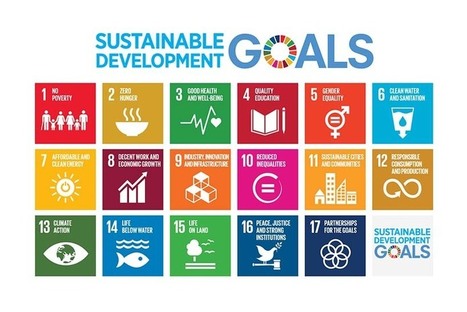
The New Global Goals Governments are calling for innovation and data-driven development policy at diplomatic tables. In September 2015, 193 UN member governments adopted the 2030 Agenda on Sustainable Development, in which are the Sustainable Development Goals (SDGs) that will guide the global development pathway for the next 15 years. High representatives from governments will meet at the UN Headquarters every year, at the High Level Political Forum (HLPF), to check their progress on the implementation of the 2030 Agenda in their own countries. During the first HLPF in 2016, at which the author of this post attended both the consultation process and the Forum, governments welcomed “enhancing national capacities for evidence-based and data-driven decision-making.” They stressed that “the availability and use of accessible, timely, reliable and high-quality disaggregated data underpins our efforts to leave no one behind,” and called for “further building and strengthening capacities for data collection, disaggregation, dissemination and analysis at all levels.” However, they qualified these goals, specifying that, “global review of the 2030 Agenda will be based primarily on national official data sources.” Now, will relying primarily on national official data sources be enough to reach those goals? The 2030 Agenda is extraordinarily ambitious. Achieving the new global goals will require all who pursue global development to think and act very differently. It will not be possible to achieve the goals without fully exploring worldwide innovations. Mark Malloch-Brown, former UN Deputy Secretary-General, once commented that while no topic was more popular than reform in the UN, neither governments nor the UN Secretariat understood the scale of change needed. The extent of the change required, he pointed out, ‘‘may take a crisis.’’ These comments, made in 2008, resonate even further today as we have now embarked on a new era of global development. So, just how are we going to achieve the 17 Sustainable Development Goals? Data Revolution and Sustainable Development The Millennium Development Goals (MDGs) ignited a conversation about how we know whether progress is happening, and the role of data systems in tracking progress and providing information for effective policy design. Over the 15 years of the MDGs, the need for real-time data and measurement became apparent as the key indicators were collected through laborious and retrospective household surveys that were as much as five years out-of-date in most countries. And so the contours of the data-to-impact process were not clear. There were cases wherein excellent data was available but had little policy impact. As we look toward the SDGs, the optimism on data is ever high in our radically data-driven world. Data and information flows are soaring. Just about 15 years ago, there weren’t such remarkable digital flows. According to a research report from the McKinsey Global Institute, these digital flows now exert an even larger impact on GDP growth than centuries-old trade. Individuals are using global digital platforms to learn, find jobs, and work, and build personal or professional networks. Some 900 million people have international connections on social media. Governments working on the new global goals around the world also recognize the explosion in data. The first UN World Data Forum on Sustainable Development Data took place in mid-January 2017. Governments and various professional groups including information technology, geospatial information managers, data scientists, users, and other stakeholders met to intensify cooperation. Not only businesses but also national security agencies, political advisors, scientists, researchers and more have already tapped into big data to accelerate their progress. While the global development world is now attempting to grab the same opportunities, it has been much slower in this trend thus far, using existing capabilities to gather and analyze data. When pursuing such ambitious long-term targets like the SDGs, measuring progress at frequent intervals and publicizing the successes and shortfalls is essential. It rewards governments that make progress, and keeps laggard ones accountable for their performance and stimulates them to double their efforts for their own benefit and further resource allocation. Invest in Mobilizing Data for Global Development The proportion of the world population covered by a 2G mobile-cellular network has now reached more than 95 percent. 3G mobile-broadband coverage is also extending rapidly and into rural areas at the same time; 45 percent of the population around the world had 3G coverage in 2011, and the proportion has grown to 70 percent in just four years. The spread of broadband coverage nearly everywhere in the world, together with the ICT capacities accelerating the digital revolution, allows for a better data system. We can now create an active link between decision-making and service provision. Community health workers supported by smartphone applications log patient information that can go directly to managers to spot disease outbreaks, identify causes of death, find issues in supply chains, make required medical intervention, and so on. In education, although this is just a small example, student and teacher attendance can be recorded more transparently and accurately on a real-time basis; the log data, automatically fed into dashboards, can be used to track progress in key areas and make informed interventions on program failures. We need two-way investments: one, modernize the practices and methods used by statistical offices; two, tap into the new sources of data in a creative way that can complement or overcome the limits of traditional government statistical data. Without doing both, the scale of the work needed to “leave no one behind” will not be attained. The views expressed in the Government Innovators Network blog are those of the individual author(s) and do not necessarily reflect those of the Ash Center for Democratic Governance and Innovation, the John F. Kennedy School of Government, or of Harvard University.
COVER PHOTO ADOBE STOCK 1616 Rhode Island Avenue NW Washington, DC 20036 202 887 0200 | www.csis.org S E P T E M B E R 2 0 1 7 A Report of the CSIS PROJECT ON …
Big Data The volume of data in the world is increasing exponentially. By some estimates, 90% of the data in the world has been created in the last two years, and it is projected to increase by 40% annually. A large share of this output is “data exhaust,” or passively collected data deriving from everyday interactions with digital products or services, including mobile phones, credit cards, and social media. This deluge of digital data is known as big data. Data is growing because it is increasingly being gathered by inexpensive and numerous information‐sensing, mobile devices and because the world’s capacity for storing information has roughly doubled every 40 months since the 1980s. The Data Revolution The data revolution -- which encompasses the open data movement, the rise of crowdsourcing, new ICTs for data collection, and the explosion in the availability of big data, together with the emergence of artificial intelligence and the Internet of Things -- is already transforming society. Advances in computing and data science now make it possible to process and analyse big data in real time. New insights gleaned from such data mining can complement official statistics and survey data, adding depth and nuance to information on human behaviours and experiences. The integration of this new data with traditional data should produce high-quality information that is more detailed, timely and relevant. Opportunities Data is the lifeblood of decision-making and the raw material for accountability. Today, in the private sector, analysis of big data is commonplace, with consumer profiling, personalised services, and predictive analysis being used for marketing, advertising and management. Similar techniques could be adopted to gain real-time insights into people’s wellbeing and to target aid interventions to vulnerable groups. New sources of data, new technologies, and new analytical approaches, if applied responsibly, can enable more agile, efficient and evidence-based decision-making and can better measure progress on the Sustainable Development Goals (SDGs) in a way that is both inclusive and fair. Risks Fundamental elements of human rights have to be safeguarded to realize the opportunities presented by big data: privacy, ethics and respect for data sovereignty require us to assess the rights of individuals along with the benefits of the collective. Much new data is collected passively – from the ‘digital footprints’ people leave behind and from sensor-enabled objects – or is inferred via algorithms. Because big data is the product of unique patterns of behaviour of individuals, removal of explicit personal information may not fully protect privacy. Combining multiple datasets may lead to the re-identification of individuals or groups of individuals, subjecting them to potential harms. Proper data protection measures must be put in place to prevent data misuse or mishandling. There is also a risk of growing inequality and bias. Major gaps are already opening up between the data haves and have-nots. Without action, a whole new inequality frontier will split the world between those who know, and those who do not. Many people are excluded from the new world of data and information by language, poverty, lack of education, lack of technology infrastructure, remoteness or prejudice and discrimination. There is a broad range of actions needed, including building the capacities of all countries and particularly the Least Developed Countries (LDCs), Land-locked Developing Countries (LLDCs), and Small Island Developing States (SIDS). Big Data for Development and Humanitarian Action In 2015, the world embarked on a new development agenda underpinned by the Sustainable Development Goals (SDGs). Achieving these goals requires integrated action on social, environmental and economic challenges, with a focus on inclusive, participatory development that leaves no one behind. Critical data for global, regional and national development policymaking is still lacking. Many governments still do not have access to adequate data on their entire populations. This is particularly true for the poorest and most marginalized, the very people that leaders will need to focus on if they are to achieve zero extreme poverty and zero emissions by 2030, and to ‘leave no one behind’ in the process. Big data can shed light on disparities in society that were previously hidden. For example, women and girls, who often work in the informal sector or at home, suffer social constraints on their mobility, and are marginalized in both private and public decision-making. Much of the big data with the most potential to be used for public good is collected by the private sector. As such, public-private partnerships are likely to become more widespread. The challenge will be ensuring they are sustainable over time, and that clear frameworks are in place to clarify roles and expectations on all sides. The role of the UN One of the key roles of the UN and other international or regional organisations is setting principles and standards to guide collective action around the safe use of big data for development and humanitarian action within a global community and according to common norms. These standards seek to increase the usefulness of data through a much greater degree of openness and transparency, avoid invasion of privacy and abuse of human rights from misuse of data on individuals and groups, and minimise inequality in production, access to and use of data. Achievement of the SDGs in our digital world will require recognition of the need not only to prevent misuse of data, but also to ensure that when data can be used responsibly for the public good, it is. The Secretary-General’s Independent Expert Advisory Group on a Data Revolution for Sustainable Development (IEAG) has made specific recommendations on how to address these challenges, calling for a UN-led effort to mobilise the data revolution for sustainable development. - Fostering and promoting innovation to fill data gaps.
- Mobilising resources to overcome inequalities between developed and developing countries and between data-poor and data-rich people.
- Leadership and coordination to enable the data revolution to play its full role in the realisation of sustainable development.
Uptake of big data analytics is accelerating across the UN system with a growing number of UN agencies, funds and programmes implementing and scaling operational applications for development and humanitarian use. The UN Development Group has issued general guidance on data privacy, data protection and data ethics concerning the use of big data, collected in real time by private sector entities as part of their business offerings, and shared with UNDG members for the purposes of strengthening operational implementation of their programmes to support the achievement of the 2030 Agenda. The first UN World Data Forum held in January 2017 brought together over 1,400 data users and producers from the public and private sectors, policy makers, academia and civil society to explore ways to harness the power of data for sustainable development. It produced important outcomes, including the launch of the Cape Town Global Action Plan for Sustainable Development Data. UN Global Pulse Global Pulse is an innovation initiative of the UN Secretary-General on data science. Global Pulse promotes awareness of the opportunities big data presents for sustainable development and humanitarian action, develops high-impact analytics solutions for UN and government partners through its network of data science innovation centres, or Pulse Labs, in Indonesia (Jakarta), Uganda (Kampala) and the UN Headquarters (New York), and works to lower barriers to adoption and scaling. To safely and responsibly unlock the value of data, Global Pulse established a data privacy programme, part of which involves ongoing research into privacy-protective uses of big data for humanitarian and development purposes. Global Pulse set up a Data Privacy Advisory Group, comprised of privacy experts from the regulatory community, private sector and academia, that engages in dialogue on the critical issues around big data and advises on the development of privacy tools and guidelines across the UN. To better understand the risks linked to big data, Global Pulse developed a two-phase “Risk, Harms and Benefits Assessment” tool, which includes guidelines to help practitioners assess the proportionality of the risks, harms, and utility in a data-driven project. Global Pulse was also involved in the organization of the UN Data Innovation Lab workshop series, an initiative led by UNICEF and WFP. Consisting of five thematic workshops, the series aimed to understand existing data innovation capabilities and needs within the UN system. Public - Private Partnerships To ensure that access to insights from big data across many industries is widely available, Global Pulse has been working with the private sector to operationalize the concept of ‘data philanthropy,’ whereby companies’ data can be safely and responsibly used for sustainable development and humanitarian action. For example, in 2016, Global Pulse formed a partnership with the social media network Twitter. Every day, people around the world send hundreds of millions of tweets in dozens of languages. Such social conversations contain real-time information on many issues, including food costs, the availability of jobs, access to health care, quality of education, and reports of natural disasters. The partnership will allow UN development and humanitarian agencies to turn the public data into actionable information to aid communities around the globe. Other examples of partnerships include the GSMA’s “Big Data for Social Good” initiative, which leverages mobile operators’ big data capabilities to address humanitarian crises, including epidemics and natural disasters; Data for Climate Action, a competition which connected researchers around the world with data and tools from leading companies to enable data-driven climate solutions; and Data Collaboratives, a new form of collaboration beyond the public-private partnership model, in which participants from different sectors (and companies in particular) exchange their data to create public value. Resources Videos Database Publications Initiatives and Collaborations Events
During the 2013 Global Partnership for Effective Development Cooperation monitoring process, 11 partner countries reported on Chinese development cooperation data for the first time, amounting to over US$770 million in total. The research paper seeks to better understand the determining factors and mechanisms behind the reporting, and shed some light on how to improve the data gathering process. The paper also highlights the importance of development cooperation data for partner countries and the demand-driven approach and initiatives. It suggests that this could be an effective alternative to getting information about Chinese development cooperation.
Challenging the status quo in digital marketing, leading one of the top big data projects in the world, and the driving passion to become the next tech giant.
The Global Findex database provides in-depth data on how individuals save, borrow, make payments, and manage risks. It is the world’s most comprehensive database on financial inclusion that consistently measures people’s use of financial services across countries and over time. The 2014 Global Findex consists of over 100 indicators, also shown by gender, income, and age. Collected in partnership with the Gallup World Poll and funded by the Bill & Melinda Gates Foundation, the Global Findex is based on interviews with about 150,000 nationally representative and randomly selected adults (age 15+) in over 140 countries. Read More »
Amina Mohammed, the UN Secretary-General Special Advisor on Post-2015 Development Planning participated as an ex-officio member in the Secretary-General’s Independent Expert Advisory Group on the D...
A new report highlights how the data revolution can accelerate progress toward ending poverty, promoting social inclusion, and protecting the environment.
The data revolution needs funding
Devex
What does the third International Conference for Financing for Development Conference in July hold for data revolution?
Explorer Exploring 25 databases and 9 table presentations Commodity Trade Statistics Database United Nations Statistics Division (UNSD) Energy Statistics Database United Nations Statistics Division (UNSD) Environment Statistics Database United Nations Statistics Division (UNSD) FAO Data Food and Agriculture Organization (FAO) Gender Info United Nations Statistics Division (UNSD) Global Indicator Database United Nations Statistics Division (UNSD) Greenhouse Gas Inventory Data United Nations Framework Convention on Climate Change (UNFCCC) Human Development Indices: A statistical update 2013 United Nations Development Programme (UNDP) Indicators on Women and Men United Nations Statistics Division (UNSD) INDSTAT United Nations Industrial Development Organization (UNIDO) Industrial Commodity Statistics Database United Nations Statistics Division (UNSD) International Financial Statistics International Monetary Fund (IMF) Key Indicators of the Labour Market, 7th Edition International Labour Organization (ILO) LABORSTA International Labour Organization (ILO) Millennium Development Goals Database United Nations Statistics Division (UNSD) National Accounts Estimates of Main Aggregates United Nations Statistics Division (UNSD) National Accounts Official Country Data United Nations Statistics Division (UNSD) OECD Data Organisation for Economic Co-operation and Development (OECD) Net debt relief grants, percentage of total ODA View data Net debt relief grants, USD million View data The State of the World’s Children United Nations Children's Fund (UNICEF) UIS Data Centre UNESCO Institute for Statistics (UNESCO UIS) UNAIDS Data Joint United Nations Programme on HIV/AIDS (UNAIDS) UNHCR Statistical Database United Nations High Commissioner for Refugees (UNHCR) UNODC Homicide Statistics 2012 United Nations Office on Drugs and Crime (UNODC) UNSD Demographic Statistics United Nations Statistics Division (UNSD) WHO Data World Health Organization (WHO) World Contraceptive Use United Nations Population Division (UNPD) World Development Indicators The World Bank (WB) World Fertility Data United Nations Population Division (UNPD) World Marriage Data United Nations Population Division (UNPD) World Meteorological Organization Standard Normals World Meteorological Organization (WMO) World Population Prospects: The 2012 Revision United Nations Population Division (UNPD) World Telecommunication/ICT Indicators Database International Telecommunications Union (ITU) World Telecommunication/ICT Indicators Table International Telecommunications Union (ITU) World Tourism Data World Tourism Organization (UNWTO) This page
is safe Bitdefender Antivirus Plus
Featured Coordinated response efforts and information by Members of the World We Want in Nepal and the region. Send us your video and have a say on the world YOU want! Tune in to World We Want TV! Join the inter-generational conversation and find out more about the World We Want for Older People!!! Join the post-2015 consultation for children. What is the world children want? Add your voice here! Join the consultation for youth under 30. What is the world youth want? Add your voice here! Add to a collection of faith-inspired voices: What give you hope we can end poverty in our world? This page
is safe Bitdefender Antivirus Plus
|
The Intersection of Wahhabism and Jihad By Mohammed Al Jarman - 06 July 2017 Mohammed Al Jarman explores the evolution of Wahhabism and its intersection with Jihad through its source material. This is a chapter from the e-book 'The Future of the Middle East' co-produced by Global Policy and Arab Digest, and edited by Hugh Miles and Alastair Newton. Freely available chapters will be serialised here and collected into a final downloadable publication in the spring. Introduction This paper is an attempt to outline the different paths Wahhabism has taken and examine how they intersect with the global Jihad phenomenon. It argues that Wahhabism is not a monolithic vision, but is in fact comprised of three distinct tracks which have in turn produced multiple currents and sub-currents. A fuller appreciation of these dynamics is crucial to developing an understanding of the complex relationship between Wahhabism and the global Jihadi movement. Wahhabism’s three tracks can be described as the academic, the historical and the inherited track. Each path had a distinct evolutionary momentum and would inevitably clash with the others later on. There have been previous attempts to differentiate between the original Wahhabi school and the contemporary Saudi clerical establishment. In this article however, a more detailed map of Wahhabi branches is drawn with a view to drawing clear distinctions between these tracks. The construction of this intra-ideological taxonomy makes it easier to understand the contradictory behavior among many Wahhabis and the connection of Wahhabism to Islamic groups, the Saudi government and the wider world. This taxonomic approach also applies to understanding the story of the Egyptian and global Jihadis; namely which direction each has taken; where they intersect; how they exchanged intellectual concepts and military, political and media experiences. Furthermore, this approach enables a comparative study of ISIS and al-Qaeda in the context of their respective relationships with Wahhabi ideology. It finds that Wahhabism on its own would not have created a Jihadi movement and that the expansion of global Jihad is connected more to the invasion and occupation of Iraq, US support for repressive Arab regimes and the over-protection of Israel, than it is to Wahhabi dogma. Since the emergence of al-Qaeda and the “Islamic State”, there has been an explosion of interest in the role of “Wahhabi” thought in the formation, evolution and legitimization of the Jihadi trend. Interest in the ideological roots of the Jihadi trends started at the beginning of the 1990s, but the insistence on linking Jihad to Wahhabism only came after the 11 September, 2001 terrorist attacks. This grew even more following the emergence of the Islamic State in Iraq and the Levant (ISIS). The debate, however, has been overshadowed by two complex obstacles which either forced researchers astray or propelled them toward hasty conclusions. The first of these was the dearth of information available to scholars. The second is the immense political and sectarian pressure that impacted heavily on academic objectivity and neutrality. Hence, some researchers adopted a non-evidenced based approach and jumped to conclusions to satisfy academic requirements in this field. Information on these topics does exist, it is just in a raw form that requires effort to extricate. Most Wahhabi literature and commentary on the Wahhabi movement and the First and Second Saudi States, and the beginning of the Third Saudi State, is in Arabic. Most of what is written on these subjects in English is either deficient or prejudiced. What compounded this effect was the non-academic, commercial publishing world, including newspapers and books, which tends to lack discipline and scrutiny. The proliferation of commercial or quasi-academic products and commentary on al-Qaeda and Bin Laden poses a wide range of challenges to the integrity of academic research. These challenges are compounded by the fact some publications became best sellers. Furthermore, researchers found themselves grappling with sectarian and political issues, brought to bear by strong forces working in the background. One such force is Iran which, due to its antagonistic attitude towards Wahhabism has spared no effort in drawing a structural relationship between Wahhabism and the Jihadi tendencies. Saudi Arabia has also expended great effort to exonerate its religious institutions, and thereby the Wahhabist school, from such a relationship. It is not surprising, therefore, that these two states, given their enormous resources, would throw their financial, political, and public relations services behind their respective agendas. The impact of their efforts would eventually prove to be tremendous on the neutrality and integrity of academic works. Both Iranian and Saudi authorities have great experience in manipulating the media and academic worlds. Many institutions claim immunity from political influence, but these countries are adept at methods which can deceive even the most vigilant institutions. The influence of foreign governments on research centers has often been reported in the media. To maintain an academic standard one must consider these two challenges. Dealing with the first challenge mandates going directly to the original sources, be they books, personal documents, reports or oral narrations. As for the second, it is important to conduct a study of the forms, fundamental tenets and evolution of Wahhabism independent of the Jihadi movement. Only by studying the two tracks independently, noting the points of contact and influence can we understand the multi-level cross-pollination of these two trends and reach an objective conclusion. History of Wahhabism Wahhabism is a term given to a religious trend or school which appeared in the eighteenth century in the central Arabian Peninsula, led by Sheikh Mohamed bin Abdulwahhab (M.B.A.) (1703 – 1791). This trend gave rise, in 1744, to what was known as the First Saudi State which continued until 1818 when it was brought down by an Egyptian invasion supported by the Ottoman empire. The Wahhabi ideas, teachings and culture, however, outlived the Saudi State, and its influence expanded with time. This was due to the spread of the writings and teachings of M.B.A. and the spread of his students and followers, both contemporaneously and then across the generations. Supporters of M.B.A. claim that his primary motivation was the perceived departure from Islam and the pollution of its teaching with heretic innovations. He launched a social campaign, starting with a call on people to return to the basic first principles of Islam. He later succeeded in convincing a local chief (Ibn Saud) to adopt his message which transformed the plan into a full-scale expansionist political program, historically known as the First Saudi State. The Saudi State authority spread through the use of force upon all of Arabia. This was accompanied by immense theological-oriented educational activities by M.B.A. and his students and followers. The intellectual influence spilled beyond Arabia to Iraq and the Levant and other parts of the Muslim World, including far-flung areas such as India and the Maghreb. This influence followed three tracks each differing in their nature, process of expansion and ideological substance. The first track: Wahhabi academic discourse This refers to the bulk of literature produced by M.B.A. and the subsequent writings, commentaries and addition supplied by his students and followers. This was the most effective track and most widely spread owing to the support and services of the Salafi schools in the Muslim world generally. The books themselves deal with fundamental questions such as the basic tenets of the faith, the concept of Tawheed (the oneness of God), Muslims’ attitude towards non-Muslims, the stance of the Islamic state towards non-Muslim states and entities, Takfir (expulsion from Islam), the nature and sources of Islamic law, the importance of upholding it and related issues. These publications were collected in a series entitled Addorar Assaniyah. The most important works were Kitab Attawheed by MBA himself and Fathulmajid by his grandson ِAbdulrahman Bin Hassan. This track does not, in fact, deviate a great deal from the so-called Salafism branch of mainstream Sunni Islam. Although very close in terms of concepts and methodology, Wahhabism and Salafism are not synonymous as many researchers claim. In short, every Wahhabi is Salafi but not every Salafi is Wahhabi. Fathi al-Husan discussed Wahhabi-Salafi links at length in his book Alfikr Assiyasi Littayarat Assalafiyyah (Political Thought of Salafi trends). This affinity meant Wahhabism was immensely helped by the Salafi movement in general and men like Sheikh Mohamed Ali Shawkani, a 19th century renowned scholar from Yemen, and Ahmed Erfan Al-Barawli, a 19th century Indian scholar in particular. Others in Mesopotamia and the Arab world led to the dissemination of the Wahhabi thought outside Arabia. Among them was Sheikh Mohammed Rashid Ridha who ironically is considered a leading renaissance figure in the modern Arab world. Wahhabism has spread most notably, however, in the wake of the contemporary influence of the present Saudi state and the establishment and growth of Saudi Islamic universities. Many non-Saudis flocked to study Islam in these universities from all over the world. In addition, Saudi religious authorities established and sponsored satellite universities in various parts of the world. Ordinary Saudi citizens contributed to this cause either as individuals or as organised charities. This academic discourse track of the Wahhabi movement benefitted indirectly from other Islamic movements that advocate the revival of Islamic identity and glory, such as the Muslim Brotherhood. Such groups are in fact accused by the Wahhabis of being lax in upholding true Salafism, but both found themselves in the same trench against the “enemies of Islam” such as communism, socialism, nationalism and liberalism. This undeclared accord was boosted by the large number of Brotherhood members who flocked en masse into Saudi Arabia to escape the tyranny of Jamal Abdul Nasser of Egypt in the 1960s. The exodus of Brotherhood members to Saudi Arabia during the Nasser regime opened new channels of communication with Wahhabism, influencing Brotherhood programs as the Brotherhood found itself obliged to comply with the prevailing salafi trend. More specific inspiration for the academic track however was the publication in the 1960s and 1970s of a series of books written by the Egyptian intellectual, writer and activist Sayyid Qutb, which were widely distributed all over the Arab world, including his most illustrious works: In the Shade of the Quran (1951-1965) and Milestones (1964). Scholars agree that these books have had a tremendous influence on all the Islamist and jihadist movements ever since. Qutb neither used Wahhabi methodology nor referred to it, but focused on a number of central questions that coincided with issues dear to the Wahhabi cause. The only mention of Wahhabis in his writings was in an article he published in Arrisalah Magazine in 1952 in which he regarded the destruction of Wahhabism by the Egyptian army as a cause of a 100 years delay in an Arab revival. The main issues he rigorously and seriously tackled were those of Islamic identity, loyalty and the superiority of Muslims over non-Muslims. He also addressed issues pertaining to the Shariah (Islamic principles of law), the necessity to refer to it as the supreme law and to reject any other system of legislation. Furthermore, he spoke of emulating the behavior of the Prophet Mohammed as the perfect individual role model and the first Islamic society as the ideal society. Qutb also contended that although at a personal level present-day Muslims live according to Islam, at a social level they live a form of Jahilliyah i.e. an ignorant and non-Islamic way of life. This characterization is not at odds with the Wahhabi approach. In celebration of Sayyid Qutb’s work came this leaflet by Sheikh Bakr Abuzeid which was distributed manually in 1992 and later published online on bulletin boards. It was also re-published following a rebuttal of Sayyid Qutb’s Ideology by Sheikh Rabie al-Mudkhali. Sayyid Qutb was perhaps, inadvertently, most influential in adapting Wahhabism towards the Jihadi trend. Noted for his literary prowess, he redacted many principles and ideas using a modern style and made them more contemporary, accessible, and in line with present-day usage. Despite the universality of concepts such as identity, superiority and ascendency, their influence on Jihadis remained local and limited to Egypt. The transformation of these ideas into a Jihadi movement with a global outlook did not come to fruition until 1990. There appears to have been two factors which prevented the Jihadi movement from becoming a global movement earlier, particularly in Saudi Arabia, the birthplace of Wahhabism. The first factor was the third Wahhabi track, (discussed below), which succeeded in taming academic Wahhabi discourse; the second was the emergence of a relatively docile groups within Saudi Arabia which integrated the Muslim Brotherhood’s and Wahhabist’s approaches. This hybrid approach pursued Wahhabi fervor in a peaceful and education-oriented fashion. Above all, it succeeded in assimilating and absorbing the enthusiasm of the youth. This amalgam is discussed by Stephane Lacroix in his book Awakening Islam: The Politics of Religious Dissent in Contemporary Saudi Arabia. The academic Wahhabi track might have been a strong factor in inspiring global Jihad but reference to its literature did not appear in the Jihadi movement’s writings until after its establishment. The Jihadi movement found what they were looking for in the Wahhabi-Qutb amalgam. Qutb provided the theoretical framework while the Wahhabis prepared the legal setting. Thus, it seems, that the Jihadi mind was moulded into a more settled formula according to this Qutb-Wahhabi view, which in turn shaped its worldview of itself, other societies, authorities, Islam and the West. Understanding this complex integration and cross-pollination is crucial to understanding the Jihadi mentality. Given that Qutb – perhaps unwittingly – created a coherent ideological framework for Wahhabist political concepts, it is a great irony that he is described as a heretic by one track of Wahhabism while another views him as a great scholar. The second track: the Wahhabi historical record This refers to real historical events in the first Saudi state as documented in two famous chronicles: Inwan Al-majd Fi Tarihk Najd (The History of Najd) by ibn Bishr and Tarikh Ibn Bisher (The History of Najd) by ibn Ghannam. These documents carefully record details of events, behavior, decisions and attitudes, together with the letters exchanged between M.B.A. and his military leaders and his enemies. Reading these reports and correspondences carefully, it becomes clear that the expansion of Takfir (excommunication) and the widespread and lax justification of homicide was the norm at the time. By contrast, the first academic track did not give enough clues as to the real situation on the ground as explained by Sheikh Hatim Aloni in this interview. These chronicles were not widely distributed and remained strictly within the domain of researchers and historians until recently when interest grew as some researchers tried to link the practices documented in them to the practices of ISIS and other jihadi groups as explained in a series of lectures by the egyptian thinker Dr Mohamed Salim al-Awwa. It was noted that the pattern documented in these chronicles was repeated at the establishment of the modern Saudi State when King Abdulaziz recruited “Ikhwan men Ta’allah” (The Brothers of Those Who Obeyed God), groups of Bedouin militia largely cut off from urban educated society, as warriors. Their story was extensively presented in Mohamed Jalal Kishk: Saudis and the Islamic Solution. These fighters were extremely preoccupied with Jihad and fighting for Islam and though they did not represent the bulk of the king’s army their practice was similar to the Saudi army in the First Saudi state. The King utilised them to expand his kingdom before he wiped them out in two famous battles: Sabillah and Umm Ridhmah. Having eliminated the “Ikhwan men Ta’allah” the Arab and Muslim lands were expunged of this kind of Jihadi practice until the Grand Mosque seizure in 1979. ِِAn armed cult stormed the Grand Mosque in Makkah and staged a sit-in. They claimed to be led by the Messiah, al-Mahdi, whose leadership would ensure the defeat of the Saudi regime. This was a relatively small and parochial event, which while lasting only a few weeks, nevertheless had far-reaching repercussions, notably by forcing the Saudi authorities to radically review the Westernization program they had just embarked on. This group’s foundations and jurisprudence was not similar to the historic trend of the Wahhabis, but it left a psychological legacy and caused a cultural shock that paved the ground for the clash that came later between the first academic Wahhabi track and the third inherited Wahhabi track (see below) in Saudi Arabia. This phenomenon recurred in the activities and behaviour of ISIS which is known for its laxity in relation to takfeer and the spilling of blood. There is no evidence, however, to suggest that the historic records themselves influenced or contributed to the formulation of ISIS’s behavior. There has to be another explanation for the similarity of these two models as we will see below. ISIS was formed prior to the dissemination of these chronicles. ISIS supporters used second track literature retrospectively to justify and glorify their actions. Conversely, ISIS opponents used the same literature to demonize Wahhabism. The third track: the inherited tradition of Wahhabism This is a reference to the expansion of the Wahhabi school through the growth and the succession of generations of students and followers who claimed association with the Wahhabi school. Throughout the nineteenth century this track was similar to the first track and might even have been more extreme on issues relating to non-Muslims, non-Sunnis and the role of Sharia. After the emergence of the third (current) Saudi state however, King Abdulaziz was able to contain the ulema and persuade them to amend their priorities to include issues such as social matters, the relationship of men and women, and personal behavior. Later kings succeeded in going further by making the job of Ulema to subjugate the public to their will and teach them to be totally obedient to them. In fact, Saudi Arabia has succeeded in inducing present-day Ulema to move away from defending the principles promoted by earlier generations of Wahhabi Ulema, opposing them without denigrating or in any way disparaging M.B.A. himself or the Ulema who came after him. Doctrinally, although this third inherited track shares with the first academic track its approval for an unelected ruler (a well known school within the salafi trend), it differs from the first track in that it does not insist on the same conditions needed to legitimise his rule. The first track will accept an unelected ruler only on the condition that he guarantees the superiority of Shariaa, bases the state’s relations with other states on Islam, and prohibits by force any non-Islamic practice within his domain. Despite its blatant abandoning of the original Wahhabi principles, proponents of the third inherited track still insist that they are the true inheritors of the Wahhabi school. They hit back at critics by pointing to the succession of students and the large number of descendants of MBA still in the front ranks of the movement, including the present Mufti of Saudi Arabia. Today’s official scholars in Saudi Arabia repeatedly claim that they are the natural and legitimate extension of the Wahhabi call and the most qualified to comment and explain its positions. This track is robustly supported by the Saudi authorities both inside and outside the country, through media, education, political and security resources, in addition to the repression of dissenters.The Saudi authorities have also persuaded other Arab and Muslim governments of the validity of this trend leading to its spread into a number of Arab countries under the name Jamyiah or Madkhaliyyah, after Mohamed Aman Jami and Rabi’ Al Madkhali who both upheld this trend with enthusiasm. This approach does not pose any threat to Arab and Muslim governments or western governments for that matter. The opposite applies in so far as many of its followers have devoted their energies to supporting their governments with a view to combating Jihadi groups as well as non-violent movements such as the Muslim Brotherhood. It is interesting to note that the US State Department often publishes statements and fatwas issued by eminent figures from the official Saudi school on its website and its Arabic Twitter handle. Jihadi trends Jihad did not take global shape until after 1990. It started in Arab countries as a national mission with an underlying religious spirit to fight the colonialist enemy and drive out the invader. The movement did not have a global agenda, plans for hegemony, nor Sharia domination. Moreover, it did not pose any challenge to super-powers. However, modern Jihad is completely different, in its inception, ideology and strategies. The Urabi revolt in Egypt 1882, Rashid al Gilani in Iraq 1941, Al-Qassam in Palestine 1936, Prince Abdulqadir in Algeria 1832-1839, Omar Almukhtar in Libya 1911-1930 and Al Khuttabi in Maghreb 1921 - 1926 can all be considered as national revolts, albeit with an underlying Jihadi spirit. The current Jihadi movement started as two independent trends both influenced by the salafi thought in general and Wahhabi ethos in particular. The first is the Jihadi movements in Egypt, and the other is the Jihadi movement in Afghanistan. The relationship between the two started tentatively but later transformed into a complete ideological and organizational merger. As for the relationship between the two jihadi trends and the Wahhabi thought and practice, we need to delve deeper into the detail. Jihad in Egypt The origin of armed activity in Egypt dates back to the formation of the military’s ‘special division’ at the behest of Hassan al-Banna, founder of the Muslim Brotherhood. The division’s supposed aim was to fight and expel the British from Egypt and Zionists from Palestine. But its commanders decided to exceed al-Banna’s instructions by targeting figures in the then Egyptian government, which created a rift between the regime and the Brotherhood. The ‘Special Division’ was dismantled by King Farouk’s government and subsequently dissolved by the Nasser regime. The severe repression that followed and the harassment of the broadly peaceful Brotherhood movement led to the emergence of the Jihad Group in Egypt in the mid-1960s. This constituted the first group that openly adopted military force in confronting an indigenous regime as opposed to a foreign colonial force. Despite their actions being limited to Egypt, their philosophy harbored the essence of a global mission. It was the first group to endorse the salafi thought, based on fatwas of Ibn Taymiyyah, and was heavily influenced by Sayyid Qutb. It is a historical fact that the founders of this group (Alawi Mustafa, Nabil Mar’i, Ismail Tantawi and later Ayman al-Zawaheri) were students of Sheikh Mohamed Harras who lived for a time in Saudi Arabia and was known for his enthusiastic embrace of Wahhabi thought. The influence of Wahhabism on Sheikh Harras’s beliefs probably constitutes the first interaction of modern Jihadi trends with Wahhabi thought. The first articulation of Jihadi thought in Egypt was a booklet entitled “The Absent Duty” written in 1980 by Mohamed Abduassalam Farag. The treatise lacked references to Wahhabi literature but it was replete with salafi quotations akin to Wahhabi writings. This booklet was followed by two more important books written by another Jihadi scholar; Abdulqadir Abdulaziz, known as Sayyid Imam. The first of which was Al-Jame’ Fi Talab Al’ilm (The Compiler in Seeking Knowledge) which included numerous references to statements by Wahhabi scholars. It envisaged the books of Wahhabism as the most important references of Islamic ‘aqeedah’ (creed). The influence of Wahhabism was even more evident in his second book,Al-Umdah Fi I’dad Al’Uddah (The ultimate reference for perfect readiness) which contained extensive quotations from Wahhabi literature. Towards the end of the 1970s, the Al-Gama'a al-Islamiyya emerged, initially as a peaceful movement in Egyptian universities, later evolving into a radical Jihadi organization. The group did not publish books but issued many treatises and leaflets replete with references to Salafi works, especially those of ibn Taymiyyah, but crucially it did not rely on Wahhabi literature. However, there was an indirect link through the first head of the group Sheikh Omar Abdurrahman, who had spent several years in Saudi Arabia and established good relations with Wahhabi scholars there. He was not known for specific Wahhabi rhetoric but was well known for reiterating the same principles. Both groups; namely Egyptian Jihad and Jama’a al-Islamiyyah carried out a number of operations inside Egypt targeting the regime, such as the assassination of President Sadat in 1981 as well as targeting foreign tourists in the Luxor Massacre. The regime, however, was able to smash both groups, by imprisoning its members and executing many of its leaders. Several years later many prisoners were released, some of whom travelled to Afghanistan where they
Read more
Download the Report Purchase a print version Executive Summary Functioning societies collect accurate data and utilize the evidence to inform policy. The use of evidence derived from data in policymaking requires the capability to collect and analyze accurate data, clear administrative channels through which timely evidence is made available to decisionmakers, and the political will to rely on—and ideally share—the evidence. The collection of accurate and timely data, especially in the developing world, is often logistically difficult, not politically expedient, and/or expensive. Before launching its second round of global goals—the Sustainable Development Goals (SDGs)—the United Nations convened a High-Level Panel of Eminent Persons on the Post-2015 Development Agenda. As part of its final report, the Panel called for a “data revolution” and recommended the formation of an independent body to lead the charge. 1 The report resulted in the creation of the Global Partnership for Sustainable Development Data (GPSDD)—an independent group of countries, companies, data communities, and NGOs—and the SDG Data Labs, a private initiative partnered with the GPSDD. In doing so the United Nations and its partners signaled broad interest in data and evidence-based policymaking at a high level. In fact, the GPSDD calls for the “revolution in data” by addressing the “crisis of non-existent, inaccessible or unreliable data.” 2 As this report shows, this is easier said than done. This report defines the data revolution as an unprecedented increase in the volume and types of data—and the subsequent demand for them—thanks to the ongoing yet uneven proliferation of new technologies. This revolution is allowing governments, companies, researchers, and citizens to monitor progress and drive action, often with real-time, dynamic, disaggregated data. Much work will be needed to make sure the data revolution reaches developing countries facing difficult challenges (i.e., before the data revolution fully becomes the data revolution for sustainable development). It is important to think of the revolution as a multistep process, beginning with building basic knowledge and awareness of the value of data. This is followed by a more specific focus on public private partnerships, opportunities, and constraints regarding collection and utilization of data for evidence-based policy decisions. Unlike the common perception of “revolution” as being relatively quick, broad, and transformational, the data revolution may be slow, country context specific, and incremental. Building on the momentum created by the adoption of the SDGs in late 2015,3 the international community can have a critical role to play in supporting national agendas and driving development. This report analyzes the challenges and opportunities that exist in the pursuit of the data revolution. It considers the challenges faced by two developing countries—Laos and Myanmar—in the broader context of what will be needed to enable “leapfrog” data technologies to take hold and ultimately drive the data revolution without following the linear progression of development laid out by OECD countries. To achieve this outcome, developing countries will need to build domestic institutional capacity to use and maintain new technologies, understand and analyze the data collected, and identify and implement change based on that analysis. Many outside the developing world are considering the endless possibilities presented by “big data.” For many in the developing world—especially those in statistical agencies and other entities responsible for data collection, dissemination, and analysis—big data is not even on the radar. These governments face enough challenges to utilization of “small data” and evidence more broadly in policymaking. Even when they acknowledge the benefits of creating an environment in which leapfrog data technologies could flourish and support such policies, further execution challenges remain. This report categorizes the many challenges facing developing country governments on the road to the data revolution—and then, ideally, measurable sustainable development—as follows: Addressing capacity constraints at all levels Creating the appropriate enabling environment for leapfrog data technologies to have transformational impact Confronting data sharing, ownership, and privacy concerns Navigating complex political environments Thankfully, developing country governments are not alone. While funding has not increased to the extent necessary, the international community has embraced its post-MDG role in the data revolution. There are several ways this support can be strengthened. This report provides the following recommendations to the international community to play a constructive role in the data revolution: Don’t fixate on big data alone. Focus on the foundation necessary to facilitate leapfrogs around all types of data: small, big, and everywhere in between. Increase funding for capacity building as part of an expansion of broader educational development priorities. Highlight, share, and support enlightened government-driven approaches to data. Increase funding for the data revolution and coordinate donor efforts. Coordinate UN data revolution-related activities closely with an expanded GPSDD. Secure consensus on data sharing, ownership, and privacy-related international standards. This report shows that a solid foundation to enable leapfrog data technologies can be fully realized is critical . The ability to collect and utilize accurate data—however small or large—matters, especially in developing countries. However, there must be a solid foundation of infrastructure, skills, and political will on which to build. Promising examples of opportunities for deploying such technologies can be identified; strong enabling foundations will be essential for these opportunities to achieve their full transformational potential. A number of examples of how this is currently being done are presented in this report. These should be seen as useful, tangible, and transferable examples of how to incorporate leapfrog data technologies into policy environments. This report also demonstrates the importance of the international community. Through the GPSDD and other multi- and bilateral channels, the international community has a significant role to play in realizing transformative innovation through evidence-based policymaking in the developing world. Though not without its bumps and turns, the road to the data revolution is paved with promise and possibility. [1] High-Level Panel of Eminent Persons on the Post-2015 Development Agenda, A New Global Partnership: Eradicate Poverty and Transform Economies through Sustainable Development (New York: United Nations, 2013), https://sustainabledevelopment.un.org/content/documents/8932013-05%20-%20HLP%20Report%20-%20A%20New%20Global%20Partnership.pdf. [2] Global Partnership for Sustainable Development Data, “The Data Ecosystem and the Global Partnership,” 2016, http://www.data4sdgs.org/who-we-are/. [3] UN General Assembly, “Resolution Adopted by the General Assembly on 25 September 2015: 70/1. Transforming Our World: The 2030 Agenda for Sustainable Development,” http://www.un.org/ga/search/view_doc.asp?symbol=A/RES/70/1&Lang=E.
The United Nations World Data Forum is a global event, a gigantic magnet for a myriad of data experts in the development realm. Organized by the United Nations Statistics Division and hosted by the Federal Competitiveness and Statistics Authority of the United Arab Emirates and the Government of the UAE, the 2018 Forum will take place in Dubai, 22-24 October. The first Forum was a great opportunity for geospatial communities to build more fruitful dialogues and action toward a central, committed goal of “leaving no one behind”. The Forum inspired us all to listen more closely to the people — and the stories of their places — with accurate geodata, to avoid speaking theoretically about “locals”, and instead to produce disaggregated data as part of the data revolution. The 2018 Forum aims to explore new ways to modernize national statistical offices (NSOs) and their ecosystems, and it also professes to lead in promoting synergies across data ecosystems. This thematic area is crucial to deliver the revolutionary message of the 2030 Agenda, and to actively allow the inclusion of third-party data and innovative practices to strengthen existing national data ecosystems. We perceive that no third-party data community is growing more rapidly and with greater capacity to represent grassroots data than the geospatial community. Should the United Nations and advocates of the Sustainable Development Goals — including nations, cities and private organizations — wish to truly embrace a transformative data revolution, they should look more closely at open mapping examples to update their own operations and infrastructures. By updating traditional practices — especially those required to measure and achieve specific SDGs — statistical organizations can attain sustained success with vibrant, diverse and consistent collaboration with civil society. As these alternative data are recognized as a natural ally for the achievement and monitoring of the SDGs, the use of databases coming from civic geospatial technologies should expand. If governments provide their technical supervision and experience, synergies could even converge to a gradual dissolution of differences between users and producers of statistics. Inspiringly, pioneer NSOs are daring to try on new clothes in the data revolution scene — transcending their traditional approaches — and taking a more “supervisory” agenda through broader data partnerships to generate new outcomes and coverages. If a forthright recognition of the geospatial communities is seriously considered by NSOs, resources could be freed from the “production function” side and official efforts could be focused on servicing the infrastructure needed to contain and monitor the data coming from other sources. On the other side, non-traditional data producers, such as mapping communities, are producing more and more data. Civil society is strengthening its data production capacities and a new generation is beginning to lead the way in public engagement, with data production in nationwide projects monitoring health campaigns, low-cost housing projects, urban planning and humanitarian relief. These new data producers are taking to the next level collaborative and data-focused projects, together with opening and enriching the production of the collected data, adding valuable disaggregated sources. The geo-referenced tools that civic mappers bring to the table are increasingly demonstrating their value to contribute to a broader SDG data infrastructure: Statistics Canada is working with the OpenStreetMapcommunity to build a single inventory of the location and attributes of every building in Canada, running a pilot to test if qualitative data can be produced collaboratively. The NGO Open UP SA is collaborating with Statistics South Africa to produce hyperlocal data using Wazimap. Uwezo, aided by an official statistics expert panel, is independently producing data to monitor SDG 4 in Kenya, in lieu of key indicators. The Stats Up program from the GeoCensos community is being offered as an entry-level opportunity to train geodata entrepreneurs in collaboration with NSOs. Also, a few successful startups are actively using national statistics and geographic data to add value for the private sector. Bringing civic geospatial actors to the “official” statistics ecosystem can also integrate richness and depth in more inclusive datasets, building low-cost and efficient capacities on the ground. Embryonic spatial data infrastructures are constantly being created for grassroots projects, targeting the most underserved citizens and the least prioritized territories. Today, several civic tech groups like local guides from Google Maps, Geogeeks from ESRI and Missing Maps or Hot osm from the Openstreetmap platform have employed and expanded proprietary and open geodata for the benefit of numerous vulnerable populations, unravelling the needs and specificities of those who we are holding up when we vow to “leave no one behind”. These civic tech organizations can aid the official data collection process, leveraging vibrant open data advocacy, humanitarian values and basic statistical skills to advocate for the welfare of forgotten territories and people. An unprecedented revolution of data resources is literally going on in streets and remote corners of the planet, led by non-traditional statistical actors. International organizations, governments and NSOs will be seriously constrained if they insist on using only traditional data sources to monitor the 2030 Agenda. A wise strategy for the 2030 Agenda should be to decode and integrate vital civic actors and make the best use of their creative powers. As the rise of technology and civic activism is producing massive amounts of new data, the official role of statistics could and should be reimagined. If informed governments decide to accept this, they will be empowering NSOs to actively lead the SDG endeavour. Clearly, an empowered civil society that produces more and more data is ready for this kind of data revolution. Discussing these ideas and further developing partnerships between civil society and NSOs at the 2018 Forum will allow us to map together a better world.
DATA PRIVACY, ETHICS AND PROTECTION GUIDANCE NOTE ON BIG DATA FOR ACHIEVEMENT OF THE 2030 AGENDA
1 Demand-Driven Data: How Partner Countries are Gathering Chinese Development Cooperation Information Final Report June 2015
Destroyed ambulances at a health center in the Central African Republic, where armed men ransacked public facilities. Many health facilities in the country are out of commission because of the ongoing insecurity and lack of funding. Photo by: C.Illemassene / OCHA / ECHO / CC BY-ND
Out of 814 health facilities in the Central African Republic, 254 are not functioning, with many of them partially destroyed, looted and abandoned amid conflict in the country.
Among the worst hit are regions 3 and 5, which covers the area in Bossangua in the north-west, and Bria in the east. Most child-related services in both regions, such as immunization and services to address child malnutrition, are lacking or nonexistent. Services for victims of sexual violence like clinical management and provision of psychosocial services are not available. And in region 3, almost all services related to HIV and AIDS and other sexually transmitted diseases are limited or not available.
The unavailability of services is linked to a number of factors: lack of sufficiently trained staff, equipment or funding, according to the nationwide assessment made last year by the World Health Organization and its partner nongovernmental organizations.
The same issues remain to this day however: Many of these health facilities, particularly those outside the capital Bangui, are missing medical supplies and equipment, and do not have sufficient staff, mainly due to ongoing insecurity and a significant funding gap.
Médecins Sans Frontières, which is among the few NGOs providing health assistance in the country, suspended part of its activities in a hospital in Kabo, located north of the country, in April following an attack on its facilities.
“The government tried to pay the nurses, but in the facilities, most of the workers, like cleaners, are being paid from the pockets of the patient. [So now] we need to fill this gap [to get people back to work],” Dr. Michel Yao, WHO’s representative in CAR, told Devex.
Ensuring health worker salaries and that they have a decent place to stay are critical, especially in areas where there aren’t NGOs that can fill the gap. The yearslong conflict has driven away many organizations; others are overstretched from responding to the Ebola crisis in neighboring Sierra Leone and Guinea, or other emergencies.
Recruitment, even among U.N. agencies, has been tough because of insecurity, Yao said. But that’s where the problem lies: The health cluster’s budget for 2015 is significantly underfunded, receiving only 12 percent of the required $63.2 million, which, according to Yao, has mostly gone to the purchase of medical supplies. Only a portion of received funding was spent on health worker salaries and re-equipping hospitals and health centers.
Serious funding gap
This is not surprising if one looks at the country’s aid funding history. When the conflict erupted in 2013, the health cluster received only 49 percent of its $21.28 million requested budget. That requirement shot up to $71 million in 2014, which by the end of the year was only 58 percent filled.
And the funding shortfall may even get worse.
Yao said some of last year’s donors have yet to commit funding to CAR this year. Several of them have contributed to other crises WHO is responding to, “but not CAR.” This comes despite the availability of data that clearly sets out the different needs of health facilities across the country until the end of 2015.
Yao said this could very well be a sign of donor fatigue and low political interest in the country. In his years of experience as senior health adviser for humanitarian crises at WHO’s headquarters in Geneva, Yao said that while donors are quick to pour in resources to countries of interest, their assistance often slows down in protracted crises.
The current crisis in CAR may have started in 2013, but Yao explained that donors have been providing aid to the country for nearly a decade now.
At the international conference for CAR in Brussels, Belgium, the EU made 15 million euros ($16.6 million) available from its multidonor trust fund, to be allocated for several health activities carried out by NGOs like Save the Children and the French Red Cross in the country. Yao said the multilateral donor has also expressed interest in supporting WHO, although nothing has been finalized.
“We also shared the clear plan to other donors, but up to now, we don’t have any significant contribution,” he said. “It’s difficult. I’m struggling.”
WHO international staffers are paid every three months; the next payout is scheduled for the end of June. As Yao struggles to find enough resources to pay them this month, he is already worrying about where to find financing for the next period’s payout.
“So from end of June, it will be critical … I cannot afford to reduce the staff [else many of the field activities like disease surveillance and monitoring will be affected],” he said.
The grading dilemma
Hopes to mobilize more resources for the country’s health needs however may go further down the drain, after the Inter-Agency Standing Committee and WHO last week downgraded the CAR crisis to Level 2 and Grade 2, respectively.
Yao said the decision was made not because the crisis is over, but because some of the crisis’ acute phases have “cooled down a bit.” For example, the need for trauma care has now gone down compared with a year ago. Level 3 or Grade 3 crises are those that require quick mobilization of resources and response, which is “not the case in CAR right now.”
But he is well aware of the decision’s possible implications, as well as the current limitations of WHO’s emergency framework.
“What we are afraid of is if the country is totally forgotten, because things are improving in the capital city,” the WHO official said. The danger with that is CAR can easily fall back into the acute phase again.
Yao is part of the working group reviewing WHO’s emergency response framework. And he said the case of CAR is among those that the organization is looking into as it improves its grading system. They are now looking to adopt an all-hazards approach where they’d be able to take protracted situations into account when grading crises. And coming from the organization’s experience in Ebola, they are moving toward adopting a clearer chain of command in emergencies.
“Because in some of crises, like Sahel, a food insecurity crisis, things moved slowly up to the peak of the crisis … so we are learning from past experience … to improve the new one that will come out soon,” he said.
In her speech at the recently concluded 68th World Health Assembly, Director-General Margaret Chan promised to complete that commitments she made on WHO’s emergency response capacity by the end of the year.
Read more international development news online, and subscribe to The Development Newswire to receive the latest from the world’s leading donors and decision-makers — emailed to you FREE every business day.
About the author
Jenny lei ravelo 400x400
Jenny Lei Ravelo
Follow@JennyLeiRavelo
Jenny Lei Ravelo is a staff writer for Devex. She covers breaking international development news in the Middle East, North Africa, Asia and the Pacific for the Development Newswire, often focusing on aid worker security. Jenny is also a regular contributor to the GDB and other Devex publications.
Mythology can be a useful tool for uniting cultures and countries. It's somewhat less useful for understanding the rise of modern technologies. Here are two..
These five use cases will give you a glimpse into what HR data analytics can do. They’re only the beginning of how big data and predictive analytics is shaping the future of HR.
In the next 10 years, we believe that computers will move beyond their current role as our assistants, and become our advisors. With their help, we'll grapple with and solve some of the toughest issues facing the world today.
Update: April 6, 2015: Microsoft has closed the acquisition of Revolution Analytics. For more details, please read the blog post by Joseph Sirosh here.
The rapidly progressing digital revolution is now touching the foundations of the governance of societal structures. Humans are on the verge of evolving from consumers to prosumers, and old, entrenched theories – in particular sociological and economic ones – are falling prey to these rapid developments. The original assumptions on which they are based are being questioned. Each year we produce as much data as in the entire human history - can we possibly create a global crystal ball to predict our future and to optimally govern our world? Do we need wide-scale surveillance to understand and manage the increasingly complex systems we are constructing, or would bottom-up approaches such as self-regulating systems be a better solution to creating a more innovative, more successful, more resilient, and ultimately happier society? Working at the interface of complexity theory, quantitative sociology and Big Data-driven risk and knowledge management, the author advocates the establishment of new participatory systems in our digital society to enhance coordination, reduce conflict and, above all, reduce the “tragedies of the commons,” resulting from the methods now used in political, economic and management decision-making.
Thinking Ahead - Essays on Big Data, Digital Revolution, and Participatory Market Society
Authors: Dirk Helbing
ISBN: 978-3-319-15077-2 (Print) 978-3-319-15078-9 (Online) http://www.pks.mpg.de/mpi-doc/sodyn/physicist-language/
Via Complexity Digest
|