Your new post is loading...
Visualizing
People's Voices Filters Currently Viewing - All Consultations, All Regions, All Countries, All Keywords Results from Consultations Data Browse Sentences by Alphabetical Index of Documents Civil-Society-SRHR-Platform-20130204_Visionary-Development-Goal-on-SRHR_Final.pdf Visionary Development Goal on Sexual and Reproductive Health & Rights Sexual and reproductive health and rights (SRHR) are inter-linked to all key development agendas and are central to human health and development: gender equality, human rights, poverty, migration, health, education, climate change and environmental sustainability, population dynamics, food security, sustainable economies and employment, access to resources, education and peace and security. Consultation: Letters to High Level Panel of Eminent Persons Region: Civil-Society-SRHR-Platform-20130204_Visionary-Development-Goal-on-SRHR_Final.pdf Consultation: Letters to High Level Panel of Eminent Persons Region: Civil-Society-SRHR-Platform-20130204_Visionary-Development-Goal-on-SRHR_Final.pdf Consultation: Letters to High Level Panel of Eminent Persons Region: Civil-Society-SRHR-Platform-20130204_Visionary-Development-Goal-on-SRHR_Final.pdf These are dependent on reducing maternal mortality and morbidity and ensuring quality sexual and reproductive health services, including family planning services to enable women to choose the number, timing and spacing of their pregnancies, as well as ensuring physical security, bodily integrity and mobility. Consultation: Letters to High Level Panel of Eminent Persons Region: Civil-Society-SRHR-Platform-20130204_Visionary-Development-Goal-on-SRHR_Final.pdf The Rio+20, ICPD Beyond2014 and Beijing Fourth World Conference on Women processes must be integrated with the post-2015 framework. Consultation: Letters to High Level Panel of Eminent Persons Region: Civil-Society-SRHR-Platform-20130204_Visionary-Development-Goal-on-SRHR_Final.pdf Consultation: Letters to High Level Panel of Eminent Persons Region: Civil-Society-SRHR-Platform-20130204_Visionary-Development-Goal-on-SRHR_Final.pdf Consultation: Letters to High Level Panel of Eminent Persons Region: Civil-Society-SRHR-Platform-20130204_Visionary-Development-Goal-on-SRHR_Final.pdf Integrate the Rio+20, ICPD Beyond 2014 and Beijing Fourth World Conference on Women processes with the post-2015 framework. Consultation: Letters to High Level Panel of Eminent Persons Region: Civil-Society-SRHR-Platform-20130204_Visionary-Development-Goal-on-SRHR_Final.pdf The development goal on SRHR is inspired by and based on decades of commitment to the SRHR agenda by the women’s movement, the youth movement, the reproductive health community, the public health community and builds on the various milestones that have been achieved so far. Consultation: Letters to High Level Panel of Eminent Persons Region: Civil-Society-SRHR-Platform-20130204_Visionary-Development-Goal-on-SRHR_Final.pdf These milestones include internationally agreed upon resolutions/conventions highlighting the importance of a human rights-based approach to population and development that embody government commitments to fulfilling the SRHR of women, young people and other marginalized population groups. Consultation: Letters to High Level Panel of Eminent Persons Region: Civil-Society-SRHR-Platform-20130204_Visionary-Development-Goal-on-SRHR_Final.pdf Consultation: Letters to High Level Panel of Eminent Persons Region: Civil-Society-SRHR-Platform-20130204_Visionary-Development-Goal-on-SRHR_Final.pdf 1 These resolutions/conventions include: • UN Universal Declaration of Human Rights (1948) • The Alma- Ata Declaration adopted at the International Conference on Primary Health Care (1978) • UN Convention on the Elimination of All Forms of Discrimination Against Women (CEDAW) (1979) • International Conference on Population and Development, Programme of Action (1994) and the Key Actions for the Further Implementation of the Programme of Action of the ICPD (1999) • Beijing Platform for Action (1995) • UN Millennium Declaration (2000) • 2001 Declaration of Commitment on HIV/AIDS and subsequent recommitments in the 2006 and 2011 Political Declarations on HIV and AIDS • 2005 World Summit Outcome Document • Maputo Plan of Action (2006) and the Maputo Protocol on the Rights of Women in Africa • UN Commission on Population and Development Resolution (2009) • UN Human Rights Council Resolutions on Maternal Mortality and Morbidity (20092012) • UN Human Rights Council Resolution on the Rights of the Child (2012 ) • UN Millennium Development Goals (MDG) Summit Outcome Document (2010) • UN Secretary-General’s Global Strategy for Women’s and Children’s Health (2010) • UN Human Rights Council Resolution on Sexual Orientation and Gender Identity (2011) • ICPD Global Youth Forum Declaration (“Bali Declaration”) (2012) Human rights, especially sexual and reproductive rights need to underpin the post-2015 Development Framework to ensure that the new health goal(s) are framed in terms of equity and equality for all groups. Consultation: Letters to High Level Panel of Eminent Persons Region: Civil-Society-SRHR-Platform-20130204_Visionary-Development-Goal-on-SRHR_Final.pdf Health and SRH goal(s) and targets must remain part of the new post-2015 development framework and should explicitly include reproductive rights. Consultation: Letters to High Level Panel of Eminent Persons Region: Civil-Society-SRHR-Platform-20130204_Visionary-Development-Goal-on-SRHR_Final.pdf The new Development Framework cannot backtrack from current global commitments, particularly the unmet MDGs and other global targets. Consultation: Letters to High Level Panel of Eminent Persons Region: Civil-Society-SRHR-Platform-20130204_Visionary-Development-Goal-on-SRHR_Final.pdf 2 Despite these high level commitments, the sexual and reproductive health and rights agenda continues to lack priority in funding and implementation. Consultation: Letters to High Level Panel of Eminent Persons Region: Civil-Society-SRHR-Platform-20130204_Visionary-Development-Goal-on-SRHR_Final.pdf SRHR was initially left out of the Millennium Development Goals framework; MDG 5b, “Achieve universal access to reproductive health” was only added as a goal in 2005, and indicators were only assigned in 2007. Consultation: Letters to High Level Panel of Eminent Persons Region: Civil-Society-SRHR-Platform-20130204_Visionary-Development-Goal-on-SRHR_Final.pdf In comparison to other MDGs, MDG 5b only entered the development framework 7 years later. Consultation: Letters to High Level Panel of Eminent Persons Region: Civil-Society-SRHR-Platform-20130204_Visionary-Development-Goal-on-SRHR_Final.pdf Currently MDG 5 is considered off-track from realising progress, and hence investment in this goal needs to be continued in order to maintain and accelerate progress. Consultation: Letters to High Level Panel of Eminent Persons Region: Civil-Society-SRHR-Platform-20130204_Visionary-Development-Goal-on-SRHR_Final.pdf Therefore, in the lead-up to the new development framework in the post-2015 era, we, as civil society organizations dedicated to realizing SRHR, call early for the inclusion of a specific SRHR goal, including the outcome and process (e.g., service provision) indicators set out in this document, and around important anniversaries of key UN conferences including Rio+20, Cairo+20, Beijing+20, among others. Consultation: Letters to High Level Panel of Eminent Persons Region: Civil-Society-SRHR-Platform-20130204_Visionary-Development-Goal-on-SRHR_Final.pdf This Sexual and Reproductive Health and Rights Development Goal is applicable to all population groups, including those with diverse and distinct gender identities and in all settings, including conflicts and emergencies. Consultation: Letters to High Level Panel of Eminent Persons Region: This page
is safe Bitdefender Antivirus Plus
Independent Expert Advisory Group Members
The Secretary General’s Independent Expert Advisory Group on the
“Data Revolution for Sustainable Development”
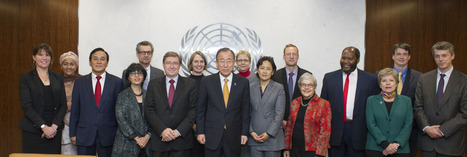
Secretary-General Meets Co-Chairs of the Secretary-GeneralÕs Independent Expert Advisory Group on the Date Revolution for Sustainable Development.
Enrico Giovannini (Italy)
Co-Chair
A Professor of Economics and Statistics at University Tor Vergata of Rome since 2002, Professor Giovannini was the Minister of Labor and Social Policies in Italy from April 2013 to February 2014. He was previously President of the Italian Statistical Institute (Istat) and Director of Statistics and Chief Statistician of the Organisation for Economic Co-operation and Development (OECD).
Robin Li (China)
Co-Chair
Robin Li is co-founder, Chairman and Chief Executive Officer of Baidu, the Chinese Nasdaq-listed internet search company. He was previously a staff engineer for Infoseek and a senior consultant for IDD Information Services. Mr. Li also acts as the vice chairman of the internet Society of China (ISC).
TCA Anant (India)
TCA Anant is the Chief Statistician of India, with concurrent responsibility as the Secretary of the Ministry of Statistics and Programme Implementation. He is also a co-Chair of the Friends of the Chair Group on Broader Measures of Progress. He was previously a professor of economics at the Delhi School of Economics, and a member of the advisory committee on regulations under the Competition Commission of India.
Shaida Badiee (Iran)
Shaida Badiee is the Co-Founder and Managing Director of Open Data Watch. During her tenure as Director of the World Bank’s Development Data Group, flagship statistical products were launched such as the World Development Indicators and Global Development Finance. In 2010, she led the World Bank’s Open Data Initiative to provide full and free access to the World Bank’s extensive statistical databases. Prior to that, she played a key role in the creation and operation of PARIS21.
Carmen Barroso (Brazil)
Carmen Barroso is the Regional Director, International Planned Parenthood Federation, Western Hemisphere Region. She has served on the Millennium Project Task Force on MDG 3 and the Brazilian Commission on Reproductive Health, and currently serves on the board of the International AIDS Alliance, is co-chair of PAHO’s Panel on Gender and Health, and is a member of the Independent Expert Review Group of the Global Strategy on Women and Children’s Health, appointed by the UN Secretary-General.
Robert Chen (US)
Robert Chen directs the Center for International Earth Science Information Network (CIESIN) at Columbia University’s Earth Institute. He also manages the NASA Socioeconomic Data and Applications Center, which develops and disseminates interdisciplinary data and indicators related to human-environment interactions. His current research focuses on earthquake risk assessment, environment and security, climate adaptation, data integration and stewardship, and sustainability education.
Choi Soon-hong (Republic of Korea)
Choi Soon-hong served as United Nations Chief Information Technology Officer from 2007 to 2012, where he was in charge of all substantive and operational needs relating to information and communications technology of the United Nations. He was previously with the International Monetary Fund (IMF), where he served in numerous technical and business operations and team leadership positions.
Nicolas de Cordes (Belgium)
Nicolas de Cordes is Vice President of Marketing Vision at Orange France Telecom Group. An expert of the telecom industry, he joined Orange France Telecom in London where he headed the Mobile Strategy Practice before moving to Paris to lead the Group Strategy Team covering all lines of business. He was previously Head of Consumer Marketing with Mobistar, the Belgian mobile subsidiary of Orange.
Fu Haishan (China)
Fu Haishan is the Director of the Development Data Group at The World Bank. She was previously the Director of the Statistics Division of United Nations Economic and Social Commission for Asia and the Pacific (ESCAP). Prior to that, she was the Chief of Statistics at the Human Development Report Office of United Nations Development Programme (UNDP).
Johannes Jütting (Germany)
Johannes P. Jütting is the Manager of the PARIS21 Secretariat within the OECD’s Development Co-operation Directorate, where he leads the partnership’s work in supporting developing countries to strengthen capacity to better produce and use statistical data for policy-making and the monitoring of development outcomes. He was previously Head of the Global Development Team at the OECD Development Centre.
Pali Lehohla (South Africa)
Pali Lehohla is the Statistician-General of South Africa, a position he held since 2000. He was the chair of PARIS21and the Chair of the United Nations Statistics Commission. He was the founding chair of the Statistics Commission of Africa (StatCom Africa) and he is the Chair of the African Symposium for Statistical Development (ASSD). He was the Vice President of the International Statistics Institute (ISI). He is the sponsor of the Young African Statistician (YAS) movement. Pali Lehohla sees Africa’s bright future through the lens of numbers and believes that the Civil Registration and Vital Statistics movement remains an important vehicle by which Africa can know and understand itself. Pali Lehohla holds a BA double major in Economics and Statistics from the University of Lesotho and a post-graduate diploma from the UN Regional Institute for Population Studies at the University of Ghana.
Tim O’Reilly (US)
Tim O’Reilly is the founder and CEO of O’Reilly Media Inc. A thought leader in technology and innovation, he is also a partner at O’Reilly AlphaTech Ventures, a venture firm, and board member of Safari Books Online, PeerJ, Code for America, and Maker Media.
Sandy Pentland (US)
Sandy Pentland is the Toshiba Professor at the Massachusetts Institute of Technology. A pioneer in organizational engineering, mobile information systems, and computational social science, Professor Pentland’s research focuses on harnessing information flows and incentives within social networks, the big data revolution, and converting this technology into real-world ventures. He is founder and director of the Human Dynamics group, and the Media Lab Entrepreneurship Program.
Rakesh Rajani (Tanzania)
Rakesh Rajani is the Head of Twaweza, an initiative to enhance access to information, citizen agency, and public accountability in East Africa. He was previously the founding Executive Director of HakiElimu, an independent organization that promotes citizen engagement in education in Tanzania.
Juliana Rotich (Kenya)
Juliana Rotich is the co-founder and Executive Director for Ushahidi, an open-source software project which uses crowdsourced geolocation, mobile phone, and web reporting data to provide crisis reporting and information. Rotich is also a founder of iHub, a Nairobi tech space and Mobisoko, a mobile marketplace for language and location relevant apps in Africa.
Wayne Smith (Canada)
Wayne R. Smith is the Chief Statistician at Statistics Canada. He was previously Assistant Chief Statistician in the agency’s Communications and Operations division, Director General of Regional Operations, Director of Special Surveys Division Branch, and Director of Communications Division.
Eduardo Sojo Garza-Aldape (Mexico)
Eduardo Sojo Garza-Aldape is the President of the Board of Governors of the National Institute of Statistics and Geography of Mexico. He previously served as Chief Economic Advisor to President Vicente Fox and as Secretary of Economy in the cabinet of President Felipe Calderón.
Gabriella Vukovich (Hungary)
Gabriella Vukovich is the President of the Hungarian Central Statistical Office. She currently serves as the Acting Chair of the 45th Session of the UN Statistical Commission. A specialist in Population and Development, she was previously the Head of the Population Census Department in the Hungarian Central Statistical Office.
Alicia Barcena (ECLAC)
Alicia Bárcena is the Executive Secretary of the Economic Commission for Latin America and the Caribbean (ECLAC). She previously served as the Under-Secretary-General for Management at United Nations Headquarters in New York, Chef de Cabinet and Deputy Chef de Cabinet to the former Secretary-General Kofi Annan.
Robert Kirkpatrick (Global Pulse)
Robert Kirkpatrick is the Director of the UN Global Pulse, an innovation initiative of the Secretary-General to harness Big Data for a revolution in humanitarian action and sustainable development. His work in government, UN agencies, NGOs and the private sector has focused on developing solutions at the intersection of technology, policy and social change. He was previously Lead Architect for Microsoft’s Humanitarian Systems Team.
Eva Jespersen (UNDP)
Eva Jespersen is the Deputy Director, Human Development Report Office at UNDP. Prior to joining UNDP, she worked at the UNICEF Innocenti Research Centre in Florence where, as chief of the unit for research on social and economic trends and policies she led two flagship reports, the Social Monitor and the Report Cards on child wellbeing.
Edilberto Loaiza (UNFPA)
Edilberto Loaiza is a Social Demographer working as Sr. Adviser for Monitoring and Evaluation in the Technical Division of UNFPA in New York. Before joining UNFPA in 2009, Mr. Loaiza spent ten years working in UNICEF at the Strategic Information Section (SIS) where he coordinated the data production, analysis and dissemination for the areas of child mortality, education and child protection
Katell Le Goulven (UNICEF)
Katell Le Goulven is the Chief of Policy Planning at UNICEF where she was previously Head of Multilateral Affairs. Before joining UNICEF, she held senior positions with the United Nations Secretary-General’s High-Level Panel on Global Sustainability, the International Commission on Climate Change and Development, and the International Task Force on Global Public Goods.
Thomas Gass (ex officio)
Thomas Gass is the Assistant Secretary-General for Policy Coordination and Inter-Agency Affairs in UN Department of Economic and Social Affairs. Previously, as Ambassador and Country Director of the Swiss Agency for Development and Cooperation in Nepal, he established the Embassy of Switzerland in the country and served as its Head of Mission.
Amina J. Mohammed (ex officio)
Amina J. Mohammed is Assistant Secretary-General and the Secretary-General’s Special Adviser on Post-2015 Development Planning. She previously served as Senior Special Assistant to the President of Nigeria on the Millennium Development Goals in three administrations. In 2005 she was charged with the coordination of the debt relief funds ($1 billion per annum) towards the achievement of Millennium Development Goals in Nigeria.
DSG Photo OP-crop
IMAGE: l-r top row: Wayne Smith (Canada), Eva Jespersen (UNDP), Edilberto Loaiza (UNFPA), Fu Haishan (China), Thomas Gass (ex officio), Nicolas de Cordes (France), Pali Lehohla (South Africa), Gabriella Vukovich (Hungary), Johannes Jütting (Germany), Robert Chen (US), Shaida Badiee (Iran), Eduardo Sojo Garza-Aldape (Mexico)
l-r bottom row Robert Kirkpatrick (Global Pulse), Katell Le Goulven (UNICEF), Alicia Barcena (ECLAC), Claire Melamed (Secretariat), DSG, Enrico Giovannini (Italy), Amina J. Mohammed (ex officio), Carmen Barroso (Brazil), Sandy Pentland (US),
December 15, 2014
by Jennifer Poole
Data Revolution
Making the data revolution a gender data revolution
By Shaida Badiee and Claire Melamed
If there was a competition for the most repeated and least reliable statistic in the development business, then the oft-repeated ‘fact’ that 70% of the world’s poor are women might just win it. It might be true, it might not. But, shockingly and surprisingly given how often it’s used, there’s not really any way of knowing if it’s true.
worldfish-data-entry-bangladeshThe ubiquity and uncertainty of the 70% figure tells us two things about the data revolution. Firstly, that people want good data on gender – the over use of this dubious statistic indicates a demand out there that needs to be filled. Secondly, that at the moment we don’t have it – in many countries we don’t even know how many women there are, let alone how poor, or how healthy, or how well educated they are, or what work they do, or how they spend their time. The data revolution must be gendered.
Gendering the data revolution means thinking about gender at two levels. Firstly, of course the data itself. In the IEAG report, we pointed out how ‘gender inequality and the undervaluing of women’s activities and priorities in every sphere has been replicated in the statistical record’.
Currently, data suffer from several gender blind spots. Firstly, too often gender simply isn’t recorded. This makes data much less useful than it could be. Knowing the number of people in a country living under $1.25 a day, for example, is one thing. But if, say 80% of those people are women, then that implies a very different set of problems and solutions to if the split is 50-50 between women and men. If most recorded violence is domestic violence against women, this implies very different policies to if violence is mainly men attacking other men. Gender disaggregated data is needed to make women visible and to make good policy. In this respect, gender is just one of many blind spots in much of the data that are produced – numbers on disability, or ethnicity, for example, are also often lacking but are essential for diagnosing and solving the inequalities and exclusion that drive poverty.
It’s not just women themselves who are invisible. Some of the issues most important to their lives are also uncounted and therefore invisible in policy agendas. Labour market statistics designed by women, for example, would almost certainly take into account time spent on domestic work. Surveys in Kenya, Mozambique and Liberia, for example, found that over half of all women cited childcare responsibilities as a constraint on them achieving their livelihood ambitions. In Kenya the figure was over 80 per cent.
Not measuring the realities of the working lives of half the population will mean worse employment policy. Attempts to increase productivity through, for example, offering workers more training, will be of no use to people whose time is already unacceptably squeezed between the different types of work they are required to do. Employment policy using data collected with a gender lens looks different in significant ways – and the same is true of other areas.
Collecting data that more accurately reflects the experiences of women, and that provides policy makers with the raw materials for better, more gender sensitive, policy, is one part of the gender data revolution. But there is a second – putting data in the hands of women themselves.
The data revolution is not for just more data about people – it’s also more data for people – putting data and information in the hands of women themselves, so they have the tools to demand accountability. In many countries, women have less education, and, when they have the chance to specialise, are less likely to do maths, economics or computing than their male counterparts. If new technology is one of the defining characteristics of the data revolution then women are lagging behind there too – in Africa, Asia and Latin America women’s mobile phone ownership is less than men’s, often a lot less.
How can the data revolution be a gender data revolution? There are two priorities
Women need to become more visible in data. This means collecting more data, through well-functioning civil registration systems, it means disaggregating all data by gender as a matter of course, and it means collecting data on the things that matter most to women’s lives.
Women need to become active users of data. Many already are. But data literacy programmes must make a special effort to reach out to girls and women, compensating for the often unstated social norms that reserve maths, computing and similar disciplines for boys and men.
There is much hype and hope around the data revolution. For it to be made real, the revolution needs initiatives like Data 2x, showing, again and again, that without paying attention to half the world’s population, the hype will be just hype and the hope will not be realised. The data revolution must be gendered, can be gendered, and will be gendered.
image: A woman enters data in a logbook, Bangladesh (CC Worldfish)
Share this:
November 7, 2014
by UN Datarev
Data Innovation
Data Revolution
qualitative data
The Data Revolution for Human Development
07 November 2014
By Selim Jahan
Data Revolution
A World That Counts, the report by the UN Secretary General’s Data Revolution Group, was released yesterday. And it might come as no surprise that the report has strong links with UNDP’s Human Development Report Office: Eva Jespersen, our Deputy Director, was a member of the Independent Expert Advisory Group that prepared it, as was Haishan Fu who is now with the World Bank but used to be our chief statistician. Moreover Enrico Giovannini, the co-chair of the group is also a good friend to this office and one of our key advisors.
The report contains much that is important to global development. But what, I have been pondering, might the data revolution mean for human development and human development reporting in particular? Three ideas occur immediately.
First, this office understands very well the importance of data for both decision-making and analytical debate. The Human Development Index (HDI) is a remarkable example of the power a simple measure can wield to reframe debate towards genuine development outcomes, and away from a singular monetary measure of progress such as per capita income. But while the HDI has been a success we have never claimed that it is a perfect encapsulation of human development. The HDI reflects just three basic aspects of human development – a long, healthy and creative life, knowledge, and a decent standard of living. Now, in a more data rich world one could mount a strong argument for the index also to include so much more that is important to people: measures of voice, equality, sustainability, security, freedom and dignity would all help paint a richer picture of human development. But such data are not yet available in most countries. At least not yet. I hope the data revolution will change that.
Second, looking beyond the global Human Development Reports, I would like to remind you that UNDP has been involved in the production of some 700 national human development reports at the country level. These reports, which are country-led and usually produced in collaboration with national governments, have tackled a myriad of topics through a human development lens at the national level. And they always are built on data, often with disaggregation and innovative analysis. Of course such evidence-based analysis is vital to ensuring the reports’ robustness and usefulness. But I believe that the conversations about what data to use, that are a key part of the process of analysis and writing a report, are often also beneficial to human development. When handled well, and involving many stakeholders, they can develop capacity within a country, provide a platform for democratic dialogues and “make the business of government easier”, as a2013 report from Germany’s Bertelsmann Foundation argued. The data revolution has the potential to enrich such conversations – and the ensuring reports – enormously.
graph 2
Third, and most pressingly, the data revolution is already having a direct impact on human development. Remember that human development has been defined as “expanding the choices of people to lead lives they value”. Access to good information is an important part of expanding our choices. Not only does it enable citizens to better hold their leaders accountable, but it can help all of us to take better decisions in our day to day lives that can be very important: which school to send our children to, which hospital to visit if we fall ill, where to look for work, and so on. But, just as with any valuable resource, access to good information is not equally distributed around the world. In many places the available data range from poor to non-existent. But, even when good data are available, many people lack the basic skills to access or understand it. This has to change. And so I am pleased that the report pays considerable attention to the principles that should underpin the revolution so it benefits all rather than create a data-elite.
I am reminded of a quotation from Eric Hoffer, the American moral philosopher, who pointed out that “We used to think that revolutions are the cause of change. Actually it is the other way around: change prepares the ground for revolution.” The change that inspired the data revolution is clearly happening. And so what is important now, as this report rightly points out, is that we make sure that the coming revolution leads to the world having the right information, at the right time, to build accountability and make good decisions and so improve lives.
Selim Jahan is the Director of UNDP Human Development Report Office. This blog post originally appeared on the Human Development Report website
‘A World That Counts: Mobilising The Data Revolution for Sustainable Development’ report by the Expert Advisory Group on a Data Revolution for Sustainable Development (IEAG)
Top image: Secretary-General reads A World That Counts at handover meeting on 6th Nov 2014
October 8, 2014
by UN Datarev
Data Innovation
Data Revolution
You Say You Want A Revolution
a mural of the famous beatles lyrics
Last year the United Nations Secretary General’s High Level Panel Report on the Post-2015 Development Agenda called for a “data revolution”.
“You say you want a revolution” sang John Lennon. “Well you know, we all want to change the world”. The Beatles may have been singing about the political protests of the 1960s but their song was echoed in some of the reactions to the High Level Panel’s call. No one is against the need for more – and more reliable – data to inform development analysis, monitoring and policy making. Indeed, the call for better data has been a mantra for many years. But a number of voices asked what a revolution would look like and to what purpose? They noted that, in some countries at least, plenty of data are collected but not used. The challenge is also about creating a “data liberation” and stimulating a greater demand for – and capacity to use – data.
And so the United Nations Secretary General formed an Independent Advisory Expert Group (IAEG) on “Data revolution for development”. Our group has been asked to craft a framework on what the “data revolution for development” would mean in practice, what institutional and governance implications this would entail and what are the funding implications. Specifically, our Group has been asked to consider how to fill data gaps and strengthen national statistical capacities. We have also been asked to consider what new opportunities might be afforded from both innovation and new data – including Big Data – and how this might complement existing statistical systems. How, we are asking, can data best support the sustainable development goals process, and strengthen accountability across the world?
This is a challenging task. Even more challenging is our timeline: we have been asked to report by the beginning of November, and last week the group held its first meetings in New York and consulted with a wide range of people from Civil Society.
It is also an important task, particularly for those with an interest in human development. Data has always been fundamental to United Nations Development Programme’s human development reporting. The reports have prided themselves on ensuring that their analysis and recommendations were based on reliable data, while the reports are also a key custodian of development data, with the Human Development Index (HDI) the most famous data item.
Human development is much broader than the measures within the HDI. Income, longevity and knowledge (measures of which together comprise the HDI) are essential components of human development but by no means the only components. Participation, voice and freedom, particularly empowerment and agency; human security; equity; and sustainability are all also fundamental to human development. These facets are fundamental perhaps. But they are often not easy to measure, both
conceptually – how could one measure generalised empowerment for example?; and
statistically – how could one accurately measure change in biodiversity when so much is unknown about so many species?
Can a data revolution really help? Our answer, so far at least, is a cautious – a very cautious – “yes” to both areas.
Much has already been said about Big Data and our Group is paying close attention to it. As is now well known the world is creating enormous and unprecedented amounts of data. Even in 2010 (when much less data was being produced than today), Google chief Eric Schmidt argued that the globe was creating as much data every two days as had been created between the dawn of civilization and 2003! Citizens, businesses and public and private institutions are the engine of this process, providing data on just about anything imaginable. In parallel, sensors, satellites and other tools produce real-time data on the environment, people’s movements and more. While others are analyzing social media data to try to gauge anything from a community’s subjective wellbeing to rising food prices.
This all has considerable potential to allow us to measure those aspects of human development that count, but are not yet counted. Big Data also holds the promise of producing statistics almost instantaneously – so called “nowcasting” – and allowing disaggregation to levels of details hitherto undreamt of outside of a population census. But we also need to understand better the risks of Big Data and to agree global principles to ensure it is used wisely and ethically.
All of this will help improve decision making. But Big Data alone will not be enough. Many countries still lack basic data about their economic, social and environmental conditions. Data on key aspects of people’s wellbeing are still missing, especially for the most vulnerable and for the “invisible” groups. Moreover, even where data are available, decisions are often not based on evidence. Related to this a lack of data literacy also needs to be addressed: far too many people do not have the skills necessary to understand and use data. And this is important not only for the quality of their decisions, but also for their ability to hold policy makers accountable. Media, when they report statistics at all, sometimes still inaccurately report data. And so the “statistics, knowledge and policy” chain is broken in several places.
Another key concern that official statisticians understand better than most is the importance of data privacy. For every potential benefit Big Data offers, there is an equal but opposite risk that an unscrupulous government or group might use the same data to do harm rather than good. Imagine, for example, how much more terribly efficient ethnic cleansing might be with the help of big data. We must be cautious as we move forward.
And so while it is much too early to speculate on what our final report might say, we do believe that whatever the revolution holds, it must not become a struggle between anancient regime of traditional official statistics and a new Big Data Republique. A worthwhile revolution will provide a means for Big Data scientists and official statisticians to work together as partners and complement one another. Fraternity, quality, privacy! will be our motto.
Enrico Giovannini is the co-chair of the IAEG and is a professor at Tor Vergata University in Rome. He was previously the Italian Minister for Labour and Social Policy, the head of the Italian Statistics Office (ISTAT) and Chief Statistician and the Organisation for Economic Co-Operation and Development.
Eva Jespersen is UNDP’s representative on the IAEG. She is deputy director of the Human Development Report Office and earlier guided a number of data initiatives at UNICEF’s Innocenti Research Centre.
Image: A mural depicts the famous Beatles lyrics, CC by Victor Saez
Image: A mural depicts the famous Beatles lyrics, CC by Victor Saez This post was originally featured on the UNDP HDRO website
What is the Open Government Partnership? OGP was launched in 2011 to provide an international platform for domestic reformers committed to making their governments more open, accountable, and responsive to citizens. Since then, OGP has grown from 8 countries to the 65 participating countries indicated on the map below. In all of these countries, government and civil society are working together to develop and implement ambitious open government reforms. Developing Action Plan 1st Action Plan Cycle 2nd Action Plan Cycle Activity Stream News and Events The session will highlight some of the commitments from the 2nd round of Action Plans and discuss how they could serve as guidance. Posted November 18, 2014 The second Open Government Partnership Regional Meeting for the Americas will be held 17-19 November, 2014 in San José, Costa Rica. Posted September 10, 2014 Get Social Changing the Culture of Government Accountability There are rules, regulations and mechanisms in place that call upon government actors to justify their actions, act upon criticisms or requirements made of them, and accept responsibility for failure to perform with respect to laws or commitments. Technology & Innovation Governments embrace the importance of providing citizens with open access to technology, the role of new technologies in driving innovation, and the importance of increasing the capacity of citizens to use technology. Citizen Participation Governments seek to mobilize citizens to engage in public debate, provide input, and make contributions that lead to more responsive, innovative and effective governance. Transparency Information on government activities and decisions is open, comprehensive, timely freely available to the public and meets basic open data standards (e.g. raw data, machine readability). © 2015 Open Government Partnership This page
is safe Bitdefender Antivirus Plus
October 1, 2014
by Claire Melamed
Data Revolution
The data revolution is coming and it will unlock the corridors of power
Computer geeks and government statisticians are joining a UN initiative to raise the information bar
a phone SMS describes ebola symptomsOne might not think of statisticians or computer geeks as natural revolutionaries. But that, it turns out, would be unfair, because statisticians and computer geeks are in the vanguard of what could prove a very exciting revolution indeed – the revolution of data.
The world is awash with data. Every time someone walks down the street with their mobile phone, every time a satellite orbits the earth, and every time a product with a barcode is loaded or unloaded from a truck or a ship, data is created that can be, and increasingly is, pored over, analysed and examined for patterns and insights.
Despite this flood of information in some parts of the world, there are still people and things, in other parts of the globe, about which very little is known. Data on some people is almost nonexistent, and they tend to be the most marginalised, the poorest and the excluded.
We don’t know, for example, how many children with disabilities are out of school. We don’t really know how many women in the poorest countries die in childbirth – what we have are estimates based on other, often quite unreliable, information. Not knowing makes it easier to ignore hardship and injustice – and even where governments or other organisations do want to act, it makes it harder to know what to do.
Of course, this has been the case for a long time. But that may be beginning to change. Suddenly, numbers are in fashion. The “data revolution” is the idea of the moment, and it’s hard to find anyone who doesn’t think that more money, innovation and effort should be poured into counting and measuring, and that more open data can help to unlock the corridors of power.
A high-level group has just been appointed by the UN secretary general, Ban Ki-moon, to come up with ideas for how to make this happen – a group that brings together academics and activists, the people who manage data for governments and the people who put together the global numbers.
These data revolutionaries met for the first time in New York last week. The job is to work out how to bring together the old and the new worlds of data – the government statisticians with the Silicon Valley developers; the citizen movements mapping their unmapped cities with the custodians of global numbers in UN agencies. All of these groups, and more, have something to contribute to increase the quantity, quality and usability of data – and to put it to work to improve people’s lives.
How can new technologies and the almost daily innovations in how the world is recorded, tracked and monitored be used to fill some of the most critical data gaps? How can the hard-pressed statistical offices in many developing countries be resourced and reorganised through innovation to cope with the growing demands of governments and citizens for more information? How can data from mobile phones and other devices be brought out of the private domain and used to serve the public good, without compromising privacy or safety? How can data be better joined up so we get more value from what is discovered?
This is an opportunity for change. An upheaval in measurement is coming, with the agreement next year of new global goals to monitor progress – which could include everything from land degradation to the quality of secondary education; from road traffic accidents to increased economic productivity. The goals will be accompanied by a monitoring framework, which will require governments to pay more attention to how, when, and to what standards, they measure these things.
If the last set of global goals – the millennium development goals – is anything to go by, one response to this will be more investment in data, a stronger focus on getting the numbers right, and greater public interest in the data produced.
This is a chance to bring that political demand for better data together with the technological opportunities and combine these with the popular movements in many countries calling for more open, accessible and useful data. This could, if we get it right, create a step change in what is measured, how it is measured, and who gets to see the numbers.
If the data revolution group is to make the right recommendations to the UN and to governments about how to rise to this opportunity, the widest possible range of people needs to be involved. The group needs to hear from everyone with an interest in, or ideas about, how to make information better, more available and more useful. You can feed into the process through this website.
This article first appeared in Guardian’s Global Development sectionImage: In a world of mobile phones we are awash with data but there are still significant gaps. Photograph: UNICEF
Share this:
September 24, 2014
by UN Datarev
Data Revolution
A warm welcome..
Prof Giavannini EnricoA warm welcome to the website of the Independent Advisory Expert Group (IAEG) on “Data revolution for development”.
As everybody knows, data and data analysis are surrounding and influencing our lives more than ever. Citizens, businesses and public and private institutions are the engine of this process, providing data on almost all human activities, especially when using ICT. In parallel, sensors, satellites and other tools produce real-time data on the environment, mobility behaviours and more.
We have at our disposal a huge amount of statistical information and much more will be available in the future. But this is not enough. Many countries still lack fundamental data about their economic, social and environmental conditions. Data on key phenomena related to people’s wellbeing are still missing, especially for the most vulnerable groups. Even where data are available, evidence-based decision making is not happening as frequently as it should.
A lack of data literacy is another issued to be addressed – a large proportion of our populations do not have the skills to analyse data, not only to improve their decisions, but also to hold policy makers accountable. Media still inaccurately report data or do not report key statistics at all. In other words, the chain “statistics, knowledge and policy” is broken in several places.
The IEAG has been asked to craft a strategic framework on what the “data revolution for development” would mean in practice, how it can be funded and what institutional and governance implications this would entail. Specifically, the Group is asked to suggest measures to close the data gaps and strengthen national statistical capacities, and to assess the new opportunities linked to innovation, technical progress and the surge of new public and private data providers to support and complement the conventional national countries statistical systems to support the sustainable development agenda, as well as to strengthen accountability at the global, regional and national level.
The IEAG was established by the UN Secretary General at the end of August. Since then, we have been working very hard to collect a wide range of documents, ideas and inputs to develop our Report, with publication due in November. We want to do that by harnessing the wide knowledge built over the years on these themes, as well as the wealth of new ideas that are still at an embryonic level. This is why, despite the short time available, we kindly encourage you to provide ideas, suggestions, inputs to this process.
Today we have the first plenary meeting of the IEAG, while tomorrow we will spend the whole day listening to groups that have offered to contribute to our work. The delivery of the Report will not be “the end of the story”: on the contrary, we are convinced that the consultation process on the next steps should continue over time, building a world community ready to contribute to and benefit from the “data revolution”.
We count on you.
Enrico Giovannini, Co-chair of the IEAG
IMAGE: Enrico Giovannini
The Humanitarian Data ExchangeWhere your data comes to life A project by: Related Sites: Stay connected:
Committed to connecting the world Smart Sustainable Development Model (SSDM) Initiative Today more than ever before, the world is threatened by disasters characterized by unprecedented frequency and magnitude with a massive impact on both developed and developing economies. The Initiative aims to create actions necessary to deploy the crucial telecommunications infrastructure that contribute to giving rapid assistance in case of natural disasters, and could also be used as a working tool to foster economic and social development, providing community telecommunication services where people can have access to education, health or best practices in any particular field. Linking ICTs development to emergency telecommunications, opens opportunities for countries to attain sustainable development, and that access to, and use of, telecommunications services brings innumerable social opportunities and helps to stimulate economic growth of all nations, thereby benefiting the daily lives of all citizens. The objectives of the initiative - Harness the potential of ICTs in changing lives through development and saving lives at times of emergencies
- Link rural telecommunications/ ICT development to both disaster risk reduction and management efforts.
- Make optimal use of scarce and high cost resources such as satellite systems by putting in use unused satellite capacity.
- Create ecosystems where investments made for deploying telecom infrastructures for economic development are also used for disaster response for public safety.
- Ensure deployment of robust and resilient communication networks that continues to provide services in the immediate aftermath of disasters.
Avoid duplication in efforts by development partners (governments, private sector, Inter-governmental Organizations, etc.) focusing on either development only or disaster management only without taking into account the other.
Reasons to join the Initiative Address solutions to common problems through crowdsourcing and partnerships: SSDM Initiative will provide a platform for information exchange and it will also seek solutions to common problems, convince policy makers and will provide an important opportunity for partnerships. Leverage your ideas by making use of expertise of ITU and others: As an international organization with 193 Member States and 700 Sector Members ITU and its membership count on their vast knowledge of ICTs and its potential for development purposes.
Get your voice heard to shape the future by collaborating with a wide range of stakeholders:
SSDM platform will provide tremendous opportunity for private business entities and NGOs to have access to and work together with policy makers, governments and other international organizations.
Skip to end of metadataGo to start of metadataThis wiki is the public-access site for information about the High-Level Group for the Modernisation of Statistical Production and Services (HLG). Browse this site to find out about the origins, goals and work of the HLG and its subsidiary bodies, principally the four Modernisation Committees. The High-Level Group for the Modernisation of Statistical Production and Services (HLG) was set up by the Bureau of the Conference of European Statisticians in 2010 to oversee and coordinate international work relating to statistical modernisation. It promotes standards-based modernisation of statistical production and services. It reports directly to the Conference of European Statisticians and recevied its mandate from this body. The mission of the HLG is to oversee development of frameworks, and sharing of information, tools and methods, which support the modernisation of statistical organizations. The aim is to improve the efficiency of the statistical production process, and the ability to produce outputs that better meet user needs. Who is in the HLG? The members of the HLG are: How is the HLG organized? The HLG is organized as shown in the following diagram: What does the HLG do?
You are here - Home
- » Informing a Data Revolution
Informing a Data Revolution Unlocking the power of data – getting the right data, to the right people, at the right time, in the right format When the High Level Panel of Eminent Persons on the Post-2015 Development Goals made a call for a data revolution in May 2013, the development world took notice. Across conferences, seminars, presentations, and workshops the data revolution has been described, analyzed, questioned, criticized, and not least of all, championed, The vast majority of this discussion has been valuable, but time is of the essence, and to take advantage of this momentum discussion must turn into action - action that results in better statistics, for better policy, for better lives. The Informing a Data Revolution (IDR) Project, financed by a grant from the Bill and Melinda Gates Foundation (BMGF), is a catalyst for such action. The overall objective of the Project is to improve the production, accessibility and use of data to support and strengthen evidence-based decision-making, identify ways in which the data needed to monitor progress on international goals and targets can be made available, and support the design and implementation of policies, programmes and projects. But what does that mean in practice? The main output will be a Road Map for a data revolution, supporting the Post-2015 development process. This document will make the case for a data revolution in developing countries, identifying what will need to be done, how it might be implemented, and how much it might cost. The Road Map will be supported by a number of other outputs, including a review of the situation of statistical systems in developing countries and a limited number of case studies of important innovations in statistics. Explore the main activities of the project:
Country Studies
Innovations
Road-Map
Advocacy
Statistics Global strategy to improve agricultural and rural statistics The initiative to develop the global strategy came as a response to the declining quantity and quality of agricultural statistics. The global strategy will also address the emerging data requirements posed by the Millennium Development Goals (MDGs), mainly on biofuels, global warming, the environment and food security. Policy makers at the national and international level and those developing investment strategies to enhance economic development face many challenges with the changing face of agriculture in the 21st century. While agriculture is the primary source to feed, clothe, and provide materials for fuel and housing for a growing world population, the challenge is at the same time to lift millions of people out of poverty and hunger, reduce the impact of agriculture on the environment and global warming, and sustain water and land resources. These are issues that go beyond national boundaries. The purpose of the global strategy is to provide the vision for national and international statistical systems to produce the basic data and information to guide the decision making required for the 21st century. The global strategy is based on a thorough assessment of data user needs and what is currently available. Global Strategy website
|
The World We Want 2015 enables people to engage, visualise and analyse people’s voices on sustainable development. Want to analyse and visualise the conversation to date?Visualise ▸Want to be part of the ongoing conversations and consultations?Engage ▸Want to find out what are the Key Post-2015 dates and events?Timeline ▸This page
is safe Bitdefender Antivirus Plus
January 20, 2015
by Jennifer Poole
Data Revolution
Funding
Funding The Data Revolution
By Claire Melamed and Grant Cameron
A revolution starts with an idea, but to become real, it has to move quickly to a practical proposition about getting stuff done. And getting things done needs money. If the ideas generated last year, in the report of the UN Secretary General’s Independent Expert Advisory Group and elsewhere, about how to improve data production and use are to become real, then they will need investments. It’s time to start thinking about where the money to fund the data revolution might come from, and how it might be spent.
Getting funding for investment in data won’t be easy. As hard-pressed statistical offices around the world know to their cost, it’s tough to persuade governments to put money into counting things instead of, say, teaching children or paying pensions. But unless the current excitement about data turn into concrete commitments, it will all fade away once the next big thing comes along, leaving little in the way of lasting change.
So what is needed? Two things. Firstly, there must be new money for investments in data. But, critically, a second thing is needed too – the money must be spent in ways that enable and incentivise the changes that are needed to take advantage of the revolutionary possibilities in the data landscape. The IEAG report laid out four areas in which change is needed: capacity and resources, technology and innovation, principles and standards, and partnerships and leadership. New money, used well, can support all these and help to drive the changes that are needed. In particular, four new funding streams might help to drive progress in the right direction:
1. Funding for official statistics. As the IEAG said, ‘strengthening national capacities will be the essential test of any data revolution’. Building on the idea of ‘country compacts’, new money could be used to support change at the national level, supporting dialogue between data providers and data users, enabling new and useful partnerships between public sector, private sector and civil society, investing in the technological infrastructure, and rewarding measurable improvements in the production and use of high quality data.
2. Funding for innovation. While official statistics will be the core, ignoring the potential for innovation to solve problems, create new possibilities, and leapfrog over current technologies, will in the long run be a waste of resources. Innovation is happening, and it is important that funds are available to ensure that there are incentives to innovate in the public interest as well as for the private sector. A starting point could to be to explore how new innovations could help to fill gaps in data for the new Sustainable Development Goals, along the lines of the ‘SDG data labs’ proposed by the IEAG report.
3. Funding for data literacy and use. A dedicated funding stream for civil society groups, to enable them to experiment with the collection and use of data, to strengthen data literacy and build capacity, and in the end to drive increased demand for and use of data will be a key part of using the data revolution to achieve long term change in government policies and in the relationship between governments and citizens.
4. Funding for partnership and leadership. Most of the action, initiatives, and financing required to drive the data revolution will happen at the national and local levels. But, as the IEAG report makes clear, global level partnerships and leadership can help to consolidate and share emerging lessons and develop standards, can help to broker necessary partnerships, can help to develop regional and global technology infrastructure, and can help to showcase best practice and encourage innovation. This too, needs resources, and political support to drive it.
Good data, used well, is not cheap. But this is the moment to lay down the foundations for a future of high quality, accessible, and useful data. Good data will be essential for both monitoring and achieving the new sustainable development goals – and so funding for data could, and probably should, be a part of the discussion at the Third International Conference on Financing for Development to be held in Addis Ababa in July this year. If governments, companies and civil society rise to the challenge of investing in data in ways that drive change and improvement, then that could be the moment when we know if the ‘data revolution’ will be more than just a good idea.
Claire Melamed is Secretary of the Data Revolution Independent Expert Advisory Group (IEAG)
Grant Cameron is a manager of the Development Data Group at the World Bank.
November 18, 2014
by UN Datarev
Data Revolution
The week after the revolution…still counting.
By Dr Claire Melamed, Independent Expert Advisory Group Secretary
It’s just over a week since we launched ‘A World that Counts’. The day itself went by in a flash – from the (very) early morning skype calls, via a press conference at the UN Spokesperson’s briefing, to the 11th hour arrival of the printed reports and the moment of actually handing over the report to the UN Secretary-General. The day was rounded out with a packed briefing with UN member states, and a reception in New York showcasing the global data revolution in action.
So that was that. Now what? As we say ourselves, ‘revolutions do not begin with reports’, and the same is true of press conferences and parties. What matters is what happens over the next weeks and months as the ideas and proposals in the report start to percolate through into the thinking and actions of those who have the power to create change. How is it going so far?
Secretary-General Meets Co-Chairs of the Secretary-General’s Independent Expert Advisory Group on the Date Revolution for Sustainable Development.One week on
Well, firstly we’ve had great deal of interest in the report, with over 5,000 people downloading or reading it online so far, and higher demand than we can meet for physical copies from UN missions and IEAG members hosting their own data revolution events.
There have been at least 25 blog posts and articles written about the report over the past few days. I expect there are more to come, but one week on seems a useful moment to summarise the responses so far to A World That Counts.
We’ve had a lot of political support for the report, with warm words for the report from the South African ambassador to the UN, arguing strongly that action should be taken to, as he put it ‘end the scandal of invisibility’. The Tanzanian mission was also supportive, calling the report ‘timely and compelling’, and saying ‘its relevance cannot be overstated’. The Peruvian, Brazilian and Mexican missions also welcomed the report, agreed it was very useful, and the Mexican mission in particular wanted us to get straight on with the idea of creating SDG data labs to start working out how to measure and monitor new goals. Many others have said to us privately how much they like the report and support the recommendations.
The central message of ’A World that Counts’, about the huge inequalities in data availability and use between countries, people, and public and private sectors, were well represented in the press coverage: in the Financial Times and the Economist, and in Corriere della Serra.
Mostly civil society has been supportive – though inevitably many people wanted us to go further. We all welcome this – it’s important that people keep raising the level of ambition. There’s still a long way to go and this is just the beginning.
Most of the criticism was directed at the short consultation period – our explanation (and apology!) for that is here. There is also an interesting debate developing on two issues – the first is the relative role of individuals and organisations in using data for accountability. Some criticised the report’s focus on data for people in general, arguing that it is civil society organisations that are really in the best position to make use of data, while others, in contrast, wanted us to talk more about increasing people’s capacity to use and collect data. A second emerging debate concerns the relative weight that should be given to international processes and national level organisations as the drivers for change – is it right to focus on the SDGs as the opportunity, or should the report have talked more about a broader set of national level opportunities and processes?
The organisations that work in the area of transparency and open data varied in their responses to the reports’ approach to standard setting. For some, it was the aspect of the report they particularly welcomed, while others thought that we should have gone further.
The group and the secretariat are all delighted at the interest and debate that the report has generated. The discussion – and the disagreement in particular – is how ideas are tested, and refined, and improved.
But the talk, however invigorating, is not the final indicator of success. Success will come with action not with words. This is the next phase. Watch this space.
Top image: The Independent Expert Advisory Group meet with UN Secretary-General Ban Ki-moon to handover their report on a data revolution for sustainable development.
Second image: IEAG Co-chair presents the report to Secretary-General Ban Ki-moon
October 14, 2014
by Jennifer Poole
Data Revolution
qualitative data
rights
A Rights-based Revolution?
by IEAG MEMBERS CARMEN BARROSO & KATELL LE GOULVEN
As data become more central to sustainable development, the immense scope for data to empower people is becoming apparent. But alongside this opportunity are clear risks, as people around the world question the accessibility and privacy implications of the new world of data. At the heart of issues like these—both the potential and the risks— are rights. Some members of the panel have been asking: what would a rights-based approach to the data revolution entail?
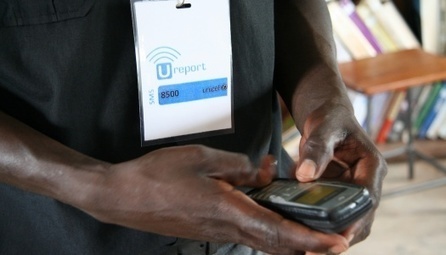
using a mobileWe know we are not alone in asking these questions. The panel’s initial consultations revealed a shared concern for data-related rights. Indeed, around the world, issues of rights and data are being hotly debated by citizens, legislative bodies, civil society, and the private sector. As we attempt to map the landscape of rights and data, we therefore seek your help!
If you have thoughts, expertise, or concrete examples on the following set of questions, please share with the panel by commenting below or by emailing them to undatarevolution@gmail.com with the subject line “rights-based data revolution.”
How do rights intersect with the process of collecting, analyzing and disseminating data?
Initial consultations have resulted in the following set of rights related to data. What is missing? Which rights should be prioritized in the context of the Panel’s report?
Right to an identity (right to be counted)
Right to privacy (in Europe: right to be forgotten)
Right to participation
Freedom of expression/ speech
Ownership: right to own your personal data
Right to access data about you (re-use, sale of data)
Principles of consent
Right to due process (how data is used, ie. how to regulate the algorithm)
Protection from discriminatory uses of data
Right to non-discrimination and equality (how data hides or shows inequalities among subgroups of the population)
What existing rights regulation, policies, or frameworks could be applied to data for development?
This might include frameworks from other sectors, ie. the right to be counted in the Convention on the Rights of the Child; or from other fields, ie. frameworks for ethical use of DNA data. What gaps should be highlighted in the report, ie. areas where “new data” require altogether new norms, frameworks, and policies for a rights-based approach to the data revolution?
How can data empower people?
Many advocate for an SDG monitoring framework that is participatory and empowering to citizens. Can data provide voice? What IEAG recommendations would ensure that data support the right to participation, both in terms of data collection and data access?
Statistical averages can hide inequalities but granular data can infringe on privacy.
As decision-makers use data to target policies and programs, data needs to be disaggregated in different ways—for example by gender, geography, age and income level— to ensure we understand the circumstances of different segments of the population. The more granular the data, the more powerful the potential to address the needs of all. But there is a concern that such disaggregation might infringe on people’s right to privacy. What recommendation should the IEAG make to reconcile this dilemma?
What are we missing?
Please tell us any other thoughts you have on a rights-based framework for the data revolution.
Carmen Barroso is the Regional Director, International Planned Parenthood Federation, Western Hemisphere Region.
Katell Le Goulven is the Chief of Policy Planning at UNICEF.
IMAGE: Using the u-report self-reporting mobile tool (UNICEF)
Share this:
Civil Society Outreach Day
On Friday 26th September, the Independent Expert Advisory Group held a Townhall event and some in-depth sessions centered around a specific topic of the data revolution, with members of civil society, academia and the private sector. These served as a listening session for IEAG members, with representatives from over 60 civil society organisations in attendance.
October 3, 2014
by Jennifer Poole
Data Revolution
Independent Expert Group on Data Revolution has kick-off meeting during General Assembly Week
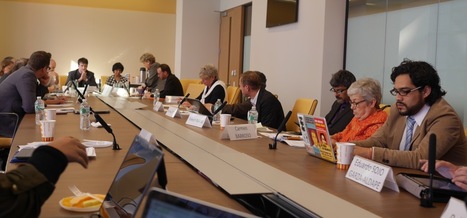
MeeThe Independent Expert Advisory Group (IEAG) on a data revolution for sustainable development was convened last week at UNHQ 25th-26th September, during General Assembly, for two day-long sessions. Below is a brief overview of the various sessions and some of the issues discussed.
Inaugural Meeting of Independent Expert Advisory Group at UNHQ
The group reviewed their mandate and agreed that it included defining what a data revolution for development means, suggesting measures to close data gaps, and seeking opportunities for new innovations and data sources while strengthening accountability at all levels. The group discussed the substance and timing of the report to Secretary-General Ban Ki-moon, due in early November.
During the initial discussion, group members highlighted several important issues including what the group means by the data revolution for development. Many members of the group view this concept as more of an evolution or accelerated data evolution, rather than a completely new paradigm, while others focused on the possibilities associated with big data and privately produced information.
Members of the group highlighted the fact it is imperative to ensure that the data is of sufficient quality and that because the mandate is for a data revolution for development, the goal of the data revolution should be to provide a framework for and investment in data that helps in achieving the SDGs and in monitoring and accountability.
The idea that the information demand for the SDGs will exceed the capability of data collection efforts was underscored. Even developed countries would need help in improving their efforts. Members mentioned that there are two things that are distinct: technological progress (which is inevitable) and what this progress means for official statistics. The role of National Statistical Systems in this new world could be an important point of discussion regarding the data revolution.
Other recurring themes during the discussion were the increase in the generation of data in the private sector and the implications of that for questions of the regulation and management of information, and a continual focus on the purpose of data for decision making, for accountability and for tracking progress. The group highlighted the need to align the frequency and format of data collection to decision making cycles in the public sector and elsewhere.
Meeting with Deputy Secretary General Jan Eliasson
Mr. Eliasson presented his idea of what the data revolution should be and it involves measures to close data gaps and to strengthen national statistical capacity to respond to the demands of a complex development agenda. He also mentioned the need to leverage new, non-traditional data like big data and that a data revolution of about far more than data and statistics, but also about how they are used.
The group then commented on Mr. Eliasson’s presentation and asked him questions including how this report can be made most useful in order to impact decisions, the process over the next several years, and on data as a human right. Mr Eliasson responded by directing the group to look at the OWG outcome document to see that countries feel the need for transformative change.
Read the Deputy Secretary-General’s full remarks at this event
Civil Society Outreach Day
A gathering of civil society and expert group
On Friday 26th September, the Independent Expert Advisory Group held a Townhall event and some in-depth sessions centered around a specific topic of the data revolution, with members of civil society, academia and the private sector. These served as a listening session for IEAG members, with representatives from over 60 civil society organisations in attendance.
Open Data and Accountability
One of the main issues discussed in this session was making data more open, potentially through Freedom of Information Acts, however, a problem is that even when these laws exist, many times they are not implemented. There was agreement among the entire group that data that is not confidential should be openly available. One big issue here is the capacity of people to find and understand the data that exists.
Discussion of possible open data standards created on the international level; the Open Government Partnership could be used as a model. A second issue with open data that was discussed was the risk of spreading data that is not high quality. A potential solution to this was the proposal of creating some sort of audit agency for open data and statistics. The European Union currently has something similar in place and an audit is conducted every five years. Many of the members emphasized that this audit must be done by an independent organization. Overall there was consensus in this meeting that there is a need for more open data, but that in order to make this a reality, efforts need to be made to ensure this data is of a high quality and that there is accountability of the data producers to protect confidentiality and privacy concerns.
Measuring the Sustainable Development Goals
This session was designed to discuss how the data revolution can be leveraged to make measurement of the SDGs more feasible. Some of the participants from civil society stated that there will be a need to move beyond quantitative indicators to more qualitative measures for measuring human rights-based targets. There was a strong point made that a lot of data currently exists but is not shared. For instance, many NGOs collect survey data at the local level but this data is not shared with NSOs or government agencies. Participants stressed that better coordination amongst a wide array of partners could go a long way to improving the measurement of the SDGs.
The importance of inclusiveness was discussed in relation to gathering data. Many times those people or groups most in need of measurement are not measured due to the difficulty of measuring them, the data revolution needs to ensure that all people and groups are included. Administrative records are an important source of information and this information needs to be made available to National Statistical Offices (NSOs) .
Another point for measuring the SDGs is that it will be important to have an adaptive monitoring system that will enable those involved to development new techniques to account for those being excluded. Feedback loops would help with this.
Finally, the point was made that maybe instead of data being seen as supporting and monitoring other sectors of development, data should be viewed as a development objective in and of itself. Finally, there was a great deal of consensus that there needs to be less of a focus on global aggregates and global reporting and more emphasis on data at the national and local level.
Challenges and Opportunities of Big Data and New Technologies
One of the biggest problems with big data is that currently it is almost all solely in the hands of the private sector. How can this data be made more public? The point was made that this fact is troubling from a development perspective as the private sector has very different objectives to the public sector and is not necessarily invested in the post-2015 agenda.
There was broad agreement that norms need to be developed around big data and that there needs to be trust in the confidentiality and reliability of this data.
Another issue is that it is very difficult to infer causality with big data and as a result, big data will not be a panacea for the availability of development data. There was no real agreement on how to address big data, other than it will be an important part of the future and needs to be closely examined.
Finally, the point was made that there are equity issues with big data, as the digital divide can exacerbate the ability to collect information using big data.
IMAGE 1: INDEPENDENT EXPERT ADVISORY GROUP INAUGURAL meeting
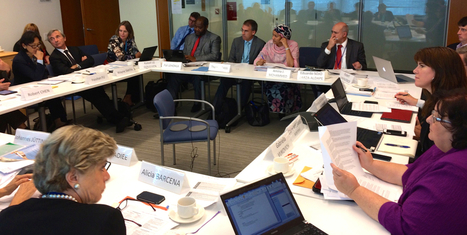
Image 2: Independent Expert Advisory Group speak with Civil Society representatives in themed sessions, this one focused on the challenges and opportunities of Big Data and innovations.
September 26, 2014
by Jennifer Poole
Data Revolution
Deputy Secretary General’s remarks on a data revolution for sustainable development
These remarks were delivered on 25th September 2014, at the first meeting of the Secretary General’s Independent Expert Advisory Group for a data revolution on sustainable development.
Checked against delivery version.
Ladies and gentlemen,
Colleagues,
Friends,
Thank you for this opportunity. Let me begin by conveying greetings from the Secretary-General who asked me to convey his gratitude to you for taking on this vital and urgent assignment.
Your group has been given the responsibility to advise the Secretary-General on the data revolution and its implications. This includes measures to close the data gaps and strengthen national statistical capacities. You come from diverse fields of data and statistics. But your expertise has brought you together to chart a new course of transformative action to respond to the demands of a complex development agenda.
I am a deep believer in your mission.
Through your work, you give visibility to people who have been invisible in policy-making and implementation.
Time is of the essence.
As you are aware, we are in the midst of a process to define a new sustainable development framework to succeed the Millennium Development Goals (MDGs).
This is both a great opportunity and a huge responsibility for the United Nations and the rest of the international community.
The MDGs have been the most successful global anti-poverty push in history.
The MDG framework process has highlighted a number of keys to success.
This includes:
1) reliable statistics to design interventions, measure progress and enhance accountability;
2) the importance of linking goals and targets with investments in data production at country level; and
3) building national capacity for data collection and reporting.
Indeed, data quality has greatly improved in recent years. Yet, we all know there is an urgent need to do more to further enhance data collection, dissemination and analysis.
Going forward, the role of data and statistics will be critical. This is particularly since the Post-2015 development agenda embraces the three dimensions of sustainable development: economic development, social inclusion and environmental sustainability.
That is why the Secretary-General’s High Level Panel on the Post-2015 Development Agenda has called for a new data revolution.
Better data and statistics will help governments reach the most marginalised and the vulnerable, track progress and make sure decisions are evidence-based. They can also strengthen accountability.
In the process, we need to find ways to garner broader participation and resources from international agencies, civil society organizations, the private sector and academia.
In addition to traditional statistics, we need to leverage new, non-traditional data such as big data.
The data revolution should build on innovative initiatives in technology and capacity building, especially at the country level. It should also expand existing monitoring frameworks towards sustainable architecture for development data.
The role of national statistical systems will be fundamental.
Ladies and Gentlemen,
In closing, I encourage you to work in an open and transparent manner, engaging with non-traditional counterparts, not least civil society.
Outreach will be key to the legitimacy of this work. You should also amplify the voices of developing countries where the data gaps are larger and where human and institutional capacities are lagging.
As I said at the beginning of my remarks, we do not have the luxury of time.
You should know that your work will be a key input to the synthesis report of the Secretary General at the end of the year. I regret that the timeframe for your work is short. But we have confidence that you can deliver.
We cannot reach our shared goals without data that enable us to reach the most vulnerable, account for our impacts on sustainable development and improve monitoring and accountability.
I have no doubt that today’s meeting will help usher in a data revolution that will lead to a Post-2015 development agenda that leaves no one behind.
Ultimately, let us not forget that a data revolution is about far more than statistics and counting. It is about making sure that the voices are heard and that aspirations of people count.
On behalf of the Secretary-General, I thank you for your engagement and commitment.
I wish you fruitful deliberations and look forward to receiving your conclusions.
Thank you.
Subscribe to our newsletter Big data innovation and a Data Revolution in Africa Big Data Innovation: Inspiration & Examples from Pulse Lab Kampala (VIDEOS) Read More /News Reflections on UNFPA's Big Data BootcampRené Clausen Nielsen Apr 27, 2015 The United Nations Population Fund (UNFPA), recently convened a group of staff interested in big data. UNFPA is traditionally one of the more data-driven entities of the UN, and in his... Global Pulse Annual Report 2014Jennifer Poole Apr 19, 2015 When the Global Pulse initiative was launched by the UN Secretary-General in late 2009, its mission to use real-time and other non-traditional data sources in development and humanitarian action was... Interview: Using Mobile Phone Data to Estimate Food SecurityAmit Wadwa and Adeline Decuyper Apr 8, 2015 UN World Food Programme (WFP), Global Pulse, Université Catholique de Louvain in Belgium and Real Impact Analytics recently collaborated on a project to analyse the potential use of mobile phone data... Copyright © 2015, Global Pulse
Committed to connecting the world Partnership on Measuring ICT for Development Final WSIS Targets Review The Partnership report Final WSIS Targets Review: Achievements, Challenges and the Way Forward was launched at the WSIS+10 High Level Event, on June 10. More > Partnership on Measuring ICT for Development
The Partnership on Measuring ICT for Development is an international, multi-stakeholder initiative that was launched in 2004 to improve the availability and quality of ICT data and indicators, particularly in developing countries. The Partnership has guided policy makers in producing ICT statistics that are crucial to informed decision-making, including through the identification of a core list of ICT indicators and methodologies to collect these indicators. The Partnership helps developing countries collect ICT statistics, particularly through capacity-building and hands-on training for national statistical offices, and collects and disseminates information society statistics. Its membership has grown from originally 11, to today 14 regional and international organisations. The Partnership work is coordinated by a Steering Committee, which is elected every 3 years. The current Steering Committee is made up of ITU, UNCTAD, and UIS.
As the UN specialized agency for ICTs, ITU is the official source for global ICT statistics. Find out more about how we produce and disseminate data, our main events and products. More >
Committed to connecting the world Connect the World aims to mobilize human, financial and technical resources for the implementation of the connectivity targets of the World Summit on the Information Society (WSIS) and the Regional Initiatives adopted by Member States at the ITU World Telecommunication Development Conference. ITU and partners are organizing a series of regional Summits to mobilize resources and forge partnerships. From Strategy to Execution - ITU-D Study Group 2 Rapporteur Group Meetings
- Monday, April 27, 2015 - Friday, May 8, 2015 Switzerland
- ITU Forum on Smart Sustainable Cities
- Sunday, May 3, 2015 - Monday, May 4, 2015 United Arab Emirates
- Rapporteur Group meeting for Question 1/2
- Monday, May 4, 2015 - Monday, May 4, 2015 Switzerland
- Rapporteur Group meeting for Question 2/2
- Tuesday, May 5, 2015 - Tuesday, May 5, 2015 Switzerland
- Regional Seminar for Europe and CIS on Spectrum Management and Transition to Digital Terrestrial Television Broadcasting
- Tuesday, May 5, 2015 - Thursday, May 7, 2015 Hungary
- Rapporteur Group meeting for Question 4/2
- Wednesday, May 6, 2015 - Wednesday, May 6, 2015 Switzerland
This page
is safe Bitdefender Antivirus Plus
EDGE indicatorsThe Evidence and Data for Gender Equality (EDGE) Initiative seeks to accelerate existing efforts to generate comparable gender indicators on health, education, employment, entrepreneurship and asset ownership. This is a three-year initiative jointly executed by the United Nations Statistics Division and UN Women, in collaboration with the World Bank, Asian Development Bank, African Development Bank and the Organisation for Economic Co-operation and Development. Activities include: (i) the development of a platform for international data and metadata compilation covering basic health, education and employment indicators; (ii) the development of standards and guidelines for measuring ownership of assets and entrepreneurship indicators; and (iii) piloting data collection on asset ownership and entrepreneurship from a gender perspective in several countries. Copyright 2015 by United Nations This page
is safe Bitdefender Antivirus Plus
|