Your new post is loading...
NewsUN-GGIM-AP Convenes Third Plenary Meeting
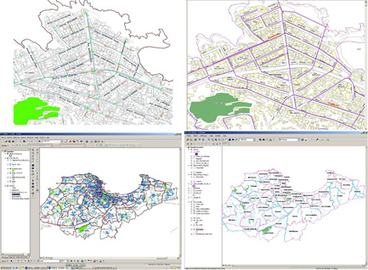
(10-12 November, 2014, Bali, Indonesia)The Third UN-GGIM-AP Plenary Meeting was convened from 10-12, November, in Bali, Indonesia. Summary | Resolution Projects with member statesUN Map A global multi-scale geospatial dataset for rapid map production and web mapping in support to the Security Council and the Secretariat including UN field missions... more Global Map An international cooperation initiative, aiming to develop a digital geo-information framework ensuring spatial resolution at 1 km... more UN International Boundaries A GIS-based UN International Boundary Information System (UNIBIS) that provides a knowledgebase of international boundary issues with treaties... UN-SALB A dataset project, providing a working platform for the sharing of data down to the second administrative level... more UN Gazetteer A global place name database and search engine in support to the Security Council and the Secretariat including UN field missions... more WGS 84 A reference frame for the earth, for use in cartography, geodesy and navigation... more GEOPortal A web interface for accessing GEOSS data, information, imagery, services and applications... more OneGeology An international initiative of the geological surveys of the world, aiming to create dynamic digital geological map data for the world... more ReliefWeb Location Maps A series of 200 country location maps, each highlighting a country, its capital and the surrounding region... more Featured UN-GGIM Best Practice: Algeria uses geospatial information to manage Algiers water supply SECOND MEETING OF THE EXPERT GROUP ON THE INTEGRATION OF STATISTICAL AND GEOSPATIAL INFORMATION, 24 MAY 2015, LISBON, PORTUGAL The United Nations Expert Group on the Integration of Statistical and Geospatial Information (UN EG-ISGI) will convene its second meeting on Sunday 24 May at the Lisbon Congress Center, Portugal, prior to the INSPIRE-Geospatial World Forum 15, to be held from 25-29 May 2015, at the same venue. more...
FIFTH SESSION OF THE UNITED NATIONS COMMITTEE OF EXPERTS ON GLOBAL GEOSPATIAL INFORMATION MANAGEMENT, 3-7 AUGUST 2015, NEW YORK The Fifth Session of the United Nations Committee of Experts on Global Geospatial Information Management (UN-GGIM) will be held from 3-7 August 2015 at the United Nations Headquarters in New York. more...
GEOSPATIAL INFORMATION DEMONSTRATED DURING THE POST-2015 INTERGOVERNMENTAL NEGOTIATIONS, 22 APRIL 2015, UN HEADQUARTERS, NEW YORK Unleashing the Power of ‘Where’ to Make the World a Better Place: How Geographic Information Contributes to Achieving the SDGs 1:15 – 2:30pm Wednesday 22 April 2015, Conference Room 6, UN Headquarters in New York more...
THIRD HIGH LEVEL FORUM ON UN GLOBAL GEOSPATIAL INFORMATION MANAGEMENT, Beijing, China, 22-24 October 2014 The Secretariat of the United Nations Committee of Experts on Global Geospatial Information Management (UN-GGIM), in collaboration with the National Administration of Surveying, Mapping and Geoinformation of China (NASG), successfully convened the Third High Level Forum. more...
GLOBAL FORUM ON THE INTEGRATION OF STATISTICAL AND GEOSPATIAL INFORMATION, 4-5 AUGUST 2014, NEW YORKThe United Nations Global Forum on the Integration of Statistical and Geospatial Information took place in the UN Headquarters in New York from 4-5 August 2014. The Forum was organized by the United Nations Statistics Division (UNSD), as the Secretariat of the UN Statistical Commission and the UN Committee of Experts on Global Geospatial Information Management (UN-GGIM), and substantively supported by the United Nations Expert Group on the Integration of Statistical and Geospatial Information (UN EG-ISGI). more...
INTERNATIONAL WORKSHOP: INTEGRATING GEOSPATIAL AND STATISTICAL INFORMATION, 9-12 JUNE 2014, BEIJING, CHINAThe International Workshop on Integrating Geospatial and Statistical Information was convened in Beijing, China, from 9-12 June 2014. The Workshop was organized by the United Nations Statistics Division, as the Secretariat of the UN Statistical Commission and the UN Committee of Experts on Global Geospatial Information Management (UN-GGIM), and the National Administration of Surveying, Mapping and Geoinformation (NASG) of China, and substantively supported by the Regional Committee of United Nations Global Geospatial Information Management for Asia and the Pacific (UN-GGIM-AP). more...
PERMANENT MISSIONS BRIEFED ON THE IMPORTANCE OF THE GLOBAL GEODETIC REFERENCE FRAME, 6 May, 2014, New YorkOn 6 May 2014, at the United Nations headquarters in New York, under the auspices of the Permanent Missions of Australia, France, Jamaica and Norway, members of the Global Geodetic Reference Frame Working Group delivered a group presentation on geospatial information technologies and the importance of the global geodetic reference frame, to a gathering of United Nations Mission representatives. more...
Note:* Please be informed that the technical reports submitted by regional entities and member states are not reviewed or edited by the secretariat. These reports facilitate the technical discussion of the subject matters on the agenda and help clarify technical issues. The contents of the reports does not reflect the position of the United Nations Secretariat. The designations employed and the presentation of material does not imply the expression of any opinion whatsoever on the part of the Secretariat of the United Nations concerning the legal status of any country, city or area, or of its authorities, concerning the appellation of places, or concerning the delimitation of its frontiers or boundaries. Geospatial Initiatives UN-GGIM Resource Documents Future Trends in Geospatial Information Management: the five to ten year vision
Arabic | Chinese | French | Russian | Spanish | Korean | Japanese The UN-GGIM Secretariat acknowledges and appreciates the contribution from China, Canada, Mexico, the Republic of Korea, the Russian Federation, and Bahrain and Qatar in translating the Future Trends document into Chinese, French, Spanish, Korean, Russian and Arabic respectively. Please Note: These translations have not been formally edited by the United Nations and therefore are not official translations. Copyright © United Nations, 2014 This page
is safe Bitdefender Antivirus Plus
The Post-2015 Data Test Unpacking the Data Revolution at the Country Level
This page
is safe Bitdefender Antivirus Plus
- Italiano
Big Data Contest now open to everybody The contest "Producing official statistics with Big Data", promoted by Istat and Google, is now open to everybody. The initiative, launched on the occasion of the Third Italian day of statistics, aims at rewarding innovative projects related to the use of Big Data sources to observe events of national relevance. The announcement now presents substantial changes (in Articles 2 and 4), and allows "…adult subjects, single or associated in groups, on a personal basis or as representatives of an organization" to submit their application form by 31 January 2014 and their project proposal by 30 April 2014. Full notice (announcement, annex, study commission) Applications should be sent by e-mail to commissionebigdata@istat.it within 31st January 2014. Project proposals should be submitted by e-mail to commissionebigdata@istat.it within 30th May 2014. Winners will be announced by the 15th January 2015. Clarifying questions related to the contest can be sent to the following email address bigdatacontest@istat.it - tags:
- Big Data, innovation, statistical literacy, students, teachers, technology, university, young
- document typology:
- News
Date of publication
Tuesday, 17 December 2013 Did you find this information useful? Yes No Please, leave a comment or suggestion below (Should you need more information, please contact us at comunica@istat.it) Istat - Istituto nazionale di statistica
Via Cesare Balbo 16 00184 - Roma tel. +39 06 46731
Australian Bureau of Statistics ABS Home > Statistics > By Release Date1504.0 - Methodological News, Sep 2013 Previous ISSUE Released at 11:30 AM (CANBERRA TIME) 25/09/2013 Flagship Projects 2013-14 Methodology and Data Management Division (MDMD) have introduced "Flagship Projects" which are research projects or projects of corporate significance. These projects will position MDMD to deliver corporate outcomes and advance ABS goals, build capability and will have a high likelihood of success with support by statistical areas. In the near term, the ABS strategic goals relevant to the flagship projects are to create new and better official statistics, improve the efficiency of statistical production and support Census 2016. Whilst the purpose of the Flagship Projects is important, so too is the research and significant projects included in them! The division makes a significant contribution to the operation and intellectual standing of the ABS - and that is reflected in the list of projects below. 1. Census 2016 (Mark Zhang) 2. Small Domain Estimation (Alistair Rogers) 3. Household Survey Futures (Ross Watmuff) 4. Methodological support to Strategic Review of Economic and Environmental Collections (Justin Farrow) 5. Statistical Quality Control (Mark Zhang) & Risk Mitigation (Justin Farrow) 6. Data Integration, Access and Confidentiality (Phil Gould) 7. Methods for Social, Economic, Environmental and Demographic Analysis (Ruel Abello) 8. Data Visualisation (Phil Carruthers) 9. Methodology Architecture (Bill Gross) 10. Statistical Metadata (Juliet Fallace, Chris Hinchcliffe) 11. Responsive Design (Mark Zhang) 12. Statistical Methods refresh (Alistair Rogers) 13. Collection Methodology in an ABS2017 world (Jo Edwards) 14. Optimum allocation of collection resources to economic statistics (Justin Farrow) 15. International Collaboration (Siu-Ming Tam) 16. Statistical and leadership Capability (Chris Duffy) 17. Big Data (Ric Clarke) The flagship projects will be managed with a minimal amount of administration by a governance board chaired by the Chief Methodologist. The board's role will be to ensure the projects are aligned with business needs, are tracking to plan, and in particular if the project is not achieving the expected benefits then stopping the project so resources can be allocated to a new project. In coming months we will provide articles on various flagship projects.
Further Information
For more information on the flagship projects, please contact the relevant person above (via the ABS switchboard) or Carolyn Cruden (02 6252 7779, carolyn.cruden@abs.gov.au)
This page last updated 10 December 2013
“Data not only measures progress, it inspires it.”
-Secretary of State Hillary Rodham Clinton Mission Data2X, named for the power women have to multiply progress in their societies, advances gender equality and women’s empowerment. How? By building partnerships to improve data collection and demonstrating how better data on the status of women and girls can guide policy, leverage investments, and inform global development agendas. About Us Good data are essential for smart policy, and the lack of reliable data has hindered progress on gender equality and women’s empowerment. Evidence-based policy to increase gains for women and girls was a priority for U.S. Secretary of State Hillary R. Clinton, who announced the creation of Data2X in 2012. The initiative—powered by the United Nations Foundation, with support from the William and Flora Hewlett Foundation and the Bill & Melinda Gates Foundation, and ongoing collaboration with the Office of Hillary R. Clinton—is a platform for partners to work together on gender data. Data2X collaborates with technical experts, policy and private sector advisors, and national and international partners. Together, we hope to spur a gender data revolution and identify innovative sources of data, including “big data,” that can provide an evidence base to guide development policy and investment, and inform the post-2015 global development agenda. Data2X © 2014 | All Rights Reserved
This page
is safe Bitdefender Antivirus Plus
Follow The Money May 2, 2015 HOW 9.2 BILLION NGN (US$ 49.8 MILLION ) IS BEING SPENT ON 750,000 CLEAN COOKSTOVES AND 18,000 WONDERBAGS FOR RURAL WOMEN Help us Follow The Money for Rural #WomenCookstoves! This information is according to our groundtruthing activities and as accounted for at our advocacy and stakeholder meetings, for any information contrary please email info@followthemoneyng.orgREAD MORE HOW IS ABOUT 123 MILLION NGN (ABOUT $US700 thousand) BEEN SPENT TO RELOCATE 570 HOUSEHOLDS IN GUTSURA, ZAMFARA? Help us Follow The Money meant to #RelocateGutsura! This information is according to what we have seen happening in Gutsura and as accounted for at our Focus Group meetings, for any information contrary email info@followthemoneyng.orgREAD MORE HOW IS ABOUT 837.3 MILLION NGN (ABOUT $5.3million) BEING SPENT TO SAVE HUNDREDS OF CHILDREN IN BAGEGA, ZAMFARA, NIGERIA?Following the Money released in January 2013 to Bagega! [NEW] Download "When will the Government of Zamfara Relocate 3,000 residents of Gutsura" in PDF [ NEW] Download "When Government spending is made to Work, Nothing works like it" in PDF Download "Education in Crisis" our data report on education funds in Nigeria in PDF This information is according to what we have seen happening in Bagega and as accounted for at the Stakeholders meeting, for any information contrary email info@followthemoneyng.org#Bekudi [***FLASH***] The 200 million Naira meant for the Ministry of Health has been released! We have followed up with an FOI Request [CLICK] to view our platform that tracks development projects in local communities. Citizens can report via SMS MORE ABOUT BAGEGA FOLLOWING EDUCATION FUNDS IN NIGERIAEducation Tracker With about US$16 billion spent on education by international aid organizations and millions of Naira government spending, the quality of basic education in Nigeria is still extremely poor due to lack of accountability and transparency, leading to low demand and unacceptably low academic performance. While education indicators are poor nationwide, the greatest need for assistance is in the predominantly Muslim north, and the Follow The Money team is tracking the implementation of budget (monitoring service delivery) in education institutions in Nigeria [CLICK] to view our monitoring and evaluation system that can be used in reporting performance in the education sector in Nigeria FULL DETAILS HEREUS$16 billion
NGN2 trillion FOLLOWING FUNDS FOR FLOOD VICTIMS spent on Education [2000- 2012] by international donors >> more In 2012, an unprecedented flood ravaged several states in Nigeria, affecting over 7 million people, displaced 2.3 million people, killed over 363 persons, damaged and destroyed about 597, 476 houses. To ameliorate the situation,In October 2012, the Federal Government of Nigeria immediately provided a total of NGN17.6 billion while about USS$12.8 million was received from donors - where did all the funds go? Did it reach the ailing communities? US$200 million NGN31 billion FULL DETAILS HERE raised for 2012 flood victims in Nigeria >> more JOIN OUR DATA EXPEDITION CLASS Do you work with the government or with a non-profit organization? Are you are a data analyst or a top decision maker in visualizing, managing and communicating data? we will help you in identifying specific tools you can use in visualizing, interpreting, and communicating your data in an IATI standard format. This expedition will help you in exploring formatting methods which allows you to visually annotate your data for both analytical and presentation purposes. Find out how you can analyze and communicate your organization data information, share it with other people,"make it open and transparent " and manage it more effectively than ever.Register to join us on one of our monthly data day...Its Free! COURSE OUTLINE REGISTER HERE LET US HELP YOU FOLLOW THE MONEY In 2012, while there was an urgent need to treat about 1,500 children in Bagega, Zamfara of lead poisoning. A stakeholders group [comprises the state Commissioner for Environment & Solid Minerals, the Emirate Council, Artisanal Miners Association, Radio Zamfara, Doctors without Borders (MSF), Community Based Organizations and other government agencies] activated Follow The Money Team to help advocate for the release of US$5.3 million; and also track how the funds are been utilized within the community. If your organization is interested in advocating or monitoring how funds are been used in your local community, do not hesitate to activate us now! ACTIVATE US We are a network of NGOs, other CSOs, academics, activist, journalists, development consultants, students, as such you can join our SDMG (Service Delivery Monitoring Group) where we share lessons, events, job, research works, project reports. To join us, kindly send join request email to sdmgafrica@googlegroups.comWE ARE IN THE NEWS! THANK YOU FOR FUNDING US! THANK YOU FOR ENDORSING US! Perhaps, you will like to give suggestions, recommendations, make enquiries, or endorse us - kindly email: hamzy@followthemoneyng.org or oludotun@followthemoneyng.org We'll be glad you did! This page
is safe Bitdefender Antivirus Plus
LinkedIn Find People, Jobs, Companies, and More Search for: Groups Main content starts below. Group Profile Private group. To request membership, click Join and your request will be reviewed by the group manager. Open Data Innovations Network (ODIN) is a community of practice supported by the World Bank-initiated knowledge partnership called "Open Development Technology Alliance" and is facilitated by the Web Foundation and other knowledge partners. The main objective of ODIN is to catalyze and support open government data initiatives and related open innovation ecosystems in developing and transition countries by leveraging experience and expertise from more developed countries and pioneers in the developing world.
The ODIN connects government, donor and civil society champions with OGD change agents and experts to facilitate the adoption of open data tools, methods and principles and catalyze broader open government initiatives.
The Open Development Technology Alliance (ODTA) is a new initiative that brings together leading ICT4D organizations and practitioners in order to maximize development impact. The ODTA leverages innovation, knowledge, and technology to facilitate citizen engagement, improve the delivery and quality of public services, and enhance accountability.
Contacts:
Tariq Khokhar, Open Data Evangelist, World Bank, tkhokhar@worldbank.org
Oleg Petrov, Program Coordinator, ICT @ World Bank, opetrov@worldbank.org
Jose M. Alonso, Open Data Program Manager, WWW Foundation, josema@webfoundation.org Group Members in Your Network About this Subgroup - Created: September 7, 2011
- Type: Professional Group
- Members: 1,601
- Subgroups: 5
- Owner: Oleg Petrov
- Managers: José Manuel Alonso, Yulia Danilina, Tariq Khokhar,
Other Subgroups - Community of Expert Consultants
213 members | Share | Join - Open Governance Community
357 members | Share | Join - e-Tajikistan Network
36 members | Share | Join - Macedonia Open Government Community
105 members | Share | Join - Moldova-India ICT Collaboration Forum
40 members | Share | Join
LinkedIn Corporation © 2015
Jump to navigation The Open Data Research network Governments, civil society organisations and companies across the world are actively engaging with open data: publishing and using datasets to promote innovation, development and democratic change. The Open Data Research network has been established to connect researchers from across the world working to explore the implementation and impact of open data initiatives. It is a joint project of IDRC and the Web Foundation, and is seeking to develop wider partnerships over the coming year. The network currently hosts the 'Exploring the Emerging Impacts of Open Data in Development Countries (ODDC)' programme. Latest News Open data for International Women's Day: Making data work to bridge the gap in women’s political representation07th Mar 2015 Did you know Rwanda, a country that is emerging from one the worst genocides in human history, has around 64% women MPs in their national Parliament? In fact, Rwanda and Bolivia are the only countries in the world where women outnumber men in the Parliament. That is an encouraging thought to start International Women’s Day with. I did not just stumble upon this data. It was part of an enterprise I undertook recently along with a friend, most of it involved long and painful scraping of data from pdfs on women's representation in parliaments. Open Data Barometer highlights the need for governments to increase open data efforts20th Jan 2015 The second edition of our Open Data Barometer, released today, shows that hard work lies ahead if Open Government Data (OGD) is to live up to its full potential and deliver truly transformative impacts. Governments worldwide have acknowledged the potential of OGD to reduce corruption, increase transparency, and improve government services, yet over 90% of the 86 countries surveyed in this edition of the Barometer do not publish key datasets in open formats. Despite pledges by the G7 countries to boost transparency by making government data “open by default”, almost half of the G7 countries are still not publishing the key datasets they promised to release in 2013, while fewer than 8% of the countries surveyed worldwide publish datasets on government budgets and spending, public sector contracts, and company ownership in open formats and under open licenses. Mapping existing open data research19th Jan 2015 We'd like to introduce our prototype open data bibliography browser at http://bibliography.opendataresearch.org. Built with support from the Open Data Institute and the Partnership for Open Data, this covers a hand-picked selection of over 120 papers and articles, and offers the ability to browse via research methods, research focus and geography (amongst other facets). 2015 Open Data Research SymposiumAlongside the 3rd International Open Government Data Conference in Ottawa, on May 27th 2015, the Open Data Research Network will host a one day academic workshop, consisting of a series of paper presentations and discussion panels. Submissions of extended abstracts are invited from all disciplines by 28th Feb 2015. Sharing findings at the Open Development Camp26th Oct 2014 A few weeks ago, a number of the Web Foundation team were in Amsterdam for the Open Development Camp to share insights from the Open Data in Developing Countries project. Below you can catch a video of our panel, with Michael Gurstein, Atif Mumtaz and Andi Pawelke all sharing their experiences of the reality of open data in practice, as well as recorded video input from ODDC partners. The video from our panel starts at 36 minutes in. Placing lessons from the ODDC research at the heart of the data revolution debate09th Oct 2014 Between the 6th and the 9th of October 2014, phase I ODDC case studies from Uganda, Nigeria and Kenya were presented at the 2014 Buntwani Conference as co-facilitators and panelists in a session on Open data and Data revolution held at the Kenya School of Government in Nairobi, Kenya. The theme of conference was “The potential of ICT in strengthening citizen engagement and participation” ODDC researchers Bernard Sabiti fromDevelopment Research and Training and Development initiatives, Zacharia Chilishwa of theJesuit Hakimani Centre in Nairobi and Dr. Omenogo Veronica Mejabi -Senior Lecturer, University of Ilorin, Nigeria presented highlights of their case studies and fielded questions from the audience. The session was moderated by Linet Kwamboka of the Kenya ICT Authority. This post summarise the session, and includes collected tweets and media from the event.
Project List The Energy and Resources Institute Instituto de Estudos Socioeconomicos - INESC Centro de Implementacion de Politicas Publicas para la Equidad y el Crecimiento (CIPPEC) Research Group on Public Policies for Information Access (GPoPAI), University of Sao Paulo, Brazil Transparent Chennai, Institute for Financial Management and Research, India Development Initiatives, Kenya, and Development Research and Training, Uganda De La Salle University, Philippines Society for Democratic Initiatives, Sierra Leone The Web Foundation & The Open Data Institute World Wide Web Foundation Jesuit Hakimani Center and iHub Research STEP Consulting and partners The Open Data Research Network Open Data Research across the web... 11 ways to rethink open data and make it relevant to the public: Original post Open contracting format can clean up government procurement: Original post Developing Data Journalism in the Developing World: Original post Newsletter Subscribe to our monthly e-mail newsletter * indicates required Email Address *
Unless otherwise specified, the works on this site are licensed under a Creative Commons Attribution-ShareAlike 2.5 South Africa Licence. To view a copy of this licence, visit http://creativecommons.org/licenses/by-sa/2.5/za/ or send a letter to Creative Commons, 171 Second Street, Suite 300, San Francisco, California 94105, USA.
The project is funded by the Canadian International Development Research Centre (through grant 107075) and is managed by the World Wide Web Foundation. This page
is safe Bitdefender Antivirus Plus
Guidelines on Modelling a Statistical Domain for Data Exchange in SDMXThis new guideline outlines general principles on how to design and create SDMX artefacts in a statistical domain, following a step-by-step approach to design based on the SDMX information model, while also complementing the existing guidelines on Data Structure Definitions and Code Lists. A poster highlighting the various steps of the process is annexed to the document. The document includes how to determine the number of Data Structure Definitions (DSDs) for a subject-matter domain, and recommends that this decision should come after the discussion on all parameters of the data collection exercise. Posted in: Governance, Standards and Guidelines | VTL 1.0 – Validation and Transformation LanguageVTL is a standard language for defining validation and transformation rules (set of operators, their syntax and semantics) for any kind of statistical data. VTL builds on the Transformation section of the SDMX information model, by taking the common parts of GSIM, SDMX and DDI as for the representation of concepts and data. The assumption is that such a logical formalization of validation and transformation rules will provide a “technology-neutral” expression at business level of the processing taking place, against which various implementations and specific programming languages can be mapped. The specifications for exchanging VTL validation rules in SDMX messages, for storing rules and for requesting validation rules from web services will be provided in a specific update to the SDMX Technical Standards on which the SDMX Technical Working Group is working on. The VTL 1.0 package includes: - Part 1, highlighting the main characteristics of VTL, its core assumptions and the information model the language is based on;
- Part 2, containing the full library of operators ordered by category, including examples; this first version can support validation and basic compilation needs. Future versions, whose design is already in progress, will include more features related to transformation of data;
- EBNF notation (Extended Backus-Naur Form) which is the technical notation to be used as a test bed for all the examples throughout the document.
Download the complete VTL 1.0 package (part 1, part 2, EBNF) Please send your comments to the SDMX Technical Working Group (TWG) at twg@sdmx.org. Each email message should contain only a limited set of numbered – and possibly homogeneous – comments and should contain the elements indicated in the attached comment log. Posted on 3 March 2015 Posted in: Standards and Guidelines | SDMX-NA and BOP: new DSD packages publishedThe Ownership Group for SDMX implementation in Balance of Payments (BOP), Foreign Direct Investment (FDI) and National Accounts (NA) is pleased to inform you that updated DSDs have been made available for NA and BOP. FDI was not updated at this time. The new National Accounts release adds support for SNA93, Euro Area 19 extension, additional coding for ESA-GFS tables and other minor additions after comments received from data providers and international organisations. Along with the new DSDs, updated Excel templates have been published, which support the new DSD versions. Apart from some ESA-GFS tables, all templates are fully backwards compatible with earlier versions of the DSDs. For more details, release notes and downloads please consult the SDMX-NA maintenance page or SDMX-BOP/FDI maintenance page. Posted in: Implementations | Enter your e-mail address to sign up for further information about SDMX
This page
is safe Bitdefender Antivirus Plus
Founding institutions
Core funding provided by Incubated in NYC by subscribe
WELCOME TO DATA-POP ALLIANCE Data-Pop Alliance is the first think-tank on Big Data and Development, co-created by the Harvard Humanitarian Initiative, MIT Media Lab, and Overseas Development Institute to promote a people-centered Big Data revolution. We function as a distributed network, with our headquarters in New York, where we are incubated by ThoughtWorks NYC, co-directors and staff at HHI, MIT Media Lab and ODI, research affiliates in various organizations, and individual and institutional partners around the globe. Our vision is a future where Big Data is leveraged to improve decisions and empower people, especially at the community level, in ways that avoid the pitfalls of a new digital divide, de-humanization and de-democratization. Our work is organized along there main strategic streams: Advancing Knowledge and Innovation with Big Data Building Capacities and Connections in Big Data Crafting Ethical and Equitable Systems for Big Data
We operate through research, training, technical assistance, convening, knowledge curation, and advocacy, with systematic engagement of local partners and communities. Our six thematic areas of focus are official statistics, socio-demographic measures and methods, conflict and crime, humanitarian action, climate change and environmental stress, and data literacy and ethics. Our main funder is The Rockefeller Foundation. Please sign up to receive our updates & newsletters, and contact us with questions or suggestions.
Initiatives on the data revolution for post-2015
Contents
1. Intro
2. List of initiatives
Introduction
The following list is a first recognition of on-going initiatives by the public sector, international organizations, the private sector and civil society on the data revolution for post-2015, particularly in relation to:
- Capacity development and modernization of statistical systems
- Big data
- Open data
- Privacy protection
- Sustainable development indicators
- Data for policy design and implementation
- Data for accountability
- Data for early warning and emergency response
We encourage people and organisations to submit new proposals.
An urgent call for action: Key recommendations
The strong leadership of the United Nations (UN) is vital for the success of this process. The Independent Expert Advisory Group (IEAG), established in August 2014, offers the UN Secretary-General several key recommendations for actions to be taken in the near future, summarised below:
- Develop a global consensus on principles and standards: The disparate worlds of public, private and civil society data and statistics providers need to be urgently brought together to build trust and confidence among data users. We propose that the UN establish a process whereby key stakeholders create a “Global Consensus on Data”, to adopt principles concerning legal, technical, privacy, geospatial and statistical standards which, among other things, will facilitate openness and information exchange and promote and protect human rights.
- Share technology and innovations for the common good: To create mechanisms through which technology and innovation can be shared and used for the common good, we propose to create a global “Network of Data Innovation Networks”, to bring together the organisations and experts in the field. This would: contribute to the adoption of best practices for improving the monitoring of SDGs, identify areas where common data-related infrastructures could address capacity problems and improve efficiency, encourage collaborations, identify critical research gaps and create incentives to innovate.
- New resources for capacity development: Improving data is a development agenda in its own right, and can improve the targeting of existing resources and spur new economic opportunities. Existing gaps can only be overcome through new investments and the strengthening of capacities. A new funding stream to support the data revolution for sustainable development should be endorsed at the “Third International Conference on Financing for Development”, in Addis Ababa in July 2015. An assessment will be needed of the scale of investments, capacity development and technology transfer that is required, especially for low income countries; and proposals developed for mechanisms to leverage the creativity and resources of the private sector. Funding will also be needed to implement an education program aimed at improving people’s, infomediaries’ and public servants’ capacity and data literacy to break down barriers between people and data.
- Leadership for coordination and mobilisation: A UN-led “Global Partnership for Sustainable Development Data” is proposed, tomobiliseandcoordinate the actions and institutions required to make the data revolution serve sustainable development, promoting several initiatives, such as:A “
- World Forum on Sustainable Development Data” to bring together the whole data ecosystem to share ideas and experiences for data improvements, innovation, advocacy and technology transfer. The first Forum should take place at the end of 2015, once the SDGs are agreed;
- A “Global Users Forum for Data for SDGs”, to ensure feedback loops between data producers and users, help the international community to set priorities and assess results;
- Brokering key global public-private partnerships for data sharing.
- Exploit some quick wins on SDG data: Establishing a “SDGs data lab” to support the development of a first wave of SDG indicators, developing an SDG analysis and visualisation platform using the most advanced tools and features for exploring data, and building a dashboard from diverse data sources on ”the state of the world”.
Never again should it be possible to say “we didn’t know”. No one should be invisible. This is the world we want – a world that counts.
The data we want for sustainable development
Too much that needs to be known remains unknown. Data could be used better to improve lives and increase the power and control that citizens have over their destinies. Data is a resource, an endless source of fuel for innovation that will power sustainable development, of which we must learn to become effective and responsible stewards. Like any resource, it must be managed for the public good, and to ensure that the benefits flow to all people and not just the few. Data must be available, and must be turned into the information that can be confidently used by people to understand and improve their lives and the world around them.
The world we need, if the data we have is to be used to the fullest to achieve sustainable development, is a world of data that is transformed in the following ways:
Data for everyone. The rules, systems and investments that underpin how official data is collected and and managed should be focused on the needs of people, while protecting their rights as the producers of that information. These data, and the information produced from them, should reflect what is important to people and the constraints and opportunities that affect their lives. This process should include all people – leaving no one out, and disaggregating in ways that allow the relevant differences and similarities between people and groups to be reflected in analysis and policy. Rules and standards should be aimed at reducing information inequalities and providing the highest-quality information for all, in the most easily understood format. The priority should always be to use data and information to improve outcomes, experiences and possibilities for people in the short and long term.[x] When the data is not confidential, it should be available and useable as open data. There must be respect for privacy and personal ownership of personal data, and mechanisms in place so that people themselves have access to the information and are able to make choices accordingly. Crucially, people must have means for redress if they feel that they are being harmed or their rights infringed by the use of their data.
Data for now. If data is to be useful and support good decision-making, it has to be ready at the time when decisions are being made or where the opportunity for influencing the outcomes is there. Trade-offs between timeliness and other quality dimensions depend on the purpose to which data is being put. New technologies and innovations provide the opportunity for the public sector, citizens groups, individuals and companies to have access to data that, with due regard for privacy, security and human rights, is aligned with their own decision making cycles and information needs – available when and how they want it – and strengthen policy planning, crisis early warning, programme operations, service delivery, impact evaluation, and disaster response.[xi]
Data for the future. Data are a key resource not just for decision-making now but for future modelling and problem solving. It is almost impossible to precisely predict future needs, or know how current data could be re-used in the service of complex and interconnected problems as yet unknown or unsolved. Data at different timescales will be most useful for solving future problems if they are part of a flexible and connected system, not tied to one project or research question. Data that can be re-used at different scales, and combined with other data, can better reflect the complex and dynamic interactions between people and the planet. We need to begin investing in data today as a shared resource that will enable the innovations required to meet the challenges of tomorrow.
|
Our Mandate The Statistical Commission Friends of the Chair Group on Broader Measures of Progress (FOC) was established by the United Nations Statistical Commission at its forty-fourth session (26 February to 1 March 2013) as response to the request of the Rio+20 conference to launch a programme of work on broader measures of progress to complement GDP in order to better inform policy decisions. Learn more » Ongoing work of the Friends of the Chair GroupWe are committed to operating in an open, transparent and inclusive manner. In this section you will find documents and information pertaining to our ongoing work, such as invitation letters, information notes, an overview of the post-2015 process, and more. Go » Sustainable development & the post-2015 development agendaWe have been requested “to closely monitor the ongoing debate on development frameworks and to keep the Bureau of the Statistical Commission informed ... in order to ensure that a robust statistical measurement approach is incorporated from the outset in preparations for the post-2015 development agenda.” In this section you will find documents and information pertaining to the ongoing discussion on sustainable development and the post-2015 development agenda. Go » Broader measures of progressWe have been mandated “to build a work programme to develop broader measures of progress based on a stocktaking exercise of current national, regional and international practices in this field, and to conduct a technical review of these existing efforts with a view to identifying good/best practices and to facilitating the sharing of knowledge, especially for the benefit of developing countries.” In this section you will find documents and information regarding broader measures of progress. Go » © United Nations Statistics Division 2013 This page
is safe Bitdefender Antivirus Plus
Skip to Content Your key to European statistics Eurostat's new website Eurostat's new website15 December 2014 New Eurostat website! Click here to go to "Home"The website has been subject to a complete design overhaul to make it more attractive and easier to use, although the overall structure of the website will remain the same. Furthermore, the technological infrastructure supporting the website has been replaced. The data extraction and visualization tools will not change and keep the same functionality. What will change for you: URL changes - please update your bookmarks accordingly
- The root URL will change from
http://epp.eurostat.ec.europa.eu
to
http://ec.europa.eu/eurostat
- The bulk download URL will change from
http://epp.eurostat.ec.europa.eu/NavTree_prod/everybody/BulkDownloadListing
to
http://ec.europa.eu/eurostat/estat-navtree-portlet-prod/BulkDownloadListing In this Excel file you can find a mapping of the links of the sections between the old and the new website. - If you were registered on the current website you will not be automatically registered(*) on the new website which will be using the European Commission Authentication System (ECAS).
- A new search function can be found in the banner of every page of the new website.
- Short information videos on "How to register on the new website" and "A guide through the new website" are available for you to consult.
If you have any questions, please address them to our user support via the "Help" page. We hope that the new website will improve your experience when looking for European statistics. (*) Except for users who confirmed to the Eurostat User support network to migrate their accounts. Only these accounts will be registered automatically. Click here to go to "Home"
- Home
- Events
- 2014
- International Conference on Big Data for Official Statistics
International Conference on Big Data for Official Statistics Organized by the United Nations Statistics Division (UNSD) and National Bureau of Statistics of China - Beijing, China
- 28 – 30 October 2014
Innovations in technology, broad use of electronic devices and the all-around generation of digital information brings fundamental changes to the availability of real-time information, such as data from GPS devices, from mobile phones or from social media. These high-volume and sometimes loosely structured data sources, commonly referred to as Big Data, are different from conventional data sources for official statistics, and have many challenges in their application. The business case still needs to be made for many statistical offices if, why and how Big Data are useful for official statistics. The statistical community has recognized the potential use of big data for official statistics. The UN Statistical Commission therefore established in March 2014 a global working group mandated to provide strategic vision, direction and coordination of a global programme on Big Data for official statistics, to promote practical use of sources of Big Data for official statistics, while finding solutions for their challenges, and to promote capacity building and sharing of experiences in this respect. Currently, mostly developed countries have started using various Big Data sources encountering a number of challenges. Mobile phone data, Traffic loop data, Twitter data and Satellite imagery have all been successfully used. Whereas national circumstances can be fairly unique, it is still intended to generalize the use of such Big Data sources to other countries, especially also in developing parts of the world. Event UpdatesEvent video available: 5 November 2014 @ 15:00 Wednesday, 29 October 2014 Day 2 started with a fascinating presentation from the invited expert Mr. Siu Ming-Tam (Australia Bureau of Statistics) on Satellite Imagery. He explained their work with satellite imagery data in order to replace surveys for measuring agricultural crop production. Following his presentation, representatives from DANE (Colombia), NBS China and INEGI (Mexico), presented three different applications of satellite imagery. Mr. Ronald Jansen presented the key findings of the joint UNECE/UNSD Survey on Big Data projects. The survey collected information on overall Big Data strategies as well as detailed information about Big Data projects. The presentation complemented the individual presentation of Big Data projects, by providing a comprehensive synopsis of the status of Big Data projects in the statistical community. 29 October 2014 @ 12:00 Day 2 concluded with a captivating discussion of the use of twitter and other social media for official statistics. The invited expert, Mr. Andrew Schwartz (University of Pennsylvania) discussed the process of acquiring social media sources, which he claimed is the largest dataset on human behavior, and demonstrated various projects using social media. Statistics Netherlands, INEGI (Mexico), ISTAT (Italy), NBS China and Baidu all presented projects that explore the use of social media to replace or reduce the reliance on surveys. The chair of the session, Mr. Trevor Sutton (Australia Bureau of Statistics) summarized by saying that the session showed that the statistical community is making strong progress in this area, and even if there are numerous methodological challenges, this is a natural part of the modernization process and that the Staticial Community should work to overcome the challenges. 29 October 2014 @ 16 :00 Tuesday, 28 October 2014 The opening of the International Conference on Big Data in Beijing was inspiring with Mr. Ma, Chief Statistician of China, Mr. Stefan Schweinfest, Director of UNSD, and Mr. Trevor Sutton, Deputy Australian Statistician, setting the tone. China has been working on Big Data since 2012, and follows a dual track strategy, developing Big Data applications in parallel to its production work. UNSD placed Big Data in the context of the recent call by the international community for a Data Revolution for Sustainable Development, and ABS, as Chair of the UN Global Working Group on Big Data, recognized that the GWG will need to deliver a global work programme for the coming years. Mr. Steven Landefeld (consultant to UNSD) gave a Key note speech which was cautiously upbeat about the promise of Big Data, seeing its potential especially in improving timeliness and relevance of official statistics, not unlike the role of, for instance, some administrative records for GDP estimates. 28 October 2014 @ 12:00 Mobile Phone positioning data, GPS and other tracking devices were discussed in detail in the afternoon session. Mr. Margus Tiru presented the difference between active and passive mobile phone location data, and showed a number of different statistical applications, such tourism, day time mobility and estimation of population census data. The key challenges remain public trust in the use of mobile phone data, and the protection of privacy and confidentiality. 28 October 2014 @ 16 :00 View full album on Flickr Map Share
About The Trade Statistics Branch (TSB) of the United Nations Statistics Division is responsible for International Merchandise Trade Statistics (IMTS) and Statistics of International Trade in Services (SITS). Additional activities include Tourism Statistics, Distributive Trade Statistics (DTS) and the Compilation of Basic Economic Statistics. 2014 © United Nations Statistics Division. ALL Rights Reserved.
Skip to Specific Areas Search Site Navigation Main Content Section NavigationNational Competitive Grants Program Breadcrumb Navigation ARC Centre of Excellence for Mathematical and Statistical Frontiers of Big Data, Big Models, New Insights In today's world, massive amounts of data in a variety of forms are collected daily from a multitude of sources. Many of the resulting data sets have the potential to make vital contributions to society, business and government, as well as impact on international developments, but are so large or complex that they are difficult to process and analyse using traditional tools.The aim of this Centre is to create innovative mathematical and statistical models that can uncover the knowledge concealed within the size and complexity of these big data sets, with a focus on using the models to deliver insight into problems vital to the Centre's Collaborative Domains: Healthy People, Sustainable Environments and Prosperous Societies. Funding: $20 million over 7 years Centre Director: Professor Peter Hall Administering Organisation: The University of Melbourne Collaborating and Partner Organisations: - Queensland University of Technology
- The University of Adelaide
- The University of New South Wales
- The University of Queensland
- University of Technology, Sydney
- AT&T Labs-Research
- Australian Bureau of Statistics
- Commonwealth Scientific and Industrial Research Organisation
- Mathematics of Information Technology and Complex Systems, Canada,
- Roads Corporation
- Sax Institute
- The Australian Institute of Marine Science
For further information about the ARC Centre of Excellence for Mathematical and Statistical Frontiers of Big Data, Big Models, New Insights visit their website: (website under construction) Content Last Modified: 11/03/2014 Footer Information © Commonwealth of Australia This page
is safe Bitdefender Antivirus Plus
Show results with: all of these words | any of these words | the exact phrase ? Total datasets available: 8476Browse datasets by subject -
Employment and working conditions -
Social questions -
Economics -
Finance -
Trade -
Education and communications -
Industry -
Production, technology and research
Popular terms statisticsvector datawatergeospatial datagender equalityinternational tradeagricultureentreprisebalance of paymentsresearcheuropean unionenvironmental statisticsbalance of paymentsmathematical analysiscontrolled vocabularyenergycredit ratingsconsumer protectionannual reportregionNUTSunemployement What is this Data Portal about? Are you looking for easy access to EU Data? Do you want to reuse data for research, an article, an application or something else? You have come to the right place. The EU Open Data Portal is your single point of access to a growing range of data produced by the institutions and other bodies of the European Union. Data are free to use, reuse, link and redistribute for commercial or non-commercial purposes. This page
is safe Bitdefender Antivirus Plus
World Bank Open Data: free and open access to data about development in countries around the globe. U. Serajuddin, N. Yoshida & H. Uematsu | Posted on 30 Mar 2015 Neil Fantom | Posted on 14 Apr 2015 L. Klapper, D. Singer & P. Van Oudheusen | Posted on 15 Apr 2015
Visualizing the structure of the world economy and population in one chart The Data Catalog is a listing of available World Bank datasets, including databases, pre-formatted tables, reports and other resources. This page
is safe Bitdefender Antivirus Plus
Clic This page
is safe Bitdefender Antivirus Plus k here to edit the title
Project Open DataOpen Data Policy — Managing Information as an Asset 1. Background Data is a valuable national resource and a strategic asset to the U.S. Government, its partners, and the public. Managing this data as an asset and making it available, discoverable, and usable – in a word, open – not only strengthens our democracy and promotes efficiency and effectiveness in government, but also has the potential to create economic opportunity and improve citizens’ quality of life. For example, when the U.S. Government released weather and GPS data to the public, it fueled an industry that today is valued at tens of billions of dollars per year. Now, weather and mapping tools are ubiquitous and help everyday Americans navigate their lives. The ultimate value of data can often not be predicted. That’s why the U.S. Government released a policy that instructs agencies to manage their data, and information more generally, as an asset from the start and, wherever possible, release it to the public in a way that makes it open, discoverable, and usable. The White House developed Project Open Data – this collection of code, tools, and case studies – to help agencies adopt the Open Data Policy and unlock the potential of government data. Project Open Data will evolve over time as a community resource to facilitate broader adoption of open data practices in government. Anyone – government employees, contractors, developers, the general public – can view and contribute. Learn more about Project Open Data Governance and dive right in and help to build a better world through the power of open data. 2. Definitions This section is a list of definitions and principles used to guide the project. 2-1 Open Data Principles - The set of open data principles. 2-2 Standards, Specifications, and Formats - Standards, specifications, and formats supporting open data objectives. 2-3 Open Data Glossary - The glossary of open data terms. 2-4 Project Open Data Metadata Schema - The schema used to describe datasets, APIs, and published data at agency.gov/data. 3. Implementation Guidance Implementation guidance for open data practices. 3-1 U.S. Government Policy on Open Data - Full text of the memorandum. 3-2 Implementation Guide - Official OMB implementation guidance for each step of implementing the policy. 3-3 Public Data Listing - The specific guidance for publishing the Open Data Catalog at the agency.gov/data page. 3-4 Documenting APIs - The specific guidance for documenting APIs in the data catalogs. 3-5 Open Licenses - Open license guidance and examples. 3-6 Frequently Asked Questions - A growing list of common questions and answers to facilitate adoption of open data projects. 3-7 Open Data Cross Priority (CAP) Goal - Information on the development of the Open Data CAP goal as required in the Open Data Executive Order. 4. Tools This section is a list of ready-to-use solutions or tools that will help agencies jump-start their open efforts. These are real, implementable, coded solutions that were developed to significantly reduce the barrier to implementing open data at your agency. Many of these tools are hosted at Labs.Data.gov and developers are encouraged to contribute improvements to them and contribute other tools which help us implement the spirit of Project Open Data. Data Catalog Tools 4-1 Project Open Data Dashboard - A dashboard to check the status of /data and /data.json at each agency. This also includes a validator. 4-2 Data.json validator - This validator can help you check compliance with the Project Open Data schema. 4-3 Data.json File Merger - Allows the easy combination of multiple data.json files from component agencies or bureaus into one combined file. 4-4 ckanext-datajson - A CKAN extension to generate agency.gov/data.json catalog files. 4-5 Inventory.data.gov - A data management tool to generate and maintain and merge Enterprise Data Inventory and Public Data Listing JSON files. - How to Guide 4-6 DKAN - An open data portal modeled on CKAN. DKAN is a stand alone Drupal distribution that allows anyone to spin up an open data portal in minutes as well as two modules, DKAN Dataset and DKAN Datastore, that can be added to existing Drupal sites to add data portal functionality to an exist Drupal site. 4-7 Datahub.io - A service offered by the Open Knowledge Foundation that allows civic bodies to host data publicly for free. 4-8 Esri Geoportal Server - Open source catalog supporting ISO/FGDC/DC/… metadata with mapping to DCAT to support agency.gov/data.json listings in addition to providing OGC CSW, OAI-PMH and OpenSearch. Supports automated harvesting from other open catalog sources. 4-9 US Open Data Institute’s Let Me Get That Data For You - A simple search interface that shows you what public machine-readable data is already live on your website. This tool is useful for ensuring your Public Data Listing is complete. Converter Tools 4-10 Database to API - Dynamically generate RESTful APIs from the contents of a database table. Provides JSON, XML, and HTML. Supports most popular databases. - Hosted 4-11 CSV to API - Dynamically generate RESTful APIs from static CSVs. Provides JSON, XML, and HTML. - Hosted 4-12 JSON-to-CSV Converter - A handy means of converting data.json files to a spreadsheet-friendly format. CSVkit is a command line suite of utilities for converting to and working with CSV. A similar tool can provide basic CSV-to-JSON functionality. 4-13 Libre Information Batch Restructuring Engine - Open data conversion and API tool, created by the Office of the Chief Information Officer of the Commonwealth of Puerto Rico. 4-14 ESRI2Open - A tool which converts spatial and non-spatial data form ESRI only formats to the Open Data formats, CSV, JSON, or GeoJSON, making them more a part of the WWW ecology. Engagement Tools 4-15 Kickstart - A WordPress plugin to help agencies kickstart their open data efforts by allowing citizens to browse existing datasets and vote for suggested priorities. Data Tools (Miscellaneous) 4-16 Spatial Search - A RESTful API that allows the user to query geographic entities by latitude and longitude, and extract data. 4-17 PDF Filler - PDF Filler is a RESTful service (API) to aid in the completion of existing PDF-based forms and empower web developers to use browser-based forms and modern web standards to facilitate the collection of information. - Hosted 4-18 API Sandbox - Interactive API documentation systems. 4-19 CFPB Project Qu - The CFPB’s in-progress data publishing platform, created to serve public data sets. 4-20 HMDA Tools - Lightweight tools to make importing and analyzing Home Mortgage Disclosure Act data easier. 4-21 DataVizWiz - A Drupal module that provides a fast way to get data vizualizations online. 5. Resources This section contains programmatic tools, resources, and/or checklists to help programs determine open data requirements. 5-1 Metadata Resources - Resources to provide guidance and assistance for each aspect of creating and maintaining agency.gov/data catalog files. 5-2 Business Case for Open Data - Overview of the benefits associated with open data. 5-3 General Workflows for Open Data Projects - A comprehensive overview of the steps involved in open data projects and their associated benefits. 5-4 API Basics - Introductory resources for understanding application programming interfaces (APIs). 5-5 Data Release Safeguard Checklist - Checklist to enable the safe and secure release of data. 5-6 Digital PII Checklist - Tool to assist agencies identify personally identifiable information in data. 5-7 Applying the Open Data Policy to Federal Awards: FAQ - Frequently asked questions for contracting officers, grant professionals and the federal acquisitions community on applying the Open Data Policy to federal awards. 5-8 Example Policy Documents - Collection of memos, guidance and policy documents about open data for reference. 5-9 Example Data Hubs - Collection of department, agency, and program data sites across the federal government. 5-12 Videos - Online tutorials walking agencies through important aspects of the Open Data Policy. 6. Case Studies Case studies of novel or best practices from agencies who are leading in open data help others understand the challenges and opportunities for success. 6-1 Department of Labor API Program - A department perspective on developing APIs for general use and, in particular, building the case for an ecosystem of users by developing SDKs. 6-2 Department of Transportation Enterprise Data Inventory - A review of DOT’s strategy and policy when creating a robust data inventory program. 6-3 Disaster Assistance Program Coordination - The coordinated campaign led by FEMA has integrated a successful data exchange among 16 agencies to coordinate an important public service. 6-4 Environmental Protection Agency Central Data Exchange - The agency’s data exchange provides a model for programs that seek to coordinate the flow of data among industry, state, local, and tribal entities. 6-5 FederalRegister.gov API - A core government program update that has grown into an important public service. 6-6 National Broadband Map - The National Broadband Map, a case study on open innovation for national policy. Produced by the Wilson Center. 6-7 National Renewable Energy Laboratory API program - An agency perspective on developing APIs for general use and in particular building the case for the internal re-use of the resources. 6-8 USAID Crowdsourcing to Open Data - A case study that shows how USAID invited the “crowd” to clean and geocode a USAID dataset in order to open and map the data. 6-9 Centers for Medicare & Medicaid Services (CMS) Data and Information Products - a case study of how CMS is transitioning to a data-driven culture, including the creation of a new office for information products and data analytics, the release of open data summarizing provider utilization and payment information, and the responsible disclosure of restricted use data to qualified parties. 6-10 Licensing policies, principles, and resources - Some examples of how government has addressed open licensing questions. For Developers: View all appendices (and source) 7. Open Data Engagement So you’re opening up government data and making it easier to find and use – to inspire new ideas, spur economic growth, and ultimately make your agency more effective in achieving its mission. But you realize that your agency can’t just supply data – it’s also about getting and acting upon feedback, and catalyzing use of the data from a wide variety of stakeholders. A community event is a great way to hear ideas and feedback from passionate people, offer your expertise to people with thoughtful questions and evangelize your data assets. This document gives an overview of the main types of open data community events the U.S. Government holds. Open Data Community EventsData Jam A closed-press, day-long ideation event with developers, designers, and subject matter experts focused on one topic and top related open data sets. Several are held in succession, leading up to a datapalooza three months later. Ex: Health Data jam (HHS), 21st Century Jobs Jam (OVP, Commerce, OSTP), Mitigating Campus Sexual Assault (Department of Education, Department of Justice) Goal: To connect tech and policy communities and get commitments to make things with open data, in support of agency mission and priorities. Datapalooza An open press celebration, demo day, and platform to announce government open data releases or improvements. Ex: Safety Datapalooza (DOT, CPSC, FDA.) Goal: To celebrate open data tools, companies and commitments and build momentum for projects. Hackathon An event where developers, designers, and strategists work in teams to solve problems with software and/or hardware and demo the resulting work at the end of the day. Ex: White House “We The People” API Hackathon, The American Art API Hackathon Goal: To build relationships with the tech community and to see immediate tools and prototypes. See: Open Data Community Event Templates and InstructionsOpen Data Stakeholder ContactsFOIA Officers and Ombudsman Federal agency staff dedicated to handling Freedom of Information Act (FOIA) requests from industry and media. The Office of Government Information Services (OGIS) at the National Archives and FOIA staff at agencies. Goal: To monitor and measure the incoming demand for data and proactively release data in response to that signal. Chief Data Officers Federal agency Chief Data Officers. The Chief Data Officer’s role is part data strategist and adviser, part steward for improving data quality, part evangelist for data sharing, part technologist, and part developer of new data products. See this growing list of federal Chief Data Officers. Goal: To engage sister agencies in open data community events. Online Community A website, social networking group and/or listserv where people who use open data congregate to offer feedback, tips, new uses or reuses, data requests or case studies. Ex: Listservs for NICAR, Code for America Brigade, Sunlight Labs, the Open Government Facebook and Google+ groups. Goal: To build and sustain ongoing relationships with media, nonprofits, good government advocates and civic technologists. This page
is safe Bitdefender Antivirus Plus
Amebo! Let your voice be heard! Send your queries/comments about MDGs related projects or facility services to 30812! It's free and sorted out in no time! Send your queries/comments in the following format: MDGS, State, LGA, Community, Type of Project, 'Comment' and Name. For example: MDGS, Osun, Ilesa East, Isare, Motorized borehole, Generator is not functional, Elizabeth Isa. Commissioned by The Office of the Senior Special Assistant to the President on MDGs Nigeria’s health, education and water facility inventory Explore data collected to inform policy and planning for poverty reduction. 98,000 Education Facilities This page
is safe Bitdefender Antivirus Plus
Sign up for monthly updates from the SDSN. Questions or Comments? We welcome your questions or comments on our work. Please get in touch with us by writing to info@unsdsn.org.
- Home
- About Us
- What We Do
- Sustainable Development Goals
- Climate Change
- Financing for Sustainable Development
- National & Regional Networks
- SDSNedu
- Thematic Groups
- 1: Macroeconomics, Population Dynamics, and Planetary Boundaries
- 2: Reducing Poverty and Building Peace in Fragile Regions
- 3: Challenges of Social Inclusion: Gender, Inequalities, and Human Rights
- 4: Early Childhood Development, Education, and Transition to Work
- 5: Health for All
- 6: Deep Decarbonization Pathways
- 7: Sustainable Agriculture and Food Systems
- 8: Forests, Oceans, Biodiversity, and Ecosystem Services
- 9: Sustainable Cities: Inclusive, Resilient, and Connected
- 10: Good Governance of Extractive and Land Resources
- 11: Redefining the Role of Business for Sustainable Development
- Solutions Initiatives
- Get Involved
- News & Events
- Resources
Sign up for monthly updates from the SDSN.
- Support for Post-2015
The SDSN supports the development of Sustainable Development Goals (SDGs) to address the challenges of economic development, social inclusion, environmental sustainability, and good governance. These goals will build on the success of the Millennium Development Goals (MDGs) and finish the job of ending extreme poverty in all its forms. Learn More - National & Regional Networks
The SDSN is building a network of universities, research centers, and other knowledge institutions. Members are organized around National or Regional SDSNs to promote Solutions Initiatives, develop educational materials for sustainable development, and contribute to setting the post-2015 agenda for their region. Learn More - Thematic Groups
Thematic Groups are solution oriented rather than research oriented. Their goal is to spur governments, UN agencies, and the public towards practical solutions to the greatest challenges of sustainable development. They highlight priority actions, open questions, and early-stage demonstration projects. Learn More - Solution Initiatives
Solution Initiatives promote new technologies, business models, institutional mechanisms, policies, and combinations thereof that can dramatically accelerate progress towards sustainable development. Learn More - Deep Decarbonization Pathways
The Deep Decarbonization Pathways Project (DDPP) is an SDSN Solutions Initiative co-founded with the Institute for Sustainable Development and International Relations (IDDRI) to prepare practical national deep decarbonization pathways to 2050, consistent with the 2°C target. The DDPP is conducted by 15 Country Research Teams composed of leading researchers and research institutions from countries representing 70% of global GHG emissions. Learn More - Education for Sustainable Development
In collaboration with educational institutions from around the world, the SDSN aims to provide mass online and affordable education on sustainable development to university students, high-school students, and sustainable development professionals. Learn More
April 30 SDSN Newsletter – April 30, 2015Welcome to our April newsletter! April 30 Press Coverage Roundup of the World Happiness Report 2015On April 23, 2015, the SDSN released the third edition of the World Happiness Report. The report has covered widely in the media; an abridged list of articles is included here. April 30 Press Coverage Roundup of Vatican Climate SymposiumOn April 28, 2015, the Pontifical Academy of Sciences, the Pontifical Academy of Social Sciences, SDSN, and Religions for Peace organized a workshop at the Vatican entitled “Protect the Earth, Dignify Humanity: The Moral Dimensions of Climate Change and Sustainable Humanity.” April 23 World Happiness Report 2015 Ranks Happiest CountriesThe World Happiness Report 2015, released on April 23, 2015, looks at the changes in happiness levels in 158 countries, and examines the reasons behind the statistics. The WHR demonstrates that well-being and happiness are critical indicators of a nation’s economic and social development, and should be a key aim of policy. April 23 SDSN Participates in Earth Day Event in the Dominican RepublicOn April 22, 2015, Global Foundation for Democracy and Development (GFDD) and Fundación Global Democracia y Desarrollo (Funglode) organized a panel discussion entitled “It is our turn to be leaders: Climate Change and Sustainable Development” in Santo Domingo, Dominican Republic (DR) in honor of Earth Day 2015. Glenn Denning, Director of the New York Office of SDSN, […] April 21 SDSN Article on Health and the SDGsLauren Barredo, Manager, and the Co-Chairs of the Thematic Group on Health For All, Irene Agyepong, Gordon Liu, and Srinath Reddy, have an article in the latest UN Chronicle. “The SDGs and a Healthier 2030″ looks at lessons learned from the MDGs in the health sector, and how they can be applied to support rapid improvements in global health under the SDGs.
- Publications
April 23 World Happiness Report 2015The World Happiness Report 2015, released on April 23, 2015, looks at the changes in happiness levels in 158 countries, and examines the reasons behind the statistics. The WHR demonstrates that well-being and happiness are critical indicators of a nation’s economic and social development, and should be a key aim of policy. April 14 Data for Development: A Needs Assessment for SDG Monitoring and Statistical Capacity DevelopmentThis study, prepared by a broad coalition of data for development experts convened by SDSN, attempts to respond to that challenge. ‘Data for Development: A Needs Assessment for SDG Monitoring and Statistical Capacity Development’ estimates that the IDA-eligible countries will need to spend $1 billion a year to upgrade their statistical systems and carry out regular data collection for the SDGs. April 8 Financing for Sustainable Development: Implementing the SDGs through Effective Investment Strategies and PartnershipsThis working paper provides a roadmap for the Financing for Sustainable Development discussions in the lead-up to the Addis Conference. Focusing on a broad array of issues – public-private partnerships, climate and infrastructure finance, official development assistance, financial regulations and more – the goal of this paper is to lay out positions on a broad range of issues and put forward an initial set of proposed recommendations for the Addis Conference.
- ParisReid Hall
4 Rue de Chevreuse
75006 Paris
France
+33 (1) 84 86 06 60 - New York314 Low Library
535 W 116th Street
New York, NY 10027
USA
+1 (212) 870 2792 - New DelhiN 21, Second Floor
Green Park Extension
New Delhi 110016
India
+(91) 11 41030859
This page
is safe Bitdefender Antivirus Plus
Initiatives on the data revolution for post-2015
International organizations Global Pulse is an initiative of the United Nations Secretary-General to accelerate the discovery, development and scaled adoption of big data innovation for sustainable development and humanitarian action. It works to promote awareness of the opportunities big data presents for development, forge public-private data sharing partnerships, generate high-impact analytical tools and approaches through its network of Pulse Labs (which are physical centers of innovation and R&D that bring together government, the UN and local partners in academia and the private sector), and drive broad adoption of useful innovations across the UN System. Global Pulse promotes innovation in the use of data to better inform the policy and planning of development programmes. In consultation with privacy experts, and building on existing models such as recent work in health data privacy, Global Pulse is has develop a set of Privacy and Data Protection Principles for how to apply big data safely and responsibly. Keywords: Capacity development and modernization of statistical systems
Big data
Privacy protection
Data for policy design and implementation
Data for early warning and emergency response
Public sector
Informal network of Privacy Enforcement Authorities of OECD member countries created to strengthen personal privacy protections by assisting public authorities with responsibilities for enforcing domestic privacy laws strengthen their capacities for cross-border cooperation. It is tasked with discussing the practical aspects of privacy law enforcement co-operation, sharing best practices in addressing cross-border challenges, working to develop shared enforcement priorities; and supporting joint enforcement initiatives and awareness campaigns. Keywords: Privacy protection
Private sector / civil society
The Responsible Data Forum is a series of collaborative events convened in the first half of 2014 to develop useful tools and strategies for dealing with the ethical, security and privacy challenges facing data-driven advocacy. Keywords: Privacy protection
Public sector
Conformed by national data protection and privacy commissioners, the Conference works to enhance internationally personal data protection and privacy rights by providing a forum that encourages dialogue, cooperation and information sharing, and by promoting the development of international standards in the field of protection of personal data. It drafts, adopts and promote the implementation of joint resolutions and declarations on subjects that warrant the common interest or concern of the accredited members, including, e.g., on the Internet of Things, Big Data, and enforcement cooperation. Keywords: Big data
International organizations
The goal of the Humanitarian Data Exchange (HDX) is to make humanitarian data easy to find and use for analysis. It aims to develop an integrated data platform combining: An HDX repository, where data providers can upload their raw data spreadsheets for others to find and use; HDX analytics, a database of high-value data that can be compared across countries and crises, with tools for analysis and visualisation; and standards to help share humanitarian data through the use of a consensus Humanitarian Exchange Language. Keywords: Capacity development and modernization of statistical systems
Open data
Data for policy design and implementation
Data for early warning and emergency response
International organizations
The Partnership on Measuring ICT for Development is a multi-stakeholder initiative aimed at improving the availability and quality of internationally comparable ICT statistics. Through its work, the Partnership helps policymakers produce statistics that are crucial to informed decision-making. The Partnership established in 2007 a core list of ICT indicators, revised in 2012, that has served as the basis for the collection of internationally comparable ICT statistics worldwide and covers the following areas: ICT infrastructure and access; access and use of ICT by households and individuals; use of ICT by businesses; the ICT sector; trade in ICT goods; ICT in education; and e-government. Keywords: Capacity development and modernization of statistical systems
Sustainable development indicators
International organizations
ITU’s Smart Sustainable Development Model (SSDM) initiative aims at linking rural telecommunications development for general communications, business, education health and banking to disaster risk reduction and disaster management initiatives, to ensure an optimal use of technology and avoid duplication of efforts and investment. The overall purpose of the SSDM is to: 1. Harness the potential of ICTs in socio-economic development and use the same technologies for saving lives in times of emergencies; 2. Link rural telecommunications/ICT development to both disaster risk reduction and management efforts; 3. Make optimal use of scarce and high cost resources such as satellite systems by putting in use unused satellite capacity; 4. Create ecosystems where investments made for deploying telecom infrastructures for economic development are also used for disaster response for public safety; 5. Ensure deployment of robust and resilient communication networks that continues to provide services in the immediate aftermath of disasters; 6. Avoid duplication in efforts by development partners (governments, private sector, Inter-governmental Organizations, etc.) focusing on either development only or disaster management only without taking into account the other. Keywords: Capacity development and modernization of statistical systems
Data for policy design and implementation
Data for early warning and emergency response
International organizations
ITU’s Connect the World initiative aims to mobilize human, financial and technical resources for the implementation of the connectivity targets of the World Summit on the Information Society (WSIS) and the Regional Initiatives adopted by Member States at the ITU World Telecommunication Development Conference. Keywords: Capacity development and modernization of statistical systems
Data for policy design and implementation
Public sector, International organizations
The High-Level Group for the Modernisation of Statistical Production and Services (HLG) was set up by the Bureau of the Conference of European Statisticians in 2010 to oversee and coordinate international work relating to statistical modernisation. It promotes standards-based modernisation of statistical production and services. It reports directly to the Conference of European Statisticians and recevied its mandate from this body. The mission of the HLG is to oversee development of frameworks, and sharing of information, tools and methods, which support the modernisation of statistical organizations. The aim is to improve the efficiency of the statistical production process, and the ability to produce outputs that better meet user needs.
Its 2014 Big Data Project on the new challenges of using Big Data sources for official statistics has three main objectives: - To identify, examine and provide guidance for statistical organizations on the main strategic and methodological issues that Big Data poses for the official statistics industry;
- To demonstrate the feasibility of efficient production of both novel products and ‘mainstream’ official statistics using Big Data sources, and the possibility to replicate these approaches across different national contexts; and
- To facilitate the sharing across organizations of knowledge, expertise, tools and methods for the production of statistics using Big Data sources.
Keywords: Capacity development and modernization of statistical systems
Big data
International organization
Eurostat’s collaboration platform, ‘Collaboration in Research and Methodology for Official Statistics’, contains a page of links to literature on initiatives related to Big Data, including general literature going beyond official statistics, and a section on ‘production of alternatives to official statistics using unconventional sources’. It also contains links to other elements of Eurostat work on Big Data such as events and the Scheveningen Memorandum. Keywords: Big data
International organizations
The overall objective of the Project is to improve the production, accessibility and use of data to support and strengthen evidence-based decision-making, identify ways in which the data needed to monitor progress on international goals and targets can be made available, and support the design and implementation of policies, programmes and projects. Its main output will be a Road Map for a data revolution, supporting the Post-2015 development process. This document will make the case for a data revolution in developing countries, identifying what will need to be done, how it might be implemented, and how much it might cost. The Road Map will be supported by a number of other outputs, including a review of the situation of statistical systems in developing countries and a limited number of case studies of important innovations in statistics. More specifically, the project aims to increase the understanding of data systems through a stock-taking exercise of 10 countries, identifying replicable interventions that, as a whole, constitute a road map for the data revolution, and build a coalition of actors willing to implement the road map. Keywords: Capacity development and modernization of statistical systems
Data for policy design and implementation
International organizations
The Evidence and Data for Gender Equality (EDGE) Initiative seeks to accelerate existing efforts to generate comparable gender indicators on health, education, employment, entrepreneurship and asset ownership. This is a three-year initiative jointly executed by the United Nations Statistics Division and UN Women, in collaboration with the World Bank, Asian Development Bank, African Development Bank and the Organisation for Economic Co-operation and Development. Activities include: (i) the development of a platform for international data and metadata compilation covering basic health, education and employment indicators; (ii) the development of standards and guidelines for measuring ownership of assets and entrepreneurship indicators; and (iii) piloting data collection on asset ownership and entrepreneurship from a gender perspective in several countries. Keywords: Capacity development and modernization of statistical systems
Open data
Data for policy design and implementation
International organizations
Global strategy to improve agricultural and rural statistics is a response to the declining quantity and quality of agricultural statistics. The global strategy aims to address data requirements from Millennium Development Goals (MDGs), mainly on biofuels, global warming, the environment and food security and to provide the vision for national and international statistical systems to produce the basic data and information to guide the decision making required for the 21st century. It is based on a thorough assessment of data user needs and what is currently available. Keywords: Capacity development and modernization of statistical systems
Sustainable development indicators
Data for policy design and implementation
Data for accountability
Data for early warning and emergency response
Public sector / International organizations
United Nations Initiative on Global Geospatial Information Management (UN-GGIM) has been launched in order to effectively manage and utilize geospatial information and resources. It aims at playing a leading role in setting the agenda for the development of global geospatial information and to promote its use to address key global challenges. It provides a forum to liaise and coordinate among Member States, and between Member States and international organizations. Keywords: Capacity development and modernization of statistical systems
Public sector / International organizations
The Statistical Commission Friends of the Chair Group on Broader Measures of Progress (FOC) was established by the United Nations Statistical Commission at its forty-fourth session (26 February to 1 March 2013) as response to the request of the Rio+20 conference to launch a programme of work on broader measures of progress to complement GDP in order to better inform policy decisions. Keywords: Sustainable development indicators
Data for policy design and implementation
Data for accountability
Private sector / Civil society
The Centre for Policy Dialogue (CPD) and The North-South Institute (NSI), in association with the network Southern Voice on Post-MDG International Development Goals (Southern Voice) and the Partnership for African Social and Governance Research (PASGR), are leading “The Post-2015 Data Test”, an initiative to unpack the data revolution at the country level through an early examination of candidate post-2015 goals, targets and indicators. Applying a select set of potential post-2015 goals, targets and indicators to a number of low, middle and high income countries – Bangladesh, Canada, Ghana, Peru, Sierra Leone, Senegal, Tanzania, and Turkey – , this initiative aims to assess the adequacy of data available for measuring post-2015 progress at the country level, and to inform debates and decisions on the architecture and priorities of the “data revolution.” It also seeks to identify opportunities and challenges that may arise from a universal, country-relevant post-2015 framework. Through the process, the initiative seeks to enhance the capacity of the Southern think-tanks conducting the country studies to contribute to the global policy debates shaping the post-2015 agenda, while also ensuring that the global processes are informed by country-level realities. Keywords: Capacity development and modernization of statistical systems
Sustainable development indicators
International organizations
In 2012-2014 a study was carried out to assess the feasibility of using mobile positioning data for (tourism) statistics. The study, which was a forerunner of Eurostat’s current work in the area of Big Data, had the objective to address most technical, legal and quality-related issues that may surround the use of data stored by mobile network operators for official statistics. Keywords: Capacity development and modernization of statistical systems
Big data
Public sector
Contest initiative, promoted by Istat and Google, and launched on the occasion of the Third Italian day of statistics. It aims at rewarding innovative projects related to the use of Big Data sources to observe events of national relevance. Winners will be announced by the 15th January 2015. Keywords: Capacity development and modernization of statistical systems
Big data
Public sector / International organizations
The UN Statistical Commission established in March 2014 a global working group mandated to provide strategic vision, direction and coordination of a global programme on Big Data for official statistics, to promote practical use of sources of Big Data for official statistics, while finding solutions for their challenges, and to promote capacity building and sharing of experiences in this respect. The International Conference on Big Data for Official Statistics, organized by UNSD and NBS China on 28-30 October 2014, in Beijing, provided an overview of the ongoing initiatives of Big Data for official statistics at the international level, worked on concrete and practical examples of Big Data sources while addressing the concerns of methodology, standards and norms, privacy, utility, risks and research on Big Data for official statistics, and allowed for sharing national experiences of building partnerships for Big Data projects. Keywords: Capacity development and modernization of statistical systems
Big data
Public sector
Initiative led by the methodologists of the Australian Bureau of Statistics, intended to coordinate research and development (R&D) to build a sound methodological foundation for the mainstream use of Big Data in statistical production and analysis. The desired outcomes of the project are to: - Promote a greater understanding of Big Data concepts, opportunities, practicalities and challenges within the ABS;
- Encourage methodological rigour in the use of different sources of Big Data for statistical production;
- Build a seminal capability in exploring, combining, visualising and analysing large, complex and volatile data sets;
- Cultivate strong links to networks of Big Data experts in government, industry, academia, and the international statistical community; and
- Enhance national and international standing for the ABS in Big Data inference.
Keywords: Capacity development and modernization of statistical systems
Big data
Private sector / civil society
The aim of this Centre is to create innovative mathematical and statistical models that can uncover the knowledge concealed within the size and complexity of these big data sets, with a focus on using the models to deliver insight into problems vital to the Centre’s Collaborative Domains: Healthy People, Sustainable Environments and Prosperous Societies. Keywords: Capacity development and modernization of statistical systems
Big data
Private sector / civil society
Initiative led by the United Nations Foundation, that serves as a platform for partners to work together for improved data collection and use. It works to advance gender equality and women’s empowerment by building partnerships to improve data collection and use to guide policy, better leverage investments, and spur global economic and social progress. Keywords: Capacity development and modernization of statistical systems
Sustainable development indicators
Data for policy design and implementation
Private sector / civil society
Follow the Money is a community action organization that leverages open budget and aid spending data from the Nigerian government and its aid partners. The organization also advocates for specific issues that impact communities, most recently, in the Zamfara State. Follow the Money activists collect, publish, and visualize data, then connect findings to national and global social media networks in order to bring government attention to crises on the ground that require resources or immediate action. Once visualized, the data become a resource for citizens in affected communities to track government expenditures against actual outcomes. The team has tackled issues like lead poisoning, flood relief, and most recently, education. They also host partners with other organizations, like Indigo Trust U.K. to offer regular data literacy events for other non-profits, journalists, government officials, legal professionals, and open data activists. Keywords: Open data
Data for accountability
International organizations
The European Union Open Data Portal is the single point of access to a growing range of data from the institutions and other bodies of the European Union (EU). Data are free to use and reuse for commercial or non-commercial purposes. By providing easy and free access to data, the portal aims to promote their innovative use and unleash their economic potential. It also aims to help foster the transparency and the accountability of the institutions and other bodies of the EU. The EU Open Data Portal is managed by the Publications Office of the European Union. Implementation of the EU’s open data policy is the responsibility of the Directorate-General for Communications Networks, Content and Technology of the European Commission. Keywords: Open data World Bank Open Data portalType of initiative: International organizations/code>
Free and open access to data about development in countries around the globe. Keywords: Open data
Public sector / International organizations / Private sector / Civil society
Open Data Innovations Network (ODIN) is a community of practice supported by the World Bank-initiated knowledge partnership called “Open Development Technology Alliance” and is facilitated by the Web Foundation and other knowledge partners. The main objective of ODIN is to catalyze and support open government data initiatives and related open innovation ecosystems in developing and transition countries by leveraging experience and expertise from more developed countries and pioneers in the developing world. The ODIN connects government, donor and civil society champions with OGD change agents and experts to facilitate the adoption of open data tools, methods and principles and catalyze broader open government initiatives. Keywords: Open data
Public sector / International organizations
Open Data for Development (OD4D) is a coalition among initiatives in Asia, Africa, Latin America and the Caribbean that aims to produce knowledge on how to harness the power of open data to achieve positive developmental outcomes. OD4D is setting a Southern-led collaborative agenda that brings together innovation, research and practice. Through conferences, convening, scoping studies, measurement and evaluation, research and bespoke work with government, civil society and entrepreneurs we are working to strengthen an inclusive eco-system for open data. Keywords: Open data
Private sector / Civil society
The Open Data Research network is a collaborative project, coordinated by the Web Foundation and the International Development Research Centre (IDRC), that exists to: (1) Connect open data focussed researchers from across the world; (2) Bring together information and news relating to research into the implementation and impacts of open data initiatives; (3) Host focussed research projects into open data. The network is open to all researchers interested in open data, and has a particular focus on research into open data in the global South. Keywords: Open data
Public sector / Private sector / Civil society
Collaborative, open-source project to facilitate broader adoption of open data practices in government. It consists of a collection of code, tools, and case studies – to help agencies adopt the Open Data Policy and unlock the potential of government data. Anyone – government employees, contractors, developers, the general public – can view and contribute. Keywords: Open data
International organizations
SDMX is an initiative to foster standards for the exchange of statistical information, sponsored by BIS, ECB, Eurostat, IMF, OECD, UN and the World Bank Keywords: Capacity development and modernization of statistical systems
Public sector
The Nigeria MDG Information System (NMIS) is an online portal created by the Nigerian Government to promote the use of data in the local planning process and to encourage and help other organizations better plan future infrastructure and move Nigeria closer to achieving the MDGs. It is designed to be used by planners, researchers and the broader global development community. Its website asks for the global community to participate in keeping this key national asset up-to-date with the latest health, education and water facility information. Keywords: Sustainable development indicators
Data for policy design and implementation
Private sector / Civil society Joint initiative on Big Data and development of the Harvard Humanitarian Initiative (HHI), the MIT Media Lab, and the Overseas Development Institute (ODI) to promote a ‘people-centered Big Data revolution’. Its goal is to help craft and leverage the new ecosystem of Big Data—i.e. new personal data, new tools, new actors—to improve decisions and empower people in a way that avoids the pitfalls of a new digital divide, de-humanization and de-democratization. Data-Pop Alliance aims to serve as a designer, broker and implementer of ideas and activities bringing together institutions and individuals around common principles and objectives through collaborative research, training and capacity building, technical assistance, convening, knowledge curation, and advocacy. Its thematic areas of focus include official statistics, socio-economic and demographic methods, conflict and crime, climate change and environment, literacy and ethics. Keywords: Capacity development and modernization of statistical systems
Big data
Sustainable development indicators
Public sector / International Organizations / Private sector / Civil society Launched by UN Secretary-General Ban Ki-moon in August 2012, the Sustainable Development Solutions Network (SDSN) mobilizes scientific and technical expertise from academia, civil society, and the private sector in support of sustainable development problem solving at local, national, and global scales. It aims to accelerate joint learning and help to overcome the compartmentalization of technical and policy work by promoting integrated approaches to the interconnected economic, social, and environmental challenges confronting the world. The SDSN works closely with United Nations agencies, multilateral financing institutions, the private sector, and civil society to elaborate on the concept of the Data Revolution, identifying concrete actions and next steps. Keywords: Capacity development and modernization of statistical systems
Sustainable development indicators
Data for policy design and implementation
Why a data revolution for sustainable development?
Although there have been steady and dramatic improvements in recent decades, there is still work to do to create a clearer and more up-to-date picture of the world, to use in planning, monitoring and evaluation of the policies and programmes that will together achieve the SDGs, and in holding to account those in positions of power over resources and other decisions that affect people’s lives.
There are two main problems to address:
- Not enough high-quality data. In a world increasingly awash with data, it is shocking how little is known about some people and some parts of our environment.The world has made huge strides in recent years in tracking specific aspects of human development such as poverty, nutrition, child and maternal health and access to water and sanitation. However, too many countries still have poor data, data arrives too late and too many issues are still barely covered by existing data. For example, in several countries data on employment are notoriously unreliable, data on age and disability are routinely not collected and a great deal of data is difficult to access to citizens or is not available until several years have passed since the time of collection.
There is considerable variation in data availability between indicators, where,for example, data on malaria indicators is very scarce, while for the ratio of girls to boys enrolled in primary, secondary and tertiary education there is relatively good country level data available for most countries and years (though much remains to be done in tracking other indicators essential to monitoring educational outcomes).If data availability is still low for some individual indicators and/or countries, the graph below highlights how, when looked at from a country level, there has been a tremendous improvement in the ability of national statistical systems to provide data directly over the past ten years. This has been one of the greatest achievements of MDG monitoring, and is testament to the tremendous efforts of many national and international organisations.
Beyond the MDG indicators, other disturbing gaps exist. Entire groups of people and key issues remain invisible. Indigenous populations and slum dwellers for instance, are consistently left out of most data sets. It is still impossible to know with certainty how many disabled children are in school.
Globally, the fact of birth has not been recorded for nearly 230 million children under age five. In 2012 alone, 57 million infants – four out of every ten babies delivered worldwide that year – were not registered with civil authorities.[vii] Violence against children is often under-reported, leading to failures to protect vulnerable children.Data is often insufficiently disaggregated at sub-national level, making it hard for policy makers or communities to compare their progress with that of other communities or the country as a whole. In water supply, for example, the analysis of many household surveys produces a single national estimate of access to clean and safe water in rural areas, but does not show how it varies between districts.
Gender inequality and the undervaluing of women’s activities and priorities in every sphere has been replicated in the statistical record. Many of the issues of most concern to women are poorly served by existing data; just over half of all countries report data on intimate partner violence, and where it is reported quality is not consistent, data is rarely collected from women over 49, and data are not comparable. [viii] Very little data is available on the distribution of money or the division of labour within households. Much more data are needed on the economic roles of women of all ages as caregivers to children, older persons and the disabled in the household and in the labour force.
Mexico data example
Of the 42.9 million persons of concern to the United Nations High Commissioner for Refugees (UNHCR) globally at the end of 2013, sex composition was known for only 56 percent of the population, and sex-age composition was available for just 35 percent. A lack of demographic and location information frequently hinders needs assessment and monitoring of the global response to emergencies.[ix]
The new goals will cover a wider range of environmental issues than the existing MDGs. Data on many environmental issues is particularly sparse. There is almost no useful data on chemical pollutants, despite toxic waste dumping being a serious environmental and health issue in some countries. Likewise, we lack sound and agreed-upon metrics for tracking excessive flows of reactive nitrogen.It is quite clear that the monitoring of the SDGs will require substantial additional investment in order to consolidate gains made during the MDG era and to develop reliable, high-quality data on a range of new subjects, such as climate risk mitigation or inequality, ensuring that no groups are excluded, and with an unprecedented level of detail.
Data that are not used or not usable. To be useful, data must be of high quality, at a level of disaggregation that is appropriate to the issue at hand, and must be made accessible to those who want or need to use them. Too many countries still have data that are of insufficient quality to be useful in making decisions, holding governments to account or fostering innovation. Good data are relevant, accurate, timely, accessible, comparable and produced free of political interferences.Comparability and standardisation are crucial, as they allow data from different sources or time periods to be combined, and the more data can be combined, the more useful they are. Combining data allows for changes of scale – e.g., aggregating data from different countries to produce regional or global figures. It allows for comparison over time, if data on the same thing collected at different moments can be brought together to reveal trends. But too much data is still produced using different standards – household surveys that ask slightly different questions or geospatial data that uses different geographical definitions. There is, for example, no standard definition of an “urban” area. And too little data are available at a level of disaggregation that is appropriate to policy makers trying to make decisions about local-level allocation or monitoring equitable outcomes across regions. This prevents researchers, policy makers, companies or NGOs from realising the full value of the data produced.
Access, too, is often restricted behind technical and/or legal barriers, or restricted by governments or companies that fear too much transparency, all of which prevent or limit effective use of data. Data buried in pdf documents, for example, are much harder for potential users to work with; administrative data that are not transferred to statistical offices; data generated by the private sector or by academic researchers that are never released or data released too late to be useful; data that cannot be translated into action because of lack of operational tools to leverage them. This is a huge loss in terms of the benefits that could be gained from more open data and from being able to link data across different sectors.Data needs to be generated with users in mind. Too often data providers underinvest in identifying and engaging those in a position to use data to drive action. Agencies with a mandate to collect public information are not always well-suited to ensuring their information is used by stakeholders, while civil society and the private sector could play a critical role in translating data into a form that is more readily useable.
|