Your new post is loading...

|
Suggested by
AntonJ
June 3, 2013 10:48 AM
|
Why do some innocent kids grow up to become cold-blooded serial killers? Is bad biology partly to blame? For more than three decades Adrian Raine has been researching the biological roots of violence and establishing neurocriminology, a new field that applies neuroscience techniques to investigate the causes and cures of crime. In The Anatomy of Violence, Raine dissects the criminal mind with a fascinating, readable, and far-reaching scientific journey into the body of evidence that reveals the brain to be a key culprit in crime causation.
Raine documents from genetic research that the seeds of sin are sown early in life, giving rise to abnormal physiological functioning that cultivates crime. Drawing on classical case studies of well-known killers in history—including Richard Speck, Ted Kaczynski, and Henry Lee Lucas—Raine illustrates how impairments to brain areas controlling our ability to experience fear, make good decisions, and feel guilt predispose us to violence. He contends that killers can actually be coldhearted: something as simple as a low resting heart rate can give rise to violence. But arguing that biology is not destiny, he also sketches out provocative new biosocial treatment approaches that can change the brain and prevent violence.
Finally, Raine tackles the thorny legal and ethical dilemmas posed by his research, visualizing a futuristic brave new world where our increasing ability to identify violent offenders early in life might shape crime-prevention policies, for good and bad. Will we sacrifice our notions of privacy and civil rights to identify children as potential killers in the hopes of helping both offenders and victims? How should we punish individuals with little to no control over their violent behavior? And should parenting require a license? The Anatomy of Violence offers a revolutionary appraisal of our understanding of criminal offending, while also raising provocative questions that challenge our core human values of free will, responsibility, and punishment.
|
|
Suggested by
AntonJ
May 28, 2013 4:35 PM
|
While we joke that men are from Mars and women are from Venus, our gender differences can't compare to those of other animals. For instance: the male garden spider spontaneously dies after mating with a female more than fifty times his size. Female cichlids must guard their eggs and larvae--even from the hungry appetites of their own partners. And male blanket octopuses employ a copulatory arm longer than their own bodies to mate with females that outweigh them by four orders of magnitude. Why do these gender gulfs exist? Introducing readers to important discoveries in animal behavior and evolution, Odd Couples explores some of the most extraordinary sexual differences in the animal world. From the fields of Spain to the deep oceans, evolutionary biologist Daphne Fairbairn uncovers the unique and bizarre characteristics--in size, behavior, ecology, and life history--that exist in these remarkable species and the special strategies they use to maximize reproductive success. Fairbairn describes how male great bustards aggressively compete to display their gorgeous plumage and large physiques to watching, choosey females. She investigates why female elephant seals voluntarily live in harems where they are harassed constantly by eager males. And she reveals why dwarf male giant seadevils parasitically fuse to their giant female partners for life. Fairbairn also considers humans and explains that although we are keenly aware of our own sexual differences, they are unexceptional within the vast animal world. Looking at some of the most amazing creatures on the planet, Odd Couples sheds astonishing light on what it means to be male or female in the animal kingdom.
|
|
Suggested by
AntonJ
May 28, 2013 4:34 PM
|
Charles Darwin, William Thomson (Lord Kelvin), Linus Pauling, Fred Hoyle, and Albert Einstein were all brilliant scientists. Each made groundbreaking contributions to his field—but each also stumbled badly. Darwin’s theory of natural selection shouldn’t have worked, according to the prevailing beliefs of his time. Not until Gregor Mendel’s work was known would there be a mechanism to explain natural selection. How could Darwin be both wrong and right? Lord Kelvin, Britain’s leading scientific intellect at the time, gravely miscalculated the age of the earth. Linus Pauling, the world’s premier chemist (who would win the Nobel Prize in chemistry) constructed an erroneous model for DNA in his haste to beat the competition to publication. Astrophysicist Fred Hoyle dismissed the idea of a “Big Bang” origin to the universe (ironically, the caustic name he gave to this event endured long after his erroneous objections were disproven). And Albert Einstein, whose name is synonymous with genius, speculated incorrectly about the forces that hold the universe in equilibrium—and that speculation opened the door to brilliant conceptual leaps. These five scientists expanded our knowledge of life on earth, the evolution of the earth itself, and the evolution of the universe, despite and because of their errors. As Mario Livio luminously explains, the scientific process advances through error. Mistakes are essential to progress.
|
|
Suggested by
AntonJ
May 28, 2013 4:33 PM
|
Tychomancy—meaning “the divination of chances”—presents a set of rules for inferring the physical probabilities of outcomes from the causal or dynamic properties of the systems that produce them. Probabilities revealed by the rules are wide-ranging: they include the probability of getting a 5 on a die roll, the probability distributions found in statistical physics, and the probabilities that underlie many prima facie judgments about fitness in evolutionary biology. Michael Strevens makes three claims about the rules. First, they are reliable. Second, they are known, though not fully consciously, to all human beings: they constitute a key part of the physical intuition that allows us to navigate around the world safely in the absence of formal scientific knowledge. Third, they have played a crucial but unrecognized role in several major scientific innovations. A large part of Tychomancy is devoted to this historical role for probability inference rules. Strevens first analyzes James Clerk Maxwell’s extraordinary, apparently a priori, deduction of the molecular velocity distribution in gases, which launched statistical physics. Maxwell did not derive his distribution from logic alone, Strevens proposes, but rather from probabilistic knowledge common to all human beings, even infants as young as six months old. Strevens then turns to Darwin’s theory of natural selection, the statistics of measurement, and the creation of models of complex systems, contending in each case that these elements of science could not have emerged when or how they did without the ability to “eyeball” the values of physical probabilities.

|
Scooped by
Complexity Digest
May 13, 2013 3:02 PM
|
Simulating Social Complexity examines all aspects of using agent- or individual-based simulation. This approach represents systems as individual elements having each their own set of differing states and internal processes. The interactions between elements in the simulation represent interactions in the target systems. What makes these elements "social" is that they are usefully interpretable as interacting elements of an observed society. In this, the focus is on human society, but can be extended to include social animals or artificial agents where such work enhances our understanding of human society. Edmonds, B. & Meyer, R. (eds.) (2013) Simulating Social Complexity - a
handbook. Springer. http://www.springer.com/computer/information+systems+and+applications/book/978-3-540-93812-5
|
|
Suggested by
AntonJ
May 9, 2013 9:43 AM
|
What is your favorite deep, elegant, or beautiful explanation? This is the question John Brockman, publisher of Edge.org, posed to the world's most influential minds. Flowing from the horizons of physics, economics, psychology, neuroscience, and more, This Explains Everything presents 150 of the most surprising and brilliant theories of the way of our minds, societies, and universe work.
|
|
Suggested by
AntonJ
May 9, 2013 9:42 AM
|
Musician and naturalist Bernie Krause is one of the world's leading experts in natural sound, and he's spent his life discovering and recording nature's rich chorus. Searching far beyond our modern world's honking horns and buzzing machinery, he has sought out the truly wild places that remain, where natural soundscapes exist virtually unchanged from when the earliest humans first inhabited the earth.
Krause shares fascinating insight into how deeply animals rely on their aural habitat to survive and the damaging effects of extraneous noise on the delicate balance between predator and prey. But natural soundscapes aren't vital only to the animal kingdom; Krause explores how the myriad voices and rhythms of the natural world formed a basis from which our own musical expression emerged.
From snapping shrimp, popping viruses, and the songs of humpback whales-whose voices, if unimpeded, could circle the earth in hours-to cracking glaciers, bubbling streams, and the roar of intense storms; from melody-singing birds to the organlike drone of wind blowing over reeds, the sounds Krause has experienced and describes are like no others. And from recording jaguars at night in the Amazon rain forest to encountering mountain gorillas in Africa's Virunga Mountains, Krause offers an intense and intensely personal narrative of the planet's deep and connected natural sounds and rhythm.
The Great Animal Orchestra is the story of one man's pursuit of natural music in its purest form, and an impassioned case for the conservation of one of our most overlooked natural resources-the music of the wild.
|
|
Suggested by
AntonJ
April 29, 2013 4:02 PM
|
Analogy is the core of all thinking.
This is the simple but unorthodox premise that Pulitzer Prize–winning author Douglas Hofstadter and French psychologist Emmanuel Sander defend in their new work. Hofstadter has been grappling with the mysteries of human thought for over thirty years. Now, with his trademark wit and special talent for making complex ideas vivid, he has partnered with Sander to put forth a highly novel perspective on cognition.
We are constantly faced with a swirling and intermingling multitude of ill-defined situations. Our brain’s job is to try to make sense of this unpredictable, swarming chaos of stimuli. How does it do so? The ceaseless hail of input triggers analogies galore, helping us to pinpoint the essence of what is going on. Often this means the spontaneous evocation of words, sometimes idioms, sometimes the triggering of nameless, long-buried memories.
Why did two-year-old Camille proudly exclaim, “I undressed the banana!”? Why do people who hear a story often blurt out, “Exactly the same thing happened to me!” when it was a completely different event? How do we recognize an aggressive driver from a split-second glance in our rearview mirror? What in a friend’s remark triggers the offhand reply, “That’s just sour grapes”? What did Albert Einstein see that made him suspect that light consists of particles when a century of research had driven the final nail in the coffin of that long-dead idea?
The answer to all these questions, of course, is analogy-making—the meat and potatoes, the heart and soul, the fuel and fire, the gist and the crux, the lifeblood and the wellsprings of thought. Analogy-making, far from happening at rare intervals, occurs at all moments, defining thinking from top to toe, from the tiniest and most fleeting thoughts to the most creative scientific insights.
Like Gödel, Escher, Bach before it, Surfaces and Essences will profoundly enrich our understanding of our own minds. By plunging the reader into an extraordinary variety of colorful situations involving language, thought, and memory, by revealing bit by bit the constantly churning cognitive mechanisms normally completely hidden from view, and by discovering in them one central, invariant core—the incessant, unconscious quest for strong analogical links to past experiences—this book puts forth a radical and deeply surprising new vision of the act of thinking.
|
|
Suggested by
AntonJ
April 29, 2013 4:01 PM
|
What is time?
This deceptively simple question is the single most important problem facing science as we probe more deeply into the fundamentals of the universe. All of the mysteries physicists and cosmologists face—from the Big Bang to the future of the universe, from the puzzles of quantum physics to the unification of forces and particles—come down to the nature of time.
The fact that time is real may seem obvious. You experience it passing every day when you watch clocks tick, bread toast, and children grow. But most physicists, from Newton to Einstein to today’s quantum theorists, have seen things differently. The scientific case for time being an illusion is formidable. That is why the consequences of adopting the view that time is real are revolutionary.
Lee Smolin, author of the controversial bestseller The Trouble with Physics, argues that a limited notion of time is holding physics back. It’s time for a major revolution in scientific thought. The reality of time could be the key to the next big breakthrough in theoretical physics.
What if the laws of physics themselves were not timeless? What if they could evolve? Time Reborn offers a radical new approach to cosmology that embraces the reality of time and opens up a whole new universe of possibilities. There are few ideas that, like our notion of time, shape our thinking about literally everything, with huge implications for physics and beyond—from climate change to the economic crisis. Smolin explains in lively and lucid prose how the true nature of time impacts our world.
|
|
Scooped by
Complexity Digest
March 25, 2013 11:42 AM
|
This volume, with a foreword by Sir Roger Penrose, discusses the foundations of computation in relation to nature.
It focuses on two main questions: What is computation?
How does nature compute?
The contributors are world-renowned experts who have helped shape a cutting-edge computational understanding of the universe. They discuss computation in the world from a variety of perspectives, ranging from foundational concepts to pragmatic models to ontological conceptions and philosophical implications.
|
|
Suggested by
AntonJ
March 22, 2013 1:11 PM
|
The brain sciences are influencing our understanding of human behavior as never before, from neuropsychiatry and neuroeconomics to neurotheology and neuroaesthetics. Many now believe that the brain is what makes us human, and it seems that neuroscientists are poised to become the new experts in the management of human conduct. Neuro describes the key developments--theoretical, technological, economic, and biopolitical--that have enabled the neurosciences to gain such traction outside the laboratory. It explores the ways neurobiological conceptions of personhood are influencing everything from child rearing to criminal justice, and are transforming the ways we "know ourselves" as human beings. In this emerging neuro-ontology, we are not "determined" by our neurobiology: on the contrary, it appears that we can and should seek to improve ourselves by understanding and acting on our brains. Neuro examines the implications of this emerging trend, weighing the promises against the perils, and evaluating some widely held concerns about a neurobiological "colonization" of the social and human sciences. Despite identifying many exaggerated claims and premature promises, Neuro argues that the openness provided by the new styles of thought taking shape in neuroscience, with its contemporary conceptions of the neuromolecular, plastic, and social brain, could make possible a new and productive engagement between the social and brain sciences.
|
|
Suggested by
AntonJ
March 22, 2013 1:11 PM
|
This invaluable book is a unique collection of tributes to outstanding discoveries pioneered by Leon Chua in nonlinear circuits, cellular neural networks, and chaos. It is comprised of three parts. The first - cellular nonlinear networks, nonlinear circuits and cellular automata - deals with Chua's Lagrangian circuits, cellular wave computers, bio-inspired robotics and neuro-morphic architectures, toroidal chaos, synaptic cellular automata, history of Chua's circuits, cardiac arrhythmias, local activity principle, symmetry breaking and complexity, bifurcation trees, and Chua's views on nonlinear dynamics of cellular automata. Dynamical systems and chaos is the scope of the second part of the book, where we find genius accounts on theory and application of Julia set, stability of dynamical networks, chaotic neural networks and neocortical dynamics, dynamics of piecewise linear systems, chaotic mathematical circuitry, synchronization of oscillators, models of catastrophic events, control of chaotic systems, symbolic dynamics, and solitons. First hand accounts on the discovery of memristors in HP Labs, historical excursions into ancient memristors , analytical analysis of memristors, and hardware memristor emulators are presented in the third and final part of the book.
|
|
Suggested by
AntonJ
February 25, 2013 6:26 PM
|
Chaos theory deals with the description of motion (in a general sense) which cannot be predicted in the long term although produced by deterministic system, as well exemplified by meteorological phenomena. It directly comes from the Lunar theory -- a three-body problem -- and the difficulty encountered by astronomers to accurately predict the long-term evolution of the Moon using "Newtonian" mechanics. Henri Poincare's deep intuitions were at the origin of chaos theory. They also led the meteorologist Edward Lorenz to draw the first chaotic attractor ever published. But the main idea consists of plotting a curve representative of the system evolution rather than finding an analytical solution as commonly done in classical mechanics. Such a novel approach allows the description of population interactions and the solar activity as well. Using the original sources, the book draws on the history of the concepts underlying chaos theory from the 17th century to the last decade, and by various examples, show how general is this theory in a wide range of applications: meteorology, chemistry, populations, astrophysics, biomedicine, etc.
|
|
|
Suggested by
AntonJ
June 3, 2013 10:47 AM
|
THE FORM WITHIN is the fascinating story of two hundred years of pioneering brain research, told from the unique perspective of the only brain scientist who has been, and still remains, an active participant in that story throughout the past seventy years: Karl H. Pribram.
In THE FORM WITHIN, Dr. Pribram takes us on a compelling journey from the dawn of our collective “recorded perceptions” in cave paintings to our greatest achievements as a species. He explains the important task of mapping the brain; the discovery of our holographic processing of memory and perception; and the detailed research that has created our understanding of self-organizing biological systems.
Along the way, Pribram shares the intimate interactions he has had with luminaries of twentieth-century science, including David Bohm, Francis Crick, John Eccles, Dennis Gabor, Hubel and Wiesel, Wolfgang Kohler, Karl Lashley, Aleksandr Romanovitch Luria, Ilya Prigogine, B. F. Skinner, Eugene Sokolov, and many others.
But this riveting glimpse into our past is only a part of the story. Pribram also provides us with insightful breakthroughs into a science of the future, and points the way to where our understanding of the brain is headed.
|
|
Suggested by
AntonJ
May 28, 2013 4:35 PM
|
The human mind has the capacity to vault over the realm of current perception, motivation, emotion, and action, to leap -- consciously and deliberately -- to past or future, possible or impossible, abstract or concrete scenarios and situations. In this book, Radu Bogdan examines the roots of this uniquely human ability, which he terms "mindvaulting." He focuses particularly on the capacities of pretending and imagining, which he identifies as the first forms of mindvaulting to develop in childhood. Pretending and imagining, Bogdan argues, are crucial steps on the ontogenetic staircase to the intellect. Bogdan finds that pretending and then imagining develop from a variety of sources for reasons that are specific and unique to human childhood. He argues that these capacities arise as responses to sociocultural and sociopolitical pressures that emerge at different stages of childhood. Bogdan argues that some of the properties of mindvaulting -- including domain versatility and nonmodularity -- resist standard evolutionary explanations. To resolve this puzzle, Bogdan reorients the evolutionary analysis toward human ontogeny, construed as a genuine space of evolution with specific pressures and adaptive responses. Bogdan finds that pretending is an ontogenetic response to sociocultural challenges in early childhood, a pre-adaptation for imagining; after age four, the adaptive response to cooperative and competitive sociopolitical pressures is a competence for mental strategizing that morphs into imagining.
|
|
Suggested by
AntonJ
May 28, 2013 4:34 PM
|
In early 2012, the global scientific community erupted with news that the elusive Higgs boson had likely been found, providing potent validation for the Standard Model of how the universe works. Scientists from more than one hundred countries contributed to this discovery—proving, beyond any doubt, that a new era in science had arrived, an era of multinationalism and cooperative reach. Globalization, the Internet, and digital technology all play a role in making this new era possible, but something more fundamental is also at work. In all scientific endeavors lies the ancient drive for sharing ideas and knowledge, and now this can be accomplished in a single tongue— English. But is this a good thing?
In Does Science Need a Global Language?, Scott L. Montgomery seeks to answer this question by investigating the phenomenon of global English in science, how and why it came about, the forms in which it appears, what advantages and disadvantages it brings, and what its future might be. He also examines the consequences of a global tongue, considering especially emerging and developing nations, where research is still at a relatively early stage and English is not yet firmly established.
Throughout the book, he includes important insights from a broad range of perspectives in linguistics, history, education, geopolitics, and more. Each chapter includes striking and revealing anecdotes from the front-line experiences of today’s scientists, some of whom have struggled with the reality of global scientific English. He explores topics such as student mobility, publication trends, world Englishes, language endangerment, and second language learning, among many others. What he uncovers will challenge readers to rethink their assumptions about the direction of contemporary science, as well as its future.
|
|
Scooped by
Complexity Digest
May 13, 2013 3:04 PM
|
The concept of temporal networks is an extension of complex networks as a modeling framework to include information on when interactions between nodes happen.
Many studies of the last decade examine how the static network structure affect dynamic systems on the network. In this traditional approach the temporal aspects are pre-encoded in the dynamic system model.
Temporal-network methods, on the other hand, lift the temporal information from the level of system dynamics to the mathematical representation of the contact network itself.
This framework becomes particularly useful for cases where there is a lot of structure and heterogeneity both in the timings of interaction events and the network topology. Temporal Networks
Holme, Petter; Saramäki, Jari (Eds.) http://t.co/DWnhXNIiXb
|
|
Suggested by
AntonJ
May 9, 2013 9:43 AM
|
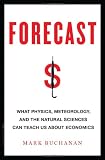
In this deeply researched and piercingly intelligent book, physicist Mark Buchanan shows how a simple feedback loop can lead to major consequences, the kind predictable by mathematical models but hard for most people to anticipate. From his unique perspective, Buchanan argues that our basic assumptions about economic markets--that they are for the most part stable, with occasional interruptions--are simply wrong. Markets really act more like the weather: a brief heat wave can become a massive storm in a matter of a few days, or even hours.
The Physics of Finance reimagines the basics of how economics, with consequences that affect everyone.
|
|
Suggested by
AntonJ
May 9, 2013 9:42 AM
|
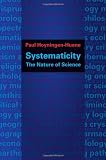
In Systematicity, Paul Hoyningen-Huene answers the question "What is science?" by proposing that scientific knowledge is primarily distinguished from other forms of knowledge, especially everyday knowledge, by being more systematic. "Science" is here understood in the broadest possible sense, encompassing not only the natural sciences but also mathematics, the social sciences, and the humanities. The author develops his thesis in nine dimensions in which it is claimed that science is more systematic than other forms of knowledge: regarding descriptions, explanations, predictions, the defense of knowledge claims, critical discourse, epistemic connectedness, an ideal of completeness, knowledge generation, and the representation of knowledge. He compares his view with positions on the question held by philosophers from Aristotle to Nicholas Rescher. The book concludes with an exploration of some consequences of Hoyningen-Huene's view concerning the genesis and dynamics of science, the relationship of science and common sense, normative implications of the thesis, and the demarcation criterion between science and pseudo-science.
|
|
Suggested by
AntonJ
April 29, 2013 4:03 PM
|
Scholars have long been captivated by the parallels between birdsong and human speech and language. In this book, leading scholars draw on the latest research to explore what birdsong can tell us about the biology of human speech and language and the consequences for evolutionary biology. They examine the cognitive and neural similarities between birdsong learning and speech and language acquisition, considering vocal imitation, auditory learning, an early vocalization phase ("babbling"), the structural properties of birdsong and human language, and the striking similarities between the neural organization of learning and vocal production in birdsong and human speech. After outlining the basic issues involved in the study of both language and evolution, the contributors compare birdsong and language in terms of acquisition, recursion, and core structural properties, and then examine the neurobiology of song and speech, genomic factors, and the emergence and evolution of language.
|
|
Suggested by
AntonJ
April 29, 2013 4:02 PM
|
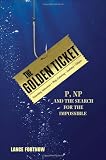
The P-NP problem is the most important open problem in computer science, if not all of mathematics. The Golden Ticket provides a nontechnical introduction to P-NP, its rich history, and its algorithmic implications for everything we do with computers and beyond. In this informative and entertaining book, Lance Fortnow traces how the problem arose during the Cold War on both sides of the Iron Curtain, and gives examples of the problem from a variety of disciplines, including economics, physics, and biology. He explores problems that capture the full difficulty of the P-NP dilemma, from discovering the shortest route through all the rides at Disney World to finding large groups of friends on Facebook. But difficulty also has its advantages. Hard problems allow us to safely conduct electronic commerce and maintain privacy in our online lives. The Golden Ticket explores what we truly can and cannot achieve computationally, describing the benefits and unexpected challenges of the P-NP problem.
|
|
Rescooped by
Complexity Digest
from Cognition sociale
April 23, 2013 1:15 PM
|
"Cartesian-inspired dualism enforces a theoretical distinction between the motor and the cognitive and locates the mental exclusively in the head. This collection, focusing on the hand, challenges this dichotomy, offering theoretical and empirical perspectives on the interconnectedness and interdependence of the manual and mental. The contributors explore the possibility that the hand, far from being the merely mechanical executor of preconceived mental plans, possesses its own know-how, enabling “enhanded” beings to navigate the natural, social, and cultural world without engaging propositional thought, consciousness, and deliberation.
The contributors consider not only broad philosophical questions—ranging from the nature of embodiment, enaction, and the extended mind to the phenomenology of agency—but also such specific issues as touching, grasping, gesturing, sociality, and simulation. They show that the capacities of the hand include perception (on its own and in association with other modalities), action, (extended) cognition, social interaction, and communication. Taken together, their accounts offer a handbook of cutting-edge research exploring the ways that the manual shapes and reshapes the mental and creates conditions for embodied agents to act in the world".
Via Marie-Anne Paveau
|
|
Suggested by
AntonJ
March 22, 2013 1:13 PM
|
A revelatory exploration of the hottest trend in technology and the dramatic impact it will have on the economy, science, and society at large.
Which paint color is most likely to tell you that a used car is in good shape? How can officials identify the most dangerous New York City manholes before they explode? And how did Google searches predict the spread of the H1N1 flu outbreak?
The key to answering these questions, and many more, is big data. “Big data” refers to our burgeoning ability to crunch vast collections of information, analyze it instantly, and draw sometimes profoundly surprising conclusions from it. This emerging science can translate myriad phenomena—from the price of airline tickets to the text of millions of books—into searchable form, and uses our increasing computing power to unearth epiphanies that we never could have seen before. A revolution on par with the Internet or perhaps even the printing press, big data will change the way we think about business, health, politics, education, and innovation in the years to come. It also poses fresh threats, from the inevitable end of privacy as we know it to the prospect of being penalized for things we haven’t even done yet, based on big data’s ability to predict our future behavior.
In this brilliantly clear, often surprising work, two leading experts explain what big data is, how it will change our lives, and what we can do to protect ourselves from its hazards. Big Data is the first big book about the next big thing.
|
|
Suggested by
AntonJ
March 22, 2013 1:11 PM
|
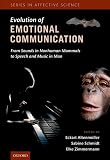
Why do we think that we can understand animal voices - such as the aggressive barking of a pet dog, and the longing meows of the family cat? Why do we think of deep voices as dominant and high voices as submissive. Are there universal principles governing our own communication system? Can we even see how close animals are related to us by constructing an evolutionary tree based on similarities and dissimilarities in acoustic signaling?
Research on the role of emotions in acoustic communication and its evolution has often been neglected, despite its obvious role in our daily life. When we infect others with our laugh, soothe a crying baby with a lullaby, or get goose bumps listening to classical music, we are barely aware of the complex processes upon which this behavior is based. It is not facial expressions or body language that are affecting us, but sound. They are present in music and speech as "emotional prosody" and allow us to communicate not only verbally but also emotionally.
This groundbreaking book presents a thorough exploration into how acoustically conveyed emotions are generated and processed in both animals and man. It is the first volume to bridge the gap between research in the acoustic communication of emotions in humans with those in animals, using a comparative approach. With the communication of emotions being an important research topic for a range of scientific fields, this book is valuable for those in the fields of animal behaviour, anthropology, evolutionary biology, human psychology, linguistics, musicology, and neurology.
|
|
Suggested by
AntonJ
February 25, 2013 6:26 PM
|
Regularity and Complexity in Dynamical Systems describes periodic and chaotic behaviors in dynamical systems, including continuous, discrete, impulsive,discontinuous, and switching systems. In traditional analysis, the periodic and chaotic behaviors in continuous, nonlinear dynamical systems were extensively discussed even if unsolved. In recent years, there has been an increasing amount of interest in periodic and chaotic behaviors in discontinuous dynamical systems because such dynamical systems are prevalent in engineering. Usually,the smoothening of discontinuous dynamical system is adopted in order to use the theory of continuous dynamical systems. However, such technique cannot provide suitable results in such discontinuous systems. In this book, an alternative way is presented to discuss the periodic and chaotic behaviors in discontinuous dynamical systems.
|