Your new post is loading...

|
Suggested by
AntonJ
January 10, 2013 1:37 PM
|
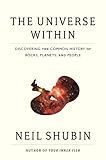
From one of our finest and most popular science writers, and the best-selling author of Your Inner Fish, comes the answer to a scientific mystery as big as the world itself: How are the events that formed our solar system billions of years ago embedded inside each of us?
In Your Inner Fish, Neil Shubin delved into the amazing connections between human bodies—our hands, heads, and jaws—and the structures in fish and worms that lived hundreds of millions of years ago. In The Universe Within, with his trademark clarity and exuberance, Shubin takes an even more expansive approach to the question of why we look the way we do. Starting once again with fossils, he turns his gaze skyward, showing us how the entirety of the universe’s fourteen-billion-year history can be seen in our bodies. As he moves from our very molecular composition (a result of stellar events at the origin of our solar system) through the workings of our eyes, Shubin makes clear how the evolution of the cosmos has profoundly marked our own bodies.
|
|
Suggested by
AntonJ
December 26, 2012 10:07 AM
|
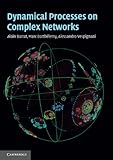
The availability of large data sets have allowed researchers to uncover complex properties such as large scale fluctuations and heterogeneities in many networks which have lead to the breakdown of standard theoretical frameworks and models. Until recently these systems were considered as haphazard sets of points and connections. Recent advances have generated a vigorous research effort in understanding the effect of complex connectivity patterns on dynamical phenomena. For example, a vast number of everyday systems, from the brain to ecosystems, power grids and the Internet, can be represented as large complex networks. This new and recent account presents a comprehensive explanation of these effects.
|
|
Suggested by
AntonJ
December 26, 2012 10:06 AM
|
This exceptional book is concerned with the application of fractals and chaos, as well as other concepts from nonlinear dynamics to biomedical phenomena. Herein we seek to communicate the excitement being experienced by scientists upon making application of these concepts within the life sciences. Mathematical concepts are introduced using biomedical data sets and the phenomena being explained take precedence over the mathematics. In this new edition what has withstood the test of time has been updated and modernized; speculations that were not borne out have been expunged and the breakthroughs that have occurred in the intervening years are emphasized. The book provides a comprehensive overview of a nascent theory of medicine, including a new chapter on the theory of complex networks as they pertain to medicine.
|
|
Suggested by
AntonJ
December 26, 2012 10:03 AM
|
Although chaos theory refers to the existence between seemingly random events, it has been gaining the attention of science, technology and managements fields. The shift from traditional procedures to the dynamics of chaos and complexity theory has resulted in a new element of complexity thinking, allowing for a greater capability for analyzing and understanding key business processes. This book explores chaos and complexity theory and its relationship with the understanding of natural chaos in the business environment. Utilizing these theories aids in comprehending the development of businesses as a complex adaptive system.

|
Rescooped by
Complexity Digest
from FuturICT Books
December 17, 2012 2:15 PM
|
|
|
Scooped by
Complexity Digest
December 4, 2012 4:33 PM
|
Nassim Nicholas Taleb, the bestselling author of The Black Swan and one of the foremost thinkers of our time, reveals how to thrive in an uncertain world. Just as human bones get stronger when subjected to stress and tension, and rumors or riots intensify when someone tries to repress them, many things in life benefit from stress, disorder, volatility, and turmoil. What Taleb has identified and calls “antifragile” is that category of things that not only gain from chaos but need it in order to survive and flourish. In The Black Swan, Taleb showed us that highly improbable and unpredictable events underlie almost everything about our world. In Antifragile, Taleb stands uncertainty on its head, making it desirable, even necessary, and proposes that things be built in an antifragile manner. The antifragile is beyond the resilient or robust. The resilient resists shocks and stays the same; the antifragile gets better and better.
|
|
Scooped by
Complexity Digest
November 21, 2012 12:28 PM
|
In On Computing, Paul Rosenbloom examines the case for computing to enter the pantheon of great scientific domains alongside the physical, biological and social sciences. The centenary year of computing pioneer Alan Turing's birth seems a fitting moment to put the idea to the test. The study of computing, dated from Turing's work, is only about 80 years old. It is variously claimed by engineering, physics, mathematics, linguistics and psychology — or seen merely as a supporting technology whose academic roots are irrelevant. Despite this, computing has arguably made more, and deeper, inroads into the daily life of humanity during the past 50 years than any other academic discipline, underlying a series of life-changing products. Imagine life today without mobile-phone networks, the Internet or medical imaging. On Computing — The Fourth Great Scientific Domain
Paul S. Rosenbloom MIT Press: 2012. 312 pp. $35, £24.95) http://tinyurl.com/beaog6c Computer science: Virtually there John Gilbey
Nature 491, 331 (15 November 2012) http://dx.doi.org/10.1038/491331a

|
Suggested by
Joseph Lizier
November 13, 2012 4:25 PM
|
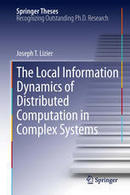
The nature of distributed computation in complex systems has often been described in terms of memory, communication and processing. This thesis presents a complete information-theoretic framework to quantify these operations on information (i.e. information storage, transfer and modification), and in particular their dynamics in space and time. The framework is applied to cellular automata, and delivers important insights into the fundamental nature of distributed computation and the dynamics of complex systems (e.g. that gliders are dominant information transfer agents). Applications to several important network models, including random Boolean networks, suggest that the capability for information storage and coherent transfer are maximised near the critical regime in certain order-chaos phase transitions. Further applications to study and design information structure in the contexts of computational neuroscience and guided self-organisation underline the practical utility of the techniques presented here. "The Local Information Dynamics of Distributed Computation in Complex Systems" Joseph T. Lizier (With foreword by Dr. Mikhail Prokopenko) Springer Theses, Springer: Berlin/Heidelberg, 2013. http://dx.doi.org/10.1007/978-3-642-32952-4
|
|
Scooped by
Complexity Digest
October 30, 2012 1:02 PM
|
The social sciences have sophisticated models of choice and equilibrium but little understanding of the emergence of novelty. Where do new alternatives, new organizational forms, and new types of people come from? Combining biochemical insights about the origin of life with innovative and historically oriented social network analyses, John Padgett and Walter Powell develop a theory about the emergence of organizational, market, and biographical novelty from the coevolution of multiple social networks. They demonstrate that novelty arises from spillovers across intertwined networks in different domains. In the short run actors make relations, but in the long run relations make actors. This theory of novelty emerging from intersecting production and biographical flows is developed through formal deductive modeling and through a wide range of original historical case studies. Padgett and Powell build on the biochemical concept of autocatalysis--the chemical definition of life--and then extend this autocatalytic reasoning to social processes of production and communication. Padgett and Powell, along with other colleagues, analyze a very wide range of cases of emergence. They look at the emergence of organizational novelty in early capitalism and state formation; they examine the transformation of communism; and they analyze with detailed network data contemporary science-based capitalism: the biotechnology industry, regional high-tech clusters, and the open source community. The Emergence of Organizations and Markets
John F. Padgett, Walter W. Powell Princeton University Press (October 14, 2012)
|
|
Scooped by
Complexity Digest
October 19, 2012 11:44 AM
|
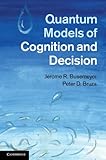
Much of our understanding of human thinking is based on probabilistic models. This innovative book by Jerome R. Busemeyer and Peter D. Bruza argues that, actually, the underlying mathematical structures from quantum theory provide a much better account of human thinking than traditional models. They introduce the foundations for modelling probabilistic-dynamic systems using two aspects of quantum theory. The first, 'contextuality', is a way to understand interference effects found with inferences and decisions under conditions of uncertainty. The second, 'quantum entanglement', allows cognitive phenomena to be modeled in non-reductionist ways. Employing these principles drawn from quantum theory allows us to view human cognition and decision in a totally new light. Introducing the basic principles in an easy-to-follow way, this book does not assume a physics background or a quantum brain and comes complete with a tutorial and fully worked-out applications in important areas of cognition and decision.
|
|
Suggested by
AntonJ
October 15, 2012 1:27 PM
|
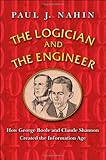
Boolean algebra, also called Boolean logic, is at the heart of the electronic circuitry in everything we use--from our computers and cars, to our kitchen gadgets and home appliances. How did a system of mathematics established in the Victorian era become the basis for such incredible technological achievements a century later? In The Logician and the Engineer, best-selling popular math writer Paul Nahin combines engaging problems and a colorful historical narrative to tell the remarkable story of how two men in different eras--mathematician and philosopher George Boole (1815-1864) and electrical engineer and pioneering information theorist Claude Shannon (1916-2001)--advanced Boolean logic and became founding fathers of the electronic communications age. Presenting the dual biographies of Boole and Shannon, Nahin examines the history of Boole's innovative ideas, and considers how they led to Shannon's groundbreaking work on electrical relay circuits and information theory. Along the way, Nahin presents logic problems for readers to solve and talks about the contributions of such key players as Georg Cantor, Tibor Rado, and Marvin Minsky--as well as the crucial role of Alan Turing's "Turing machine"--in the development of mathematical logic and data transmission. Nahin takes readers from fundamental concepts to a deeper and more sophisticated understanding of how a modern digital machine such as the computer is constructed. Nahin also delves into the newest ideas in quantum mechanics and thermodynamics in order to explore computing's possible limitations in the twenty-first century and beyond. The Logician and the Engineer shows how a form of mathematical logic and the innovations of two men paved the way for the digital technology of the modern world.
|
|
Suggested by
AntonJ
October 15, 2012 1:26 PM
|
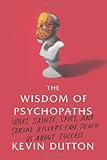
In this engrossing journey into the lives of psychopaths and their infamously crafty behaviors, the renowned psychologist Kevin Dutton reveals that there is a scale of “madness” along which we all sit. Incorporating the latest advances in brain scanning and neuroscience, Dutton demonstrates that the brilliant neurosurgeon who lacks empathy has more in common with a Ted Bundy who kills for pleasure than we may wish to admit, and that a mugger in a dimly lit parking lot may well, in fact, have the same nerveless poise as a titan of industry. Dutton argues that there are indeed “functional psychopaths” among us—different from their murderous counterparts—who use their detached, unflinching, and charismatic personalities to succeed in mainstream society, and that shockingly, in some fields, the more “psychopathic” people are, the more likely they are to succeed. Dutton deconstructs this often misunderstood diagnosis through bold on-the-ground reporting and original scientific research as he mingles with the criminally insane in a high-security ward, shares a drink with one of the world’s most successful con artists, and undergoes transcranial magnetic stimulation to discover firsthand exactly how it feels to see through the eyes of a psychopath.
|
|
Suggested by
AntonJ
October 8, 2012 7:40 PM
|
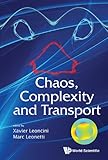
The main goal is to offer readers a panorama of recent progress in nonlinear physics, complexity and transport with attractive chapters readable by a broad audience. It allows readers to gain an insight into these active fields of research and notably promotes the interdisciplinary studies from mathematics to experimental physics. To reach this aim, the book collects a selection of contributions to the CCT11 conference.
|
|
|
Suggested by
AntonJ
January 10, 2013 1:37 PM
|
Ray Kurzweil is arguably today’s most influential—and often controversial—futurist. In How to Create a Mind, Kurzweil presents a provocative exploration of the most important project in human-machine civilization—reverse engineering the brain to understand precisely how it works and using that knowledge to create even more intelligent machines.
Kurzweil discusses how the brain functions, how the mind emerges from the brain, and the implications of vastly increasing the powers of our intelligence in addressing the world’s problems. He thoughtfully examines emotional and moral intelligence and the origins of consciousness and envisions the radical possibilities of our merging with the intelligent technology we are creating.
|
|
Suggested by
AntonJ
December 26, 2012 10:07 AM
|
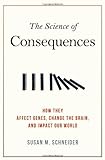
Actions have consequences—and the ability to learn from them revolutionized life on earth. It comes in quite handy for everyday life too. While it's easy enough to see that consequences are important, few have heard there's a science of consequences, with principles that affect us every day and applications everywhere—at home, at work, at school. Despite their variety, consequences appear to follow a common set of scientific principles and share some similar effects in the brain (such as the so-called pleasure centers). Further, scientists have demonstrated that learning from consequences predictably activates genes and restructures the neural configuration of the brain-in humans as well as in animals. Consequences are an integral part of the nature-and-nurture system. In The Science of Consequences, Susan M. Schneider, an internationally recognized biopsychologist, draws together research lines from many scientific fields to tell the story of how something so deceptively simple can help make sense of so much.
|
|
Suggested by
AntonJ
December 26, 2012 10:05 AM
|
This book presents a vivid argument for the almost lost idea of a unity of all natural sciences. It starts with the "strange" physics of matter, including particle physics, atomic physics and quantum mechanics, cosmology, relativity and their consequences (Chapter I), and it continues by describing the properties of material systems that are best understood by statistical and phase-space concepts (Chapter II). These lead to entropy and to the classical picture of quantitative information, initially devoid of value and meaning (Chapter III). Finally, "information space" and dynamics within it are introduced as a basis for semantics (Chapter IV), leading to an exploration of life and thought as new problems in physics (Chapter V).
Dynamic equations - again of a strange (but very general) nature - bring about the complex familiarity of the world we live in. Surprising new results in the life sciences open our eyes to the richness of physical thought, and they show us what can and what cannot be explained by a Darwinian approach. The abstract physical approach is applicable to the origins of life, of meaningful information and even of our universe.
|
|
Rescooped by
Complexity Digest
from Research Interests
December 26, 2012 9:54 AM
|
Jeff Speck's new book, Walkable City: How Downtown Can Save America, One Step at a Time, is worth a read for its acerbic wit, alone. The author fits a remarkable collection of data and anecdotal evidence from his long ...
Via Ines Amaral
|
|
Scooped by
Complexity Digest
December 14, 2012 3:28 PM
|
For one thing, complex systems do not easily lend themselves to analysis, the process of taking apart a system and examining its components individually. If taken apart, many complex systems lose precisely the character that makes them complex. The essence of these systems, then, seems to lie not in the nature of their components but in how the components interact—across different hierarchies, in synergistic and antagonistic manners. The agents within these systems are heterogeneous (think participants in a market economy or molecules within a cell), and their behavior is influenced by the type and quantity of other agents nearby. Such systems defy description with the traditional tool of theory builders: mathematics. Instead, they must be modeled by taking into account the rules of interaction, the natures of the agents, and the way the agents, rules, and ultimately whole systems came about. In his Signals and Boundaries: Building Blocks for Complex Adaptive Systems, John Holland proposes that computational modeling is the appropriate tool not only for describing but, fundamentally, for understanding such systems. In particular, he argues that this modeling approach is in no way inferior to a mathematical one. Rather, he advocates that the computational modeling of signal-boundary systems (which I will describe in more detail below) goes where mathematics cannot go while being no less rigorous, no less exact. Boldly Going Beyond Mathematics Christoph Adami Science 14 December 2012: Vol. 338 no. 6113 pp. 1421-1422 http://dx.doi.org/10.1126/science.1230587Signals and Boundaries: Building Blocks for Complex Adaptive Systems John H. Holland http://tinyurl.com/cvk3t6u
|
|
Scooped by
Complexity Digest
December 3, 2012 11:42 AM
|
The domain of nonlinear dynamical systems and its mathematical underpinnings has been developing exponentially for a century, the last 35 years seeing an outpouring of new ideas and applications and a concomitant confluence with ideas of complex systems and their applications from irreversible thermodynamics. A few examples are in meteorology, ecological dynamics, and social and economic dynamics. These new ideas have profound implications for our understanding and practice in domains involving complexity, predictability and determinism, equilibrium, control, planning, individuality, responsibility and so on. Our intention is to draw together in this volume, we believe for the first time, a comprehensive picture of the manifold philosophically interesting impacts of recent developments in understanding nonlinear systems and the unique aspects of their complexity. The book will focus specifically on the philosophical concepts, principles, judgments and problems distinctly raised by work in the domain of complex nonlinear dynamical systems, especially in recent years. Philosophy of Complex Systems Edited by Cliff Hooker
|
|
Scooped by
Complexity Digest
November 14, 2012 1:30 PM
|
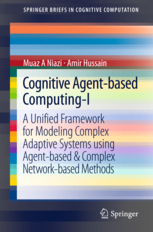
Complex Systems are made up of numerous interacting sub-components. Non-linear interactions of these components or agents give rise to emergent behavior observable at the global scale. Agent-based modeling
and simulation is a proven paradigm which has previously been used for effective computational modeling of complex systems in various domains. Because of its popular use across different scientific domains, research in agent-based modeling has primarily been
vertical in nature.
The goal of this book is to provide a single hands-on guide to developing cognitive agent-based models for the exploration of emergence across various types of complex systems. We present practical ideas and
examples for researchers and practitioners for the building of agent-based models using a horizontal approach - applications are demonstrated in a number of exciting domains as diverse as wireless sensors networks, peer-to-peer networks, complex social systems,
research networks and epidemiological HIV. Cognitive Agent-based Computing-I A Unified Framework for Modeling Complex Adaptive Systems using Agent-based & Complex Network-based Methods
Series: SpringerBriefs in Cognitive Computation
Niazi, Muaz A, Hussain, Amir
|
|
Scooped by
Complexity Digest
November 12, 2012 10:50 AM
|
The “language-communication-society” triangle defies traditional scientific approaches. Rather, it is a phenomenon that calls for an integration of complex, transdisciplinary perspectives, if we are to make any progress in understanding how it works. The highly diverse agents in play are not merely cognitive and/or cultural, but also emotional and behavioural in their specificity. Indeed, the effort may require building a theoretical and methodological body of knowledge that can effectively convey the characteristic properties of phenomena in human terms. New complexity approaches allow us to rethink our limited and mechanistic images of human societies and create more appropriate emo-cognitive dynamic and holistic models. We have to enter into dialogue with the complexity views coming out of other more ‘material’ sciences, but we also need to take steps in the linguistic and psycho-sociological fields towards creating perspectives and concepts better fitted to human characteristics. Our understanding of complexity is different – but not opposed – to the one that is more commonly found in texts written by people working in physics or computer science, for example. The goal of this book is to extend the knowledge of these other more ‘human’ or socially oriented perspectives on complexity, taking account of the language and communication singularities of human agents in society. Complexity Perspectives on Language, Communication and Society
Series: Understanding Complex Systems
Massip-Bonet, Àngels; Bastardas-Boada, Albert (Eds.)
|
|
Scooped by
Complexity Digest
October 23, 2012 1:45 PM
|
Reaction-diffusion and excitable media are amongst most intriguing substrates. Despite apparent simplicity of the physical processes involved the media exhibit a wide range of amazing patterns: from target and spiral waves to travelling localisations and stationary breathing patterns. These media are at the heart of most natural processes, including morphogenesis of living beings, geological
formations, nervous and muscular activity, and socio-economic developments. This book explores a minimalist paradigm of studying reaction-diffusion and excitable media using locally-connected networks of finite-state machines: cellular automata and automata on proximity graphs. Cellular automata are marvellous objects per se because they show us how to generate and manage complexity using very simple rules of dynamical transitions. When combined with the reaction-diffusion paradigm the cellular automata become an essential user-friendly tool for modelling natural systems and designing future and emergent computing architectures. The book brings together hot topics
of non-linear sciences, complexity, and future and emergent computing. It shows how to discover propagating localisation and perform computation with them in very simple two-dimensional automaton models. Paradigms, models and implementations presented in the book strengthen the theoretical foundations in the area for future and emergent computing and lay key stones towards
physical embodied information processing systems. Reaction-Diffusion Automata:
Phenomenology, Localisations, Computation by Andrew Adamatzky http://www.springer.com/physics/complexity/book/978-3-642-31077-5
|
|
Rescooped by
Complexity Digest
from FuturICT Books
October 15, 2012 1:29 PM
|
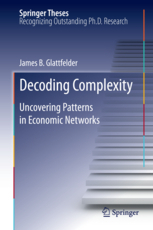
Nominated as an outstanding contribution by the ETH Zurich Presents powerful new methods for understanding economic and corporate networks Written in a lucid and accessible style Will appeal to readers from many disciplines that involve complex networks Today it appears that we understand more about the universe than about our interconnected socio-economic world. In order to uncover organizational structures and novel features in these systems, we present the first comprehensive complex systems analysis of real-world ownership networks. This effort lies at the interface between the realms of economics and the emerging field loosely referred to as complexity science. The structure of global economic power is reflected in the network of ownership ties of companies and the analysis of such ownership networks has possible implications for market competition and financial stability. Thus this work presents powerful new tools for the study of economic and corporate networks that are only just beginning to attract the attention of scholars.
Via FuturICT
|
|
Suggested by
AntonJ
October 15, 2012 1:26 PM
|
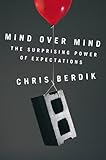
We all know expectations matter—in school, in sports, in the stock market. From a healing placebo to a run on the bank, hints of their self-fulfilling potential have been observed for years. But now researchers in fields ranging from medicine to education to criminal justice are moving beyond observation to investigate exactly how expectations work—and when they don’t. In Mind Over Mind, journalist Chris Berdik offers a captivating look at the frontiers of expectations research, revealing how our brains work in the future tense and how our assumptions—about the next few milliseconds or the next few years—bend reality. We learn how placebo calories can fill us up, why wine judges can’t agree, how fake surgery can sometimes work better than real surgery, and how imaginary power can be corrupting. We meet scientists who have found that wearing taller and more attractive avatars in a virtual world boosts confidence in real life, gambling addicts whose brains make losing feel like winning, and coaches who put blurry glasses on athletes to lift them out of slumps. Along the way, Berdik probes the paradox of expectations. Their influence seems based on illusion, even trickery, but they can create their own reality, for good or for ill.
|
|
Suggested by
AntonJ
October 8, 2012 7:41 PM
|
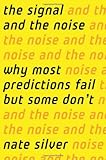
Nate Silver built an innovative system for predicting baseball performance, predicted the 2008 election within a hair’s breadth, and became a national sensation as a blogger and now he is one of the nation’s most influential political forecasters.
Drawing on his own groundbreaking work, Silver examines the world of prediction, investigating how we can distinguish a true signal from a universe of noisy data. Most predictions fail, often at great cost to society, because most of us have a poor understanding of probability and uncertainty. Both experts and laypeople mistake more confident predictions for more accurate ones. But overconfidence is often the reason for failure. If our appreciation of uncertainty improves, our predictions can get better too. This is the “prediction paradox”: The more humility we have about our ability to make predictions, the more successful we can be in planning for the future.
In keeping with his own aim to seek truth from data, Silver visits the most successful forecasters in a range of areas, from hurricanes to baseball, from the poker table to the stock market, from Capitol Hill to the NBA. He explains and evaluates how these forecasters think and what bonds they share. What lies behind their success? Are they good—or just lucky? What patterns have they unraveled? And are their forecasts really right? He explores unanticipated commonalities and exposes unexpected juxtapositions. And sometimes, it is not so much how good a prediction is in an absolute sense that matters but how good it is relative to the competition. In other cases, prediction is still a very rudimentary—and dangerous—science.
Silver observes that the most accurate forecasters tend to have a superior command of probability, and they tend to be both humble and hardworking. They distinguish the predictable from the unpredictable, and they notice a thousand little details that lead them closer to the truth. Because of their appreciation of probability, they can distinguish the signal from the noise.
|