Your new post is loading...

|
Suggested by
AntonJ
August 6, 2013 10:58 AM
|
Professor Brian Goodwin (1931-2007) was a visionary biologist, mathematician and philosopher. Understanding organisms as dynamics wholes, he worked to develop an alternate view to extreme Darwinism based solely on genetic factors. He was a pioneer in the field of theoretical biology; in later years was made a founding fellow at Schumacher College near Totnes, England, where he taught holistic science and wrote his final book, Nature's Due: Healing our Fragmented Culture (Floris Books 2007). This new book is a tribute to the life and work of Brian Goodwin. It includes contributions from eminent scholars and academics around the world, addressing his work on pattern and form in biology, and the metaphysical principles that guided him. It also includes an interview with Goodwin which offers new insights into his thinking. The book honours both his work and personal memories of a much loved and respected colleague. Contributors include: Stuart Kauffman, Lewis Wolpert, Fritjof Capra, Margaret Boden, Michael Ruse, Fred Cummings, Mae-wan Ho, Philip Franses, Stephan Harding, Nick Monk, Claudio Stern and Johannes Jaeger
|
|
Suggested by
AntonJ
July 23, 2013 3:28 PM
|
This book explores the relationships between language, music, and the brain by pursuing four key themes and the crosstalk among them: song and dance as a bridge between music and language; multiple levels of structure from brain to behavior to culture; the semantics of internal and external worlds and the role of emotion; and the evolution and development of language. The book offers specially commissioned expositions of current research accessible both to experts across disciplines and to non-experts. These chapters provide the background for reports by groups of specialists that chart current controversies and future directions of research on each theme. The book looks beyond mere auditory experience, probing the embodiment that links speech to gesture and music to dance. The study of the brains of monkeys and songbirds illuminates hypotheses on the evolution of brain mechanisms that support music and language, while the study of infants calibrates the developmental timetable of their capacities. The result is a unique book that will interest any reader seeking to learn more about language or music and will appeal especially to readers intrigued by the relationships of language and music with each other and with the brain.
|
|
Suggested by
AntonJ
July 23, 2013 3:27 PM
|
Why do some cities grow economically while others decline? Why do some show sustained economic performance while others cycle up and down? In Keys to the City, Michael Storper, one of the world's leading economic geographers, looks at why we should consider economic development issues within a regional context--at the level of the city-region--and why city economies develop unequally. Storper identifies four contexts that shape urban economic development: economic, institutional, innovational and interactional, and political. The book explores how these contexts operate and how they interact, leading to developmental success in some regions and failure in others. Demonstrating that the global economy is increasingly driven by its major cities, the keys to the city are the keys to global development. In his conclusion, Storper specifies eight rules of economic development targeted at policymakers. Keys to the City explains why economists, sociologists, and political scientists should take geography seriously.

|
Scooped by
Complexity Digest
July 22, 2013 7:12 PM
|
|
|
Suggested by
AntonJ
July 11, 2013 6:45 PM
|
Charles Darwin struggled to explain how forty thousand bees working in the dark, seemingly by instinct alone, could organize themselves to construct something as perfect as a honey comb. How do bees accomplish such incredible tasks? Synthesizing the findings of decades of experiments, The Spirit of the Hive presents a comprehensive picture of the genetic and physiological mechanisms underlying the division of labor in honey bee colonies and explains how bees’ complex social behavior has evolved over millions of years. Robert Page, one of the foremost honey bee geneticists in the world, sheds light on how the coordinated activity of hives arises naturally when worker bees respond to stimuli in their environment. The actions they take in turn alter the environment and so change the stimuli for their nestmates. For example, a bee detecting ample stores of pollen in the hive is inhibited from foraging for more, whereas detecting the presence of hungry young larvae will stimulate pollen gathering. Division of labor, Page shows, is an inevitable product of group living, because individual bees vary genetically and physiologically in their sensitivities to stimuli and have different probabilities of encountering and responding to them. A fascinating window into self-organizing regulatory networks of honey bees, The Spirit of the Hive applies genomics, evolution, and behavior to elucidate the details of social structure and advance our understanding of complex adaptive systems in nature.
|
|
Suggested by
AntonJ
July 11, 2013 6:44 PM
|
The purpose of migration, regardless of the distance involved, is to exploit two or more environments suitable for survival or reproduction over time, usually on a seasonal basis. Yet individual organisms can practice the phenomenon differently, and birds deploy unique patterns of movement over particular segments of time. Incorporating the latest research on bird migration, this concise, critical assessment offers contemporary readers a firm grasp of what defines an avian migrant, how the organism came to be, what is known about its behavior, and how we can resolve its enduring mysteries. John H. Rappole's sophisticated survey of field data clarifies key ecological, biological, physiological, navigational, and evolutionary concerns. He begins with the very first migrants, who traded a home environment of greater stability for one of greater seasonality, and uses the structure of the annual cycle to examine the difference between migratory birds and their resident counterparts. He ultimately connects these differences to evolutionary milestones that have shaped a migrant lifestyle through natural selection. Rather than catalogue and describe various aspects of bird migration, Rappole considers how the avian migrant fits within a larger ecological frame, enabling a richer understanding of the phenomenon and its critical role in sustaining a hospitable and productive environment. Rappole concludes with a focus on population biology and conservation across time periods, considering the link between bird migration and the spread of disease among birds and humans, and the effects of global warming on migrant breeding ranges, reaction norms, and macroecology.
|
|
Suggested by
AntonJ
July 11, 2013 6:44 PM
|
This popular science journey explores key concepts in information theory in terms of Conway's "Game of Life" program. The author explains the application of natural law to a random system and demonstrates the necessity of limits. Other topics include the limits of knowledge, paradox of complexity, Maxwell's demon, Big Bang theory, and much more. 1985 edition.
|
|
Suggested by
AntonJ
June 26, 2013 1:21 PM
|
The concepts of evolution and complexity theory have become part of the intellectual ether permeating the life sciences, the social and behavioral sciences, and, more recently, management science and economics. In this book, John E. Mayfield elegantly synthesizes core concepts from multiple disciplines to offer a new approach to understanding how evolution works and how complex organisms, structures, organizations, and social orders can and do arise based on information theory and computational science. Intended for the intellectually adventuresome, this book challenges and rewards readers with a nuanced understanding of evolution and complexity that offers consistent, durable, and coherent explanations for major aspects of our life experiences. Numerous examples throughout the book illustrate evolution and complexity formation in action and highlight the core function of computation lying at the work's heart.
|
|
Suggested by
AntonJ
June 26, 2013 1:20 PM
|
The issues of mental causation, consciousness, and free will have vexed philosophers since Plato. In this book, Peter Tse examines these unresolved issues from a neuroscientific perspective. In contrast with philosophers who use logic rather than data to argue whether mental causation or consciousness can exist given unproven first assumptions, Tse proposes that we instead listen to what neurons have to say. Because the brain must already embody a solution to the mind--body problem, why not focus on how the brain actually realizes mental causation? Tse draws on exciting recent neuroscientific data concerning how informational causation is realized in physical causation at the level of NMDA receptors, synapses, dendrites, neurons, and neuronal circuits. He argues that a particular kind of strong free will and "downward" mental causation are realized in rapid synaptic plasticity. Recent neurophysiological breakthroughs reveal that neurons function as criterial assessors of their inputs, which then change the criteria that will make other neurons fire in the future. Such informational causation cannot change the physical basis of information realized in the present, but it can change the physical basis of information that may be realized in the immediate future. This gets around the standard argument against free will centered on the impossibility of self-causation. Tse explores the ways that mental causation and qualia might be realized in this kind of neuronal and associated information-processing architecture, and considers the psychological and philosophical implications of having such an architecture realized in our brains.
|
|
Scooped by
Complexity Digest
June 24, 2013 9:20 PM
|
Edited by Carl Knappett While the study of networks has grown exponentially in the past decade and is now having an impact on how archaeologists study ancient societies, its emergence in the field has been dislocated. This volume provides a coherent framework on network analysis in current archaeological practice by pulling together its main themes and approaches to show how it is changing the way archaeologists face the key questions of regional interaction. Working with the term 'network' as a collection of nodes and links, as used in network science and social network analysis, it juxtaposes a range of case studies and investigates the positives and negatives of network analysis. With contributions by leading experts in the field, the volume covers a broad range: from Japan to America, from the Palaeolithic to the Precolumbian.
|
|
Suggested by
AntonJ
June 14, 2013 11:07 AM
|
How does life prosper in a complex and erratic world? While we know that nature follows patterns—such as the law of gravity—our everyday lives are beyond what known science can predict. We nevertheless muddle through even in the absence of theories of how to act. But how do we do it?
In Probably Approximately Correct, computer scientist Leslie Valiant presents a masterful synthesis of learning and evolution to show how both individually and collectively we not only survive, but prosper in a world as complex as our own. The key is “probably approximately correct” algorithms, a concept Valiant developed to explain how effective behavior can be learned. The model shows that pragmatically coping with a problem can provide a satisfactory solution in the absence of any theory of the problem. After all, finding a mate does not require a theory of mating. Valiant’s theory reveals the shared computational nature of evolution and learning, and sheds light on perennial questions such as nature versus nurture and the limits of artificial intelligence.
Offering a powerful and elegant model that encompasses life’s complexity, Probably Approximately Correct has profound implications for how we think about behavior, cognition, biological evolution, and the possibilities and limits of human and machine intelligence.
|
|
Scooped by
Complexity Digest
June 3, 2013 4:06 PM
|
Series Editors: Bertino, E., Foster, J., Gilbert, N., Golbeck, J., Kitts, J.A., Liebovitch, L., Matei, S.A., Nijholt, A., Savit, R., Vinciarelli, A. A series of authored and edited monographs that utilize quantitative and computational methods to model, analyze and interpret large-scale social phenomena. Titles within the series contain methods and practices that test and develop theories of complex social processes through bottom-up modeling of social interactions. Of particular interest is the study of the co-evolution of modern communication technology and social behavior and norms, in connection with emerging issues such as trust, risk, security and privacy in novel socio-technical environments.
Computational Social Sciences is explicitly transdisciplinary: quantitative methods from fields such as dynamical systems, artificial intelligence, network theory, agent-based modeling, and statistical mechanics are invoked and combined with state-of-the-art mining and analysis of large data sets to help us understand social agents, their interactions on and offline, and the effect of these interactions at the macro level. Topics include, but are not limited to social networks and media, dynamics of opinions, cultures and conflicts, socio-technical co-evolution and social psychology. Computational Social Sciences will also publish monographs and selected edited contributions from specialized conferences and workshops specifically aimed at communicating new findings to a large transdisciplinary audience. A fundamental goal of the series is to provide a single forum within which commonalities and differences in the workings of this field may be discerned, hence leading to deeper insight and understanding. http://www.springer.com/series/11784
|
|
Suggested by
AntonJ
June 3, 2013 10:48 AM
|
The issues of mental causation, consciousness, and free will have vexed philosophers since Plato. In this book, Peter Tse examines these unresolved issues from a neuroscientific perspective. In contrast with philosophers who use logic rather than data to argue whether mental causation or consciousness can exist given unproven first assumptions, Tse proposes that we instead listen to what neurons have to say. Because the brain must already embody a solution to the mind--body problem, why not focus on how the brain actually realizes mental causation? Tse draws on exciting recent neuroscientific data concerning how informational causation is realized in physical causation at the level of NMDA receptors, synapses, dendrites, neurons, and neuronal circuits. He argues that a particular kind of strong free will and "downward" mental causation are realized in rapid synaptic plasticity. Recent neurophysiological breakthroughs reveal that neurons function as criterial assessors of their inputs, which then change the criteria that will make other neurons fire in the future. Such informational causation cannot change the physical basis of information realized in the present, but it can change the physical basis of information that may be realized in the immediate future. This gets around the standard argument against free will centered on the impossibility of self-causation. Tse explores the ways that mental causation and qualia might be realized in this kind of neuronal and associated information-processing architecture, and considers the psychological and philosophical implications of having such an architecture realized in our brains.
|
|
|
Suggested by
AntonJ
July 23, 2013 3:28 PM
|
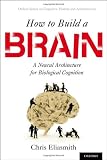
One goal of researchers in neuroscience, psychology, and artificial intelligence is to build theoretical models that are able to explain the flexibility and adaptiveness of biological systems. How to build a brain provides a detailed guided exploration of a new cognitive architecture that takes biological detail seriously, while addressing cognitive phenomena. The Semantic Pointer Architecture (SPA) introduced in this book provides a set of tools for constructing a wide range of biologically constrained perceptual, cognitive, and motor models.
Examples of such models are provided, and they are shown to explain a wide range of data including single cell recordings, neural population activity, reaction times, error rates, choice behavior, and fMRI signals. Each of these models introduces a major feature of biological cognition addressed in the book, including semantics, syntax, control, learning, and memory. These models are not introduced as independent considerations of brain function, but instead integrated to give rise to what is currently the world's largest functional brain model.
The last half of this book compares the Semantic Pointer Architecture with the current state-of-the-art, addressing issues of theory construction in the behavioral sciences, semantic compositionality, and scalability, among other considerations. The book concludes with a discussion of conceptual challenges raised by this architecture, and identifies several outstanding challenges for this, and other, cognitive architectures.
|
|
Suggested by
AntonJ
July 23, 2013 3:27 PM
|
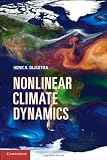
This book introduces stochastic dynamical systems theory in order to synthesize our current knowledge of climate variability. Nonlinear processes, such as advection, radiation and turbulent mixing, play a central role in climate variability. These processes can give rise to transition phenomena, associated with tipping or bifurcation points, once external conditions are changed. The theory of dynamical systems provides a systematic way to study these transition phenomena. Its stochastic extension also forms the basis of modern (nonlinear) data analysis techniques, predictability studies and data assimilation methods. Early chapters apply the stochastic dynamical systems framework to a hierarchy of climate models to synthesize current knowledge of climate variability. Later chapters analyse phenomena such as the North Atlantic Oscillation, El Niño/Southern Oscillation, Atlantic Multidecadal Variability, Dansgaard-Oeschger Events, Pleistocene Ice Ages, and climate predictability. This book will prove invaluable for graduate students and researchers in climate dynamics, physical oceanography, meteorology and paleoclimatology.
|
|
Suggested by
AntonJ
July 23, 2013 3:27 PM
|
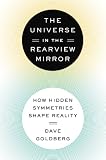
Why is the sky dark at night? Is it possible to build a shrink-ray gun? If there is antimatter, can there be antipeople? Why are past, present, and future our only options? Are time and space like a butterfly's wings?
Goldberg’s narrative is populated with giants from the history of physics, and the biggest turns out to be an unsung genius and Nazi holocaust escapee named Emmy Noether—the other Einstein. She was unrecognized, even unpaid, throughout most of her career simply because she was a woman. Nevertheless, her theorem relating conservation laws to symmetries is widely regarded to be as important as Einstein’s notion of the speed of light. Einstein himself said she was “the most significant creative mathematical genius thus far produced since the higher education of women began.”
Symmetry is the unsung great idea behind all the big physics of the last one hundred years—and what lies ahead. In this book, Goldberg makes mindbending science not just comprehensible but gripping. Fasten your seat belt.
|
|
Suggested by
AntonJ
July 11, 2013 6:45 PM
|
This book presents a vivid argument for the almost lost idea of a unity of all natural sciences. It starts with the "strange" physics of matter, including particle physics, atomic physics and quantum mechanics, cosmology, relativity and their consequences (Chapter I), and it continues by describing the properties of material systems that are best understood by statistical and phase-space concepts (Chapter II). These lead to entropy and to the classical picture of quantitative information, initially devoid of value and meaning (Chapter III). Finally, "information space" and dynamics within it are introduced as a basis for semantics (Chapter IV), leading to an exploration of life and thought as new problems in physics (Chapter V).
Dynamic equations - again of a strange (but very general) nature - bring about the complex familiarity of the world we live in. Surprising new results in the life sciences open our eyes to the richness of physical thought, and they show us what can and what cannot be explained by a Darwinian approach. The abstract physical approach is applicable to the origins of life, of meaningful information and even of our universe.
|
|
Suggested by
AntonJ
July 11, 2013 6:44 PM
|
In this accessible new selection of writings by Information Age pioneer Alan Turing, readers will find many of the most significant contributions from the four-volume set of the Collected Works of A. M. Turing. These contributions, together with commentaries from current experts in a wide spectrum of fields and backgrounds, provide insight on the significance and contemporary impact of A.M. Turing's work. Offering a more modern perspective than anything currently available, Alan Turing: His Work and Impact gives wide coverage of the many ways in which Turing's scientific endeavors have impacted current research and understanding of the world. His pivotal writings on subjects including computing, artificial intelligence, cryptography, morphogenesis, and more display continued relevance and insight into today's scientific and technological landscape. This collection provides a great service to researchers, but is also an approachable entry point for readers with limited training in the science, but an urge to learn more about the details of Turing's work.
|
|
Suggested by
AntonJ
July 11, 2013 6:44 PM
|
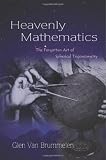
Spherical trigonometry was at the heart of astronomy and ocean-going navigation for two millennia. The discipline was a mainstay of mathematics education for centuries, and it was a standard subject in high schools until the 1950s. Today, however, it is rarely taught. Heavenly Mathematics traces the rich history of this forgotten art, revealing how the cultures of classical Greece, medieval Islam, and the modern West used spherical trigonometry to chart the heavens and the Earth. Glen Van Brummelen explores this exquisite branch of mathematics and its role in ancient astronomy, geography, and cartography; Islamic religious rituals; celestial navigation; polyhedra; stereographic projection; and more. He conveys the sheer beauty of spherical trigonometry, providing readers with a new appreciation for its elegant proofs and often surprising conclusions. Heavenly Mathematics is illustrated throughout with stunning historical images and informative drawings and diagrams that have been used to teach the subject in the past. This unique compendium also features easy-to-use appendixes as well as exercises at the end of each chapter that originally appeared in textbooks from the eighteenth to the early twentieth centuries.
|
|
Suggested by
AntonJ
July 11, 2013 6:44 PM
|
While logical principles seem timeless, placeless, and eternal, their discovery is a story of personal accidents, political tragedies, and broad social change. If A, Then B begins with logic's emergence twenty-three centuries ago and tracks its expansion as a discipline ever since. It explores where our sense of logic comes from and what it really is a sense of. It also explains what drove human beings to start studying logic in the first place. Logic is more than the work of logicians alone. Its discoveries have survived only because logicians have also been able to find a willing audience, and audiences are a consequence of social forces affecting large numbers of people, quite apart from individual will. This study therefore treats politics, economics, technology, and geography as fundamental factors in generating an audience for logic -- grounding the discipline's abstract principles in a compelling material narrative. The authors explain the turbulent times of the enigmatic Aristotle, the ancient Stoic Chrysippus, the medieval theologian Peter Abelard, and the modern thinkers René Descartes, David Hume, Jeremy Bentham, George Boole, Augustus De Morgan, John Stuart Mill, Gottlob Frege, Bertrand Russell, and Alan Turing. Examining a variety of mysteries, such as why so many branches of logic (syllogistic, Stoic, inductive, and symbolic) have arisen only in particular places and periods, If A, Then B is the first book to situate the history of logic within the movements of a larger social world.
|
|
Suggested by
AntonJ
June 26, 2013 1:21 PM
|
John Tyler Bonner, one of our most distinguished and insightful biologists, here challenges a central tenet of evolutionary biology. In this concise, elegantly written book, he makes the bold and provocative claim that some biological diversity may be explained by something other than natural selection. With his customary wit and accessible style, Bonner makes an argument for the underappreciated role that randomness--or chance--plays in evolution. Due to the tremendous and enduring influence of Darwin's natural selection, the importance of randomness has been to some extent overshadowed. Bonner shows how the effects of randomness differ for organisms of different sizes, and how the smaller an organism is, the more likely it is that morphological differences will be random and selection may not be involved to any degree. He traces the increase in size and complexity of organisms over geological time, and looks at the varying significance of randomness at different size levels, from microorganisms to large mammals. Bonner also discusses how sexual cycles vary depending on size and complexity, and how the trend away from randomness in higher forms has even been reversed in some social organisms.
|
|
Rescooped by
Complexity Digest
from Tech and urban life
June 26, 2013 1:19 PM
|
Forthcoming book, I am eager to read it Anthony Townsend always hit the nail on the head on smart cities. If you have to read a book on this topic this year, this will be a good option for...
Via Manu Fernandez
|
|
Suggested by
AntonJ
June 14, 2013 11:08 AM
|
The history of science abounds with momentous theories that disrupted conventional wisdom and yet were eventually proven true. Ajit Varki and Danny Brower's "Mind over Reality" theory is poised to be one such idea-a concept that runs counter to commonly-held notions about human evolution but that may hold the key to understanding why humans evolved as we did, leaving all other related species far behind.
At a chance meeting in 2005, Brower, a geneticist, posed an unusual idea to Varki that he believed could explain the origins of human uniqueness among the world's species: Why is there no humanlike elephant or humanlike dolphin, despite millions of years of evolutionary opportunity? Why is it that humans alone can understand the minds of others?
Haunted by their encounter, Varki tried years later to contact Brower only to discover that he had died unexpectedly. Inspired by an incomplete manuscript Brower left behind, DENIAL presents a radical new theory on the origins of our species. It was not, the authors argue, a biological leap that set humanity apart from other species, but a psychological one: namely, the uniquely human ability to deny reality in the face of inarguable evidence-including the willful ignorance of our own inevitable deaths.
The awareness of our own mortality could have caused anxieties that resulted in our avoiding the risks of competing to procreate-an evolutionary dead-end. Humans therefore needed to evolve a mechanism for overcoming this hurdle: the denial of reality.
As a consequence of this evolutionary quirk we now deny any aspects of reality that are not to our liking-we smoke cigarettes, eat unhealthy foods, and avoid exercise, knowing these habits are a prescription for an early death. And so what has worked to establish our species could be our undoing if we continue to deny the consequences of unrealistic approaches to everything from personal health to financial risk-taking to climate change. On the other hand reality-denial affords us many valuable attributes, such as optimism, confidence, and courage in the face of long odds.
|
|
Scooped by
Complexity Digest
June 7, 2013 12:55 PM
|
The macroeconomist Felix Martin covers a vast geographical and historical spread in his argument that we have it all wrong about money. Money: The Unauthorised Biography reveals that credit has a crucial role in society, but that many misunderstandings persist about the relationship of credit to gold or fiat money. The latest views on microeconomic theory get no airing here, yet such developments point to a scientific shift towards an information-processing and network analysis of money and credit markets in a dynamic evolving economy. Economics: A tale of cash and credit Martin Shubik
Nature 498, 35 (06 June 2013) http://dx.doi.org/10.1038/498035a
|
|
Suggested by
AntonJ
June 3, 2013 10:48 AM
|
 | ~ Joanna Raczaszek-Leonardi (author) More about this product
| List Price: | $189.00 | | Price: | $156.29 | | You Save: | $32.71 (17%) | | | |
Howard Pattee is a physicist who for many years has taken his own path in studying the physics of symbols, which is now a foundation for biosemiotics. By extending von Neumann’s logical requirements for self-replication, to the physical requirements of symbolic instruction at the molecular level, he concludes that a form of quantum measurement is necessary for life. He explains why all non-dynamic symbolic and informational controls act as special (allosteric) constraints on dynamical systems. Pattee also points out that symbols do not exist in isolation but in coordinated symbol systems we call languages. Such insights turn out to be necessary to situate biosemiotics as an objective scientific endeavor. By proposing a way to relate quiescent symbolic constraints to dynamics, Pattee’s work builds a bridge between physical, biological, and psychological models that are based on dynamical systems theory. Pattee’s work awakes new interest in cognitive scientists, where his recognition of the necessary separation—the epistemic cut—between the subject and object provides a basis for a complementary third way of relating the purely symbolic, computational models of cognition and the purely dynamic, non-representational models. This selection of Pattee’s papers also addresses several other fields, including hierarchy theory, artificial life, self-organization, complexity theory, and the complementary epistemologies of the physical and biological sciences.
|