CxBooks
313.6K views | +1 today
CxBooks
Recent books related to complex systems
Your new post is loading...
Suggested by Joseph Lizier
March 19, 2012 1:25 PM
Scoop.it!

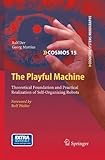
The Playful Machine: Theoretical Foundation and Practical Realization of Self-Organizing Robots: Ralf Der, Georg Martius

Autonomous robots may become our closest companions in the near future. While the technology for physically building such machines is already available today, a problem lies in the generation of the behavior for such complex machines. Nature proposes a solution: young children and higher animals learn to master their complex brain-body systems by playing. Can this be an option for robots? How can a machine be playful? The book provides answers by developing a general principle---homeokinesis, the dynamical symbiosis between brain, body, and environment---that is shown to drive robots to self- determined, individual development in a playful and obviously embodiment- related way: a dog-like robot starts playing with a barrier, eventually jumping or climbing over it; a snakebot develops coiling and jumping modes; humanoids develop climbing behaviors when fallen into a pit, or engage in wrestling-like scenarios when encountering an opponent. The book also develops guided self-organization, a new method that helps to make the playful machines fit for fulfilling tasks in the real world. The book provides two levels of presentation. Students and scientific researchers interested in the field of robotics, self-organization and dynamical systems theory may be satisfied by the in-depth mathematical analysis of the principle, the bootstrapping scenarios, and the emerging behaviors. But the book additionally comes with a robotics simulator inviting also the non- scientific reader to simply enjoy the fabulous world of playful machines by performing the numerous experiments.

No comment yet.
Scooped by Complexity Digest
March 16, 2012 11:16 AM
Scoop.it!

Recommended Reading on Complex Systems

Recommended Reading on Complex Systems  http://t.co/ErMBkGwK...

No comment yet.
Scooped by Complexity Digest
March 16, 2012 9:01 PM
Scoop.it!

Dynamical Systems: Examples of Complex Behaviour, by Jürgen Jost

This book presents a survey of the field of dynamical systems and its significance for research in complex systems and other fields, based on a careful analysis of specific important examples It also explains the fundamental underlying mathematical concepts, with a particular focus on invariants of dynamical systems, including a systematic treatment of Morse-Conley theory Entropy and related concepts in the topological, metric, measure theoretic and smooth settings and some connections with information theory are discussed, and cellular automata and random Boolean networks are presented as specific examples

No comment yet.
Scooped by Complexity Digest
March 15, 2012 2:42 PM
Scoop.it!

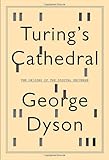
Amazon.com: Turing's Cathedral: The Origins of the Digital Universe (9780375422775): George Dyson: Books

Turing's Cathedral: The Origins of the Digital Universe

~ George Dyson (author) More about this product
List Price: $29.95
Price: $17.61
You Save: $12.34 (41%)

“It is possible to invent a single machine which can be used to compute any computable sequence,” twenty-four-year-old Alan Turing announced in 1936. In Turing’s Cathedral, George Dyson focuses on a small group of men and women, led by John von Neumann at the Institute for Advanced Study in Princeton, New Jersey, who built one of the first computers to realize Alan Turing’s vision of a Universal Machine. Their work would break the distinction between numbers that mean things and numbers that do things—and our universe would never be the same.

Using five kilobytes of memory (the amount allocated to displaying the cursor on a computer desktop of today), they achieved unprecedented success in both weather prediction and nuclear weapons design, while tackling, in their spare time, problems ranging from the evolution of viruses to the evolution of stars.

Dyson’s account, both historic and prophetic, sheds important new light on how the digital universe exploded in the aftermath of World War II. The proliferation of both codes and machines was paralleled by two historic developments: the decoding of self-replicating sequences in biology and the invention of the hydrogen bomb. It’s no coincidence that the most destructive and the most constructive of human inventions appeared at exactly the same time.

How did code take over the world? In retracing how Alan Turing’s one-dimensional model became John von Neumann’s two-dimensional implementation, Turing’s Cathedral offers a series of provocative suggestions as to where the digital universe, now fully three-dimensional, may be heading next.

No comment yet.