Your new post is loading...

|
Suggested by
AntonJ
October 3, 2013 12:36 PM
|
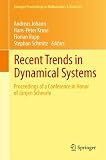
This book presents the proceedings of a conference on dynamical systems held in honor of Jürgen Scheurle in January 2012. Through both original research papers and survey articles leading experts in the field offer overviews of the current state of the theory and its applications to mechanics and physics. In particular, the following aspects of the theory of dynamical systems are covered:
- Stability and bifurcation
- Geometric mechanics and control theory
- Invariant manifolds, attractors and chaos
- Fluid mechanics and elasticity
- Perturbations and multiscale problems
- Hamiltonian dynamics and KAM theory

|
Scooped by
Complexity Digest
September 9, 2013 7:26 AM
|
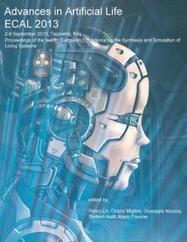
ECAL 2013, the twelfth European Conference on Artificial Life, presents the current state of the art of a mature and autonomous discipline collocated at the intersection of a theoretical perspective (the scientific explanations of different levels of life organizations, e.g., molecules, compartments, cells, tissues, organs, organisms, societies, collective and social phenomena) and advanced technological applications (bio-inspired algorithms and techniques to building-up concrete solutions such as in robotics, data analysis, search engines, gaming). Advances in Artificial Life, ECAL 2013 Proceedings of the Twelfth European Conference on the Synthesis and Simulation of Living Systems Edited by Pietro Liò, Orazio Miglino, Giuseppe Nicosia, Stefano Nolfi and Mario Pavone http://mitpress.mit.edu/books/advances-artificial-life-ecal-2013
|
|
Suggested by
AntonJ
September 4, 2013 11:00 AM
|
This book is an introduction to health care as a complex adaptive system, a system that feeds back on itself. The first section introduces systems and complexity theory from a science, historical, epistemological, and technical perspective, describing the principles and mathematics.
Subsequent sections build on the health applications of systems science theory, from human physiology to medical decision making, population health and health services research. The aim of the book is to introduce and expand on important population health issues from a systems and complexity perspective, highlight current research developments and their implications for health care delivery, consider their ethical implications, and to suggest directions for and potential pitfalls in the future.
|
|
Suggested by
AntonJ
September 4, 2013 11:00 AM
|
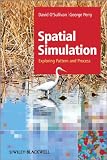
Across broad areas of the environmental and social sciences, simulation models are an important way to study systems inaccessible to scientific experimental and observational methods, and also an essential complement to those more conventional approaches. The contemporary research literature is teeming with abstract simulation models whose presentation is mathematically demanding and requires a high level of knowledge of quantitative and computational methods and approaches. Furthermore, simulation models designed to represent specific systems and phenomena are often complicated, and, as a result, difficult to reconstruct from their descriptions in the literature. This book aims to provide a practical and accessible account of dynamic spatial modelling, while also equipping readers with a sound conceptual foundation in the subject, and a useful introduction to the wide-ranging literature. Spatial Simulation: Exploring Pattern and Process is organised around the idea that a small number of spatial processes underlie the wide variety of dynamic spatial models. Its central focus on three ‘building-blocks’ of dynamic spatial models – forces of attraction and segregation, individual mobile entities, and processes of spread – guides the reader to an understanding of the basis of many of the complicated models found in the research literature. The three building block models are presented in their simplest form and are progressively elaborated and related to real world process that can be represented using them. Introductory chapters cover essential background topics, particularly the relationships between pattern, process and spatiotemporal scale. Additional chapters consider how time and space can be represented in more complicated models, and methods for the analysis and evaluation of models. Finally, the three building block models are woven together in a more elaborate example to show how a complicated model can be assembled from relatively simple components. To aid understanding, more than 50 specific models described in the book are available online at patternandprocess.org for exploration in the freely available Netlogo platform. This book encourages readers to develop intuition for the abstract types of model that are likely to be appropriate for application in any specific context. Spatial Simulation: Exploring Pattern and Process will be of interest to undergraduate and graduate students taking courses in environmental, social, ecological and geographical disciplines. Researchers and professionals who require a non-specialist introduction will also find this book an invaluable guide to dynamic spatial simulation.
|
|
Suggested by
AntonJ
September 4, 2013 10:59 AM
|
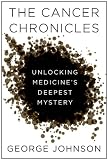
When the woman he loved was diagnosed with a metastatic cancer, science writer George Johnson embarked on a journey to learn everything he could about the disease and the people who dedicate their lives to understanding and combating it. What he discovered is a revolution under way—an explosion of new ideas about what cancer really is and where it comes from. In a provocative and intellectually vibrant exploration, he takes us on an adventure through the history and recent advances of cancer research that will challenge everything you thought you knew about the disease.
Deftly excavating and illuminating decades of investigation and analysis, he reveals what we know and don’t know about cancer, showing why a cure remains such a slippery concept. We follow him as he combs through the realms of epidemiology, clinical trials, laboratory experiments, and scientific hypotheses—rooted in every discipline from evolutionary biology to game theory and physics. Cogently extracting fact from a towering canon of myth and hype, he describes tumors that evolve like alien creatures inside the body, paleo-oncologists who uncover petrified tumors clinging to the skeletons of dinosaurs and ancient human ancestors, and the surprising reversals in science’s comprehension of the causes of cancer, with the foods we eat and environmental toxins playing a lesser role. Perhaps most fascinating of all is how cancer borrows natural processes involved in the healing of a wound or the unfolding of a human embryo and turns them, jujitsu-like, against the body.
Throughout his pursuit, Johnson clarifies the human experience of cancer with elegiac grace, bearing witness to the punishing gauntlet of consultations, surgeries, targeted therapies, and other treatments. He finds compassion, solace, and community among a vast network of patients and professionals committed to the fight and wrestles to comprehend the cruel randomness cancer metes out in his own family. For anyone whose life has been affected by cancer and has found themselves asking why?, this book provides a new understanding. In good company with the works of Atul Gawande, Siddhartha Mukherjee, and Abraham Verghese, The Cancer Chronicles is endlessly surprising and as radiant in its prose as it is authoritative in its eye-opening science.
|
|
Suggested by
AntonJ
September 4, 2013 10:56 AM
|
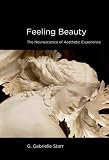
In Feeling Beauty, G. Gabrielle Starr argues that understanding the neural underpinnings of aesthetic experience can reshape our conceptions of aesthetics and the arts. Drawing on the tools of both cognitive neuroscience and traditional humanist inquiry, Starr shows that neuroaesthetics offers a new model for understanding the dynamic and changing features of aesthetic life, the relationships among the arts, and how individual differences in aesthetic judgment shape the varieties of aesthetic experience. Starr, a scholar of the humanities and a researcher in the neuroscience of aesthetics, proposes that aesthetic experience relies on a distributed neural architecture -- a set of brain areas involved in emotion, perception, imagery, memory, and language. More important, it emerges from networked interactions, intricately connected and coordinated brain systems that together form a flexible architecture enabling us to develop new arts and to see the world around us differently. Focusing on the "sister arts" of poetry, painting, and music, Starr builds and tests a neural model of aesthetic experience valid across all the arts. Asking why works that address different senses using different means seem to produce the same set of feelings, she examines particular works of art in a range of media, including a poem by Keats, a painting by van Gogh, a sculpture by Bernini, and Beethoven's Diabelli Variations. Starr's innovative, interdisciplinary analysis is true to the complexities of both the physical instantiation of aesthetics and the realities of artistic representation.
|
|
Suggested by
AntonJ
August 22, 2013 5:42 PM
|
The European Conference on Complex Systems, held under the patronage of the Complex Systems Society, is an annual event that has become the leading European conference devoted to complexity science. ECCS'12, its ninth edition, took place in Brussels, during the first week of September 2012. It gathered about 650 scholars representing a wide range of topics relating to complex systems research, with emphasis on interdisciplinary approaches. More specifically, the following tracks were covered: 1. Foundations of Complex Systems; 2. Complexity, Information and Computation; 3. Prediction, Policy and Planning, Environment; 4. Biological Complexity; 5. Interacting Populations, Collective Behavior; 6. Social Systems, Economics and Finance. This book contains a selection of the contributions presented at the conference and its satellite meetings. Its contents reflect the extent, diversity and richness of research areas in the field, both fundamental and applied.
|
|
Suggested by
AntonJ
August 19, 2013 11:32 AM
|
Communication, one of the most important functions of life, occurs at any spatial scale from the molecular one up to that of populations and ecosystems, and any time scale from that of fast chemical reactions up to that of geological ages. Information theory, a mathematical science of communication initiated by Shannon in 1948, has been very successful in engineering, but biologists ignore it. This book aims at bridging this gap. It proposes an abstract definition of information based on the engineers' experience which makes it usable in life sciences. It expounds information theory and error-correcting codes, its by-products, as simply as possible. Then, the fundamental biological problem of heredity is examined. It is shown that biology does not adequately account for the conservation of genomes during geological ages, which can be understood only if it is assumed that genomes are made resilient to casual errors by proper coding. Moreover, the good conservation of very old parts of genomes, like the HOX genes, implies that the assumed genomic codes have a nested structure which makes an information the more resilient to errors, the older it is. The consequences that information theory draws from these hypotheses meet very basic but yet unexplained biological facts, e.g., the existence of successive generations, that of discrete species and the trend of evolution towards complexity. Being necessarily inscribed on physical media, information appears as a bridge between the abstract and the concrete. Recording, communicating and using information exclusively occur in the living world. Information is thus coextensive with life and delineates the border between the living and the inanimate.
|
|
Suggested by
AntonJ
August 14, 2013 4:44 PM
|
Why do some people get cancer and not others? Why is global warming happening? Why does one person get depressed in the face of life's vicissitudes while another finds resilience? Questions like these -- questions of causality -- form the basis of modern scientific inquiry, posing profound intellectual and methodological challenges for researchers in the physical, natural, biomedical, and social sciences. In this groundbreaking book, noted psychiatrist and author Peter Rabins offers a conceptual framework for analyzing daunting questions of causality. Navigating a lively intellectual voyage between the shoals of strict reductionism and relativism, Rabins maps a three-facet model of causality and applies it to a variety of questions in science, medicine, economics, and more. Throughout this book, Rabins situates his argument within relevant scientific contexts, such as quantum mechanics, cybernetics, chaos theory, and epigenetics. A renowned communicator of complex concepts and scientific ideas, Rabins helps readers stretch their minds beyond the realm of popular literary tipping points, blinks, and freakonomic explanations of the world.
|
|
Suggested by
AntonJ
August 14, 2013 4:43 PM
|
Galileo wrote that “nature cannot produce a horse as large as twenty ordinary horses or a giant ten times taller than an ordinary man unless by miracle or by greatly altering the proportions of his limbs and especially of his bones”—a statement that wonderfully captures a long-standing scientific fascination with body size. Why are organisms the size that they are? And what determines their optimum size? This volume explores animal body size from a macroecological perspective, examining species, populations, and other large groups of animals in order to uncover the patterns and causal mechanisms of body size throughout time and across the globe. The chapters represent diverse scientific perspectives and are divided into two sections. The first includes chapters on insects, snails, birds, bats, and terrestrial mammals and discusses the body size patterns of these various organisms. The second examines some of the factors behind, and consequences of, body size patterns and includes chapters on community assembly, body mass distribution, life history, and the influence of flight on body size.
|
|
Suggested by
AntonJ
August 6, 2013 12:23 PM
|
There is a widespread assumption that the universe in general, and life in particular, is 'getting more complex with time'. This book brings together a wide range of experts in science, philosophy and theology and unveils their joint effort in exploring this idea. They confront essential problems behind the theory of complexity and the role of life within it: what is complexity? When does it increase, and why? Is the universe evolving towards states of ever greater complexity and diversity? If so, what is the source of this universal enrichment? This book addresses those difficult questions, and offers a unique cross-disciplinary perspective on some of the most profound issues at the heart of science and philosophy. Readers will gain insights in complexity that reach deep into key areas of physics, biology, complexity science, philosophy and religion.
|
|
Suggested by
AntonJ
August 6, 2013 12:22 PM
|
Written by James R. Flynn of the "Flynn effect" (the sustained and substantial increase in intelligence test scores across the world over many decades), Intelligence and Human Progress examines genes and human achievement in all aspects, including what genes allow and forbid in terms of personal life history, the cognitive progress of humanity, the moral progress of humanity, and the cross-fertilization of the two. This book presents a new method for weighing family influences versus genes in the cognitive abilities of individuals, and counters the arguments of those who dismiss gains in IQ as true cognitive gains. It ranges over topics including: how family can handicap those taking the SAT; new IQ thresholds for occupations that show elite occupations are within reach of the average American; what Pol Pot did to the genetic potential of Cambodia; why dysgenics (the deterioration of human genes over the generations) is important, but no menace for the foreseeable future; and what might derail human intellectual progress.
|
|
Suggested by
AntonJ
August 6, 2013 12:22 PM
|
Written by an international team of leading experts in neuroscience, this book presents an overview of some of the main schools of thought as well as current research trends in neuroscience. It focuses on neural top-down causation applied to hot topics like consciousness, emotions, the self and the will, action and behavior, neural networks, brains and society. A special feature of the book is pertinent presentations and lively discussions on the topic. The book provides the reader with invaluable information on what the latest research is in this field and will enable the reader to gain considerable amount of knowledge as well as hints for further enquiry. This is the first book on the topic of neuroscience and top-down causation, and is written at a level that will interest both academics and the general readers. The extensive and lively discussions included in the book offer the reader a clear idea of the research in this field, and what will emerge as the main trends.
|
|
|
Suggested by
AntonJ
October 3, 2013 12:36 PM
|
Computational and mathematical models provide us with the opportunities to investigate the complexities of real world problems. They allow us to apply our best analytical methods to define problems in a clearly mathematical manner and exhaustively test our solutions before committing expensive resources. This is made possible by assuming parameter(s) in a bounded environment, allowing for controllable experimentation, not always possible in live scenarios. For example, simulation of computational models allows the testing of theories in a manner that is both fundamentally deductive and experimental in nature. The main ingredients for such research ideas come from multiple disciplines and the importance of interdisciplinary research is well recognized by the scientific community. This book provides a window to the novel endeavours of the research communities to present their works by highlighting the value of computational modelling as a research tool when investigating complex systems. We hope that the readers will have stimulating experiences to pursue research in these directions.
|
|
Suggested by
AntonJ
September 4, 2013 11:02 AM
|
Tools and methods from complex systems science can have a considerable impact on the way in which the quantitative assessment of economic and financial issues is approached, as discussed in this thesis. First it is shown that the self-organization of financial markets is a crucial factor in the understanding of their dynamics. In fact, using an agent-based approach, it is argued that financial markets’ stylized facts appear only in the self-organized state. Secondly, the thesis points out the potential of so-called big data science for financial market modeling, investigating how web-driven data can yield a picture of market activities: it has been found that web query volumes anticipate trade volumes. As a third achievement, the metrics developed here for country competitiveness and product complexity is groundbreaking in comparison to mainstream theories of economic growth and technological development. A key element in assessing the intangible variables determining the success of countries in the present globalized economy is represented by the diversification of the productive basket of countries. The comparison between the level of complexity of a country's productive system and economic indicators such as the GDP per capita discloses its hidden growth potential.
|
|
Suggested by
AntonJ
September 4, 2013 11:00 AM
|
Chaos and nonlinear dynamics initially developed as a new emergent field with its foundation in physics and applied mathematics. The highly generic, interdisciplinary quality of the insights gained in the last few decades has spawned myriad applications in almost all branches of science and technology—and even well beyond. Wherever quantitative modeling and analysis of complex, nonlinear phenomena is required, chaos theory and its methods can play a key role.
This third volume concentrates on reviewing further relevant contemporary applications of chaotic nonlinear systems as they apply to the various cutting-edge branches of engineering. This encompasses, but is not limited to, topics such fluctuation relations and chaotic dynamics in physics, fractals and their applications in epileptic seizures, as well as chaos synchronization. Featuring contributions from active and leading research groups, this collection is ideal both as a reference and as a ‘recipe book’ full of tried and tested, successful engineering applications.
|
|
Suggested by
AntonJ
September 4, 2013 10:59 AM
|
Metaphysics and Science brings together important new work within an emerging philosophical discipline: the metaphysics of science. In the opening chapter, a definition of the metaphysics of science is offered, one which explains why the topics of laws, causation, natural kinds, and emergence are at the discipline's heart. The book is then divided into four sections, which group together papers from leading academics on each of those four topics. Among the questions discussed are: How are laws and measurement methods related? Can a satisfactory reductive account of laws be given? How can Lorentz transformation laws be explained? How are dispositions triggered? What role should dispositional properties play in our understanding of causation? Are natural kinds and natural properties distinct? How is the Kripke-Putnam semantics for natural kind terms related to the natural kind essentialist thesis? What would have to be the case for natural kind terms to have determinate reference? What bearing, if any, does nonlinearity in science have on the issue of metaphysical emergence? This collection will be of interest to philosophers, scientists and post-graduates working on problems at the intersection of metaphysics and science.
|
|
Suggested by
AntonJ
September 4, 2013 10:59 AM
|
Choice modelling has been one of the most active fields in economics over recent years. This valuable new book contains leading contributions from academics and practitioners from across the different areas of study where choice modelling is a key analytical technique, drawn from a recent international conference. Choice models explain the behavior of individuals by quantifying their values, responses and perceptions of attributes describing the various options (alternatives) available to them. Policy makers and planners have long since recognised the potential of using choice models for guidance purposes, with applications in fields as diverse as transport analysis, healthcare, telecommunications, public service evaluation and energy. The unique mix of theoretical and applied chapters will appeal to academics, students, researchers and practitioners in various fields, as well as anyone with a general interest in the subject.
|
|
Suggested by
AntonJ
August 22, 2013 5:42 PM
|
This volume presents recent advances in the dynamic field of Artificial Economics and its various applications. Artificial Economics provides a structured approach to model and investigate economic and social systems. In particular, this approach is based on the use of agent-based simulations and further computational techniques. The main aim is to analyze the outcomes at the overall systems’ level as results from the agents’ behavior at the micro-level. These emergent characteristics of complex economic and social systems can neither be foreseen nor are they intended. The emergence rather makes these systems function. Artificial Economics especially facilitates the investigation of this emergent systems’ behavior.
|
|
Suggested by
AntonJ
August 22, 2013 5:42 PM
|
A well-balanced overview of mathematical approaches to describe complex systems, ranging from chemical reactions to gene regulation networks, from ecological systems to examples from social sciences. Matthias Dehmer and Abbe Mowshowitz, a well-known pioneer in the field, co-edit this volume and are careful to include not only classical but also non-classical approaches so as to ensure topicality.
Overall, a valuable addition to the literature and a must-have for anyone dealing with complex systems.
|
|
Suggested by
AntonJ
August 14, 2013 4:44 PM
|
For the past two decades, ‘complexity’ has informed a range of work across the social sciences. There are diverse schools of complexity thinking, and authors have used these ideas in a multiplicity of ways, from health inequalities to the organization of large scale firms. Some understand complexity as emergence from the rule-based interactions of simple agents and explore it through agent-based modelling. Others argue against such ‘restricted complexity’ and for the development of case-based narratives deploying a much wider set of approaches and techniques. Major social theorists have been reinterpreted through a complexity lens and the whole methodological programme of the social sciences has been recast in complexity terms. In four parts, this book seeks to establish ‘the state of the art’ of complexity-informed social science as it stands now, examining: (1) the key issues in complexity theory; (2) the implications of complexity theory for social theory; (3) the methodology and methods of complexity theory and (4) complexity within disciplines and fields. It also points ways forward towards a complexity-informed social science for the twenty-first century, investigating the argument for a post-disciplinary, ‘open’ social science. Byrne and Callaghan consider how this might be developed as a programme of teaching and research within social science. This book will be particularly relevant for, and interesting to, students and scholars of social research methods, social theory, business and organization studies, health, education, urban studies and development studies.
|
|
Suggested by
AntonJ
August 14, 2013 4:43 PM
|
Many books explain what is known about the universe. This book investigates what cannot be known. Rather than exploring the amazing facts that science, mathematics, and reason have revealed to us, this work studies what science, mathematics, and reason tell us cannot be revealed. In The Outer Limits of Reason, Noson Yanofsky considers what cannot be predicted, described, or known, and what will never be understood. He discusses the limitations of computers, physics, logic, and our own thought processes. Yanofsky describes simple tasks that would take computers trillions of centuries to complete and other problems that computers can never solve; perfectly formed English sentences that make no sense; different levels of infinity; the bizarre world of the quantum; the relevance of relativity theory; the causes of chaos theory; math problems that cannot be solved by normal means; and statements that are true but cannot be proven. He explains the limitations of our intuitions about the world -- our ideas about space, time, and motion, and the complex relationship between the knower and the known. Moving from the concrete to the abstract, from problems of everyday language to straightforward philosophical questions to the formalities of physics and mathematics, Yanofsky demonstrates a myriad of unsolvable problems and paradoxes. Exploring the various limitations of our knowledge, he shows that many of these limitations have a similar pattern and that by investigating these patterns, we can better understand the structure and limitations of reason itself. Yanofsky even attempts to look beyond the borders of reason to see what, if anything, is out there.
|
|
Scooped by
Complexity Digest
August 13, 2013 3:58 PM
|
This volume addresses the emerging area of human computation, The chapters, written by leading international researchers, explore existing and future opportunities to combine the respective strengths of both humans and machines in order to create powerful problem-solving capabilities. The book bridges scientific communities, capturing and integrating the unique perspective and achievements of each. It coalesces contributions from industry and across related disciplines in order to motivate, define, and anticipate the future of this exciting new frontier in science and cultural evolution. Readers can expect to find valuable contributions covering Foundations; Application Domains; Techniques and Modalities; Infrastructure and Architecture; Algorithms; Participation; Analysis; Policy and Security and the Impact of Human Computation. Researchers and professionals will find the Handbook of Human Computation a valuable reference tool. The breadth of content also provides a thorough foundation for students of the field.
|
|
Suggested by
AntonJ
August 6, 2013 12:23 PM
|
The study of complex adaptive systems is among the key modern tasks in science. Such systems show radically different behaviours at different scales and in different environments, and mathematical modelling of such emergent behaviour is very difficult, even at the conceptual level. We require a new methodology to study and understand complex, emergent macroscopic phenomena. Coarse graining, a technique that originated in statistical physics, involves taking a system with many microscopic degrees of freedom and finding an appropriate subset of collective variables that offer a compact, computationally feasible description of the system, in terms of which the dynamics looks “natural”. The authors explain the basics of natural and artificial evolutionary dynamics, and offer detailed treatments of the related models of search spaces, population spaces, state spaces, crossover, mutation and selection. The rest of the book is concerned with the mathematical modelling of these aspects of evolutionary dynamics using the coarse graining technique, and with analysis of the subsequent models. This book is a significant contribution to the theory of artificial evolutionary systems, and will be key reading for theoreticians in computer science, artificial intelligence and engineering. While the insights into how complexity can be tamed will be valuable reading for biologists and physicists engaged with the theory of natural evolutionary systems.
|
|
Suggested by
AntonJ
August 6, 2013 12:22 PM
|
In this book, Benoît Dubreuil explores the creation and destruction of hierarchies in human evolution. Combining the methods of archeology, anthropology, cognitive neuroscience, and primatology, he offers a natural history of hierarchies from the point of view of both cultural and biological evolution. This volume explains why dominance hierarchies typical of primate societies disappeared in the human lineage and why the emergence of large-scale societies during the Neolithic implied increased social differentiation, the creation of status hierarchies, and, eventually, political centralization.
|