


Dr. Wayne Dyer was one of my favorite authors. He passed away on Aug 29, 2015 at the age of 75.


 Your new post is loading... Your new post is loading...
 Scoop.it!
Dr. Wayne Dyer was one of my favorite authors. He passed away on Aug 29, 2015 at the age of 75. 
No comment yet.
Sign up to comment
Scoop.it!

From
hbr

Brené Brown, an expert on social connection, conducted thousands of interviews to discover what lies at the root of social connection. A thorough analysis of the data revealed what it was: vulnerability. Via The Learning Factor
CCM Consultancy's insight:
Vulnerability and authenticity lies at the root of human connection. Vulnerability here does not mean being weak or submissive. To the contrary, it implies the courage to be yourself. It means replacing “professional distance and cool” with uncertainty, risk, and emotional exposure.

The Learning Factor's curator insight,
December 14, 2014 2:11 AM
Vulnerability and authenticity as lying at the root of human connection. Check out why it's vital for leadership. 
CCM Consultancy's curator insight,
August 2, 2018 1:43 AM
As leaders and employees, we are often taught to keep a distance and project a certain image. An image of confidence, competence and authority. We may disclose our vulnerability to a spouse or close friend behind closed doors at night but we would never show it elsewhere during the day, let alone at work. But research shows that the happiness employees derive from personal connection at their work fosters greater loyalty than the amount on their paycheck.
Scoop.it!

Thinking about Thinking Optimizes Learning
Learn more / En savoir plus / Mehr erfahren:
http://www.scoop.it/t/21st-century-learning-and-teaching/?&tag=reflection
http://www.scoop.it/t/21st-century-learning-and-teaching/?&tag=Psychology
http://www.scoop.it/t/21st-century-learning-and-teaching/?&tag=Metacognition
Via Gust MEES
CCM Consultancy's insight:
Teaching learners to think about their own "thinking" can be one of the most empowering tools. When learners engage in reflective thinking it develops a growth rather than a fixed mindset.

Gust MEES's curator insight,
March 10, 2017 7:06 PM
Thinking about Thinking Optimizes Learning
Learn more / En savoir plus / Mehr erfahren:
http://www.scoop.it/t/21st-century-learning-and-teaching/?&tag=reflection
http://www.scoop.it/t/21st-century-learning-and-teaching/?&tag=Psychology
http://www.scoop.it/t/21st-century-learning-and-teaching/?&tag=Metacognition
Scoop.it!

Maria Konnikova writes about resilience and the skills that researches say can be learned to acquire it.
Via Charles Morris
CCM Consultancy's insight:
“Human beings are capable of worry and rumination: we can take a minor thing, blow it up in our heads, run through it over and over, and drive ourselves crazy until we feel like that minor thing is the biggest thing that ever happened, and in a sense, it’s a self-fulfilling prophecy. Resilience is the exact opposite of that"
Scoop.it!

A few weeks ago I was sitting at a restaurant watching waiters step around some food that was spilled on the floor. This went on for almost 10 minutes before the restaurant manager came out with a mop and bucket to clean up the spill. I am fairly certain that cleaning the floors is not part of the restaurant manager’s job description.
The incident reminded me of how much I loved having dinner with my family when we had teenagers. As soon as they would finish their meals, they would excuse themselves and exit quickly from the dining room only to hear their mother say, “Pick up your dishes!” Via The Learning Factor
CCM Consultancy's insight:
Empowerment impacts the engagement of the team, but it also impacts productivity. A study from Zenger Folkman found that only 4% of employees are willing to give extra effort when empowerment is low but 67% as willing when empowerment is high.
The Learning Factor's curator insight,
March 2, 2017 6:07 PM
Empowerment impacts the engagement of the team, but it also impacts productivity. Zenger Folkman's study found that only 4% of employees are willing to give extra effort when empowerment is low but 67% as willing when empowerment is high. Learn six ways to increase empowerment in your team.
Scoop.it!
CCM Consultancy's insight:
Research from the fields of positive psychology and neuroscience are making a clear connection between happiness and success. It turns out that when our brain is in a positive state, it is actually primed for higher levels of success and performance.
Scoop.it!
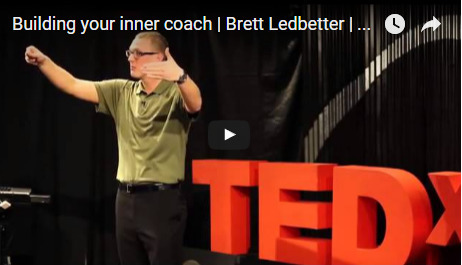
Brett Ledbetter is a former college basketball player and author of the book What Drives Winning. I stumbled upon his TEDx talk somehow recently and I’m glad I did because it’s well worth watching. Brett's presentation showed good preparatio Via Ariana Amorim
CCM Consultancy's insight:
Would you be proud to have the words of your inner voice broadcasted on a wall for everyone to see, especially in tough times?
Scoop.it!

If you're looking for reasons to make time in your busy schedule to keep learning, there's no shortage of possibilities. First and foremost, perhaps, is that you'll be in great company. Bill Gates, Warren Buffett, and Oprah Winfrey all set aside dedicated time to learn new things each week. Look how far the practice has taken them. But if you're looking for more scientific explanations of why the end of school shouldn't mean the end of learning, writer John Coleman is probably your man. He writes regularly for the HBR blogs on the subject of lifelong learning and its many benefits. One of his recent posts is a must read for those who suspect they should to make more time in their lives to nourish their brains, but still need a bit of a kick in the pants. Via The Learning Factor
CCM Consultancy's insight:
Long life learning has become an economic imperative
The Learning Factor's curator insight,
February 19, 2017 5:41 PM
An author runs down the impressive benefits of lifelong learning. 
rodrick rajive lal's curator insight,
February 22, 2017 4:38 AM
Making and finding time to learn new things, even things not related to one's profession or skill set will help make one healthier, richer, and more popular. This is very important for all professionals. Learning is a constant process, and the more you learn, the better equipped you are for life in the 21st Century. Looking at the pace with which technological advancement is taking place and the pace with which new discoveries and inventions are taking place, I feel it is important for us to be life-long learners! Health, richness and popularity will follow!
Scoop.it!

Gamification has become a bit of a buzzword and also in some cases a must have strategy for learning and... [Read More] Via Shah Zamri
CCM Consultancy's insight:
Gamification is only the tip of the iceberg. We need to get to the point of awareness that you are in need of more, before openness to learning really occurs. Once awareness hits.........

Shah Zamri's curator insight,
January 4, 2017 11:08 PM
Sprinkling icing on a cake doesn't ensure you have a great cake, it may look fabulous, but if the recipe is flawed the taste will still be poor. It is the same with gamification.
Scoop.it!

CCM Consultancy's insight:
Work is a learning lab and the daily experiences are the curriculum.
Shah Zamri's curator insight,
December 3, 2016 6:59 PM
Work IS a learning lab and the daily experiences ARE the curriculum.
Scoop.it!
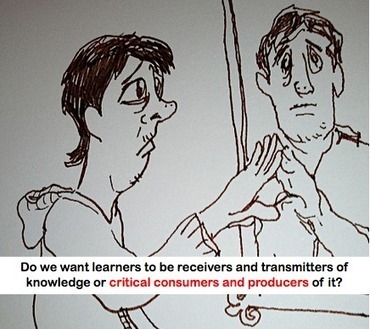
Today, we finished the second week of an interpersonal communications course. The students in the course are first term college students, a few fresh out of high school. As is my common practice, I end my week of instruction with reflective questions for the students: What was your significant learning this past week? What principles…
Learn more / En savoir plus / Mehr erfahren:
http://www.scoop.it/t/21st-century-learning-and-teaching/?tag=reflection
Via Gust MEES
CCM Consultancy's insight:
"Critical reflection is an important part of any learning process. Without reflection, learning becomes only an activity — like viewing a reality TV show — which was never meant to have meaning, but was only meant to occupy time"
Gust MEES's curator insight,
February 8, 2017 10:36 AM
Today, we finished the second week of an interpersonal communications course. The students in the course are first term college students, a few fresh out of high school. As is my common practice, I end my week of instruction with reflective questions for the students: What was your significant learning this past week? What principles…
Learn more / En savoir plus / Mehr erfahren:
http://www.scoop.it/t/21st-century-learning-and-teaching/?tag=reflection

CoryWillhite's curator insight,
February 8, 2017 9:26 PM
The move away from standardization and into a personal learning classroom is built upon reflection. The blended classroom can be a hot bed for personal reflection. 
Koen Mattheeuws's curator insight,
February 11, 2017 8:54 AM
Samen nadenken met je leerlingen over hun leerproces. Hoe maak jij hier tijd voor?
Scoop.it!

In this installment of What Do You Know blog series, Patti Shank looks at the question Why Do People Forget What They Learn? Via Shah Zamri
CCM Consultancy's insight:
Remarkable insight. Forgetting information does not depend on how long the information had been presented but on how the information was learned. "forgetting that occurs depends heavily on how the initial memory was created". The impact and the meaning given to the learning is primary.
Shah Zamri's curator insight,
October 22, 2016 5:17 PM
Answer this question: "Does forgetting primarily depend on how the information is presented and how long it has been since the information was presented?"
Scoop.it!
From
hbr
Don’t get stuck in your current ways of thinking.
Via Shah Zamri
CCM Consultancy's insight:
You have to recognize that the old mental model is no longer effective. Don't get stuck in your current ways of thinking.
|
Scoop.it!
Blaming's very corrosive in relationships and it's one of the reasons we miss our opportunities for empathy. Because when something happens and we're hearing a story, we're not really listening. We're making the connections as quickly as we can about whose fault something was. You are probably a bit of a blamer - most of us are. But why should we give it up? In this witty sequel to our most watched RSA Short, inspirational thinker Brené Brown considers why we blame others, how it sabotages our relationships, and why we desperately need to move beyond this toxic behaviour. Via Edwin Rutsch
CCM Consultancy's insight:
How many of you go that place when something goes wrong the first thing you want to know is whose fault is it? According to research we do this because blame gives us some semblance of control. But blame is only the discharging of discomfort, anger and pain. It is very corrosive to relationships and future improvement.
Scoop.it!

By Maria Popova
“If one wanted to crush and destroy a man entirely, to mete out to him the most terrible punishment,” wrote Dostoevsky, “all one would have to do would be to make him do work that was completely and utterly devoid of usefulness and meaning.” Indeed, the quest to avoid work andmake a living of doing what you love is a constant conundrum of modern life. In How to Find Fulfilling Work (public library) — the latest installment in The School of Life’s wonderful series reclaiming the traditional self-help genre as intelligent, non-self-helpy, yet immensely helpful guides to modern living, which previously gave us Philippa Perry’s How to Stay Sane and Alain de Botton’s How to Think More About Sex — philosopher Roman Krznaric (remember him?)explores the roots of this contemporary quandary and guides us to its fruitful resolution:
"The desire for fulfilling work — a job that provides a deep sense of purpose, and reflects our values, passions and personality — is a modern invention. … For centuries, most inhabitants of the Western world were too busy struggling to meet their subsistence needs to worry about whether they had an exciting career that used their talents and nurtured their wellbeing. But today, the spread of material prosperity has freed our minds to expect much more from the adventure of life. We have entered a new age of fulfillment, in which the great dream is to trade up from money to meaning."
Via Jim Lerman
CCM Consultancy's insight:
“If one wanted to crush and destroy a man entirely, wrote Dostoevsky, “all one would have to do would be to make him do work that was completely and utterly devoid of usefulness and meaning.”
Scoop.it!

Maria Konnikova writes about how to create a positive work environment. Research shows that it involves not telling people to be positive.
CCM Consultancy's insight:
Putting on an emotional mask at work—conforming to a certain image that doesn’t necessarily correspond to how you feel or who you are—drains you of energy that can only be replenished if you then have an opportunity to be yourself. “You have to be able to be real”
Scoop.it!
While there are numerous ways in which Socratic Questioning can be effectively executed in the classroom, there are a set of principles, which guide a Socratic dialog. In this section, these principles are laid out in the form of directives. Via THE OFFICIAL ANDREASCY
CCM Consultancy's insight:
Thinking is not driven by answers but by questions. Answers often signal a full stop in thought. This is why it is true that only students who have questions are really thinking and learning.
Scoop.it!

If there's one thing all management experience has taught me, it's that feedback is one of the most important parts of the relationship between an employer and employee. It is also one of the most complicated--especially when it comes to critical feedback.
But constructive criticism is very much a necessary part of work life, so it needs to be handled well and in real-time.
Kim Scott's Radical Candor is a great way to think about delivering feedback that might not always be easy to hear, but is important nonetheless. Kim, a former Google and Apple executive, often points to an experience during her early days at Google when her then-boss Sheryl Sandberg told her she said "um" too often during an otherwise slam-dunk presentation. Sheryl was clear in her criticism and suggested Kim get a speech coach (at Google's expense) to address the issue. Here is a further explanation of why this works: Via The Learning Factor
CCM Consultancy's insight:
Fostering an authentic connection builds trust over time, and if employees trust you, they will be less inclined to feel like you're being overly critical when you critique their performance.
The Learning Factor's curator insight,
February 28, 2017 5:40 PM
As a manager, it's important to deliver feedback that walks the fine line of being both positive and instructive.
Scoop.it!

Connie Malamed explains why the better L&D professionals understand attention, the better we’re able to support learning. Via Shah Zamri
CCM Consultancy's insight:
Attention can be thought of as a limited resource, how are you making best use of it?
Scoop.it!

Whether you're managing an intern or running an entire business, your employees' success (and your own skin) depends on your leadership.
Thankfully, the solution for motivating your team and squashing any issues is right at the tip of your tongue. It all starts with communication -- the skill experts point to as the make-or-break factor for successful leadership.
Here are eight things that exceptional bosses tell their employees daily. Start using these daily (or begin looking for a boss who does), and watch your success skyrocket: Via The Learning Factor
CCM Consultancy's insight:
Effective leaders allow great people to do the work they were born to do
The Learning Factor's curator insight,
February 12, 2017 6:27 PM
Leadership always starts with great communication, so amazing bosses use these phrases daily.
Scoop.it!

Learning is more than just asking questions and getting answers (whether through social media or a search engine), there’s an active component to learning that is too often forgotten. When I look at the tools in the Top 100 tools for learning, I see some reflective tools, e.g. writing, but I may be one of the few who’s talking about diagramming tools, and I think that’s important. Not diagramming, per se, but representation tools that allow us to express our understanding.
In short, we act and reflect to develop our ability to do something different and presumably better. The second is that this is separate from instruction, which is designed action and guided reflection. Self-learning, however, requires self-designed action and self-guided reflection.
Learn more / En savoir plus / Mehr erfahren:
https://gustmees.wordpress.com/2014/10/03/design-the-learning-of-your-learners-students-ideas/
http://www.scoop.it/t/21st-century-learning-and-teaching/?tag=reflection
Via Gust MEES
CCM Consultancy's insight:
Learning is more than just asking questions and getting answers, learning is action and reflection. The outcome is a new response to the same stimuli.
Gust MEES's curator insight,
February 9, 2017 10:07 AM
Learning is more than just asking questions and getting answers (whether through social media or a search engine), there’s an active component to learning that is too often forgotten. When I look at the tools in the Top 100 tools for learning, I see some reflective tools, e.g. writing, but I may be one of the few who’s talking about diagramming tools, and I think that’s important. Not diagramming, per se, but representation tools that allow us to express our understanding.
In short, we act and reflect to develop our ability to do something different and presumably better. The second is that this is separate from instruction, which is designed action and guided reflection. Self-learning, however, requires self-designed action and self-guided reflection.
Learn more / En savoir plus / Mehr erfahren:
https://gustmees.wordpress.com/2014/10/03/design-the-learning-of-your-learners-students-ideas/
http://www.scoop.it/t/21st-century-learning-and-teaching/?tag=reflection
Scoop.it!

This year, I completed my third #MOOC course called 'Learning How to Learn: Powerful mental tools to help you master tough subjects'. This course is offered by University of California, San Diego through Coursera and is taught by Dr. Barbara Oakley, Prof of Engineering at Oakland University and Dr. Terrence Sejnowski, Francis Crick Prof at the Salk Institute for Biological Studies. Through this post, I want to reflect on my experience with the course and what I learned about learning. Via ColinHickie, Miloš Bajčetić
CCM Consultancy's insight:
There are 2 types of thinking modes 1) Focused mode (concentration) and 2) Diffused mode (relaxed mind wandering state). You must alternate between these two to get the most out of your learning.
Scoop.it!

Discussion around the topic of group learning is of interest to many students and teachers. In a group learning situation, many learners are involved in a project together. The enthusiasts of this style of learning may be inclined to say The more the merrier, implying that many students can enjoy working together. However, if the situation is not managed carefully, the proverb could easily read Two is company but three’s a crowd, implying that two can work well together, but once you bring in a third there could be some conflict. Via Mark E. Deschaine, PhD
CCM Consultancy's insight:
Find out what individual learning cannot teach you. “Teach me and I remember, involve me and I learn.”–Ben Franklin

Oskar Almazan's curator insight,
February 13, 2017 12:10 AM
How does group work develop cognitive thinking skills? Critical thinking: a chance to analyse others’ ideas and question their thinking. Problem solving: challenging thoughts and actions through the group forum. Value clarification: assessing the true worth of others’ input. Active involvement: an opportunity to contribute to the group. Learning by example: the group dynamic adds further learning examples. Sharing information: different ideas and information increase knowledge. Assessments: teaching, learning, and assessment opportunities are increased.

CCAFYDE's curator insight,
February 13, 2017 4:46 AM
Beneficios del aprendizaje en grupo y ¿por qué?
¿Hacia donde queremos dirigir la educación?
Scoop.it!

In this installment of What Do You Know blog series, Patti Shank looks at the question: Do most people know when they need additional knowledge and skills? Via Shah Zamri
CCM Consultancy's insight:
"Metacognition, the ability to monitor and assess one's own understanding. It’s what makes people who are more proficient better able to determine what they need to learn"
Shah Zamri's curator insight,
October 22, 2016 5:30 PM
TMI (Too Much Information) - Can people correctly evaluate whether they need additional knowledge and skills to perform their job?
Scoop.it!

From
www
Body language affects how others see us, but it may also change how we see ourselves. Social psychologist Amy Cuddy shows how “power posing” -- standing in a posture of confidence, even when we don’t feel confident -- can affect testosterone and cortisol levels in the brain, and might even have an impact on our chances for success. Via Enzo Calamo
CCM Consultancy's insight:
Do you shape your body language or are you shaped by your body language. Find out how a few poses can affect how we see ourselves.
|







Behaviors come from how we see things and the “story” or “meaning” we make about what we see. A mind centered and at peace avoids destructive perspectives, while an agitated and hyperactive mind can cause the opposite.