 Your new post is loading...
Mishra, Amit Kumar, Pramila Aggarwal, Ranjan Bhattacharyya, , T.K. Das, A.R. Sharma, and Ravender Singh. 2015. Least limiting water range for two conservation agriculture cropping systems in India. Soil and Tillage Research. 150: 43-56. doi:/10.1016/j.still.2015.01.003.
The authors suggest deterioration of soil physical properties is a major reason for loss of productivity of rice-wheat and cotton-wheat in India. They compared conventional rice-wheat with direct seeded rice - ZT wheat systems on beds and flat. Overall, among the treatments, permanent beds + Residue and Direct seeded rice + brownmanuring (use of a GM Sesbania crop) + ZT Wheat were the best management practices for improved soil physical environment under cotton–wheat and rice–wheat systems, respectively, and therefore could be recommended.
Gathala, Mahesh, K., Jagadish Timsina, Md. Saiful Islam, Md. Mahbubur Rahman, Md. Israil Hossain, Harun Ar Rashid, Anup K Ghosh, Timothy J Krupnik, Thakur P. Tiwari, and Andrew McDonald. 2015. Conservation agriculture based tillage and crop establishment options can maintain farmers' yields and increase profits in South Asia's rice-maize systems: Evidence from Bangladesh. Field Crops Research. 172: 85-92. doi:/10.1016/j.fcr.2014.12.003
Compares rice-maize and rice-rice systems in Bangladesh since maize is more profitable as the poultry industry grows. The objective of this study was to evaluate the productivity and profitability of R–M systems under CA-based tillage and crop establishment options across a gradient of 69 farmers’ fields in Northwest Bangladesh. They evaluated four tillage and crop establishment options: reduced tillage; strip tillage; fresh beds; and permanent beds. Conventional-tilled (puddled) transplanted rice on flat followed by conventional-tilled maize on flat was included as a current practice. They conclude that both rice and maize planted sequentially on permanent beds and strip tillage can result in higher net income and benefit-cost ratio compared to conventional tillage practice.
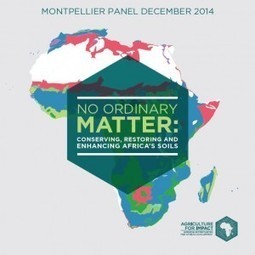
Glatzel, Katrin, Gordon Conway, Emily Alpert, and Stephanie Brittain. 2014. No ordinary matter: Conserving, restoring and enhancing Africa's soils. Agriculture for Impact.
Soils are the essence of life, sustaining humans, plants and animals from present and future generations. The contribution of soil to alleviating many of today’s pressing challenges, however, is overlooked.This report highlights what is needed to manage soils responsibly in Africa. Responsible soil management will ultimately help agricultural systems better adapt and build resilience to climate change while minimizing GHG emissions and restoring lost carbon to the soil.
Pittelkow, C., et al. 2014. Productivity limits and potentials of the principles of conservation agriculture. Nature. doi:10.1038/nature13809 The authors conducted a global meta-analysis using 5,463 paired yield observations from 610 studies to compare no-till, the original and central concept of conservation agriculture, with conventional tillage practices across 48 crops and 63 countries. Overall, results show that no-till reduced yields. When no-till is combined with the other two conservation agriculture principles of residue retention and crop rotation, its negative impacts are minimized and rainfed crop productivity in dry climates significantly increases, suggesting that it may become an important climate-change adaptation strategy for ever-drier regions of the world. [freely available]
Cid, P., et al. 2014. No-tillage permanent bed planting and controlled traffic in a maize-cotton irrigated system under Mediterranean conditions: Effects on soil compaction, crop performance and carbon sequestration. European Journal of Agronomy 61(0):24-34. DOI: 10.1016/j.eja.2014.08.002. The aim of this study was to evaluate the mid-term effects of PB on soil compaction, root growth, crop yield and carbon sequestration compared with conventionally tilled bed planting (CB) and with a variant of PB that had partial subsoiling (DPB) in a Typic Xerofluvents soil (Soil Survey Staff, 2010) in southern Spain. After six years, soil compaction was higher in PB than in CB, particularly under the bed (44 and 27% higher in top 0.3- and 0.6-m soil layers, respectively). Root density, soil carbon, residue accumulation, and yields were also compared between practices. Furthermore, at the end of the study, more soil organic carbon was stocked in PB than in CB. [subscription only]
Bajwa, Ali Ahsan. 2014. Sustainable weed management in conservation agriculture. Crop Protection. DOI: 10.1016/j.cropro.2014.07.014. This study reviews different management strategies for weeds in CA systems. Weed control is the biggest challenge to CA adoption. Reduced tillage systems affect the efficacy of herbicides and mechanical weed control measures. Modified tillage operations, improved cultural practices, bioherbicides, chemical herbicides, allelopathy, and crop nutrition have been identified as suitable weed management tools. [subscription only]
Umar, Bridget Bwalya & Progress Hazwida Nyanga. 2014. Women smallholder farmers and sustainable agriculture intensification: A case of conservation agriculture in Zambia. International Proceedings of Chemical, Biological & Environmental 63:69. This study examined the effects of CA among smallholder farmers in Southern, Eastern, and Central Zambia. It used questionnaires, household and key informant interviews, observations, field assessments, and desk reviews to collect the data. The results show that CA improved crop yields, and nutrient use efficiency; gave more stable yields during periods of moisture stress, and above normal rainfall; resulted in more diversified crop combinations; and was welcomed by women farmers as it encouraged the production of food legumes. CA adoption was also associated with a reduction in the use of purchased inputs and more use of locally available resources. CA is thus a sustainable intensification agricultural system that could help the many women farmers in Zambia that currently face low crop productivity due to unreliable access to agricultural inputs. [subscription only]
Thierfelder, Christian, et al. 2013. Conservation agriculture in Southern Africa: Advances in knowledge. Renewable Agriculture and Food Systems: 2-21. doi:10.1017/S1742170513000550 This paper summarizes recent findings about the constraints to CA's widespread adoption in Southern Africa, including the retention of sufficient crop residues, crop rotations, weed control, pest and diseases, farmer perception and economic limitations. It concludes that, though CA benefits food security, soil fertility, and farmers' livelihoods, CA is not a solution and often needs significant adaptation and flexibility when implemented across farming systems. [freely available]
Sommer, Rolf, et al. 2014. Effects of zero tillage and residue retention on soil quality in the Mediterranean region of Northern Syria. Earth & Environmental Sciences 4(3): 109-125. doi:10.4236/ojss.2014.43015 Results of long-term trials at ICARDA headquarters in Syria showed that CA/ZT had a positive impact on soil fertility, including increased soil organic matter (SOM), microbial biomass, extractable phosphate, higher amounts of larger water-stable soil aggregates, soil infiltration capacity and soil water retention.This type of agricultural intensification provides an attractive option for farmers in WANA, from the standpoints of economy and ecological efficiency. [freely available]
Baudron, Frederic, et al. 2014. Multi-scale trade-off analysis of cereal resude use for livestock feeding vs. soil mulching in the Mid-Zambezi Valley, Zimbabwe. Agricultural Systems. 1-10. doi:10.10.1016/j.agsy.2014.03.002 The authors examine the trade-offs of crop residues mulching for smallholder cotton–sorghum farming systems in Zimbabwe. They find that this practice becomes more desirable when a longer time-frame is analyzed, mechanization replaces animal traction, and C to N ratios are considered. [subscription only]
Brouder, Sylvia, and Helena Gomez-Macpherson. 2014. The impact of conservation agriculture on smallholder agricultural yields: A scoping review of the evidence. Agriculture, Ecosystems and Environment 187: 11-32. doi:10.1016/B978-0-12-800132-5.00002-X Widespread use of conservation agriculture (CA) in North and South America and Australia suggests significant farmer profitability through increased agronomic productivity and reduced input costs. The authors conclude that more quantifying and explanatory data from key crops and representative cropping systems is needed to conclude about benefits of CA and ZT on yields and resource use efficiency of smallholder farmers. [subscription only]
Huggins, David, et al. 2014. Site-specifc trade-offs of harvesting cereal residues as biofuel feedstocks in dryland annual cropping systems of the Pacific Northwest, USA. Bioenergy Research 7 (2): 598-608. doi:10.1007/s12155-014-9438-4 This paper evaluates the trade- offs of using wheat and barley residues for soil health versus harvesting straw for biofuel. They conclude that trade-offs should be evaluated on a site-specific basis, and that support practices such as crop rotation, reduced tillage, and site-specific nutrient management need to be considered if residue harvest is to be sustainable. [freely available]
Kirkegaard, John. 2014. Sense and nonsense in conservation agriculture: Principles, pragmatism and productivity in Australian mixed farming systems. Agriculture, Ecosystems and Environment 187: 133-145. doi:10.1016/j.agee.2013.08.011 This paper reviews aspects of CA adoption in Australia in an effort to draw out important lessons as CA principles are adapted elsewhere. They conclude that “no-till” adopters in Australia continue some strategic tillage for a range of sound agronomic reasons, that intensive cereal systems dominate, and partial removal of crop residues as hay or by grazing livestock is commonplace within the largely mixed-farming systems. This is important for adoption of CA in the diverse smallholder systems of Sub-Saharan Africa and South Asia. [subscription only]
|
Mhlanga, Blessing, Stephanie Cheesman, Barbara Maasdorp, Tarirai Muoni, Stanford Mabasa, Eunice Mangosho, and Christian Thierfelder. 2015. Weed community responses to rotations with cover crops in maize-based consevation agriculture systems of Zimbabwe. Crop Protection.69: 1-8. doi: /10.1016/j.cropro.2014.11.010.
Weed management is a challenge in smallholder agricultural production in SSA. However, when weeds are controlled by herbicides or rotations under CA, weed shifts occur and need to be addressed. The paper studies the effect of rotations on weed shifts. The results suggest that rotations with cover crops such as velvet bean may reduce weed numbers and dominance of problematic weeds over time. This can potentially lead to a less intense weeding schedule, which is more cost effective and affordable for smallholder farmers.
Denison, R.F., A.M. McGuire. 2015. What should agriculture copy from natural ecosystems? Global Food Security. 4: 30-36. doi:10.1016/j.gfs.2014.12.002
Natural ecosystems persist without synthetic inputs. Would mimicking the organization of natural ecosystems enhance the productivity, year-to-year stability, or long-term sustainability of agriculture? The paper argues that natural-ecosystem organization (diversity, spatial patterns, etc.) is not necessarily superior to that in well-designed agricultural ecosystems, especially by criteria relevant to agriculture. Furthermore, agriculture׳s constraints (exporting protein to cities, challenges in managing mixtures) would limit mimicry even of any hypothetical natural ecosystems with superior organization.
Singh, Balwinder, E. Humphreys, D.S. Gaydon, Sudhir Yadav. 2015. Options for increasing the productivity of the rice–wheat system of north west India while reducing groundwater depletion. Part 2. Is conservation agriculture the answer? Field Crops Research. 173: 81-94. doi: 10.1016/j.fcr.2014.11.019
The irrigated rice–wheat system of north west India is not sustainable, as currently practiced, due to over-exploitation of groundwater, soil degradation, labor scarcity, high fuel and labor costs, and air pollution from stubble burning. Labor and water scarcity are driving farmers to change from puddling and manual transplanting of rice to mechanized dry seeding.This paper looks at the introduction of dry seeded rice to the R-W system and using CA. The authors used the APSIM cropping system model to examine whether conversion from recommended farmer practice (rFP, comprising puddled transplanted rice, alternate wetting and drying rice water management, rice straw removal, tillage for wheat) to a CA rice–wheat system would reduce evapotranspiration and improve water use efficiency in Punjab, north west India.
Grabowski, P., et al. 2014. Minimum tillage adoption among commercial smallholder cotton farmers in Zambia, 2002 to 2011. Agricultural Systems 131: 34-44. DOI: 10.1016/j.agsy.2014.08.001. This study examines adoption rates of a critical component of CA, minimum tillage (MT) of Zambian cotton farmers. Among farmer groups interviewed in both years, MT adoption rates increased by about one-third compared to 2002. Four key factors –use of MT, number of years of extension efforts, availability of herbicides on credit, and availability of tractor ripper services – all positively influence MT adoption. Zambia’s experience underlines the long timeframe required for testing and refining location-specific technology packages that prove both agronomically suitable and commercially attractive for farmers of differing resource endowments. [subscription only]
Bartz, M., et al. 2014. Earthworm richness in land-use systems in Santa Catarina, Brazil. Applied Soil Ecology 83: 59-70. DOI: 10.1016/j.apsoil.2014.03.003. The aim of this study was to evaluate earthworm species richness in five different land-use systems (LUS) with increasing anthropogenic impact: native forest (NF), eucalyptus plantation (EP), pasture (PA), integrated crop-livestock (ICL) and no-tillage cropping (NT), in Santa Catarina, Brazil. Contrary to expectations, species richness was higher in LUS with higher (ICL and NT = 15 and 17 spp.) vs. lower anthropogenic impacts (EP, PA, NF = 9–10 spp.), mainly due to the presence of exotic species in the cropping systems. Native species predominated in PA and NF, although natives were also found in highly disturbed ecosystems (NT, ICL) and in the West region all worms collected in NT were native. [subscription only]
Vanlauwe, B., et al. 2014. A fourth principle is required to define Conservation Agriculture in sub-Saharan Africa: The appropriate use of fertilizer to enhance crop productivity. Field Crops Research 155: 10-13. doi:10.1016/j.fcr.2013.10.002 A case study from Kenya clearly demonstrates how fertilizer increases maize stover productivity above thresholds for minimal initial soil cover required for initiating CA (about 3 tonne ha−1). The authors conclude that strategies for using CA in SSA must integrate a fourth principle – the appropriate use of fertilizer – to increase the likelihood of benefits for smallholder farmers. [subscription only]
Tui, Sabine, et al. 2014. Economic trade-offs of biomass use in crop-livestock systems: Exploring more sustainable options in semi-arid Zimbabwe. Agricultural Systems. doi: 10.1016/j.agsy.2014.06.009 This paper quantifies the associated potential economic trade-offs and profitability of using residues for soil amendment or as livestock feed in Zimbabwe, and explores alternative biomass production options. CA without fertilizer application and at non-subsidized fertilizer prices is not financially viable; whereas with subsidized fertilizer it can benefit half the farm population. The poverty effects of all considered alternative biomass options are however limited; they do not raise income sufficiently to lift farmers out of poverty.
[subscription only]
Sommer, Rolf, et al. 2014. Fertilizer use should not be a fourth principle to define conservation agriculture: Response to the opinion paper of Vanlauwe et al. (2014) ‘A fourth principle is required to define conservation agriculture in sub-Saharan Africa: The appropriate use of fertilizer to enhance crop productivity’. Field Crops and Research. doi: 10.1016/j.fcr.2014.05.012 This article addresses the Vanlauwe et al., 2014 opinion paper that argues that strategies for the implementation of CA in sub-Saharan Africa (SSA) must integrate a fourth principle – the appropriate use of fertilizer – to increase the likelihood of success of CA and benefits for smallholder farmers. Sommer et al. state that this proposed fourth principle will add more confusion and is thus not required to define CA. [subscription only]
Singh, Ajeet, et al. 2014. Impact of long-term zero till wheat on soil physical properties and wheat productivity under rice-wheat cropping system. Soil and Tillage Research 140: 98-105. doi: 10.1016/j.still.2014.03.002 Information about the changes in soil properties upon change in the agricultural management system is essential for sustainability a no-till system. The long-term (15 years) impact of zero tillage in wheat under rice–wheat cropping system in semi-arid region of Indo-Gangetic Plains (IGP) was evaluated for physical properties, organic carbon build up, root growth and wheat productivity in different textured soils. [subscription only]
Chai, Qiang, et al. 2014. Chapter Two-Water-saving innovations in Chinese agriculture. Advances in Agronomy 126: 149-201. doi:10.1016/B978-0-12-800132-5.00002-X This chapter summarizes some key water-saving technologies developed in China and discusses integrated and innovative approaches for the development of water-saving agricultural systems. Technologies that reduce agricultural water use and improve agricultural productivity are a need of the day. [subscription only]
Henneron, Ludovic, et al. 2014. Fourteen years of evidence for positive effects of conservation agriculture and organic farming on soil life. Agronomy for Sustainable Development. 1-13. doi:10.1007/s13593-014-0215-8 This paper compares the long-term effects of conservation agriculture, organic farming, and conventional agriculture on major soil organisms such as microbes, nematofauna, and macrofauna. The study shows that long-term, no-tillage, and cover crops are better for soil biota than periodic legume green manures, pesticides, and mineral fertilizers. [freely available]
Jat, Raj, et al. 2014. Seven years of conservation agriculture in a rice-wheat rotation of Eastern Gangetic Plains of South Asia: Yield trends and economic profitability. Field Crops Research 164: 199-210. doi:10.1016/j.fcr.2014.04.015 This paper looks at the productivity and profitability of tillage, crop establishment and residue management practices in the rice–wheat rotation of Eastern IGP of India. In medium term, the authors found CA based systems to be agronomically and economically superior to CT based systems. CA improves productivity, income and food security while sustaining the natural resources in smallholder production [freely available]
|









Abstract available but for full text need subscription to journal