Buzz e-sante
248.4K views | +6 today
Buzz e-sante
Le média du digital santé
Curated by Rémy TESTON
Your new post is loading...
Rescooped by Rémy TESTON from Social Media and Healthcare
November 11, 2015 11:53 AM
Scoop.it!

27 surprising stats how social media is changing healthcare

27 surprising stats how social media is changing healthcare | Buzz e-sante | Scoop.it

Healthcare is a heavy regulated industry so many healthcare organizations avoid the use of social media. But patients, healthcare professionals and hospitals don’t.

Consumers use social media to research and to make health decisions. Patients consider themselves part of a tribe trusting others on social media more than other sources. Physicians use social media to network professionally with colleagues and peers and participate in forums, sharing medical knowledge within their community.

Social media is a platform where the public, patients and healthcare professionals can communicate about health issues and possibly improve health outcomes.

Here are 27 surprising stats how social media is changing healthcare.

90% of Millennials say they would trust medical information shared by others on their social media networks (source: Search Engine Watch)81% of hospitals said service lines expressed an interest in participating in the hospital’s social media strategy (source: AFIA)66% of doctors use social media for professional purposes, often preferring an open forum as opposed to a physician-only online community (source: EMR Thoughts)60% of doctors say social media improves the quality of care delivered to patients (source: Demi & Cooper Advertising and DC Interactive Group)60% of consumers say they trust doctors’ posts versus 36% who trust posts from a pharma firm (source: MDDI)60% of physicians most popular activities on social are following what colleagues are sharing and discussing (source: Health Care Communication)54% of patients are very comfortable with their providers seeking advice from online communities to better treat their conditions (source: Mediabistro)50% of healthcare apps available to consumers can be downloaded for free and are produced by a variety of types of developer (source: IMS Institute)49% of those polled expect to hear from their doctor when requesting an appointment or follow-up discussion via social media within a few hours. (source:HealthCare Finance News)41% of people said social media would affect their choice of a specific doctor, hospital, or medical facility (source: Demi & Cooper Advertising and DC Interactive Group)40% of people polled said information found on social media affects how someone coped with a chronic condition, their view of diet and exercise and their selection of a physician (source: HealthCare Finance News)40% of consumers say that information found via social media affects the way they deal with their health.(source: Mediabistro)31% of health care professionals use social media for professional networking (source: Mediabistro)31% of health care organizations have specific social media guidelines in writing (source: Institute for Health)30% of adults are likely to share information about their health on social media sites with other patients, 47% with doctors, 43% with hospitals, 38% with a health insurance company and 32% with a drug company. (source: Fluency Media)28% of health-related conversations on Facebook are supporting health-related causes, followed by 27% of people commenting about health experiences or updates (source: Infographics Archive)27% of patients comment or post status updates based on health-related experiences (source: MDDI)26% of all hospitals in the US participate in social media (source: Demi & Cooper Advertising and DC Interactive Group)23% of drug companies have not addressed security and privacy in terms of social media (source: Mediabistro)19% of smartphone owners have at least one health app on their phone. Exercise, diet, and weight apps are the most popular types (source: Demi & Cooper Advertising and DC Interactive Group)12% of apps accounted for 90% of all downloads (source: iMedicalApps)18 to 24 year olds are more than 2x as likely than 45 to 54 year olds to use social media for health-related discussions (source: Mediabistro)YouTube traffic to hospital sites has increased 119% year-over-year (source:Google’s Think Insights)The Mayo Clinic’s podcast listeners rose by 76,000 after the clinic started using social media (source: Infographics Archive)Among the 165,000 health & medical apps now on the market, nearly two thirds are focused on general wellness issues like fitness, lifestyle & stress, and diet. The remainder is made up by apps focused on specific health conditions (9%), medication info & reminders (6%), and women’s health & pregnancy (7%). Mental health apps led among disease specific apps, followed by diabetes (source: iMedicalApps)$392,000,000 is the revenue from mobile healthcare apps in 2015 (source:Northern Kentucky University)Of more than 1,500 hospitals nationwide who have an online presence, Facebook is most popular (source: WHPRMS)

Below are three infographics that also deliver statistics on the impact social media is having on healthcare.

Do these facts align with your healthcare behaviors. Do you believe social media is changing healthcare?


Via Plus91
AAAASF Marketing's curator insight, November 11, 2015 9:28 AM

Do these facts align with your health care behaviors. Do you believe social media is changing health care?

Scooped by Rémy TESTON
November 11, 2015 11:48 AM
Scoop.it!

L'IEEE veut faciliter les communications dans l'e-santé - Sciences - Numerama

L'IEEE veut faciliter les communications dans l'e-santé - Sciences - Numerama | Buzz e-sante | Scoop.it
L'IEEE veut standardiser les communications entre les appareils utilisés dans le secteur de la santé électronique.
No comment yet.
Scooped by Rémy TESTON
November 9, 2015 12:11 PM
Scoop.it!

Les capteurs se veulent 3e génération d’appareils médicaux | L'Atelier : Accelerating Business

Les capteurs se veulent 3e génération d’appareils médicaux | L'Atelier : Accelerating Business | Buzz e-sante | Scoop.it
Canan Dagdeviren, chercheuse au MIT et finaliste du MIT TR 35 US, a créé un capteur flexible capable de déceler les anomalies cutanées.
No comment yet.
Rescooped by Rémy TESTON from Social Media and Healthcare
November 8, 2015 10:06 PM
Scoop.it!

Healthcare SEO Basics For Doctors

Search engines can be hopelessly addictive. For going on 20 years, humans have had the luxury of finding information on nearly everything on the Internet, usually for free and typically nearly instantly. As a result, most of us are on Google multiple times daily.

Yet if anything is even more appealing than tapping into this unprecedented access to the body of knowledge, perhaps it’s the irresistible lure of checking out your own standing on the Internet. Enter the Google Narcissist (GN) – the Internet surfer who is constantly checking search-engine rankings to see where his own website ranks.

If you own a business or medical practice, it’s hard not to be a GN. Given the importance of a website to independent healthcare providers these days, you naturally want to monitor where your site stands among competitors.

In many circumstances, being on page one of Google search engine results pages (SERPs) is all but essential to attracting new patients.

And gaining or losing a few places in the rankings can make or break your success. In just the last decade, these realities have given birth to a massive industry in search engine optimization (SEO), the craft of managing web pages so they rank highly in Internet search results.

Becoming a healthy, well-informed GN

So if you’re going to be a GN, the best advice is probably to become a well informed GN. We see plenty of physicians despairing over their Google rankings needlessly. The main cause of despair is their choice of terms for Googling themselves – they pick search terms that don’t really matter much. A bit of SEO knowledge can ease despair considerably.

The Internet search engine is arguably the greatest invention to date. It’s also an extraordinarily complex and constantly changing phenomenon.

Google, Yahoo, Bing and most other search engines evolve to a) respond to changing uses of the Internet, and b) to stay ahead of unscrupulous techies trying to game the system and cheat their way to the top of the SERPs.

An article in WIRED magazine several years ago quoted a Google executive as saying that the search juggernaut (more than two-thirds of Internet searches are on Google) expected to alter its search algorithm 550 times that year. To be sure, the rate of change provides some job security for digital marketing firms like Vanguard. It takes skilled and dedicated search marketing professionals to stay on top of it all.

But there’s no need for a clinician to be studying SEO strategies and techniques. Here are a few principles to keep in mind, along with insights into how search engines work, in hopes of offering words of comfort to the obsessive GN.

High Google rankings matter a lot

They’re critical to online marketing of healthcare. There are instances in which moving from page two to page one of SERPs doubled or even tripled the number of visitors to a web page.

But what’s important is not ranking for all search terms but ranking for the right terms, as defined by a combination of: a) what a practice offers and wants to promote among its services, and b) most importantly, what healthcare consumers are already looking for on the Internet.

No website can be on page one for all search terms

You have to pick and choose based on the above two criteria. The end goal for SEO is to rank well for a large enough group of keyword search phrases to grow new-patient volumes. You don’t have to rank highly for everything to achieve that goal.

The 20/80 rule generally applies here: 20 percent of the keywords will often generate 80 percent of organic website traffic (from unpaid search engine results). Let go of any notion of running the table on all possible search terms.

Organic search-engine rankings are ever changing

Rankings are just like the Internet itself. A web page may rank at number three on page one in one week, slide to position six the next, and then shoot to number two the following week.

The Internet holds an estimated 30 trillion web pages. Google indexes (evaluates and stores information) all of them 100 billion times per month. Additionally, Google handles 40,000 Internet searches per second.

Rankings change constantly, often by the hour, due in part to searchers changing searches. However, in most cases we’re able to hold a page-one ranking for our clients consistently for the more important search terms.

Human response is key to effective SEO


Google bases its rankings largely on what its users link to from other websites and on what they see and click on in search results. Each link and click is a vote. Each vote helps that web page move higher in the rankings.

Good content and optimization only take a website so far. It takes time to accumulate votes. Remember also that it’s the patient’s language and mindset that rule here. You can disappoint yourself by Googling keywords/search terms more familiar to doctors than patients.

Keyword choice should be a function of content

A common myth is that you should pick keywords for search engine optimization in order to bring visitors to a website. That’s not quite accurate. Instead, the idea is to pick content based on what you want to promote and what people are searching for already.

Through an online tool called Keyword Planner, Google will reveal the most popular search terms for any healthcare specialty. It’s free and easy to use. Once Keyword Planner has uncovered the most popular keyword combinations for your services, deciding what to put on your website is easy.

One reason to outsource at least some SEO responsibilities is to have an experienced search marketer monitor how website pages are faring in the rankings for individual keywords. At Vanguard, we also do a bow-to-stern website audit annually to see if there have been significant shifts in keyword usage that we need to accommodate by adjusting the website content and SEO on a broad scale.

Content is king, emperor and lord of all SEO


In the end, the quality of information on a web page is the ultimate arbiter. Google and other search engines only mimic human informational needs.

Humans want clear, accurate and relevant content. Provide that on a web page, and it will ultimately rank highly for a specific keyword phrase – but usually only for that phrase and very similar ones, which are merely an indicator of what the page is all about … like a book title.

No one ever tricks Google. Not for long anyway. Not even China pushes Google around, as evidenced by Google’s refusal a few years ago to yield to China’s restrictions on the Internet.

SEO is all about fulfilling human’s informational needs. Keep that as a top priority and you’ll be rewarded.


Via Plus91
No comment yet.
Scooped by Rémy TESTON
November 7, 2015 4:14 AM
Scoop.it!

Pourquoi l'e-santé a de quoi séduire les jeunes talents

Pourquoi l'e-santé a de quoi séduire les jeunes talents | Buzz e-sante | Scoop.it
Pour Emmanuel Stanislas, fondateur du cabinet de recrutement Clémentine les objets connectés et les e-services joueront un rôle de plus en plus important.
No comment yet.
Rescooped by Rémy TESTON from Social Media and Healthcare
November 6, 2015 3:09 AM
Scoop.it!

​Moaning about medicine on Twitter? How those tweets could help scientists

​Moaning about medicine on Twitter? How those tweets could help scientists | Buzz e-sante | Scoop.it

Among all the empty trivia on social networks, researchers now think important scientific data is just waiting to be found.

Scientists in Spain believe messages posted on social media can be a valuable source of information about adverse drug effects that have not been mentioned in clinical trials or registered in reporting systems by patients or doctors.

A research team at Carlos III University of Madrid (UC3M) is currently working on the development of a toolkit for processing large volumes of health data.

As part of the project, the team is developing ways to take social-media comments about drugs, diseases, and adverse drugs reactions, and transform them into structured information for better decision-making in the healthcare sector.

READ THIS
 

Big data: Five of the bigger myths and why they just don't stack up

Read More

The use of social-media big data could also help pharmaceutical companies identify potential new drug candidates and lower research costs. This type of data may also assist in monitoring the effectiveness of drugs by collecting data in unrestricted and mixed environments.

So far, the team of scientists at UC3M has published aprototype, under the European research project TrendMiner, storing five million tweets and 40,000 comments, written in Spanish and collected over a year.

The prototype includes a linguistic processor based on MeaningCloud commercial software, which recognizes mentions of drugs, adverse effects, and diseases, and then displays them in clouds of tags and different timelines.

LISTENING TO THE RIGHT CHANNELS

Using these techniques, colloquial descriptions by patients in social networks are translated into manageable data in comparative studies to obtain patterns and trends.

The messages can also be combined with those obtained from other sources, such as electronic medical records, explained Paloma Martinez, researcher and professor of the laboratory of advanced database at UC3M.

Aggregated and standardized information is anonymized to comply with the highest level of security required by the current Spanish Organic Law on Data Protection.

For Martinez, whether medical agencies consider changes to the technical specifications of a drug, or pharmaceutical companies gather feedback on their products and know how to position themselves against competitors, it is important "to be listening to the right channels".

"Patients do not explain everything to doctors but are comfortable with sharing information in social networks and forums," she said.

To improve the system, the UC3M team is now working on algorithms to see whether the information obtained has statistical significance. Scientists are also trying to improve the analysis of patient-oriented language.


To do this analysis, they are applying deep-learning algorithms, based on the use of neural networks, capable of working with massive volumes of data, and trained to analyze and understand the language.

"In this domain not only do we work analyzing social media but also other documents such as clinical notes and scientific publications," said Martinez.

Marc Torrent, head of the Big Data Center of Excellence in Barcelona, said this kind of research may be a major breakthrough for the pharmaceutical industry.

However, Felip Miralles Barrachina, director of the eHealth unit at Barcelona Digital Technology Centre (BDigital), a member of the Catalan government's technology hub known as Eurecat, is not so sure.

"The results may be qualitative, but are unlikely to have clinical value in the study of adverse drug reactions," he said. "[But] we must not be dogmatic," he added.

According to Farmaindustria, an association representing the pharmaceutical industry in Spain, the sector spent €950m in research and development in 2014 and got back into the growth after three consecutive years of falling investment.


Via Plus91
No comment yet.
Scooped by Rémy TESTON
November 5, 2015 7:15 AM
Scoop.it!

Lancement du programme Epidemium - Buzz-esanté

Lancement du programme Epidemium - Buzz-esanté | Buzz e-sante | Scoop.it
Roche et La Paillasse lancent Epidemium, premier programme de recherche participatif en épidémiologie pour mieux comprendre le cancer grâce aux “Big Data”
No comment yet.
Rescooped by Rémy TESTON from Les actualités du Club Inter Pharmaceutique C.I.P.
November 4, 2015 7:06 AM
Scoop.it!

Les nouveaux défis de la #pharmacovigilance par Claude Touche #hcsmeufr

La Pharmacovigilance est un domaine en pleine mutation.

L’ Association Française des Affaires Réglementaires vient de publier un article consacré à ce sujet.

  « Les nouveaux défis de la Pharmacovigilance », par Claude Touche.


AFAR (Association Française des Affaires Réglementaires) - Octobre 2015

http://www.afar.asso.fr/


Via Festival Communication Santé, Celine Sportisse, CIP /ACL au coeur de la distribution de la santé
No comment yet.
Scooped by Rémy TESTON
November 4, 2015 4:00 AM
Scoop.it!

Lumo lève $10M pour agréger les données de santé connectée

Lumo lève $10M pour agréger les données de santé connectée | Buzz e-sante | Scoop.it
Fabricant d'objets connectés de bien-être, la startup Lumo annonce avoir levé 10 millions pour centraliser les données provenant d'objets connectés de santé ou
No comment yet.
Scooped by Rémy TESTON
November 3, 2015 4:57 PM
Scoop.it!

Détecter le diabète grâce à un échantillon de salive et un smartphone sera bientôt possible

Détecter le diabète grâce à un échantillon de salive et un smartphone sera bientôt possible | Buzz e-sante | Scoop.it
À quelques jours de la Journée mondiale du diabète (le 14 novembre), la mise au point de cet appareil en phase de développement pourrait...
Jerome Leleu's curator insight, November 4, 2015 2:47 AM

ajouter votre perspicacité ...

Scooped by Rémy TESTON
November 3, 2015 2:48 PM
Scoop.it!

Prévention : Cegedim Assurances dévoile MyHospiPartner | Assurance & Banque 2.0

Prévention : Cegedim Assurances dévoile MyHospiPartner | Assurance & Banque 2.0 | Buzz e-sante | Scoop.it
L’éditeur vient de lancer sa nouvelle offre digitale destinée à l’hôpital et accessible à partir des principales couches clientes du marché. MyHospiPartner a été conçue en partenariat avec la société BePatient. Cette solution propose un accompagnement de l’assuré tout au long de son hospitalisation, grâce à des services accessibles au moment opportun  lui permettant de …
No comment yet.
Scooped by Rémy TESTON
November 3, 2015 3:45 AM
Scoop.it!

Quelle gouvernance des projets digitaux pour les industriels de santé ? - Club Digital Santé

Quelle gouvernance des projets digitaux pour les industriels de santé ? - Club Digital Santé | Buzz e-sante | Scoop.it
Carte blanche à Franck Hernandez, consultant et directeur associé de la société de conseil Market iT.
No comment yet.
Scooped by Rémy TESTON
November 2, 2015 3:08 PM
Scoop.it!

Santé : à la rencontre des adeptes du quantified self, ceux qui comptabilisent tout

Ces hommes et ces femmes sont désormais connectés. Ils mesurent tout de leurs performances. Explications.
No comment yet.
Rescooped by Rémy TESTON from Tout et Rein by renaloo.com
November 11, 2015 11:52 AM
Scoop.it!

Pharmacovigilance et réseaux sociaux : le projet de Renaloo retenu par l'Agence du Médicament

Pharmacovigilance et réseaux sociaux : le projet de Renaloo retenu par l'Agence du Médicament | Buzz e-sante | Scoop.it

Notre projet se propose d’identifier et d’analyser les discussions entre les patients consacrées aux médicaments sur le forum Renaloo et les autres réseaux sociaux. Il s'agira d’évaluer les problématiques des patients, les effets secondaires qu'ils décrivent et d’entamer une démarche pédagogique destinée à encourager leur participation à la pharmacovigilance (prévention du mésusage des médicaments, identification et déclaration des effets secondaires). 


Via Renaloo
No comment yet.
Rescooped by Rémy TESTON from Social Media and Healthcare
November 10, 2015 12:36 PM
Scoop.it!

Women in Healthcare - Five Social Medias Every Doctor Should Practice

Although women own the demographic in many social media, a large number of female physicians forego the incredible opportunity to connect with potential client…

Via Plus91
No comment yet.
Scooped by Rémy TESTON
November 9, 2015 11:57 AM
Scoop.it!

Psoriasis : campagne digitale par Janssen - Buzz-esanté

Psoriasis : campagne digitale par Janssen - Buzz-esanté | Buzz e-sante | Scoop.it
Le laboratoire Janssen lance un dispositif digital pour sensibiliser les adolescents au psoriasis : « le psoriasis, parlons-en ! ».
No comment yet.
Rescooped by Rémy TESTON from Hopital 2.0
November 8, 2015 10:04 PM
Scoop.it!

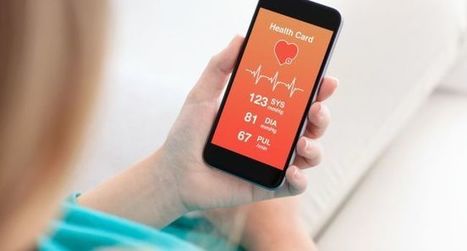
58% of Smartphone Owners Download, Use Mobile Health Apps

58% of Smartphone Owners Download, Use Mobile Health Apps | Buzz e-sante | Scoop.it

Smartphone users seem to have a high regard for mobile health apps, especially those focused on providing diet and fitness support.


Via Chanfimao
Thehealthmanual's curator insight, November 9, 2015 7:03 PM

Add me to the list ..

Rescooped by Rémy TESTON from Social Media and Healthcare
November 7, 2015 4:11 AM
Scoop.it!

Healthcare Marketing to the Millennial Mindset

Healthcare Marketing to the Millennial Mindset | Buzz e-sante | Scoop.it

If you’re going to reach Millennials, you must be where they are: online. That’s no earth shattering surprise, but can you actually break through the online clutter and connect?  And as a healthcare marketer, should you even try to be reaching this group?

Yes and yes.

While they may not be the primary target for every healthcare specialty, this group, now as old as their early 30s, consumes healthcare. Urgent care, emergency, maternity and pediatrics are among their needs, along with a host of wellness products—especially preventative care products and services. Some of their baby boomer parents are on the cusp of retirement so senior care issues are on the horizon for Millennials, too.

The Attention Deficit Issue

As a generation that has grown up in the Information Age, Millennials can’t help having short attention spans. They have learned by necessity to filter information and self-select based on their interests or immediate needs. They use aggregator sites like Reddit, the Skimm and Buzzfeed. They will also go to your social media pages before they go to your website; a recent study showed that Millennials are five times more likely to trust a pharma-sponsored social media platform than Baby Boomers, and nearly three times more likely than consumers between 45 and 65.  

What’s more, younger Millennials are migrating toward visual-based sites including Instagram, Pinterest, Vine and Periscope. Facebook, Twitter and LinkedIn are also still relevant but losing younger Millennials’ interest. 

Thus, if you’re a healthcare marketer targeting Millennials in the places to which they turn for information, you must develop and present content in short, relevant chunks with no fluff—as if your entire audience had attention deficit disorder.  Short videos, images and creative visuals that can get a point across in a single view are best (think infographics and slide shows). And, everything must be sharable via social media.

This may seem difficult with more complex healthcare topics, but savvy healthcare marketers are learning how to make it work; the campaign rolled out by New York state health insurer Oscar to guide Millennials through ACA enrollment was tremendously successful; it recruited local photographers to share photos on social media sites and achieved 500% growth with 150,000 engagements.

The same strategies can easily be applied to provider-supplied information including health education. Cleveland Clinic is leading the way, as usual; check out their Instagram and Vine pages. The key to making it successful (and not just fun) is to create a funnel or journey with various stops where viewers can digest your messages little by little, forming a relationship with you along the way. The challenge is making it interesting enough to make them want to be in a  relationship with you.

A blog is the most they will read, and it will backfire if you do it wrong.

If they are going to read any “long form” content, it’s most likely a blog.  Experts vary on the ideal blog length, but it ranges from 600 to 1,500 words (this one is 810).  A blog of 2,000 words or more is like “War and Peace” from a Millennial’s perspective. 

So, in addition to the telegraph-style comunication expected in social media, you must blog if you are going to influence Millennials’ healthcare decisions.  According to a recent survey from Elite Daily, the majority of Millennials expect brands—whether they’re consumer products or healthcare—to publish content online before they make purchases. Thirty percent of survey respondents selected blogs as a top media source before making a purchase. On the flipside:

Fewer than three percent ranked TV news and magazines as influencing their buying decisionsOnly one in 100 said an ad would translate to brand trustFamily inheritance and student loans do not impact buying decisions (contrary to popular belief)

Blogging for the sake of blogging won’t be effective. You must provide Millennials with non-biased, non-promotional information that will help them make their healthcare decisions; if they detect sales speak, they may shut you out for good.  Third-party credibility is also important, and not necessarily from a medical expert. They trust online reviews from other consumers, so you will have to accept that there may be negative reviews about your organization or the quality of your care.  Just hope that there are far more positive reviews than negative ones.

Other good blogging strategies include:

Offering to guest blog on sites Millennials trustInviting credible guest bloggers to your sitePitching your medical experts to popular health bloggersTreating trusted health bloggers like reporters. Bloggers are constantly looking for great ideas from credible sources – approach them as you would any other reporter with sources, images, and your latest news.

One of Shakespeare’s most famous lines from “Hamlet” was, “Brevity is the soul of wit.”  Not every Millennial knows the line, but they certainly know its meaning.


Via Plus91
No comment yet.
Scooped by Rémy TESTON
November 5, 2015 7:18 AM
Scoop.it!

58% des Américains ont déjà téléchargé une application santé, mais près de la moitié ne s'en sert plus

58% des Américains ont déjà téléchargé une application santé, mais près de la moitié ne s'en sert plus | Buzz e-sante | Scoop.it
Que ce soit pour enregistrer le sommeil, mesurer son activité physique ou les calories consommées, les applications en santé se sont multipliées. Mais qu'en pensent leurs utilisateurs et sont-elles toutes vraiment utilisées ? Une enquête ...
No comment yet.
Rescooped by Rémy TESTON from E-sante, web 2.0, 3.0, M-sante, télémedecine, serious games
November 4, 2015 8:58 AM
Scoop.it!

Les Google Glass pour aider les enfants autistes

Les Google Glass pour aider les enfants autistes | Buzz e-sante | Scoop.it

Google travaillerait sur des applications pour ses Google Glass dans le but d'améliorer le quotidien des enfants autistes.


Via Festival Communication Santé
No comment yet.
Rescooped by Rémy TESTON from Digital marketing pharma
November 4, 2015 4:03 AM
Scoop.it!

Increase Adherence by 20% by Challenging Patients Beliefs

Increase Adherence by 20% by Challenging Patients Beliefs | Buzz e-sante | Scoop.it

John Weinman, PhD, Head of Health Psychology at Atlantis Healthcare and Professor of Psychology at King’s College, London, has been studying adherence for the past 25 years and one thing he has learned: Everything pharma thinks they know about adherence is wrong. Pharma’s traditional line of thinking is that patients simply don’t know enough about the treatment or just forget to take the medication. In reality, there could be anywhere between 20 to 30 reasons why a patient is nonadherent—and those reasons are very personal to that patient. Professor Weinman has discovered a way to identify the factors affecting each patient and what can be done to change the patient’s behavior in order to influence adherence. In fact, he offers a case study of a program that was able to improve adherence by 20%—and keep patients at that improved rate even after the program ended.


Via Olivier Delannoy
Jerome Leleu's curator insight, November 6, 2015 1:46 AM

ajouter votre perspicacité ...

Scooped by Rémy TESTON
November 4, 2015 3:59 AM
Scoop.it!

A la découverte du Festival de la Communication Santé 2015 - Buzz-esanté

A la découverte du Festival de la Communication Santé 2015 - Buzz-esanté | Buzz e-sante | Scoop.it
Les 27 et 28 novembre prochains se déroulera la 26e édition du Festival de la Communication Santé. Interview de son organisatrice, Dominique Noël.
No comment yet.
Scooped by Rémy TESTON
November 3, 2015 4:44 PM
Scoop.it!

Les humains ont une qualité qui les rend encore supérieurs aux robots

Les humains ont une qualité qui les rend encore supérieurs aux robots | Buzz e-sante | Scoop.it
La crainte d'une robotisation massive de l'économie occupe les esprits. Pourtant, l'Homme a encore une longueur d'avance sur les machines.
No comment yet.
Scooped by Rémy TESTON
November 3, 2015 8:26 AM
Scoop.it!

La relation patient-médecin bousculée par le dossier médical

La relation patient-médecin bousculée par le dossier médical | Buzz e-sante | Scoop.it
L'arrivée d'un dossier électronique en 2016 devrait accélérer cette mutation alors que l'accès aux données initié par loi du 4 mars 2002 entre tout
No comment yet.
Scooped by Rémy TESTON
November 3, 2015 3:15 AM
Scoop.it!

Guide sur la santé connectée par Harmonie Mutuelle - Buzz-esanté

Guide sur la santé connectée par Harmonie Mutuelle - Buzz-esanté | Buzz e-sante | Scoop.it
Le groupe Harmonie Mutuelle lance un guide sur la santé connectée permettant aux internautes de trouver l'objet connecté le plus adapté à leurs besoins.
No comment yet.